Results by title
426 books match the query 'Philosophy & Social Aspects' and 23 start with p
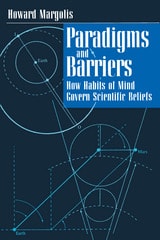
Paradigms and Barriers
How Habits of Mind Govern Scientific BeliefsHoward Margolis
University of Chicago Press, 1993
innovative interpretation of Thomas S. Kuhn's landmark idea
of "paradigm shifts," applying insights from cognitive
psychology to the history and philosophy of science.
Building upon the arguments in his acclaimed Patterns,
Thinking, and Cognition, Margolis suggests that the
breaking down of particular habits of mind—of critical
"barriers"—is key to understanding the processes through
which one model or concept is supplanted by another.
Margolis focuses on those revolutionary paradigm shifts—
such as the switch from a Ptolemaic to a Copernican
worldview—where challenges to entrenched habits of mind
are marked by incomprehension or indifference to a new
paradigm. Margolis argues that the critical problem for a
revolutionary shift in thinking lies in the robustness of the
habits of mind that reject the new ideas, relative to the
habits of mind that accept the new ideas.
Margolis applies his theory to famous cases in the history of
science, offering detailed explanations for the transition
from Ptolemaic to cosmological astronomy, the emergence of
probability, the overthrow of phlogiston, and the emergence
of the central role of experiment in the seventeenth century.
He in turn uses these historical examples to address larger
issues, especially the nature of belief formation and
contemporary debates about the nature of science and the
evolution of scientific ideas.
Howard Margolis is a professor in the Harris Graduate School
of Public Policy Studies and in the College at the University
of Chicago. He is the author of Selfishness, Altruism,
and Rationality and Patterns, Thinking, and
Cognition, both published by the University of Chicago
Press.
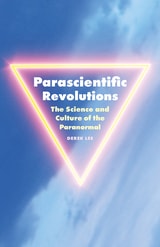
Parascientific Revolutions
The Science and Culture of the ParanormalDerek Lee
University of Minnesota Press, 2025
Unraveling the hidden influence of the paranormal on science, literature, and belief
Telepathy, clairvoyance, precognition, and telekinesis: these attributes of the paranormal mind are widely dismissed as nonsense, but what can an exploration of such pseudoscientific phenomena tell us about accepted scientific and cultural thought? In Parascientific Revolutions, Derek Lee traces the evolution of psi epistemologies across the twentieth and twenty-first centuries to uncover how these ideas have migrated into scientific fields such as quantum physics and neurology, as well as diverse literary genres including science fiction, ethnic literature, and even government training manuals.
Lee introduces the groundbreaking concept of “parascience,” a dynamic cultural space where ideas rejected by the scientific establishment blend with alternative strains of literary, mythic, and philosophical thought to regenerate and return to mainstream discourse. From early modernist works by James Joyce to postwar speculative fiction by Philip K. Dick to ethnofuturist narratives by Ruth Ozeki, Parascientific Revolutions demonstrates how cultural and intellectual currents reshape paranormal ideas over time. Examining psychic surveillance programs like Project Stargate and bizarre particles of extrasensory perception such as the psitron, Lee illustrates the ways paranormal concepts persist and evolve to influence culture.
Presenting pseudoscience as an inevitable by-product of the scientific process, Parascientific Revolutions offers fresh insight into how the paranormal mind continually challenges our understanding of knowledge and belief. It invites readers to reconsider the boundaries between science and the unknown, revealing a world where speculative thought and empirical investigation are deeply intertwined.
Retail e-book files for this title are screen-reader friendly with images accompanied by short alt text and/or extended descriptions.

Perception, Theory, and Commitment
The New Philosophy of ScienceHarold I. Brown
University of Chicago Press, 1979
empiricist tradition and then the more historical and process-oriented
approach he calls the “new philosophy of science.” Examining the two
together, he describes the very transition between them as an example
of the kind of change in historical tradition with which the new
philosophy of science concerns itself.
“I would recommend it to every historian of science and to every
philosopher of science. . . . I found it clear, readable, accurate,
cogent, insightful, perceptive, judicious, and full of original
ideas.”
—Maurice A. Finocchiaro, Isis
“The best and most original aspect of the book is its overall
conception.”
—Thomas S. Kuhn
Harold I. Brown is professor of philosophy at Northern Illinois
University.
Personal Knowledge
Towards a Post-Critical PhilosophyMichael Polanyi
University of Chicago Press, 1974
The tendency to make knowledge impersonal in our culture has split fact from value, science from humanity. Polanyi wishes to substitute for the objective, impersonal ideal of scientific detachment an alternative ideal which gives attention to the personal involvement of the knower in all acts of understanding. His book should help to restore science to its rightful place in an integrated culture, as part of the whole person's continuing endeavor to make sense of the totality of his experience. In honor of this work and his The Study of Man Polanyi was presented with the Lecomte de Noüy Award for 1959.
Personal Knowledge
Towards a Post-Critical PhilosophyMichael Polanyi
University of Chicago Press, 2015

Perspectives on the Human Genome Project and Genomics
Christopher R. Donohue
University of Minnesota Press, 2026
Interdisciplinary voices reflect on some of the most complex and consequential scientific undertakings of our time
Perspectives on the Human Genome Project and Genomics is a groundbreaking volume that examines the pivotal roles of the National Institutes of Health (NIH) and the National Human Genome Research Institute (NHGRI) in the Human Genome Project (HGP) and the development of other major genomics projects. Drawing on newly uncovered archival materials and oral histories from NHGRI, this volume offers a multifaceted narrative of transformative scientific achievements of the twentieth and twenty-first centuries.
Coeditors Christopher R. Donohue and Alan C. Love bring together a range of perspectives on the HGP’s progress and legacy, as well as other major genomics projects, to explore not only their scientific achievements but also their social and political dimensions. Presenting reflections from historians, philosophers, and sociologists alongside those of key NHGRI scientists like Eric Green, Mark Guyer, and Elise Feingold; experts like Nature editor-in-chief Magdalena Skipper and geneticist Eric Vilain; and scholars of the ethical, legal, and social implications of genomics like Jean McEwan and Joy Boyer, Perspectives on the Human Genome Project and Genomics highlights the international, interdisciplinary collaborations and collective long view that underpinned these genomics initiatives aimed at a better understanding of our basic biology and genetic diseases.
From genomic variation and sequencing technologies to the integration of big data and the influence of ancestry and gender, this book is an essential resource for deepening the discussion of the scientific, historical, and ethical impacts of genomics and a fascinating collection of insights into coordinated science in the making.
Contributors: Rina Bliss, Joy Boyer, Lisa D. Brooks, Michel Dubois, Elise A. Feingold, Adam Felsenfeld, Miguel García-Sancho, Eric D. Green, Catherine Guaspare, Chris Gunter, Stephan Guttinger, Mark Guyer, Elke Jordan, Jonathan E. LoTempio Jr., Jean McEwen, Jane Peterson, Anya Plutynski, Ramya M. Rajagopalan, Emanuele Ratti, Sahotra Sarkar, Jeffery A. Schloss, Magdalena Skipper, Alexandra Soulier, Thomas Stoeger, Eric Vilain, Kris A. Wetterstrand.
Retail e-book files for this title are screen-reader friendly with images accompanied by short alt text and/or extended descriptions.
Pharmocracy
Value, Politics, and Knowledge in Global BiomedicineKaushik Sunder Rajan
Duke University Press, 2017
Philosophical Instruments
Minds and Tools at WorkDaniel Rothbart. Foreword by Rom Harré
University of Illinois Press, 2006
The surprising roles of instruments and experimentation in acquiring knowledge
In Philosophical Instruments Daniel Rothbart argues that our tools are not just neutral intermediaries between humans and the natural world, but are devices that demand new ideas about reality. Just as a hunter's new spear can change their knowledge of the environment, so can the development of modern scientific equipment alter our view of the world.
Working at the intersections of science, technology, and philosophy, Rothbart examines the revolution in knowledge brought on by recent advances in scientific instruments. Full of examples from historical and contemporary science, including electron scanning microscopes, sixteenth-century philosophical instruments, and diffraction devices used by biochemical researchers, Rothbart explores the ways in which instrumentation advances a philosophical stance about an instrument's power, an experimenter's skills, and a specimen's properties. Through a close reading of engineering of instruments, he introduces a philosophy from (rather than of) design, contending that philosophical ideas are channeled from design plans to models and from model into the use of the devices.
Philosophy of Pseudoscience
Reconsidering the Demarcation ProblemEdited by Massimo Pigliucci and Maarten Boudry
University of Chicago Press, 2013
Physics Or Natural Hearing
Glen Aristotle
St. Augustine's Press, 2005
Plant Life
The Entangled Politics of AfforestationRosetta S. Elkin
University of Minnesota Press, 2022
How afforestation reveals the often-concealed politics between humans and plants
In Plant Life, Rosetta S. Elkin explores the procedures of afforestation, the large-scale planting of trees in otherwise treeless environments, including grasslands, prairies, and drylands. Elkin reveals that planting a tree can either be one of the ultimate offerings to thriving on this planet, or one of the most extreme perversions of human agency over it.
Using three supracontinental case studies—scientific forestry in the American prairies, colonial control in Africa’s Sahelian grasslands, and Chinese efforts to control and administer territory—Elkin explores the political implications of plant life as a tool of environmentalism. By exposing the human tendency to fix or solve environmental matters by exploiting other organisms, this work exposes the relationship between human and plant life, revealing that afforestation is not an ecological act: rather, it is deliberately political and distressingly social.
Plant Life ultimately reveals that afforestation cannot offset deforestation, an important distinction that sheds light on current environmental trends that suggest we can plant our way out of climate change. By radicalizing what conservation protects and by framing plants in their total aliveness, Elkin shows that there are many kinds of life—not just our own—to consider when advancing environmental policy.
Plasticity in the Life Sciences
Antonine Nicoglou
University of Chicago Press, 2024
Plasticity has become an important topic in biology, with some even wondering if it has now acquired the theoretical importance in biology that the concept of the gene enjoyed at the beginning of the last century. In this historical and epistemological study, philosopher Antonine Nicoglou shows how the recurrence of the general idea of plasticity—throughout the history of the life sciences—indicates its essential role in the way we think about life processes. Although plasticity has become a key element in new evolutionary thinking, she argues, its role in contemporary biology is also not insignificant. Rather, as mobilized in contemporary biology, plasticity most often seeks to account for the specific nature of living systems.
The book is divided into two parts. The first takes up the history of plasticity from Aristotle to contemporary biology; the second part offers an original way of distinguishing between different phenomena described by “plasticity.” In the process, the author explores what has led some biologists to speak of plasticity as a way of overcoming genetic determinism.
Playing God?
Human Genetic Engineering and the Rationalization of Public Bioethical DebateJohn H. Evans
University of Chicago Press, 2001
Playing God? asks why and explores the social forces that have led to the thinning out of public debate over human genetic engineering. John H. Evans contends that the problem lies in the structure of the debate itself. Disputes over human genetic engineering concern the means for achieving assumed ends, rather than being a healthy discussion about the ends themselves. According to Evans, this change in focus occurred as the jurisdiction over the debate shifted from scientists to bioethicists, a change which itself was caused by the rise of the bureaucratic state as the authority in such matters. The implications of this timely study are twofold. Evans not only explores how decisions about the ethics of human genetic engineering are made, but also shows how the structure of the debate has led to the technological choices we now face.
Porous Becomings
Anthropological Engagements with Michel SerresAndreas Bandak and Daniel M. Knight, editors
Duke University Press, 2024
Contributors. Andreas Bandak, Jane Bennett, Tom Boylston, Steven D. Brown, Matei Candea, Alberto Corsín Jiménez, David Henig, Michael Jackson, Daniel M. Knight, Celia Lowe, Morten Nielsen, Stavroula Pipyrou, Elizabeth Povinelli, Andrew Shryock, Arpad Szakolczai
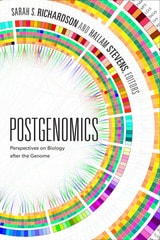
Postgenomics
Perspectives on Biology after the GenomeSarah S. Richardson and Hallam Stevens, editors
Duke University Press, 2015
Contributors. Russ Altman, Rachel A. Ankeny, Catherine Bliss, John Dupré, Michael Fortun, Evelyn Fox Keller, Sabina Leonelli, Adrian Mackenzie, Margot Moinester, Aaron Panofsky, Sarah S. Richardson, Sara Shostak, Hallam Stevens

Power and Invention
Situating ScienceIsabelle Stengers
University of Minnesota Press, 1997
Power of Material - Politics of Materiality
Edited by Susanne Witzgall and Kerstin Stakemeier
Diaphanes, 2014
In the last years a new focus on material phenomena has become increasingly oberservable in the arts and sciences. Most diverse disciplines are stressing the momentum and the agency of matter, material and things and underline their status as agents within the web of relationships of culture and nature. The book "Power of Material / Politics of Materiality“ deepens this current discourse and for the time brings materialist tendencies within the arts, design and architecture into a direct dialogue with a range of scientific approaches from a "New Materialism“ within the humanities and social sciences.
This publication is the result of the first year of program at the newly established cx centre for interdisciplinary studies at the Academy of Fine Arts Munich.
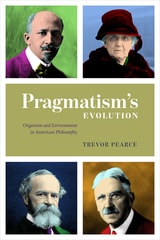
Pragmatism's Evolution
Organism and Environment in American PhilosophyTrevor Pearce
University of Chicago Press, 2020
Although the various thinkers associated with pragmatism—from Charles Sanders Peirce to Jane Addams and beyond—were towering figures in American intellectual life, few realize the full extent of their engagement with the life sciences. In his analysis, Pearce focuses on a series of debates in biology from 1860 to 1910—from the instincts of honeybees to the inheritance of acquired characteristics—in which the pragmatists were active participants. If we want to understand the pragmatists and their influence, Pearce argues, we need to understand the relationship between pragmatism and biology.
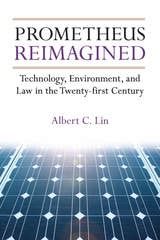
Prometheus Reimagined
Technology, Environment, and Law in the Twenty-first CenturyAlbert C. Lin
University of Michigan Press, 2013
Technologies such as synthetic biology, nanotechnology, artificial intelligence, and geoengineering promise to address many of our most serious problems, yet they also bring environmental and health-related risks and uncertainties. Moreover, they can come to dominate global production systems and markets with very little public input or awareness. Existing governance institutions and processes do not adequately address the risks of new technologies, nor do they give much consideration to the concerns of persons affected by them.
Instead of treating technology, health, and the environment as discrete issues, Albert C. Lin argues that laws must acknowledge their fundamental relationship, anticipating both future technological developments and their potential adverse effects. Laws should encourage international cooperation and the development of common global standards, while allowing for flexibility and reassessment.
Prosthetic Immortalities
Biology, Transhumanism, and the Search for Indefinite LifeAdam R Rosenthal
University of Minnesota Press, 2024
Examining the links between today’s ideas of radical life extension and age-old notions of immortality
From Plato’s notion of generation to Derrida’s concept of survival to such modern phenomena as anti-aging treatments, cryogenics, cloning, and whole-brain uploads, Adam Rosenthal’s Prosthetic Immortalities shows how the dream of indefinite life has always been a technological one: a matter of prosthesis. He argues that every biological instance of perpetual life, from one-celled organisms to rejuvenating jellyfish to Henrietta Lacks’s “immortal” cancer cells, always results in the transformation of the original being. There can, therefore, be no certainty of immortality. Yet, because finite mortal life is already marked by difference, division, and change, as Rosenthal concludes: “the problem of immortality will not cease to haunt us.”
Prosthetic Immortalities examines the persistence of humans’ aspirations of deathlessness, showing that the link between immortalization and prostheticization is not unique to a single period but is, rather, a ubiquitous element of the discourse of immortality, encompassing both modern technoscientific efforts and religious discourses of an afterlife. Rosenthal asks to what extent the emergence of a virtual, posited, immortal presence follows from the tenets of empirical science—and not simply from the discourse of biology but also, and more radically still, from biological organization itself.
Rosenthal ultimately argues that the discovery of biological immortals—lifeforms that naturally have indefinitely long lifespans, such as cancer cells and bacteria—present novel conceptual difficulties for traditional philosophical approaches to mortality and selfhood, asking whether it is life itself that first births immortalizing prostheses.

Protogaea
Gottfried Wilhelm Leibniz
University of Chicago Press, 2008
Though the works of Leibniz have been widely translated, Protogaea has languished in its original Latin for centuries. Now Claudine Cohen and Andre Wakefield offer the first English translation of this central text in natural philosophy and natural history. Written between 1691 and 1693, and first published after Leibniz’s death in 1749, Protogaea reemerges in this bilingual edition with an introduction that carefully situates the work within its historical context.
Psychoanalysis--A Theory in Crisis
Marshall Edelson
University of Chicago Press, 1988
Putting Inequality in Context
Class, Public Opinion, and Representation in the United StatesChristopher Ellis
University of Michigan Press, 2017
Christopher Ellis argues citizens’—and legislators’—views of class politics are driven by lived experience in particular communities. While some experience is formally political, on an informal basis citizens learn a great deal about their position in the broader socioeconomic spectrum and the social norms governing how class intersects with day-to-day life. These factors are important for policymakers, since most legislators do not represent “the public” at large, but specific constituencies.
Focusing on U.S. congressional districts as the contextual unit of interest, Ellis argues individuals’ political behavior cannot be separated from their environment, and shows how income’s role in political processes is affected by the contexts in which citizens and legislators interact. Political inequality exists in the aggregate, but it does not exist everywhere. It is, rather, a function of specific arrangements that depress the political influence of the poor. Identifying and understanding these factors is a crucial step in thinking about what reforms might be especially helpful in enhancing equality of political voice.