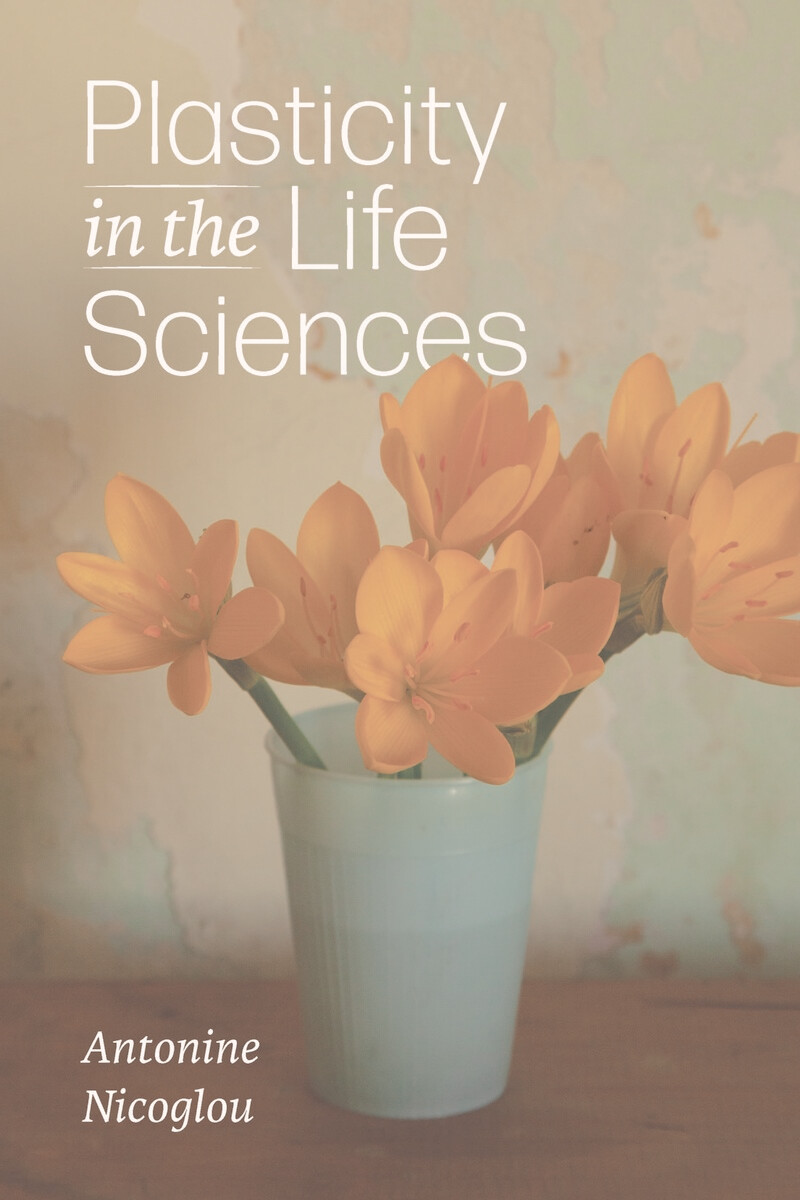
Plasticity in the Life Sciences
University of Chicago Press, 2024
Cloth: 978-0-226-83714-7 | Paper: 978-0-226-83716-1 | eISBN: 978-0-226-83715-4 (all)
Library of Congress Classification QH438.5.N53 2024
Dewey Decimal Classification 572.838
Cloth: 978-0-226-83714-7 | Paper: 978-0-226-83716-1 | eISBN: 978-0-226-83715-4 (all)
Library of Congress Classification QH438.5.N53 2024
Dewey Decimal Classification 572.838
ABOUT THIS BOOK | AUTHOR BIOGRAPHY | REVIEWS | TOC | REQUEST ACCESSIBLE FILE
ABOUT THIS BOOK
Analyzes the reasons why biologists have referred to and continue to refer to plasticity.
Plasticity has become an important topic in biology, with some even wondering if it has now acquired the theoretical importance in biology that the concept of the gene enjoyed at the beginning of the last century. In this historical and epistemological study, philosopher Antonine Nicoglou shows how the recurrence of the general idea of plasticity—throughout the history of the life sciences—indicates its essential role in the way we think about life processes. Although plasticity has become a key element in new evolutionary thinking, she argues, its role in contemporary biology is also not insignificant. Rather, as mobilized in contemporary biology, plasticity most often seeks to account for the specific nature of living systems.
The book is divided into two parts. The first takes up the history of plasticity from Aristotle to contemporary biology; the second part offers an original way of distinguishing between different phenomena described by “plasticity.” In the process, the author explores what has led some biologists to speak of plasticity as a way of overcoming genetic determinism.
See other books on: Biology | Evolutionary genetics | Philosophy & Social Aspects | Plasticity | Variation (Biology)
See other titles from University of Chicago Press