Results by title
183 books match the query 'Places' and 20 start with p
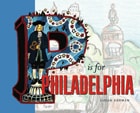
P Is For Philadelphia
Susan Korman
Temple University Press, 2005

PLEASURE
Angelo Nikolopoulos
Four Way Books, 2022
PLEASURE is a book-length poem which muses on the phenomenology of solitude in a pastoral landscape, written in a diaristic, lyric mode, where the queer “I” alternately savors the decadence of isolation and stands at the precipice of despair. A travelogue in verse, PLEASURE takes place in Syros, the Greek island to which author Angelo Nikolopolous travels a few weeks after the discovery of his mother’s brain tumor. These intertextual, elliptical explorations of solitude and sensuality interweave images of seaside roaming, secluded town life, and ephemeral sexual encounters with the ubiquitous implication of death—the waning summer, the ill, perhaps dying, mother. Staring down true disconnection—both physical and psychic orphanhood —Nikolopoulos writes about the thrill and sadness of turning your back against the world and those in it only to rediscover that which tethers all to human experience: the quotidian, singular pleasures of having a body.
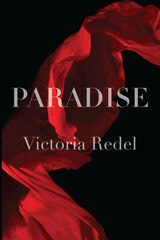
Paradise
Victoria Redel
Four Way Books, 2022
Rewriting Eden, Victoria Redel interrogates the idea of paradise within the historical context of borders, exile, and diaspora that brought us to the present global migration crisis. Drawing from a long family history of flight and refuge, the poems in Paradise interweave religion and myth, personal lore and nation-building, borders actual and imagined. They ask: What if what we fell from was never, actually, grace? What is a boundary, really? Redel navigates geopolitical perimeters while also questioning the border between the living and the dead and delineating the migrations aging women make in their bodies and lives. With stark lyricism and unflinching attention, Paradise considers how a legacy of trauma shapes imagination and asks readers to see the threads that tie contemporary catastrophes to the exigencies and flight paths that made us.
Paradise
Victoria Redel
Four Way Books, 2022
Rewriting Eden, Victoria Redel interrogates the idea of paradise within the historical context of borders, exile, and diaspora that brought us to the present global migration crisis. Drawing from a long family history of flight and refuge, the poems in Paradise interweave religion and myth, personal lore and nation-building, borders actual and imagined. They ask: What if what we fell from was never, actually, grace? What is a boundary, really? Redel navigates geopolitical perimeters while also questioning the border between the living and the dead and delineating the migrations aging women make in their bodies and lives. With stark lyricism and unflinching attention, Paradise considers how a legacy of trauma shapes imagination and asks readers to see the threads that tie contemporary catastrophes to the exigencies and flight paths that made us.
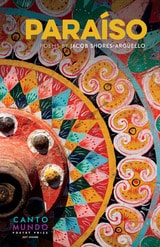
Paraíso
Poems byJacob Shores-Argüello
University of Arkansas Press, 2017
Paraíso, the first book in the new CantoMundo Poetry Series, which celebrates the work of Latino/a poets writing in English, is a pilgrimage against sorrow. Erupting from a mother’s death, the poems follow the speaker as he tries to survive his grief. Catholicism, family, good rum . . . these help, but the real medicine happens when the speaker pushes into the cloud forest alone.
In a Costa Rica far away from touristy beaches, we encounter bus trips over the cold mountains of the dead, drug dealers with beautiful dogs, and witches with cell phones. Science fuses with religion, witchcraft is joined with technology, and eventually grief transforms into belief.
Throughout, Paraíso defies categorization, mixing its beautiful sonnets with playful games and magic cures for the reader. In the process, moments of pure life mingle with the aftermath of a death.
Particulars of Place
Richard O. Moore
Omnidawn, 2015

People and Places of Nature and Culture
Rod Giblett
Intellect Books, 2011
Using the rich and vital Australian Aboriginal understanding of country as a model, People and Places of Nature and Culture affirms the importance of a sustainable relationship between nature and culture. While current thought includes the mistaken notion—perpetuated by natural history, ecology, and political economy—that humans have a mastery over the Earth, this book demonstrates the problems inherent in this view. In the current age of climate change, this is an important appraisal of the relationship between nature and culture, and a projection of what needs to change if we want to achieve environmental stability.

Pittsburghese
Robert Gibb
Michigan State University Press, 2024
Places and Purposes of Popular Music Education
Perspectives from the FieldEdited by Bryan Powell and Gareth Dylan Smith
Intellect Books, 2022
This book provides a variety of perspectives on popular music education. With a mixture of rants, manifestos, and punchy position pieces, the volume moves from scholarly essays replete with citations and references to descriptions of practice and straight-talking polemics. The writing is approachable in tone, and the chapters are intended to whet appetites, prime pumps, open eyes, and keep cogs turning for academics of all ages and stages.
The book will appeal to those working in popular music studies, communication studies, and education research. It also holds relevance for researchers of the music industry and music ecosystems around the world. International in reach and scope and edited by recognized voices at the vanguard of progressive music education, this is an eye-opening exploration of education in and through the widespread cultural phenomenon of popular music.
Places in Need
The Changing Geography of PovertyScott W. Allard
Russell Sage Foundation, 2017
Using census data, administrative data from safety net programs, and interviews with nonprofit leaders in the Chicago, Los Angeles, and Washington, D.C. metropolitan areas, Allard shows that poor suburban households resemble their urban counterparts in terms of labor force participation, family structure, and educational attainment. In the last few decades, suburbs have seen increases in single-parent households, decreases in the number of college graduates, and higher unemployment rates. As a result, suburban demand for safety net assistance has increased. Concerning is evidence suburban social service providers—which serve clients spread out over large geographical areas, and often lack the political and philanthropic support that urban nonprofit organizations can command—do not have sufficient resources to meet the demand.
To strengthen local safety nets, Allard argues for expanding funding and eligibility to federal programs such as SNAP and the Earned Income Tax Credit, which have proven effective in urban and suburban communities alike. He also proposes to increase the capabilities of community-based service providers through a mix of new funding and capacity-building efforts.
Places in Need demonstrates why researchers, policymakers, and nonprofit leaders should focus more on the shared fate of poor urban and suburban communities. This account of suburban vulnerability amidst persistent urban poverty provides a valuable foundation for developing more effective antipoverty strategies.
Places in the Bone
A MemoirDine, Carol
Rutgers University Press, 2005
In a series of unflinching vignettes laced with heartbreak and often with humor, Places in the Bone gives an unforgettable account of loss and survival, childhood secrets banished from memory, and the power of language to retrieve the missing parts of oneself and one’s past. Woven together with unmistakable lyricism, Carol Dine’s narrative moves back and forth in time and place—from the childhood bedroom that fills her with fear, to a hospital room after her surgery for breast cancer, to an adobe hut in a New Mexico artists’ colony where she escapes and finds her voice.
This voice, it turns out, is a chorus—a harmony of cries, both anguished and triumphant. Among them we hear a young girl speak about the abuse by her father; we hear the tormented reflections of a mother who, for several years after a divorce, loses contact with her young son; and we hear the testimony of a cancer survivor. Through it all, we feel the determination, courage, and creativity of a woman who has spent more than two decades confronting her past, her body, and her identity. Despite her struggles, Dine finds positive influences in her life, including her mentor, Anne Sexton, who recognizes the fire in her words, and Stanley Kunitz, whose indomitable spirit provides enduring inspiration.
More than a story of personal loss, the memoir moves us with its humanity, its unnerving wit, and its defiant faith. As the fragments come together, we experience Dine’s joy in living and her reconciliation with the past that allow her to renew bonds with her son, her sister, and her mother. In page after page, we witness the power of art to refigure a body, to transform suffering, and ultimately, to redeem.
Places in the Dark
Short StoriesLidmila Kábrtová
Seagull Books, 2025
Following her divorce, Tereza shuts off emotionally and flits from one faceless lover to the next, until an unexpected visitor shakes her existence to the core. Klara is a bird trapped in a golden cage slowly suffocating her. Eva has sacrificed herself for her children and family. Life is one big party for Karla—or is it? Alice is doing everything she can not to be a crybaby like her mother. Petra has finally had enough and takes drastic measures. Magdalena’s true yearnings bubble up to the surface.
The stories of these six characters may be different, but these women’s paths converge throughout Places in the Dark, weaving a vivid tapestry of interconnected lives. Czech author Lidmila Kábrtová is a master of writing stories of astonishing clarity. Echoing the brilliance of Alice Munro, Kábrtová’s words act as translucent veils, allowing the essential truths to shimmer through. Moments move about on tectonic plates somewhere beneath the surface of the everyday, and nothing will be as it used to be. Yet, in this kaleidoscope of narratives, the question lingers: Was it ever truly as it seemed?
Places in the Making
A Cultural Geography of American PoetryJim Cocola
University of Iowa Press, 2016
Positing place as a pivotal axis of identification and heralding emplacement as a crucial model for cultural, intellectual, and political activity in a period marked and imperiled by a tendency toward dislocation, the critical vocabulary of this project centers upon the work of place-making. It attends to a poetics that extends beyond epic and lyric modes while relying simultaneously on auditory and visual effects and proceeding in the interests of environmental advocacy and social justice, often in contrast to the more orthodox concerns of literary modernism, global capitalism, and print culture. Focusing on poets of international reputation, such as Elizabeth Bishop, Pablo Neruda, Charles Olson, and William Carlos Williams, Places in the Making also considers work by more recent figures, including Kamau Brathwaite, Joy Harjo, Myung Mi Kim, and Craig Santos Perez. In its larger comparative, multiethnic, and transnational emphases, this book addresses questions of particular moment in American literary and cultural studies and aspires to serve as a catalyst for further interdisciplinary work connecting geography and the humanities.
Places in the World a Person Could Walk
Family, Stories, Home, and Place in the Texas Hill CountryBy David Syring
University of Texas Press, 2000
Spring-fed creeks. Old stone houses. Cedar brakes and bleached limestone. The Hill Country holds powerful sway over the imagination of Texans. So many of us dream of having our own little place in the limestone hills. The Hill Country feels just like home, even if you've never lived there.
This beautifully written book explores what the Hill Country has meant as a homeplace to the author, his family, and longtime residents of the area, as well as to newcomers. David Syring listens to the stories that his aunts, uncles, and cousins tell about life in the Hill Country and grapples with their meaning for his own search for a place to belong. He also collects short stories focused around Honey Creek Church to consider how places become containers for memory. And he draws upon several years of living in Fredericksburg to talk about the problems and opportunities created by heritage tourism and the development of the town as a "home" for German Americans. These interconnected stories illuminate what it means to belong to a place and why the Texas Hill Country has become the spiritual, if not actual, home of many people.
Places of Public Memory
The Rhetoric of Museums and MemorialsEdited by Greg Dickinson, Carole Blair, and Brian L. Ott
University of Alabama Press, 2010
A sustained and rigorous consideration of the intersections of memory, place, and rhetoric
Though we live in a time when memory seems to be losing its hold on communities, memory remains central to personal, communal, and national identities. And although popular and public discourses from speeches to films invite a shared sense of the past, official sites of memory such as memorials, museums, and battlefields embody unique rhetorical principles.
Places of Public Memory: The Rhetoric of Museums and Memorials is a sustained and rigorous consideration of the intersections of memory, place, and rhetoric. From the mnemonic systems inscribed upon ancient architecture to the roadside accident memorials that line America’s highways, memory and place have always been deeply interconnected. This book investigates the intersections of memory and place through nine original essays written by leading memory studies scholars from the fields of rhetoric, media studies, organizational communication, history, performance studies, and English. The essays address, among other subjects, the rhetorical strategies of those vying for competing visions of a 9/11 memorial at New York City’s Ground Zero; rhetorics of resistance embedded in the plans for an expansion of the National Civil Rights Museum; representations of nuclear energy—both as power source and weapon—in Cold War and post–Cold War museums; and tours and tourism as acts of performance.
By focusing on “official” places of memory, the collection causes readers to reflect on how nations and local communities remember history and on how some voices and views are legitimated and others are minimized or erased.
Places of Quiet Beauty
Parks, Preserves, and EnvironmentalismRebecca Conard
University of Iowa Press, 1997
Resource protection and public recreation policies have always been subject to the shifting winds of management philosophy governing both national and state parks. Somewhere in the balance, however, parks and preserves have endured as unique places of mind as well as matter. Places of Quiet Beauty allows us to see parks and preserves, forests and wildlife refuges—all those special places that the term “park” conjures up—as measures of our own commitment to caring for the environment. In this broad-ranging book, historian Rebecca Conard examines the complexity of American environmentalism in the twentieth century as manifest in Iowa's state parks and preserves.
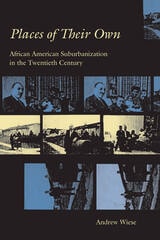
Places of Their Own
African American Suburbanization in the Twentieth CenturyAndrew Wiese
University of Chicago Press, 2005
For most people, this cozy image of suburbia does not immediately evoke images of African Americans. But as this pioneering work demonstrates, the suburbs have provided a home to black residents in increasing numbers for the past hundred years—in the last two decades alone, the numbers have nearly doubled to just under twelve million. Places of Their Own begins a hundred years ago, painting an austere portrait of the conditions that early black residents found in isolated, poor suburbs. Andrew Wiese insists, however, that they moved there by choice, withstanding racism and poverty through efforts to shape the landscape to their own needs. Turning then to the 1950s, Wiese illuminates key differences between black suburbanization in the North and South. He considers how African Americans in the South bargained for separate areas where they could develop their own neighborhoods, while many of their northern counterparts transgressed racial boundaries, settling in historically white communities. Ultimately, Wiese explores how the civil rights movement emboldened black families to purchase homes in the suburbs with increased vigor, and how the passage of civil rights legislation helped pave the way for today's black middle class.
Tracing the precise contours of black migration to the suburbs over the course of the whole last century and across the entire United States, Places of Their Own will be a foundational book for anyone interested in the African American experience or the role of race and class in the making of America's suburbs.
Winner of the 2005 John G. Cawelti Book Award from the American Culture
Association.
Winner of the 2005 Award for Best Book in North American Urban
History from the Urban History Association.
Popular Music in Leeds
Histories, Heritage, People and PlacesEdited by Brett Lashua, Karl Spracklen, and Kitty Ross
Intellect Books, 2023
This is the first scholarly volume to focus on popular music in Leeds. It delves into the rich musical history of Leeds and its long tradition of vibrant venues, nightclubs, dance halls, pubs, and other sites of musical entertainment. The contributors use the popular music of Leeds to exemplify and inform understandings of broader cultural and urban changes, the social and historical significance of music as mass media; music and migration; music, racialization, and social equity; and industrial decline, deindustrialization, neoliberalism, and the rise of the twenty-four-hour city. Charting moments of stark musical politicization and de-politicization, while also tracing arguments about heritagizing popular music within discussions about music’s place in museums and in the urban economy, this book contributes to debates about why music matters, has mattered, and continues to matter in Leeds and beyond.
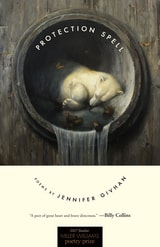
Protection Spell
PoemsJennifer Givhan
University of Arkansas Press, 2017
Finalist, 2017 Miller Williams Poetry Prize, edited by Billy Collins
“A poet of great heart and brave directness.”
—Billy Collins
In Protection Spell Jennifer Givhan explores the guilt, sadness, and freedom of relationships: the sticky love that keeps us hanging on for no reason other than love, the inky place that asks us to continue revising and reimagining, tying ourselves to this life and to each other despite the pain (or perhaps because of it). These poems reassemble safe spaces from the fissures cleaving the speaker’s own biracial home and act as witnesses speaking to the racial iniquity of our broader social landscape as well as to the precarious standpoint of a mother-woman of color whose body lies vulnerable to trauma and abuse. From insistent moments of bravery, a collection of poems arises that asks the impossible, like the childhood chant that palliates suffering by demanding nothing less than magical healing: sana sana colita de rana, si no sanas hoy, sanas mañana (the frog who loses his tail is commanded to grow another). In the end, Givhan’s verse offers a place where healing may begin.
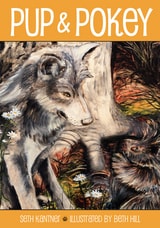
Pup and Pokey
Seth Kantner
University of Alaska Press, 2014
Gently inspired by the fable of “The Lion and the Mouse,” Pup and Pokey teaches young readers about living in the wilderness and the sometimes unexpected connections that arise in our lives. Pup and Pokey is the first children’s book from acclaimed Alaska author Seth Kantner. With Kantner’s storytelling and Beth Hill’s original illustrations, Pup and Pokey is a touching outdoor adventure story that only two talented Alaskans could tell.