Results by title
101 books match the query 'Planning' and 15 start with p
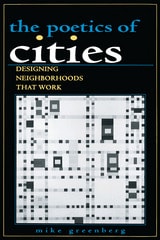
POETICS OF CITIES
DESIGNING NEIGHBORHOODS THAT WORKMIKE GREENBERG
The Ohio State University Press, 1995
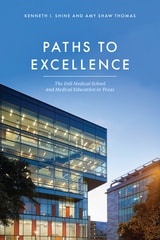
Paths to Excellence
The Dell Medical School and Medical Education in TexasKenneth I. Shine and Amy Shaw Thomas
University of Texas Press, 2021
This book tells in detail and for the first time the story of how this change came about: how dedicated administrators, alumni, business leaders, community organizers, doctors, legislators, professors, and researchers joined forces, overcame considerable resistance, and raised the funds to build a new medical school without any direct state monies. Funding was secured in large part by the unique willingness of the local community to tax itself to pay for the financial operations of the school. Kenneth I. Shine and Amy Shaw Thomas, who witnessed this process from their unique vantages as past and present vice chancellors for health affairs in the University of Texas System, offer a working model that will enable other leaders to more effectively seek solutions, avoid pitfalls, and build for the future.
Planning New and Remodeled Archival Facilities
Thomas P. Wilsted
Society of American Archivists, 2007
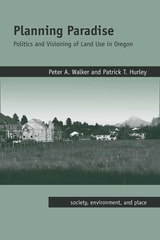
Planning Paradise
Politics and Visioning of Land Use in OregonBy Peter A. Walker and Patrick T. Hurley
University of Arizona Press, 2011
Oregon is one of the nation’s most celebrated exceptions. In the early 1970s Oregon established the nation’s first and only comprehensive statewide system of land-use planning and largely succeeded in confining residential and commercial growth to urban areas while preserving the state’s rural farmland, forests, and natural areas. Despite repeated political attacks, the state’s planning system remained essentially politically unscathed for three decades. In the early- and mid-2000s, however, the Oregon public appeared disenchanted, voting repeatedly in favor of statewide ballot initiatives that undermined the ability of the state to regulate growth. One of America’s most celebrated “success stories” in the war against sprawl appeared to crumble, inspiring property rights activists in numerous other western states to launch copycat ballot initiatives against land-use regulation.
This is the first book to tell the story of Oregon’s unique land-use planning system from its rise in the early 1970s to its near-death experience in the first decade of the 2000s. Using participant observation and extensive original interviews with key figures on both sides of the state’s land use wars past and present, this book examines the question of how and why a planning system that was once the nation’s most visible and successful example of a comprehensive regulatory approach to preventing runaway sprawl nearly collapsed.
Planning Paradise is tough love for Oregon planning. While admiring much of what the state’s planning system has accomplished, Walker and Hurley believe that scholars, professionals, activists, and citizens engaged in the battle against sprawl would be well advised to think long and deeply about the lessons that the recent struggles of one of America’s most celebrated planning systems may hold for the future of land-use planning in Oregon and beyond.

Planning a New West
The Columbia River Gorge National Scenic AreaCarl Abbott
Oregon State University Press, 1997
Planning as Persuasive Storytelling
The Rhetorical Construction of Chicago's Electric FutureJames A. Throgmorton
University of Chicago Press, 1996
Planning the City upon a Hill
Boston since 1630Lawrence W. Kennedy
University of Massachusetts Press, 1992
Planning the Family in Egypt
New Bodies, New SelvesBy Kamran Asdar Ali
University of Texas Press, 2002
In this ethnographic study, the author examines the policies and practices of family planning programs in Egypt to see how an elitist, Western-informed state attempts to create obliging citizens. The state sees voluntary compliance with the law for the common good as the cornerstone of modernity. Family planning programs are a training ground for the construction of self-disciplined individuals, and thus a rewarding area of study for the fate of social programs in developing countries.
Through a careful examination of state-endorsed family planning practices in urban and rural contexts, the author shows us the pervasive, high-pressure persuasion of women, who are encouraged to think as individual decision makers of their immediate families and their national interests. But what of the other forces at work in these women’s lives, binding them to their extended families and to their religious identities? And what of the laws that allow for polygamy and discriminate against women in marriage, inheritance, and as part of the workforce?
These forces operate against the received wisdom of the state. Is the Muslim community thought to end at the borders of Egypt? What about local constructions of masculinity when the state appeals to wives to decide for themselves? How does widespread labor migration to foreign countries affect attitudes toward family planning? How is female contraception viewed by the Islamic Brotherhood and other modern Muslim groups?
This book questions much that we have taken for granted and gives us grounds for reexamining our assumptions about family planning and the individual and state in developing countries such as Egypt.
Planning the Home Front
Building Bombers and Communities at Willow RunSarah Jo Peterson
University of Chicago Press, 2013
Planning the Oregon Way
A 20-Year EvaluationCarl Abbott
Oregon State University Press, 1994
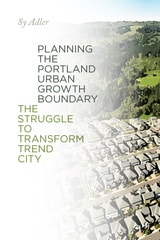
Planning the Portland Urban Growth Boundary
The Struggle to Transform Trend CitySy Adler
Oregon State University Press, 2022
In this companion volume to his 2012 book Oregon Plans: The Making of an Unquiet Land-Use Revolution, Sy Adler offers readers a deep analysis of planning Portland’s Urban Growth Boundary. Required by one of Oregon’s nineteen statewide planning goals, a boundary in the Portland metropolitan area was intended to separate urban land and land that would be urbanized from commercially productive farmland. After adopting the goals, approving the Portland growth boundary in 1979 was the most significant decision the Oregon Land Conservation and Development Commission has ever made, and, more broadly, is a significant milestone in American land-use planning.
Planning the Portland Urban Growth Boundary primarily covers the 1970s. Innovative regional planning institutions were established in response to concerns about sprawl, but planners working for those institutions had to confront the reality that various plans being developed and implemented by city and county governments in metro Portland would instead allow sprawl to continue. Regional planners labeled these as “Trend City” plans, and sought to transform them during the 1970s and thereafter.
Adler discusses the dynamics of these partially successful efforts and the conflicts that characterized the development of the Portland UGB during the 1970s—between different levels of government, and between public, private, and civic sector advocates. When the regional UGB is periodically reviewed, these conflicts continue, as debates about values and technical issues related to forecasting future amounts of population, economic activity, and the availability of land for urban development over a twenty-year period roil the boundary planning process.
Planning the Portland Urban Growth Boundary is an authoritative history and an indispensable resource for anyone actively involved in urban and regional planning—from neighborhood associations and elected officials to organizations working on land use and development issues throughout the state.
Planning the Urban Region
A Comparative Study of Policies and OrganizationsPeter Self
University of Alabama Press, 1982
In tandem with an analysis of the basic purpose and rationale of urban planning, Peter Self discusses the achievements and failures of different types of planning authorities. Planning the Urban Region surveys in turn the planning of city governments, metro governments, and regional bodies as they attempt to guide the growth and character of large urban areas—within whose sprawl live roughly one-half of the populations of Western countries—with examples drawn from the United States, Great Britain, Canada, Australia, Sweden, and France.
Self argues that the urban region is at a political and organizational crossroads, as it must grapple with the problems of urban sprawl: the social effects of land use and housing, conflicts between local communities and the metro organizations, environmental issues, and the capacity of governmental systems to handle complex issues. Planning the Urban Region is a valuable contribution to the literature on the future of cities and urban regions and should materially inform the debate on the place of public planning in shaping that future.

Pre- and Post-Retirement Tips for Librarians
Carol Smallwood
American Library Association, 2012
Preservation
Issues and PlanningPaul Banks
American Library Association, 2000
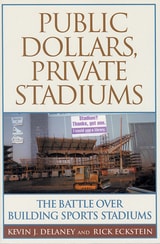
Public Dollars, Private Stadiums
The Battle over Building Sports StadiumsDelaney, Kevin J.
Rutgers University Press, 2003
The authors provide an eye-opening account of recent battles over publicly financed stadiums in some of America’s largest cities. Their interviews with the key decision makers present a behind-the-scenes look at how and why powerful individuals and organizations foist these sports palaces on increasingly unreceptive communities.
Delaney and Eckstein show that in the face of studies demonstrating that new sports facilities don’t live up to their promise of big money, proponents are using a new tactic to win public subsidies¾intangible “social” rewards, such as prestige and community cohesion. The authors find these to be empty promises as well, demonstrating that new stadiums may exacerbate, rather than erase, social problems in cities.