Results by title
557 books match the query 'Poems' and 38 start with p

Palladium
POEMSAlice Fulton
University of Illinois Press, 1987
as "electrifying," and the poet herself, according to Publishers
Weekly, "may be Dickinson's postmodern heir."
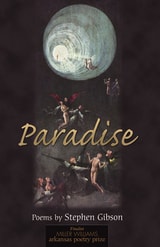
Paradise
PoemsStephen Gibson
University of Arkansas Press, 2011
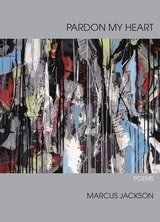
Pardon My Heart
PoemsMarcus Jackson
Northwestern University Press, 2018
Pardon My Heart is an exploration of love in the contemporary African American ethos. In this lyrically complex collection, the speakers and subjects—the adult descendants of the Great Migration—reckon with past experiences and revelatory, hard-earned ideas about race and class.
With a compelling blend of narrative, musicality, and imagery, Jackson’s poems span a multitude of scenes, landscapes, and sensations. Pardon My Heart examines intimacy, memory, grief, and festivity while seeking out new, reflective sectors within emotion and culture. By means of concise portraiture and sonic vibrancy, Jackson’s poems ultimately express the urgency and pliability of the human soul.
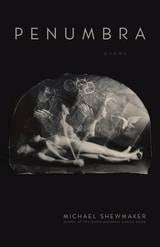
Penumbra
PoemsMichael Shewmaker
Ohio University Press, 2017
Penumbra—Michael Shewmaker’s debut collection—explores the half-shadows of a world torn between faith and doubt. From intricate descriptions of the rooms in a dollhouse, to the stark depiction of a chapel made of bones, from pre-elegies for a ghostly father, to his compelling treatment of his obsessed, human characters (a pastor, a tattoo artist, a sleepwalker, to name only a few), these are poems that wrestle with what it means to believe in something beyond one’s own mortality. Learned and formally adept, these poems consist of equal parts praise and despair. They announce Shewmaker as an important new voice in American poetry.
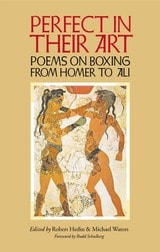
Perfect in Their Art
Poems on Boxing from Homer to AliEdited by Robert Hedin and Michael Waters. Foreword by Budd Schulberg
Southern Illinois University Press, 2003
Two combatants, one ring, and a battle governed as much by determination and drive as by rules and referees: that’s boxing. Perfect in Their Art: Poems on Boxing from Homer to Ali spans the millennia to present more than one hundred of the finest in pugilism poetry from both oral and written traditions, celebrating the lasting literary, historical, and cultural significance of boxing’s storied heritage.
Editors Robert Hedin and Michael Waters pulled no punches in assembling the definitive poems and poets of the sport. Works by such classical poets as Homer, Virgil, and Pindar are gathered here side-by-side for the first time with the poems of Lord Byron, William Makepeace Thackeray, and Sir Arthur Conan Doyle. This provocative collection also features more recent literary heavyweights, including Langston Hughes, Maya Angelou, Joyce Carol Oates, Philip Levine, Wislawa Szymborska, Ai, Yusef Komunyakaa, James Merrill, and Norman Mailer. Equally impressive is this anthology’s rich sampling of boxing music, including ballads, blues, marches, waltzes, and pop lyrics. Irving Berlin, Memphis Minnie, Leadbelly, Paul Simon, Warren Zevon, and Bob Dylan are only a few of the songwriters in this volume compelled to honor the sweet science.
Complemented by a foreword from On the Waterfront author Budd Schulberg, Perfect in Their Art offers glimpses into the boxing ring’s literal and metaphoric place as a popular stage for brutal but artful combat. Together these poems celebrate the heroes and traditions of this most primal competition across its many eras to provide an accurate, graceful, and spirited evocation of boxing’s cultural legacy as both sport and art.
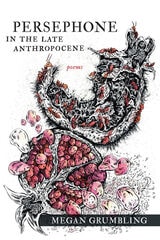
Persephone in the Late Anthropocene
PoemsMegan Grumbling
Acre Books, 2020
This ecopoetic collection interweaves the voices of Persephone, Demeter, and a human chorus with a range of texts, including speculative cryptostudies that shed light on the culture of the “Late Anthropocene.” These voices speak of decadence and blame, green crabs and neonicotinoids, mysteries and effigies. They reckon with extreme weather, industrialized plenty, and their own roles in ecological collapse.
Tonally, the poems of this book range between the sublime and the profane; formally, from lyric verse and modern magical-realist prose poems to New Farmer’s Almanac riddles and pop-anthropology texts. At the heart of this varied and inventive collection is story itself, as Demeter deconstructs “whodunits,” as the chorus grasps that mythmaking is an act of “throwing their voices,” and as their very language mirrors the downward spiral of destruction. Together, the collected pieces of Persephone in the Late Anthropocene form a narrative prism, exploring both environmental crisis and the question of how we tell it.
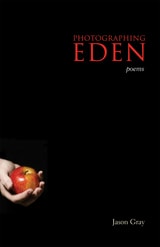
Photographing Eden
PoemsJason Gray
Ohio University Press, 2008
Photographing Eden presents the first full-length collection of poems by a major new talent. The work meditates on several ideas, the crux of which is Eden: spirituality, environmentalism, and the relationships between men and women. Observing, often through the lens of a camera, our state in the world, the poems try to focus sharply on what often seems a blur. The poems are always attentive to artistic mediums and the craft behind them because our struggle is to make something perfect in the imperfect world in which we live, while acknowledging the impossibility of that quest. Gray’s poems range all over, from adventures in Egyptian ruins with machine-gun-toting tourist police to the western edge of the foggy Irish coastline, and to the mythic past, where Adam and Eve visit a zoo and Eden has become a nature preserve.
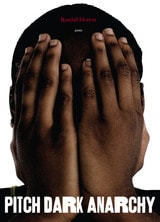
Pitch Dark Anarchy
PoemsRandall Horton
Northwestern University Press, 2013
Pitch Dark Anarchy investigates the danger of one single narrative with multilayered poems that challenge concepts of beauty and image, race and identity, as well as the construction of skin color. Through African American memory and moments in literature, the poems seek to disrupt and dismantle foundations that create erasures and echoes of the unremembered. Pitch Dark Anarchy uses the slave revolt of the Amistad as a starting point, a metaphor for "opposition" and "against." These themes run through the very core for the book while drawing on inventive and playful language. The poems bring to life human experiences and conditions created by an "elite" society. In these poems, locations and landscapes are always shifting, proving that our shared experiences can be interchangeable. At the very core of Pitch Dark Anarchy is a seven-part poem based on the artist Margret Bowland’s "Another Thorny Crown Series," which are paintings of an African American girl in white face.
Through innovative formal and visual techniques, such as fractured syntax and typographical disruption, Horton evokes the disorienting experiences of urban life, while also calling into question the complicity of language in the oppressive structures he anatomizes.
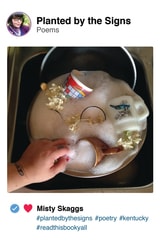
Planted by the Signs
PoemsMisty Skaggs
Ohio University Press, 2019
Planted by the Signs brings us the contemporary Appalachian poetry—cultivated in the dirt of Elliott County, Kentucky—of Misty Skaggs. With an eye for details that exquisitely balance personal and social observation to communicate volumes, she tells the stories of generations of women who have learned to navigate a harsh world with a little help from the Farmers’ Almanac and the stars. The collection is separated into three sections that reference the best times to grow and harvest. Knowing and following these guidelines—planting by the signs—could mean the difference between prosperity and tragedy in the lives of Appalachian families.
Personal, political, and passionate, Planted by the Signs also explores what it means for Skaggs to care for her great-grandmother at the end of her life. Color photos by the poet further showcase her sidelong and fierce outlook. The images and poems together deliver an intimate look into the day-to-day reality of a backwoods woman embracing barefooted radicalism in the only place she could call home.
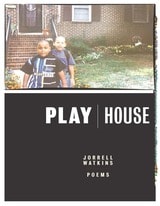
PlayHouse
PoemsJorrell Watkins
Northwestern University Press, 2024
Jorrell Watkins's debut poetry collection is a polyvocal, musically charged disruption of the United States's fixation on drug and gun culture. The poems in Play|House embody many identities, including son, brother, fugitive, bluesman, karate practitioner, and witness. Throughout, Watkins inflects a Black/trap vernacular that defamiliarizes the urban Southern landscape. Across three sections of poetry scored by hip-hop, blues, and trap, Watkins considers how music is a dwelling and wonders which histories, memories, and people haunt each home. Past figures such as John Coltrane, Billie Holiday, and the short-lived 1940s trio Day, Dawn & Dusk intermingle with Migos, the Watkins family, childhood friends, and loved ones both parted and departed. At its core, Play|House reckons with the truths and failures of masculinity for Black boys and men, all the while documenting moments of triumphant Black joy and love.
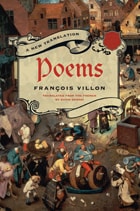
Poems
François Villon
Northwestern University Press, 2012
One of the most original and influential European poets of the Middle Ages, François Villon took his inspiration from the streets, taverns, and jails of Paris. Villon was a subversive voice speaking from the margins of society. He wrote about love and sex, money trouble, "the thieving rich," and the consolations of good food and wine. His work is striking in its directness, wit, and gritty urban realism. Villon’s writing spurred the development of the psychologically complex first-person voice in lyric poetry. He has influenced generations of avant-garde poets and artists. Arthur Rimbaud and Paul Verlaine have emulated Villon’s poetry. Claude Debussy set it to music, and Bertolt Brecht adapted it for the stage. Ezra Pound championed Villon’s poetry and became largely responsible for its impact on modern verse. With David Georgi’s ingenious translation, English-speaking audiences finally have a text that captures the riotous energy and wordplay of the original. With a newly revised French text that reflects the latest scholarship, this bilingual edition also features inviting and informative notes that illuminate the nuances of Villon’s poems and the world of medieval Paris.
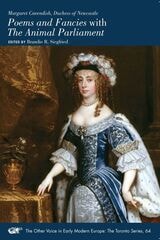
Poems and Fancies with The Animal Parliament
Margaret Cavendish, Duchess of Newcastle
Iter Press, 2018
The Other Voice in Early Modern Europe. The Toronto Series: Volume 64
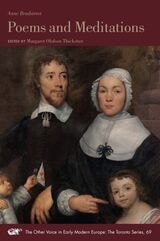
Poems and Meditations
Anne Bradstreet
Iter Press, 2019
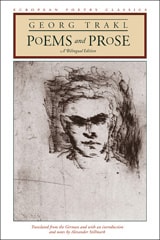
Poems and Prose
A Bilingual EditionGeorg Trakl, translated from the German and with an introduction by Alexander Stillmark
Northwestern University Press, 2005
A comprehensive English-language edition of verse by the Austrian poet
An undeniable aura surrounds the name of Georg Trakl, a poet of intense inner vision and originality whose work stands alongside that of Yeats, Valéry, and T. S. Eliot. Besides Rilke, his more famous admirers include Karl Kraus and Martin Heidegger. The distinctive tone of Trakl's work-especially admired by his patron Ludwig Wittgenstein-is autumnal and melancholy. Trakl was writing at a time of spiritual and social disintegration on the eve of the First World War, when personal values and perceptions tended to be subsumed in a more generalized anguish and exaltation. Neo-romantic, early modernist, his rich, vitally sensuous poetry can be seen to mark the transition from impressionism to expressionism, but at the same time transcends such categories. Trakl's poetry has previously only been available in English in short selections or in anthologies. This bilingual edition, the most comprehensive to date, gives readers the chance to get to know Trakl's work more fully than ever before.
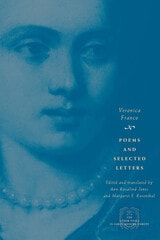
Poems and Selected Letters
Veronica Franco
University of Chicago Press, 1998
As an "honored courtesan", Franco made her living by arranging to have sexual relations, for a high fee, with the elite of Venice and the many travelers—merchants, ambassadors, even kings—who passed through the city. Courtesans needed to be beautiful, sophisticated in their dress and manners, and elegant, cultivated conversationalists. Exempt from many of the social and educational restrictions placed on women of the Venetian patrician class, Franco used her position to recast "virtue" as "intellectual integrity," offering wit and refinement in return for patronage and a place in public life.
Franco became a writer by allying herself with distinguished men at the center of her city's culture, particularly in the informal meetings of a literary salon at the home of Domenico Venier, the oldest member of a noble family and a former Venetian senator. Through Venier's protection and her own determination, Franco published work in which she defended her fellow courtesans, speaking out against their mistreatment by men and criticizing the subordination of women in general. Venier also provided literary counsel when she responded to insulting attacks written by the male Venetian poet Maffio Venier.
Franco's insight into the power conflicts between men and women and her awareness of the threat she posed to her male contemporaries make her life and work pertinent today.

Poems from Captured Documents
A Bilingual EditionThanh T. Nguyen
University of Massachusetts Press, 1994
Written in journals and notebooks by ordinary soldiers who fought against American forces in Vietnam, the poems collected in this volume fill a longstanding void in the literature of that war. In addition to offering a revealing window into another culture – a culture that prizes poetry as an integral part of social life – the pieces provide a rare look at the conflict from the perspective of those who served in the National Liberation Front, the People’s Armed Forces, and the People’s Army of Vietnam.
The format of this edition is bilingual, to enable both Vietnamese and American readers to share and appreciate these poignant and deeply personal documents, which were often written under fire and always in the face of death.
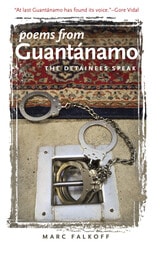
Poems from Guantanamo
The Detainees SpeakMarc Falkoff
University of Iowa Press, 2007
Since 2002, at least 775 men have been held in the U.S. detention center at Guantánamo Bay, Cuba. According to Department of Defense data, fewer than half of them are accused of committing any hostile act against the United States or its allies. In hundreds of cases, even the circumstances of their initial detainment are questionable.
This collection gives voice to the men held at Guantánamo. Available only because of the tireless efforts of pro bono attorneys who submitted each line to Pentagon scrutiny, Poems from Guantánamo brings together twenty-two poems by seventeen detainees, most still at Guantánamo, in legal limbo.
If, in the words of Audre Lorde, poetry “forms the quality of light within which we predicate our hopes and dreams toward survival and change,” these verses—some originally written in toothpaste, others scratched onto foam drinking cups with pebbles and furtively handed to attorneys—are the most basic form of the art.
Poems from the Greek Anthology
Expanded EditionTranslated, with a Foreword, by Kenneth Rexroth
University of Michigan Press, 1999
Friend to the Beats, organizer of the Six Gallery poetry reading in 1955, and iconoclastic poet extraordinare, Kenneth Rexroth here turns his imagination to a selection of verses from the Greek Anthology. In his lively style he successfully captures the spirit of the originals by such poets as Sappho, Anyte, Glykon, Antipatros, Leonidas, Askelpiades, and Ammianos. Students of the classics as well as poets and translators will welcome this collection for the insight and dexterity of its unconventional editor.
Kenneth Rexroth (1905-1982), poet, critic, and translator, is also noted for his translations from the Chinese and Japanese. Widely prolific, he helped usher in the Beat movement in the 1950s and is widely considered to have invented the idea of San Francisco as a center of literary innovation. David Mulroy is Associate Professor in the Department of Foreign Languages and Linguistics, University of Wisconsin, Milwaukee. He is the translator of Early Greek Lyric Poetry and Horace's Odes and Epodes.
Poems in Absentia & Poems from The Island and the World
Pedro da Silveira, Translated by George Monteiro
Tagus Press, 2019
Poems of Guido Gezelle
A Bilingual AnthologyEdited by Paul Vincent
University College London, 2016
Poems of Love and Marriage
John Ciardi
University of Arkansas Press, 1989
Collected from his published and heretofore unpublished work, the love poems of John Ciardi in Poems of Love and Marriage are a rich display of gentle wit, emotion, and craft. Not merely lyrics of youthful romance, these span the course of a love affair, of a life shared from first blush to old age.
These poems never disturb the sanctity of the private moment, but transcend the specific situation and bloom into universal recognition. And in his usual way of basking in those qualities which transform the ordinary into the unique, John Ciardi finds poignancy and truth in those elements of love and living together that so often go unnoticed.
Poems of Widowhood
A Bilingual Edition of the 1538 "Rime"Vittoria Colonna
Iter Press, 2021
This volume presents the first complete English translation of the 1538 Rime and restores the original Italian texts from the blemished Parma printing and later composite editions, a boon to readers of both languages.
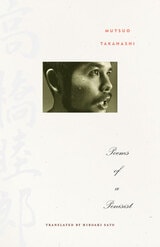
Poems of a Penisist
Mutsuo Takahashi
University of Minnesota Press, 2012
“In the name of / Man, member, / and the holy fluid, / Amen,” begins Mutsuo Takahashi’s epic one-thousand-line erotic fantasy poem, “Ode,” the centerpiece of his groundbreaking collection of queer poetry, Poems of a Penisist. Takahashi’s work, reminiscent of Walt Whitman’s, is a celebration of the male body, treating homosexual desire as something sacred. Stunningly beautiful and passionate, Poems of a Penisist is one of the most important compilations of homoerotic poetry written in the twentieth century.
Poems of the American Empire
The Lyric Form in the Long Twentieth CenturyJen Hedler Phillis
University of Iowa Press, 2019
Poems of the American Empire argues that careful attention to a particular strain of twentieth-century lyric poetry yields a counter-history of American global power. The period that Phillis covers—from Ezra Pound’s A Draft of XXX Cantos in 1930 to Cathy Park Hong’s Engine Empire in 2012—roughly matches what some consider the ascent and decline of the American empire. The diverse poems that appear in this book are united by their use of epic forms in the lyric poem, a combination that violates a fundamental framework of both genres’ relationship to time.
This book makes a groundbreaking intervention by insisting that lyric time is key to understanding the genre. These poems demonstrate the lyric form’s ability to represent the totality of history, making American imperial power visible in its fullness. Neither strictly an empty celebration of American exceptionalism nor a catalog of atrocities, Poems of the American Empire allows us to see both.
Poems of the Five Mountains
An Introduction to the Literature of the Zen MonasteriesMarian Ury
University of Michigan Press, 1992
Poems, 1922-1961
Donald Davidson
University of Minnesota Press, 1966
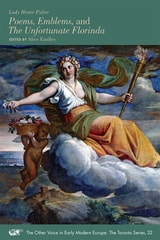
Poems, Emblems, and The Unfortunate Florinda
Lady Hester Pulter
Iter Press, 2014
Poems, Volume 1
Catholic University of America Press, 1962
Poems, Volume 2
Catholic University of America Press, 1965
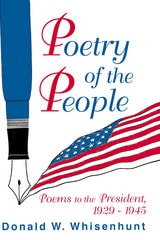
Poetry of the People
Poems to the President, 1929–1945Donald W. Whisenhunt
University of Wisconsin Press, 1996
The poets of the era voiced their opinions on virtually every subject. They wrote about New Deal agencies, they praised and condemned Hoover and Roosevelt. They expressed their views about the Supreme Court, the third term, and the approaching war in Europe. The resulting study, arranged topically rather than chronologically, provides a unique perspective on American popular culture and American politics.
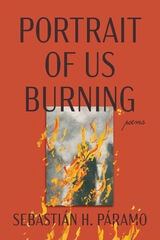
Portrait of Us Burning
PoemsSebastián H. Páramo
Northwestern University Press, 2024
Sebastián H. Páramo renders a semi-autobiographical collection, utilizing self-portraiture and memory to uncover how his Texan, working-class, Mexican American identity shapes his relationship to his half brother and to his family’s burning desire to become American.
Portrait of Us Burning begins with the humble picture of an immigrant American family. This picture starts to disintegrate—and, ultimately, burns—with the need to understand an inciting event that haunts the family throughout the second half of the collection. As the poems gather force and the picture dissolves further, Páramo asks us again and again: What does it mean to burn while becoming a part of a whole?
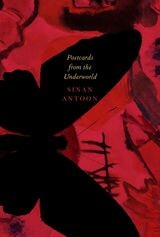
Postcards from the Underworld
PoemsSinan Antoon
Seagull Books, 2023
To confront time, pre-modern Arabic poems often began with the poet standing before the ruins, real and imagined, of a beloved’s home. In Postcards from the Underworld, Sinan Antoon works in that tradition, observing the detritus of his home city, Baghdad, where he survived two wars—the Iran-Iraq War of 1980 and the First Gulf War of 1991—and which, after he left, he watched from afar being attacked during the US invasion in 2003. Antoon’s poems confront violence and force us not to look away as he traces death’s haunting presence in the world. Nature offers consolation, and flowers and butterflies are the poet’s interlocutors, but they too cannot escape ruin. Composed in Arabic and translated into English by the poet himself, Postcards from the Underworld is a searing meditation on the destruction of humans, habitats, and homes.
Praise Nothing
PoemsJoshua Robbins
University of Arkansas Press, 2013
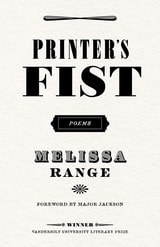
Printer's Fist
PoemsMelissa Range
Vanderbilt University Press, 2026
Melissa Range’s Printer’s Fist, awarded the 2025 Vanderbilt University Literary Prize, is a collection that tells the story of a political movement—its strides and setbacks, its unity and fractures—with a particular emphasis on print culture. Drawing upon more than a decade’s worth of archival research into nineteenth-century antislavery newspapers, pamphlets, broadsides, and more, Range highlights the expansiveness of the movement by focusing not on one, but a chorus of abolitionist voices. Her investment in celebrating Black and women’s histories, in particular, offers an inclusive account of American history, informed not only by thorough research but through a formal, poetic engagement with the past. In exploring how enslaved people’s self-emancipation was a form of resistance that preceded, operated alongside, and intertwined with organized networks of antislavery activists, Printer’s Fist will help facilitate discussions surrounding race, gender, and activism that are grounded in historical fact and emotional truth.
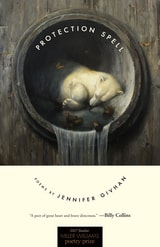
Protection Spell
PoemsJennifer Givhan
University of Arkansas Press, 2017
Finalist, 2017 Miller Williams Poetry Prize, edited by Billy Collins
“A poet of great heart and brave directness.”
—Billy Collins
In Protection Spell Jennifer Givhan explores the guilt, sadness, and freedom of relationships: the sticky love that keeps us hanging on for no reason other than love, the inky place that asks us to continue revising and reimagining, tying ourselves to this life and to each other despite the pain (or perhaps because of it). These poems reassemble safe spaces from the fissures cleaving the speaker’s own biracial home and act as witnesses speaking to the racial iniquity of our broader social landscape as well as to the precarious standpoint of a mother-woman of color whose body lies vulnerable to trauma and abuse. From insistent moments of bravery, a collection of poems arises that asks the impossible, like the childhood chant that palliates suffering by demanding nothing less than magical healing: sana sana colita de rana, si no sanas hoy, sanas mañana (the frog who loses his tail is commanded to grow another). In the end, Givhan’s verse offers a place where healing may begin.
Push
A Collection of PoemsRonald F. Smits
University of Scranton Press, 2009
In this sophisticated debut collection, Ronald F. Smits deftly weaves the comic with the tragic as he vividly recreates days past in rural Pennsylvania. With a boyish charm, the eighty poems in Push lyrically recall baseball games, campouts under the stars, and dusty treks along lonely back roads—bringing to life a vision of mid-century America that is by turns nostalgic and clear-eyed, humorous and heartfelt. A masterly evocation of a place and a time that feel quintessentially American, Push opens our eyes to the twinned power of literature and memory.
promised instruments
poemsKristiana Colón
Northwestern University Press, 2013