Results by title
3785 books match the query 'Poetry' and 203 start with p
PLEASURE
Angelo Nikolopoulos
Four Way Books, 2022
PLEASURE is a book-length poem which muses on the phenomenology of solitude in a pastoral landscape, written in a diaristic, lyric mode, where the queer “I” alternately savors the decadence of isolation and stands at the precipice of despair. A travelogue in verse, PLEASURE takes place in Syros, the Greek island to which author Angelo Nikolopolous travels a few weeks after the discovery of his mother’s brain tumor. These intertextual, elliptical explorations of solitude and sensuality interweave images of seaside roaming, secluded town life, and ephemeral sexual encounters with the ubiquitous implication of death—the waning summer, the ill, perhaps dying, mother. Staring down true disconnection—both physical and psychic orphanhood —Nikolopoulos writes about the thrill and sadness of turning your back against the world and those in it only to rediscover that which tethers all to human experience: the quotidian, singular pleasures of having a body.
PORTAL
Tracy Fuad
University of Chicago Press, 2024
Tracy Fuad’s second collection of poems, PORTAL, probes the fraught experience of bringing a new life into a world that is both lush and filled with gloom. A baby is born in a brutalist building; the planet shrinks under the new logic of contagion; roses washed up from a shipwreck centuries ago are blooming up and down the cape. PORTAL documents a life that is mediated, even at its most intimate moments, by flattening interfaces of technology and in which language—and even intelligence—is no longer produced only by humans. The voices here are stalked by eco-grief and loneliness, but they also brim with song and ecstasy, reveling in the strangeness of contemporary life while grieving losses that cannot be restored. Through Fuad’s frank, honest poetry, PORTAL vibrates with pleasure and dread.
Peeling back the surfaces of words to reveal their etymologies, Fuad embraces playfulness through her formal range, engaging styles from the tersely lineated to the essayistic as she intertwines topics of replication, reproduction, technology, language, history, and biology.
PULSE
Maria Nazos
Omnidawn, 2026
The poems of PULSE look deeply into a troubled world, inspecting what makes us suffer and demonstrating how we overcome difficulties. PULSE interrogates painful losses of friends to cancer, harmful politics, hate crimes, and mass shootings, including the 2016 massacre at Pulse nightclub. Maria Nazos examines the life force that continues to pulse relentlessly through a fragmented world, that enables us to flow, breathe, and regenerate, even through grief and loss. From Provincetown beaches and Costa Rican crab shacks to Midwestern plains and a Tampa nightclub, the collection moves through madness, redemption, and love.
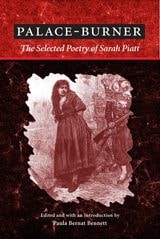
Palace-Burner
The Selected Poetry of Sarah PiattEdited and with an Introduction by Paula Bernat Bennett
University of Illinois Press, 2001
The unique and powerful voice of an extraordinary nineteenth-century woman poet
Sarah Morgan Bryan Piatt (1836-1919) now ranks as the strongest American woman poet of the nineteenth century after Emily Dickinson. Published heavily in all the period's most prestigious journals, Piatt was widely celebrated by her peers as a gifted stylist in the genteel tradition. This selected edition reveals Piatt's other side, a side that contemporary critics found more problematic: ironic, experimental, pushing the limits of Victorian language and the sentimental female persona.
Spanning more than half a century, this collection reveals the "borderland temper" of Piatt's mind and art. As an expatriate southerner, Piatt voices guilt at her own past as the daughter of slave-holders and raw anguish at the waste of war; as an eleven-year "exile" in Ireland, she expresses her dismay at the indifference of the wealthy to the daily suffering of the poor. Her poetry, whether speaking of children, motherhood, marriage, or illicit love affairs, uses conventional language and forms but in ways that greatly broadened the range of what women's poetry could say. Going beyond and even contradicting the genteel aesthetic, Piatt's poetry moves toward an innovative kind of dramatic realism built on dialogue, an approach more familiar to modern readers, acquainted with Faulknerian polyvocal texts, than to her contemporaries, who were as ill at ease with complexity as they were with irony.
This astutely edited selection of Piatt's mature work--much of it never before collected--explains why her "deviant poetics" caused her peers such discomfort and why they offer such fertile ground for study today. Illustrated with engravings from Harper's Weekly and Harper's Bazaar, both periodicals in which Piatt's work appeared, Palace-Burner marks the reemergence of one of the most interesting writers in American literary history.

Palladium
POEMSAlice Fulton
University of Illinois Press, 1987
as "electrifying," and the poet herself, according to Publishers
Weekly, "may be Dickinson's postmodern heir."
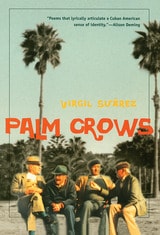
Palm Crows
Virgil Suárez
University of Arizona Press, 2001
Born in Havana in the wake of the Cuban Revolution, Suárez is now one of more than a million Cubans living in the United States. In Palm Crows Suárez offers a compelling canción of loss, longing, and memory as he explores the meaning of exile. In poems that range from playful and fantastic to elegiac and meditative, he writes about “the in-betweenness of spirit” of those who have left their home and must try to forge a new one in the United States.
Palm Crows shows us an almost mythical Cuba, offering a compelling testament both to the immigrant experience and to our own search for home.
Palm Frond with Its Throat Cut
Vickie Vértiz
University of Arizona Press, 2017
Palma Cathedral
Michael White
University Press of Colorado, 1998
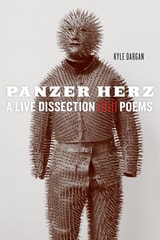
Panzer Herz
A Live DissectionKyle Dargan
Northwestern University Press, 2023
The keen and jagged blade that is Kyle Dargan’s eye is drawn in Panzer Herz: A Live Dissection, the final poetic compilation of a lived and inherited masculinity.
Dargan targets the armored heart, or “panzer herz”—a site where desire, violence, family, politics, blackness, and capitalism all intertwine with gender. Pierced with the question—What if the heart, in the aforementioned capacity, was not a constricting vessel, struggling to withstand internal and external pressures, but instead was a space of release?—the collection opens a cishet masculinity to the inquiries and explorations that the traditional conscription of gender discourages and often vilifies.
I long to abandon this violent / vagrancy, but the roads . . . teem with other men who know / no training, who see upon me / my teachers’ marks and ache / for the elicitation of drawn steel.
The denser blades of compassion and accountability are Dargan’s arms of choice to carry, and not conceal, the weapons he uses to probe his own heart and the hearts of the men and women who shaped him into a man that has been . . . and is unbecoming. The poetic paring of layered lines, the nicking of the process, these poems crimson the page—and not for scarlet spectacle. These versed incisions and sutures are the oeuvre dedicated to the outgrowing of the writer and the “man” that began it.
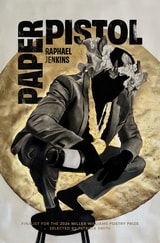
Paper Pistol
Raphael Jenkins
University of Arkansas Press, 2026
Finalist, 2026 Miller Williams Poetry Prize
Following in the footsteps of poets like Hanif Abdurraqib, John Murillo, and Robert Hayden, Raphael Jenkins’s Paper Pistol considers tenderness, heteronormativity, male friendship, grief, and the various violences implemented by and against Black men. Channeling a multitude of speakers, this collection explores Black fatherhood and “the totems we bequeath” to our young, whom the “hunter . . . see[s as] a field of bucks instead of a / field of boys. What marred your vision & made us look so killable?” With humor and vivid imagery, Paper Pistol ultimately champions familial care and poetry as the ultimate weaponry, even in the wake of generational violence. “If a pistol were made of paper,” the poet dreams. “If a piece / of paper were capable of killing. If a peace. If peace / were possible.”
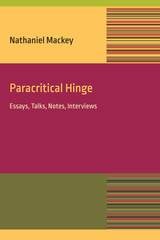
Paracritical Hinge
Essay, Talks, Notes, InterviewsNathaniel Mackey
University of Iowa Press, 2018
Paracritical Hinge is a collection of varied yet interrelated pieces highlighting Nathaniel Mackey’s multifaceted work as writer and critic. It embraces topics ranging from Walt Whitman’s interest in phrenology to the marginalization of African American experimental writing; from Kamau Brathwaite’s “calibanistic” language practices to Federico García Lorca’s flamenco aesthetic of duende and its continuing repercussions; from H. D.’s desert measure and coastal way of knowing to the altered spatial disposition of Miles Davis’s trumpet sound; from Robert Duncan’s serial poetics to diasporic syncretism; from the lyric poem’s present-day predicaments to gnosticism. Offering illuminating commentary on these and other artists including Amiri Baraka, Mississippi Fred McDowell, Wilson Harris, Jack Spicer, John Coltrane, Jay Wright, and Bob Kaufman, Paracritical Hinge also sheds light on Mackey’s own work as a poet, fiction writer, and editor.
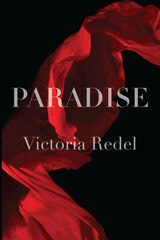
Paradise
Victoria Redel
Four Way Books, 2022
Rewriting Eden, Victoria Redel interrogates the idea of paradise within the historical context of borders, exile, and diaspora that brought us to the present global migration crisis. Drawing from a long family history of flight and refuge, the poems in Paradise interweave religion and myth, personal lore and nation-building, borders actual and imagined. They ask: What if what we fell from was never, actually, grace? What is a boundary, really? Redel navigates geopolitical perimeters while also questioning the border between the living and the dead and delineating the migrations aging women make in their bodies and lives. With stark lyricism and unflinching attention, Paradise considers how a legacy of trauma shapes imagination and asks readers to see the threads that tie contemporary catastrophes to the exigencies and flight paths that made us.
Paradise
Victoria Redel
Four Way Books, 2022
Rewriting Eden, Victoria Redel interrogates the idea of paradise within the historical context of borders, exile, and diaspora that brought us to the present global migration crisis. Drawing from a long family history of flight and refuge, the poems in Paradise interweave religion and myth, personal lore and nation-building, borders actual and imagined. They ask: What if what we fell from was never, actually, grace? What is a boundary, really? Redel navigates geopolitical perimeters while also questioning the border between the living and the dead and delineating the migrations aging women make in their bodies and lives. With stark lyricism and unflinching attention, Paradise considers how a legacy of trauma shapes imagination and asks readers to see the threads that tie contemporary catastrophes to the exigencies and flight paths that made us.
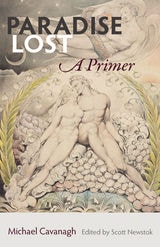
Paradise Lost
A PrimerMichael Cavanagh
Catholic University of America Press, 2020
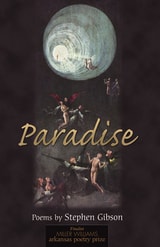
Paradise
PoemsStephen Gibson
University of Arkansas Press, 2011
Paradox Hill
From Appalachia to Lunar Shore, Revised EditionPoems by Louise McNeill, Edited and with an Introduction by A. E. Stringer
West Virginia University Press, 2009
—a classic work from a West Virginia Poet Laureate!
With a new introduction by A.E. Stringer, this reprint of Louise McNeill's classic work remains as vivid as when it was first published. Containing poems from several decades of her career, Paradox Hill: From Appalachia to Lunar Shore is a must-have collection of a beloved poet's heartfelt exploration of her physical and cultural surroundings.
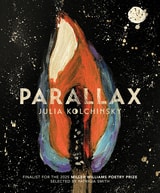
Parallax
Julia Kolchinsky
University of Arkansas Press, 2025
Finalist, 2025 Miller Williams Poetry Prize
Julia Kolchinsky’s Parallax offers a lyrical narrative of parenting a neurodiverse child under the shadow of the ongoing war in Ukraine, the poet’s birthplace. As her child expresses a fascination with death and violence, Kolchinsky struggles to process the war unfolding far away, on the same soil where so many of her ancestors perished during the Holocaust.
Anchored by a series of poems that look to the moon, this collection explores displaced perspectives and turns to the celestial to offer meditations on how elements formed in distant stars account for so much of our human DNA. In these poems, writes series editor Patricia Smith, Kolchinsky “clutches at a feeling of home that is both unfamiliar and deeply treasured, longs for all that was left behind, struggles to come to terms with the rampant violence devastating a landscape that still, in so many encouraging and heartbreaking ways, belongs to her.”
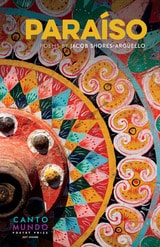
Paraíso
Poems byJacob Shores-Argüello
University of Arkansas Press, 2017
Paraíso, the first book in the new CantoMundo Poetry Series, which celebrates the work of Latino/a poets writing in English, is a pilgrimage against sorrow. Erupting from a mother’s death, the poems follow the speaker as he tries to survive his grief. Catholicism, family, good rum . . . these help, but the real medicine happens when the speaker pushes into the cloud forest alone.
In a Costa Rica far away from touristy beaches, we encounter bus trips over the cold mountains of the dead, drug dealers with beautiful dogs, and witches with cell phones. Science fuses with religion, witchcraft is joined with technology, and eventually grief transforms into belief.
Throughout, Paraíso defies categorization, mixing its beautiful sonnets with playful games and magic cures for the reader. In the process, moments of pure life mingle with the aftermath of a death.
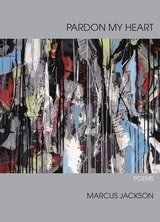
Pardon My Heart
PoemsMarcus Jackson
Northwestern University Press, 2018
Pardon My Heart is an exploration of love in the contemporary African American ethos. In this lyrically complex collection, the speakers and subjects—the adult descendants of the Great Migration—reckon with past experiences and revelatory, hard-earned ideas about race and class.
With a compelling blend of narrative, musicality, and imagery, Jackson’s poems span a multitude of scenes, landscapes, and sensations. Pardon My Heart examines intimacy, memory, grief, and festivity while seeking out new, reflective sectors within emotion and culture. By means of concise portraiture and sonic vibrancy, Jackson’s poems ultimately express the urgency and pliability of the human soul.
Parti-Colored Blocks for a Quilt
Marge Piercy
University of Michigan Press, 1983
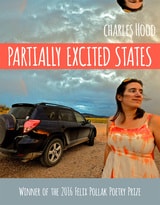
Partially Excited States
Charles Hood
University of Wisconsin Press, 2017
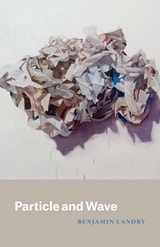
Particle and Wave
Benjamin Landry
University of Chicago Press, 2014
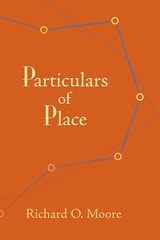
Particulars of Place
Richard O. Moore
Omnidawn, 2015
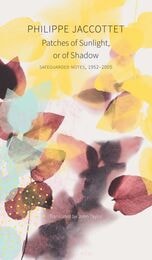
Patches of Sunlight, Or of Shadow
Safeguarded Notes, 1952–2005Philippe Jaccottet
Seagull Books, 2020
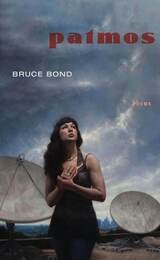
Patmos
Bruce Bond
University of Massachusetts Press, 2021
Patterns of Epiphany
From Wordsworth to Tolstoy, Pater, and Barrett BrowningMartin Bidney
Southern Illinois University Press, 1997
After explaining his new methodology, Bidney identifies and discusses epiphanies in the works of William Wordsworth, Samuel Taylor Coleridge, Matthew Arnold, Alfred Lord Tennyson, Walter Pater, Thomas Carlyle, Leo Tolstoy, and Elizabeth Barrett Browning. Taking his cue from the French philosopher Gaston Bachelard, Bidney postulates that any writer’s epiphany pattern usually shows characteristic elements (earth, air, fire, water), patterns of motion (pendular, eruptive, trembling), and/or geometric shapes. Bachelard’s analytic approach involves studying patterns of perceived experience—phenomenology—but unlike most phenomenologists, Bidney does not speculate on internal processes of consciousness. Instead, he concentrates on literary epiphanies as objects on the printed page, as things with structures that can be detected and analyzed for their implications.
Bidney, then, first identifies each author’s paradigm epiphany, finding that both the Romantics and the Victorians often label such a paradigm as a vision or dream, thereby indicating its exceptional intensity, mystery, and expansiveness. Once he identifies the paradigm and shows how it is structured, he traces occurrences of each writer’s epiphany pattern, thus providing an inclusive epiphanic portrait that enables him to identify epiphanies in each writer’s other works. Finally, he explores the implications of his analysis for other literary approaches: psychoanalytical, feminist, influence-oriented or intertextual, and New Historical.
Pax Americana
Paul Otremba
Four Way Books, 2015
Pearl from the Dragon’s Mouth
Evocation of Scene and Feeling in Chinese PoetryCecile C. C. Sun
University of Michigan Press, 1995
Peasants Wake for Fellini's *Casanova* and Other Poems
Andrea Zanzotto
University of Illinois Press, 1997
Supported by the Institute for Scholarship in the Liberal Arts, Collegeof Arts and Letters, University of Notre Dame
Pelican Tracks
Elton Glaser
Southern Illinois University Press, 2003
Pelican Tracks is a book of poems with a homing instinct. Elton Glaser travels a restless circuit between his native Louisiana and his adopted home of Ohio, from the “spice and license of the lowlands” to the “streets of Akron cobbled in ice.” These reflections, leavened with a fierce wit and moving bravura of language, are extracted from the origins and ends of the poet’s life—his birth in the final spasms of the second World War, the fears and excitements of youth, the death of parents, and the unexpected losses of adulthood. Marking his tracks between the Pelican State and the Buckeye State, Glaser records the damaged beauty of “everything sinking, everything rising again in the mind.”
Penultimate Suitor
Mary Leader
University of Iowa Press, 2001
Penumbra
PoemsMichael Shewmaker
Ohio University Press, 2017
Penumbra—Michael Shewmaker’s debut collection—explores the half-shadows of a world torn between faith and doubt. From intricate descriptions of the rooms in a dollhouse, to the stark depiction of a chapel made of bones, from pre-elegies for a ghostly father, to his compelling treatment of his obsessed, human characters (a pastor, a tattoo artist, a sleepwalker, to name only a few), these are poems that wrestle with what it means to believe in something beyond one’s own mortality. Learned and formally adept, these poems consist of equal parts praise and despair. They announce Shewmaker as an important new voice in American poetry.
Penury
Myung Mi Kim
Omnidawn, 2009
Percussing the Thinking Jar
Maw Shein Win
Omnidawn, 2024
With her latest collection, Maw Shein Win deftly braids together the pleasures, pains, and anxieties of living in an aging body, revealing how a mind can log thoughts and observations. Win employs new poetic forms to invite her readers into realms that are both deeply personal and universal, rendered with dreamlike imagery and surprising humor. Reflecting on our strange times and the atmospheric undercurrents of chaos and disintegration, Percussing the Thinking Jar is a hypnotic book and invites the reader into conversation with their own vulnerability and resilience. Throughout the book, sumi ink drawings by artist Mark Dutcher echo the rhythms of Win’s poetry.
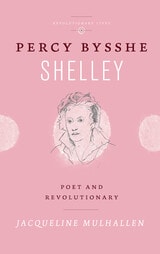
Percy Bysshe Shelley
Poet and RevolutionaryJaqueline Mulhallen
Pluto Press, 2015
An engaging look at one of English history and literature’s most compelling, complicated, and talented figures, Percy Bysshe Shelley will be a valuable contribution to our understanding of the man and his work.
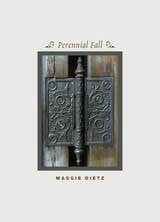
Perennial Fall
Maggie Dietz
University of Chicago Press, 2006
Dietz creates a world alive with detail and populated with the everyday and strange: amusement-park horses named Virgil and Sisyphus, squirrels hanging over tree branches “like fish.” By turns humorous and pained, direct and mysterious, elegiac and elegant, the poems trace for us the journey and persistence of the spirit toward and through its “perennial fall”—both the season and the human condition. Cumulatively, the work moves toward a fragile transcendence, surrendering to difficulty, splendor, and strangeness.
“In Perennial Fall, distinct, hard-edged images create a haunting counter-play of distortion, troubled insight or menace. The simultaneous clarity and shadow has the quality of a dream that can be neither forgotten nor settled. This is a spectacular debut and more than that—a wonderful book.”—Robert Pinsky
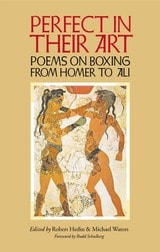
Perfect in Their Art
Poems on Boxing from Homer to AliEdited by Robert Hedin and Michael Waters. Foreword by Budd Schulberg
Southern Illinois University Press, 2003
Two combatants, one ring, and a battle governed as much by determination and drive as by rules and referees: that’s boxing. Perfect in Their Art: Poems on Boxing from Homer to Ali spans the millennia to present more than one hundred of the finest in pugilism poetry from both oral and written traditions, celebrating the lasting literary, historical, and cultural significance of boxing’s storied heritage.
Editors Robert Hedin and Michael Waters pulled no punches in assembling the definitive poems and poets of the sport. Works by such classical poets as Homer, Virgil, and Pindar are gathered here side-by-side for the first time with the poems of Lord Byron, William Makepeace Thackeray, and Sir Arthur Conan Doyle. This provocative collection also features more recent literary heavyweights, including Langston Hughes, Maya Angelou, Joyce Carol Oates, Philip Levine, Wislawa Szymborska, Ai, Yusef Komunyakaa, James Merrill, and Norman Mailer. Equally impressive is this anthology’s rich sampling of boxing music, including ballads, blues, marches, waltzes, and pop lyrics. Irving Berlin, Memphis Minnie, Leadbelly, Paul Simon, Warren Zevon, and Bob Dylan are only a few of the songwriters in this volume compelled to honor the sweet science.
Complemented by a foreword from On the Waterfront author Budd Schulberg, Perfect in Their Art offers glimpses into the boxing ring’s literal and metaphoric place as a popular stage for brutal but artful combat. Together these poems celebrate the heroes and traditions of this most primal competition across its many eras to provide an accurate, graceful, and spirited evocation of boxing’s cultural legacy as both sport and art.
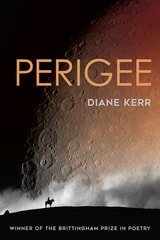
Perigee
Diane Kerr
University of Wisconsin Press, 2020
Moments are revealed in layers; we join the poet as she rides through fields on horseback, watches a woman testify on television, and comes to terms with her experiences of sexual abuse. Vivid recollections of emotionally charged minutiae—broken-in cowboy boots, the second button on a blouse, a housecoat patterned with pink begonias—remind us how even the smallest details can be fraught with both nostalgia and pain. Each poem wields power, with resonating narratives of fear and survival reminding us that suffering has no statute of limitations.

Perilous Balance
Arnold Stein
University of Minnesota Press, 1945
Perilous Balance was first published in 1945. Minnesota Archive Editions uses digital technology to make long-unavailable books once again accessible, and are published unaltered from the original University of Minnesota Press editions.
Perishable
Stelios Mormoris
Tupelo Press, 2025
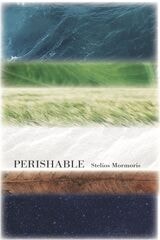
In Perishable, Stelios Mormoris asks incisive questions about the nature of human connection: Where does memory live—in the body, in the mind, or elsewhere? What happens when the objects that surround us—a wedding ring, an empty purse, a harp—reveal necessary truths about ourselves and those we love? As the book unfolds, lush sensory details and unmatched lyricism are brought to bear on these lingering concerns in a style as neoclassical as it is contemporary. In poems that radiate with intelligence, Mormoris combines understated elegance with finely tuned music and evocative imagery.
Persephone in America
Alison Townsend
Southern Illinois University Press, 2009
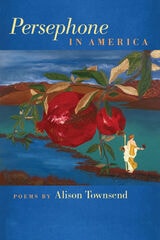
In Persephone in America, Alison Townsend deftly weaves autobiography with myth in this reinvention of the tale of Demeter and Persephone as seen from the modern woman’s perspective. Fraught with emotional honesty, this captivating collection of lyrical and narrative poems chronicles the struggles of the figurative Persephone in three parts—the abduction, descent to the underworld, and return. Townsend turns a shrewd eye to her own experiences, as well as to the lives of other women, to offer an unflinching yet deeply compassionate exploration of such themes as girlhood and the vulnerability of the motherless; the demons of depression, addiction, and abuse; as well as passion, aging, and celebration of the natural world.
Although the poems traverse dark emotional territory at times, the picture that emerges ultimately is one of revelation and wisdom. Persephone in America is above all a journey of the soul, following the narrator as she explores what it means to be a woman in America, at times descending into darkness, only to emerge into redemption and realize “time’s sweet and invincible secret—that everything repeats—and we watch it.” Townsend’s candid portrait of female loss and discovery seeks to illuminate the truths inherent in myth, and the awakenings that hide in our darkest moments.
Persephone, Pretending(Madison, Wisconsin)
When the news says that the girl
who had been missing almost four days,
only to be found in a marshy area
at the edge of our medium-sized city,
was faking it all along, I wondered
what made her do it. I'd seen
her face—bright smile, dark eyes—
on a flier masking-taped to a pillar
at the airport the week before,
felt the involuntary frisson
of the curious, then only fear
at the thought of a girl abducted
in this place once voted
"America's most livable city."
She must have wanted
something she couldn't name,
that good girl with good grades
who looks like so many girls
in my own classes, but who keeps
changing her story. It happened
here; no, it happened there; no,
I really just wanted to be alone.
Then she turns her face away,
tired of telling her tale,
not sure what to make up next
or where invention will take her.
“Fictitious victimization disorder,”
Time magazine claims, but I wonder
what else, imagining her in the marsh,
cold, unrepentant, powerless, her mind
gone muddy with lack of sleep,
no way out of this lie she almost
believes, or the lies ahead,
nothing but memory of the rope,
duct tape, cough medicine,
and knife she bought at the PDQ
with her own cash, wanting
to be taken by someone so badly,
she takes us, she does it to herself.
Persephone in the Late Anthropocene
PoemsMegan Grumbling
Acre Books, 2020
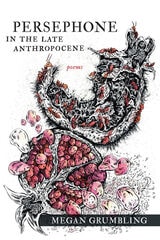
This ecopoetic collection interweaves the voices of Persephone, Demeter, and a human chorus with a range of texts, including speculative cryptostudies that shed light on the culture of the “Late Anthropocene.” These voices speak of decadence and blame, green crabs and neonicotinoids, mysteries and effigies. They reckon with extreme weather, industrialized plenty, and their own roles in ecological collapse.
Tonally, the poems of this book range between the sublime and the profane; formally, from lyric verse and modern magical-realist prose poems to New Farmer’s Almanac riddles and pop-anthropology texts. At the heart of this varied and inventive collection is story itself, as Demeter deconstructs “whodunits,” as the chorus grasps that mythmaking is an act of “throwing their voices,” and as their very language mirrors the downward spiral of destruction. Together, the collected pieces of Persephone in the Late Anthropocene form a narrative prism, exploring both environmental crisis and the question of how we tell it.
Persius
A Study in Food, Philosophy, and the FiguralShadi Bartsch
University of Chicago Press, 2015
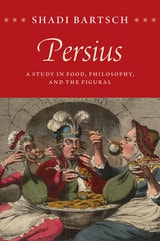
In Persius, Shadi Bartsch explores this Stoic framework and argues that Persius sets his own bizarre metaphors of food, digestion, and sexuality against more appealing imagery to show that the latter—and the poetry containing it—harms rather than helps its audience. Ultimately, he encourages us to abandon metaphor altogether in favor of the non-emotive abstract truths of Stoic philosophy, to live in a world where neither alluring poetry, nor rich food, nor sexual charm play a role in philosophical teaching.

Personal Science
Lillian-Yvonne Bertram
Tupelo Press, 2017
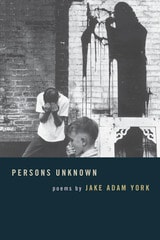
Persons Unknown
Jake Adam York
Southern Illinois University Press, 2010
A Natural History of Mississippi
A blade of rust from the ocean
and from the air a rumor
that corrodes the earth in tongues,
lichen, moss, magnolia,
until each gossip’s true.
Things go this way,
each green repeating its fact
of sun and wind and rain,
its dialect, its blade,
while beneath each leaf
a quiet cuts between the veins.
Laced, pale wings open
to learn the particular weather,
the place or part of speech
that will darken
and give them a name.
So each sugar furls
to burn and bitter
against whatever mouths
might swallow,
each skin becomes
the history of its harbor,
another word for here.
This hatch of bark and shade
hangs like a photograph
of all it covers, so perfect,
so still, its edges
blur, then disappear.
Perspectives of Roman Poetry
A Classics SymposiumEdited by G. Karl Galinsky
University of Texas Press, 1974
Written by leading specialists, the essays in Perspectives of Roman Poetry seek to provide a broad range of readers with a good understanding of some essential aspects of major Roman poets and poetic genres. The value of the essays is enhanced, for comparative purposes, by their extensive reference to modern authors. such as Shakespeare and Tolkien. For the modern reader, Latin quotations are accompanied by effective English translations.
The essays and their authors are as follows:
- "The Woman's Role in Latin Love Poetry," by Georg Luck
- "Autobiography and Art in Horace," by William S. Anderson
- "Some Trees in Virgil and Tolkien," by Kenneth J. Reckford
- "The Business of Roman Comedy," by Erich Segal
- "Ovid's Metamorphosis of Myth," by G. Karl Galinsky
Perspectives of Roman Poetry resulted from a symposium held at the University of Texas at Austin in 1972. These essays offer different and, in some cases, heterodox interpretations that will serve as a basis for future discussions.
Persuasions Of Fall
Ann Lauinger
University of Utah Press, 2004
The Agha Shahid Ali Prize in Poetry was inaugurated in 2003 to honor the late poet, a nationally recognized author of numerous collections of poetry and a former professor at the University of Utah, and is sponsored by the University of Utah Press and the University of Utah Department of English. In Persuasion of Fall, the first prizewinning volume of the annual competition, Ann Lauinger celebrates the quotidian in ways that are wise, uncompromising, and sometimes sly in their playfulness.
Petrarch and His Legacies
Edited by Ernesto Livorni and Jelena Todorovic
Arizona Center for Medieval and Renaissance Studies, 2021
This book gathers cutting-edge articles by prominent scholars reflecting on Petrarch’s poetry and his long legacy, from the Renaissance to the present day. The scholars engaged in this volume read Petrarch in the context of his own world and with a variety of theoretical and critical approaches, never overlooking the opportunity for an interdisciplinary reading that combines poetry and visual arts. The volume includes scholars from the United States and Europe (Italy, in particular), thus offering the opportunity to compare different theoretical approaches.
The articles in the second half of the volume celebrate Petrarch’s legacies beyond the historically fundamental Renaissance Petrarchism, while exploring the presence of Petrarch’s poetry in several cultural realities. The scholars also read Petrarch with necessary attention to new disciplines such as digital humanities. The richness of the volume lies in these innovative perusals of Petrarch’s works not only through the critical lens of dedicated scholars, but also through their readings of artists who throughout the centuries appreciated and revived Petrarch’s poetry in their own literary endeavors.
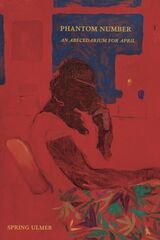
Phantom Number
An Abecedarium for AprilSpring Ulmer
Tupelo Press, 2025
Phantom Number listens for an absent voice. To survive and answer to her best friend and fellow poet April Freely’s death, Spring Ulmer rips meaning apart in her poems, then repairs it, only to rip it up again. Words bend, meaning shifts—abstraction a tool Ulmer wields to better get at the question at the heart of Phantom Number: How might a white friend write in protest of intimate Black death at a time when the push is to write Black joy as antidote to the commodification of Black trauma? Ulmer understands her position is suspect yet cannot shirk her love or rage. Ulmer asks the reader to do the work or else. Her abstracted poems vibrate, emotion emerging from a poem made rag. Ulmer’s abecedarium long form holds these fragments, inviting lines into an order of alliteration and words into an otherwise coherence, a belonging that has nothing to do with their origin. Phantom Number finds in abstraction a radical wail.
Phenomenal Reading
Essays on Modern and Contemporary PoeticsBrian M. Reed
University of Alabama Press, 2012