Results by title
471 books match the query 'Power' and 85 start with p

POWER OF THE PEOPLE
Congressional Competition, Public Attention, and Voter RetributionSean M. Theriault
The Ohio State University Press, 2005
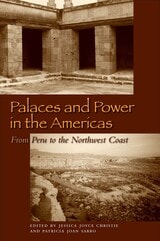
Palaces and Power in the Americas
From Peru to the Northwest CoastEdited by Jessica Joyce Christie and Patricia Joan Sarro
University of Texas Press, 2006
Ancient American palaces still captivate those who stand before them. Even in their fallen and ruined condition, the palaces project such power that, according to the editors of this new collection, it must have been deliberately drawn into their formal designs, spatial layouts, and choice of locations. Such messages separated palaces from other elite architecture and reinforced the power and privilege of those residing in them. Indeed, as Christie and Sarro write, "the relation between political power and architecture is a pervasive and intriguing theme in the Americas."
Given the variety of cultures, time periods, and geographical locations examined within, the editors of this book have grouped the articles into four sections. The first looks at palaces in cultures where they have not previously been identified, including the Huaca of Moche Site, the Wari of Peru, and Chaco Canyon in the U.S. Southwest. The second section discusses palaces as "stage sets" that express power, such as those found among the Maya, among the Coast Salish of the Pacific Northwest, and at El Tajín on the Mexican Gulf Coast. The third part of the volume presents cases in which differences in elite residences imply differences in social status, with examples from Pasado de la Amada, the Valley of Oaxaca, Teotihuacan, and the Aztecs. The final section compares architectural strategies between cultures; the models here are Farfán, Peru, under both the Chimú and the Inka, and the separate states of the Maya and the Inka.
Such scope, and the quality of the scholarship, make Palaces and Power in the Americas a must-have work on the subject.
Paper Pusher
Power and Protest in Higher EducationKathryn J. Gindlesparger
University of Minnesota Press, 2027
Paperwork is the new protest: leveraging bureaucracy for progressive action
In contemporary higher education, power increasingly circulates through documents rather than debate, making paperwork one of the most consequential sites of protest. Yet as universities become more corporatized and subject to authoritarian influence, bureaucratic writing is often treated as passive, procedural, or politically neutral. Paper Pusher shows how paperwork is a central mechanism of governance and therefore a formidable, underused medium for democratic action and protest within bureaucracies.
Kathryn J. Gindlesparger reframes the “paper pusher” from a symbol of compliance into an agent of institutional accountability and resistance. She develops four avenues for protesting through bureaucracy—voice, filing, circulation, and stasis-seeking—showing how everyday documents such as meeting minutes, policy drafts, budgets, and accreditation reports can be used to push back against authoritarian and corporate forces that undermine an institution’s mission. Rather than emphasizing visible confrontation, Paper Pusher demonstrates how activism can operate quietly and credibly from within systems where overt protest may carry professional risk.
Grounded in story and lived experience, this book is a love letter to office workers, staff, and middle managers whose labor sustains institutions and whose expertise is often overlooked. It foregrounds feminist, working-class, queer, disabled, Black, and brown voices, highlighting how marginalized workers have long used bureaucratic knowledge to create access, protection, and change. Practical and people-centered, Paper Pusher calls for bureaucratic literacy to be taught wherever writing is taught, insisting that paperwork is not grunt work but power work.
Retail e-book files for this title are screen-reader friendly with images accompanied by short alt text and/or extended descriptions.
Passion And Power
Sexuality in HistoryKathy Peiss
Temple University Press, 1989
Pathos and Power
Interdisciplinary Perspectives on Widowhood in Africa, Past and PresentBenjamin N. Lawrance and Joanna Davidson
Ohio University Press, 2025
The collected essays in Pathos and Power provide a critical exploration of widowhood in Africa through a series of historical and contemporary case studies. The book challenges a simplistic understanding of widowhood by highlighting how the experience varies according to age, class, race, religion, and geographic location. The contributors investigate how the category of widowhood can obscure or reveal various social dynamics while demonstrating the diversity of material, symbolic, and embodied circumstances faced by African widows. The volume considers the forces shaping the lives of widows by examining the structural and legal challenges they encounter, including discriminatory practices in social, economic, and political spheres. Through discussions of precolonial, colonial, and postcolonial contexts, it explores the intersections of custom, law, patriarchy, and feminism while delving into the potentially liberatory opportunities that widowhood sometimes presents. The book also raises broader questions about gender, personhood, marriage, autonomy, and national identity, emphasizing how widowhood informs key conceptual debates in African studies. Editors Joanna Davidson and Benjamin N. Lawrance bring together scholars across such fields as anthropology, gender studies, history, law, and political science. The authors employ a range of methodologies, including archival research, ethnography, and storytelling, to illuminate widowhood in new and innovative ways. The volume’s rich empirical studies and theoretical insights offer a valuable resource for scholars seeking to understand widowhood and its broader implications in African societies. CONTRIBUTORS Rogaia Mustafa Abusharaf Fisayo Ajala Catherine E. Bolten Abbass Braham Mariana Candido Joanna Davidson Mariana Dias Paes Ramadan El-Khouli Casey Golomski Juelma Gomes de Matos Ngãla Benjamin N. Lawrance Kenda Mutongi Richard L. Roberts Enid Schildkrout Kate Skinner Wallace Teska Benjamin Twagira Sarah J. Zimmerman
Paths to Power
Elite Mobility in Contemporary ChinaBy David M. Lampton with the assistance of Yeung Sai-cheung
University of Michigan Press, 2000
Pathways of Memory and Power
Ethnography and History among an Andean PeopleThomas A. Abercrombie
University of Wisconsin Press, 1998
Making clear the early and deep intermingling of practices and world views among Spaniards and Andeans, Christians and non-Christians, Abercrombie critiques both the romanticist tendency to regard Andean culture as still separate from and resistant to European influences, and the melodramatic view that all indigenous practices have been obliterated by colonial and national elites. He challenges prejudices that, from colonial days to the present, have seen Andean historical knowledge only in mythic narratives or narratives of personal experience. Bringing an ethnographer’s approach to historiography, he shows how complex Andean rituals that hybridize European and indigenous traditions—such as libation dedications and llama sacrifices held on saints’ day festivals—are in fact potent evidence of social memory in the community.
Peacebuilding, Power, and Politics in Africa
Devon Curtis
Ohio University Press, 2012
Peacebuilding, Power, and Politics in Africa is a critical reflection on peacebuilding efforts in Africa. The authors expose the tensions and contradictions in different clusters of peacebuilding activities, including peace negotiations; statebuilding; security sector governance; and disarmament, demobilization, and reintegration. Essays also address the institutional framework for peacebuilding in Africa and the ideological underpinnings of key institutions, including the African Union, NEPAD, the African Development Bank, the Pan-African Ministers Conference for Public and Civil Service, the UN Peacebuilding Commission, the World Bank, and the International Criminal Court. The volume includes on-the-ground case study chapters on Sudan, the Great Lakes Region of Africa, Sierra Leone and Liberia, the Niger Delta, Southern Africa, and Somalia, analyzing how peacebuilding operates in particular African contexts.
The authors adopt a variety of approaches, but they share a conviction that peacebuilding in Africa is not a script that is authored solely in Western capitals and in the corridors of the United Nations. Rather, the writers in this volume focus on the interaction between local and global ideas and practices in the reconstitution of authority and livelihoods after conflict. The book systematically showcases the tensions that occur within and between the many actors involved in the peacebuilding industry, as well as their intended beneficiaries. It looks at the multiple ways in which peacebuilding ideas and initiatives are reinforced, questioned, reappropriated, and redesigned by different African actors.
A joint project between the Centre for Conflict Resolution in Cape Town, South Africa, and the Centre of African Studies at the University of Cambridge.
Pearls, People, and Power
Pearling and Indian Ocean WorldsPedro Machado
Ohio University Press, 2019
Pearls, People, and Power is the first book to examine the trade, distribution, production, and consumption of pearls and mother-of-pearl in the global Indian Ocean over more than five centuries. While scholars have long recognized the importance of pearling to the social, cultural, and economic practices of both coastal and inland areas, the overwhelming majority have confined themselves to highly localized or at best regional studies of the pearl trade. By contrast, this book stresses how pearling and the exchange in pearl shell were interconnected processes that brought the ports, islands, and coasts into close relation with one another, creating dense networks of connectivity that were not necessarily circumscribed by local, regional, or indeed national frames.
Essays from a variety of disciplines address the role of slaves and indentured workers in maritime labor arrangements, systems of bondage and transoceanic migration, the impact of European imperialism on regional and local communities, commodity flows and networks of exchange, and patterns of marine resource exploitation between the Industrial Revolution and Great Depression. By encompassing the geographical, cultural, and thematic diversity of Indian Ocean pearling, Pearls, People, and Power deepens our appreciation of the underlying historical dynamics of the many worlds of the Indian Ocean.
Contributors: Robert Carter, William G. Clarence-Smith, Joseph Christensen, Matthew S. Hopper, Pedro Machado, Julia T. Martínez, Michael McCarthy, Jonathan Miran, Steve Mullins, Karl Neuenfeldt, Samuel M. Ostroff, and James Francis Warren.
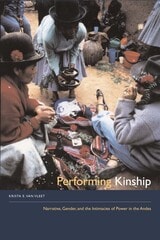
Performing Kinship
Narrative, Gender, and the Intimacies of Power in the AndesBy Krista E. Van Vleet
University of Texas Press, 2008
In the highland region of Sullk'ata, located in the rural Bolivian Andes, habitual activities such as sharing food, work, and stories create a sense of relatedness among people. Through these day-to-day interactions—as well as more unusual events—individuals negotiate the affective bonds and hierarchies of their relationships. In Performing Kinship, Krista E. Van Vleet reveals the ways in which relatedness is evoked, performed, and recast among the women of Sullk'ata.
Portraying relationships of camaraderie and conflict, Van Vleet argues that narrative illuminates power relationships, which structure differences among women as well as between women and men. She also contends that in the Andes gender cannot be understood without attention to kinship.
Stories such as that of the young woman who migrates to the city to do domestic work and later returns to the highlands voicing a deep ambivalence about the traditional authority of her in-laws provide enlightening examples of the ways in which storytelling enables residents of Sullk'ata to make sense of events and link themselves to one another in a variety of relationships. A vibrant ethnography, Performing Kinship offers a rare glimpse into an compelling world.
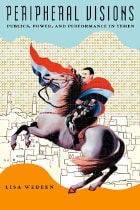
Peripheral Visions
Publics, Power, and Performance in YemenLisa Wedeen
University of Chicago Press, 2008
Lisa Wedeen, who spent a year and a half in Yemen observing and interviewing its residents, argues that national solidarity in such weak states tends to arise not from attachments to institutions but through both extraordinary events and the ordinary activities of everyday life. Yemenis, for example, regularly gather to chew qat, a leafy drug similar to caffeine, as they engage in wide-ranging and sometimes influential public discussions of even the most divisive political and social issues. These lively debates exemplify Wedeen’s contention that democratic, national, and pious solidarities work as ongoing, performative practices that enact and reproduce a citizenry’s shared points of reference. Ultimately, her skillful evocations of such practices shift attention away from a narrow focus on government institutions and electoral competition and toward the substantive experience of participatory politics.
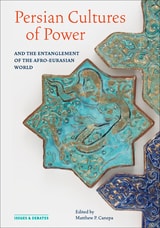
Persian Cultures of Power and the Entanglement of the Afro-Eurasian World
Matthew P. Canepa
J. Paul Getty Trust, The, 2024
With the rise of the Achaemenid Empire (550–330 BCE), Persian institutions of kingship became the model for legitimacy, authority, and prestige across three continents. Despite enormous upheavals, Iranian visual and political cultures connected an ever-wider swath of Afro-Eurasia over the next two millennia, exerting influence at key historical junctures. This book provides the first critical exploration of the role Persian cultures played in articulating the myriad ways power was expressed across Afro-Eurasia between the sixth century BCE and the nineteenth century CE.
Exploring topics such as royal cosmologies, fashion, banqueting, manuscript cultures, sacred landscapes, and inscriptions, the volume’s essays analyze the intellectual and political exchanges of art, architecture, ritual, and luxury material within and beyond the Persian world. They show how Perso-Iranian cultures offered neighbors and competitors raw material with which to formulate their own imperial aspirations. Unique among studies of Persia and Iran, this volume explores issues of change, renovation, and interconnectivity in these cultures over the longue durée.
Peruvian Lives across Borders
Power, Exclusion, and HomeM. Cristina Alcalde
University of Illinois Press, 2018
Alcalde draws on interviews, surveys, participant observation, and textual analysis to argue that to belong is to exclude. To that end, transnational Peruvians engage in both subtle and direct policing along the borders of belonging. These acts allow them to claim and maintain the social status they enjoyed in their homeland even as they profess their openness and tolerance. Alcalde details these processes and their origins in Peru's gender, racial, and class hierarchies. As she shows, the idea of return—whether desired or rejected, imagined or physical—spurs constructions of Peruvianness, belonging, and home.
Deeply researched and theoretically daring, Peruvian Lives across Borders answers fascinating questions about an understudied group of migrants.
Peruvian Street Lives
Culture, Power, and Economy among Market Women of CuzcoLinda J. Seligmann
University of Illinois Press, 2004
In Peruvian Street Lives, Seligmann argues that the sometimes invisible and informal economic, social, and political networks market women establish may appear disorderly and chaotic, but in fact often keep dysfunctional economies and corrupt bureaucracies from utterly destroying the ability of citizens to survive from day to day. Seligmann asks why the constructive efforts of market women to make a living provoke such negative social perceptions from some members of Peruvian society, who see them as symbols and actual catalysts of social disorder. At the same time, Seligmann shows how market women eke out a living, combat discrimination, and transgress racial and gender ideologies within the rich and expressive cultural traditions they have developed.
Perversion of Power
Sexual Abuse in the Catholic ChurchMary Gail Frawley-O'Dea
Vanderbilt University Press, 2007
Celibacy, homosexuality in the priesthood, the infiltration into the priesthood of secular moral relativism, too much liberalism in the Church since Vatican II, damaging rollback of Vatican II reforms by conservative prelates--all have been suggested as causes for the crisis. This book, however, begins with the premise that, because the pattern of abuse and cover-up was so similar across the world, there is something fundamentally awry with Church traditions and power structures in relationship to sexuality and sexual abuse.
Specifically, in chapters on suffering and sadomasochism, bodies and gender, desire and sexuality, celibacy and homosexuality, the author concludes that aspects of the Catholic theology of sexuality set the stage for the abuse of minors and its cover-up. Frawley-O'Dea also analyzes the American bishops' lack of pastoral care and tendency towards clerical narcissism--the belief that the needs of the hierarchy represent the needs of the wider Church--as central factors in the scandal. She balances this criticism with a discussion of the backgrounds of the bishops presiding over the crisis and the challenges they faced in their relationships with the Pope and Vatican officials.
Drawing on twenty years of clinical experience, she imagines the dynamics of sexual abuse both from the victim's point of view and from the priest's, and she probes why the Church hierarchy, fellow priests, and lay people were silent for so long. Finally, Frawley-O'Dea examines factors internal to the Church and outside of it that drew this scandal into the public square and kept it there.
Police, Power, and the Production of Racial Boundaries
Muñiz, Ana
Rutgers University Press, 2015
Muñiz illuminates the degree to which the definitions of “gangs” and “deviants” are politically constructed labels born of public policy and court decisions, offering an innovative look at the process of criminalization and underscoring the ways in which a politically powerful coalition can define deviant behavior. As she does so, Muñiz also highlights the various grassroots challenges to such policies and the efforts to call attention to their racist effects. Muñiz describes the fight over two very different methods of policing: community policing (in which the police and the community work together) and the “broken windows” or “zero tolerance” approach (which aggressively polices minor infractions—such as loitering—to deter more serious crime). Police, Power, and the Production of Racial Boundaries also explores the history of the area to explain how Cadillac-Corning became viewed by outsiders as a “violent neighborhood” and how the city’s first gang injunction—a restraining order aimed at alleged gang members—solidified this negative image. As a result, Muñiz shows, Cadillac-Corning and other sections became a test site for repressive practices that eventually spread to the rest of the city.
Political Ethnography
What Immersion Contributes to the Study of PowerEdited by Edward Schatz
University of Chicago Press, 2009
Scholars of politics have sought in recent years to make the discipline more hospitable to qualitative methods of research. Lauding the results of this effort and highlighting its potential for the future, Political Ethnography makes a compelling case for one such method in particular. Ethnography, the contributors amply demonstrate in a wide range of original essays, is uniquely suited for illuminating the study of politics.
Situating these pieces within the context of developments in political science, Edward Schatz provides an overarching introduction and substantive prefaces to each of the volume’s four sections. The first of these parts addresses the central ontological and epistemological issues raised by ethnographic work, while the second grapples with the reality that all research is conducted from a first-person perspective. The third section goes on to explore how ethnographic research can provide fresh perspectives on such perennial topics as opinion, causality, and power. Concluding that political ethnography can and should play a central role in the field as a whole, the final chapters illuminate the many ways in which ethnographic approaches can enhance, improve, and, in some areas, transform the study of politics.
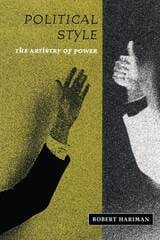
Political Style
The Artistry of PowerRobert Hariman
University of Chicago Press, 1995
In critical studies of classic texts, Hariman identifies four dominant political styles. The realist style, as found in Machiavelli's The Prince, creates a world of sheer power, constant calculation, and emotional control; this style is the common sense of modern political science. The courtly style, depicted in Kapuscinski's The Emperor, is characterized by high decorousness, hierarchies, and fixation on the body of the sovereign; this style infuses mass media coverage of the American presidency. The republican style, reflected in Cicero's letters to Atticus, promotes the art of oratory, consensus, and civility; it informs our ideal of democratic conversation. The bureaucratic style, as captured in Kafka's The Castle, emphasizes institutional procedures, official character, and the priority of writing; this style structures everday life.
Hariman looks at effective political artistry in figures from antiquity to modern politicians such as Vaclav Havel, Ronald Reagan, and Bill Clinton. He discusses the crises to which each style is susceptible, as well as the social and moral consequences of each style's success.
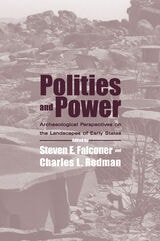
Polities and Power
Archaeological Perspectives on the Landscapes of Early StatesEdited by Steven E. Falconer and Charles L. Redman
University of Arizona Press, 2009
Polities and Power features detailed studies from an intentionally disparate array of regions, including Mesoamerica, Andean South America, southwestern Asia, East Africa, and the Indian subcontinent. Each chapter or pair of chapters is followed by a critical commentary. In concert, these studies strive to infer social, political, and economic meaning from archaeologically discerned landscapes associated with societies that incorporate some expression of state authority. The contributions engage a variety of themes, including the significance of landscapes as they condition and reflect complex polities; the interplay of natural and cultural elements in defining landscapes of state; archaeological landscapes as ever-dynamic entities; and archaeological landscapes as recursive structures, reflected in palimpsests of human activity.
Individually, many of these contributions are provocative, even controversial. Taken together, they reveal the contours of landscape archaeology at this particular evolutionary moment.
Power
Keith Dowding
University of Minnesota Press, 1996
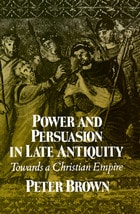
Power & Persuasion Late Antiquity
Towards A Christian EmpirePeter Brown
University of Wisconsin Press, 1992
Power Of Blackness
Hawthorne, Poe, MelvilleHarry Levin
Ohio University Press, 1980
Power Of Prayer Around The World
Glenn Mosley
Templeton Press, 2005
Universally, the power of prayer has been recognized by many cultures for immeasurable time. Whether it be a part of a formal service recited with a congregation of worshipers or an individual, quiet moment, prayer is part of the lives of people from a variety of religions.
There seems to be an innate urge among humanity to connect with a higher source of energy and love when we need guidance or direction, and this is called prayer. By reading the prayers from religions such as Buddhism, Hinduism, Christianity, and Islam, from cultures in Africa, India, Egypt, and China, we begin to share the sense of a common experience.
The deepest inner feelings and longings are similar—concern for family, assistance in healing, a longing for peace, or a wish for greater wisdom. For some people, prayer can be thought of as a way to ask for specific goals or special favors. This type of prayer may or may not be effective. Another type of prayer exists when all selfish desire is put aside and we feel ourselves in communion with God. At this point, our greatest wish is that God's will be done.
There may be pressing concerns that make us turn our sights upward, but we learn to let go of the end result. At this point, prayer becomes a way of opening up to the universal, loving, creative energy that exists and is far greater than any person could imagine. This is the source of miracles, of faith and unconditional love. Prayer then becomes more than a means to an end; it becomes a state of humility and of awe. It can exist whether we are washing the floor or composing a symphony. Prayer is communion with the Divine, a universal loving creative force that exists in a variety of ways for people around the world.
This book brings together an inspirational collection of prayer suitable for all ages and traditions. In addition, it offers insight and guidance about the nature of prayer that will be useful for the serious seeker.

Power and Elusiveness in Shelley
Oscar W. Firkins
University of Minnesota Press, 1937
Power and Elusiveness in Shelley was first published in 1937. Minnesota Archive Editions uses digital technology to make long-unavailable books once again accessible, and are published unaltered from the original University of Minnesota Press editions.
This is a discussion in measured prose of the strange yet frequent union of various abstract elements in Shelley's poetry. The study contains an interesting analysis of the thesis that Shelley's "love of abstraction is only one form—probably the most obvious and the most significant form—of a larger and more general tendency." The object of this essay, in the author's words, "is to collect and combine the manifestations of this larger tendency."
The two great "abstractions" that Firkins selects as the touchstones in his study he generalizes as "power" and "elusiveness," and he shows how these seemingly antithetical qualities are united in both the structure and the style of all Shelley's chief poems.

Power and Empowerment
A Radical Theory of Participatory DemocracyPeter Bachrach
Temple University Press, 1992
Power and Everyday Life
The Lives of Working Women in Nineteenth-Century BrazilDias, Maria Odila Silva
Rutgers University Press, 1995
This important new work is a study of the everyday lives of the inhabitants of São Paulo in the nineteenth century. Full of vivid detail, the book concentrates on the lives of working women--black, white, Indian, mulatta, free, freed, and slaves, and their struggles to survive. Drawing on official statistics, and on the accounts of travelers and judicial records, the author paints a lively picture of the jobs, both legal and illegal, that were performed by women. Her research leads to some surprising discoveries, including the fact that many women were the main providers for their families and that their work was crucial to the running of several urban industries. This book, which is a unique record of women’s lives across social and race strata in a multicultural society, should be of interest to students and researchers in women’s studies, urban studies, historians, geographers, economists, sociologists, and anthropologists.
Power and Everyday Life
The Lives of Working Women in Nineteenth-Century BrazilDias, Maria Odila Silva
Rutgers University Press, 1995
This important new work is a study of the everyday lives of the inhabitants of São Paulo in the nineteenth century. Full of vivid detail, the book concentrates on the lives of working women--black, white, Indian, mulatta, free, freed, and slaves, and their struggles to survive. Drawing on official statistics, and on the accounts of travelers and judicial records, the author paints a lively picture of the jobs, both legal and illegal, that were performed by women. Her research leads to some surprising discoveries, including the fact that many women were the main providers for their families and that their work was crucial to the running of several urban industries. This book, which is a unique record of women’s lives across social and race strata in a multicultural society, should be of interest to students and researchers in women’s studies, urban studies, historians, geographers, economists, sociologists, and anthropologists.
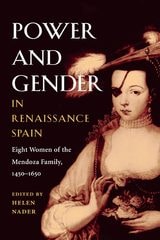
Power and Gender in Renaissance Spain
Eight Women of the Mendoza Family, 1450-1650Edited by Helen Nader
University of Illinois Press, 2003
These essays explore the lives of powerful women whose lineage gave them status within a patriarchal society designed to keep women from public life. Each of the influential and literary women discussed in this volume handled her status differently, and their concerns were not dissimilar from the concerns of feminists today: the blurring of the personal and the political, public versus private space, language and voice, and property.
Spanning the two centuries between Juana Pimentel, a widow who manipulated the patronage system to her own ends, and Luisa de Carvajal y Mendoza, who rejected both convent and marriage in favor of missionary work, Power and Gender in Renaissance Spain reveals a complex society in which women were limited by law, and yet their social status made those laws negotiable.
These women found that their personal agendas had a broad societal impact, challenging the laws of the land and patriarchal assumptions about women's inferiority.
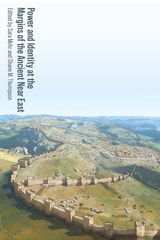
Power and Identity at the Margins of the Ancient Near East
Sara Mohr
University Press of Colorado, 2022
The borderlands of hegemonic entities within the Near East and Egypt pressed against each other, creating cities and societies with influence from several competing polities. The peoples, cities, and cultures that resulted present a unique lens by which to examine how states controlled and influenced the lives, political systems, and social hierarchies of these subjects (and vice versa). This volume addresses the distinct traditions and experiences of areas beyond the core; terminology used when discussing empire, core, periphery, borderlands, and frontiers; conceptualization of space; practices and consequences of warfare, captive-taking, and slavery; identity- and secondary state–formation; economy and society; ritual; diplomacy; and the negotiation of claims to power.
It is imperative that historians and social scientists understand the ways in which these cultures developed, spread, and interacted with others along frontier edges. Using an intersectional approach across disciplines, Power and Identity at the Margins of the Ancient Near East brings together professionals from archaeology, religious studies, history, sociology, and anthropology to make new contributions to the study of the frontier.
Contributors: Alexander Ahrens, Peter Dubovský, Avraham Faust, Daniel E. Fleming, Mahri Leonard-Fleckman, Alvise Matessi, Ellen Morris, Valeria Turriziani, Eric M. Trinka
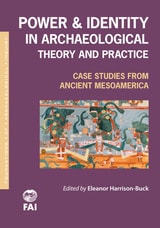
Power and Identity in Archaeological Theory and Practice
Case Studies from Ancient MesoamericaEleanor Harrison-Buck
University of Utah Press, 2012
The contributions to this volume represent a diverse array of Mesoamerican archaeological studies that are all theo-retically rooted to larger, global debates concerning issues of power and identity—two logically paired concepts. While social identity has been the focus of more critical analysis in recent years, the concept of power has received far less attention. Most studies focus on large-scale, institutional forms of power and the ruling body. Here, the focus is on relations of power, addressing broader segments of society outside the dominant group, that often are ignored in traditional reconstructions of past societies.
Harrison-Buck has compiled works that address a common criticism of social theory in the field of anthropological archaeology—the lack of strong case studies and corroborating facts supporting the abstract and often complex social theoretical concepts presented by scholars. Each contributor offers innovative method and theory and provides alternative and varied approaches to understanding power and identity in the archaeological record. They draw from a wide range of related disciplines and theoretical frameworks, including feminism, queer theory, cognitive studies, and postcolonial theory. The provocative case studies and exciting theoretical applications presented here will stimulate lively debate among scholars working both in and outside of Mesoamerica.
Power and Invention
Situating ScienceIsabelle Stengers
University of Minnesota Press, 1997

Power and Its Disguises
Anthropological Perspectives on PoliticsJohn Gledhill
Pluto Press, 2000
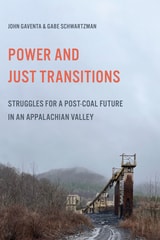
Power and Just Transitions
Struggles for a Post-Coal Future in an Appalachian ValleyJohn Gaventa and Gabe Schwartzman
University of Illinois Press, 2026
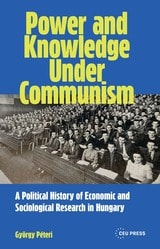
Power and Knowledge Under Communism
A Political History of Economic and Sociological Research in HungaryGyorgy Peteri
Central European University Press, 2026
Power and Negotiation
I. William Zartman and Jeffrey Z. Rubin, Editors
University of Michigan Press, 2002
Power and Performance
Ethnographic Explorations through Proverbial Wisdom and Theater in Shaba, ZaireJohannes Fabian
University of Wisconsin Press, 1990
In 1985 Johannes Fabian, while engaged in fieldwork in the Shaba province of Zaire, first encountered this saying. Its implications—for the charismatic religious movements Fabian was examining, for the highly charged political atmosphere of Zaire, and for the cultures of the Luba peoples—continued to intrigue him, though its meaning remained elusive. On a later visit, he mentioned the saying to a company of popular actors, and triggered an ethnographic brainstorm. “Spontaneously, they decided it would be just the right topic for their next play. On the spot they began planning—suggestions for a plot were made, problems of translating the French term ‘pouvoir’ were debated, several actors cited sayings and customs from their home villages. . . .”
Power and Performance examines traditional proverbs about power as it illustrates how the performance of Le pouvoir se mange entier was created, rehearsed, and performed. The play deals with the issue of power through a series of conflicts between villagers and their chief. Both rehearsal and performance versions of the text of this drama are included, in Swahili and in English translation.
Power and Possibility
Essays, Reviews, and InterviewsElizabeth Alexander
University of Michigan Press, 2007
A volume in the Poets on Poetry series, which collects critical works by contemporary poets, gathering together the articles, interviews, and book reviews by which they have articulated the poetics of a new generation.
Elizabeth Alexander is considered one of the country's most gifted contemporary poets, and the publication of her essays in The Black Interior in 2004 established her as an astute critic and cultural commentator as well. Arnold Rampersad has called Alexander "one of the brightest stars in our literary sky . . . a superb, invaluable commentator on the American scene." In this new collection of her essays, reviews, and interviews, Alexander again focuses on African American artistic production, particularly poetry, and the cultural contexts in which it is created and experienced.
The book's first section, "Black Arts 101," takes up the poetry of Paul Laurence Dunbar, Sterling Brown, Lucille Clifton, Gwendolyn Brooks, and Rita Dove (among others); artist Romare Bearden; dancer Bill T. Jones; and dramatist August Wilson. A second section, "Black Feminist Thinking," provides engaging meditations ranging from "My Grandmother's Hair" and "A Very Short History of Black Women and Food" to essays on the legacies of Toni Cade, Audre Lorde, and June Jordan. The collection's final section, "Talking," includes interviews, a commencement address---"Black Graduation"---and the essay "Africa and the World."
Elizabeth Alexander received a B.A. from Yale University, an M.A. from Boston University, and a Ph.D. in English from the University of Pennsylvania. She has published four books of poems: The Venus Hottentot (1990); Body of Life (1996); Antebellum Dream Book (2001); and, most recently, American Sublime (2005), which was one of three finalists for the Pulitzer Prize. Her play, Diva Studies, was produced at the Yale School of Drama. She is presently Professor of American and African American Studies at Yale University.
Power and Powerlessness
Quiescence and Rebellion in an Appalachian ValleyJohn Gaventa
University of Illinois Press, 1980
Using Clear Fork Valley in central Appalachia as an empirical example, Gaventa attempts to discern the "hidden faces of power" - those forces which shape actions and consciousness in ways not readily apparent in formal American political processes. He seeks to clarify and expand upon past theories (by such writers as Bachrach and Lukes) on the nature and maintenance of power.
The region studied here is characterized by stark incongruity - the co-existence of massive natural wealth (coal and land) with pervasive human poverty attended by high unemployment, limited education, malnutrition, and the prevalent hazards of mining coal: black lung, dismemberment, death, and ecological ruin. This has been the region's status quo under the decades of domination by a British company and its absentee owners. Despite these departure conditions and frequently violent union struggles, culminating in the 1969 murder of UMW reformist Jock Yablonski, acquiescence to this status quo has been maintained. Gaventa searches out the answers to how and why wealth and poverty continue to coexist and the powerless continue to accede to the powerful. His astute analysis poses broader questions about the politics of poverty, working-class consciousness, and corporate power in America.
Power and Protest in the Countryside
Studies of Rural Unrest in Asia, Europe, and Latin AmericaRobert P. Weller and Scott Guggenheim
Duke University Press, 1993

Power and Society in Greater NY
David C. Hammack
Russell Sage Foundation, 1982
Power and Terror
Conflict, Hegemony, and the Rule of ForceNoam Chomsky
Pluto Press, 2011
Power and Time
Temporalities in Conflict and the Making of HistoryEdited by Dan Edelstein, Stefanos Geroulanos, and Natasha Wheatley
University of Chicago Press, 2020
A collection of essays that challenges how we interpret history by focusing on the nexus of two concepts— “power” and “time”—as they manifest in a wide variety of case studies.
Time is the backdrop of historical inquiry, yet it is much more than a featureless setting for events. Different temporalities interact dynamically; sometimes they coexist tensely, sometimes they clash violently. In this innovative volume, editors Dan Edelstein, Stefanos Geroulanos, and Natasha Wheatley challenge how we interpret history by focusing on the nexus of two concepts—“power” and “time”—as they manifest in a wide variety of case studies. Analyzing history, culture, politics, technology, law, art, and science, this engaging book shows how power is constituted through the shaping of temporal regimes in historically specific ways. Power and Time includes seventeen essays on human rights; sovereignty; Islamic, European, Chinese, and Indian history; slavery; capitalism; revolution; the Supreme Court; the Anthropocene; and even the Manson Family. Power and Time will be an agenda-setting volume, highlighting the work of some of the world’s most respected and original contemporary historians and posing fundamental questions for the craft of history.
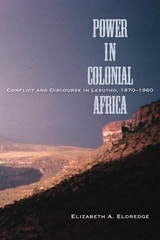
Power in Colonial Africa
Conflict and Discourse in Lesotho, 1870–1960Elizabeth A. Eldredge
University of Wisconsin Press, 2007
In Power in Colonial Africa: Conflict and Discourse in Lesotho, 1870–1960, Elizabeth A. Eldredge analyzes a panoply of archival and oral resources, visual signs and symbols, and public and private actions to show how power may be exercised not only by rulers but also by the ruled. The BaSotho—best known for their consolidation of a kingdom from the 1820s to 1850s through primarily peaceful means, and for bringing colonial forces to a standstill in the Gun War of 1880–1881—struggled to maintain sovereignty over their internal affairs during their years under the colonial rule of the Cape Colony (now part of South Africa) and Britain from 1868 to 1966. Eldredge explores instances of BaSotho resistance, resilience, and resourcefulness in forms of expression both verbal and non-verbal. Skillfully navigating episodes of conflict, the BaSotho matched wits with the British in diplomatic brinksmanship, negotiation, compromise, circumvention, and persuasion, revealing the capacity of a subordinate population to influence the course of events as it selectively absorbs, employs, and subverts elements of the colonial culture.
“A refreshing, readable and lucid account of one in an array of compositions of power during colonialism in southern Africa.”—David Gordon, Journal of African History
“Elegantly written.”—Sean Redding, Sub-Saharan Africa
“Eldredge writes clearly and attractively, and her studies of the war between Lerotholi and Masupha and of the conflicts over the succession to the paramountcy are essential reading for anyone who wants to understand those crises.”—Peter Sanders, Journal of Southern African Studies
Power in Concert
The Nineteenth-Century Origins of Global GovernanceJennifer Mitzen
University of Chicago Press, 2013
Power in Modernity
Agency Relations and the Creative Destruction of the King’s Two BodiesIsaac Ariail Reed
University of Chicago Press, 2020
He mobilizes this theory to investigate the onset of modernity in the Atlantic world, with a focus on rebellion, revolution, and state formation in colonial North America, the early American Republic, the English Civil War, and French Revolution. Modernity, Reed argues, dismantled the “King’s Two Bodies”—the monarch’s physical body and his ethereal, sacred second body that encompassed the body politic—as a schema of representation for forging power relations. Reed’s account then offers a new understanding of the democratic possibilities and violent exclusions forged in the name of “the people,” as revolutionaries sought new ways to secure delegation, build hierarchy, and attack alterity.
Reconsidering the role of myth in modern politics, Reed proposes to see the creative destruction and eternal recurrence of the King’s Two Bodies as constitutive of the modern attitude, and thus as a new starting point for critical theory. Modernity poses in a new way an eternal human question: what does it mean to be the author of one’s own actions?
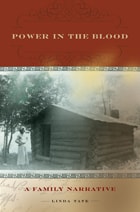
Power in the Blood
A Family NarrativeLinda Tate
Ohio University Press, 2009
Power in the Blood: A Family Narrative traces Linda Tate’s journey to rediscover the Cherokee-Appalachian branch of her family and provides an unflinching examination of the poverty, discrimination, and family violence that marked their lives. In her search for the truth of her own past, Tate scoured archives, libraries, and courthouses throughout Kentucky, Tennessee, Alabama, Illinois, and Missouri, visited numerous cemeteries, and combed through census records, marriage records, court cases, local histories, old maps, and photographs. As she began to locate distant relatives — fifth, sixth, seventh cousins, all descended from her great-greatgrandmother Louisiana — they gathered in kitchens and living rooms, held family reunions, and swapped stories. A past that had long been buried slowly came to light as family members shared the pieces of the family’s tale that had been passed along to them.
Power in the Blood is a dramatic family history that reads like a novel, as Tate’s compelling narrative reveals one mystery after another. Innovative and groundbreaking in its approach to research and storytelling, Power in the Blood shows that exploring a family story can enhance understanding of history, life, and culture and that honest examination of the past can lead to healing and liberation in the present.
Power in the Wild
The Subtle and Not-So-Subtle Ways Animals Strive for Control over OthersLee Alan Dugatkin
University of Chicago Press, 2022
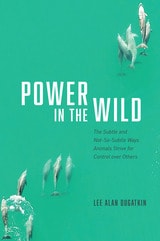
The quest for power in animals is so much richer, so much more nuanced than who wins what knock-down, drag-out fight. Indeed, power struggles among animals often look more like an opera than a boxing match. Tracing the path to power for over thirty different species on six continents, writer and behavioral ecologist Lee Alan Dugatkin takes us on a journey around the globe, shepherded by leading researchers who have discovered that in everything from hyenas to dolphins, bonobos to field mice, cichlid fish to cuttlefish, copperhead snakes to ravens, and meerkats to mongooses, power revolves around spying, deception, manipulation, forming and breaking up alliances, complex assessments of potential opponents, building social networks, and more. Power pervades every aspect of the social life of animals: what they eat, where they eat, where they live, whom they mate with, how many offspring they produce, whom they join forces with, and whom they work to depose. In some species, power can even change an animal’s sex. Nor are humans invulnerable to this magnificently intricate melodrama: Dugatkin’s tales of the researchers studying power in animals are full of unexpected pitfalls, twists and turns, serendipity, and the pure joy of scientific discovery.
Power of Freedom
Hu Shih's Political WritingsChih-p'ing Chou and Carlos Yu-Kai Lin, Editors
University of Michigan Press, 2022
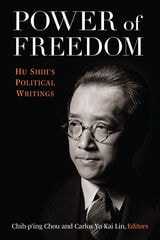
For decades—and today to a certain extent—Hu Shih’s political writings were considered sensitive and even dangerous. As a strident critic of the Chinese Communist Party’s oligarchical practices, he was targeted by the CCP in a concerted national campaign to smear his reputation, cast aspersions on his writings, and generally destroy any possible influence he might have in China. This volume brings together a collection of Hu Shih’s most important, mostly unpublished, English-language speeches, interviews, and commentaries on international politics, China-U.S. relations, and the International Communist Movement. Taken together, these works provide an insider’s perspective on Sino-American relations and the development of the International Communist Movement over the course of the 20th century.
Power of Material - Politics of Materiality
Edited by Susanne Witzgall and Kerstin Stakemeier
Diaphanes, 2014
In the last years a new focus on material phenomena has become increasingly oberservable in the arts and sciences. Most diverse disciplines are stressing the momentum and the agency of matter, material and things and underline their status as agents within the web of relationships of culture and nature. The book "Power of Material / Politics of Materiality“ deepens this current discourse and for the time brings materialist tendencies within the arts, design and architecture into a direct dialogue with a range of scientific approaches from a "New Materialism“ within the humanities and social sciences.
This publication is the result of the first year of program at the newly established cx centre for interdisciplinary studies at the Academy of Fine Arts Munich.

Power of Nature
Archaeology and Human-Environmental Dynamicsedited by Monica L. Smith
University Press of Colorado, 2022
Climatic events, pathogens, and animals as nonhuman agents, ranging in size from viruses to mega-storms, have presented our species with dynamic conditions that overwhelm human capacities. In some cases, people have modified architecture to deal with a constant onslaught of storms, as in Japan or the Caribbean; in other cases, they have welcomed the occasional natural disaster as a chance to start fresh or to put into place new ideas and practices, as in the case of ancient Roman cities. Using the concept of “agency” as one in which multiple sentient and nonhuman actors interact in a landscape, and exploring locations such as the Caribbean, the Pacific, South Asia, the Andes, the Mediterranean, Mesoamerica, North America, and the Arctic, the authors provide compelling explanations of the effect of an entire realm of natural powers that beset human societies past and present—from storms, earthquakes, and fires to vegetation, domestic animals, and wild birds. Throughout, the emphasis is on the philosophical and engineering adjustments that people make to stay resilient when facing the perpetual changes of the natural world.
Using an archaeological perspective, The Power of Nature illustrates and analyzes the many
ways that people do not control their environments. It will be of interest to archaeologists, as well as scholars in science, biology, botany, forestry, urban studies, and disaster management.
Contributors: Steven Ammeran, Traci Ardren, Katelyn J. Bishop, Karen Mohr Chávez, Sergio Chávez, Stanislava Chávez, Emelie Cobb, Jago Cooper, Harper Dine, Chelsea Fisher, Jennifer Huebert, Dale L. Hutchinson, Sara L. Juengst, Kanika Kalra, François Oliva, Matthew C. Peros, Jordan Pickett, Seth Quintus, John Robb, Monica L. Smith, Jillian A. Swift, Silvia Tomášková, Kyungsoo Yoo