Results by title
88 books match the query 'Prisoners' and 13 start with p
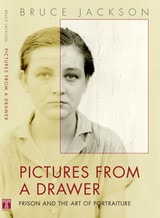
Pictures from a Drawer
Prison and the Art of PortraitureBruce Jackson
Temple University Press, 2009
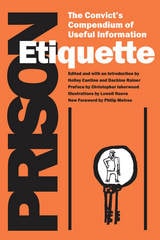
Prison Etiquette
The Convict's Compendium of Useful InformationEdited by Holley Cantine and Dachine Rainer. Foreword by Philip Metres.
Southern Illinois University Press, 2001
Of the fifty thousand Americans who declared themselves conscientious objectors during World War II, nearly six thousand went to prison, many serving multiyear sentences in federal lockups. Some conscientious objectors, notably Robert Lowell, William Everson, and William Stafford, went on to become important figures in the literary life of their country, while others were participants and teachers in the civil rights and antiwar movements of the 1950s, 1960s, and 1970s. This long out-of-print book, reprinted from the rare original 1951 edition, collects firsthand accounts by conscientious objectors who were imprisoned for their beliefs.
Prison Etiquette is illustrated with eleven line drawings by Lowell Naeve.
Prison Masculinities
Don Sabo
Temple University Press, 2001
The opening section, which features an essay by Angela Davis, focuses on the historical roots of the prison system, cultural practices surrounding gender and punishment, and the current expansion of corrections into the "prison-industrial complex."
The next section examines the dominant or subservient roles that men play in prison and the connections between this hierarchy and male violence. Another section looks at the spectrum of intimate relations behind bars, from rape to friendship, and another at physical and mental health.
The last section is about efforts to reform prisons and prison masculinities, including support groups for men. It features an essay about prospects for post-release success in the community written by a man who, after doing time in Soledad and San Quentin, went on to get a doctorate in counseling.
The contributions from prisoners include an essay on enforced celibacy by Mumia Abu-Jamal, as well as fiction and poetry on prison health policy, violence, and intimacy. The creative contributions were selected from the more than 200 submissions received from prisoners.

Prison Song
Music and Incarceration in the United StatesDavid Metzer
University of Michigan Press, 2026
Prison and Social Death
Price, Joshua M
Rutgers University Press, 2015
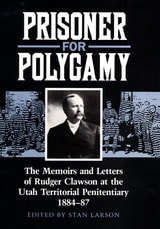
Prisoner for Polygamy
The Memoirs and Letters of Rudger Clawson at the Utah Territorial Penitentiary, 1884-87Edited by Stan Larson
University of Illinois Press, 1993
Prisoners after War
Veterans in the Age of Mass IncarcerationJason A. Higgins
University of Massachusetts Press, 2024
Winner of the 2025 Oral History Association Book Award • Winner of Virginia Tech's Albert Lee Sturm Award for Faculty Excellence • Finalist for the 2026 Veterans Studies Association Distinguished Book Award • Honorable Mention, National Council on Public History Book Award
The United States has both the largest, most expensive, and most powerful military and the largest, most expensive, and most punitive carceral system in the history of the world. Since the American War in Vietnam, hundreds of thousands of veterans have been incarcerated after their military service.
Identifying the previously unrecognized connections between American wars and mass incarceration, Prisoners after War reaches across lines of race, class, and gender to record the untold history of incarcerated veterans over the past six decades. Having conducted dozens of oral history interviews, Jason A. Higgins traces the lifelong effects of war, inequality, disability, and mental illness, and explores why hundreds of thousands of veterans, from Vietnam to Afghanistan, were caught up in the carceral system. This original study tells an intergenerational history of state-sanctioned violence, punishment, and inequality, but its pages also resonate with stories of survival and redemption, revealing future possibilities for reform and reparative justice.
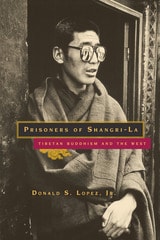
Prisoners of Shangri-La
Tibetan Buddhism and the WestDonald S. Lopez Jr.
University of Chicago Press, 1998
"Lopez lifts the veil on America's romantic vision of Tibet to reveal a country and a spiritual history more complex and less ideal than popular perceptions allow. . . . Lively and engaging, Lopez's book raises important questions about how Eastern religions are often co-opted, assimilated and misunderstood by Western culture."—Publishers Weekly
"Proceeding with care and precision, Lopez reveals the extent to which scholars have behaved like intellectual colonialists. . . . Someone had to burst the bubble of pop Tibetology, and few could have done it as resoundingly as Lopez."—Booklist
"Fascinating. . . [A] provocative exploration. Lopez conveys the full dizziness of the Western encounter with Tibet and Tibetan Buddhism."—Fred Pheil, Tricycle: The Buddhist Review
"A timely and courageous exploration. . . . [Lopez's] book will sharpen the terms of the debate over what the Tibetans and their observers can or should be doing about the place and the idea of Tibet. And that alone is what will give us all back our Shambhala."—Jonathan Spence, Lingua Franca Book Review
"Lopez's most important theme is that we should be wary of the idea . . . that Tibet has what the West lacks, that if we were only to look there we would find the answers to our problems. Lopez's book shows that, on the contrary, when the West has looked at Tibet, all that it has seen is a distorted reflection of itself."—Ben Jackson, Times Higher Education Supplement
Prisoners of Shangri-La
Tibetan Buddhism and the WestDonald S. Lopez, Jr.
University of Chicago Press, 2018
Upon its original publication, Prisoners of Shangri-La sent shockwaves through the field of Tibetan studies—hailed as a timely, provocative, and courageous critique. Twenty years hence, the situation in Tibet has only grown more troubled and complex—with the unrest of 2008, the demolition of the dwellings of thousands of monks and nuns at Larung Gar in 2016, and the scores of self-immolations committed by Tibetans to protest the Dalai Lama’s exile.
In his new preface to this anniversary edition, Lopez returns to the metaphors of prison and paradise to illuminate the state of Tibetan Buddhism—both in exile and in Tibet—as monks and nuns still seek to find a way home. Prisoners of Shangri-La remains a timely and vital inquiry into Western fantasies of Tibet.
Prisoners of Their Premises
How Unexamined Assumptions Lead to War and Other Policy DebaclesGeorge C. Edwards III
University of Chicago Press, 2022
Why do accomplished and stable leaders frequently make calamitous decisions with devastating consequences for their countries—and other nations? We debate debacles such as the American involvement in Vietnam, seeking to understand why leaders pursued disastrous policies. In Prisoners of Their Premises, George C. Edwards III argues that the failure of leaders to examine their premises—the assumptions they make about the world and situation they are dealing with—cause them to ignore real problems or pursue policies that, in costly ways, deal with problems that are different than they think or simply don’t exist. Edwards looks at the role of premises in identifying (or ignoring) a problem in a series of case studies that range from strategic decisions in World War I and the Korean War to the wars in Vietnam and Iraq. Too often, unexamined premises color initial decisions to pursue a policy and shape the strategies leaders employ to achieve their goals, with grave consequences for their countries, organizations, and potentially the world. Timely and important, Prisoners of Their Premises demonstrates the real costs leaders incur by failing to question their assumptions.
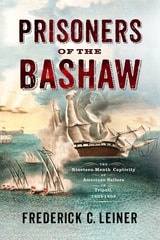
Prisoners of the Bashaw
The Nineteen-Month Captivity of American Sailors in Tripoli, 1803–1805Frederick C. Leiner
Westholme Publishing, 2025
America’s first crisis with the Islamic world: the diplomatic and military mission to free more than three hundred enslaved sailors
On October 31, 1803, the frigate USS Philadelphia ran aground on a reef a few miles outside the harbor of Tripoli. Since April 1801, the United States had been at war with Tripoli, one of the Barbary “pirate” regimes, over the payment of annual tribute—bribes so that American merchant ships would not be seized and their crews held hostage. After hours under fire, the Philadelphia, aground and defenseless, surrendered, and 307 American sailors and marines were captured. Manhandled and stripped of their clothes and personal belongings, the men of the Philadelphia were paraded before the Bashaw of Tripoli, Yusuf Karamanali. The bashaw ordered the crew moved into an old warehouse, and the officers were eventually moved to a dungeon beneath the Bashaw’s castle. While the officers were treated as “gentlemen,” although imprisoned, the sailors worked as enslaved laborers. Regularly beaten and given a meager diet, several died in captivity; escape attempts failed, while a few ended up converting to Islam and joined their captors. President Thomas Jefferson, Congress, U.S. diplomats, and Commodore Edward Preble, commander of the naval squadron off Tripoli, grappled with how to safely free the American captives. The crew of the Philadelphia remained prisoners for nineteen months, until the Tripolitan War ended in June 1805.
The Philadelphia captives became the key to negotiations to end the war; the possibility existed that if threatened too much, the Bashaw would kill the captives. Ultimately, the United States paid $60,000 to get them back—about $200 per man—a sum less than the Bashaw’s initial demands for compensation. In June 1805, the Americans began their journey home. Combining stirring naval warfare, intricate diplomatic negotiations, the saga of surviving imprisonment, and based on extensive primary source research, Prisoners of the Bashaw: The Nineteen-Month Captivity of American Sailors in Tripoli, 1803-1805 by Frederick C. Leiner tells the complete story of America’s first great hostage crisis.
Prisons and Patriots
Japanese American Wartime Citizenship, Civil Disobedience, and Historical MemoryCherstin Lyon
Temple University Press, 2011
Prisons and Patriots provides a detailed account of forty-one Nisei (second-generation Japanese Americans), known as the Tucsonians, who were imprisoned for resisting the draft during WWII. Cherstin Lyon parallels their courage as resisters with that of civil rights hero Gordon Hirabayashi, well known for his legal battle against curfew and internment, who also resisted the draft. These dual stories highlight the intrinsic relationship between the rights and the obligations of citizenship, particularly salient in times of war.
Lyon considers how wartime civil disobedience has been remembered through history—how soldiers have been celebrated for their valor while resisters have been demonized as unpatriotic. Using archival research and interviews, she presents a complex picture of loyalty and conflict among first-generation Issei and Nisei. Lyon contends that the success of the redress movement has made room for a narrative that neither reduces the wartime confinement to a source of shame nor proffers an uncritical account of heroic individuals.
Punishment in Paradise
Race, Slavery, Human Rights, and a Nineteenth-Century Brazilian Penal ColonyPeter M. Beattie
Duke University Press, 2015