54 books match the query 'Psychiatry' and 9 start with p

cover of Phenomenology in Psychology and Psychiatry: A Historical Introduction

Phenomenology in Psychology and Psychiatry

A Historical Introduction

Herbert Spiegelberg

Northwestern University Press, 1972

Phenomenology in Psychology and Psychiatry is a historical introduction to phenomenology in psychology working from the general to the details of the subject.  
[more]
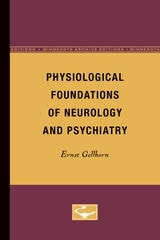
cover of Physiological Foundations of Neurology and Psychiatry

Physiological Foundations of Neurology and Psychiatry

Ernst Gellhorn

University of Minnesota Press, 1953
Physiological Foundations of Neurology and Psychiatry was first published in 1953.The findings of Dr. Gellhorn’s extensive and significant research on the physiology of the central nervous system form the basis of the discussion in this volume. Reference is frequently made to the applicability of this laboratory experience to clinical as well as other fields. An attempt has been made to integrate the clinical and experimental literature with the discussion, to give an up-to-date picture of the problems involved and to indicate the possibilities for future investigation. Topics of interest to physiologists, endocrinologists, internists, neurologists and neurosurgeons, psychiatrists, and clinical psychologists are discussed.An important aspect of the author’s work concerned certain recent tests which show an altered reactivity of autonomic centers in the psychotic condition. His interpretation of the significance of these tests for a physiologically oriented therapy of functional psychoses is published here for the first time. The physiological effects actually produced in the central nervous system by “shock” treatment and carbon dioxide therapy are analyzed.Other sections give consideration to some of the principal working mechanisms of the neuron, to the factors determining movements and convulsions, to the pathophysiology of cortical lesions, to some aspects of autonomic physiology, and to the problem of consciousness. An important section deals with integrative functions of the nervous system - those involved in emotion, the conditioning process as the basis of behavior, and homeostasis.
[more]
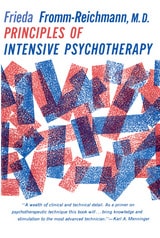
cover of Principles of Intensive Psychotherapy

Principles of Intensive Psychotherapy

Frieda Fromm-Reichmann

University of Chicago Press, 1950

"[This book has] a wealth of clinical and technical detail. As a primer on psychotherapeutic technique this book will. . .bring knowledge and stimulation to the most advanced technician"—Karl A. Menninger

"One is continuously aware that here is a truly human being at work, human in the sense of exquisite awareness, on a profoundly intuitive level, of the workings of the human totality. . . . Because of this she can bridge the vast divide that separates us from the psychotic . . . thereby gaining access to the process of recalling the patient to his lost domain."—Louise E. DeRosis, M.D., American Journal of Psychoanalysis

[more]
cover of Prozac on the Couch: Prescribing Gender in the Era of Wonder Drugs

Prozac on the Couch

Prescribing Gender in the Era of Wonder Drugs

Jonathan Michel Metzl

Duke University Press, 2003

Pills replaced the couch; neuroscience took the place of talk therapy; and as psychoanalysis faded from the scene, so did the castrating mothers and hysteric spinsters of Freudian theory. Or so the story goes. In Prozac on the Couch, psychiatrist Jonathan Michel Metzl boldly challenges recent psychiatric history, showing that there’s a lot of Dr. Freud encapsulated in late-twentieth-century psychotropic medications. Providing a cultural history of treatments for depression, anxiety, and other mental illnesses through a look at the professional and popular reception of three “wonder drugs”—Miltown, Valium, and Prozac—Metzl explains the surprising ways Freudian gender categories and popular gender roles have shaped understandings of these drugs.

Prozac on the Couch traces the notion of “pills for everyday worries” from the 1950s to the early twenty-first century, through psychiatric and medical journals, popular magazine articles, pharmaceutical advertisements, and popular autobiographical "Prozac narratives.” Metzl shows how clinical and popular talk about these medications often reproduces all the cultural and social baggage associated with psychoanalytic paradigms—whether in a 1956 Cosmopolitan article about research into tranquilizers to “cure” frigid women; a 1970s American Journal of Psychiatry ad introducing Jan, a lesbian who “needs” Valium to find a man; or Peter Kramer’s description of how his patient “Mrs. Prozac” meets her husband after beginning treatment.

Prozac on the Couch locates the origins of psychiatry’s “biological revolution” not in the Valiumania of the 1970s but in American popular culture of the 1950s. It was in the 1950s, Metzl points out, that traditional psychoanalysis had the most sway over the American imagination. As the number of Miltown prescriptions soared (reaching 35 million, or nearly one per second, in 1957), advertisements featuring uncertain brides and unfaithful wives miraculously cured by the “new” psychiatric medicines filled popular magazines. Metzl writes without nostalgia for the bygone days of Freudian psychoanalysis and without contempt for psychotropic drugs, which he himself regularly prescribes to his patients. What he urges is an increased self-awareness within the psychiatric community of the ways that Freudian ideas about gender are entangled in Prozac and each new generation of wonder drugs. He encourages, too, an understanding of how ideas about psychotropic medications have suffused popular culture and profoundly altered the relationship between doctors and patients.
[more]
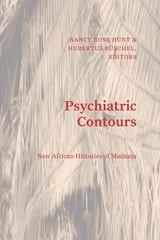
cover of Psychiatric Contours: New African Histories of Madness

Psychiatric Contours

New African Histories of Madness

Nancy Rose Hunt and Hubertus Büschel, editors

Duke University Press, 2024

Psychiatric Contours investigates new histories of psychiatry, derangement, and agitated subjectivities in colonial and decolonizing Africa. The volume lets the multivalent term madness broaden perception, well beyond the psychiatric. Many chapters detect the mad or the psychiatric in unhinged persons, frantic collectives, and distressing situations. Others investigate individuals suffering from miscategorization. A key Foucauldian word, vivacity, illuminates how madness aligns with pathology, creativity, turbulence, and psychopolitics. The archives, patient-authored or not, speak to furies and fantasies inside asylums, colonial institutions, decolonizing missions, and slave ships. The frayed edges of politicized deliria open up the senses and optics of psychiatry’s history in Africa far beyond clinical spaces and classification. The volume also proposes fresh concepts, notably the vernacular, to suggest how to work with emic clues in a granular fashion and telescope the psychiatric within histories of madness. With chapters stretching across much of ex-British and ex-French colonial Africa, Psychiatric Contours attends to the words, autobiographies, and hallucinations of the stigmatized and afflicted as well as of the powerful. Expatriate psychiatrists with cameras, prying authorities, fearful missionaries, and colonial anthropologists enter these readings beside patients, asylums, and boarding schools via research on possession “hysteria” and schizophrenia. In brief, this book demonstrates novel ways of writing not only medical history but all subaltern and global histories.

Contributors. Hubertus Büschel, Raphaël Gallien, Matthew M. Heaton, Richard Hölzl, Nancy Rose Hunt, Richard C. Keller, Sloan Mahone, Nana Osei Quarshie, Jonathan Sadowsky, Romain Tiquet
[more]
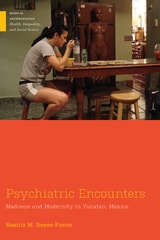
cover of Psychiatric Encounters: Madness and Modernity in Yucatan, Mexico

Psychiatric Encounters

Madness and Modernity in Yucatan, Mexico

Reyes-Foster, Beatriz M.

Rutgers University Press, 2019
Psychiatric Encounters presents an intimate portrait of a public inpatient psychiatric facility in the Southeastern state of Yucatan, Mexico. The book explores the experiences of patients and psychiatrists as they navigate the challenges of public psychiatric care in Mexico. While international reports condemning conditions in Mexican psychiatric institutions abound, Psychiatric Encounters considers the large- and small-scale obstacles to quality care encountered by doctors and patients alike as they struggle to live and act like human beings under inhumane conditions. Beatriz Mireya Reyes-Foster closely examines the impact of the Mexican state’s neoliberal health reforms on how patients access care and doctors perform their duties. Engaging with madness, modernity, and identity, Psychiatric Encounters considers the enduring role of colonialism in the context of Mexico's troubled contemporary mental health care institutions.  
[more]
cover of Psychiatry and Behavioral Science: An Introduction and Study Guide for Medical Students

Psychiatry and Behavioral Science

An Introduction and Study Guide for Medical Students

edited by David A. Baron and Ellen H. Sholevar

Temple University Press, 2008
This easy-to-read, unique format text combines introductory psychiatry content with board-style review questions written for first and second year medical students.  The book is intended to be used as the required text for pre-clinical psychiatric education.  The user-friendly split page format includes clinical vignettes, "fun facts," and relevant art work.  Each chapter contains board review questions that prepare the medical student for USMLE Step 1 and COMLEX 1. By using a clinical approach consistent with the needs of today's medical students, the authors hope to prepare first and second year medical students for their exams and clinical rotations.
[more]
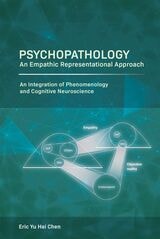
cover of Psychopathology: An Empathic Representational Approach; An Integration of Phenomenology and Cognitive Neuroscience

Psychopathology

An Empathic Representational Approach; An Integration of Phenomenology and Cognitive Neuroscience

Eric Yu Hai Chen

Hong Kong University Press, 2024

Explores how the scientific concepts of information and representation can be used to understand subjective mental phenomena and integrate them in empathic clinical dialogues during interactions with patients.

Psychopathology: An Empathic Representational Approach retraces the foundations of classical phenomenological psychopathology and integrates them with modern ideas drawn from anthropology, cognitive neuroscience, computational science, and evolutionary biology to synthesize a comprehensive framework and provide fresh insights. It explores key issues in clinical psychopathology coherently and systematically, illustrates advanced topics in an accessible manner using clinical case examples, metaphors, and clarifying diagrams, and directly links advanced conceptual frameworks with pragmatic skills in the clinical dialogue process.

This volume is aimed at a broad audience of mental health professionals, researchers, and students in psychiatry, psychology, and social work. Its interdisciplinary treatment of the subject will also interest biologists, anthropologists, cognitive psychologists, neuroscientists, and philosophers.

[more]
cover of Psychosis and Schizophrenia in Hong Kong: Navigating Clinical and Cultural Crossroads

Psychosis and Schizophrenia in Hong Kong

Navigating Clinical and Cultural Crossroads

Eric Yu Hai Chen and Yvonne Treffurth

Hong Kong University Press, 2024

Fills a gap in research by focusing psychosis studies on those affected in Hong Kong.

Psychosis and Schizophrenia in Hong Kong covers some of the most serious mental health conditions that top the global disease burden and affect three percent of the general population. However, most research on psychotic disorders is undertaken in the West, and few studies have been systematically carried out in Asia despite global interest in regional differences. This work offers a unique and coherent account of these disorders and their treatment in Hong Kong over the last thirty years.

Chen and his research program’s pioneering work has ranged from the impact of early intervention on outcomes and relapse prevention to the renaming of psychosis to reduce stigma. The studies have contributed to wider international debates on the optimal management of the condition. Their investigations in semantics and cognition, as well as cognition-enhancing exercise interventions, have provided novel insights into deficits encountered in the treatment of psychotic disorders and how they might be ameliorated. The research has also explored subjective experiences of psychosis and elicited unique perspectives in patients of Asian origin.

Each topic is divided into three sections: a global background of the challenges encountered; research findings from Hong Kong; and reflections that place the data in scientific and clinical contexts and offer future directions.
[more]