Results by title
1325 books match the query 'Psychology' and 89 start with p

Pandemic Minds
COVID-19 and Mental Health in Hong KongKate Whitehead
Hong Kong University Press, 2024
The COVID-19 pandemic was a global crisis that affected millions of lives and brought mental health challenges to the forefront. In Hong Kong, the situation was worsened by uniquely strict COVID-19 regulations, quarantine measures, and travel restrictions. The mental health issues associated with the pandemic did not end with the lifting of the mask mandate. On the contrary, the repercussions are only just beginning to surface and their impact will be felt for years to come.
This eye-opening book shares the stories of ordinary Hongkongers who faced extraordinary challenges during the pandemic. Through a blend of first-person accounts, psychological insights, and hard data, it offers a compelling and accessible exploration of the toll that the COVID-19 pandemic has taken on mental health in Hong Kong.
However, Pandemic Minds is not only a chronicle of suffering—it is also a guide to healing and hope. It offers practical advice on how to overcome the mental health issues caused by the pandemic, and how to build resilience and well-being. It reveals the lessons that can be learned from Hong Kong’s experience, and how they can help individuals and policymakers around the world.
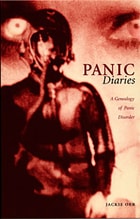
Panic Diaries
A Genealogy of Panic DisorderJackie Orr
Duke University Press, 2006
Orr, who has experienced panic attacks herself, kept a diary of her participation as a research subject in clinical trials for the Upjohn Company’s anti-anxiety drug Xanax. This “panic diary” grounds her study and suggests the complexity of her desire to track the diffusion and regulation of panic in U.S. society. Orr’s historical research, theoretical reflections, and biographical narrative combine in this remarkable and compelling genealogy, which documents the manipulation of panic by the media, the social sciences and psychiatry, the U.S. military and government, and transnational drug companies.
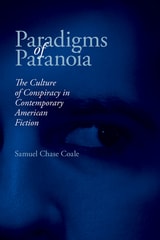
Paradigms of Paranoia
The Culture of Conspiracy in Contemporary American FictionSamuel Chase Coale
University of Alabama Press, 2005
Tracing paranoia as a defining pattern of modern American literature.
The recent popularity of The DaVinci Code and The Matrix trilogy exemplifies the fascination Americans have with conspiracy-driven subjects. Though scholars have suggested that in modern times the JFK assassination initiated an industry of conspiracy (i.e., Vietnam and the Pentagon Papers, Area 51, Iran-Contra Affair), Samuel Chase Coale reminds us in this book that conspiracy is foundational in American culture—from the apocalyptic Biblical narratives in early Calvinist households to the fear of Mormon, Catholic, Jewish, and immigrant populations in the 19th century.
Coale argues that contemporary culture—a landscape characterized by doubt, ambiguity, fragmentation, information overload, and mistrust—has fostered a radical skepticism so pervasive that the tendency to envision or construct conspiracies often provides the best explanation for the chaos that surrounds us.
Conspiracy as embodied in narrative form provides a fertile field for explorations of the anxiety lying at the heart of the postmodern experience. Thomas Pynchon's The Crying of Lot 49, Don DeLillo's Underworld, Toni Morrison's Jazz and Paradise, Joan Didion's Democracy, Tim O'Brien's In the Lake of the Woods, and Paul Auster's New York City Trilogy are some of the texts Coale examines for their representations of isolated individuals at the center of massive, anonymous master plots that lay beyond their control. These narratives remind us that our historical sense of national identity has often been based on the demonizing of others and that American fiction arose and still flourishes with apocalyptic visions.
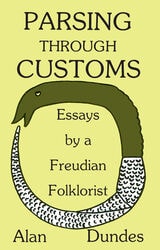
Parsing through Customs
Essays by a Freudian FolkloristAlan Dundes
University of Wisconsin Press, 1987
In these stimulating essays, Alan Dundes presents a history of psychoanalytic studies of folklore while also showing how folklore methodology can be used to clarify and validate psychoanalytic theory. Dundes’ work is unique in its symbolic analysis of the ordinary imagination. His data are children’s games, folktales, everyday speech, cultural metaphors for power and prestige, and rituals associated with childbirth.
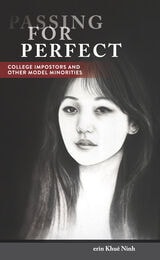
Passing for Perfect
College Impostors and Other Model Minoritieserin Khuê Ninh
Temple University Press, 2021
In her engaging study, Passing for Perfect,erin Khuê Ninh considers the factors that drove college imposters such as Azia Kim—who pretended to be a Stanford freshman—and Jennifer Pan—who hired a hitman to kill her parents before they found out she had never received her high school diploma—to extreme lengths to appear successful. Why would someone make such an illogical choice? And how do they stage these lies so convincingly, and for so long?
These outlier examples prompt Ninh to address the larger issue of the pressures and difficulties of striving to be model minority, where failure is too ruinous to admit. Passing for Perfect insists that being a “model minority” is not a “myth,” but coded into one’s programming as an identity—a set of convictions and aspirations, regardless of present socioeconomic status or future attainability—and that the true cost of turning children into high-achieving professionals may be higher than anyone can bear.
Ninh’s book codifies for readers the difference between imposters who are con artists or shysters and those who don’t know how to stop passing for perfect.
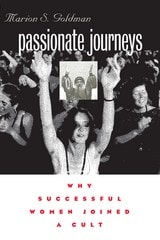
Passionate Journeys
Why Successful Women Joined a CultMarion S. Goldman
University of Michigan Press, 2001
Passionate Journeys explores the fascinating stories behind the Bhagwan Rajneesh phenomenon of the 1970s and 1980s, focusing on women who left families, careers, and identities to join the community of Rajneeshpuram. Rajneesh was a spiritual leader for thousands of young Americans, and in rural Oregon his devotees established a thriving community. Marion S. Goldman's extensive interviews with women who participated at Rajneeshpuram provide a fascinating picture of the cultural and social climate that motivated successful, established women to join such a movement.
Passionate Journeys will appeal to specialists in feminist theory and women's studies, sociology, religious studies, American studies, and the history of the Northwest.
Marion S. Goldman is Professor of Sociology, University of Oregon. She is also the author of Gold Diggers and Silver Miners: Prostitution and Social Life on the Comstock Lode.
Passionate Politics
Emotions and Social MovementsEdited by Jeff Goodwin, James M. Jasper, and Francesca Polletta
University of Chicago Press, 2001
With this new collection of essays, Jeff Goodwin, James M. Jasper, and Francesca Polletta reverse this trend, reincorporating emotions such as anger, indignation, fear, disgust, joy, and love into research on politics and social protest. The tools of cultural analysis are especially useful for probing the role of emotions in politics, the editors and contributors to Passionate Politics argue. Moral outrage, the shame of spoiled collective identities, or the joy of imagining a new and better society, are not automatic responses to events. Rather, they are related to moral institutions, felt obligations and rights, and information about expected effects, all of which are culturally and historically variable.
With its look at the history of emotions in social thought, examination of the internal dynamics of protest groups, and exploration of the emotional dynamics that arise from interactions and conflicts among political factions and individuals, Passionate Politics will lead the way toward an overdue reconsideration of the role of emotions in social movements and politics generally.
Contributors:
Rebecca Anne Allahyari
Edwin Amenta
Collin Barker
Mabel Berezin
Craig Calhoun
Randall Collins
Frank Dobbin
Jeff Goodwin
Deborah B. Gould
Julian McAllister Groves
James M. Jasper
Anne Kane
Theodore D. Kemper
Sharon Erickson Nepstad
Steven Pfaff
Francesca Polletta
Christian Smith
Arlene Stein
Nancy Whittier
Elisabeth Jean Wood
Michael P. Young

Paternalism
Rolf Sartorius, Editor
University of Minnesota Press, 1984
Paternalism was first published in 1984. Minnesota Archive Editions uses digital technology to make long-unavailable books once again accessible, and are published unaltered from the original University of Minnesota Press editions.
Over a hundred years of controversy have established that the antipaternalistic principle so passionately argued by Mill in On Liberty is anything but simple. There are difficulties in interpreting the principle, in reconciling it with Mill's general utilitarian position, and defending it under any particular interpretation. The fourteen essays collected in Paternalism represent the shape philosophical discussions have taken in the past decade and include the classical contemporary statements as well as important new work. This book will provide philosophers, policymakers, doctors, lawyers, and students with all the major arguments that are part of the current controversy.
Pathways to Empathy
New Studies on Commodification, Emotional Labor, and Time BindsEdited by Gertraud Koch and Stefanie Everke Buchanan
Campus Verlag, 2013

Patterns of Time in Hospital Life
A Sociological PerspectiveEviatar Zerubavel
University of Chicago Press, 1979
Patterns of Time will be valued for its several distinctive achievements. Foremost among these is a demonstration of the importance of "temporality" as a topic in its own right. Because measurements of time are a commonplace of social life, sociologists have tended to ignore the significance of temporality as a feature of social organizations. Zerubavel's work is a corrective to this neglect. In addition, the author's imaginative integration of ethnographic description and theoretical analysis bridges the gap between contrasting methods that has characterized much recent sociological and anthropological work. Finally, because of the author's selection of the hospital setting, sociologists of medicine and the professions will find his study useful for its rich and well-observed ethnography, as well as its novel analytical approach.

Payback
The Case for RevengeThane Rosenbaum
University of Chicago Press, 2013

Peacocks, Chameleons, Centaurs
Gay Suburbia and the Grammar of Social IdentityWayne Brekhus
University of Chicago Press, 2003
In this first-ever ethnography of American gay suburbanites, Wayne H. Brekhus demonstrates that who one is depends at least in part on where and when one is. For many urban gay men, being homosexual is key to their identity because they live, work, and socialize in almost exclusively gay circles. Brekhus calls such men "lifestylers" or peacocks. Chameleons or "commuters," on the other hand, live and work in conventional suburban settings, but lead intense gay social and sexual lives outside the suburbs. Centaurs, meanwhile, or "integrators," mix typical suburban jobs and homes with low-key gay social and sexual activities. In other words, lifestylers see homosexuality as something you are, commuters as something you do, and integrators as part of yourself.
Ultimately, Brekhus shows that lifestyling, commuting, and integrating embody competing identity strategies that occur not only among gay men but across a broad range of social categories. What results, then, is an innovative work that will interest sociologists, psychologists, anthropologists, and students of gay culture.
Perception and cognition
issues in the foundations of psychologyC. Wade. Savage
University of Minnesota Press, 1978

Performance Generating Systems in Dance
Dramaturgy, Psychology, and PerformativityPil Hansen
Intellect Books, 2022
Performance-generating systems are systematic and task-based dramaturgy that generate performance for or with an audience. In dance, such systems differ in ways that matter from more closed choreographed scores and more open forms of structured improvisation. Dancers performing within these systems draw on predefined and limited sources while working on specific tasks within constraining rules. The generating components of the systems provide boundaries that enable the performance to self-organize into iteratively shifting patterns instead of becoming repetitive or chaotic.
This book identifies the generating components and dynamics of these works and the kinds of dramaturgical agency they enable. It explains how the systems of these creations affect the perception, cognition, and learning of dancers and why that is a central part of how they work. It also examines how the combined dramaturgical and psychological effects of the systems performatively address individual and social conditions of trauma that otherwise tend to remain unchangeable and negatively impact the human capacity to learn, relate, and adapt. The book provides analytical frameworks and practical insights for those who wish to study or apply performance-generating systems in dance within the fields of choreography and dance dramaturgy, dance education, community dance, or dance psychology.

Person Schemas and Maladaptive Interpersonal Patterns
Edited by Mardi J. Horowitz
University of Chicago Press, 1991
behavior and intrapsychic conflict brings together psychoanalytic researchers, social learning
theorists, and cognitive scientists. The contributors show that a fuller conceptualization of
person schemas can begin to close the gap between psychodynamic and cognitive science
research, providing new methods for understanding disorders of personality.
“There are many strengths in this volume beyond the clear presentation of the person schema
as a concept linking cognitive and psychodynamic perspectives. . . . Students will have an
opportunity for comparison of perspectives while those working in the field will have an
opportunity to follow the shift from concept to method to case application to theoretical
context for understanding personality change.”—Bertram J. Cohler, University of Chicago
Contributors are Lorna Smith Benjamin, Paul Crits-Christoph, Randolph L. Cunningham, Roy
D'Andrade, Amy Demorest, Mary Ewert, Scott H. Friedman, Frances J. Friedrich, Jess H.
Ghannam, Dianna Hartley, Mardi J. Horowitz, John F. Kihlstrom, Peter H. Knapp, Lester
Luborsky, David Mark, Thomas V. Merluzzi, Stephen E. Palmer, Carol Popp, Peter Salovey,
Pamela Schaffler, Jerome L. Singer, Charles H. Stinson, and Sandra L. Tunis.

Person-Centered Management in Academic Libraries
Edited by Dani Brecher Cook, Maoria J. Kirker, and Diann Smothers
American Library Association, 2024
A recent study published in the Journal of Library Administration draws a sobering conclusion: the accelerated exodus of library workers from the profession in the last several years is partially due to strained relationships between staff and their managers. Often, administrators and managers operate within structures that may encourage or enable poor managerial practices. This volume shines a light on a different path forward for the field, one that focuses on the people who work in libraries and how their managers can support them with empathy and skill. Stemming from insights presented at the Conference on Academic Library Management (CALM), the contributors illustrate what person-centered management looks like in practice and point the way toward implementing this approach at readers’ institutions. This book
- incorporates a variety of institutional perspectives, including community colleges, technical and special colleges, liberal arts institutions, and large research universities;
- defines the concept of person-centered management in the context of libraries and explains why it offers such a valuable framework for improving workplace conditions;
- demonstrates why lack of workplace satisfaction and the low morale experience of library staff is often tied to the culture created by management;
- discusses building person-centered systems, interacting with student employees, setting healthy boundaries, and practicing reflection and self-care;
- shares positive, proactive management practices that create space for criticism, sharing of lived experiences, and a willingness to investigate and, if needed, make changes to the status quo; and
- explores such key topics as communication, working virtually, mentorship, intellectual humility, shared leadership, and many others.
Persona
Social Role and PersonalityHelen Harris Perlman
University of Chicago Press, 1986
Personality Development in Children
Edited by Ira Iscoe and Harold Stevenson
University of Texas Press, 1960
This book presents penetrating observations by six authorities on the personality development of children for the enlightenment of parents, teachers, and others who have a vital interest in children.
In the first paper, the late Harold E. Jones, a professor of psychology and the director of the Institute of Human Development at the University of California, examines the development of personality over a long period of time. He discusses the child-rearing practices used with a number of babies, then follows through with observations made several years later to see the effects of these practices.
In another paper, John E. Anderson, a professor of psychology at the University of Minnesota and the former director of the Institute of Child Development and Welfare there, supports the theory that valid predictions of future personality adjustment can be made through an assessment of the present status of an individual.
Anderson’s findings are based on the results of tests administered to children of Nobles County, Minnesota, during the period 1950–1957, and on teacher-community-pupil ratings of these children.
Still other papers offer a variety of ideas. Dr. Milton J. E. Senn, Sterling Professor of Pediatrics and Psychiatry and the director of the Child Study Center at Yale University, suggests that there be greater harmony and more exchange of thought among people working toward a proper understanding of human nature. To a degree this entire book follows his suggestion.
Among several noteworthy observations made by Stanford University Professor of Psychology Robert R. Sears is the point that the development of conscience depends largely upon whether a child is loved or rejected by his or her parents.
John W. M. Whiting, professor of education and director of the Laboratory for Human Development at Harvard University, discusses, among other problems, the question of why children like to play grown-up roles and what happens when they are not permitted to do so. Orville Brim, a sociologist at the Russell Sage Foundation of New York City, explains personality in terms of demands, holding that one’s personality changes from situation to situation and from person to person.
Personality and the Cultural Construction of Society
Edited by David K. Jordan and Marc J. Swartz
University of Alabama Press, 1990
Pyschological anthropology is a vital area of contemporary social science, and one of the field's most important and innovative thinkers is Melford E. Spiro. This volume brings together sixteen essays that review Spiro's theoretical insights and extend them into new areas. The essays center on several general problems: In what ways is it meaningful to speak of a social act as having "functions"? What elements and processes of human personality are universal, and why? What is the relationship between religion and personality? Why? What are the pyschological underpinnings of social manipulation?

Personology
Method and Content in Personality Assessment and PsychobiographyIrving E. Alexander
Duke University Press, 1990
This work by a highly respected senior psychologist is an effort to answer these questions. Irving E. Alexander presents a case for considering the personal narrative of a human life as the most compelling aspect of that life to be decoded and understood. In part a critique of an exclusive reliance on general theories about the development of personality and ways of knowing based primarily on comparison with others, Personology is illustrated with material drawn from the lives, personal writings, and theories of Freud, Jung, and Sullivan. Alexander develops new insights into the lives of these men and offers methods and guidelines for investigating and teaching personology and psychobiography.
Perspectives on Behavioral Inhibition
Edited by J. Steven Reznick
University of Chicago Press, 1989
Perspectives on Contexts
Edited by Paolo Bouquet, Luciano Serafini, and Richmond H. Thomason
CSLI, 2008
Most human thinking is thoroughly informed by context but, until recently, theories of reasoning have concentrated on abstract rules and generalities that make no reference to this crucial factor. Perspectives on Contexts brings together essays from leading cognitive scientists to forge a vigorous interdisciplinary understanding of the contextual phenomenon. Applicable to human and machine cognition in philosophy, artificial intelligence, and psychology, this volume is essential to the current renaissance in thinking about context.
Perturbing the Organism
The Biology of Stressful ExperienceHerbert Weiner
University of Chicago Press, 1992
This authoritative work is the first to analyze critically the entire range of research and theory on stress in animals and humans, from the earliest studies in the 1930s up to the present day. Herbert Weiner not only documents the many empirical and conceptual advances of recent years, but also supplies a new working definition and classification of stressful experience. He describes the integrated, organismic responses to stressful environmental changes, tasks, and challenges in terms of functional adaptation: the failure of these responses results in injury, ill-health, disease, and death. To examine the coordination between behavior and bodily functions, Weiner reviews current knowledge on how stressful experiences also alter biobehavioral rhythms.
Providing a useful, integrative concept of stress rooted in an understanding of the organism as an interactive communication system composed of many subsystems, Perturbing the Organism will interest a wide range of clinicians and researchers throughout the medical and behavioral sciences.
The John D. and Catherine T. MacArthur Foundation Series on Mental Health and Development

Perversion and the Social Relation
sic IVMolly Anne Rothenberg, Dennis A. Foster and Slavoj Zizek, eds.
Duke University Press, 2003
By focusing on perversion as a psychic structure rather than as aberrant behavior, the contributors provide an alternative to models of social interpretation based on classical Oedipal models of maturation and desire. At the same time, they critique claims that the perverse is necessarily subversive or liberating. In their lucid introduction, the editors explain that while fixation at the stage of the perverse can result in considerable suffering for the individual and others, perversion motivates social relations by providing pleasure and fulfilling the psychological need to put something in the place of the Father. The contributors draw on a variety of psychoanalytic perspectives—Freudian and Lacanian—as well as anthropology, history, literature, and film. From Slavoj Žižek's meditation on “the politics of masochism” in David Fincher's movie Fight Club through readings of works including William Styron's The Confessions of Nat Turner, Don DeLillo’s White Noise, and William Burroughs's Cities of the Red Night, the essays collected here illuminate perversion's necessary role in social relations.
Contributors. Michael P. Bibler, Dennis A. Foster, Bruce Fink, Octave Mannoni, E. L. McCallum, James Penney, Molly Anne Rothenberg, Nina Schwartz, Slavoj Žižek

Perversion of Power
Sexual Abuse in the Catholic ChurchMary Gail Frawley-O'Dea
Vanderbilt University Press, 2007
Celibacy, homosexuality in the priesthood, the infiltration into the priesthood of secular moral relativism, too much liberalism in the Church since Vatican II, damaging rollback of Vatican II reforms by conservative prelates--all have been suggested as causes for the crisis. This book, however, begins with the premise that, because the pattern of abuse and cover-up was so similar across the world, there is something fundamentally awry with Church traditions and power structures in relationship to sexuality and sexual abuse.
Specifically, in chapters on suffering and sadomasochism, bodies and gender, desire and sexuality, celibacy and homosexuality, the author concludes that aspects of the Catholic theology of sexuality set the stage for the abuse of minors and its cover-up. Frawley-O'Dea also analyzes the American bishops' lack of pastoral care and tendency towards clerical narcissism--the belief that the needs of the hierarchy represent the needs of the wider Church--as central factors in the scandal. She balances this criticism with a discussion of the backgrounds of the bishops presiding over the crisis and the challenges they faced in their relationships with the Pope and Vatican officials.
Drawing on twenty years of clinical experience, she imagines the dynamics of sexual abuse both from the victim's point of view and from the priest's, and she probes why the Church hierarchy, fellow priests, and lay people were silent for so long. Finally, Frawley-O'Dea examines factors internal to the Church and outside of it that drew this scandal into the public square and kept it there.
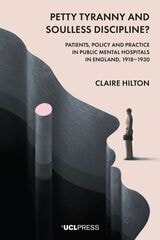
Petty Tyranny and Soulless Discipline?
Patients, Policy and Practice in Public Mental Hospitals in England, 1918–1930Claire Hilton
University College London, 2025
Petty Tyranny and Soulless Discipline? examines England’s public mental hospitals for the working class after World War I. Claire Hilton combines narratives of patients’ difficult daily lives with an analysis of competing agendas from campaigners, the government, and new medical knowledge to build a complex picture of mental health provision. Patient experiences, including their admission, care, treatment, discharge, and sometimes death, are illuminated in previously unexplored primary sources and situated within the broader context of reform and change (or lack thereof). While offering a comprehensive history of psychiatric care in early twentieth-century England, the book also draws on historical insights to reflect on contemporary mental health practices, making it relevant to historians, mental health professionals, and patients alike.

Phantasmic Radio
Allen S. Weiss
Duke University Press, 1995
Phantasmic Radio presents a new perspective on the avant-garde radio experiments of Antonin Artaud and John Cage, and brings to light fascinating, lesser-known work by, among others, Valère Novarina, Gregory Whitehead, and Christof Migone. Weiss shows how Artaud’s "body without organs" establishes the closure of the flesh after the death of God; how Cage’s "imaginary landscapes" proffer the indissociability of techne and psyche; how Novarina reinvents the body through the word in his "theater of the ears." Going beyond the art historical context of these experiments, Weiss describes how, with their emphasis on montage and networks of transmission, they marked out the coordinates of modernism and prefigured what we now recognize as the postmodern.
Phenomenology and Deconstruction, Volume One
The Dream is OverRobert Denoon Cumming
University of Chicago Press, 1991
In this analysis Cumming deals with how a philosophy can be vulgarized (as Heidegger's was by Nazism but in Heidegger's own view by Sartre), with problems of periodization, with how the history of philosophy can be disinguished as a philosophical discipline from intellectual history. Cumming also elaborates an analogy between a philosophical method and style.

Phenomenology in Psychology and Psychiatry
A Historical IntroductionHerbert Spiegelberg
Northwestern University Press, 1972
Phenomenology in Psychology and Psychiatry is a historical introduction to phenomenology in psychology working from the general to the details of the subject.

Pillar of Salt
Gender, Memory, and the Perils of Looking BackHaaken, Janice
Rutgers University Press, 1998
Play and the Human Condition
Thomas S. Henricks
University of Illinois Press, 2015
Imaginative and stimulating, Play and the Human Condition shows how play allows us to learn about our qualities and those of the world around us--and in so doing make sense of ourselves.

Playing Dead
Mock Trauma and Folk Drama in Staged High School Drunk Driving TragediesMontana Miller
Utah State University Press, 2012
As the Grim Reaper pulls a student out of class to be a “victim” of drunk driving in a program called “Every 15 Minutes,” Montana Miller observes the ritual through a folklorist’s lens. Playing Dead examines why hundreds of American schools and communities each year organize these mock tragedies without any national sponsorship or coordination. Often, the event is complete with a staged accident in the parking lot, a life-flight helicopter, and faux eulogies for the “dead” students read in school assemblies. Grounding her research in play theory, frame theory, and theory of folk drama, Miller investigates key aspects of this emergent tradition, paying particular attention to its unplanned elements—enabled by the performance’s spontaneous nature and the participants’ tendency to stray from the intended frame. Miller examines such variations in terms of the program as a whole, analyzing its continued popularity and weighing its success as perceived by participants. Her fieldwork reveals a surprising aspect of Every 15 Minutes that typical studies of ritual do not include: It can be fun. Playing Dead is volume two of the series Ritual, Festival, and Celebration, edited by Jack Santino.

Playing Fans
Negotiating Fandom and Media in the Digital AgePaul Booth
University of Iowa Press, 2015
In Playing Fans, Paul Booth argues that the more attention entertainment businesses pay to fans, the more mainstream fans have become popularized. But such mainstreaming ignores important creative fan work and tries to channel fandom into activities lucrative for the companies. Offering a new approach to the longstanding debate about the balance between manipulation and subversion in popular culture, the author argues that we can understand the current moment best through the concepts of pastiche and parody. This sophisticated alternative to conceiving of fans as either dupes of the media industry or rebels against it takes the discussion of “transformative” and “affirmative” fandom in a productive new direction.
With nuanced analyses of the Doctor Who Experience in Cardiff, the representations of fans in TV shows like Community and films like Fanboys, SuperWhoLock fans’ use of gifs, and the similarities in discussions of slash fandom and pornographic parody films, this book reveals how fans borrow media techniques and media industries mimic fan activities. Just as the entertainment industry needs fans to succeed, so too do fans need—and desire—the media, and they represent their love through gif fics, crowdfunding, and digital cosplay. Everyone who wants to understand how consumers are making themselves at home in the brave new world being built by the contemporary media should read this book.
Pleasure in the News
African American Readership and Sexuality in the Black PressKim T. Gallon
University of Illinois Press, 2020
Gallon discusses how journalists and editors created black sexual publics that offered everyday African Americans opportunities to discuss sexual topics that exposed class and gender tensions. While black churches and black schools often encouraged sexual restraint, the black press printed stories that complicated notions about respectability. Sensational coverage also expanded African American women’s sexual consciousness and demonstrated the tenuous position of female impersonators, black gay men, and black lesbians in early twentieth African American urban communities.
Informative and empowering, Pleasure in the News redefines the significance of the black press in African American history and advancement while shedding light on the important cultural and social role that sexuality played in the power of the black press.

Pleasures Taken
Performances of Sexuality and Loss in Victorian PhotographsCarol Mavor
Duke University Press, 1995
Mavor’s original approach to these photographs emphatically sees sexuality where it has been previously rendered invisible. She insists that the sexuality of the girls in Carroll’s pictures is not only present, but deserves recognition, respect, and scrutiny. Similarly, she sees in Cameron’s photographs of sensual Madonnas surprising visions of motherhood that outstrip both Victorian and contemporary understandings of the maternal as untouchable and inviolate, without sexuality. Finally she shows how Hannah Cullwick, posing in various masquerades for her secret paramour, emerges as a subject with desires rather than simply a victim of her upper-class partner. Even when confronting the darker areas of these photographs, Mavor perseveres in her insistence on the pleasures taken—by the viewer, the photographer, and often by the model herself—in the act of imagining these sexualities. Inspired by Roland Barthes, and drawing on other theorists such as Julia Kristeva and Luce Irigaray, Mavor creates a text that is at once interdisciplinary, personal, and profoundly pleasurable.

Plundered Kitchens, Empty Wombs
Threatened Reproduction and Identity in the Cameroon GrassfieldsPamela Feldman-Savelsberg
University of Michigan Press, 1999
In the Cameroon grassfields, an area of high fertility, women hold a paradoxical fear of infertility. By combining symbolic, political-economic, and historical analyses, Pamela Feldman-Savelsberg traces the way reproductive threat is invoked in struggles over gender and ethnic identities. Women's fears of reproductive disorders, she finds, are an important mode of expression for their worries about much larger issues, such as rural poverty, brought about or exacerbated by political and economic changes in this century.
A lively case study of an infertile queen who flees the palace sets the stage for discussions of the ethnographic and historical setting, the symbolism of fertility and infertility, and the development and interaction of cosmopolitan and ethno-gynecologies. The book concludes with an analysis of the links between women's role in human reproduction and the divine king's role in social reproduction, both occurring in the rapidly changing context of a multiethnic African nation.
Plundered Kitchens, Empty Wombs underscores the relevance of medical anthropology to other anthropological specializations, as well as to epidemiologists, population specialists, and development planners. It should reach a broad audience in medical anthropology, public health, and women's studies.
Pamela Feldman-Savelsberg is Assistant Professor of Anthropology, Carleton College.
Poe, Fuller, and the Mesmeric Arts
Transition States in the American RenaissanceBruce Mills
University of Missouri Press, 2005
Poetics of Cognition
Thinking through Experimental PoemsJessica Lewis Luck
University of Iowa Press, 2023
The cognitive research Luck draws upon suggests that the strangeness of experimental poetry can reshape the activity of the reader’s mind, creating new forms of attention, perception, and cognition. This book closes by shifting from theory to praxis, extracting forms of teaching from the forms of thinking that experimental poems instill in order to better enable their transformative effects in readers and to bring poetry pedagogy into the twenty-first century.
Polanski and Perception
The Psychology of Seeing and the Cinema of Roman PolanskiDavide Caputo
Intellect Books, 2012
Police Burnout
Signs, Symptoms and SOLUTIONSGerald Loren Fishkin, PH.D.
Parkhurst Brothers, Inc., 0
Police Burnout is the synthesis of Dr. Fishkin’s sixteen years experience as a police psychologist, and is a must read for all police officers, family members, police and public safety administrators, as well as mental health specialists who work in the area of law enforcement. It is a modern classic in the field of police psychology.
Political Psychology in International Relations
Rose McDermott
University of Michigan Press, 2004
In the wake of September 11, the American public has been besieged with claims that politics is driven by personality. Saddam Hussein, Osama bin Laden, Kim Chong-Il, Ayatollah Khameinei-America's political rogues' gallery is populated by individuals whose need for recognition supposedly drives their actions on the world stage. How does personality actually drive politics? And how is personality, in turn, formed by political environment? Political Psychology in International Relations provides students and scholars with the analytical tools they need to answer these pressing questions, and to assess their implications for policy in a real and sometimes dangerous world.

Politics of Emotion/Power of Affect
Edited by Susanne Witzgall and Marietta Kesting
Diaphanes, 2021
With contributions by Marie-Luise Angerer, Ben Anderson, Jace Clayton, Keren Cytter, Antonio Damasio, Cécile B. Evans, Karianne Fogelberg, Deborah Gould, Susanna Hertrich, Serhat Karakayali, Marietta Kesting, Carolyn Pedwell, and Susanne Witzgall.

Popular Stories and Promised Lands
Fan Cultures and Symbolic PilgrimagesRoger C. Aden
University of Alabama Press, 2007
A conversation about who we are, where we’ve been, and where we might be going.
Popular Stories and Promised Lands enters a conversation about who we are, where we’ve been, and where we might be going by suggesting that possible answers to those questions can be found in the popular stories we encounter at the movies, on television, in popular magazines, and even on the funny pages.
As countless scholars and popular writers have noted, those of us living in the United States find ourselves at a cultural crossroads. We are increasingly aware that the stories that once permeated life in these United States, stories that tell us that social and economic progress comes from working hard, that everyone has an equal opportunity to experience such progress, do not resonate to the degree they once did. Because many Americans have traditionally defined themselves, others, and their unique sense of place through these stories, we find ourselves displaced socially, economically, politically, and/or culturally.
So, Roger Aden says, we go to places of our own making. Fans of the television series The X-Files return to the Funhouse each week for a dose of frightening fun. Fans of the weekly magazine Sports Illustrated play in the American Elysian Fields where democratic efforts at balancing work and play are valued. Fans of the movie Field of Dreams work as altruistic producers in an alternative garden spot.
Grounded in the author’s own experiences and reinforced by the voices of approximately two hundred additional fans of the four popular stories, this book offers a compelling case for understanding the alleged wasteland of popular culture as a fertile site of individually and communally created sacred places.

Popular Trials
Rhetoric, Mass Media, and the LawRobert Hariman
University of Alabama Press, 1993
Examining how landmark trials become public dramas that shape law, culture, and collective memory.
Contemporary scholarship illustrates the law’s increasingly powerful role in American life; legal education, in turn, has focused on the problems and techniques of communication. This book addresses these interests through critical study of eight popular trials: the 17th-century trial of Dr. Henry Sacheverell, and the 20th-century trials of Scopes, the Rosenbergs, the Chicago Seven, the Catonsville Nine, John Hinckley, Claus von Bulow, and San Diego Mayor Larry Hedgecock. Such trials spark major public debates, become symbols of public life, and legitimize particular beliefs and institutions. Despite high visibility and drama, however, the popular trial has not received sufficient study as persuasive event. Lying at the intersection of the institutional practices of law and the mass media, the popular trial has confounded study according to the conventional assumptions of scholarship in both law and communication studies.
This volume defines popular trials as a genre of public communication, a genre that includes trials unusually prominent within public discourse. Further, popular trials are often characterize by special media presentations through televised coverage of the trial itself and news analysis, intense audience identification with the principal actors, and political and social consequences independent of the legal action. The essays in this volume stress the rhetorical functions of popular trials. Contributors in addition to the editor include Lawrance M. Bernabo, Barry Brummett, Celeste Michelle Condit, Juliet Dee, Susan J. Drucker, J. Justin Gustainis, Janice Platt Hunold, William Lewis, John Louis Lucaites, and Larry A. Williamson.
Positive Youth Development and Spirituality
From Theory to ResearchRichard M. Lerner
Templeton Press, 2008
<p>Bringing together a never-before-assembled network of biologists, psychologists, and sociologists, <em>Positive Youth Development and Spirituality</em> scientifically examines how spirituality and its cultivation may affect the positive development of adolescents. </p>
<p>Chapters provide groundbreaking new discussions of conceptual, theoretical, definitional, and methodological issues that need to be addressed when exploring the relationships between spirituality and development. Throughout the book, contributors recommend ways in which the research on the spirituality/positive youth development connection may be integral in building the larger field of spiritual development as a legitimate and active domain of developmental science. This volume, which is sure to be seen as a seminal contribution to a field in need of theoretical underpinnings, will be of interest to scholars and scientists in the fields of biology and the social and behavioral sciences.</p>
<p>Contributors include: Mona Abo-Zena, Jeffrey Jensen Arnnett, Peter L. Benson, Marina Umaschi Bers, Aerika Brittian, William Damon, Angela M. DeSilva, Jacquelynne S. Eccles, David Henry Feldman, Simon Gächter, Elena L. Grigorenko, Sonia S. Isaac, Lene Arnett Jensen, Carl N. Johnson, Linda Juang, Pamela Ebstyne King, Richard M. Lerner, Jennifer Menon, Na'ilah Sued Nasir, Guerda Nicolas, Toma´š Paus, Stephen C. Peck, Erin Phelps, Alan P. Poey, Robert W. Roeser, W. George Scarlett, Lonnie R. Sherrod, Gabriel S. Spiewak, Chris Starmer, Moin Syed, Janice L. Templeton, Heather L. Urry, and Richard Wilkinson.</p>
Possibility and Necessity
Volume 1Jean PiagetTranslated by Helga Feider
University of Minnesota Press, 1987
Possibility and Necessity was first published in 1987. Minnesota Archive Editions uses digital technology to make long-unavailable books once again accessible, and are published unaltered from the original University of Minnesota Press editions.
Jean Piaget was preoccupied, later in life, with the developing child's understanding of possibility—how the child becomes aware of the potentially unlimited scope of possible actions and learns to choose among them. Piaget's approach to this question took on a new openness to real-life situations, less deterministic than his earlier, ground-breaking work in cognitive development. The resulting two-volume work—his last—was published in France in 1981 and 1983 and is not available for the first time in English translation. Possibility and Necessity combines theoretical interpretation with detailed summaries of the experiments that Piaget and his colleagues used to test their hypotheses.
Piaget's intent, in Volume 1, is to explore the process whereby possibilities are formed. He chooses to understand "the possible" not as something predetermined by initial conditions; rather, in his use of the term, possibilities are constantly coming into being, and have no static characteristics—each arises from an event which has produced an opening onto it, and its actualization will in turn give rise to other openings. In perceiving that a possibility can be realized, and in acting upon it, the child creates something that did not exist before.
To observe this process, Piaget and his associates devised a series of thirteen problems appropriate for children ranging in age from four or five to eleven or twelve; they were asked to name all possible ways three dice might be arranged, for example, or a square of paper sectioned. The experimenters had two primary aims—to discover to what extent the child's capacity to see possibilities develops with age, and to determine the place in cognitive development of this capacity—does it precede or follow the advent of operational thought structures? In charting this process, Piaget discerns a growing interaction between possibility and necessity. How the child comes to understand necessity and achieves a dynamic synthesis—or equilibrium — between the possible and the necessary is discussed by Piaget and his colleagues in Volume 2, The Role of Necessity in Cognitive Development, also published by Minnesota.
Possibility and Necessity
Volume 2Jean PiagetTranslated by Helga Feider
University of Minnesota Press, 1987
Possibility and Necessity was first published in 1987. Minnesota Archive Editions uses digital technology to make long-unavailable books once again accessible, and are published unaltered from the original University of Minnesota Press editions.
This two-volume work—Jean Piaget's last—was published in France in 1981 and 1983 and is available now for the first time in English translation. Reflecting the preoccupations and methodologies of his later years, Possibility and Necessity combines theoretical interpretation with detailed summaries of the experiments Piaget and his colleagues used to test their hypotheses.
Volume 2 presents a series of experiments documenting the way children between the ages of four or five and eleven to thirteen come to develop a grasp of necessity and its role in understanding the world about them. The experiments show how children proceed from an initial level (at four or five years) of pseudo-necessities, where they see the world as necessarily what it appears to be without the existence of other possibilities, to an intermediate level (at six to ten years), where pseudo-necessities give way to increasingly rich arrays of possibilities, and a final stage (at eleven to thirteen years), where children are able to select among these multiple possibilities the one that fits all the data. This stage represents the optimal level of understanding reality, which is now seen by the child as infinitely variable yet coherent and lawful. Psychologically, this lawfulness corresponds to a sense of necessity, or certainty.
Volume 2 thus completes the theory presented in Volume 1 (The Role of Possibility in Cognitive Development) by showing how cognitive development is mediated on the one hand by a dialectical process of ever-expanding possibilities and, on the other, by increasingly delimiting necessities. In demonstrating how this process operates in psychological development—and in pointing out analogies in the history of science — Piaget gave his genetic epistemology its final and most accomplished form. The acquisition of knowledge is thus shown to be the result of two complementary processes: the formation of possibilities and the grasping of necessary laws and constraints in the construction of a reasoned representation of the external world.
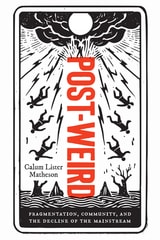
Post-Weird
Fragmentation, Community, and the Decline of the MainstreamCalum Lister Matheson
Rutgers University Press, 2026
An ambitious look at rhetoric and psychosis that explores how communities form when society collapses
American society seems to have fractured. Common touchpoints of authority have receded in recent decades and beliefs that were once taboo are now openly shared, from neo-Nazism to occultism to conspiracy thinking. In this book, Calum Lister Matheson goes beyond the fraying of contemporary American culture to ask how splinter communities form in our current media environment, what keeps them together, and what they build from the ruins of shared language.
In his stirring exploration of how people communicate when old forms of authority and meaning collapse, Matheson examines far-flung groups that have departed the mainstream—Sandy Hook deniers, Appalachian serpent handlers, pro-anorexia bloggers, incels, transvestigators, pseudoscientific reactionaries, and more—and finds unexpected similarities among their many differences. Key among their parallels is the insistence that the symbols shared by each community represent a hidden truth that cannot be questioned or interpreted but is revealed through signs—words, images, videos, and texts. By documenting American fringe cultures, extremism, and the social functions of language, this book rethinks concepts like irony, psychosis, propriety, and what it means to be normal in weird times.
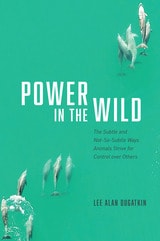
Power in the Wild
The Subtle and Not-So-Subtle Ways Animals Strive for Control over OthersLee Alan Dugatkin
University of Chicago Press, 2022
The quest for power in animals is so much richer, so much more nuanced than who wins what knock-down, drag-out fight. Indeed, power struggles among animals often look more like an opera than a boxing match. Tracing the path to power for over thirty different species on six continents, writer and behavioral ecologist Lee Alan Dugatkin takes us on a journey around the globe, shepherded by leading researchers who have discovered that in everything from hyenas to dolphins, bonobos to field mice, cichlid fish to cuttlefish, copperhead snakes to ravens, and meerkats to mongooses, power revolves around spying, deception, manipulation, forming and breaking up alliances, complex assessments of potential opponents, building social networks, and more. Power pervades every aspect of the social life of animals: what they eat, where they eat, where they live, whom they mate with, how many offspring they produce, whom they join forces with, and whom they work to depose. In some species, power can even change an animal’s sex. Nor are humans invulnerable to this magnificently intricate melodrama: Dugatkin’s tales of the researchers studying power in animals are full of unexpected pitfalls, twists and turns, serendipity, and the pure joy of scientific discovery.
Practice Development in Sport and Performance Psychology
Jim Taylor
FiT Publishing, 2015
Practice Development in Sport and Performance Psychology is a practical guide with a step-by-step process for establishing and maintaining a consulting practice for today's sport and performance psychology professionals.
Editor Jim Taylor and a talented team of authors provide a foundation of knowledge and skills necessary to establish and maintain a consulting practice and explore the gamut of issues including understanding the progression of professional development, creating a performance model, writing a business plan, using social media, and much more.
Each chapter includes a summary and exercises to review and further explore relevant topics covered in the book.
“This book is both informative and practical. Two particular aspects are especially worth commending because they ground us in the lessons of the past, the current state of our field, and its certain future. First, though often relegated to the latter parts of a book as an afterthought, the chapter on ethics is placed front and center. Ethics should indeed be the starting point of any consulting business. Second, technology is the future of sport and performance psychology consulting. Appropriately located in the latter part of the book, but certainly critical to our work in the 21st century, is a chapter on consulting in the age of electronic and social media. “How do you get to Carnegie Hall?” the old joke goes. Practice, practice, practice.”
–Kate F. Hays, Ph.D., CC-AASP, The Performing Edge
"Deftly organized into three major sections (Designing; Building; Expanding), Practice Development in Sport and Performance Psychology is comprised of ten erudite and informative articles by experts. The result is a seminal work of impressive scholarship and scope, making Practice Development in Sport and Performance Psychology very highly recommended for personal, professional, community, and academic library Sports & Athletics reference collections and supplemental studies reading lists."
–The Sports Shelf, Midwest Book Review