Results by title
4743 books match the query 'Religion' and 206 start with p
PADRES
The National Chicano Priest MovementBy Richard Edward Martínez
University of Texas Press, 2005
From the 1848 Treaty of Guadalupe Hidalgo to the 1960s, Mexican American Catholics experienced racism and discrimination within the U.S. Catholic church, as white priests and bishops maintained a racial divide in all areas of the church's ministry. To oppose this religious apartheid and challenge the church to minister fairly to all of its faithful, a group of Chicano priests formed PADRES (Padres Asociados para Derechos Religiosos, Educativos y Sociales, or Priests Associated for Religious, Educational, and Social Rights) in 1969. Over the next twenty years of its existence, PADRES became a powerful force for change within the Catholic church and for social justice within American society.
This book offers the first history of the founding, activism, victories, and defeats of PADRES. At the heart of the book are oral history interviews with the founders of PADRES, who describe how their ministries in poor Mexican American parishes, as well as their own experiences of racism and discrimination within and outside the church, galvanized them into starting and sustaining the movement. Richard Martínez traces the ways in which PADRES was inspired by the Chicano movement and other civil rights struggles of the 1960s and also probes its linkages with liberation theology in Latin America. He uses a combination of social movement theory and organizational theory to explain why the group emerged, flourished, and eventually disbanded in 1989.
Pacific Apostle
The 1920-21 Diary of David O. McKay in the Latter-day Saint Island MissionsDavid O. McKay, Edited by Reid L. Neilson and Carson V. Teuscher
University of Illinois Press, 2020
Paganism - Christianity - Judaism
A Confession of FaithMax Brod, translated by William Wolfe, introduction by Eric Gottgetreu
University of Alabama Press, 1970
Now remembered primarily as Franz Kafta's friend and literary executor, Max Brod was an accomplishered thinker and writer in his own right. In this volume, he considers the nature and differences between Judaism and Christianity, addressing some of the most perplexing questions at the heart of human existence.
“One of the most famous and widely discussed books of the 1920’s, Max Brod’s Paganism—Christianity—Judaism, has at last found its way into English translation to confront a new generation of readers. Max Brod is best remembered today as the literary editor and friend of Franz Kafka. In his day, however, he was the more famous of the two by far. A major novelist, playwright, poet, essayist, and composer, he was also, as this book demonstrates, a serious thinker on the perennial questions that are at the heart of human existence. . . .Some of his judgments are open to question. Still, with all its limitations, this is a forthright and passionate proclamation of the uniqueness of Judaism. Paganism—Christianity—Judaism was an intellectual and spiritual event when it was first published and it remains a valuable document even now.” —Rabbi Jack Riemer, Hadassah
Pagans and Christians in the Late Roman Empire
New Evidence, New Approaches (4th–8th centuries)Marianne Sághy
Central European University Press, 2017
Paging God
Religion in the Halls of MedicineWendy Cadge
University of Chicago Press, 2012
Paging God
Religion in the Halls of MedicineWendy Cadge
University of Chicago Press, 2012
While the modern science of medicine often seems nothing short of miraculous, religion still plays an important role in the past and present of many hospitals. When three-quarters of Americans believe that God can cure people who have been given little or no chance of survival by their doctors, how do today’s technologically sophisticated health care organizations address spirituality and faith?
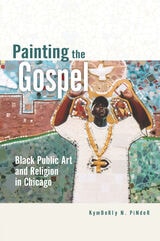
Painting the Gospel
Black Public Art and Religion in ChicagoKymberly Pinder
University of Illinois Press, 2016
Painting the Gospel includes maps and tour itineraries that allow readers to make conceptual, historical, and geographical connections among the works.
Paleontology
A Brief History of LifeIan Tattersall
Templeton Press, 2010
"Endlessly absorbing and informative. It would be hard to imagine a better introduction to this most important and fascinating field.”—Bill Bryson, author of A Short History of Nearly Everything
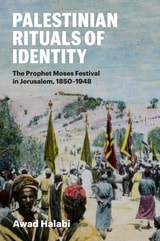
Palestinian Rituals of Identity
The Prophet Moses Festival in Jerusalem, 1850-1948Awad Halabi
University of Texas Press, 2023
Members of Palestine’s Muslim community have long honored al-Nabi Musa, or the Prophet Moses. Since the thirteenth century, they have celebrated at a shrine near Jericho believed to be the location of Moses’s tomb; in the mid-nineteenth century, they organized a civic festival in Jerusalem to honor this prophet. Considered one of the most important occasions for Muslim pilgrims in Palestine, the Prophet Moses festival yearly attracted thousands of people who assembled to pray, conduct mystical forms of worship, and hold folk celebrations.
Palestinian Rituals of Identity takes an innovative approach to the study of Palestine’s modern history by focusing on the Prophet Moses festival from the late Ottoman period through the era of British rule. Halabi explores how the festival served as an arena of competing discourses, with various social groups attempting to control its symbols. Tackling questions about modernity, colonialism, gender relations, and identity, Halabi recounts how peasants, Bedouins, rural women, and Sufis sought to influence the festival even as Ottoman authorities, British colonists, Muslim clerics, and Palestinian national leaders did the same. Drawing on extensive research in Arabic newspapers and Islamic and colonial archives, Halabi reveals how the festival has encapsulated Palestinians’ responses to modernity, colonialism, and the nation’s growing national identity.

Papal Letters in the Early Middle Ages
Detlev Jasper
Catholic University of America Press, 2001
Papyrus Codex of the Shepherd of Hermas
(Similitudes 2-9) With a Fragment of the MandatesEdited by Campbell Bonner
University of Michigan Press, 1934
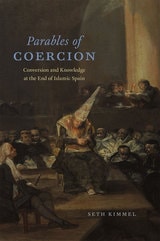
Parables of Coercion
Conversion and Knowledge at the End of Islamic SpainSeth Kimmel
University of Chicago Press, 2015
In its careful examination of how Spanish authors transformed the history of scholarship through debate about forced religious conversion, Parables of Coercion makes us rethink what we mean by tolerance and intolerance, and shows that debates about forced conversion and assimilation were also disputes over the methods and practices that demarcated one scholarly discipline from another.
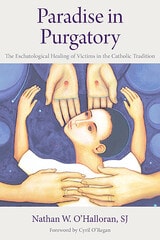
Paradise in Purgatory
The Eschatological Healing of Victims in the Catholic TraditionNathan W. O'Halloran
Catholic University of America Press, 2024
Paradox at Play
Metaphor in Meister Eckhart's Sermons: with previously unpublished sermonsClint Johnson
Catholic University of America Press, 2022
Parallel Worlds
An Anthropologist and a Writer Encounter AfricaAlma Gottlieb and Philip Graham
University of Chicago Press, 1994
"A remarkable look at a remote society [and] an engaging memoir that testifies to a loving partnership . . . compelling."—James Idema, Chicago Tribune
Parish Boundaries
The Catholic Encounter with Race in the Twentieth-Century Urban NorthJohn T. McGreevy
University of Chicago Press, 1996
"Parish Boundaries can take its place in the front ranks of the literature of urban race relations."—Jonathan Dorfman, Washington Post Book Review
"A prodigiously researched, gracefully written book distinguished especially by its seamless treatment of social and intellectual history."—Robert Orsi, American Historical Review
"Parish Boundaries will fascinate historians and anyone interested in the historic connection between parish and race."—Ed Marciniak, Chicago Tribune
"The history that remains to be written will rest on the firm foundation of Mr. McGreevy's remarkable book."—Richard Wightman Fox, New York Times Book Review
Parish Nursing - 2011 Edition
Stories of Service and CareVerna Benner Carson
Templeton Press, 2011
The engaging stories in Parish Nursing provide accessible and enjoyable accounts of real parish nurses, both paid and volunteer, who attend to the needs of their congregations in a variety of ways—from home, hospice, and hospital visits to community outreach. This revised edition gathers their stories of hearing and heeding God’s call, of their faith that they are doing the “right thing,” of their joys, sorrows, and challenges, and of their quiet dedication as they offer their time and talents to meet the needs of others.
By offering inspiration and encouragement, along with a healthy dose of updated practical advice, this collection will make parish nursing theory come to life. These stories will honor practicing parish nurses, will guide the way for anyone contemplating parish nursing as a career, and will challenge church members and leaders to examine the role that their congregations play in health ministry—especially in meeting the long-term care needs of an aging population.
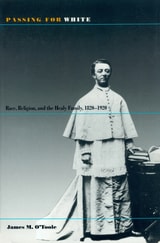
Passing for White
Race, Religion, and the Healy Family, 1820-1920James M. O'Toole
University of Massachusetts Press, 2002
Through the prism of one family's experience, this book explores questions of racial identity, religious tolerance, and black-white “passing” in America. Spanning the century from 1820 to 1920, it tells the story of Michael Morris Healy, a white Irish immigrant planter in Georgia; his African American slave Eliza Clark Healy, who was also his wife; and their nine children. Legally slaves, these brothers and sisters were smuggled north before the Civil War to be educated. In spite of the hardships imposed by American society on persons of mixed racial heritage, the Healy children achieved considerable success. Rejecting the convention that defined as black anyone with “one drop of Negro blood,” they were able to transform themselves into white Americans.
Their unlikely ally in this transition was the Catholic church, as several of them became priests or nuns. One brother served as a bishop in Maine, another as rector of the Cathedral in Boston, and a third as president of Georgetown University. Of the two sisters who became nuns, one was appointed the superior of convents in the United States and Canada. Another brother served for twenty years as a captain in the U.S. Coast Guard, enforcing law and order in the waters off Alaska. The Healy children's transition from black to white should not have been possible according to the prevailing understandings of race, but they accomplished it with apparent ease. Relying on their abilities, and in most cases choosing celibacy, which precluded mixed-race offspring, they forged a place for themselves. They also benefited from the support of people in the church and elsewhere. Even those white Americans who knew the family's background chose to overlook their African ancestry and thereby help them to “get away” with passing. By exploring the lifelong struggles of the members of the Healy family to redefine themselves in a racially polarized society, this book makes a distinctive contribution to our understanding of the enduring dilemma of race in America.

Passion of Israel
Jacques Maritain, Catholic Conscience, and the HolocaustRichard Francis Crane
University of Scranton Press, 2010
In his lifetime, French philosopher Jacques Maritain (1882–1973) achieved a reputation as both a leading Catholic intellectual and as an outspoken critic of antisemitism. Here historian Richard Francis Crane traces the development of Maritain’s opposition toward antisemitism and analyzes the Catholic appreciation of Judaism that animated his stance. Crane probes the writings and teachings of Maritain—from before, during, and after the Holocaust—and illuminates how his ideas altered Christian perceptions of Jews and Judaism during his lifetime and continue to do so today.
Passionate Journeys
Why Successful Women Joined a CultMarion S. Goldman
University of Michigan Press, 2001
Passionate Journeys explores the fascinating stories behind the Bhagwan Rajneesh phenomenon of the 1970s and 1980s, focusing on women who left families, careers, and identities to join the community of Rajneeshpuram. Rajneesh was a spiritual leader for thousands of young Americans, and in rural Oregon his devotees established a thriving community. Marion S. Goldman's extensive interviews with women who participated at Rajneeshpuram provide a fascinating picture of the cultural and social climate that motivated successful, established women to join such a movement.
Passionate Journeys will appeal to specialists in feminist theory and women's studies, sociology, religious studies, American studies, and the history of the Northwest.
Marion S. Goldman is Professor of Sociology, University of Oregon. She is also the author of Gold Diggers and Silver Miners: Prostitution and Social Life on the Comstock Lode.
Passionate and Pious
Religious Media and Black Women's SexualityMonique Moultrie
Duke University Press, 2018
Passions and Virtue
Servais Pinckaers
Catholic University of America Press, 2015
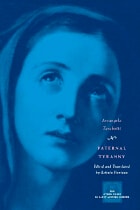
Paternal Tyranny
Arcangela Tarabotti
University of Chicago Press, 2004
Paternal Tyranny, the first of these works, is a fiery but carefully argued manifesto against the oppression of women by the Venetian patriarchy. Denouncing key misogynist texts of the era, Tarabotti shows how despicable it was for Venice, a republic that prided itself on its political liberties, to deprive its women of rights accorded even to foreigners. She accuses parents of treating convents as dumping grounds for disabled, illegitimate, or otherwise unwanted daughters. Finally, through compelling feminist readings of the Bible and other religious works, Tarabotti demonstrates that women are clearly men's equals in God's eyes.
An avenging angel who dared to speak out for the rights of women nearly four centuries ago, Arcangela Tarabotti can now finally be heard.
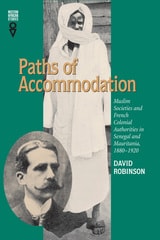
Paths of Accommodation
Muslim Societies and French Colonial Authorities in Senegal and Mauritania, 1880–1920David Robinson
Ohio University Press, 2000
Between 1880 and 1920, Muslim Sufi orders became pillars of the colonial regimes and economies of Senegal and Mauritania. In Paths of Accommodation, David Robinson examines the ways in which the leaders of the orders negotiated relations with the Federation of French West Africa in order to preserve autonomy within the religious, social, and economic realms while abandoning the political sphere to their non-Muslim rulers.
This was a striking development because the local inhabitants had a strong sense of belonging to the Dar al-Islam, the “world of Islam” in which Muslims ruled themselves.
Drawing from a wide variety of archival, oral, and Arabic sources, Robinson describes the important roles played by Muslim merchants and the mulatto community of St. Louis, Senegal. He also examines the impact of the electoral institutions established by the Third Republic, and the French effort to develop a reputation as a “Muslim power”—a European imperial nation with a capacity for ruling over Islamic subjects.
By charting the similarities and differences of the trajectories followed by leading groups within the region as they responded to the colonial regimes, Robinson provides an understanding of the relationship between knowledge and power, the concepts of civil society and hegemony, and the transferability of symbolic, economic, and social capital.
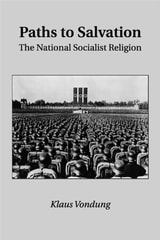
Paths to Salvation
The National Socialist ReligionKlaus Vondung
St. Augustine's Press, 2017
In order to understand National Socialism one must recognize its religious nature. Many Germans were attracted to the party by its pledge to re-establish a true community of the people, a goal that was celebrated as “holy”.
Not only did Hitler promise to solve political, social, and economic problems, he also responded to a widely felt need for salvation. The prospect of salvation elevated politics into the realm of religion and lent meaning to the lives of those who embraced it.
In this work Klaus Vondung explores the various forms in which the elevation of politics into the sphere of religion was expressed in the Third Reich: in the faith of committed National Socialists, in the party’s cult events which celebrated the “community of the people” as a “community of faith” and the Fuhrer as “savior”, and in the persecution of the Jews that was ‘justified’ in religious terms by demonizing Jews as the “evil enemies of humanity” responsible for the world’s ills. This apocalyptic worldview was the extreme manifestation of the religious nature of National Socialism and, in the final analysis, the only plausible explanation for the intention of exterminating the Jews that led to the holocaust.
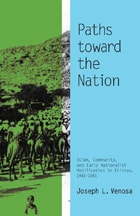
Paths toward the Nation
Islam, Community, and Early Nationalist Mobilization in Eritrea, 1941–1961Joseph L. Venosa
Ohio University Press, 2014
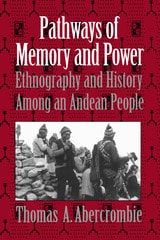
Pathways of Memory and Power
Ethnography and History among an Andean PeopleThomas A. Abercrombie
University of Wisconsin Press, 1998
Making clear the early and deep intermingling of practices and world views among Spaniards and Andeans, Christians and non-Christians, Abercrombie critiques both the romanticist tendency to regard Andean culture as still separate from and resistant to European influences, and the melodramatic view that all indigenous practices have been obliterated by colonial and national elites. He challenges prejudices that, from colonial days to the present, have seen Andean historical knowledge only in mythic narratives or narratives of personal experience. Bringing an ethnographer’s approach to historiography, he shows how complex Andean rituals that hybridize European and indigenous traditions—such as libation dedications and llama sacrifices held on saints’ day festivals—are in fact potent evidence of social memory in the community.
Patient Expectations
How Economics, Religion, and Malpractice Shaped Therapeutics in Early AmericaCatherine L. Thompson
University of Massachusetts Press, 2015
During the first half of the nineteenth century a major shift occurred in the medical treatment of illness in the United States, as physicians abandoned the use of “heroic” depletive therapies—the pukes and purges made famous in the 1790s by Dr. Benjamin Rush of Philadelphia—in favor of a let-nature-take-its-course approach to most diseases. Standard histories of American medicine have long attributed this shift to new theories and training methods as well as increased competition from homeopaths and botanical doctors. In this book, Catherine L. Thompson challenges that interpretation by emphasizing the role of patients as active participants in their own health care rather than passive objects of medical treatment.
Focusing on Massachusetts, then as now a center of U.S. medical education and practice, Thompson draws on data from patients' journals, medical account ledgers, physicians' daybooks, and court records to link changes in medical treatment to a gradual evolution of patient expectations across varied populations. Specifically, she identifies three developments—the increasing use of cash in medical transactions, growing religious pluralism, and the rise of malpractice suits—as key factors in transforming patients into active medical consumers unwilling to submit to doctors' advice without considering alternatives.
By showing how nineteenth-century patients shaped therapeutic practice “through the medical choices they made or didn't make,” Thompson's study alters our understanding of American medicine in the past and has implications for its present and future.
Patriotism is a Catholic Virtue
Irish-American Catholics, The American Church and the Coming of the Great WarThomas J. Rowland
Catholic University of America Press, 2023
Patristic Exegesis in Context
Exploring the Genres of Early Christian Biblical InterpretationMiriam De Cock
Catholic University of America Press, 2023
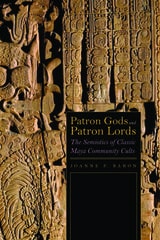
Patron Gods and Patron Lords
The Semiotics of Classic Maya Community CultsJoanne Baron
University Press of Colorado, 2016
Using semiotic theory, Baron draws on three bodies of evidence: ethnographies and manuscripts from Postclassic, Colonial, and modern Maya communities that connect patron saints to pre-Columbian patron gods; hieroglyphic texts from the Classic period that discuss patron deity veneration; and excavations from four patron deity temples at the site of La Corona, Guatemala. She shows how the Classic Maya used patron deity effigies, temples, and acts of devotion to negotiate group membership, social entitlements, and obligations between individuals and communities. She also explores the wider role of these processes in politics, arguing that rituals and discourses related to patron deities ultimately formulated Maya rulership as a locally oriented institution, which limited the ability of powerful kingdoms to create wider religious communities.
Applying a new theoretical approach for the archaeological study of ideology and power dynamics, Patron Gods and Patron Lords reveals an overlooked aspect of the belief system of Maya communities.
Paul Unbound
Other Perspectives on the ApostleMark D. Given
SBL Press, 2022
"As long as there are readers of Paul, there will be always be other perspectives."
The essays in this second edition of Paul Unbound: Other Perspectives on the Apostle provide introductions to Paul's relationship to and views on the Roman Empire, first-century economic stratification, his opponents, ethnicity, the law, Judaism, women, and Greco-Roman rhetoric. Contributors Warren Carter, Charles H. Cosgrove, A. Andrew Das, Steven J. Friesen, Mark D. Given, Deborah Krause, Mark D. Nanos, and Jerry L. Sumney have added addendums to their original essays and updated the bibliography to take into account scholarship produced in the decade since the publication of the first edition. The collection provides essential background and sets out new directions for study useful to students of the New Testament and Paul's letters.
Paul and Scripture
Extending the ConversationChristopher D. Stanley
SBL Press, 2012
Paul and the Resurrected Body
Social Identity and Ethical PracticeMatt O'Reilly
SBL Press, 2020
A new reading of Pauline theology, ethics, and eschatology grounded in social-identity theory and sociorhetorical criticism
Readers often think of Paul’s attitude toward the resurrection of the body in individual terms: a single body raised as the climax of an individual’s salvation. In Paul and the Resurrected Body: Social Identity and Ethical Practice, Matt O’Reilly makes the case that, for Paul, the social dimension of future bodily resurrection is just as important, if not more so. Through a close reading of key texts in the letters to the Corinthians, Romans, and Philippians, O’Reilly argues that resurrection is integral to Paul’s understanding of Christian social identity. In Paul’s theological reasoning, a believer’s hope for the future depends on being identified as part of the people of God who will be resurrected.
Features
- A clarification of the eschatological basis for Paul’s ethical expectations
- Exploration of the social significance of Paul’s theological reasoning
- An integration of ancient rhetorical theory with contemporary social-identity theory
Paul as Infant and Nursing Mother
Metaphor, Rhetoric, and Identity in 1 ThessaJennifer Houston McNeel
SBL Press, 2014
Explore the significance of maternal metaphors in the writings of a first-century male missionary and theologian
Paul employed metaphors of childbirth or breastfeeding in four out of the seven undisputed epistles. In this book, McNeel uses cognitive metaphor theory and social identity analysis to examine the meaning and function of these maternal metaphors. She asserts that metaphors carry cognitive content and that they are central to how humans process information, construct reality, and shape group identity.
Features:
- A focus on “identity” as the way in which people understand themselves in relation to one another, to society, and to those perceived as outsiders
- Examination of metaphor as part of Paul’s rhetorical strategy
- Integration of the work of philosopher Max Black with the work of cognitive linguists George Lakoff and Mark Johnson
Paul in the Summa Theologiae
Matthew Levering
Catholic University of America Press, 2014
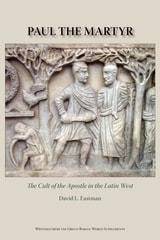
Paul the Martyr
The Cult of the Apostle in the Latin WestDavid L. Eastman
SBL Press, 2011
Ancient iconography of Paul is dominated by one image: Paul as martyr. Whether he is carrying a sword—the traditional instrument of his execution—or receiving a martyr's crown from Christ, the apostle was remembered and honored for his faithfulness to the point of death. As a result, Christians created a cult of Paul, centered on particular holy sites and characterized by practices such as the telling of stories, pilgrimage, and the veneration of relics. This study integrates literary, archaeological, artistic, and liturgical evidence to describe the development of the Pauline cult within the cultural context of the late antique West.
Peace in the Thought of Thomas Aquinas
Philosophy, Theology, and EthicsJohn M. Meinert
Catholic University of America Press, 2024
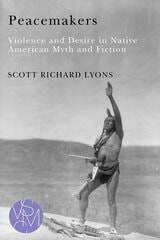
Peacemakers
Violence and Desire in Native American Myth and FictionScott Richard Lyons
Michigan State University Press, 2027
Employing the mimetic theory of René Girard as its heuristic, Peacemakers offers a unique analysis of Native American myth and fiction. It explores two important founding myths (Lac du Flambeau Ojibwe and Acoma Pueblo) and analyzes four modern novels: three from the Native American Renaissance of the 1960s and 1970s (N. Scott Momaday’s House Made of Dawn, James Welch’s Winter in the Blood, Leslie Marmon Silko’s Ceremony) and the fourth from the twenty-first century (Sherman Alexie’s Flight). While Native American literary criticism typically points to continuities across the traditional-modern divide, Scott Richard Lyons emphasizes a decisive break happening in the progressive era. Following Girard’s theory, Lyons finds that the Indigenous worlds of sacred tradition and secular modernity confront situations of mimetic desire and violence in significantly different ways, given their different cultural resources. Ultimately problems of violence and desire come down to questions of how people can live together peacefully with a sense of meaning and transcendence, questions that are more “religious” than “political.” Thus, the outlook of Peacemakers is more Shakespearian than Marxian.
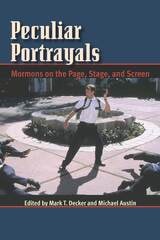
Peculiar Portrayals
Mormons on the Page, the Stage and the ScreenMark T Decker
Utah State University Press, 2010
In a time when Mormons appear to have larger roles in everything from political conflict to television shows and when Mormon-related topics seem to show up more frequently in the news, eight scholars take a close look at Mormonism in popular media: film, television, theater, and books.
Some contributors examine specific works, including the Tony-winning play Angels in America, the hit TV series Big Love, and the bestselling books Under the Banner of Heaven: A Story of Violent Faith and The Miracle Life of Edgar Mint. Others consider the phenomena of Mormon cinema and Mormon fiction; the use of the Mormon missionary as a stock character in films; and the noticeably prominent presence of Mormons in reality television shows.
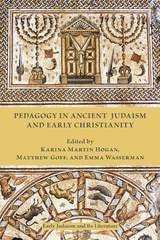
Pedagogy in Ancient Judaism and Early Christianity
Karina Martin Hogan
SBL Press, 2017
Engage fourteen essays from an international group of experts
There is little direct evidence for formal education in the Bible and in the texts of Second Temple Judaism and early Christianity. At the same time, pedagogy and character formation are important themes in many of these texts. This book explores the pedagogical purpose of wisdom literature, in which the concept of discipline (Hebrew musar) is closely tied to the acquisition of wisdom. It examines how and why the concept of musar came to be translated as paideia (education, enculturation) in the Greek translation of the Hebrew Bible (Septuagint), and how the concept of paideia was deployed by ancient Jewish authors writing in Greek. The different understandings of paideia in wisdom and apocalyptic writings of Second Temple Judaism are this book's primary focus. It also examines how early Christians adapted the concept of paideia, influenced by both the Septuagint and Greco-Roman understandings of this concept.
Features
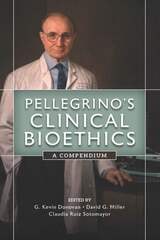
Pellegrino's Clinical Bioethics
A CompendiumEdmund Pellegrino
Catholic University of America Press, 2023

Pentecostal Currents in American Protestantism
Edited by Edith L. Blumhofer, Russell P. Spittler, and Grant A. Wacker
University of Illinois Press, 1999
Edith Blumhofer uses the Assemblies of God, the largest classical Pentecostal denomination in the world, as a lens through which to view the changing nature of Anglo Pentecostalism in the United States. She illustrates how the original mission to proclaim the end resulted in the development of Bible schools, the rise of the charismatic movement, and the popularity of such figures as Aimee Semple McPherson, Charles Fox Parham, and David Du Plessis. Blumhofer also examines the sect's use of radio and television and the creation of a parallel Christian culture
Pentecostalism in Urban Oaxaca
Healing Patriarchy, Marriage, and MexicoMichelle Ramirez
University of Alabama Press, 2024
An ethnography focusing on a Pentecostal church community and their pursuit of healing marriages and prosperity
Pentecostalism in Urban Oaxaca is a timely feminist ethnography set in a Pentecostal church community in Oaxaca de Juarez. Based on extensive fieldwork, Michelle Ramirez skillfully melds medical anthropology with cultural analysis to reveal the Pentecostal movement’s dynamics in the contexts of faith healing, marital relations, and economic prosperity.
Ramirez takes stock of the problematic ways that Pentecostalism has played out for Mexican women today but also reminds readers of some of its successes. Within the context of Mexican patriarchy, some women parishioners in abusive relationships see the church as a way to improve their lot. Pentecostalism seeks to rupture with Mexico’s colonial heritage, and Ramirez provides novel ways for the reader to consider how Pentecostalism can provide healing for even the “endlessness of addiction.” One case study portrays a former abusive alcoholic womanizer who underwent a spiritual transformation as a result of his conversion. Through this example and more, Ramirez examines the complex relationship between gender, modernity, and Indigeneity in the context of marriage. The book also addresses the #MeToo movement as encountered in the Pentecostal church.
Finally, Ramirez investigates how Pentecostalism addresses the “curses” of illness and poverty, highlighting the paradoxical relationship between faith healing and curanderismo. The gospel of economic prosperity holds promise for a better life, breaking free from the “disease” of poverty. To this end, Ramirez profiles some parishioners’ involvement with Omnilife, a multilevel marketing company selling vitamins and natural health products that propounds ideals similar to those of Pentecostal Christianity.
People of Faith
Slavery and African Catholics in Eighteenth-Century Rio de JaneiroMariza de Carvalho Soares
Duke University Press, 2011
People of the Water
Change and Continuity among the Uru-Chipayans of BoliviaJoseph Bastien
University of Utah Press, 2012
People of the Water is an ethnographic analysis of the cultural practices of the Uru-Chipayans—how they have maintained their culture and how they have changed. The Chipayans are an Andean people whose culture predates the time of the Incas (c. AD 1400), but they were almost wiped out by 1940, when only around 400 remained. Yet their population has quadrupled in the last 60 years. Joseph Bastien has spent decades living with and studying the Chipayans, and here for the first time he discusses the dynamics between traditional, social, and religious practices and the impending forces of modernity upon them. With the support of more than 100 illustrations he documents how, in spite of challenges, the Chipayans maintain ecological sustainability through an ecosystem approach that is holistic and symbolically embedded in rituals and customs.
Chipayans have a resilient and innovative culture, maintaining dress, language, hairstyle, rituals, and behavior while also re-creating their culture from a dialectic between themselves and the world around them. Bastien provides the reader with a series of experienced observations and intimate details of a group of people who strive to maintain their ancient traditions while adapting to modern society. This ethnographic study offers insightful, surprising, and thoughtful conclusions applicable to interpreting the world around us.
Peregrinations of the Word
Louis Mackey
University of Michigan Press, 1997
Peregrinations of the Word consists of essays on five medieval philosophers: Augustine, Anselm, Aquinas, Bonaventure, and Duns Scotus. An essay on the tension between autobiography and theology in Augustine's Confessions is followed by a commentary on the dialogue of faith and reason in his On the Teacher. A third essay shows how Anselm's Proslogion both constructs and deconstructs the ontological proof of God's existence. There is a discussion of Bonaventure's staging of the opposition between Aristotle and the scriptures in terms of the respective languages. Finally there is an examination of the ways Duns Scotus's distinctive positions on the Incarnation, the Immaculate Conception, and the Eucharist shape his philosophical views.
Though each of these essays is an independent study, they have as a common theme the relation between faith and reason as understood in the Middle Ages; e.g., the conflict between the hermeneutic of reason and that of revelation in the construction of self; the dialectic of philosophical demonstration and devotional submission required of all discourse about God; and the resources available to medieval theology for resolving the conflict of nominalism and realism. Mackey maintains that medieval philosophy can only be understood in its theological and scriptural milieu. He has argued this point by showing how that milieu enabled these five thinkers to deal with a variety of philosophical issues. He concludes persuasively that religious beliefs and exegetical concerns did not shackle the medieval mind but rather liberated it and empowered it.
Louis Mackey is Professor of Philosophy, University of Texas at Austin.
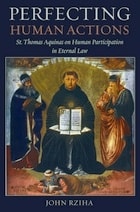
Perfecting Human Actions
St. Thomas Aquinas on Human Participation in Eternal LawJohn Rziha
Catholic University of America Press, 2009
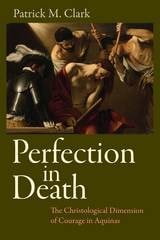
Perfection in Death
Patrick M. Clark
Catholic University of America Press, 2015
Performances of Spiral Time
Leda Maria Martins. Translated by Bruna Barros and Jess Oliveira
Duke University Press, 2025