Results by title
4154 books match the query 'State & Local' and 170 start with p

Pacific Northwest Cheese
A HistoryTami Parr
Oregon State University Press, 2013
For years, farmers in the Pacific Northwest made and sold cheese to support themselves, but over time the craft of cheesemaking became a profitable industry and production was consolidated into larger companies and cooperatives. Eventually, few individual cheesemakers were left in the region. In the late sixties and early seventies, influenced by the counterculture and back-to-the-land movements, the number of small farms and cheesemakers began to grow, initiating an artisan cheese renaissance that continues today.
Along with documenting the history of cheese in the region, Parr reveals some of the Pacific Northwest’s untold cheese stories: the fresh cheese made on the Oregon Trail, the region’s thriving blue cheese and regional swiss cheese makers, and the rise of goat’s milk and goat’s milk cheese (not the modern phenomenon many assume it to be).

Pacific Northwest Women, 1815-1925
Lives, Memories, and WritingsJean M. Ward
Oregon State University Press, 1995
Pacific Northwest Women, 1815-1925
Lives, Memories, and WritingsJean M. Ward
Oregon State University Press, 1997

Pandora's Locks
The Opening of the Great Lakes-St. Lawrence SeawayJeff Alexander
Michigan State University Press, 2009
The St. Lawrence Seaway was considered one of the world's greatest engineering achievements when it opened in 1959. The $1 billion project-a series of locks, canals, and dams that tamed the ferocious St. Lawrence River-opened the Great Lakes to the global shipping industry.
Linking ports on lakes Superior, Michigan, Huron, Erie, and Ontario to shipping hubs on the world's seven seas increased global trade in the Great Lakes region. But it came at an extraordinarily high price. Foreign species that immigrated into the lakes in ocean freighters' ballast water tanks unleashed a biological shift that reconfigured the world's largest freshwater ecosystems.
Pandora's Locks is the story of politicians and engineers who, driven by hubris and handicapped by ignorance, demanded that the Seaway be built at any cost. It is the tragic tale of government agencies that could have prevented ocean freighters from laying waste to the Great Lakes ecosystems, but failed to act until it was too late. Blending science with compelling personal accounts, this book is the first comprehensive account of how inviting transoceanic freighters into North America's freshwater seas transformed these wondrous lakes.

Paradise Valley, Nevada
The People and Buildings of an American PlaceHoward Wight Marshall
University of Arizona Press, 1995

Paradoxes of Hawaiian Sovereignty
Land, Sex, and the Colonial Politics of State NationalismJ. Kehaulani Kauanui
Duke University Press, 2018
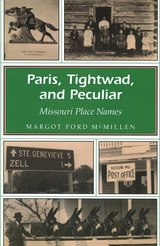
Paris, Tightwad, and Peculiar
Missouri Place NamesMargot Ford McMillen
University of Missouri Press, 1994
Paris, Tightwad, Peculiar, Neosho, Gasconade, Hannibal, Diamond, Quarantine, Zif, and Zig. These are just a few of the names Margot Ford McMillen covers in her lively book on the history of place names in Missouri. The origins behind the names range from humorous to descriptive:
•Tightwad, Missouri, is said to have been named after a store owner who cheated a mailman out of his rightful watermelon to make an extra fifty cents. •Plad, Missouri, was supposed to be named "Glad," but the post office printed the name wrong, and it was too much trouble to get it changed. •Some place names describe a location, such as Big Spring or Flat River. •Other names show the influence of immigrants to the state, like Hermann, which is a German name, or the Maries River, which was derived from the French. •Many places are named for people or wildlife found nearby, while others are backed up by legend or simply picked out of thin air.
Parks for Texas
Enduring Landscapes of the New DealBy James Wright Steely
University of Texas Press, 1999
State parks across Texas offer a world of opportunities for recreation and education. Yet few park visitors or park managers know the remarkable story of how this magnificent state park system came into being during the depths of the Great Depression in the 1930s. Drawing on archival records and examining especially the political context of the New Deal, James Wright Steely here provides the first comprehensive history of the founding and building of the Texas state park system.
Steely's history begins in the 1880s with the movement to establish parks around historical sites from the Texas Revolution. He follows the fits-and-starts progress of park development through the early 1920s, when Governor Pat Neff envisioned the kind of park system that ultimately came into being between 1933 and 1942.
During the Depression an amazing cast of personalities from Franklin D. Roosevelt to Lyndon Johnson led, followed, or obstructed the drive to create this state park system. The New Deal federal-state partnerships for depression relief gave Texas the funding and personnel to build 52 recreational parks under the direction of the National Park Service. Steely focuses in detail on the activities of the Civilian Conservation Corps, whose members built parks from Caddo Lake in the east to the first park improvements in the Big Bend out west. An appendix lists and describes all the state parks in Texas through 1945, while Steely's epilogue brings the parks' story up to the present.

Parson Henry Renfro
Free Thinking on the Texas FrontierBy William C. Griggs
University of Texas Press, 1994
The years following the Texas Revolution held even more turbulent events as diverse droves of pioneers crossed the Sabine and Red Rivers to start new lives in Texas. Early Texas society contended with religious issues, family life in a rugged environment, and the Civil War. This cultural history was clearly reflected in the life of frontier preacher Henry C. Renfro.
Migrating to Texas in 1851, Renfro enrolled in the fledgling Baylor University and became a Baptist preacher. Eventually disillusioned with Baptist orthodoxy, Renfro was disenfranchised on charges of infidelity as he embraced the ideals of the Free Thought Movement, inspired by the writings of men such as Thomas Paine, Spinoza, and Robert Ingersoll.
Renfro's Civil War experience was no less unusual. Serving as both soldier and chaplain, Renfro left a valuable legacy of insight into the conflict, captured in a wealth of correspondence that is in itself significant.
Drawing on a vast body of letters, speeches, sermons, and oral histories that had never before been available, this chronological narrative of "The Parson's" life describes significant changes in Texas from 1850 to 1900, especially the volatile formation and growth of Baptist churches in North Central Texas. William Griggs' study yields numerous new details about the Free Thought Movement and depicts public reaction to sectarian leaders in nineteenth-century Texas.
The author also describes the developing Central Texas region known as the Cross Timbers, including the personal dynamics between a frontier family and its patriarch and encompassing such issues as property conflicts, divorce, and family reconciliation. This work unlocks an enlightening, engaging scene from Texas history.
Party Organization and Activism in the American South
Robert P. Steed
University of Alabama Press, 1998
Maps the ways political parties remain vital components in the American political system, especially in the eleven states in the South
As Tocqueville noted more than 100 years ago, “No countries need associations more . . . than those with a democratic social state.” Although some contemporary observers see a decline in associations, especially in the political sphere, the contributors in this volume argue not only that political parties remain an essential component of the American political system but also that grassroots political groups have revitalized the political process, especially in the South.
Using data gathered from local party officials in the eleven southern states, the authors examine such key issues as: Who becomes involved in local party organizations and why? How do parties recruit and retain workers? What are the ideological and issue orientations of these activists? How does intraparty factionalism affect local party organizations? What is the connection between the party organization and its external environment?
The large regional database provides these contributors with the opportunity to extend the study of local party organization and activists, thus addressing some of the significant gaps in previous research. The additional data enable them to clarify the nature of local party organizations and, in a larger sense, the role of the parties in the contemporary American political system.
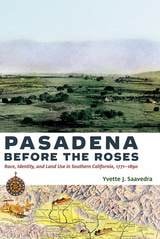
Pasadena Before the Roses
Race, Identity, and Land Use in Southern California, 1771–1890Yvette J. Saavedra
University of Arizona Press, 2018
But what existed before the roses? Before it was Pasadena, this land was Hahamog’na, the ancestral lands of the Tongva people. Later, it comprised the heart of the San Gabriel Mission lands, and in the Mexican period, it became Rancho San Pascual. The 1771 Spanish conquest of this land set in motion several colonial processes that would continue into the twentieth century and beyond.
In Pasadena Before the Roses, historian Yvette J. Saavedra examines a period of 120 years to illustrate the interconnectedness of power, ideas of land use, and the negotiation of identity within multiple colonial moments. By centering the San Gabriel Mission lands as the region’s economic, social, and cultural foundation, she shows how Indigenous, Spanish, Mexican, and American groups each have redefined the meanings of land use to build their homes and their lives. These visions have resulted in competing colonialisms that framed the racial, ethnic, gender, and class hierarchies of their respective societies.
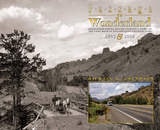
Passage to Wonderland
Rephotographing Joseph Stimson's Views of the Cody Road to Yellowstone National Park, 1903 and 2008Michael A. Amundson
University Press of Colorado, 2012
Amundson examines the physical changes along "the most scenic fifty miles in America" and explores the cultural and natural history behind them. This careful analysis of the paired images make Passage to Wonderland more than a "then and now" photography book--it is a unique exploration of the interconnectedness between the Old West and the New West. It will be a wonderful companion for those touring the Cody Road as well as those armchair tourists who can follow the road on Google Earth using the provided GPS coordinates.
The University Press of Colorado gratefully acknowledges the generous support of the Charles Redd Center for Western Studies at Brigham Young University toward the publication of this book.

Passing the Baton
The Chicago Symphony Orchestra and the Music Directors Who Shaped Its GreatnessPhillip Huscher
University of Chicago Press, 2026
The untold story of how the Chicago Symphony Orchestra forged its place among the world’s foremost performing arts institutions through 135 years of change.
The Chicago Symphony Orchestra boasts a tradition and staying power that few cultural institutions can rival—a legacy that is tested each time one music director passes the conductor’s baton to another. In this first narrative account of the orchestra’s 135-year history, music critic and historian Phillip Huscher delivers a passionate description of how an upstart ensemble rose to international prominence and established itself as the premier symphony orchestra in the United States.
With a scholar’s care for detail and a novelist’s attention to drama, Huscher invites us into the tangled machinations behind the success or failure of each chapter in the orchestra’s storied past. We see how legendary directors such as Fritz Reiner, Sir Georg Solti, and Riccardo Muti carried the orchestra to new heights of technical perfection and sonic brilliance, but also how others provoked public outcry, caved to insider hostility, or fell to cruel press. The result is a vivid portrait of an orchestra fighting to sustain its identity amid the constant contest between past and present, supporters and critics, and artistic and financial vision.
Woven into this saga are personal stories drawn from newly uncovered documents and interviews with players, conductors, and policymakers about the burden of inheritance, the price of ambition, and the yearning to forge a legacy. Taken together, this is a tale about the power of music—how it can help us navigate our lives and leave a lasting impact on the world around us.
Past Titan Rock
Journeys into an Appalachian ValleyEllesa Clay High
West Virginia University Press, 2021
Past Titan Rock, a winner of the Appalachian Award for Literature, is available in a new edition as part of the series Sounding Appalachia, with an introduction by series editor Travis D. Stimeling.
In 1977 Ellesa Clay High thought she would spend an afternoon interviewing Lily May Ledford, best known as the lead performer of an all-female string band that began playing on the radio in the 1930s. That meeting began an unexpected journey leading into the mountains of eastern Kentucky and a hundred years into the past. Set in Red River Gorge, an area of steep ridges and box canyons, Past Titan Rock is a multigenre, multivocal re-creation of life in that region. With Ledford’s guidance, High traveled and lived in the gorge, visiting with people who could remember life there before the Works Progress Administration built roads across the ridges and into the valleys during the New Deal. What emerges through a unique combination of personal essay, oral history, and short fiction is a portrait of a mountain culture rich in custom, oral tradition, and song. Past Titan Rock demonstrates the depth of community ties in the Red River Gorge and raises important questions about how to resist destructive forces today.
Pastkeepers in A Small Place
Five Centuries in Deerfield, MassachusettsMichael C. Batinski
University of Massachusetts Press, 2004
Like many small places in the American landscape, Batinski points out, Deerfield does not fit into the history we learn in textbooks. With the exception of the famous French and Indian raid on the town in 1704, nothing of national significance has happened there. Yet that has not diminished the interest of local inhabitants in establishing and maintaining a vital connection to the past.
Different groups, from Native Pocumtuck to Puritan settlers to the grandchildren of Polish immigrants, have told the Deerfield story in varied and sometimes conflicting ways, each drawing on the past to shape its own sense of collective identity. Together their efforts at pastkeeping reveal how people organize and explain the motion of time, why they feel it important to pass on family stories, and why they keep family heirlooms. In doing so, Batinski argues, they illustrate why the preservation of the past remains a civic concern to us all.
Pat McCarran
Political Boss Of NevadaJerome E. Edwards
University of Nevada Press, 1982
Within his native state of Nevada, McCarran constructed a machine designed to dominate the state’s political and economic life. This domination, which extended to both political parties, was built on personal favors for constituents, shrewd use of patronage, rewards for friends, and inevitable punishment for those suspected of being enemies. Ironically, the Senator employed the same tactics that others had once used against him to stymie his own early political efforts.
This work discusses the Senator’s background, his rise to power, and his methods of establishing political domination. Personal correspondence, excerpts from speeches, newspaper editorials, and interviews all help bring to life a colorful account of a controversial, driven man who held the levers of political control in Nevada during the early twentieth century.
Pataphysics and Surrealism in Alabama
A Cultural HistorySteven Harris
University of Alabama Press, 2026
An exploration of the surrealist artists, musicians, and performers who forged a unique experimental arts community in Alabama
Pataphysics and Surrealism in Alabama: A Cultural History is the first book to uncover a remarkable chapter in American experimental art, music, dance and writing, tracing the activities of a creative group known as Raudelunas, the music collective Transcendprovisation, and the surrealist association initially called Glass Veal: a series of interrelated artistic and cultural movements that originated in Tuscaloosa and Birmingham, Alabama, during the 1970s. Drawing on extensive archival research and firsthand accounts, including interviews with twenty-six participants in these groups, sound recordings, publications, and other primary sources, Steven Harris traces the history of a vibrant creative community that began when three University of Alabama students started improvising music together and encouraged others to join them.
From these sessions emerged a dynamic network of performers and artists whose work challenged conventional boundaries between disciplines. Inspired by musical improvisation, surrealism, and pataphysics, participants embraced spontaneity and absurdity as they developed a positive expression of creativity that was both uniquely Southern and sharply distinctive from the dominant culture that surrounded them.
Harris situates these movements within broader histories of Alabama, Dada, pataphysics, surrealism, and improvised music and dance while charting their lasting influence on the artists who participated in them. Featuring a timeline of major events, biographies of key members, and an anthology of representative writings, Pataphysics and Surrealism in Alabama is an essential contribution to the history of American experimental culture.
Patchwork Apartheid
Private Restriction, Racial Segregation, and Urban InequalityColin Gordon
Russell Sage Foundation, 2023
Gordon also explores the role of other policies and practices in sustaining segregation. Enforcement of private racial restrictions was held unconstitutional in 1948, and such agreements were prohibited outright in 1968. But their premises and assumptions, and the segregation they had accomplished, were accommodated by local zoning and federal housing policies. Explicit racial restrictions were replaced by the deceptive business practices of real estate agents and developers, who characterized certain neighborhoods as white and desirable and others as black and undesirable, thereby hiding segregation behind the promotion of sound property investments, safe neighborhoods, and good schools. These practices were in turn replaced by local zoning, which systematically protected white neighborhoods while targeting “blighted” black neighborhoods for commercial and industrial redevelopment, and by a tangle of federal policies that reliably deferred to local and private interests with deep investments in local segregation. Private race restriction was thus a key element in the original segregation of American cities and a source of durable inequalities in housing wealth, housing opportunity, and economic mobility.
Patchwork Apartheid exhaustively documents the history of private restriction in urban settings and demonstrates its crucial role in the ideas and assumptions that have sustained racial segregation in the United States into the twenty-first century.
Paths to Excellence
The Dell Medical School and Medical Education in TexasKenneth I. Shine and Amy Shaw Thomas
University of Texas Press, 2021
This book tells in detail and for the first time the story of how this change came about: how dedicated administrators, alumni, business leaders, community organizers, doctors, legislators, professors, and researchers joined forces, overcame considerable resistance, and raised the funds to build a new medical school without any direct state monies. Funding was secured in large part by the unique willingness of the local community to tax itself to pay for the financial operations of the school. Kenneth I. Shine and Amy Shaw Thomas, who witnessed this process from their unique vantages as past and present vice chancellors for health affairs in the University of Texas System, offer a working model that will enable other leaders to more effectively seek solutions, avoid pitfalls, and build for the future.
Paths to a Middle Ground
The Diplomacy of Natchez, Boukfouka, Nogales, and San Fernando de las Barrancas, 1791-1795Charles A. Weeks
University of Alabama Press, 2005
Weeks shows how diplomatic relations were established and maintained in the Gulf South between Choctaw, Chickasaw, Creek, and Cherokee chiefs and their Spanish counterparts aided by traders who had become integrated into Indian societies. He explains that despite the absence of a European state system, Indian groups had diplomatic skills that Europeans could understand: full-scale councils or congresses accompanied by elaborate protocol, interpreters, and eloquent metaphorical language.
Paths to a Middle Ground is both a narrative and primary documents. Key documents from Spanish archival sources serve as a basis for the examination of the political culture and imperial rivalry playing out in North America in the waning years of the 18th century.
Pathways to the Old Northwest
An Observance of the Bicentennial of the Northwest OrdinanceLloyd A. Hunter, et al
Indiana Historical Society Press, 1988

Patient Expectations
How Economics, Religion, and Malpractice Shaped Therapeutics in Early AmericaCatherine L. Thompson
University of Massachusetts Press, 2015
During the first half of the nineteenth century a major shift occurred in the medical treatment of illness in the United States, as physicians abandoned the use of “heroic” depletive therapies—the pukes and purges made famous in the 1790s by Dr. Benjamin Rush of Philadelphia—in favor of a let-nature-take-its-course approach to most diseases. Standard histories of American medicine have long attributed this shift to new theories and training methods as well as increased competition from homeopaths and botanical doctors. In this book, Catherine L. Thompson challenges that interpretation by emphasizing the role of patients as active participants in their own health care rather than passive objects of medical treatment.
Focusing on Massachusetts, then as now a center of U.S. medical education and practice, Thompson draws on data from patients' journals, medical account ledgers, physicians' daybooks, and court records to link changes in medical treatment to a gradual evolution of patient expectations across varied populations. Specifically, she identifies three developments—the increasing use of cash in medical transactions, growing religious pluralism, and the rise of malpractice suits—as key factors in transforming patients into active medical consumers unwilling to submit to doctors' advice without considering alternatives.
By showing how nineteenth-century patients shaped therapeutic practice “through the medical choices they made or didn't make,” Thompson's study alters our understanding of American medicine in the past and has implications for its present and future.
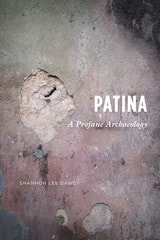
Patina
A Profane ArchaeologyShannon Lee Dawdy
University of Chicago Press, 2016
In Patina, anthropologist Shannon Lee Dawdy examines what was lost and found through the destruction of Hurricane Katrina. Tracking the rich history and unique physicality of New Orleans, she explains how it came to adopt the nickname “the antique city.” With innovative applications of thing theory, Patina studies the influence of specific items—such as souvenirs, heirlooms, and Hurricane Katrina ruins—to explore how the city’s residents use material objects to comprehend time, history, and their connection to one another. A leading figure in archaeology of the contemporary, Dawdy draws on material evidence, archival and literary texts, and dozens of post-Katrina interviews to explore how the patina aesthetic informs a trenchant political critique. An intriguing study of the power of everyday objects, Patina demonstrates how sharing in the care of a historic landscape can unite a city’s population—despite extreme divisions of class and race—and inspire civil camaraderie based on a nostalgia that offers not a return to the past but an alternative future.
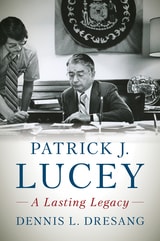
Patrick J. Lucey
A Lasting LegacyDennis L. Dresang
Wisconsin Historical Society Press, 2020
Preceding his service as governor, Lucey played a key role in rebuilding the Democratic Party in Wisconsin, returning a state that had been dominated by Republicans to a more moderate two-party system. As party chairman, he built coalitions between World War II veterans, remnants of the defunct Progressive Party, urban socialists, and activists in rural communities throughout the state.
Through exclusive interviews and unprecedented access to archival materials, Dennis L. Dresang shares the story of this pivotal figure in Wisconsin history, from his small-town rural roots to his wide-ranging influence.

Patterns of Persistence
Utah Women Legislators, 1993–2026Tiffany Greene and Marie Cornwall
University of Utah Press, 2027
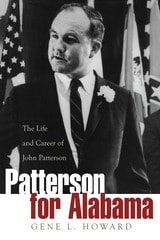
Patterson for Alabama
The Life and Career of John PattersonGene Howard
University of Alabama Press, 2013
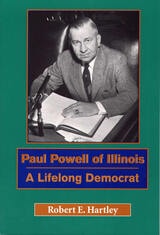
Paul Powell of Illinois
A Lifelong DemocratRobert E. Hartley
Southern Illinois University Press, 1999
Paul Powell emerged from the hill country of southern Illinois to serve in state government from 1935 until his death in 1970. His political tenure included three terms as Speaker of the Illinois House, four terms as minority leader, and two terms as secretary of state. The sponsor of hundreds of bills, he worked tirelessly for his constituents in southern Illinois. He also worked tirelessly to promote his own interests.
In this first political biography of Powell, Robert E. Hartley follows the money. He tells how this man of humble origins and meager means amassed a world-class political and financial base. Part of that story is the disclosure of a personal fortune that boggled minds, including the unbelievable yarn of the $800,000 cash found in the hotel room following Powell's death.
Powell never earned a state salary of more than $30,000 per year, yet in the last year of his life, his federal income tax return showed an income of more than $200,000. At his death his estate totaled $3.2 million, and, when settled in 1978, was worth $4.6 million, including nearly $1 million in racetrack stock.
Following Powell's story, Hartley takes us deep into the Illinois political world of the 1940s, 1950s, and 1960s, a time when politicians were on an "honor system" regarding their financial holdings. This was before disclosure of political contributions, before computer records, and before public meetings laws.

Paul Simon
The Political Journey of an Illinois OriginalRobert E. Hartley
Southern Illinois University Press, 2009
With Paul Simon: The Political Journey of an Illinois Original, author Robert E. Hartley presents the first thorough, objective volume on the journalistic and political career of one of Illinois’s most respected public figures. Hartley’s detailed account offers a fully rounded portrait of a man whose ideals and tenacity not only spurred reform on both state and national levels during his celebrated forty-year career but also established the lasting legacy of a political legend.
Simon first became a public figure at the age of nineteen, when he assumed the post of editor and publisher of a weekly newspaper in Troy, Illinois. From there, he used his paper to launch a fierce crusade against the crime and corruption plaguing Madison County. This battle sparked his entry into politics, helping to land him a seat in the state legislature in 1954. While serving, he campaigned tirelessly according to his principles, earning him the mass voter approval that would usher him into the seat of lieutenant governor in 1968—the first person elected to that position who did not share party affiliation with the governor.
As lieutenant governor, Simon initiated many changes to the position, remaking it to better serve the citizens of the state of Illinois. The cornerstone of his reform plan was an ombudsman program designed to allow the people of the state to voice problems they had with government and state agencies. The program, extremely popular with the public and the press, solved problems and helped to make Simon a household name throughout Illinois. Although he faced challenges along the way, including racial upheaval in Cairo and the student and police riots on the Carbondale campus of Southern Illinois University, Simon’s outspoken honesty and strong support of his constituents earned him the utmost esteem and popularity.
While his 1972 bid for governor of Illinois ultimately failed, this did not deter Simon from his dedication to social progress. In 1974 he began his remarkable twenty-two-year career in the U.S. House of Representatives and Senate, where he earned the admiration of the country for his political integrity. Despite the praise and support Simon had earned during his time in Washington, he was unable to win the Democratic presidential nomination in 1988 and returned to the Senate, winning a second term in 1990. Simon committed time and energy to the myriad issues of interest to him, especially in the field of education, with one of his biggest successes coming with the passage of the National Literacy Act, which he sponsored. He continued to foster his ties to journalism throughout his lengthy political career, authoring numerous books, articles, and columns, all of which he used to relentlessly promote open government and social programs.
This vivid account of the public life of Paul Simon reveals a man whose personal honor and dedication were unshakeable throughout nearly half a century in the political arena. Robert E. Hartley provides a candid perspective on Simon’s accomplishments and victories, as well as his mistakes and losses, revealing new insights into the life of this dynamic and widely respected public figure.
Pea Ridge and Prairie Grove
Scenes and Incidents fo the War in ArkansasWilliam Baxter
University of Arkansas Press, 2000
With the goal of sketching “at least some of the bright lights and dark shadows of the war;” William Baxter authored his regional classic, Pea Ridge and Prairie Grove, in 1864, before the actual end of the Civil War.
Primarily focusing on the civilians of the region, Baxter vividly describes their precarious and vulnerable positions during the advances and retreats of armies as Confederate and Federal forces marched across their homeland. In his account, Baxter describes skirmishes and cavalry charges outside his front door, the “firing” of his town’s buildings during a Confederate retreat, clashes between secessionist and Unionist neighbors, the feeding of hungry soldiers and the forceful appropriation of his remaining food supply, and the sickening sight of the wounded emerging from the Prairie Grove battlefield.
Since its original printing, this firsthand account has only been reprinted once, in 1957, and both editions are considered collectors’ items today. Of interest to Civil War scholars and general readers alike, Baxter’s compelling social history is rendered even more comprehensive by William Shea’s introduction. Pea Ridge and Prairie Grove is a valuable personal account of the Civil War in the Trans-Mississippi West which enables us to better comprehend the conflict as a whole and its devastating effect on the general populace of the war-torn portions of the country.

Peacekeeping on the Plains
Army Operations in Bleeding KansasTony R. Mullis
University of Missouri Press, 2004

Pearls, Peaches, and Peddlers
Short Essays on Arkansas’s Amazing HistoryTom Dillard
University of Arkansas Press, 2027
In Pearls, Peaches, and Peddlers: Short Essays on Arkansas’s Amazing History, Tom Dillard offers a lively portrait of Arkansas that reveals how the state was shaped by ordinary people, unexpected industries, and moments of upheaval both grand and small.
The seventy-four essays collected here draw upon Dillard’s career as a historian, archivist, educator, and preservationist to challenge familiar myths, reveal overlooked stories, and demonstrate how the history of one state can illuminate the larger American experience.
Peculiar Honor
A History of the 28th Texas Cavalry 1862-1865Jane Johansson
University of Arkansas Press, 1998

Peddlers of Hate
How the Ku Klux Klan Seized Power in 1920s OregonSteve Law
Oregon State University Press, 2026
The revived Knights of the Ku Klux Klan flourished in Oregon in the early 1920s. With more than sixty chapters established in both large and small communities like Portland, Medford, Astoria, and La Grande, the Klan’s power escalated in the region. Klan salesmen, working on commission, successfully enlisted Oregonians with a message of religious prejudice and racism. At the Klan’s peak, Portland was home to the sixth largest chapter in the country and there were more members per capita in Oregon than in any other state except one.
In Peddlers of Hate, journalist Steve Law draws on published and unpublished sources, new research, and interviews with leading scholars to provide a comprehensive account of how Oregon became one of the Klan’s strongest outposts. Representing the Klan as merely a fraternal lodge, Klan recruiters were trained to vilify Catholics, immigrants, Blacks, and Jews. They gained wide support, toppling an incumbent governor and congressman, persuading voters to ban Catholic schools, and winning control of the legislature and several local governments. From stories of “escaped nuns” to fiery crosses at mass Klan rallies at Salem’s state fairgrounds and Portland’s Mount Tabor Park, Law examines this divisive and forgotten time in Oregon’s history. He shows how it was finally greed, hypocrisy, and corruption that spurred the hate group’s demise—providing historical lessons that will resonate today.

Pella Dutch
Portrait of a Language in an Iowa Community, An Expanded EditionPhilip E. Webber
University of Iowa Press, 1988
Pembroke
A Rural, Black Community on the Illinois DunesDave Baron
Southern Illinois University Press, 2016
With a population of about two thousand, Pembroke Township, one of the largest rural, black communities north of the Mason-Dixon Line, sits in an isolated corner of Kankakee County, Illinois, sixty-five miles south of Chicago. It is also one of the poorest places in the nation. Many black farmers from the South came to this area during the Great Migration; finding Chicago to be overcrowded and inhospitable, they were able to buy land in the township at low prices. The poor soil made it nearly impossible to establish profitable farms, however, and economic prosperity has eluded the region ever since. Pembroke: A Rural, Black Community on the Illinois Dunes chronicles the history of this inimitable township and shows the author’s personal transformation through his experiences with Pembroke and its people. A native of nearby Kankakee, author Dave Baron first traveled to Pembroke on a church service trip at age fifteen and saw real poverty firsthand, but he also discovered a community possessing grace and purpose.
Baron begins each chapter with a personal narrative from his initial trip to Pembroke. He covers the early history of the area, explaining how the unique black oak savanna ecosystem was created and describing early residents, including Potawatomi tribes and white fur traders. He introduces readers to Pap and Mary Tetter, Pembroke’s first black residents, who—according to local lore—assisted fugitives on the Underground Railroad; details the town’s wild years, when taverns offered liquor, drugs, and prostitution; discusses the many churches of Pembroke and the nearby high school where, in spite of sometimes strained relations, Pembroke’s black students have learned alongside white students of a neighboring community since well before Brown v. Board of Education; outlines efforts by conservation groups to preserve Pembroke’s rare black oak savannas; and analyzes obstacles to and failed attempts at economic development in Pembroke, as well as recent efforts, including organic farms and a sustainable living movement, which may yet bring some prosperity.
Based on research, interviews with residents, and the author’s own experiences during many return trips to Pembroke, this book—part social, cultural, legal, environmental, and political history and part memoir—profiles a number of the colorful, longtime residents and considers what has enabled Pembroke to survive despite a lack of economic opportunities. Although Pembroke has a reputation for violence and vice, Baron reveals a township with a rich and varied history and a vibrant culture.

Pennsylvania Stories--Well Told
William Ecenbarger
Temple University Press, 2017
A former journalist for the Philadelphia Inquirer Magazine, and author of the bestseller Kids for Cash, Ecenbarger has collected a dozen of his fascinating articles showcasing the Keystone State in Pennsylvania Stories—Well Told. He provides a history of the pencil, and considers why the first day of Pennsylvania’s deer hunting season—the world’s largest participatory sporting event—is an unofficial state holiday, closing schools and state offices. Ecenbarger also profiles George “Boom Boom” Zambelli, the internationally renowned pyrotechnic king, and goes driving with Pennsylvania native John Updike in rural Berks County, PA.
Other fascinating tales unfold in Pennsylvania Stories, from an inspiring tale of Governor Bob Casey’s double organ transplant, to darker essays on the electric chair and the Ku Klux Klan, to a mile-by-mile appreciation of the Pennsylvania Turnpike.
In these weird and wonderful stories, Ecenbarger highlights just what makes Pennsylvania both eccentric and great. His book is a delightfully intriguing read for natives and curious outsiders alike.
Pennsylvania
A Military HistoryWilliam A. Pencak
Westholme Publishing, 2016
Westholme State Military History Series
Each state in the United States of America has a unique military history. The volumes in this series seek to provide a portrait of the richness of each state’s military experience, primarily defined by its borders, as well as the important contributions the state has made to the nation’s military history. Written by historians for the general reader, the volumes trace the history of conflict from the original native populations to today. The volumes are well illustrated and include specially commissioned maps, extensive bibliographies, lists of national and state historical sites, and a detailed index.

Penny Loafers & Bobby Pins
Tales and Tips from Growing Up in the ’50s and ’60sSusan Sanvidge
Wisconsin Historical Society Press, 2010
“In the fifties, sleek Mixmasters were replacing rusty eggbeaters, and new pressure-cookers blew their tops in kitchens all over town. There were kids everywhere, and new ‘ranch-style’ houses filled vacant lots. . . . Turquoise Studebakers and dusty-rose Chevy BelAirs with flamboyant fins and lots of chrome replaced dark pre-war cars. Cameras took color snapshots instead of black-and-white. We wore red canvas tennis shoes and lemon yellow shorts, and bright blue popsicles melted down our chins.” —from the Introduction

Penumbra
The Premier Stage for African American DramaMacelle Mahala
University of Minnesota Press, 2013
Penumbra Theatre Company was founded in 1976 by Lou Bellamy as a venue for African American voices within the Twin Cities theatre scene and has stood for more than thirty-five years at the intersection of art, culture, politics, and local community engagement. It has helped launch the careers of many internationally respected theatre artists and has been repeatedly recognized for its artistic excellence as the nation’s foremost African American theatre.
Penumbra is the first-ever history of this barrier-breaking institution. Based on extensive interviews with actors, directors, playwrights, producers, funders, and critics, Macelle Mahala’s book offers a multifaceted view of the theatre and its evolution. Penumbra follows the company’s emergence from the influential Black Arts and settlement house movements; the pivotal role Penumbra played in the development of August Wilson’s career and, in turn, how Wilson became an avid supporter and advocate throughout his life; the annual production of Black Nativity as a community-building performance; and the difficult economics of African American theatre production and how Penumbra has faced these challenges for nearly four decades.
Penumbra is a testament to how a theatre can respond to and thrive within changing political and cultural realities while contributing on a national scale to the African American presence on the American stage. It is a celebration of theatre as a means of social and cultural involvement—both local and national—and ultimately, of Penumbra’s continuing legacy of theatre that is vibrant, diverse, and vital.
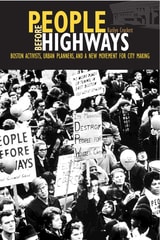
People before Highways
Boston Activists, Urban Planners, and a New Movement for City MakingKarilyn Crockett
University of Massachusetts Press, 2018
In 1948, inspired by changes to federal law, Massachusetts government officials started hatching a plan to build multiple highways circling and cutting through the heart of Boston, making steady progress through the 1950s. But when officials began to hold public hearings in 1960, as it became clear what this plan would entail—including a disproportionate impact on poor communities of color—the people pushed back. Activists, many with experience in the civil rights and antiwar protests, began to organize.
Linking archival research, ethnographic fieldwork, and oral history, Karilyn Crockett in People before Highways offers ground-level analysis of the social, political, and environmental significance of a local anti-highway protest and its lasting national implications. The story of how an unlikely multiracial coalition of urban and suburban residents, planners, and activists emerged to stop an interstate highway is one full of suspenseful twists and surprises, including for the actors themselves. And yet, the victory and its aftermath are undeniable: federally funded mass transit expansion, a linear central city park, and a highway-less urban corridor that serves as a daily reminder of the power and efficacy of citizen-led city making.
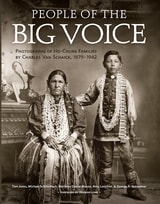
People of the Big Voice
Photographs of Ho-Chunk Families by Charles Van Schaick, 1879-1942Tom Jones
Wisconsin Historical Society Press, 2027
A stunning photographic portrayal of the Ho-Chunk people during a challenging period that presents the resilience of a community whose story continues to this day.
People of the Big Voice tells the visual history of Ho-Chunk families at the turn of the twentieth century and beyond as depicted through the lens of Black River Falls studio photographer Charles Van Schaick. The family relationships among those who sat for the photographer are clearly visible in these images. Sisters, friends, families, and young couples appear and reappear, fleshing out a narrative of the period, from 1879 to 1942, referred to as "the dark ages” in First Nations tribal history.
Following introductory essays from three of the authors are more than three hundred beautifully detailed photographs. Unique to the project are captions that identify over ninety percent of the individuals pictured—made possible by the continuing efforts of tribal members and genealogists—and include both English and Ho-Chunk names.
Also featured are candid shots of Ho-Chunk people on the streets of Black River Falls, outside family dwellings, and at powwows. As author and Ho-Chunk tribal member Amy Lonetree writes, "A significant number of the images were taken just a few short years after the darkest, most devastating period for the Ho-Chunk. Invasion, diseases, warfare, forced assimilation, loss of land, and repeated forced removals from our beloved homelands left the Ho-Chunk people in a fight for their culture and their lives."
A significant contribution to the history of Native peoples, People of the Big Voice is a breathtaking portrayal of a resilient community whose story continues today.
People of the Wheat
Culture and Cultivation in North TexasRebecca Sharpless
University of Texas Press, 2026
How wheat growing, milling, and baking shaped the people and culture of North Texas.
In the national imaginary, America’s amber fields of grain lie in the country’s center, but for more than a century, they also grew across one pocket of the South: North Texas. From the 1840s to the 1970s, the state's agriculture, dominated in lore by cotton in the east and livestock in the open range, was heavily invested in the cultivation, processing, sale, and consumption of wheat. Recalling a forgotten history, Rebecca Sharpless shows how the rhythms of the wheat harvest—and the evolution of the milling, distribution, and baking industries—governed daily life in what is now known as the Dallas–Fort Worth Metroplex.
In the 1840s, Anglo settlers discovered that grain flourished in North Texas and quickly built an economy that included wheat in fields, mills, and kitchens. After the Civil War, hand labor gave way to mechanization, greatly increasing production. Commercial bakeries churned out novel confections, and big cities were built on the bounty of the countryside. In the second half of the twentieth century, as production moved northward, industrial milling and baking declined, but home baking boomed, flour advertising supported regional music, and wheat fortunes financed the region’s cultural life. Sharpless covers 150 years of wheat’s very human history and shows how the labor that cultivated it, the sustenance it provided, and the prosperity it generated left an indelible mark on the people and institutions of Texas.
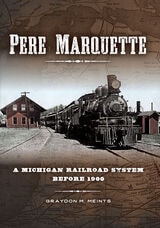
Pere Marquette
A Michigan Railroad System before 1900Graydon M. Meints
Michigan State University Press, 2020
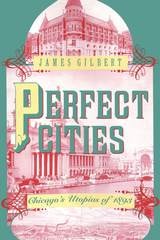
Perfect Cities
Chicago's Utopias of 1893James Gilbert
University of Chicago Press, 1991
"Mr. Gilbert's splendid book opens the door on a conflicted past, and provides an indispensable perspective on the troubled and troubling struggle we face today between old and new, unity and diversity."—Alan Trachtenberg, New York Times
"Perfect Cities is a remarkable account of a struggle for cultural definition. Chronicling the byplay between cultural homogeneity and heterogeneity, unity and diversity, James Gilbert not only throws light on Chicago's past but also provides insight that can be applied to the cultural debates of our own time."—Adria Bernardi, Chicago Tribune
"What Gilbert has done is to enable the reader to experience the grand utopian visions of the times, yet at the same time see the cantankerous reality that made the visions impossible."—Henry Kisor, Chicago Sun-Times
Perforated Indian Crania in Michigan
W. B. Hinsdale and Emerson F. Greenman
University of Michigan Press, 1936
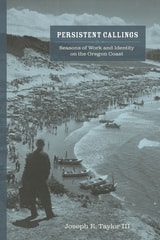
Persistent Callings
Seasons of Work and Identity on the Oregon CoastJoseph E. Taylor
Oregon State University Press, 2019
The Nestucca Valley is a small watershed, tucked away in one corner of a county in far western Oregon. There are no incorporated towns, and cows outnumber humans. It has long been a place without a written history, yet its past offers many surprising twists on received wisdom about rural economies. In crisp prose and succinct chapters, Persistent Callings carries readers from aboriginal times to the present, illustrating the wisdom of seasonal labor, the complex relationships between work and identity, and the resilience of rural economics across more than a century of almost continual change.
Life in this watershed, known to locals as “South County,” has always been demanding. Farming, fishing, and logging were difficult occupations, but work had deeper meanings. Challenges arrived in many forms, including climate shifts, market crashes, regulatory changes, and industry consolidations. Residents’ ability to innovate was their greatest resource, and their persistence helps us to recognize the callings they pursued.
During the late twentieth and early twenty-first centuries, disruptions came more quickly, and they coincided with infusions of capital that dramatically altered the structure of employment, with devastating results for the valley’s hardest working residents. Unemployment and poverty skyrocketed while health and life expectancy dropped to alarming levels. Moreover, the arrival of retirees and rise of environmental amenities actually exacerbated some ecological problems. Little in this history plays out as expected, and much of it will make readers reconsider how they think about the social, economic, and environmental contours of rural life in the American West.
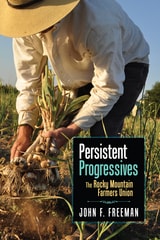
Persistent Progressives
The Rocky Mountain Farmers UnionJohn F. Freeman
University Press of Colorado, 2015
Using data spanning decades, author John Freeman covers the founding of the RMFU in 1907 until the present, demonstrating how members continually sought to control the means of production and marketing by forming cooperatives, providing consumer services, and engaging in politics. Powering this evolution was a group of “practical idealists”—the Farmers Union leaders and titular persistent progressives who shaped the organization’s growth and expansion. Initiated by Jim Patton, who brought the organization out of its oppositional roots and into its cooperative advocacy, the RMFU passed to John Stencel and then David Carter, joining hands with agricultural conservationists and small organic producers along the way to carry the torch for progressive agrarianism in today’s urbanized world. Shaken but undeterred by some notable failures, its leadership remains convinced of the efficacy of cooperatives as a means to achieve justice for all.
Discussing the broader social, economic, political, and environmental issues related to farming, ranching, and urbanization, Persistent Progressives seamlessly blends regional history with ongoing issues of agricultural and economic development.

Perspectives on Milwaukee's Past
Edited by Margo Anderson and Victor Greene
University of Illinois Press, 2008
In this volume, a diverse group of scholars explores key themes in the distinctive history of Milwaukee, from settlement to the present, both in terms of the area's internal development and its comparative standing with other Great Lakes cities. Contributors discuss the importance of socialism and labor in local politics; Milwaukee's ethnic diversity, including long-standing African American, Latino, and Asian communities as well as an unusually large and significant German American population; the function and origins of the city's residential architecture; and the role of religious and ethnic culture in forming the city's identity. Rich in detail, the essays also challenge readers and researchers to pursue additional research on the city and the region by identifying critical areas and methods for future investigations into Milwaukee's past.
Contributors are Margo Anderson, Steven M. Avella, John D. Buenker, Jack Dougherty, Eric Fure-Slocum, Victor Greene, Thomas C. Hubka, Judith T. Kenny, Genevieve G. McBride, Aims McGuinness, Anke Ortlepp, Joseph A. Rodriguez, and N. Mark Shelley.

Peruvians in Paterson
Building Businesses and CommunityGianncarlo Muschi
Rutgers University Press, 2027
Peruvians were among the first Latinos to arrive in Paterson and other cities in New Jersey during the post-WW II period. Over successive generations, they established a prosperous ethnic enclave that contributed to Paterson’s socioeconomic renewal. Yet their migration experience has remained relatively unexamined by scholars. This book examines the role of entrepreneurship and informality in the emergence and evolution of the Peruvian community of Paterson. It highlights the historical significance of the establishment of small businesses and social organizations as important cultural elements that validated their physical presence in the area. By uncovering the diverse strategies that Peruvians utilized for building a community, Muschi contends that their culture of informality and resourcefulness paved the way for their economic advancement and the consolidation of the Peruvian community. This book also shows that the informal economic practices introduced by Peruvians altered the social and economic landscape of Paterson and contributed to the revitalization of the local economy. Through the examination of oral histories, archival material from local newspapers, and memoirs declassified by the Peruvian consulate, the author challenges the oversimplified portrayal of Latinos as blue- collar workers with few opportunities for socioeconomic advancement. Peruvians in Paterson demonstrates that Latino migrants achieve wealth and ethnic empowerment in the process of adjustment and community building, suggesting new lines for future research.
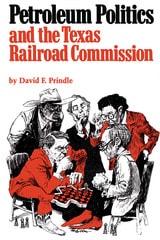
Petroleum Politics and the Texas Railroad Commission
By David F. Prindle
University of Texas Press, 1981
The single most important domestic source of oil and gas is managed by the Texas Railroad Commission. As a result, the Commission has for decades exerted a profound influence on United States and world energy policy. This influence may even increase with the recent decision to remove price controls on oil and gas. Commission decisions determine where and when oil and gas wells are drilled, how much can be produced from them, and how the products can be transported. Since the 1930s the Commission has heavily influenced both the supply and the price of petroleum in the rest of the country simply because Texas provides such a large proportion of the United States' petroleum.
As might be expected with the management of resources worth billions of dollars, the Railroad Commission has been an arena of intense political maneuvering. David Prindle examines in detail seven policymaking episodes, covering five decades of the Commission's history. He recounts the economic and political cleavages arising from clashes of interest, the efforts of individuals and organizations to exert influence, the motives and methods underlying the policy choices of the Commissioners, and the political and economic consequences of those choices, both for Texas and for the rest of the country.
This detailed look at the Railroad Commission and the politics of petroleum in Texas will be of interest to the general public and all those involved in the oil and gas industry. Scholars and students in the field of policy studies, especially energy policy, will find this book to be an invaluable guide to an important sector of the American petroleum industry.