Results by title
244 books match the query 'Study' and 17 start with p
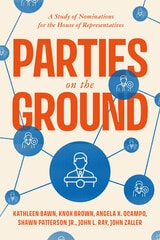
Parties on the Ground
A Study of Nominations for the House of RepresentativesKathleen Bawn, Knox Brown, Angela X. Ocampo, Shawn Patterson Jr., John L. Ray, and John Zaller
University of Chicago Press, 2026
A close-up examination of the roots of congressional politics in nominations for the House of Representatives.
With most House seats all but guaranteed for one party in general elections, primary elections for party nominees often decide who goes to Congress. Yet primaries are notoriously difficult to study, due in part to both the variety of rules that govern them and the differences in the influence of local leaders. Based on wide-ranging evidence from field interviews to fundraising data to exit polls, Parties on the Ground overcomes these challenges to take readers under the hood for an in-depth look at the nomination process.
Although progressive reformers sought the adoption of primaries to empower voters’ control over nominations, Parties on the Ground finds that most voters pay too little attention to make use of the opportunity. Instead, the most important actors are intense policy demanders—such as interest groups and activist organizations—who supply campaign resources to some candidates and deny them to others. These groups care most about securing an agent for their own interests and values; to this end, they put serious effort into vetting candidates and often coordinate among themselves or with local parties in support of their choices. At the same time, competition between establishment and insurgent groups can be high, especially in the Republican Party. Developing a nuanced account of House nominations in today’s parties, Parties on the Ground offers a host of new insights into this understudied but significant piece of the puzzle of American politics.
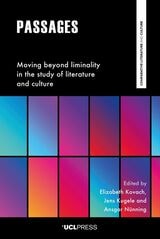
Passages
Moving beyond Liminality in the Study of Literature and CultureEdited by Elizabeth Kovach, Jens Kugele, and Ansgar Nünning
University College London, 2022
The study of literature and culture is marked by various distinct understandings of passages—as both phenomena and critical concepts. These include the anthropological notion of rites of passage, the shopping arcades (Passagen) theorized by Walter Benjamin, the Middle Passage of the Atlantic slave trade, present-day forms of migration and resettlement, and understandings of translation and adaptation. This book explores passages as contexts and processes within which liminal experiences and encounters are situated. Based on the premise that concepts travel through times, contexts, and discursive settings, the volume enables a meaningful exchange regarding passages across disciplinary, national, and linguistic boundaries. Contributions from senior scholars and early-career researchers whose work focuses on areas such as cultural memory, performativity, space, media, (cultural) translation, ecocriticism, gender, and race utilize specific understandings of passages and liminality, reflecting on their value and limits for their research.
Performing Prose
The Study and Practice of Style in CompositionChris Holcomb and M. Jimmie Killingsworth
Southern Illinois University Press, 2010
In Performing Prose, authors Chris Holcomb and M. Jimmie Killingsworth breathe new life into traditional concepts of style. Drawing on numerous examples from a wide range of authors and genres, Holcomb and Killingsworth demonstrate the use of style as a vehicle for performance, a way for writers to project themselves onto the page while managing their engagement with the reader. By addressing style and rhetoric not as an editorial afterthought, but as a means of social interaction, they equip students with the vocabulary and tools to analyze the styles of others in fresh ways, as well as create their own.
Whereas most writing texts focus exclusively on analysis or techniques to improve writing, Holcomb and Killingsworth blend these two schools of thought to provide a singular process of thinking about writing. They discuss not only the benefits of conventional methods, but also the use of deviation from tradition; the strategies authors use to vary their style; and the use of such vehicles as images, tropes, and schemes. The goal of the authors is to provide writers with stylistic “footing”: an understanding of the ways writers use style to orchestrate their relationships with readers, subject matter, and rhetorical situations.
Packed with useful tips and insights, this comprehensive volume investigates every aspect of style and its use to present an indispensable resource for both students and scholars. Performing Prose moves beyond customary studies to provide a refreshing and informative approach to the concepts and strategies of writing.
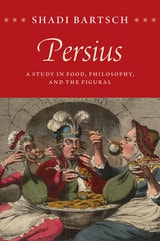
Persius
A Study in Food, Philosophy, and the FiguralShadi Bartsch
University of Chicago Press, 2015
In Persius, Shadi Bartsch explores this Stoic framework and argues that Persius sets his own bizarre metaphors of food, digestion, and sexuality against more appealing imagery to show that the latter—and the poetry containing it—harms rather than helps its audience. Ultimately, he encourages us to abandon metaphor altogether in favor of the non-emotive abstract truths of Stoic philosophy, to live in a world where neither alluring poetry, nor rich food, nor sexual charm play a role in philosophical teaching.
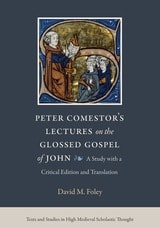
Peter Comestor's Lectures on the Glossed Gospel of John
A Study with a Critical Edition and TranslationPeter Comestor
Catholic University of America Press, 2023
Philosophy as Agôn
A Study of Plato’s Gorgias and Related TextsRobert Metcalf
Northwestern University Press, 2018
In Philosophy as Agôn: A Study of Plato's Gorgias and Related Texts, Robert Metcalf offers a fresh interpretation of Plato's dialogues as dramatic texts whose philosophy is not so much a matter of doctrine as it is a dynamic, nondogmatic, and open-ended practice of engaging others in agonistic dialogue.
Metcalf challenges prevailing interpretations according to which the agôn (contest or struggle) between the interlocutors in the dialogues is inessential to Plato's philosophical purpose, or simply a reflection of the cultural background of ancient Greek life. Instead, he argues that Plato understands philosophy as essentially agonistic—involving the adversarial engagement of others in dialogue such that one's integrity is put to the test through this engagement, and where the agôn is structured so as to draw adversaries together in agreement about the matters at issue, though that agreement is always open to future contest.
Based on a careful reading of the Gorgias and related Socratic dialogues, such as Apology and Theaetetus, Metcalf contends that agôn is indispensable to the critique of prevailing opinions, to the transformation of the interlocutor through shame-inducing refutation, and to philosophy as a lifelong training (askêsis) of oneself in relation to others.
Pioneers and Caretakers
A Study of Nine American Women NovelistsLouis Auchincloss
University of Minnesota Press, 1965
Piros and Prehistory
A Study in TanoanDavid Leedom Shaul
University of Utah Press, 2024
Shaul’s arguments use linguistic analyses coupled with historic and prehistoric records of migration and cultural interaction. Following the establishment of Piro as a Tanoan language, much of the linguistic analysis involves determining the aspects of Piro that were inherited from the earlier Proto-Tanoan versus those that were incorporated later as a result of borrowing from other languages through cultural interaction. This book lays out the linguistic argument that the similarities between Piro and Tiwan languages result from borrowing, not common ancestry, and it provides a record of contact between groups and linguistic evolution based on these movements.
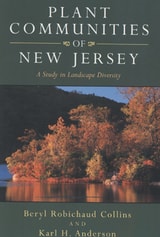
Plant Communities of New Jersey
A Study in Landscape DiversityCollins, Beryl Robichaud
Rutgers University Press, 1994
From the ridgetops of the north to the Pinelands of the south, New Jersey’s natural areas display an astonishing variety of plant life. This book--a completely revised edition of the classic Vegetation of New Jersey--enables readers to understand why the vegetation of New Jersey is what it is today and what it may become.
The book portrays New Jersey as an ecosystem--its geology, topography and soil, climate, plant-plant and plant-animal relationships, and the human impact on the environment. The authors describe in detail the twelve types of plant habitats distinguished in New Jersey and suggest places to observe good examples of them.
The book is amply illustrated with photographs of plant communities and individual species and maps. The appendixes provide a cross reference between the common and scientific names of native plants of New Jersey, and hints for plant identification.
Scientifically accurate yet written in a lively style, Plant Communities of New Jersey belongs on the bookshelf of every New Jerseyan who cares about the environment.
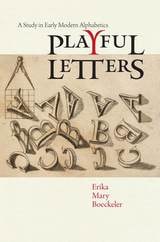
Playful Letters
A Study in Early Modern AlphabeticsErika Mary Boeckeler
University of Iowa Press, 2017
Drawing on Shakespeare, anthropomorphic typography, figured letters, and Cyrillic pedagogy and politics, this book explores the ways in which alphabetic thinking and writing inform literature and the visual arts, and it develops reading strategies for the “letterature” that underwrites such cultural production. Playful Letters begins with early modern engagements with the alphabet and the human body—an intersection where letterature emerges with startling force. The linking of letters and typography with bodies produced a new kind of literacy. In turn, educational habits that shaped letter learning and writing permeated the interrelated practices of typography, orthography, and poetry. These mutually informing processes render visible the persistent crumbling of words into letters and their reconstitution into narrative, poetry, and image.
In addition to providing a rich history of literary and artistic alphabetic interrogation in early modern Western Europe and Russia, Playful Letters contributes to the continuous story of how people use new technologies and media to reflect on older forms, including the alphabet itself.
Poetic Closure
A Study of How Poems EndBarbara Herrnstein Smith
University of Chicago Press, 1971
In Poetic Closure, distinguished literary scholar Barbara Herrnstein Smith explores the provocative question: How do poems end? To answer it, Smith examines numerous individual poems and examples of common poetic forms in order to reveal the relationship between closure and the overall structure and integrity of a poem. First published in 1968, Smith’s book remains essential reading in poetic theory.
“Ranging from Elizabethan lyric through free and syllabic verse and concrete poetry, Poetic Closure is a learned, witty, and richly illustrated study of the behavior of poems. . . . It can be read, enjoyed, studied by people who like reading poetry, including—I would suspect—poets.”—Richard M. Elman, New York Times Book Review

Poindexter of Washington
A Study in Progressive PoliticsHoward W Allen
Southern Illinois University Press, 1981
In this study of Miles Poindexter, Insurgent Republican turned conservative, Howard W. Allen reaches beyond the traditional bounds of biography to present a history of the United States Congress during the Progressive era and the early years after World War I.
A congressman (1909–13)and a senator (1913–23), Miles Poindexter of Washington State was an outspoken, progressive reformer before World War I. He struggled to protect “the people” from “special interests,” particularly defending the interest of his section against eastern “colonialism.” A man with a penchant for absolute positions, Poindexter became caught up in the emotionalism of the Insurgent Republican revolt. At one time or another he championed Socialists, the IWW, the striking textile workers in Lawrence, Massachusetts—all unlikely causes for a middle-class lawyer from Spokane.
Regarding foreign policy, Poindexter was an uncompromising nationalist who, with Theodore Roosevelt, declared himself a member of the Progressive party in 1912.
After 1917 Poindexter actively tried to suppress opponents of the war. Following the war his targets were “Bolshevists” and other radicals. He also developed intense hostility toward Socialists, the IWW, and organized labor, fearing radicalism and labor. Reversing his former position, he allied himself with the eastern businessmen and regular Republicans in the Senate. Campaigning for the presidency in 1920, he appealed without success to the most conservative members of the party. He was defeated b a progressive Democrat in his 1922 bid for reelection to the Senate.
Allen examines the traditional sources—archival collections, newspaper files, and congressional reports. When he combines this material with a quantitative analysis of roll-call votes throughout Senator Poindexter’s years in Congress, he creates a remarkably useful method never before attempted in political biography.
Political Ethnography
What Immersion Contributes to the Study of PowerEdited by Edward Schatz
University of Chicago Press, 2009
Scholars of politics have sought in recent years to make the discipline more hospitable to qualitative methods of research. Lauding the results of this effort and highlighting its potential for the future, Political Ethnography makes a compelling case for one such method in particular. Ethnography, the contributors amply demonstrate in a wide range of original essays, is uniquely suited for illuminating the study of politics.
Situating these pieces within the context of developments in political science, Edward Schatz provides an overarching introduction and substantive prefaces to each of the volume’s four sections. The first of these parts addresses the central ontological and epistemological issues raised by ethnographic work, while the second grapples with the reality that all research is conducted from a first-person perspective. The third section goes on to explore how ethnographic research can provide fresh perspectives on such perennial topics as opinion, causality, and power. Concluding that political ethnography can and should play a central role in the field as a whole, the final chapters illuminate the many ways in which ethnographic approaches can enhance, improve, and, in some areas, transform the study of politics.
Primary Movement in Sign Languages
A Study of Six LanguagesDonna Jo Napoli
Gallaudet University Press, 2011
Is it possible to identify sign languages by their prosody, that is, the rhythm and stress of sign production, and then determine if they are related to each other or other sign languages? If so, reasoned authors Donna Jo Napoli, Mark Mai, and Nicholas Gaw, perhaps they could offer such identification as a new way to typologize, or categorize sign languages by their structural features. Their new collaboration Primary Movement in Sign Languages: A Study of Six Languages traces the process and findings from this unique investigation.
Resolving on the direction of movement as the prosodic factor to track, they began their research by comparing five sign languages: American Sign Language (ASL), British Sign Language (BSL), Italian Sign Language (LIS), French Sign Language (LSF), and Australian Sign Language (Auslan). They soon discovered that the languages in their study clustered with respect to several characteristics along genetic lines, with BSL and Auslan contrasting with LSF, LIS, and ASL. They learned that sign languages with the same geographic origin evolved differently when relocated, and they isolated differences in each individual sign language. They compared four of these established sign languages with the newly emerging Nicaraguan Sign Language (NSL), with the exception of ASL due to their past close contact, thereby validating their work as the first study to identify sign language relationships without depending on grammar.
Profession of Medicine
A Study of the Sociology of Applied KnowledgeEliot Freidson
University of Chicago Press, 1988
"Profession of Medicine is a challenging monograph; the ideas presented are stimulating and thought provoking. . . . Given the expanding domain of what illness is and the contentions of physicians about their rights as professionals, Freidson wonders aloud whether expertise is becoming a mask for privilege and power. . . . Profession of Medicine is a landmark in the sociological analysis of the professions in modern society."—Ron Miller, Sociological Quarterly
"This is the first book that I know of to go to the root of the matter by laying open to view the fundamental nature of the professional claim, and the structure of professional institutions."—Everett C. Hughes, Science
Professional Powers
A Study of the Institutionalization of Formal KnowledgeEliot Freidson
University of Chicago Press, 1986
"As an attempt to provide a complex, wide-ranging account this book should be essential reading for specialist students, and it should act as a stimulus for the extension of both empirical research and theory."—Alex Faulkner, Sociological Review
"Freidson's book is a concise introduction to the professions, challenging specialists with its puncturing of theoretically induced misconceptions and offering general readers a clear but critical entrée to the theoretical literature concerning this central aspect of modern society."—Andrew Abbott, Science
"This is a stimulating and well-written book which opens up a new perspective on the professions as well as contributing to existing debates."—David Podmore, Times Higher Education Supplement
Punishment and Modern Society
A Study in Social TheoryDavid Garland
University of Chicago Press, 1990
"Punishment and Modern Society is an outstanding delineation of the sociology of punishment. At last the process that is surely the heart and soul of criminology, and perhaps of sociology as well—punishment—has been rescued from the fringes of these 'disciplines'. . . . This book is a first-class piece of scholarship."—Graeme Newman, Contemporary Sociology
"Garland's treatment of the theorists he draws upon is erudite, faithful and constructive. . . . Punishment and Modern Society is a magnificent example of working social theory."—John R. Sutton, American Journal of Sociology
"Punishment and Modern Society lifts contemporary penal issues from the mundane and narrow contours within which they are so often discussed and relocates them at the forefront of public policy. . . . This book will become a landmark study."—Andrew Rutherford, Legal Studies
"This is a superbly intelligent study. Its comprehensive coverage makes it a genuine review of the field. Its scholarship and incisiveness of judgment will make it a constant reference work for the initiated, and its concluding theoretical synthesis will make it a challenge and inspiration for those undertaking research and writing on the subject. As a state-of-the-art account it is unlikely to be bettered for many a year."—Rod Morgan, British Journal of Criminology
Winner of both the Outstanding Scholarship Award of the Crime and Delinquency Division of the Society for the Study of Social Problems and the Distinguished Scholar Award from the American Sociological Association's Crime, Law, and Deviance Section