Results by title
1214 books match the query 'Subjects & Themes' and 71 start with p

PLEASURE
Angelo Nikolopoulos
Four Way Books, 2022
PLEASURE is a book-length poem which muses on the phenomenology of solitude in a pastoral landscape, written in a diaristic, lyric mode, where the queer “I” alternately savors the decadence of isolation and stands at the precipice of despair. A travelogue in verse, PLEASURE takes place in Syros, the Greek island to which author Angelo Nikolopolous travels a few weeks after the discovery of his mother’s brain tumor. These intertextual, elliptical explorations of solitude and sensuality interweave images of seaside roaming, secluded town life, and ephemeral sexual encounters with the ubiquitous implication of death—the waning summer, the ill, perhaps dying, mother. Staring down true disconnection—both physical and psychic orphanhood —Nikolopoulos writes about the thrill and sadness of turning your back against the world and those in it only to rediscover that which tethers all to human experience: the quotidian, singular pleasures of having a body.
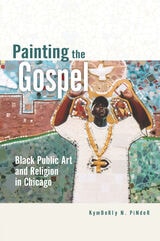
Painting the Gospel
Black Public Art and Religion in ChicagoKymberly Pinder
University of Illinois Press, 2016
Painting the Gospel includes maps and tour itineraries that allow readers to make conceptual, historical, and geographical connections among the works.
Paradise
Victoria Redel
Four Way Books, 2022
Rewriting Eden, Victoria Redel interrogates the idea of paradise within the historical context of borders, exile, and diaspora that brought us to the present global migration crisis. Drawing from a long family history of flight and refuge, the poems in Paradise interweave religion and myth, personal lore and nation-building, borders actual and imagined. They ask: What if what we fell from was never, actually, grace? What is a boundary, really? Redel navigates geopolitical perimeters while also questioning the border between the living and the dead and delineating the migrations aging women make in their bodies and lives. With stark lyricism and unflinching attention, Paradise considers how a legacy of trauma shapes imagination and asks readers to see the threads that tie contemporary catastrophes to the exigencies and flight paths that made us.
Paradise
Victoria Redel
Four Way Books, 2022
Rewriting Eden, Victoria Redel interrogates the idea of paradise within the historical context of borders, exile, and diaspora that brought us to the present global migration crisis. Drawing from a long family history of flight and refuge, the poems in Paradise interweave religion and myth, personal lore and nation-building, borders actual and imagined. They ask: What if what we fell from was never, actually, grace? What is a boundary, really? Redel navigates geopolitical perimeters while also questioning the border between the living and the dead and delineating the migrations aging women make in their bodies and lives. With stark lyricism and unflinching attention, Paradise considers how a legacy of trauma shapes imagination and asks readers to see the threads that tie contemporary catastrophes to the exigencies and flight paths that made us.
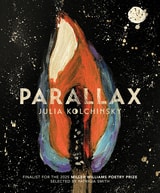
Parallax
Julia Kolchinsky
University of Arkansas Press, 2025
Finalist, 2025 Miller Williams Poetry Prize
Julia Kolchinsky’s Parallax offers a lyrical narrative of parenting a neurodiverse child under the shadow of the ongoing war in Ukraine, the poet’s birthplace. As her child expresses a fascination with death and violence, Kolchinsky struggles to process the war unfolding far away, on the same soil where so many of her ancestors perished during the Holocaust.
Anchored by a series of poems that look to the moon, this collection explores displaced perspectives and turns to the celestial to offer meditations on how elements formed in distant stars account for so much of our human DNA. In these poems, writes series editor Patricia Smith, Kolchinsky “clutches at a feeling of home that is both unfamiliar and deeply treasured, longs for all that was left behind, struggles to come to terms with the rampant violence devastating a landscape that still, in so many encouraging and heartbreaking ways, belongs to her.”
Paraíso
Poems byJacob Shores-Argüello
University of Arkansas Press, 2017
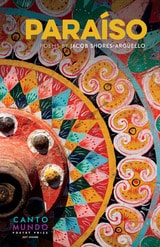
Paraíso, the first book in the new CantoMundo Poetry Series, which celebrates the work of Latino/a poets writing in English, is a pilgrimage against sorrow. Erupting from a mother’s death, the poems follow the speaker as he tries to survive his grief. Catholicism, family, good rum . . . these help, but the real medicine happens when the speaker pushes into the cloud forest alone.
In a Costa Rica far away from touristy beaches, we encounter bus trips over the cold mountains of the dead, drug dealers with beautiful dogs, and witches with cell phones. Science fuses with religion, witchcraft is joined with technology, and eventually grief transforms into belief.
Throughout, Paraíso defies categorization, mixing its beautiful sonnets with playful games and magic cures for the reader. In the process, moments of pure life mingle with the aftermath of a death.
Particulars of Place
Richard O. Moore
Omnidawn, 2015
Passage to Wonderland
Rephotographing Joseph Stimson's Views of the Cody Road to Yellowstone National Park, 1903 and 2008Michael A. Amundson
University Press of Colorado, 2012
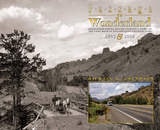
Amundson examines the physical changes along "the most scenic fifty miles in America" and explores the cultural and natural history behind them. This careful analysis of the paired images make Passage to Wonderland more than a "then and now" photography book--it is a unique exploration of the interconnectedness between the Old West and the New West. It will be a wonderful companion for those touring the Cody Road as well as those armchair tourists who can follow the road on Google Earth using the provided GPS coordinates.
The University Press of Colorado gratefully acknowledges the generous support of the Charles Redd Center for Western Studies at Brigham Young University toward the publication of this book.
Patterns in Nature
Why the Natural World Looks the Way It DoesPhilip Ball
University of Chicago Press, 2016
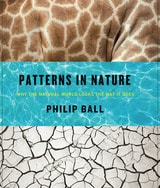
Unlike the patterns we create in technology, architecture, and art, natural patterns are formed spontaneously from the forces that act in the physical world. Very often the same types of pattern and form – spirals, stripes, branches, and fractals, say—recur in places that seem to have nothing in common, as when the markings of a zebra mimic the ripples in windblown sand. That’s because, as Patterns in Nature shows, at the most basic level these patterns can often be described using the same mathematical and physical principles: there is a surprising underlying unity in the kaleidoscope of the natural world. Richly illustrated with 250 color photographs and anchored by accessible and insightful chapters by esteemed science writer Philip Ball, Patterns in Nature reveals the organization at work in vast and ancient forests, powerful rivers, massing clouds, and coastlines carved out by the sea.
By exploring similarities such as those between a snail shell and the swirling stars of a galaxy, or the branches of a tree and those of a river network, this spectacular visual tour conveys the wonder, beauty, and richness of natural pattern formation.
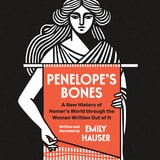
Penelope’s Bones
A New History of Homer's World through the Women Written Out of ItEmily Hauser
University of Chicago Press, 2025
Weaving together literary and archaeological evidence, Emily Hauser illuminates the rich, intriguing lives of the real women behind Homer’s Iliad and Odyssey.
Achilles. Agamemnon. Odysseus. Hector. The lives of these and many other men in the greatest epics of ancient Greece have been pored over endlessly in the past three millennia. But these are not just tales about heroic men. There are scores of women as well—complex, fascinating women whose stories have gone unexplored for far too long.
In Penelope’s Bones, award-winning classicist and historian Emily Hauser pieces together compelling evidence from archaeological excavations and scientific discoveries to unearth the richly textured lives of women in Bronze Age Greece—the era of Homer’s heroes. Here, for the first time, we come to understand the everyday lives and experiences of the real women who stand behind the legends of Helen, Briseis, Cassandra, Aphrodite, Circe, Athena, Hera, Calypso, Penelope, and more. In this captivating journey through Homer’s world, Hauser explains era-defining discoveries, such as the excavation of Troy and the decipherment of Linear B tablets that reveal thousands of captive women and their children; more recent finds like the tomb of the Griffin Warrior at Pylos, whose tomb contents challenge traditional gender attributes; DNA evidence showing that groups of warriors buried near the Black Sea with their weapons and steeds were, in fact, Amazon-like female fighters; a prehistoric dye workshop on Crete that casts fresh light on “women’s work” of dyeing, spinning, and weaving textiles; and a superbly preserved shipwreck off the coast of Turkey whose contents tell of the economic and diplomatic networks crisscrossing the Bronze Age Mediterranean.
Essential reading for fans of Madeline Miller or Natalie Haynes, this riveting new history brings to life the women of the Bronze Age Aegean as never before, offering a groundbreaking reassessment of the ancient world.
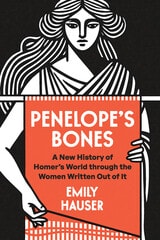
Penelope’s Bones
A New History of Homer’s World through the Women Written Out of ItEmily Hauser
University of Chicago Press, 2025
Achilles. Agamemnon. Odysseus. Hector. The lives of these and many other men in the greatest epics of ancient Greece have been pored over endlessly in the past three millennia. But these are not just tales about heroic men. There are scores of women as well—complex, fascinating women whose stories have gone unexplored for far too long.
In Penelope’s Bones, award-winning classicist and historian Emily Hauser pieces together compelling evidence from archaeological excavations and scientific discoveries to unearth the richly textured lives of women in Bronze Age Greece—the era of Homer’s heroes. Here, for the first time, we come to understand the everyday lives and experiences of the real women who stand behind the legends of Helen, Briseis, Cassandra, Aphrodite, Circe, Athena, Hera, Calypso, Penelope, and more. In this captivating journey through Homer’s world, Hauser explains era-defining discoveries, such as the excavation of Troy and the decipherment of Linear B tablets that reveal thousands of captive women and their children; more recent finds like the tomb of the Griffin Warrior at Pylos, whose tomb contents challenge traditional gender attributes; DNA evidence showing that groups of warriors buried near the Black Sea with their weapons and steeds were, in fact, Amazon-like female fighters; a prehistoric dye workshop on Crete that casts fresh light on “women’s work” of dyeing, spinning, and weaving textiles; and a superbly preserved shipwreck off the coast of Turkey whose contents tell of the economic and diplomatic networks crisscrossing the Bronze Age Mediterranean.
Essential reading for fans of Madeline Miller or Natalie Haynes, this riveting new history brings to life the women of the Bronze Age Aegean as never before, offering a groundbreaking reassessment of the ancient world.
People of the Big Voice
Photographs of Ho-Chunk Families by Charles Van Schaick, 1879-1942Tom Jones
Wisconsin Historical Society Press, 2027
A stunning photographic portrayal of the Ho-Chunk people during a challenging period that presents the resilience of a community whose story continues to this day.
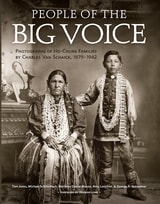
People of the Big Voice tells the visual history of Ho-Chunk families at the turn of the twentieth century and beyond as depicted through the lens of Black River Falls studio photographer Charles Van Schaick. The family relationships among those who sat for the photographer are clearly visible in these images. Sisters, friends, families, and young couples appear and reappear, fleshing out a narrative of the period, from 1879 to 1942, referred to as "the dark ages” in First Nations tribal history.
Following introductory essays from three of the authors are more than three hundred beautifully detailed photographs. Unique to the project are captions that identify over ninety percent of the individuals pictured—made possible by the continuing efforts of tribal members and genealogists—and include both English and Ho-Chunk names.
Also featured are candid shots of Ho-Chunk people on the streets of Black River Falls, outside family dwellings, and at powwows. As author and Ho-Chunk tribal member Amy Lonetree writes, "A significant number of the images were taken just a few short years after the darkest, most devastating period for the Ho-Chunk. Invasion, diseases, warfare, forced assimilation, loss of land, and repeated forced removals from our beloved homelands left the Ho-Chunk people in a fight for their culture and their lives."
A significant contribution to the history of Native peoples, People of the Big Voice is a breathtaking portrayal of a resilient community whose story continues today.
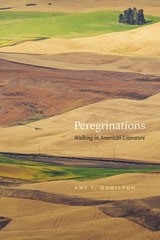
Peregrinations
Walking in American LiteratureAmy T Hamilton
University of Nevada Press, 2018
The land of the United States is defined by vast distances encouraging human movement and migration on a grand scale. Consequently, American stories are filled with descriptions of human bodies walking through the land.
In Peregrinations, Amy T. Hamilton examines stories told by and about Indigenous American, Euroamerican, and Mexican walkers. Walking as a central experience that ties these texts together—never simply a metaphor or allegory—offers storytellers and authors an elastic figure through which to engage diverse cultural practices and beliefs including Puritan and Catholic teachings, Diné and Anishinaabe oral traditions, Chicanx histories, and European literary traditions.
Hamilton argues that walking bodies alert readers to the ways the physical world—more-than-human animals, trees, rocks, wind, sunlight, and human bodies—has a hand in creating experience and meaning. Through material ecocriticism, a reading practice attentive to historical and ongoing oppressions, exclusions, and displacements, she reveals complex layerings of narrative and materiality in stories of walking human bodies.
This powerful and pioneering methodology for understanding place and identity, clarifies the wide variety of American stories about human relationships with the land and the ethical implications of the embeddedness of humans in the more-than-human world.

Perigee
Diane Kerr
University of Wisconsin Press, 2020
Moments are revealed in layers; we join the poet as she rides through fields on horseback, watches a woman testify on television, and comes to terms with her experiences of sexual abuse. Vivid recollections of emotionally charged minutiae—broken-in cowboy boots, the second button on a blouse, a housecoat patterned with pink begonias—remind us how even the smallest details can be fraught with both nostalgia and pain. Each poem wields power, with resonating narratives of fear and survival reminding us that suffering has no statute of limitations.

Perimeter
A Contemporary Portrait of Lake MichiganKevin J. Miyazaki
Wisconsin Historical Society Press, 2014
Miyazaki also photographed the water as he went, creating waterscapes of the ever-changing lake affected by weather and time. Perimeter gathers these images together, creating a diverse portrait of both people and a place, encapsulating Lake Michigan’s significance to those who are drawn to it.
Periodizing Jameson
Dialectics, the University, and the Desire for NarrativePhillip E. Wegner
Northwestern University Press, 2014
For a half century, the American intellectual Fredric Jameson has been a driving force in literary and cultural theory. In Periodizing Jameson, Phillip E. Wegner builds upon Jameson’s unique dialectical method to demonstrate the value of Jameson’s tools—periodization, the fourfold hermeneutic, and the Greimasian semiotic square, among others—and to develop virtuoso readings of Jameson’s own work and the history of the contemporary American university in which it unfolds.
Wegner shows how Jameson’s work intervenes in particular social, cultural, and political situations, using his scholarship both to develop original explorations of nineteenth-century fiction, popular films, and other promiment theorists, and to examine the changing fortunes of theory itself. In this way, Periodizing Jameson casts new light on the potential of and challenges to humanist intellectual work in the present.
Perishable
Stelios Mormoris
Tupelo Press, 2025
In Perishable, Stelios Mormoris asks incisive questions about the nature of human connection: Where does memory live—in the body, in the mind, or elsewhere? What happens when the objects that surround us—a wedding ring, an empty purse, a harp—reveal necessary truths about ourselves and those we love? As the book unfolds, lush sensory details and unmatched lyricism are brought to bear on these lingering concerns in a style as neoclassical as it is contemporary. In poems that radiate with intelligence, Mormoris combines understated elegance with finely tuned music and evocative imagery.
Phantom Number
An Abecedarium for AprilSpring Ulmer
Tupelo Press, 2025
Phantom Number listens for an absent voice. To survive and answer to her best friend and fellow poet April Freely’s death, Spring Ulmer rips meaning apart in her poems, then repairs it, only to rip it up again. Words bend, meaning shifts—abstraction a tool Ulmer wields to better get at the question at the heart of Phantom Number: How might a white friend write in protest of intimate Black death at a time when the push is to write Black joy as antidote to the commodification of Black trauma? Ulmer understands her position is suspect yet cannot shirk her love or rage. Ulmer asks the reader to do the work or else. Her abstracted poems vibrate, emotion emerging from a poem made rag. Ulmer’s abecedarium long form holds these fragments, inviting lines into an order of alliteration and words into an otherwise coherence, a belonging that has nothing to do with their origin. Phantom Number finds in abstraction a radical wail.

Phantom Skies and Shifting Ground
Landscape, Culture, and Rephotography in Eadweard Muybridge's Illustrations of Central AmericaByron Wolfe and Scott Brady
Temple University Press, 2017
In 1875, after being acquitted for the murder of his wife’s lover, Eadweard Muybridge spent a year photographing along the Central American Pacific Coast, particularly in Guatemala and Panamá. Upon his return to California in 1876, he published a very limited number of albums of the photographs (11 are known), each of which was unique in size and scope. In 2007, photographer Byron Wolfe (born 1967) tracked down and cataloged every known Muybridge Central American photograph. Then, with cultural geographer Scott Brady, he traveled to many of Muybridge’s sites to rephotograph them. Through photographic collage, interpretive rephotography, illustrations and essays, this book examines an exceptionally rare series by Muybridge. Also included is a catalogue of every known Muybridge Central American picture.
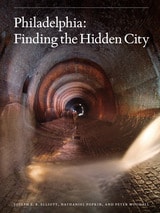
Philadelphia
Finding the Hidden CityJoseph E. B. Elliott
Temple University Press, 2017
Philadelphia possesses an exceptionally large number of places that have almost disappeared—from workshops and factories to sporting clubs and societies, synagogues, churches, theaters, and railroad lines. In Philadelphia: Finding the Hidden City, urban observers Nathaniel Popkin and Peter Woodall uncover the contemporary essence of one of America’s oldest cities. Working with accomplished architectural photographer Joseph Elliott, they explore secret places in familiar locations, such as the Metropolitan Opera House on North Broad Street, the Divine Lorraine Hotel, Reading Railroad, Disston Saw Works in Tacony, and mysterious parts of City Hall.
Much of the real Philadelphia is concealed behind facades. Philadelphia artfully reveals its urban secrets. Rather than a nostalgic elegy to loss and urban decline, Philadelphia exposes the city’s vivid layers and living ruins. The authors connect Philadelphia’s idiosyncratic history, culture, and people to develop an alternative theory of American urbanism, and place the city in American urban history. The journey here is as much visual as it is literary; Joseph Elliott’s sumptuous photographs reveal the city's elemental beauty.
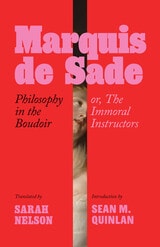
Philosophy in the Boudoir
or The Immoral InstructorsMarquis de Sade
University of Chicago Press, 2027
A freshly translated critical edition of the infamous eighteenth-century sadist’s sprawling work of eroticism that endures today as a serious philosophical argument.
The infamous libertine Marquis de Sade (1740–1814), from whose name we derive the word sadism, wove into his pornographic writings many strands of philosophical brilliance whose insights, interspersed between appalling descriptions of sexual deviance, have perplexed readers for centuries. First published in 1795, Philosophy in the Boudoir remains one of the most influential of these works, containing a powerful essay that distills Sade’s most illicit ideas into a compelling argument for personal freedom. In it, Sade experiments with forms drawn from sentimental fiction, pornography, philosophical dialogue, and drama to both satirize his contemporaries and champion the virtues of the heroic libertine—an important intellectual precursor to ideas further developed by Nietzsche, Freud, and others.
This new critical edition is freshly translated into contemporary English and includes a scholarly introduction and extensive notes that illuminate Sade’s myriad allusions and cultural connections, particularly to the larger world of Enlightenment Europe.
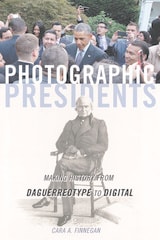
Photographic Presidents
Making History from Daguerreotype to DigitalCara A. Finnegan
University of Illinois Press, 2021
Lincoln’s somber portraits. Lyndon Johnson’s swearing in. George W. Bush’s reaction to learning about the 9/11 attacks. Photography plays an indelible role in how we remember and define American presidents. Throughout history, presidents have actively participated in all aspects of photography, not only by sitting for photos but by taking and consuming them. Cara A. Finnegan ventures from a newly-discovered daguerreotype of John Quincy Adams to Barack Obama’s selfies to tell the stories of how presidents have participated in the medium’s transformative moments. As she shows, technological developments not only changed photography, but introduced new visual values that influence how we judge an image. At the same time, presidential photographs—as representations of leaders who symbolized the nation—sparked public debate on these values and their implications.
An original journey through political history, Photographic Presidents reveals the intertwined evolution of an American institution and a medium that continues to define it.

Photography and Landscape
Rod Giblett and Juha Tolonen
Intellect Books, 2012
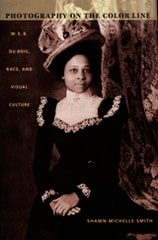
Photography on the Color Line
W. E. B. Du Bois, Race, and Visual CultureShawn Michelle Smith
Duke University Press, 2004
Smith reads Du Bois’s photographs in relation to other turn-of-the-century images such as scientific typologies, criminal mugshots, racist caricatures, and lynching photographs. By juxtaposing these images with reproductions from Du Bois’s exhibition archive, Smith shows how Du Bois deliberately challenged racist representations of African Americans. Emphasizing the importance of comparing multiple visual archives, Photography on the Color Line reinvigorates understandings of the stakes of representation and the fundamental connections between race and visual culture in the United States.

Phyla of Joy
Karen An-hwei Lee
Tupelo Press, 2012
There’s an undeniable audacity in a poet using the word “joy” in our beleaguered world. In her new book, Karen An-hwei Lee combines scientific precision and an appetite for far-flung vocabularies with a fascination for the sources of rapturous emotion.
In poems that roam from the intimacy of prayer to the art of brewing tea, from bamboo-related famine to quasars, the globe’s minor seas, and the nuptial flight of ants, Phyla of Joy reaches toward ecstasy.
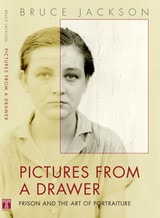
Pictures from a Drawer
Prison and the Art of PortraitureBruce Jackson
Temple University Press, 2009
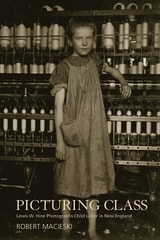
Picturing Class
Lewis W. Hine Photographs Child Labor in New EnglandRobert Macieski
University of Massachusetts Press, 2015
In this richly illustrated book, Robert Macieski examines Lewis W. Hine's art and advocacy on behalf of child laborers as part of the National Child Labor Committee (NCLC) between 1909 and 1917. A “social photographer”—as he called himself—Hine created images that documented children at work throughout New England, revealing their exploitation in the North as he had for rural working children in the South. Hine staged his images, highlighting particular types of labor in specific places: the “newsies” in Connecticut cities; sardine canners in Eastport, Maine; cranberry pickers in Cape Cod bogs; industrial homeworkers in Boston and Providence; and cotton textile workers throughout the region. His association with the NCLC connected him to a network of local and national reformers, social workers, and child welfare professionals, a broad coalition he supported in their fight to end this unethical labor practice. Macieski also chronicles Hine's efforts to mount major exhibitions that would help move public opinion against child labor.
In Picturing Class, Macieski explores the historical context of Hine's photographs and the social worlds of his subjects. He offers a detailed analysis of many of the images, unearthing the stories behind the creation of these photographs and the lives of their subjects. In telling the story of these photographs, their creation, and their reception, Macieski demonstrates how Hine worked to advance an unvarnished picture of a rapidly changing region and the young workers at the center of this important shift.
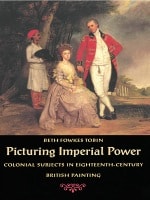
Picturing Imperial Power
Colonial Subjects in Eighteenth-Century British PaintingBeth Fowkes Tobin
Duke University Press, 1999
Informed by the varied perspectives of postcolonial theory, Tobin explores through close readings of colonial artwork the dynamic middle ground in which cultures meet. Linking specific colonial sites with larger patterns of imperial practice and policy, she examines paintings by William Hogarth, Benjamin West, Gilbert Stuart, Arthur William Devis, and Agostino Brunias, among others. These works include portraits of colonial officials, conversation pieces of British families and their servants, portraits of Native Americans and Anglo-Indians, and botanical illustrations produced by Calcutta artists for officials of the British Botanic Gardens. In addition to examining the strategies that colonizers employed to dominate and define their subjects, Tobin uncovers the tactics of negotiation, accommodation, and resistance that make up the colonized’s response to imperial authority. By focusing on the paintings’ cultural and political engagement with imperialism, she accounts for their ideological power and visual effect while arguing for their significance as agents in the colonial project.
Pointing to the complexity, variety, and contradiction within colonial art, Picturing Imperial Power contributes to an understanding of colonialism as a collection of social, economic, political, and epistemological practices that were not monolithic and inevitable, but contradictory and contingent on various historical forces. It will interest students and scholars of colonialism, imperial history, postcolonial history, art history and theory, and cultural studies.
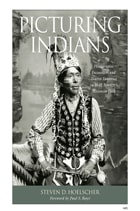
Picturing Indians
Photographic Encounters and Tourist Fantasies in H. H. Bennett's Wisconsin DellsSteven D. Hoelscher
University of Wisconsin Press, 2008
Winner, Book Award of Merit, Wisconsin Historical Society, Best Books for General Audiences, selected by the American Association of School Librarians, and Best Books for Regional Interests, selected by the Public Library Association
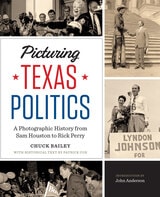
Picturing Texas Politics
A Photographic History from Sam Houston to Rick PerryBy Chuck Bailey; with historical text by Patrick Cox; introduction by John Anderson
University of Texas Press, 2015
With rare, previously unpublished photographs and iconic images of politicians from the state’s founders to Ann Richards, George W. Bush, and Rick Perry, here is the first-ever photographic album of Texas politicians and political campaigns.
The Republic of Texas was founded in 1839, around the time that photography was being invented. So while there were no photographers at the Alamo or San Jacinto, they arrived soon after to immortalize, on film, Sam Houston, David Burnett, Mirabeau Lamar, and many other founding fathers of the Lone Star State. Over the following nearly two centuries, Texas politics and politicians have provided reliable, often dramatic, and sometimes larger-than-life subjects for photographers to capture in the moment and add to the historical record.
Picturing Texas Politics presents the first photographic album of Texas politicians and political campaigns ever assembled. Chuck Bailey has searched archives, museums, libraries, and private collections to find photographs that have never been published, as well as iconic images, such as Russell Lee’s pictures of one of Ralph Yarborough’s campaigns. These photographs are arranged into four chronological sections, each one introduced by historian Patrick Cox, who also provides informative photo captions. The photographs display power and political savvy from the early Republic to Lyndon Johnson and Bob Bullock; unmatched dedication to Texas in the Hobby and Bush families; and the growing influence of women in politics, from Miriam “Ma” Ferguson to Barbara Jordan, Ann Richards, and Kay Bailey Hutchison. With Sam Houston’s jaguar vest, W. Lee “Pappy” O’Daniel’s hillbilly band, a famous governor with an ostrich, and prominent Texans eating watermelons, shooting guns, and riding horses, this is Texas politics at its liveliest and best.

Picturing Utopia
Bertha Shambaugh and the Amana PhotographersAbigail Foerstner
University of Iowa Press, 2005

Piety and Dissent
Race, Gender, and Biblical Rhetoric in Early American AutobiographyEileen R. Elrod
University of Massachusetts Press, 2008
For pious converts to Christianity in late eighteenth- and early nineteenth-century New England, all reality was shaped by religious devotion and biblical text. It is therefore not surprising that earnest believers who found themselves marginalized by their race or sex relied on their faith to reconcile the tension between the spiritual experience of rebirth and the social ordeal of exclusion and injustice.
In Piety and Dissent, Eileen Razzari Elrod examines the religious autobiographies of six early Americans who represented various sorts of marginality: John Marrant, Olaudah Equiano, and Jarena Lee, all of African or African American heritage; Samson Occom (Mohegan) and William Apess (Pequot); and Abigail Abbott Bailey, a white woman who was subjected to extreme domestic violence. Through close readings of these personal narratives, Elrod uncovers the complex rhetorical strategies employed by pious outsiders to challenge the particular kinds of oppression each experienced. She identifies recurrent ideals and images drawn from Scripture and Protestant tradition—parables of liberation, rage, justice, and opposition to authority—that allowed them to see resistance as a religious act and, more than that, imbued them with a sense of agency.
What the life stories of these six individuals reveal, according to Elrod, is that conventional Christianity in early America was not the hegemonic force that church leaders at the time imagined, and that many people since have believed it to be. Nor was there a clear distinction between personal piety and religious, social, and political resistance. To understand fully the role of religion in the early period of American letters, we must rethink some of our most fundamental assumptions about the function of Christian faith in the context of individual lives.
Pilgrimage to the End of the World
The Road to Santiago de CompostelaConrad Rudolph
University of Chicago Press, 2004
Pinion
Monica Rico
Four Way Books, 2024

Pittsburghese
Robert Gibb
Michigan State University Press, 2024
Planet Auschwitz
Holocaust Representation in Science Fiction and Horror Film and TelevisionBrian E. Crim
Rutgers University Press, 2020
Planet Auschwitz website (https://planetauschwitz.com)
Planet Work
Rethinking Labor and Leisure in the AnthropoceneRyan Hediger
Bucknell University Press, 2023
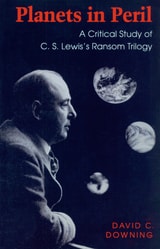
Planets in Peril
A Critical Study of C. S. Lewis's Ransom TrilogyDavid C. Downing
University of Massachusetts Press, 1992
A critical study of C.S. Lewis's “Ransom Trilogy” which analyses Lewis's methods and meanings, concentrating on this trilogy but also including relevant secondary work. Lewis's literary scholarship and display of Christian values are incorporated into this discussion.
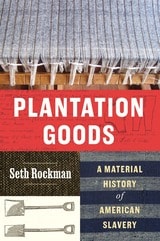
Plantation Goods
A Material History of American SlaverySeth Rockman
University of Chicago Press, 2024
The industrializing North and the agricultural South—that’s how we have been taught to think about the United States in the early nineteenth century. But in doing so, we overlook the economic ties that held the nation together before the Civil War. We miss slavery’s long reach into small New England communities, just as we fail to see the role of Northern manufacturing in shaping the terrain of human bondage in the South. Using plantation goods—the shirts, hats, hoes, shovels, shoes, axes, and whips made in the North for use in the South—historian Seth Rockman locates the biggest stories in American history in the everyday objects that stitched together the lives and livelihoods of Americans—white and Black, male and female, enslaved and free—across an expanding nation.
By following the stories of material objects, such as shoes made by Massachusetts farm women that found their way to the feet of a Mississippi slave, Rockman reveals a national economy organized by slavery—a slavery that outsourced the production of its supplies to the North, and a North that outsourced its slavery to the South. Melding business and labor history through powerful storytelling, Plantation Goods brings northern industrialists, southern slaveholders, enslaved field hands, and paid factory laborers into the same picture. In one part of the country, entrepreneurs envisioned fortunes to be made from “planter’s hoes” and rural women spent their days weaving “negro cloth” and assembling “slave brogans.” In another, enslaved people actively consumed textiles and tools imported from the North to contest their bondage. In between, merchants, marketers, storekeepers, and debt collectors laid claim to the profits of a thriving interregional trade.
Examining producers and consumers linked in economic and moral relationships across great geographic and political distances, Plantation Goods explores how people in the nineteenth century thought about complicity with slavery while showing how slavery structured life nationwide and established a modern world of entrepreneurship and exploitation. Rockman brings together lines of American history that have for too long been told separately, as slavery and capitalism converge in something as deceptively ordinary as a humble pair of shoes.
Plants Beyond Borders
Edited by Courtney B. Ryan and Alicia Carroll
The Ohio State University Press, 2026
Centers vegetal life as a force that disrupts the borders of race, gender, sexuality, and colonial power.
Although plants are the most abundant life form on earth, the environmental humanities have paid them scant attention until recently, even as new challenges, such as the COVID-19 pandemic, climate change, war, and the global rise of the right have piqued interest in plants as signs of life that challenge the Anthropocene and the logic of extraction. In Plants Beyond Borders, Courtney B. Ryan and Alicia Carroll have marshalled a range of innovative contributions that focus on vegetal borderlands—or spaces in which plant and human life overlap—where vegetal life exceeds and uproots human borders. Containing perspectives from English, landscape architecture, Native American studies, performing arts, and more, Plants Beyond Borders foregrounds Indigenous sovereignty and plant knowledge; explores the shared transmutability of plants and trans, queer, and pregnant bodies; and investigates phytographia, or plant writing, as plants thinking beyond borders. No matter the objective, the essays in this interdisciplinary collection center vegetal life, considering how agentic plants not only rupture myths of settler colonialism, gender, and sexuality but also inscribe themselves and us in the world.
Contributors:
Cinthya Ammerman Muñoz, Alicia Carroll, Gwendolyn Cohen, Isaac Cohen, Xinyue Fu, Patrícia de Nóbrega Gomes, Katie Hogan, Kaley Makino, Melissa Parrish, MacKenzie Patterson, Courtney B. Ryan, John Charles Ryan, Saghar Safaeyan, Jeannette Schollaert, Kathryn Van Wert, Christina Welch

PlayHouse
PoemsJorrell Watkins
Northwestern University Press, 2024
Jorrell Watkins's debut poetry collection is a polyvocal, musically charged disruption of the United States's fixation on drug and gun culture. The poems in Play|House embody many identities, including son, brother, fugitive, bluesman, karate practitioner, and witness. Throughout, Watkins inflects a Black/trap vernacular that defamiliarizes the urban Southern landscape. Across three sections of poetry scored by hip-hop, blues, and trap, Watkins considers how music is a dwelling and wonders which histories, memories, and people haunt each home. Past figures such as John Coltrane, Billie Holiday, and the short-lived 1940s trio Day, Dawn & Dusk intermingle with Migos, the Watkins family, childhood friends, and loved ones both parted and departed. At its core, Play|House reckons with the truths and failures of masculinity for Black boys and men, all the while documenting moments of triumphant Black joy and love.
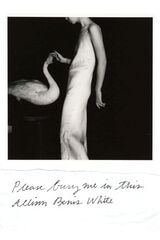
Please Bury Me in This
Allison Benis White
Four Way Books, 2017

Poems from Captured Documents
A Bilingual EditionThanh T. Nguyen
University of Massachusetts Press, 1994
Written in journals and notebooks by ordinary soldiers who fought against American forces in Vietnam, the poems collected in this volume fill a longstanding void in the literature of that war. In addition to offering a revealing window into another culture – a culture that prizes poetry as an integral part of social life – the pieces provide a rare look at the conflict from the perspective of those who served in the National Liberation Front, the People’s Armed Forces, and the People’s Army of Vietnam.
The format of this edition is bilingual, to enable both Vietnamese and American readers to share and appreciate these poignant and deeply personal documents, which were often written under fire and always in the face of death.

Poems of Love and Marriage
John Ciardi
University of Arkansas Press, 1989
Collected from his published and heretofore unpublished work, the love poems of John Ciardi in Poems of Love and Marriage are a rich display of gentle wit, emotion, and craft. Not merely lyrics of youthful romance, these span the course of a love affair, of a life shared from first blush to old age.
These poems never disturb the sanctity of the private moment, but transcend the specific situation and bloom into universal recognition. And in his usual way of basking in those qualities which transform the ordinary into the unique, John Ciardi finds poignancy and truth in those elements of love and living together that so often go unnoticed.
Poems, Volume 1
Catholic University of America Press, 1962
Poems, Volume 2
Catholic University of America Press, 1965
Poetry from Spaceship Earth
Empire and Ecology in Post-1945 American PoetrySamia Rahimtoola
University of Iowa Press, 2026
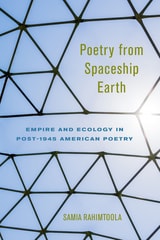
In the early decades of the postwar period, the planetary metaphor of “spaceship Earth” was everywhere in the West. It exerted its power on sites as various as Caribbean research stations, the shipping lanes of the U.S.-occupied Pacific, Palestinian refugee camps, and the internal colonies of segregated nations. At its heart was a new ideology and infrastructure of managing, administering, and rationalizing nature through which Western powers sought to maintain their grip on a decolonizing planet.
Poetry from Spaceship Earth retrieves a diverse array of postwar American poets—Robert Duncan, June Jordan, Joanne Kyger, Lorine Niedecker, and Charles Olson—who contested and cultivated alternatives to this emergent mode of environmentalism. By placing the major innovations of postwar poetry into conversation with environmental politics, Cold War science and technology studies, and postcolonial and Black studies, Samia Rahimtoola develops an original theoretical and historical account of the racial and colonial logics that underpin the supposedly neutral project of managing nature.
Poisonous Muse
The Female Poisoner and the Framing of Popular Authorship in Jacksonian AmericaSara L. Crosby
University of Iowa Press, 2016
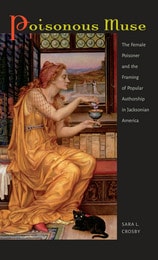
This difference in outcome doesn’t mean that poisonous women didn’t preoccupy Americans. In the decades following Andrew Jackson’s first presidential bid, Americans buzzed over women who used poison to kill men. They produced and devoured reams of ephemeral newsprint, cheap trial transcripts, and sensational “true” pamphlets, as well as novels, plays, and poems. Female poisoners served as crucial elements in the literary manifestos of writers from Nathaniel Hawthorne and Edgar Allan Poe to George Lippard and the cheap pamphleteer E. E. Barclay, but these characters were given a strangely positive spin, appearing as innocent victims, avenging heroes, or engaging humbugs.
The reason for this poison predilection lies in the political logic of metaphor. Nineteenth-century Britain strove to rein in democratic and populist movements by labeling popular print “poison” and its providers “poisoners,” drawing on centuries of established metaphor that negatively associated poison, women, and popular speech or writing. Jacksonian America, by contrast, was ideologically committed to the popular—although what and who counted as such was up for serious debate. The literary gadfly John Neal called on his fellow Jacksonian writers to defy British critical standards, saying, “Let us have poison.” Poisonous Muse investigates how they answered, how they deployed the figure of the female poisoner to theorize popular authorship, to validate or undermine it, and to fight over its limits, particularly its political, gendered, and racial boundaries.
Poisonous Muse tracks the progress of this debate from approximately 1820 to 1845. Uncovering forgotten writers and restoring forgotten context to well-remembered authors, it seeks to understand Jacksonian print culture from the inside out, through its own poisonous language.
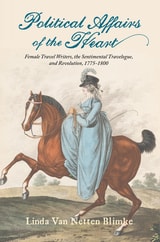
Political Affairs of the Heart
Female Travel Writers, the Sentimental Travelogue, and Revolution, 1775-1800Linda Van Netten Blimke
Bucknell University Press, 2022
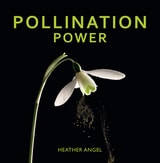
Pollination Power
Heather Angel
University of Chicago Press, 2016
In stunning full-color images, employing the latest photographic techniques, esteemed photographer Heather Angel has captures the intimate interactions of plants with their floral pollinators. The plants come not only from Angel’s Surrey backyard and the Royal Botanic Garden at Kew, but from twenty countries where Angel has travelled—from the rich floral kingdoms of the Cape of South Africa to the diversity of China and the Americas. The photos illustrate the varied techniques that flowers use to communicate with their pollinators. Some, for example, change color when the flower no longer has rewards to offer. Others control precisely when pollinators enter or leave by timing when they open and close their petals or when they emit a scent. This fascinating array of pollination repertoires crossfertilizes Angel’s photos with a descriptive text.
Featuring both common and exotic plants and temperate and tropical floral, Pollination Power will entice anyone with a passion for botanicals, from gardeners to botanists alike.