Results by title
177 books match the query 'Themes, motives' and 11 start with p
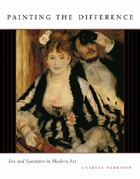
Painting the Difference
Sex and Spectator in Modern ArtCharles Harrison
University of Chicago Press, 2005
Arguing that the representation of women in art was crucial to the character of modernity, Harrison traces the history of female subjects as they began to gaze out of the picture to confront and engage their viewers. Combining sweeping conceptual history with telling investigations into the details of particular paintings, Painting the Difference deciphers the implications of sexual difference for the development of nineteenth- and twentieth-century art. Harrison shows how artists, reflecting the underlying anxieties of the time about gender, used female subjects' gazes both to create a sexualized relationship between these subjects and their viewers, and to simultaneously question that relationship. In considering works by artists such as Renoir, Manet, Degas, Cézanne, Picasso, and Matisse, as well as Rothko, Warhol, Cindy Sherman, and many more, Harrison incorporates elements of cultural criticism and social history into his arguments, and generous color illustrations permit the reader to test Harrison's claims against the works on which they are based. Rich with detail and compelling analysis, Painting the Difference offers cutting-edge interpretation grounded in the reality of magnificent works of art.
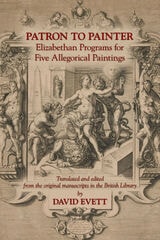
Patron to Painter
Elizabethan Programs for Five Allegorical PaintingsDavid Evett
Arizona Center for Medieval and Renaissance Studies, 2020
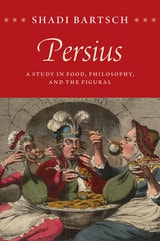
Persius
A Study in Food, Philosophy, and the FiguralShadi Bartsch
University of Chicago Press, 2015
In Persius, Shadi Bartsch explores this Stoic framework and argues that Persius sets his own bizarre metaphors of food, digestion, and sexuality against more appealing imagery to show that the latter—and the poetry containing it—harms rather than helps its audience. Ultimately, he encourages us to abandon metaphor altogether in favor of the non-emotive abstract truths of Stoic philosophy, to live in a world where neither alluring poetry, nor rich food, nor sexual charm play a role in philosophical teaching.
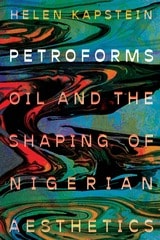
Petroforms
Oil and the Shaping of Nigerian AestheticsHelen Kapstein
West Virginia University Press, 2025
2026 PROSE Award Finalist, Humanities: Literature
Petroforms contributes a much-needed theory of form and genre to the cutting-edge field of petrocriticism, itself an offshoot of developments in postcolonial ecocriticism. Studies of resource fiction and inquiries in the energy humanities have recently taken their rightful place as necessary reflections on the role of the literary imagination in intervening in the Anthropocene as we find ourselves precariously placed in the face of a fossil fuel crisis, climate change, and mass extinctions.
With Petroforms, Helen Kapstein undertakes close readings of a range of Nigerian aesthetic forms: short stories, romance novels, documentary film, the “Nollywood” film industry, fine art sculpture, and poetry. She uses these forms to argue that the demands of paying attention to petroleum extraction, production, consumption, and distribution in the creation of resource fictions must necessarily alter and affect conventional forms and structures. What results is a new set of genre-bending forms, like documentary film that we can read as horror, in response to the forceful and fluid demands of the petroleum industry and its master narrative.
Nigeria is one of the world’s largest oil-producing nations, in which that production is concentrated in the Niger Delta, resulting in a local environment that has been steadily degraded by oil spills, flares, pollution, and contamination, and a local culture shaped by false scarcity in a space of abundance, murderous politics, and escalating violence. At the same time as the Niger Delta grounds Kapstein’s argument in its own political realities and cultural responses, Nigeria’s participation in a global economy of petrodependency allows her theory of petroforms to be extended and applied more generally.
What Peter Hitchcock calls “oil’s generative law” is that it is “everywhere and obvious, it must be opaque or otherwise fantastic.” He means the coexistence of oil’s taken-for-granted qualities is something constitutive of every level of everyday life and its spectacular displays—gushers, spills, explosions. Oil’s nature, the fact that it is everywhere, unctuously oozing into every corner of everyday life, means that it constantly spills over out of our existing forms, genres, and systems, demanding accommodation. To try to contain it, we create new forms. Thus, a petroform is simultaneously reactionary (a necessary response to oil’s pressures, a by-product of the commodity itself) and resistant (an attempt at containment, at generating a retort to the very thing that shapes it). Each form figures oil and then configures and reconfigures itself in reaction to it.
Picturing Imperial Power
Colonial Subjects in Eighteenth-Century British PaintingBeth Fowkes Tobin
Duke University Press, 1999
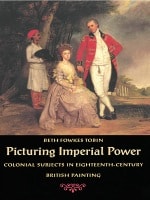
Informed by the varied perspectives of postcolonial theory, Tobin explores through close readings of colonial artwork the dynamic middle ground in which cultures meet. Linking specific colonial sites with larger patterns of imperial practice and policy, she examines paintings by William Hogarth, Benjamin West, Gilbert Stuart, Arthur William Devis, and Agostino Brunias, among others. These works include portraits of colonial officials, conversation pieces of British families and their servants, portraits of Native Americans and Anglo-Indians, and botanical illustrations produced by Calcutta artists for officials of the British Botanic Gardens. In addition to examining the strategies that colonizers employed to dominate and define their subjects, Tobin uncovers the tactics of negotiation, accommodation, and resistance that make up the colonized’s response to imperial authority. By focusing on the paintings’ cultural and political engagement with imperialism, she accounts for their ideological power and visual effect while arguing for their significance as agents in the colonial project.
Pointing to the complexity, variety, and contradiction within colonial art, Picturing Imperial Power contributes to an understanding of colonialism as a collection of social, economic, political, and epistemological practices that were not monolithic and inevitable, but contradictory and contingent on various historical forces. It will interest students and scholars of colonialism, imperial history, postcolonial history, art history and theory, and cultural studies.
Playing with Things
Engaging the Moche Sex PotsBy Mary Weismantel
University of Texas Press, 2021
Winner, Association for Latin American Art-Arvey Foundation Book Award, 2022
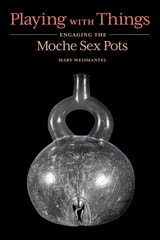
More than a thousand years ago on the north coast of Peru, Indigenous Moche artists created a large and significant corpus of sexually explicit ceramic works of art. They depicted a diversity of sex organs and sex acts, and an array of solitary and interconnected human and nonhuman bodies. To the modern eye, these Moche “sex pots,” as Mary Weismantel calls them, are lively and provocative but also enigmatic creations whose import to their original owners seems impossible to grasp.
In Playing with Things, Weismantel shows that there is much to be learned from these ancient artifacts, not merely as inert objects from a long-dead past but as vibrant Indigenous things, alive in their own inhuman temporality. From a new materialist perspective, she fills the gaps left by other analyses of the sex pots in pre-Columbian studies, where sexuality remains marginalized, and in sexuality studies, where non-Western art is largely absent. Taking a decolonial approach toward an archaeology of sexuality and breaking with long-dominant iconographic traditions, this book explores how the pots "play jokes," "make babies," "give power," and "hold water,” considering the sex pots as actual ceramic bodies that interact with fleshly bodies, now and in the ancient past. A beautifully written study that will be welcomed by students as well as specialists, Playing with Things is a model for archaeological and art historical engagement with the liberating power of queer theory and Indigenous studies.
Portraits of Remembrance
Painting, Memory, and the First World WarEdited by Margaret Hutchison and Steven Trout
University of Alabama Press, 2020
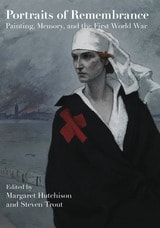
Although photography and moving pictures achieved ubiquity during the First World War as technological means of recording history, the far more traditional medium of painting played a vital role in the visual culture of combatant nations. The public’s appetite for the kind of up-close frontline action that snapshots and film footage could not yet provide resulted in a robust market for drawn or painted battle scenes.
Painting also figured significantly in the formation of collective war memory after the armistice. Paintings became sites of memory in two ways: first, many governments and communities invested in freestanding panoramas or cycloramas that depicted the war or featured murals as components of even larger commemorative projects, and second, certain paintings, whether created by official artists or simply by those moved to do so, emerged over time as visual touchstones in the public’s understanding of the war.
Portraits of Remembrance: Painting, Memory, and the First World War examines the relationship between war painting and collective memory in Australia, Austria, Belgium, Canada, Croatia, France, Germany, Great Britain, New Zealand, Russia, Serbia, Turkey, and the United States. The paintings discussed vary tremendously, ranging from public murals and panoramas to works on a far more intimate scale, including modernist masterpieces and crowd-pleasing expressions of sentimentality or spiritualism. Contributors raise a host of topics in connection with the volume’s overarching focus on memory, including national identity, constructions of gender, historical accuracy, issues of aesthetic taste, and connections between painting and literature, as well as other cultural forms.
Portraits of the Ptolemies
Greek Kings as Egyptian PharaohsBy Paul Edmund Stanwick
University of Texas Press, 2003
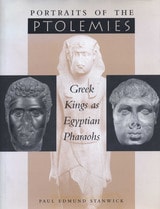
As archaeologists recover the lost treasures of Alexandria, the modern world is marveling at the latter-day glory of ancient Egypt and the Greeks who ruled it from the ascension of Ptolemy I in 306 B.C. to the death of Cleopatra the Great in 30 B.C. The abundance and magnificence of royal sculptures from this period testify to the power of the Ptolemaic dynasty and its influence on Egyptian artistic traditions that even then were more than two thousand years old.
In this book, Paul Edmund Stanwick undertakes the first complete study of Egyptian-style portraits of the Ptolemies. Examining one hundred and fifty sculptures from the vantage points of literary evidence, archaeology, history, religion, and stylistic development, he fully explores how they meld Egyptian and Greek cultural traditions and evoke surrounding social developments and political events. To do this, he develops a "visual vocabulary" for reading royal portraiture and discusses how the portraits helped legitimate the Ptolemies and advance their ideology. Stanwick also sheds new light on the chronology of the sculptures, giving dates to many previously undated ones and showing that others belong outside the Ptolemaic period.
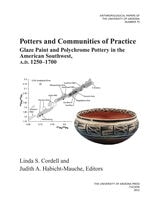
Potters and Communities of Practice
Glaze Paint and Polychrome Pottery in the American Southwest, AD 1250 to 1700Edited by Linda S. Cordell and Judith A. Habicht-Mauche
University of Arizona Press, 2012
The peoples of the American Southwest during the 13th through the 17th centuries witnessed dramatic changes in settlement size, exchange relationships, ideology, social organization, and migrations that included those of the first European settlers. Concomitant with these world-shaking events, communities of potters began producing new kinds of wares—particularly polychrome and glaze-paint decorated pottery—that entailed new technologies and new materials. The contributors to this volume present results of their collaborative research into the production and distribution of these new wares, including cutting-edge chemical and petrographic analyses. They use the insights gained to reflect on the changing nature of communities of potters as they participated in the dynamic social conditions of their world.
Pottery and People
James Skibo
University of Utah Press, 1998
This volume emphasizes the complex interactions between ceramic containers and people in past and present contexts.
Pottery, once it appears in the archaeological record, is one of the most routinely recovered artifacts. It is made frequently, broken often, and comes in endless varieties according to economic and social requirements. Moreover, even in shreds ceramics can last almost forever, providing important clues about past human behavior.
The contributors to this volume, all leaders in ceramic research, probe the relationship between humans and ceramics. Here they offer new discoveries obtained through traditional lines of inquiry, demonstrate methodological breakthroughs, and expose innovative new areas for research. Among the topics covered in this volume are the age at which children begin learning pottery making; the origins of pottery in the Southwest U.S., Mesoamerica, and Greece; vessel production and standardization; vessel size and food consumption patterns; the relationship between pottery style and meaning; and the role pottery and other material culture plays in communication.
Pottery and People provides a cross-section of the state of the art, emphasizing the complete interactions between ceramic containers and people in past and present contexts. This is a milestone volume useful to anyone interested in the connections between pots and people.
Poverty and Antitheatricality
Form and Formlessness in Latin American Literature, Art, and TheoryStephen Buttes
Rutgers University Press, 2025