Results by title
98 books match the query 'Urban renewal' and 6 start with p
Philadelphia
Neighborhoods, Division, and Conflict in a Post-Industrial CityCarolyn Adams
Temple University Press, 1993
Postcolonial Dublin
Imperial Legacies And The Built EnvironmentAndrew Kincaid
University of Minnesota Press, 2006
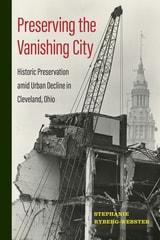
Preserving the Vanishing City
Historic Preservation amid Urban Decline in Cleveland, OhioStephanie Ryberg-Webster
Temple University Press, 2023
Stephanie Ryberg-Webster uncovers the motivations, strategies, and constraints driving Cleveland’s historic preservation sector, led by the public-sector Cleveland Landmarks Commission, nonprofit Cleveland Restoration Society, and a cadre of advocates. She sheds light on the ways in which preservationists confronted severe, escalating, and sustained urban decline, which plagued Cleveland, a prototypical rust-belt industrial city.
Preserving the Vanishing City chronicles the rise of the historic preservation profession in Cleveland and provides six case studies about targeted projects and neighborhood efforts, including industrial heritage, housing preservation and restoration, commercial district revitalization, securing local historic district designations, as well as grassroots organizing, coalition building, and partnerships. Ryberg-Webster also addresses the complexities of historic preservation within the context of rapid racial change in Cleveland’s neighborhoods.
A comprehensive history of preservation within the context of one city’s urban decline, Preserving the Vanishing Cityrecounts the successes, failures, and creative strategies employed to save Cleveland’s built environment.
Private Life, Public Action
How Housing Politics Mobilized Citizens in MoscowAnna Zhelnina
Temple University Press, 2026
Private Life, Public Action traces how residents impacted by the relocation plan became activists despite having little to no experience organizing or even forming political affiliations and opinions. Author Anna Zhelnina details the ways in which neighbors engaged in collective action, as well as the individual and structural changes these interactions caused.
Zhelnina develops the concept of “housing strategies” to explain how residents’ debates with their neighbors about housing were shaped by their private life strategies. She applies her findings about housing in Moscow to ongoing questions about political mobilization, demonstrating how public engagement is shaped by historical and social contexts.
Examining the intersection of housing, politics, and citizenship in contemporary Russia, Private Life, Public Action offers a new way to look at urban change.
In the series Politics, History, and Social Change
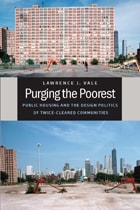
Purging the Poorest
Public Housing and the Design Politics of Twice-Cleared CommunitiesLawrence J. Vale
University of Chicago Press, 2013
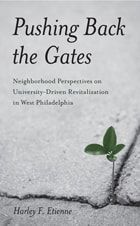
Pushing Back the Gates
Neighborhood Perspectives on University-Driven Revitalization in West PhiladelphiaHarley F Etienne
Temple University Press, 2013
As college and university administrators expand and develop their urban campuses, they have also become developers—and primary drivers—of neighborhood change. But how do institutions contend with urban real estate needs, revitalization opportunities, and community outreach? And how do the residents benefit? Pushing Back the Gates provides a lively discussion of neighborhood-level perspectives of the dynamic changes brought about by institutions' urban planning efforts.
Harley Etienne outlines the rationale for university-driven development and neighborhood revitalization balanced by caution for the limitations of the model. He provides a summary of the University of Pennsylvania's West Philadelphia Initiatives and the challenges and successes of this unique plan. Etienne also examines the implementation of similar efforts at different universities around the country.
Pushing Back the Gates speaks to communities, university leaders, and urban developers who navigate the boundary between neighborhood revitalization through physical development and investments in incumbent populations and human capital.