644 books match the query 'Wars & Conflicts' and 32 start with p

cover of Pacific Airman: The World War II Journal of a B-24 Liberator Navigator

Pacific Airman

The World War II Journal of a B-24 Liberator Navigator

Edward S. Goode, edited by Robert A. Taylor

University of Alabama Press, 2026

A World War II bomber navigator’s diary, documenting perilous missions, survival, sacrifice, and the legendary 90th Bomb Group

Pacific Airman: The World War II Journal of a B-24 Liberator Navigator presents the hand-written pocket diary of US Army Air Forces bomber navigator Edward S. Goode of West Virginia. Goode was a member of the 400th Bomber Squadron (the “Black Pirates”), part of the legendary 90th Bomb Group the “Jolly Rogers.” With approximately seventy-four combat missions to his credit and an Air Medal with six Oak Leaf clusters, Goode experienced the war close-up, with group losses and the horror of grisly deaths in and out of combat. 

The journal details costly bombing raids against Japanese targets, as well as the dangers of the Southwest Pacific area with its wild and unpredictable weather and terrain. Editor Robert A. Taylor also documents Goode’s failed postwar attempt to receive the Distinguished Flying Cross for heroism for the Peleliu bombing mission in 1944.

Taylor offers detailed historical and other context to the journal. Three appendixes comprise a guide for B-24 navigators’ duties and responsibilities, Goode’s own record of 90th Bomb Group losses for 1944–1945, and a hometown newspaper clipping announcing his return home. This book will appeal to readers interested in World War II history, military aviation, the Pacific theater, and firsthand wartime narratives.
 

[more]
cover of Pacific Citizens: Larry and Guyo Tajiri and Japanese American Journalism in the World War II Era

Pacific Citizens

Larry and Guyo Tajiri and Japanese American Journalism in the World War II Era

Edited, with and Introduction and Notes, by Greg Robinson: Foreword by Harry Honda

University of Illinois Press, 2012
Offering a window into a critical era in Japanese American life, Pacific Citizens collects key writings of Larry S. Tajiri, a multitalented journalist, essayist, and popular culture maven. He and his wife, Guyo, who worked by his side, became leading figures in Nisei political life as the central purveyors of news for and about Japanese Americans during World War II, both those confined in government camps and others outside.
 
The Tajiris made the community newspaper the Pacific Citizen a forum for liberal and progressive views on politics, civil rights, and democracy, insightfully addressing issues of assimilation, multiracialism, and U.S. foreign relations. Through his editorship of the Pacific Citizen as well as in articles and columns in outside media, Larry Tajiri became the Japanese American community's most visible spokesperson, articulating a broad vision of Nisei identity to a varied audience.
 
In this thoughtfully framed and annotated volume, Greg Robinson interprets and examines the contributions of the Tajiris through a selection of writings, columns, editorials, and correspondence from before, during, and after the war. Pacific Citizens contextualizes the Tajiris' output, providing a telling portrait of these two dedicated journalists and serving as a reminder of the public value of the ethnic community press.
[more]
cover of Paper Soldiers: The American Press and the Vietnam War

Paper Soldiers

The American Press and the Vietnam War

Clarence R. Wyatt

University of Chicago Press, 1994

Praised and condemned for its aggressive coverage of the Vietnam War, the American press has been both commended for breaking public support and bringing the war to an end and accused of misrepresenting the nature and progress of the war. While in-depth combat coverage and the instantaneous power of television were used to challenge the war, Clarence R. Wyatt demonstrates that, more often than not, the press reported official information, statements, and views. Examining the relationship between the press and the government, Wyatt looks at how difficult it was to obtain information outside official briefings, what sort of professional constraints the press worked under, and what happened when reporters chose not to "get on the team."

"Wyatt makes the Diem period in Saigon come to life—the primitive communications, the police crackdowns, the quarrels within the news organizations between the pessimists in Saigon and the optimists in Washington and New York."—Peter Braestrup, Washington Times

"An important, readable study of the Vietnam press corps—the most maligned group of journalists in modern American history. Clarence Wyatt's insights and assessments are particularly valuable now that the media is rapidly growing in its influence on domestic and international affairs."—Peter Arnett, CNN foreign correspondent
[more]
cover of Pasic & Trumbic: The Kingdom of Serbs, Croats and Slovenes

Pasic & Trumbic

The Kingdom of Serbs, Croats and Slovenes

Dejan Djokic

Haus Publishing, 2010

Nicola Pasic and Ante Trumbic: The book will provide the first parallel biographies of two key Yugoslav politicians of the early 20th century: Nikola Pasic, a Serb, and Ante Trumbic, a Croat. It will also offer a brief history of the creation of Yugoslavia (initially known as the Kingdom of Serbs, Croats, and Slovenes), internationally accepted at the Paris Peace Conference of 1919-20 (at the Treaty of Versailles). Such an approach will fill two major gaps in the literature - scholarly biographies of Pasic and Trumbic are lacking, while Yugoslavia's formation is due a reassessment - and to introduce the reader to the central question of South Slav politics: Serb-Croat relations. Pasic and Trumbic's political careers and their often troubled relationship in many ways perfectly epitomize the wider Serb-Croat question.
[more]
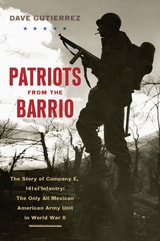
cover of Patriots from the Barrio: The Story of Company E, 141st Infantry: The Only All Mexican American Army Unit in World War II

Patriots from the Barrio

The Story of Company E, 141st Infantry: The Only All Mexican American Army Unit in World War II

Dave Gutierrez

Westholme Publishing, 2018

Named One of the 24 Best History Books of All Time by Book Riot
The Inspiring True Story of a Segregated Unit Whose Exploits Underscore the Forgotten Latino Contribution to the Allied Victory in World War II

As a child, Dave Gutierrez hung on every word his father recalled about his cousin Ramon, “El Sancudo” (the mosquito), and his service in World War II, where he earned a Silver Star, three Purple Hearts, and escaped from the Germans twice. Later, Dave decided to find out more about his father’s cousin, and in the course of his research he discovered that Ramon Gutierrez was a member of Company E, 141st Infantry, a part of the 36th “Texas” Division that was comprised entirely of Mexican Americans—the only such unit in the entire U.S. Army. The division landed at Salerno, Italy, in 1943, among first American soldiers to set foot in Europe. In the ensuing months, Company E and the rest of the 36th would battle their way up the mountainous Italian peninsula against some of Nazi Germany’s best troops. In addition to the merciless rain, mud, and jagged peaks, swift cold rivers crisscrossed the region, including the Rapido, where Company E would face its greatest challenge. In an infamous episode, the 36th Division was ordered to cross the Rapido despite reports that the opposite bank was heavily defended. In the ensuing debacle, the division was ripped apart, and Company E sustained appalling casualties. The company rebounded and made the storied landings at Anzio and ultimately invaded southern France for a final push into Germany. The men of Company E distinguished themselves as rugged fighters capable of warring amid the rubble of destroyed villages and in the devastated countryside.
Based on extensive archival research and veteran and family accounts, Patriots from the Barrio: The Story of Company E, 141st Infantry: The Only All Mexican American Army Unit in World War II brings to life the soldiers whose service should never have gone unrecognized for so long. With its memorable personalities, stories of hope and immigration, and riveting battle scenes, this beautifully written book is a testament to the shared beliefs of all who have fought for the ideals of the American flag.
[more]
cover of Patton's Pawns: The 94th US Infantry Division at the Siegfried Line

Patton's Pawns

The 94th US Infantry Division at the Siegfried Line

Tony Le Tissier

University of Alabama Press, 2007

The 94th US Infantry Division was an organization formed late in the Second World War, made up largely of draft-deferred university students as enlisted men and an officer corps pulled together from various domestic postings with unfortunate consequences for mutual trust and respect.
Initially used as part of the force blockading the Brittany ports after D-Day, in December of 1944, the division was incorporated into General Patton’s Third Army south of the Moselle-Saar Triangle, the base of which was a portion of the Siegfried Line known as the Orscholz Switch. Its first combat experience came in battalion-sized attacks during that terrible winter while the Battle of the Bulge raged to the north, and the Division suffered heavy casualties, many due to the ferocity of the winter weather. Patton, with characteristic zeal, excoriated the division’s officers and senior NCOs for the rate of non-combat casualties. Thereafter, the division was ordered forward on an all-out assault to break through the Siegfried Line. After horrific fighting against entrenched defenders, with ice turning to mud as spring approached, on February 19, 1945, the 94th broke through to open the roads to Trier and the Rhine.

This book is the most comprehensive study to date of the fierce fighting between the 94th U.S. Infantry Division and their German counterparts during that spring of 1945. It sheds new light on the achievements of the outnumbered division in penetrating Germany’s Westwall. With characteristic verve and detail, Tony Le Tissier narrates the action and illuminates the tribulations and sacrifices of American soldiers who won their laurels at great cost.
[more]
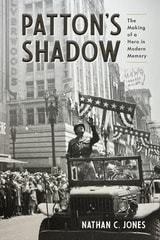
cover of Patton's Shadow: The Making of a Hero in Modern Memory

Patton's Shadow

The Making of a Hero in Modern Memory

Nathan C. Jones

University of Alabama Press, 2024

An engrossing account of the myth and legend of George S. Patton and what his reputation illuminates about American culture and hero worship

Patton’s Shadow by Nathan C. Jones, a leading authority on George S. Patton, offers a definitive account of the creation of the Patton legend and what it illuminates about American culture and the worship of heroes. Jones traces how the persona of Patton, a brash and brilliant general in the European theater of World War II, transcended the individual man and became a cultural icon and byword for triumphal American might.

Patton was a hero lionized and celebrated in his own time. Patton as well as the US Army cultivated his persona during and after the war. His image was used to promote patriotism, commercial goods, and military recruitment. The 1970 Academy Award–winning film starring George C. Scott cemented his iconic image for millions of Americans, further embellishing Patton’s persona and introducing him to entirely new generations of young Americans.

Patton’s Shadow is an intellectually omnivorous tour de force that draws on ideas about heroes from sources as timeless as ancient mythology and as contemporary as Abraham Maslow, Max Weber, and Carl Jung. Jones artfully locates the honored altar that heroes occupy in the human heart and then answers insightful questions about what America’s embrace of Patton in particular as a military hero illuminates about the United States, about Patton’s generation, and about our own.

Jones’s engrossing work will fascinate readers interested in American history, military history, and the psychology of heroism.
[more]
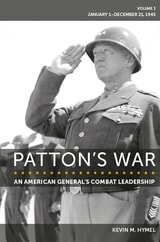
cover of Patton's War: An American General's Combat Leadership Volume 3: January 1-December 21, 1945

Patton's War

An American General's Combat Leadership Volume 3: January 1-December 21, 1945

Kevin M. Hymel

University of Missouri Press, 2026

The third and final volume of Kevin Hymel’s Patton’s War trilogy finds Lieutenant General George S. Patton on January 1, 1945, as the master of the battlefield in World War II Europe. Throughout the war, Patton showed the same kind of aggressive leadership and battlefield smarts that made his name synonymous with victory. Patton’s leadership was almost flawless as he led his men through enemy fire and one of the worst winters in European history. 

As with his previous volume, Hymel relies on Patton’s original diaries (not the transcribed, embellished versions historians have relied on for many years) and personal letters to tell the general’s story. Hymel also mined various archives to explain Patton’s encounters with soldiers, government officials, civilians, and reporters to expand on his narrative.

Throughout this three-volume work, Patton emerges not as a larger-than-life myth, but as a human being, one held back by the personal prejudices and antisemitism that ultimately proved to be his demise. Despite these personal failings, Patton was, above all, as Hymel reveals, a commander bent on winning, or, as the general himself might have put it, getting the enemy to dance to his tune. 
 
[more]
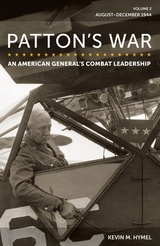
cover of Patton's War: An American General's Combat Leadership, Volume 2: August–December 1944

Patton's War

An American General's Combat Leadership, Volume 2: August–December 1944

Kevin M. Hymel

University of Missouri Press, 2023

Winner of the 2023 Army Historical Foundation Distinguished Writing Award for Biography

Finalist for the 2023 Gilder Lehrman Military History Prize


This second of three volumes of Patton’s War picks up where the first one left off, examining General George S. Patton’s leadership of the U.S. Third Army. The book follows Patton’s contributions to both the Normandy and Brittany campaigns—the closing of the Falaise Pocket in Normandy, and racing to the port cities in Brittany. It ends with Patton and his corps rescuing the besieged town of Bastogne in the Battle of the Bulge.

As he did in the preceding volume, Hymel relies not only on Patton’s diaries and letters, but countless veteran interviews, sur­veys, and memoirs. He also provides a unique insight missed by previous Patton scholars. Instead of using Patton’s transcribed diaries, which were heavily edited and embellished, he consults Patton’s original, hand-written diaries to uncover previously un­known information about the general.

This second volume of Hymel’s groundbreaking work shows Patton at the height of his generalship, successfully leading his army without the mistakes and caustic behavior that almost got him sent home earlier—even if we also see a Patton still guided at times by racism and antisemitism.
 
[more]
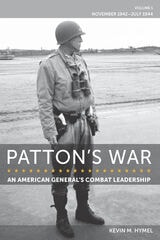
cover of Patton's War: An American General's Combat Leadership, Volume I: November 1942–July 1944

Patton's War

An American General's Combat Leadership, Volume I: November 1942–July 1944

Kevin M. Hymel

University of Missouri Press, 2021
George S. Patton Jr. lived an exciting life in war and peace, but he is best remembered for his World War II battlefield exploits. Patton’s War: An American General’s Combat Leadership: November 1942–July 1944, the first of three volumes, follows the general from the beaches of Morocco to the fields of France, right before the birth of Third Army on the continent. In highly engaging fashion, Kevin Hymel uncovers new facts and challenges long-held beliefs about the mercurial Patton, not only examining his relationships with his superiors and fellow generals and colonels, but also with the soldiers of all ranks whom he led. Using new sources unavailable to previous historians and through extensive research of soldiers’ memoirs and interviews, Hymel adds a new dimension to the telling of Patton’s WWII story.
 
[more]
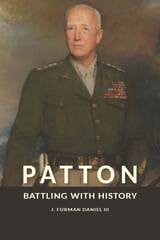
cover of Patton: Battling with History

Patton

Battling with History

J. Furman Daniel

University of Missouri Press, 2025

General George S. Patton Jr. is one of the most successful yet misunderstood figures in American military history. Despite the many books and articles written about him, none considers in depth how his love of history shaped the course of his life. In this thematic biography, Furman Daniel traces Patton’s obsession with history and argues that it informed and contributed to many of his successes, both on and off the battlefield.
 
Patton deliberately cultivated the image of himself as a warrior from ages past; the more interesting truth is that he was an exceptionally dedicated student of history. He was a hard worker and voracious reader who gave a great deal of thought to how military history might inform his endeavors. Most scholars have overlooked this element of Patton’s character, which Daniel argues is essential to understanding the man’s genius.
[more]
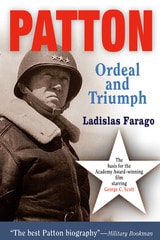
cover of Patton: Ordeal and Triumph

Patton

Ordeal and Triumph

Ladislas Farago

Westholme Publishing, 2005

"The best Patton biography."—Military Bookman

He is America's most famous general. He represents toughness, focus, determination, and the ideal of achievement in the face of overwhelming odds. He was the most feared and respected adversary to his enemies and an object of envy, admiration, and sometimes, scorn to his professional peers. An early proponent of tank warfare, George S. Patton moved from being a foresighted lieutenant in the First World War to commanding the Third Army in the next, leading armored divisions in the Allied offensive that broke the back of Nazi Germany. Patton was an enigmatic figure. His image among his troops and much of the press achieved legendary status through his bold and colorful comments and combat leadership, yet these same qualities nearly jeopardized his career and forced him out of the battle on several occasions. Victory was impossible without Patton, and returning to the field, his army was responsible for one of the most crushing advances in the history of warfare.

In Ladislas Farago's masterpiece, Patton: Ordeal and Triumph, the complete story of this fascinating personality is revealed. Born into an aristocratic California family, Patton rose in military rank quickly and was tapped to lead the Allied landings in North Africa in 1942. Under Patton's direction, American troops cut their teeth against Rommel's Afrikakorps, advanced further and more quickly than British General Montgomery's army in the conquest of Sicily, and ultimately continued their exploits by punching into Germany and checking the Russian westward advance at the end of World War II. A sweeping, absorbing biography and critically hailed, Patton: Ordeal and Triumph provides unique insights into Patton's life and leadership style and is military history at its finest.
[more]
cover of Paul Hymans: Belgium

Paul Hymans

Belgium

Sally Marks

Haus Publishing, 2010

Paul Hymans was the champion of the small states in the League of Nations Commission at the Paris Peace Conference and was rewarded by becoming the League's first president. He thereby brought about Belgium's transition from the status of sheltered child to full participation in much great-power diplomacy.
[more]
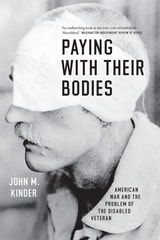
cover of Paying with Their Bodies: American War and the Problem of the Disabled Veteran

Paying with Their Bodies

American War and the Problem of the Disabled Veteran

John M. Kinder

University of Chicago Press, 2015

Christian Bagge, an Iraq War veteran, lost both his legs in a roadside bomb attack on his Humvee in 2006. Months after the accident, outfitted with sleek new prosthetic legs, he jogged alongside President Bush for a photo op at the White House. The photograph served many functions, one of them being to revive faith in an American martial ideal—that war could be fought without permanent casualties, and that innovative technology could easily repair war’s damage. When Bagge was awarded his Purple Heart, however, military officials asked him to wear pants to the ceremony, saying that photos of the event should be “soft on the eyes.” Defiant, Bagge wore shorts.

America has grappled with the questions posed by injured veterans since its founding, and with particular force since the early twentieth century: What are the nation’s obligations to those who fight in its name? And when does war’s legacy of disability outweigh the nation’s interests at home and abroad? In Paying with Their Bodies, John M. Kinder traces the complicated, intertwined histories of war and disability in modern America. Focusing in particular on the decades surrounding World War I, he argues that disabled veterans have long been at the center of two competing visions of American war: one that highlights the relative safety of US military intervention overseas; the other indelibly associating American war with injury, mutilation, and suffering. Kinder brings disabled veterans to the center of the American war story and shows that when we do so, the history of American war over the last century begins to look very different. War can no longer be seen as a discrete experience, easily left behind; rather, its human legacies are felt for decades.

The first book to examine the history of American warfare through the lens of its troubled legacy of injury and disability, Paying with Their Bodies will force us to think anew about war and its painful costs.
[more]
cover of Perilous Memories: The Asia-Pacific War(s)

Perilous Memories

The Asia-Pacific War(s)

T. Fujitani, Geoffrey M. White, Lisa Yoneyama, eds.

Duke University Press, 2001

Perilous Memories makes a groundbreaking and critical intervention into debates about war memory in the Asia-Pacific region. Arguing that much is lost or erased when the Asia-Pacific War(s) are reduced to the 1941–1945 war between Japan and the United States, this collection challenges mainstream memories of the Second World War in favor of what were actually multiple, widespread conflicts. The contributors recuperate marginalized or silenced memories of wars throughout the region—not only in Japan and the United States but also in China, Southeast Asia, the Pacific Islands, Okinawa, Taiwan, and Korea.
Firmly based on the insight that memory is always mediated and that the past is not a stable object, the volume demonstrates that we can intervene positively yet critically in the recovery and reinterpretation of events and experiences that have been pushed to the peripheries of the past. The contributors—an international list of anthropologists, cultural critics, historians, literary scholars, and activists—show how both dominant and subjugated memories have emerged out of entanglements with such forces as nationalism, imperialism, colonialism, racism, and sexism. They consider both how the past is remembered and also what the consequences may be of privileging one set of memories over others. Specific objects of study range from photographs, animation, songs, and films to military occupations and attacks, minorities in wartime, “comfort women,” commemorative events, and postwar activism in pursuing redress and reparations.
Perilous Memories is a model for war memory intervention and will be of interest to historians and other scholars and activists engaged with collective memory, colonial studies, U.S. and Asian history, and cultural studies.

Contributors. Chen Yingzhen, Chungmoo Choi, Vicente M. Diaz, Arif Dirlik, T. Fujitani, Ishihara Masaie, Lamont Lindstrom, George Lipsitz, Marita Sturken, Toyonaga Keisaburo, Utsumi Aiko, Morio Watanabe, Geoffrey M. White, Diana Wong, Daqing Yang, Lisa Yoneyama
[more]
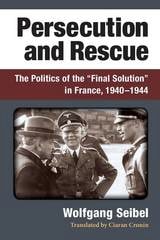
cover of Persecution and Rescue: The Politics of the “Final Solution” in France, 1940-1944

Persecution and Rescue

The Politics of the “Final Solution” in France, 1940-1944

Wolfgang Seibel

University of Michigan Press, 2016

In 1942, two years after invading France, the Germans implemented their policy of exterminating the Jews. In contrast to Jews in many parts of German-occupied Europe, however, the majority of Jews in France survived, thanks to opposition to the Nazi extermination policy from Church dignitaries and the moral indignation of the average Frenchmen. Seeking to maintain popular support, the Vichy Regime bargained with the Germans over the substance and extent of its collaboration, which the Germans needed in order to hold France.

Drawing on German and French sources, Wolfgang Seibel traces the twisted process of political decision-making that shaped the fate of the Jews in German-occupied France during World War II. By analyzing the German-French negotiations, he reveals the underlying logic as well as the actual course of the bargaining process as both the Vichy Regime and the Germans sought a stable relationship. Yet that relationship was continually reshaped by the progress of the war, Germany’s deteriorating prospects, France’s economic and geopolitical position, and the Vichy government’s quest for domestic political support. The Jews’ suffering intensified when the Germans had the upper hand; but when the French felt empowered, the Vichy Regime stopped collaborating in the completion of the “final solution.” Persecution and Rescue: The Politics of the “Final Solution” in France, 1940–1944 demonstrates the ways in which political circumstances can mitigate—or foster—mass crime.


[more]
cover of Piip, Meierovics & Voldemaras: The Baltic States

Piip, Meierovics & Voldemaras

The Baltic States

Charlotte Alston

Haus Publishing, 2010

Conflict on the borders of the Russian 'Empire', whatever the complexion of the government controlling it, has been a constant feature of the past 90 years, most recently with Russia's brief war with Georgia in August 2008. In 1919, as the smaller nations on Russia's borders sought self-determination while the Civil War raged between the Whites and the Bolsheviks, the Paris Peace Conference struggled with a situation complicated by mutually exclusive aims. The Baltic States of Latvia, Lithuania and Estonia were seen by both the Russians and the Western Allies as a protective buffer for their own territory, which led to the curious situation that the Peace Conference requested German troops to remain temporarily in the Baltic territory they had occupied during the First World War to block the westward spread of the Bolshevik Revolution. The ongoing civil war in Russia further complicated the issue, because if the Whites should win and restore the 'legitimate' Russian government, the Peace Conference could not divide up the territory of a power that had been one of the original members of the Entente. The US politician Herbert Hoover described Russia as 'Banquo's ghost' at the Paris Peace Conference, an invisible but influential presence, and nowhere can this be more clearly seen than in the deliberations over the Baltic States.
[more]
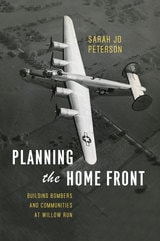
cover of Planning the Home Front: Building Bombers and Communities at Willow Run

Planning the Home Front

Building Bombers and Communities at Willow Run

Sarah Jo Peterson

University of Chicago Press, 2013

Before Franklin Roosevelt declared December 7 to be a “date which will live in infamy”; before American soldiers landed on D-Day; before the B-17s, B-24s, and B-29s roared over Europe and Asia, there was Willow Run. Located twenty-five miles west of Detroit, the bomber plant at Willow Run and the community that grew up around it attracted tens of thousands of workers from across the United States during World War II. Together, they helped build the nation’s “Arsenal of Democracy,” but Willow Run also became the site of repeated political conflicts over how to build suburbia while mobilizing for total war.
In Planning the Home Front, Sarah Jo Peterson offers readers a portrait of the American people—industrialists and labor leaders, federal officials and municipal leaders, social reformers, industrial workers, and their families—that lays bare the foundations of community, the high costs of racism, and the tangled process of negotiation between New Deal visionaries and wartime planners. By tying the history of suburbanization to that of the home front, Peterson uncovers how the United States planned and built industrial regions in the pursuit of war, setting the stage for the suburban explosion that would change the American landscape when the war was won.
[more]
cover of Polonium in the Playhouse: The Manhattan Project's Secret Chemistry Work in Dayton, Ohio

Polonium in the Playhouse

The Manhattan Project's Secret Chemistry Work in Dayton, Ohio

Linda Carrick Thomas

The Ohio State University Press, 2017

At the height of the race to build an atomic bomb, an indoor tennis court in one of the Midwest’s most affluent residential neighborhoods became a secret Manhattan Project laboratory. Polonium in the Playhouse: The Manhattan Project's Secret Chemistry Work in Dayton, Ohio presents the intriguing story of how this most unlikely site in Dayton, Ohio, became one of the most classified portions of the Manhattan Project.
 
Seized by the War Department in 1944 for the bomb project, the Runnymede Playhouse was transformed into a polonium processing facility, providing a critical radioactive ingredient for the bomb initiator—the mechanism that triggered a chain reaction. With the help of a Soviet spy working undercover at the site, it was also key to the Soviet Union’s atomic bomb program.
 
The work was directed by industrial chemist Charles Allen Thomas who had been chosen by J. Robert Oppenheimer and General Leslie Groves to coordinate Manhattan Project chemistry and metallurgy. As one of the nation’s first science administrators, Thomas was responsible for choreographing the plutonium work at Los Alamos and the Project’s key laboratories. The elegant glass-roofed building belonged to his wife’s family.
 
Weaving Manhattan Project history with the life and work of the scientist, industrial leader and singing-showman Thomas, Polonium in the Playhouse offers a fascinating look at the vast and complicated program that changed world history and introduces the men and women who raced against time to build the initiator for the bomb.
 
[more]
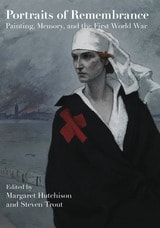
cover of Portraits of Remembrance: Painting, Memory, and the First World War

Portraits of Remembrance

Painting, Memory, and the First World War

Edited by Margaret Hutchison and Steven Trout

University of Alabama Press, 2020

Interdisciplinary collection of essays on fine art painting as it relates to the First World War and commemoration of the conflict
 
Although photography and moving pictures achieved ubiquity during the First World War as technological means of recording history, the far more traditional medium of paint­ing played a vital role in the visual culture of combatant nations. The public’s appetite for the kind of up-close frontline action that snapshots and film footage could not yet pro­vide resulted in a robust market for drawn or painted battle scenes.
 
Painting also figured significantly in the formation of collective war memory after the armistice. Paintings became sites of memory in two ways: first, many governments and communities invested in freestanding pan­oramas or cycloramas that depicted the war or featured murals as components of even larger commemorative projects, and second, certain paintings, whether created by official artists or simply by those moved to do so, emerged over time as visual touchstones in the public’s understanding of the war.
 
Portraits of Remembrance: Painting, Memory, and the First World War examines the relationship between war painting and collective memory in Australia, Austria, Belgium, Canada, Croatia, France, Germany, Great Britain, New Zealand, Russia, Serbia, Turkey, and the United States. The paintings discussed vary tremendously, ranging from public murals and panoramas to works on a far more intimate scale, including modernist masterpieces and crowd-pleasing expressions of sentimentality or spiritualism. Contribu­tors raise a host of topics in connection with the volume’s overarching focus on memory, including national identity, constructions of gender, historical accuracy, issues of aesthetic taste, and connections between painting and literature, as well as other cultural forms.
 
[more]
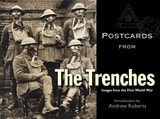
cover of Postcards from the Trenches: Images from the First World War

Postcards from the Trenches

Images from the First World War

Edited by the Bodleian Library

Bodleian Library Publishing, 2008

World War I has come down to us in indelible images—those of airplane bombers, bleak-eyed soldiers, stern-faced commanders, and the ruins of countless villages. But soldiers themselves also took photographs on the battlefield, and many of their striking images were transformed into postcards that were sent home to family and friends or collected as war mementos. Postcards from the Trenches gathers a number of these postcards to create a striking visual history of World War I.

The cards in this compelling volume were created not only by soldiers, but also by embedded journalists from France, Belgium, Austria, Germany, and Britain. The images capture scenes both humorous and poignant, including soldiers having a mock party with little food to eat, wounded soldiers smiling for the camera, a makeshift trench hospital, the bloody aftermath of a battle, and a huddle of men taking what they know could be their last communion before marching onto the battlefield. Other cards document the mundane duties that dominated wartime life, including men digging trenches, troops marching to new trenches and battlefields, and or soldiers nearly comatose with boredom while waiting for the fight to begin. This stunning visual narrative opens a new window into one of the most analyzed events in history, as the postcards’ images testify to the resilience and bravery of soldiers in the most trying circumstances.

            A fascinating and unprecedented historical document, Postcards from the Trenches draws back the curtain to unflinchingly show the daily horror and humanity that define life in war.
 
[more]
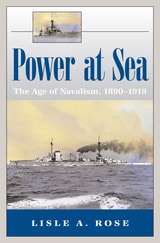
cover of Power at Sea, Volume 1: The Age of Navalism, 1890-1918

Power at Sea, Volume 1

The Age of Navalism, 1890-1918

Lisle A. Rose

University of Missouri Press, 2006
The twentieth century was preeminently an age of warring states and collapsing empires. Industrialism brought not peace but the sword. And the tip of that sword was sea power.
In Power at Sea, Lisle A. Rose gives us an unprecedented narrative assessment of modern sea power, how it emerged from the Age of Fighting Sail, how it was employed in war and peace, and how it has shaped the life of the human community over the past century and a quarter. In this first volume, Rose recalls the early twentieth-century world of emerging, predatory industrial nations engaging in the last major scramble for global markets and empire. In such times, an imposing war fleet was essential to both national security and international prestige. Battleship navies became pawns of power politics, and between 1890 and 1914 four of them--Britain’s Royal Navy, the Imperial German Navy, the Japanese Navy, and the U.S. Navy--set the tone and rhythm of international life.
Employing a global canvas, Rose portrays the increasingly frantic naval race between Britain and Germany that did so much to bring about the First World War; he takes us aboard America’s Great White Fleet as it circumnavigated the world between 1907 and 1909, leaving in its wake both goodwill and jealousy; he details Japan’s growing naval and military power and the hunger for unlimited expansion that resulted.
Important naval battles were fought in those days of ostensible peace, and Rose brings to life the encounters of still young and relatively small industrial fighting fleets at Manila Bay and Tsushima. He also takes us into the huge naval factories where the engines of war were forged. He invites us aboard the imperial battleships and battle cruisers, exploring the dramatically divided worlds of the officers’ lordly wardroom with its clublike atmosphere and the often foul and fetid enlisted men’s quarters.
The Age of Navalism climaxed in the epic First World War Battle of Jutland, in which massive guns and maneuvering dreadnoughts determined that Imperial Germany would become the latest in a line of ambitious naval powers that failed to shake Britannia’s rule of the waves. Germany’s subsequent use of a revolutionary new strategy, unrestricted submarine warfare, nearly brought Britain to its knees, reduced the level of naval combat to barbarism, and brought the United States into the war with its own substantial navy, ultimately turning the tide of battle.
Focusing as much on social issues and technological advances as on combat, Power at Sea: The Age of Navalism tells a compelling story of newfound power that is fascinating in its own right. Yet, it is merely a prologue to more startling accounts contained in the author’s succeeding volumes.
[more]
cover of Power at Sea, Volume 2: The Breaking Storm, 1919-1945

Power at Sea, Volume 2

The Breaking Storm, 1919-1945

Lisle A. Rose

University of Missouri Press, 2006
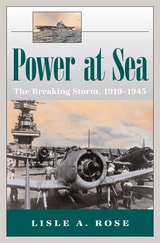
After 1921, the clouds of suspicion and resentment left by the Great War gradually obscured the strenuous efforts of negotiating statesmen and led to ever greater appetites for power at sea. By the midthirties, worried admiralties around the world were bracing themselves for a new and deadlier round of global violence. In this monumental study, Lisle A. Rose revisits the strategies, battles, ships, planes, weapons, and people of the most destructive war in history to show the decisive influence of sea power upon its outcome.
During the years preceding World War II, Britain’s once dominant Royal Navy, beset by national economic decline and steadily eroding morale within the fleet, pleaded for the appeasement of dictators in Europe and the Far East in an attempt to avoid a three-front maritime war that would surely doom the British Empire. Desperately hoping for time to build a formidable fleet, Hitler’s admirals feverishly tried to rebuild German naval weaponry upon a technological foundation not much improved since 1918. In the end, it was Japan and the United States, facing each other across the broad Pacific, that moved naval history into a new phase by fashioning ultramodern navies based on the integration of sea, air, and amphibious forces.
Rose relates how the strengths and weaknesses of seafaring nations came into play within the crucible of a six-year war during which naval encounters were every bit as critical and frequent as land-based fighting. He recounts the well-known naval battles and operations of World War II from a novel perspective, placing them in the context of daring gambles open to both the Axis and the Allies that were either seized upon or ignored. Once Britain’s survival was assured, and the Allies held on in the North Atlantic and the Pacific, however, the superior industrial culture of the United States doomed the Axis. After 1943, America threw into the deadly battles against the German U-boats and the Japanese fleet more and better ships, more and better citizen sailors, better intelligence, and better strategies than did its antagonists or allies.
Two years later, the United States had not only defeated the Axis, it had also won control of the world’s oceans from its exhausted British ally. In the process, it had begun a revolutionary transition in which power at sea became power from the sea. Whether recounting the heart-stopping action of naval encounters or analyzing the technologies that made victory possible, Rose traces in vigorous, memorable prose the dramatic emergence of a new naval power that would leave all others in its wake.
[more]
cover of Prince Charoon et al: South East Asia

Prince Charoon et al

South East Asia

Andrew Dalby

Haus Publishing, 2010

Southeast Asia needs to be dealt with as a whole, because, although the one national delegation from the region (Siam) took a minor part, nationalist movements in several Southeast Asian countries reached an early climax - significant though inconclusive - in the years 1919-1920. The planned Peace Conference, Wilson's Fourteen Points, and the victory of Communism in Russia, all contributed to this activity, and in spite of national differences it needs to be seen as a whole. The focus of the book will be on developments around 1919; thus it will bring out for the first time the unexpected significance for South-east Asia of the 1919 milestone. It will also have a biographical bias - taking a special interest in the personalities of major figures in this important period, in order to show the influences and the patterns of thought that underlie their activities at the time of the Peace Conference. Following a brief introduction making the link between world events in 1919 and South-east Asia, the book sets the scene in the region. Succeeding chapters deal with the five countries - Siam, Vietnam, Burma, Indonesia, Philippines - in which the years 1919-21 were of special significance, as well as the impact of the peace conferences in relationships with their neighbours, the growth of international Communism and global politics in later years.
[more]
cover of Prince Saionji: Japan

Prince Saionji

Japan

Jonathan Clements

Haus Publishing, 2010
Prince Saionji Kinmochi (1849-1940). The Japanese delegation at the Paris Peace Conference did not have the Japanese prime or foreign ministers with them as they had only just been elected and had plenty to do back home. The delegation was instead led by Prince Saionji, the dashing 'kingmaker' of early 20th-century Japanese politics whose life spanned the arrival of Commodore Perry and his 'black ships', the Japanese civil war, the Meiji Restoration, the Sino-Japanese War, the Russo-Japanese War, the First World War, the Paris Peace Conference and the Treaty of Versailles, and the rise of Japanese militarism. Unlike many of the conservatives of his day, Saionji was a man with experience of international diplomacy and admiration for European culture. Brought up in the days of the last Shogun, he became an active supporter of Japan's new ruling regime, after the Shogun was overthrown in a civil war, and a leading figure in the post-Restoration reform movement. In 1869 he founded the institution that would become the Ritsumeikan University - literally, 'The place to establish one's destiny'. He was sent to France for nine years to investigate Western technology and philosophy, and served for a decade as a Japanese ambassador in Europe. Returning to Japan, he served twice as Minister of Education and later became prime minister before resigning to become a revered elder statesman. Japan entered the First World War on the Allied side, seizing German possessions in China and the Pacific. In the closing days of the war, Japanese military forces participated in the Siberian Intervention - an American-led invasion of eastern Russia against Communist insurgents. At the Conference Saionji's presence was initially regarded by the Japanese as a sign that Japan had become a fully-fledged member of the international community and accepted on an equal footing with the Western Powers. His delegation introduced a controversial proposal to legally enshrine racial equality as one of the tenets of the League of Nations. The Japanese were also keen to grab colonies of their own, and went head-to-head with the Chinese delegation over the fate of the former German possession of Shandong. When Shandong was 'returned' not to China but to its Japanese occupiers, riots broke out in China. Despite Saionji's statesmanship and diplomacy, the Treaty of Versailles was regarded by many Japanese as a slap in the face. Saionji's influence weakened in his last years, while his party was dissolved and amalgamated with others.
[more]
cover of Prison Etiquette: The Convict's Compendium of Useful Information

Prison Etiquette

The Convict's Compendium of Useful Information

Edited by Holley Cantine and Dachine Rainer. Foreword by Philip Metres.

Southern Illinois University Press, 2001

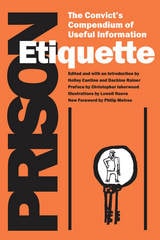
Of the fifty thousand Americans who declared themselves conscientious objectors during World War II, nearly six thousand went to prison, many serving multiyear sentences in federal lockups. Some conscientious objectors, notably Robert Lowell, William Everson, and William Stafford, went on to become important figures in the literary life of their country, while others were participants and teachers in the civil rights and antiwar movements of the 1950s, 1960s, and 1970s. This long out-of-print book, reprinted from the rare original 1951 edition, collects firsthand accounts by conscientious objectors who were imprisoned for their beliefs.

Prison Etiquette is illustrated with eleven line drawings by Lowell Naeve.
[more]
cover of Prisoner of Wars: A Hmong Fighter Pilot's Story of Escaping Death and Confronting Life

Prisoner of Wars

A Hmong Fighter Pilot's Story of Escaping Death and Confronting Life

Chia Youyee Vang

Temple University Press, 2021

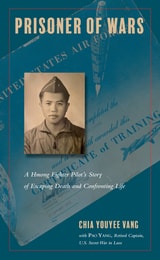
Retired Captain Pao Yang was a Hmong airman trained by the U.S. Air Force and CIA to fly T-28D aircraft for the U.S. Secret War in Laos. However, his plane was shot down during a mission in June 1972. Yang survived, but enemy forces captured him and sent him to a POW camp in northeastern Laos. He remained imprisoned for four years after the United States withdrew from Vietnam because he fought on the American side of the war. 

Prisoner of Wars shows the impact the U.S Secret War in Laos had on Hmong combatants and their families. Chia Vang uses oral histories thatpoignantly recount Yang’s story and the deeply personal struggles his loved ones—who feared he had died—experienced in both Southeast Asia and the United States. As Yang eventually rebuilt his life in America, he grappled with issues of freedom and trauma.

Yang’s life provides a unique lens through which to better understand the lasting impact of the wars in Southeast Asia and the diverse journeys that migrants from Asia made over the last two centuries. Prisoner of Wars makes visible an aspect of the collateral damage that has been left out of dominant Vietnam War narratives.
[more]
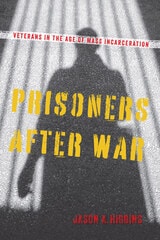
cover of Prisoners after War: Veterans in the Age of Mass Incarceration

Prisoners after War

Veterans in the Age of Mass Incarceration

Jason A. Higgins

University of Massachusetts Press, 2024

Winner of the 2025 Oral History Association Book Award • Winner of Virginia Tech's Albert Lee Sturm Award for Faculty Excellence • Finalist for the 2026 Veterans Studies Association Distinguished Book Award • Honorable Mention, National Council on Public History Book Award

The United States has both the largest, most expensive, and most powerful military and the largest, most expensive, and most punitive carceral system in the history of the world. Since the American War in Vietnam, hundreds of thousands of veterans have been incarcerated after their military service.

Identifying the previously unrecognized connections between American wars and mass incarceration, Prisoners after War reaches across lines of race, class, and gender to record the untold history of incarcerated veterans over the past six decades. Having conducted dozens of oral history interviews, Jason A. Higgins traces the lifelong effects of war, inequality, disability, and mental illness, and explores why hundreds of thousands of veterans, from Vietnam to Afghanistan, were caught up in the carceral system. This original study tells an intergenerational history of state-sanctioned violence, punishment, and inequality, but its pages also resonate with stories of survival and redemption, revealing future possibilities for reform and reparative justice.
[more]
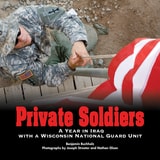
cover of Private Soldiers: A Year in Iraq with a Wisconsin National Guard Unit

Private Soldiers

A Year in Iraq with a Wisconsin National Guard Unit

Benjamin Buchholz

Wisconsin Historical Society Press, 2007
In April 2005 they received the official alert: The Wisconsin Army National Guard's 2-127th Infantry Battalion was being mobilized. After training at Camp Shelby, Mississippi, the 620 soldiers of the Gator Battalion would serve in Operation Iraqi Freedom, providing armed convoy escort and route security throughout all of Iraq, from Umm Qasr in the south to Mosul in the far north. Their mission would take them into the most dangerous regions of Iraq, and during the next year the battalion would withstand hundreds of attacks, see dozens wounded, and lose three members killed in action.
 
Private Soldiers chronicles the 2-127th's year-long deployment from the unique perspective of the soldiers themselves. Written and photographed by three battalion members, the book provides a rare first-hand account of war and life in Iraq. Fascinating soldier interviews reveal the effects of deployment on the troops and on their families back home, and interviews with Iraqi civilians describe the Iraqis' perceptions of life, war, and working alongside Wisconsin troops. Brilliant photography illuminates the 2-127th's year, from training to "boots on the ground" to their return home. And candid photos taken by battalion members capture the soldiers' day-to-day lives and camaraderie.
 
An extremely timely and relevant account of soldiers' lives, Private Soldiers honors Wisconsin's participants in the Iraq war and helps readers understand the war's human side.
 
All royalties from sales of Private Soldiers will go to the 2-127th's family support groups and to funds established in memoriam of the battalion members who gave their lives in the Iraq war.
[more]
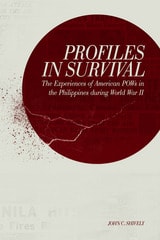
cover of Profiles in Survival: The Experiences of American POWs in the Philippines during World War II

Profiles in Survival

The Experiences of American POWs in the Philippines during World War II

John C. Shively

Indiana Historical Society Press, 2012
The stories of seven men and one woman from Indiana who survived the horrors of captivity under the Japanese in the Pacific during World War II are captured in vivid detail. These Hoosiers were ordered to surrender following the fall of Bataan and Corregidor in 1942. It was the largest surrender of American armed forces in U.S. history and the beginning of three years of hell starting with the infamous Bataan Death March, facing brutal conditions in POW camps in the Philippines, and horrific journeys to Japan for some onboard what came to be known as “hellships.” Former Indiana governor Edgar D. Whitcomb, one of those featured in the book, notes that the American prisoners had to endure “unimaginable misery and brutality at the hands of sadistic Japanese guards,” as they were routinely beaten and many were executed for the most minor offenses, or for mere sport. In addition to Whitcomb, those profiled include Irvin Alexander, Harry Brown, William Clark, James Duckworth, Eleanor Garen, Melvin McCoy, and Hugh Sims.
[more]
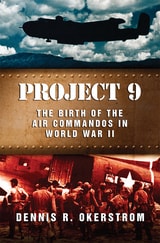
cover of Project 9: The Birth of the Air Commandos in World War II

Project 9

The Birth of the Air Commandos in World War II

Dennis R. Okerstrom

University of Missouri Press, 2026
Project 9: The Birth of the Air Commandos in World War II is a thoroughly researched narrative of the Allied joint project to invade Burma by air. Beginning with its inception at the Quebec Conference of 1943 and continuing through Operation Thursday until the death of the brilliant British General Orde Wingate in March 1944, less than a month after the successful invasion of Burma, Project 9 details all aspects of this covert mission, including the selection of the American airmen, the procurement of the aircraft, the joint training with British troops, and the dangerous night-time assault behind Japanese lines by glider.
Based on review of hundreds of documents as well as interviews with surviving Air Commandos, this is the history of a colorful, autonomous, and highly effective military unit that included some of the most recognizable names of the era. Tasked by the General of the Army Air Forces, H. H. “Hap” Arnold, to provide air support for British troops under the eccentric Major General Wingate as they operated behind Japanese lines in Burma, the Air Commandos were breaking entirely new ground in operational theory, tactics, and inter-Allied cooperation. Okerstrom’s in-depth research and analysis in Project 9 shed light on the operations of America’s first foray into special military operations, when these heroes led the way for the formation of modern special operations teams such as Delta Force and Seal Team Six.
[more]
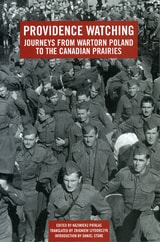
cover of Providence Watching: Journeys from Wartorn Poland to the Canadian Prairies

Providence Watching

Journeys from Wartorn Poland to the Canadian Prairies

Kazimierz Patalas

University of Manitoba Press, 2003

At the start of the Second World War, Poland was invaded by both the German and the Soviet armies. The country was unable to withstand the assaults and thousands of Polish soldiers and civilians were shipped to labour camps and prisons, where starvation, disease, and mistreatment were their daily expectations. With the signing of an amnesty between the Polish and Soviet governments in 1942, many of these soldiers were engaged in rebuilding the Polish army, and travelled through the Mideast to fight in the Italian campaign.After the war, Canada accepted over 4000 Polish immigrant soldiers and their families who did not want to return to a communist regime in their country. This book is a moving oral history of the experiences of forty-five individuals during that transition period between the outbreak of war and their eventual relocation in Canada. Their memories of those times remain clear, not so remarkably perhaps, as they recount how they struggled in labour and prison camps, refugee camps, and exile in freezing northern climates, often arriving with the clothes they wore and nothing else. There are stories here of families torn apart and reunited, courageous escapes, underground resistance, friendship and emnity, and above all of survival. To read these memoirs is to understand how the inhumanity of war is confronted and defied by the indomitable human spirit.
[more]