Results by title
28164 books match the query 'History' and 1297 start with p

Pieter Geyl and Britain
Encounters, Controversies, ImpactEdited by Stijn van Rossem and Ulrich Tiedau
University of London Press, 2022
Pieter Geyl (1887—1966) was undoubtedly one of the most internationally renowned Dutch historians of the twentieth century, but also one of the most controversial. Having come to the United Kingdom as a journalist, he started his academic career at the University of London in the aftermath of World War I and played an important role in the early days of the Institute of Historical Research. Known in this time for his reinterpretation of the sixteenth-century Dutch Revolt against the Habsburgs that challenged existing historiographies of both Belgium and the Netherlands but was also linked to his political activism in favor of the Flemish movement in Belgium, Geyl left his stamp on the British perception of Low Countries history before moving back to his country of origin in 1935. Having spent World War II in German hostage camps, he famously coined the adage of history being “a discussion without end” and reengaged in public debates with British historians after the war, partly conducted on the airwaves of the BBC. A prolific writer and an early example of a public intellectual, Geyl remains one of the most influential thinkers on history of his time. The present volume reexamines Geyl’s relationship with Britain (and the Anglophone world at large) and sheds new light on his multifaceted work as a historian, journalist, homme de lettres, and political activist.

Piety and Charity in Late Medieval Florence
John Henderson
University of Chicago Press, 1997
"[A] long-awaited book. . . . [It is] the most complete survey of confraternities and charity, not only for Florence, but for any Italian city state to date. . . . This book recovers more vividly than other recent works what it meant to be a member of a confraternity in the late middle ages."—Samuel K. Cohn, Jr., Economic History Review
"Henderson offers new and fascinating information. . . . A stimulating and suggestive book that deserves a wide readership." —Gervase Rosser, Times Higher Education Supplement

Piety and Dissent
Race, Gender, and Biblical Rhetoric in Early American AutobiographyEileen R. Elrod
University of Massachusetts Press, 2008
For pious converts to Christianity in late eighteenth- and early nineteenth-century New England, all reality was shaped by religious devotion and biblical text. It is therefore not surprising that earnest believers who found themselves marginalized by their race or sex relied on their faith to reconcile the tension between the spiritual experience of rebirth and the social ordeal of exclusion and injustice.
In Piety and Dissent, Eileen Razzari Elrod examines the religious autobiographies of six early Americans who represented various sorts of marginality: John Marrant, Olaudah Equiano, and Jarena Lee, all of African or African American heritage; Samson Occom (Mohegan) and William Apess (Pequot); and Abigail Abbott Bailey, a white woman who was subjected to extreme domestic violence. Through close readings of these personal narratives, Elrod uncovers the complex rhetorical strategies employed by pious outsiders to challenge the particular kinds of oppression each experienced. She identifies recurrent ideals and images drawn from Scripture and Protestant tradition—parables of liberation, rage, justice, and opposition to authority—that allowed them to see resistance as a religious act and, more than that, imbued them with a sense of agency.
What the life stories of these six individuals reveal, according to Elrod, is that conventional Christianity in early America was not the hegemonic force that church leaders at the time imagined, and that many people since have believed it to be. Nor was there a clear distinction between personal piety and religious, social, and political resistance. To understand fully the role of religion in the early period of American letters, we must rethink some of our most fundamental assumptions about the function of Christian faith in the context of individual lives.
Pigeon River Country
A Michigan ForestDale Clarke Franz
University of Michigan Press, 2007
The long awaited new edition of a classic offers memories, myths, and meanings of the largest contiguous piece of wild land in Michigan's Lower Peninsula.
This updated edition explores more deeply why and how the outdoors moves and compels us. It’s a book about mice who sing, elk who wear collars, deer who kiss, and birds who could dictate their compositions to Mozart. It's about the human species interacting in generous and sometimes misguided ways with the rest of life. It's about men trying to ripen pinecones into pineapples and women taking better aim with a revolver than expected. It's about poetry—from Mary Oliver, Lao Tzu, and Theodore Roethke—and seeing hawks dive in a night sky or feeling oil geologists shake the earth below. It's about finding fish dead in the river by the thousands and crouching behind a stump to watch beaver build a dwelling. While this book considers life beyond the boundaries of Pigeon River Country, it is steeped in the specifics of a place that lives mostly on its own, instead of human, terms.
The Pigeon River Country is a remote northern forest, ecologically distinct from most of the United States. Laced with waterways, it has a storied past. Dale Clarke Franz has collected personal accounts from various people intrigued with the Pigeon River Country—including loggers, conservationists, mill workers, campers, even the young Ernest Hemingway, who said he loved the forest "better than anything in the world." There are comprehensive discussions of the area's flora and fauna, guides to trails and camping sites, and photos showcasing the changing face of this hidden national treasure.
Pigskin Nation
How the NFL Remade American PoliticsJesse Berrett
University of Illinois Press, 2018

Piip, Meierovics & Voldemaras
The Baltic StatesCharlotte Alston
Haus Publishing, 2010
Pikes Peak Partnership
The Penroses and the TuttsThomas J. Noel
University Press of Colorado, 2002
Pikillacta
The Wari Empire in CuzcoMcEwan, Gordon F.
University of Iowa Press, 2005

Pilgram Marpeck
His Life and Social TheologyStephen B. Boyd
Duke University Press, 1992
Drawing on extensive archival data documenting Marpeck’s professional life, as well as on his numerous published and unpublished writings on theology and religious reform, Stephen B. Boyd traces Marpeck’s unconventional transition from mining magistrate to Anabaptist leader, establishes his connections with various radical social and religious groups, and articulates aspects of his social theology. Marpeck’s distinctive and eclectic theology, Boyd demonstrates, focused on the need for personal, uncoerced conversion, rejected state interference in the affairs of the church, denied the need for a monastic withdrawal from the secular world, and called for the Christian’s active pursuit of justice before God and among human beings.
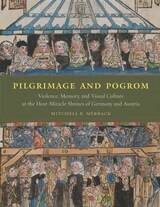
Pilgrimage and Pogrom
Violence, Memory, and Visual Culture at the Host-Miracle Shrines of Germany and AustriaMitchell B. Merback
University of Chicago Press, 2013
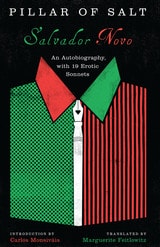
Pillar of Salt
An Autobiography, with 19 Erotic SonnetsBy Salvador Novo, Translated by Marguerite Feitlowitz, Introduction by Carlos Monsiváis
University of Texas Press, 2014
Written with exquisite sensitivity and wit, this memoir by one of Mexico’s foremost men of letters describes coming of age during the violence of the Mexican Revolution and “living dangerously” as an openly homosexual man in a brutally machista society.
Salvador Novo (1904–1974) was a provocative and prolific cultural presence in Mexico City through much of the twentieth century. With his friend and fellow poet Xavier Villaurrutia, he cofounded Ulises and Contemporáneos, landmark avant-garde journals of the late 1920s and 1930s. At once “outsider” and “insider,” Novo held high posts at the Ministries of Culture and Public Education and wrote volumes about Mexican history, politics, literature, and culture. The author of numerous collections of poems, including XX poemas, Nuevo amor, Espejo, Dueño mío, and Poesía 1915–1955, Novo is also considered one of the finest, most original prose stylists of his generation.
Pillar of Salt is Novo’s incomparable memoir of growing up during and after the Mexican Revolution; shuttling north to escape the Zapatistas, only to see his uncle murdered at home by the troops of Pancho Villa; and his initiations into literature and love with colorful, poignant, complicated men of usually mutually exclusive social classes. Pillar of Salt portrays the codes, intrigues, and dynamics of what, decades later, would be called “a gay ghetto.” But in Novo’s Mexico City, there was no name for this parallel universe, as full of fear as it was canny and vibrant. Novo’s memoir plumbs the intricate subtleties of this world with startling frankness, sensitivity, and potential for hilarity. Also included in this volume are nineteen erotic sonnets, one of which was long thought to have been lost.

Pillars of Salt, Monuments of Grace
New England Crime Literature and the Origins of American Popular Culture, 1674-1860Daniel A. Cohen
University of Massachusetts Press, 2006

Pilots' Directions
Transcontinental AirwayWilliam M. Leary
University of Iowa Press, 1990

Pimping Fictions
African American Crime Literature and the Untold Story of Black Pulp PublishingJustin Gifford
Temple University Press, 2013
Gifford draws from an impressive array of archival materials to provide a first-of-its-kind literary and cultural history of this distinctive genre. He evaluates the artistic and symbolic representations of pimps, sex-workers, drug dealers, and political revolutionaries in African American crime literature-characters looking to escape the racial containment of prisons and the ghetto.
Gifford also explores the struggles of these black writers in the literary marketplace, from the era of white-owned publishing houses like Holloway House-that fed books and magazines like Players to eager black readers-to the contemporary crop of African American women writers reclaiming the genre as their own.

Pin-Up Grrrls
Feminism, Sexuality, Popular CultureMaria Elena Buszek
Duke University Press, 2006
Beginning with the pin-up’s origins in mid-nineteenth-century carte-de-visite photographs of burlesque performers, Buszek explores how female sex symbols, including Adah Isaacs Menken and Lydia Thompson, fought to exert control over their own images. Buszek analyzes the evolution of the pin-up through the advent of the New Woman, the suffrage movement, fanzine photographs of early film stars, the Varga Girl illustrations that appeared in Esquire during World War II, the early years of Playboy magazine, and the recent revival of the genre in appropriations by third-wave feminist artists. A fascinating combination of art history and cultural history, Pin-Up Grrrls is the story of how women have publicly defined and represented their sexuality since the 1860s.

Pinery Boys
Songs and Songcatching in the Lumberjack EraEdited by Franz Rickaby with Gretchen Dykstra and James P. Leary
University of Wisconsin Press, 2017
Pinery Boys now incorporates, commemorates, contextualizes, and complements Rickaby's early work. It includes an introduction and annotations throughout by eminent folklore scholar James P. Leary and an engaging, impressively researched biography by Rickaby's granddaughter Gretchen Dykstra. Central to this edition are Rickaby's own introduction and the original fifty-one songs that he published—including "Jack Haggerty's Flat River Girl," "The Little Brown Bulls," "Ole from Norway," "The Red Iron Ore," and "Morrissey and the Russian Sailor"—plus fourteen additional songs selected to represent the varied collecting Rickaby did beyond the lumber camps.
Supplemented by historical photographs, Pinery Boys fully reveals Franz Rickaby as a visionary artist and scholar and provides glimpses into the past lives of woods poets and singers.

Pink Pirates
Contemporary American Women Writers and CopyrightCaren Irr
University of Iowa Press, 2010
Today, copyright is everywhere, surrounded by a thicket of no trespassing signs that mark creative work as private property. Caren Irr’s Pink Pirates asks how contemporary novelists—represented by Ursula Le Guin, Andrea Barrett, Kathy Acker, and Leslie Marmon Silko—have read those signs, arguing that for feminist writers in particular copyright often conjures up the persistent exclusion of women from ownership. Bringing together voices from law schools, courtrooms, and the writer's desk, Irr shows how some of the most inventive contemporary feminist novelists have reacted to this history.
Explaining the complex, three-century lineage of Anglo-American copyright law in clear, accessible terms and wrestling with some of copyright law's most deeply rooted assumptions, Irr sets the stage for a feminist reappraisal of the figure of the literary pirate in the late twentieth century—a figure outside the restrictive bounds of U.S. copyright statutes.
Going beyond her readings of contemporary women authors, Irr’s exhaustive history of how women have fared under intellectual property regimes speaks to broader political, social, and economic implications and engages digital-era excitement about the commons with the most utopian and materialist strains in feminist criticism.

Pink and Blue
Gender, Culture, and the Health of ChildrenElena Conis
Rutgers University Press, 2021
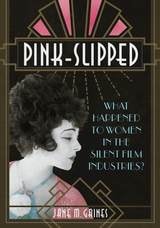
Pink-Slipped
What Happened to Women in the Silent Film Industries?Jane M Gaines
University of Illinois Press, 2018
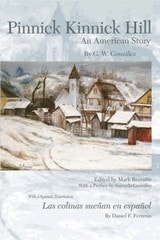
Pinnick Kinnick Hill
An American StoryBy G. W. González, Edited by Mark Brazaitis, with a Preface by Suronda González, with a Spanish translation Las colinas sueñan en español by Daniel Ferreras
West Virginia University Press, 2006
Nearly a century ago, hundreds of families journeyed from Spain to the United States, to search for a better life in the growing zinc-industry towns of Harrison County, West Virginia. As they created a new culture and a new home in this strange land, they added another thread to the rich fabric of our nation. Writing from his perspective as a first-generation son of this immigrant community, González recounts his childhood memories of his neighborhood, where these immigrants raised their families, worked in the often insufferable conditions of the zinc factories, and celebrated "romerias" and feast days with their neighbors.

Pinter In Play
Critical Strategies and the Plays of Harold PinterSusan Hollis Merritt
Duke University Press, 1990
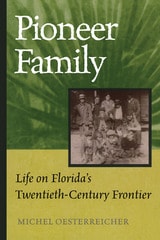
Pioneer Family
Life on Florida's Twentieth-Century FrontierMichel Oesterreicher
University of Alabama Press, 1996
Tracing the roots of resilience on the American frontier.
Pioneer Family is based on the recollections of Hugie and Oleta Oesterreicher, who lived in rural northeast Florida in the early decades of the twentieth century. Northeast Florida was still frontier country then, and Hugie and Oleta were pioneers. Although the time and setting of their story are particular, the theme of survival during hard times is universal. Born in a cypress cabin on the edge of the great Durbin Swamp located midway between St. Augustine and Jacksonville, Hugie knew every alligator hole, every bog, every creek; he could dry venison so it lasted without refrigeration for months, could build a potato bank that kept potatoes warm all winter, and put down a well without machinery. He knew how to cope with rattlesnakes and moccasins. Early one morning in 1925, Hugie fell in love with a tall, brown-eyed girl as he passed her place on a cattle drive. He courted this girl, Oleta Brown, with no success at first, but finally they were married in 1927.
Their daughter retells their story from vivid accounts they gave of their childhood, courtship, early years of marriage, and struggles during the Great Depression. In an age bereft of heroes, the story of their courage, their faith, and their commitment provides a fascinating empathy with a time that has passed; a place that has disappeared.
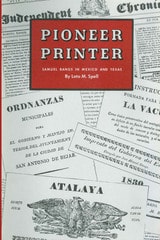
Pioneer Printer
Samuel Bangs in Mexico and TexasBy Lota M. Spell
University of Texas Press, 1963
Samuel Bangs, the first printer in the territory that is now Texas, once owed his life to his printing press. One of the few survivors of the Mina Expedition to Mexico in 1817, Bangs wrote to Servando de Mier, “I had the good fortune, through the will of God, to have my life saved, as I was a printer.”
Bangs was not always so fortunate. Losses and disappointments plagued him throughout his career, and he spent many miserable months in Mexican jails. But his ingenuity in the face of adversity, his courage and charm, stamped him not only as a storybook hero but as a man whose virtues were large enough to be their own reward.
Lota Spell’s fine biography of Samuel Bangs is at the same time a fascinating history of northern Mexico (including Texas) in the first half of the nineteenth century. Through the successes and failures of an individual it presents the facts about the operation of a business during a time of important political and economic change.
Even more important is its contribution to our knowledge of printing and of the contemporary periodical press. Although first of all a printer, Samuel Bangs was also involved in the production of newspapers, making this book a detailed history of journalism in the Mexico and Texas of his day. His printing office also functioned as a typographer’s school, through which he instituted the apprentice system in the Southwest; and as a result of his interest in presses as a commodity of trade, the first business for merchandising and servicing printing presses in the area was developed.
This narrative, combining the story of a man’s life, the history of his times, and the development of his profession, fills a gap in our knowledge of Mexico and Texas, and does it with perception and charm.
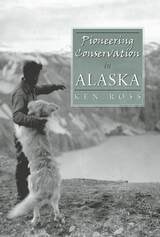
Pioneering Conservation in Alaska
Ken Ross
University Press of Colorado, 2006
The Alaskan frontier tempted fur traders, whalers, salmon fishers, gold miners, hunters, and oilmen to take what they could without regard for long-term consequences. Wildlife species, ecosystems, and Native cultures suffered, sometimes irreparably. Damage to wildlife and lands drew the attention of environmentalists, including John Muir, who applied their influence to enact wildlife protection laws and set aside lands for conservation. Alaska served as a testing ground for emergent national resource policy in the United States, as environmental values of species and ecosystem sustainability replaced the unrestrained exploitation of Alaska's early frontier days.
Efforts of conservation leaders and the territory's isolation, small human population, and late development prevented widespread destruction and gave Americans a unique opportunity to protect some of the world's most pristine wilderness.
Enhanced by more than 100 photographs, Pioneering Conservation in Alaska illustrates the historical precedents for current natural resource disputes in Alaska and will fascinate readers interested in wildlife and conservation.
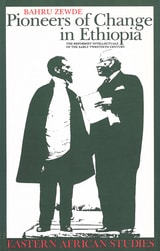
Pioneers Of Change In Ethiopia
The Reformist Intellectuals of the Early Twentieth CenturyBahru Zewde
Ohio University Press, 2002
In this exciting new study, Bahru Zewde, one of the foremost historians of modern Ethiopia, has constructed a collective biography of a remarkable group of men and women in a formative period of their country’s history. Ethiopia’s political independence at the end of the nineteenth century put this new African state in a position to determine its own levels of engagement with the West. Ethiopians went to study in universities around the world. They returned with the skills of their education acquired in Europe and America, and at home began to lay the foundations of a new literature and political philosophy. Pioneers of Change in Ethiopia describes the role of these men and women of ideas in the social and political transformation of the young nation and later in the administration of Haile Selassie.

Pioneers for Profit
Foreign Entrepreneurship and Russian Industrialization, 1885-1913John P. McKay
University of Chicago Press, 1970

Pioneers of Cardiac Surgery
William S. Stoney
Vanderbilt University Press, 2008
The profiles are edited transcripts of interviews videotaped between 1996 and 2004. They tell of the development of new techniques such as the "blue baby operation," the first heart-lung machine, the first artificial heart valve, and the first coronary bypass operation. They also tell the unusual life stories of the surgeons and allude to professional and institutional rivalries. A particularly valuable part of the book is the author's brief history of cardiac surgery, designed to orient the reader for reading the profiles that follow.

Pioneers of Ecological Restoration
The People and Legacy of the University of Wisconsin ArboretumFranklin E. Court
University of Wisconsin Press, 2012
Internationally renowned for its pioneering role in the ecological restoration of tallgrass prairies, savannas, forests, and wetlands, the University of Wisconsin Arboretum contains the world’s oldest and most diverse restored ecological communities. A site for land restoration research, public environmental education, and enjoyment by nature lovers, the arboretum remains a vibrant treasure in the heart of Madison’s urban environment.
Pioneers of Ecological Restoration chronicles the history of the arboretum and the people who created, shaped, and sustained it up to the present. Although the arboretum was established by the University of Wisconsin in 1932, author Franklin E. Court begins his history in 1910 with John Nolen, the famous landscape architect who was invited to create plans for the city of Madison, the university campus, and Wisconsin state parks. Drawing extensive details from archives and interviews, Court follows decades of collaborative work related to the arboretum’s lands, including the early efforts of Madison philanthropists and businessmen Michael Olbrich, Paul E. Stark, and Joseph W. “Bud” Jackson.
With labor from the Civilian Conservation Corps during the 1930s Depression, University of Wisconsin scientists began establishing both a traditional horticultural collection of trees and plants and a completely new, visionary approach to recreate native ecosystems. Hundreds of dedicated scientists and staff have carried forward the arboretum’s mission in the decades since, among them G. William Longenecker, Aldo Leopold, John T. Curtis, Rosemary Fleming, Virginia Kline, and William R. Jordan III.
This archival record of the arboretum’s history provides rare insights into how the mission of healing and restoring the land gradually shaped the arboretum’s future and its global reputation; how philosophical conflicts, campus politics, changing priorities, and the encroaching city have affected the arboretum over the decades; and how early aspirations (some still unrealized) have continued to motivate the work of this extraordinary institution.
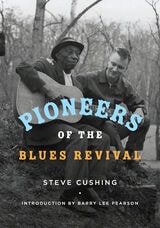
Pioneers of the Blues Revival
Steve Cushing
University of Illinois Press, 2014
Opinionated and territorial, the American, British, and French interviewees provide fascinating first-hand accounts of the era and movement. Experts including Paul Oliver, Gayle Dean Wardlow, Sam Charters, Ray Flerledge, Paul Oliver, Richard K. Spottswood, and Pete Whelan chronicle in their own words their obsessive early efforts at cataloging blues recordings and retrace lifetimes spent loving, finding, collecting, reissuing, and producing records. They and nearly a dozen others recount relationships with blues musicians, including the discoveries of prewar bluesmen Mississippi John Hurt, Son House, Skip James, and Bukka White, and the reintroduction of these musicians and many others to new generations of listeners. The accounts describe fieldwork in the South, renew lively debates, and tell of rehearsals in Muddy Waters's basement and randomly finding Lightning Hopkins's guitar in a pawn shop.
Blues scholar Barry Lee Pearson provides a critical and historical framework for the interviews in an introduction.
Pioneers of the Blues Revival
Steve Cushing
University of Illinois Press, 2018
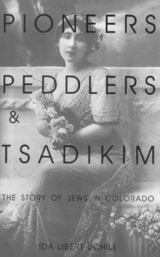
Pioneers, Peddlers, and Tsadikim
The Story of Jews in ColoradoIda Libert Uchill
University Press of Colorado, 2000
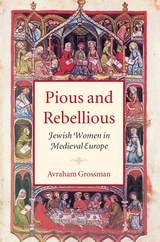
Pious and Rebellious
Jewish Women in Medieval EuropeAvraham Grossman
Brandeis University Press, 2004
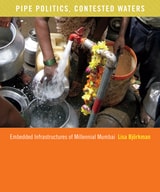
Pipe Politics, Contested Waters
Embedded Infrastructures of Millennial MumbaiLisa Bjorkman
Duke University Press, 2015
Despite Mumbai's position as India's financial, economic, and cultural capital, water is chronically unavailable for rich and poor alike. Mumbai's dry taps are puzzling, given that the city does not lack for either water or financial resources. In Pipe Politics, Contested Waters, Lisa Björkman shows how an elite dream to transform Mumbai into a "world class" business center has wreaked havoc on the city’s water pipes. In rich ethnographic detail, Pipe Politics explores how the everyday work of getting water animates and inhabits a penumbra of infrastructural activity—of business, brokerage, secondary markets, and sociopolitical networks—whose workings are reconfiguring and rescaling political authority in the city. Mumbai’s increasingly illegible and volatile hydrologies, Björkman argues, are lending infrastructures increasing political salience just as actual control over pipes and flows becomes contingent on dispersed and intimate assemblages of knowledge, power, and material authority. These new arenas of contestation reveal the illusory and precarious nature of the project to remake Mumbai in the image of Shanghai or Singapore and gesture instead toward the highly contested futures and democratic possibilities of the actually existing city.

Piracy
The Intellectual Property Wars from Gutenberg to GatesAdrian Johns
University of Chicago Press, 2009
Since the rise of Napster and other file-sharing services in its wake, most of us have assumed that intellectual piracy is a product of the digital age and that it threatens creative expression as never before. The Motion Picture Association of America, for instance, claimed that in 2005 the film industry lost $2.3 billion in revenue to piracy online. But here Adrian Johns shows that piracy has a much longer and more vital history than we have realized—one that has been largely forgotten and is little understood.
Piracy explores the intellectual property wars from the advent of print culture in the fifteenth century to the reign of the Internet in the twenty-first. Brimming with broader implications for today’s debates over open access, fair use, free culture, and the like, Johns’s book ultimately argues that piracy has always stood at the center of our attempts to reconcile creativity and commerce—and that piracy has been an engine of social, technological, and intellectual innovations as often as it has been their adversary. From Cervantes to Sonny Bono, from Maria Callas to Microsoft, from Grub Street to Google, no chapter in the story of piracy evades Johns’s graceful analysis in what will be the definitive history of the subject for years to come.

Piroska and the Pantokrator
Dynastic Memory, Healing and Salvation in Komnenian ConstantinopleMarianne Sághy
Central European University Press, 2019

Pissarro, Neo-Impressionism, and the Spaces of the Avant-Garde
Martha Ward
University of Chicago Press, 1996
Paying particular attention to the participation of Camille Pissarro, the only older artist to join the otherwise youthful movement, Ward sets the neo-impressionists' individual achievements in the context of a generational struggle to redefine the purposes of painting. She describes the conditions of display, distribution, and interpretation that the neo-impressionists challenged, and explains how these artists sought to circulate their own work outside of the prevailing system. Paintings, Ward argues, often anticipate and respond to their own conditions of display and use, and in the case of the neo-impressionists, the artists' relations to market forces and exhibition spaces had a decisive impact on their art.
Ward details the changes in art dealing, and chronicles how these and new freedoms for the press made artistic vanguardism possible while at the same time affecting the content of painting. She also provides a nuanced account of the neo-impressionists' engagements with anarchism, and traces the gradual undermining of any strong correlation between artistic allegiance and political direction in the art world of the 1890s.
Throughout, there are sensitive discussions of such artists as Georges Seurat and Paul Signac, as well as Pissarro. Yet the touchstone of the book is Pissarro's intricate relationship to the various factions of the Paris art world.
Pissing in the Snow and Other Ozark Folktales
Vance Randolph
University of Illinois Press, 1976
Randolph's reputation rests on the massive accumulation of folksong, folktale, and ballad materials he collected during forty years of living and working in the Ozarks. Unfortunately, in the 1950s when Randolph published several collection of Ozark tales, the material in this volume was considered unprintable.
Pissing in the Snow departs from the academic prudery that until recently has restricted the amount of bawdy folklore available for study. It presents a body of material that for twenty years has circulated only in manuscript or microfilm under its present title.
When placed in their rightful context alongside Randolph's other collections of folk material, the bawdy tales help provide evidence of what Ozark hill people think about their own lives and language. As Rayna Green writes in her introduction, "The entire body of material . . . offers a picture of expressive behavior unparalleled by any other American region's or group's study." Hoffmann's annotations draw parallels between the erotic narrative tradition of the Ozarks and that in other parts of the country and the world, especially Europe.
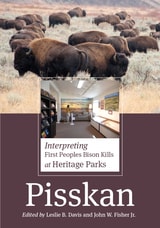
Pisskan
Interpreting First Peoples Bison Kills at Heritage ParksEdited by Leslie B. Davis and John W. Fisher, Jr.
University of Utah Press, 2016

Pitching Democracy
Baseball and Politics in the Dominican RepublicApril Yoder
University of Texas Press, 2023
How Dominicans contribute to Major League Baseball and what they receive in return.
From Juan Marichal and Pedro Martínez to Albert Pujols and Juan Soto, Dominicans have long been among Major League Baseball’s best. How did this small Caribbean nation become a hothouse of baseball talent? To many fans, the answer is both obvious and disconcerting: pro teams use their riches to develop talent abroad, creating opportunities for superhuman athletes and corrupt officials, while the rest of the population sees little benefit.
Yet this interpretation of history is incomplete. April Yoder traces how baseball has empowered Dominicans in their struggles for democracy and social justice. While the dictatorship of Rafael Trujillo saw the sport as a means of cementing its power at home and abroad, the Dominican people fashioned an emancipated civic sphere by seeing their potential for democratic success in their compatriots’ baseball success. Later, Dominicans articulated demands for democracy, economic opportunity, and civil rights through successful calls for public support of amateur and professional baseball. Today, Dominicans continue to demand that incentives for the baseball industry foster human as well as economic development. A revelatory and innovative history, Pitching Democracy restores agency to the Dominican people and honors their true love of the game.

Pius XII and the Holocaust
Understanding the ControversyJosé M. Sánchez
Catholic University of America Press, 2002
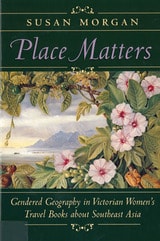
Place Matters
Morgan, Susan
Rutgers University Press, 1996
"Morgan has written an important and original work that presents a well-substantiated challenge to many recent studies of 'colonial discourse'."--Nancy L. Paxton,
Susan Morgan's study of materials and regions, previously neglected in contemporary postcolonial studies, begins with the transforming premise that "place matters." Concepts derived from writings about one area of the world cannot simply be transposed to another area, in some sort of global theoretical move. Moreover, place in the discourse of Victorian imperialism is a matter of gendered as well as geographic terms. Taking up works by Anna Forbes and Marianne North on the Malay Archipelago, by Margaret Brooke and Harriette McDougall on Sarawak, by Isabella Bird and Emily Innes on British Malaya, by Anna Leonowens on Siam, Morgan also makes extensive use of theorists whose work on imperialism in Southeast Asia is unfamiliar to most American academics.
This vivid examination of a different region and different writings emphasizes that in Victorian literature there was no monolithic imperialist location, authorial or geographic. The very notion of a ‘colony’ or an ‘imperial presence’ in Southeast Asia is problematic. Morgan is concerned with marking the intersections of particular Victorian imperial histories and constructions of subjectivity. She argues that specific places in Southeast Asia have distinctive, and differing, masculine imperial rhetorics. It is within these specific rhetorical contexts that women’s writings, including their moments of critique, can be read.

Place Names in Alabama
Virginia O. Foscue
University of Alabama Press, 1988
Discover the stories, people, and histories behind the names on Alabama's map.
Place Names in Alabama is the first comprehensive and systematic study of the names that define Alabama's geographic landscape. In this indispensable reference work, Virginia O. Foscue examines more than 2,600 place names drawn from across the state, including counties, cities, towns, rivers, lakes, streams, mountains, and other significant geographic features. Each entry provides detailed information on location, historical development, etymology, naming history, and documented sources, creating a rich portrait of the people, cultures, and events that have shaped Alabama over time.
Drawing upon archival records, historical documents, maps, and interviews with local informants, Foscue uncovers the stories behind the names that appear on Alabama's maps. The volume reveals the influence of Native American languages, European settlement, transportation networks, natural features, political leaders, local families, and regional traditions on the state's evolving identity. By tracing how communities and landmarks acquired their names, the book illuminates broader patterns of migration, settlement, economic development, and cultural exchange throughout Alabama's history.
More than a dictionary of place names, this work offers a unique window into Alabama's social and cultural heritage. Readers discover not only the origins of familiar names but also the histories of the individuals and communities that helped build the state. Whether used as a scholarly resource, a genealogical tool, or a source of fascinating historical insights, Place Names in Alabama remains an essential guide to understanding the connections between geography, language, and history in the American South.
Valuable for historians, genealogists, geographers, librarians, educators, students, journalists, and local history enthusiasts, this landmark volume continues to serve as the definitive reference on Alabama's geographic names and the stories they preserve.
Place Names of Illinois
Edward Callary
University of Illinois Press, 2007

Place Names of Southwest Peloponnesus
Register and IndexesDemetrius J. Georgacas and William A. McDonald
University of Minnesota Press, 1969
Place Names of Southwest Peloponnesus was first published in 1969. Minnesota Archive Editions uses digital technology to make long-unavailable books once again accessible, and are published unaltered from the original University of Minnesota Press editions.
This work contains listings, in Greek, of nearly 10,000 place names collected in approximately 300 settlements of regions in Peloponnesus, the southern peninsula of Greece. In their introduction the authors point out that the present-day toponyms reflect historical and linguistic developments through the ages and thus provide important source material for scholarly studies. Inhabitants of the region whose language was ancient Greek, Koine Greek, Byzantine Greek, South Slavic, Frankish, Venetian, Albanian, Turkish, or Neo-Greek have all left discernible traces in the local place names. The book will be useful not only to specialists in onomastics and linguistics but also to historians, archaeologists, geographers, and other researchers in Greek and comparative studies.
Place Names of Wisconsin
Edward Callary
University of Wisconsin Press, 2016
Place and Politics in Modern Italy
John A. Agnew
University of Chicago Press, 2002
For Agnew, place is not just a static backdrop against which events occur, but a dynamic component of social, economic, and political processes. He shows, for instance, how the lack of a common "landscape ideal" or physical image of Italy delayed the development of a sense of nationhood among Italians after unification. And Agnew uses the post-1992 victory of the Northern League over the Christian Democrats in many parts of northern Italy to explore how parties are replaced geographically during periods of intense political change.
Providing a fresh new approach to studying the role of space and place in social change, Place and Politics in Modern Italy will interest geographers, political scientists, and social theorists.
Place and Replace
Essays on Western CanadaAdele Perry
University of Manitoba Press, 2013
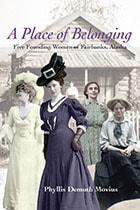
Place of Belonging
Five Founding Women of Fairbanks, AlaskaPhyllis Demuth Movius
University of Alaska Press, 2009
Alaska has always attracted people from varied backgrounds. In A Place of Belonging, Phyllis Movius introduces us to five women who settled in Fairbanks between 1903 and 1923 and who typify the disparate population that has long enriched Alaska. The women’s daily lives and personal stories are woven together in these biographical portraits, drawn from the women’s letters, memoirs, personal papers, club records, their own oral histories and published writings. Enriched by many never-before-published historical photos, Movius’s research gives us a unique inroad into life on the frontier.

Placeholder
Brandeis University Press, 2018
Places in the Making
A Cultural Geography of American PoetryJim Cocola
University of Iowa Press, 2016
Positing place as a pivotal axis of identification and heralding emplacement as a crucial model for cultural, intellectual, and political activity in a period marked and imperiled by a tendency toward dislocation, the critical vocabulary of this project centers upon the work of place-making. It attends to a poetics that extends beyond epic and lyric modes while relying simultaneously on auditory and visual effects and proceeding in the interests of environmental advocacy and social justice, often in contrast to the more orthodox concerns of literary modernism, global capitalism, and print culture. Focusing on poets of international reputation, such as Elizabeth Bishop, Pablo Neruda, Charles Olson, and William Carlos Williams, Places in the Making also considers work by more recent figures, including Kamau Brathwaite, Joy Harjo, Myung Mi Kim, and Craig Santos Perez. In its larger comparative, multiethnic, and transnational emphases, this book addresses questions of particular moment in American literary and cultural studies and aspires to serve as a catalyst for further interdisciplinary work connecting geography and the humanities.