Results by title
8812 books match the query 'Political Science' and 592 start with p
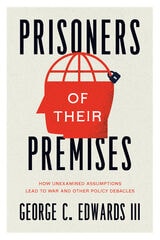
Prisoners of Their Premises
How Unexamined Assumptions Lead to War and Other Policy DebaclesGeorge C. Edwards III
University of Chicago Press, 2022
Why do accomplished and stable leaders frequently make calamitous decisions with devastating consequences for their countries—and other nations? We debate debacles such as the American involvement in Vietnam, seeking to understand why leaders pursued disastrous policies. In Prisoners of Their Premises, George C. Edwards III argues that the failure of leaders to examine their premises—the assumptions they make about the world and situation they are dealing with—cause them to ignore real problems or pursue policies that, in costly ways, deal with problems that are different than they think or simply don’t exist. Edwards looks at the role of premises in identifying (or ignoring) a problem in a series of case studies that range from strategic decisions in World War I and the Korean War to the wars in Vietnam and Iraq. Too often, unexamined premises color initial decisions to pursue a policy and shape the strategies leaders employ to achieve their goals, with grave consequences for their countries, organizations, and potentially the world. Timely and important, Prisoners of Their Premises demonstrates the real costs leaders incur by failing to question their assumptions.

Privacy Matters
Conversations about Surveillance within and beyond the ClassroomEstee Beck
Utah State University Press, 2020
This collection offers practical analyses of surveillance and privacy as they occur within classrooms and communities. Organized by themes—surveillance and classrooms, surveillance and bodies, surveillance and culture—Privacy Matters provides writing, rhetoric, and communication scholars and teachers with specific approaches, methods, inquiries, and examinations into the impact tracking and monitoring has upon people’s habits, bodies, and lived experiences.
While each chapter contributes a new perspective in the discipline and beyond, Privacy Matters affirms that these analyses remain inconclusive. This collection is a call for scholars, researchers, activists, and educators within rhetoric and composition to continue the scholarly conversation because privacy matters to all of us.
Contributors: Christina Cedillo, Jenae Cohn, Dànielle Nicole DeVoss, Dustin Edwards, Norah Fahim, Ann Hill Duin, Gavin P. Johnson, John Peterson, Santos Ramos, Colleen A. Reilly, Jennifer Roth Miller, Jason Tham, Stephanie Vie

Privacy and the Past
Research, Law, Archives, EthicsLawrence, Susan C
Rutgers University Press, 2016

Privacy at Risk
The New Government Surveillance and the Fourth AmendmentChristopher Slobogin
University of Chicago Press, 2007
Applying the Fourth Amendment’s prohibition on unreasonable searches and seizures, Slobogin argues that courts should prod legislatures into enacting more meaningful protection against government overreaching. In setting forth a comprehensive framework meant to preserve rights guaranteed by the Constitution without compromising the government’s ability to investigate criminal acts, Slobogin offers a balanced regulatory regime that should intrigue everyone concerned about privacy rights in the digital age.

Private Acts, Social Consequences
Bayer, Ronald
Rutgers University Press, 1991
Bayer, staff member of a policy studies center in New York State, here reviews the record of public agencies in dealing with AIDS-created biological, social and political problems, including resolution of conflicts between privacy and the public good. He notes the contradiction between Centers for Disease Control recommendations of counseling, education and broad-scale voluntary testing of all Americans at risk, and federal policies that favor mandatory testing of the military, marriage applicants, hospital workers, patients and prostitutes, among others, and quarantine of AIDS carriers advocated by some states. Bayer recommends restraint by individuals in sexual matters and drug use, accompanied by an assault on the economic and social problems that underlie the epidemic, especially as regards the newborn and teenagers. In the growing body of AIDS literature, this is a valuable fact-finding study that should interest a lay as well as professional audience.
From Library Journal
Bayer's topic is the politically charged dilemma AIDS presents to public health officials and policymakers. What steps can be taken which will not only protect society at large, but also safeguard the privacy and civil liberties of individuals? The author ably traces the political history of AIDS. He suggests a responsible but nonauthoritarian approach, combining education; health care access for IV users; promotion of anonymous, confidential screening; defense of victims' rights; appropriate contact notification programs; and moderate laws protecting society from malicious individuals. This work is well-documented and cogently argued. Highly recommended for all academic collections and larger public libraries.

Private Equity at Work
When Wall Street Manages Main StreetEileen Appelbaum
Russell Sage Foundation, 2014
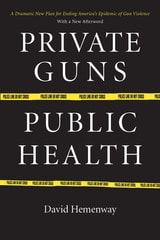
Private Guns, Public Health
David Hemenway
University of Michigan Press, 2004
-Richard F. Corlin, Past President, American Medical Association
"This lucid and penetrating study is essential reading for anyone who wishes to understand the tragedy of gun violence in America and-even more important-what we can do to stop it. David Hemenway cuts through the cant and rhetoric in a way that no fair-minded person can dismiss, and no sane society can afford to ignore."
-Richard North Patterson, novelist
"The rate of gun-related homicide, suicide, and accidental injury has reached epidemic proportions in American society. Diagnosing and treating the gun violence epidemic demands the development of public health solutions in conjunction with legislative and law enforcement strategies."
-Kweisi Mfume, President and CEO of NAACP
"In scholarly, sober analytic assessments, including rigorous critiques of NRA-popularized pseudoscience, David Hemenway constructs a convincing case that firearm availability is a critical and proximal cause of unparalleled carnage. By formulating such violence as a public health issue, he proposes workable policies analogous to ones that reduced injuries from tobacco, alcohol, and automobiles."
-Jerome P. Kassirer, Editor-in-Chief Emeritus, New England Journal of Medicine, and Distinguished Professor, Tufts University School of Medicine
"As a former District Attorney and Attorney General, I know the urgency of providing safe homes, schools and neighborhoods for all. This remarkable tour-de-force is a powerful study of one promising solution: a data-rich, eminently readable demonstration of why we should treat gun violence as an American epidemic."
-Scott Harshbarger, Former Attorney General of Massachusetts, President and CEO of Common Cause
On an average day in the United States, guns are used to kill almost eighty people, and to wound nearly three hundred more. If any other consumer product had this sort of disastrous effect, the public outcry would be deafening; yet when it comes to guns such facts are accepted as a natural consequence of supposedly high American rates of violence.
Private Guns, Public Health explodes that myth and many more, revealing the advantages of treating gun violence as a consumer safety and public health problem. David Hemenway fair-mindedly and authoritatively demonstrates how a public-health approach-which emphasizes prevention over punishment, and which has been so successful in reducing the rates of injury and death from infectious disease, car accidents, and tobacco consumption-can be applied to gun violence.
Hemenway uncovers the complex connections between guns and self-defense, gun violence and schools, gun prevalence and homicide, and more. Finally, he outlines a policy course that would significantly reduce gun-related injury and death.
With its bold new public-health approach to guns, Private Guns, Public Health marks a shift in our understanding of guns that will-finally-point us toward a solution.

Private Guns, Public Health, New Ed.
David Hemenway
University of Michigan Press, 2017
Hemenway fair-mindedly and authoritatively outlines a policy course that would significantly reduce gun-related injury and death, pointing us toward a solution.

Private Life, Public Action
How Housing Politics Mobilized Citizens in MoscowAnna Zhelnina
Temple University Press, 2026
Private Life, Public Action traces how residents impacted by the relocation plan became activists despite having little to no experience organizing or even forming political affiliations and opinions. Author Anna Zhelnina details the ways in which neighbors engaged in collective action, as well as the individual and structural changes these interactions caused.
Zhelnina develops the concept of “housing strategies” to explain how residents’ debates with their neighbors about housing were shaped by their private life strategies. She applies her findings about housing in Moscow to ongoing questions about political mobilization, demonstrating how public engagement is shaped by historical and social contexts.
Examining the intersection of housing, politics, and citizenship in contemporary Russia, Private Life, Public Action offers a new way to look at urban change.
In the series Politics, History, and Social Change
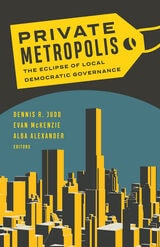
Private Metropolis
The Eclipse of Local Democratic GovernanceDennis R. Judd
University of Minnesota Press, 2021
Examines the complex ecology of quasi-public and privatized institutions that mobilize and administer many of the political, administrative, and fiscal resources of today’s metropolitan regions
In recent decades metropolitan regions in the United States have witnessed the rise of multitudes of “shadow governments” that often supersede or replace functions traditionally associated with municipalities and other local governments inherited from the urban past. Shadow governments take many forms, ranging from billion-dollar special authorities that span entire urban regions, to public–private partnerships and special districts created to accomplish particular tasks, to privatized gated communities, to neighborhood organizations empowered to receive private and public funds. They finance and administer public services ranging from the prosaic (garbage collection and water utilities) to the transformative (economic development and infrastructure). Private Metropolis demonstrates that this complex ecosystem of local governance has compromised and even eclipsed democratic processes by moving important policy decisions out of public sight.
The quasi-public institutions of urban governance generally escape the budgetary and statutory restraints imposed on traditional local governments and protect policy decisions from the limitations and vagaries of electoral politics. Moving major policy decisions into a privatized and corporatized realm facilitates efficiency and speed, but at the cost of democratic oversight. Increasingly, the urban electorate is left debating symbolic issues only tangentially connected to the actual distribution of the resources that affect people’s lives.
The essays in Private Metropolis grapple with the difficult and timely questions that arise from this new ecology of governance: What are the consequences of the proliferation of special authorities, privatized governments, and public–private arrangements? Is the trade-off between democratic accountability and efficiency worth it? Has the public sector, with its messiness and inefficiencies—but also its checks and balances—ceded too much power to these new institutions? By examining such questions, this book provokes a long-overdue debate about the future of urban governance.
Contributors: Douglas Cantor, California State U, Long Beach; Ellen Dannin, Pennsylvania State U; Jameson W. Doig, Princeton U; Mary Donoghue; Peter Eisinger, New School; Steven P. Erie, U of California, San Diego; Rebecca Hendrick, U of Illinois at Chicago; Sara Hinkley, U of California, Berkeley; Amanda Kass, U of Illinois at Chicago; Scott A. MacKenzie, U of California, Davis; David C. Perry, U of Illinois at Chicago; James M. Smith, U of Indiana South Bend; Shu Wang, Michigan State U; Rachel Weber, U of Illinois at Chicago.

Private Property and the Limits of American Constitutionalism
The Madisonian Framework and Its LegacyJennifer Nedelsky
University of Chicago Press, 1990
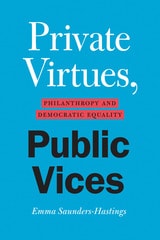
Private Virtues, Public Vices
Philanthropy and Democratic EqualityEmma Saunders-Hastings
University of Chicago Press, 2022
Philanthropy plays a huge role in supporting the provision of many public goods in contemporary societies. As a result, decisions that affect public outcomes and people’s diverse interests are often dependent on the preferences and judgments of the rich. Political theorist Emma Saunders-Hastings argues that philanthropy is a deeply political activity. She asks readers to look at how the power wielded by philanthropy impacts democracy and deepens political inequality by enabling the wealthy to exercise outsize influence in public life and by putting in place paternalistic relationships between donors and their intended beneficiaries. If philanthropy is to be made compatible with a democratic society of equals, it must be judged not simply on the benefits it brings but on its wider political consequences. Timely and thought-provoking, Private Virtues, Public Vices will challenge readers’ thoughts on what philanthropy is and how it truly affects us.

Privatization in Eastern Europe
Is the State Withering Away?Roman Frydman
Central European University Press, 1994
Privatizing Health Services in Africa
Turshen, Meredeth
Rutgers University Press, 1998
Privatizing Health Services in Africa analyzes the disappearance of public health in the form of state services in Africa, and the growth of a private market in health care that will serve primarily an urban elite. Meredeth Turshen considers the implications of introducing private insurance in countries with growing unemployment, a shrinking formal job sector, and a lack of social security programs or other safety nets. She debates the pros and cons of shifting the delivery of health services to the nongovernmental sector in the context of new concepts of the role of the state. Many of the schemes to privatize the purchase and sale of pharmaceuticals reverse decades of United Nations work challenging the power of the multinational drug industry. Turshen weighs these policy changes in light of the World Bank’s eclipse of the World Health Organization as the premier UN health policy agency. Until now, no book has disputed the World Bank’s plans to privatize health care in Africa. This is the first book-length analysis of policy changes in light of monetarism and globalization.
Throughout the book, Turshen examines the implications of privatization for gender equity. She also provides a case study of Zimbabwe and comparative material from Malawi, Mozambique, and Zambia. Her study makes a contribution to current debates on the impact of structural adjustment policies on health and the design of health services in the Third World.
Privatizing Social Security
Edited by Martin Feldstein
University of Chicago Press, 1998
Privileged Precarities
An Organizational Ethnography of Early Career Workers at the United NationsLinda M. Mülli
Campus Verlag, 2021
This ethnography focuses on the work and lifeworld at the United Nations in Geneva and Vienna. By emphasizing the perspectives of entry-level workers, this book addresses the increasing flexibility and job insecurity for those at the beginning of their potential UN careers. It explores questions such as: How do career aspirants reconcile their narratives with the organization’s image built over the past decades? How can we understand institutional power and individual agency through the lens of ritual theory and the theory of social orders? This study finally examines the entangled discourses around privilege and prestige on the one hand and the precarity and vulnerability of a growing number of UN workers on the other hand. It shows that these phenomena are not contractionary but two sides of the coin. Using the UN as an example, the study considers mechanisms of flexible and unstable work environments in times of cognitive and affective capitalism.

Pro-Life, Pro-Choice
Shared Values in the Abortion DebateBertha Alvarez Manninen
Vanderbilt University Press, 2014
Manninen approaches the abortion controversy through a variety of perspectives and ethical frameworks. She addresses the social circumstances that influence many women's decision to abort and considers whether we believe that there are good and bad reasons to abort. Manninen also looks at the call for post-abortion fetal grieving rituals for women who desire them and the attempt to make room in the pro-choice position for the views of prospective fathers.
The author spells out how the two sides demonize each other and proposes ways to find degrees of convergence between the seemingly intractable positions.
Probable Justice
Risk, Insurance, and the Welfare StateRachel Z. Friedman
University of Chicago Press, 2020
Probable Justice traces a history of social insurance from the eighteenth century to today, from the earliest ideas of social accountability through the advanced welfare state of collective responsibility and risk. At the heart of Rachel Z. Friedman’s investigation is a study of how probability theory allows social insurance systems to flexibly measure risk and distribute coverage. The political genius of social insurance, Friedman shows, is that it allows for various accommodations of needs, risks, financing, and political aims—and thereby promotes security and fairness for citizens of liberal democracies.
Processing Politics
Learning from Television in the Internet AgeDoris A. Graber
University of Chicago Press, 2001
More and more people rely on information from television and the Internet to make important decisions. Processing Politics offers a sound, well-researched defense of these remarkably versatile media, and challenges us to make them work for us in our democracy.
Producers, Parasites, Patriots
Race and the New Right-Wing Politics of PrecarityDaniel Martinez HoSang
University of Minnesota Press, 2019
The shifting meaning of race and class in the age of Trump
The profound concentration of economic power in the United States in recent decades has produced surprising new forms of racialization. In Producers, Parasites, Patriots, Daniel Martinez HoSang and Joseph E. Lowndes show that while racial subordination is an enduring feature of U.S. political history, it continually changes in response to shifting economic and political conditions, interests, and structures.
The authors document the changing politics of race and class in the age of Trump across a broad range of phenomena, showing how new forms of racialization work to alter the economic protections of whiteness while promoting some conservatives of color as models of the neoliberal regime. Through careful analyses of diverse political sites and conflicts—racially charged elections, attacks on public-sector unions, new forms of white precarity, the rise of black and brown political elites, militia uprisings, multiculturalism on the far right—they highlight new, interwoven deployments of race in the ascendant age of inequality. Using the concept of “racial transposition,” the authors demonstrate how racial meanings and signification can be transferred from one group to another to shore up both neoliberalism and racial hierarchy.
From the militia movement to the Alt-Right to the mainstream Republican Party, Producers, Parasites, Patriots brings to light the changing role of race in right-wing politics.

Professionalism, the Third Logic
On the Practice of KnowledgeEliot Freidson
University of Chicago Press, 2021
Freidson then appraises the present status of professionalism, exploring how traditional and national variations in state policy and organization are influencing the power and practice of such professions as medicine and law. Widespread attacks by neoclassical economists and populists, he contends, are obscuring the social value of credentialism and monopolies. The institutions that sustain professionalism in our world are simply too useful to both capital and state to dismiss.

Professions And The State
Expertise and Autonomy in the Soviet Union and Eastern Europeedited by Anthony Jones
Temple University Press, 1991
Unlike autonomous professionals in Western industrialized democracies, professionals in a socialist, bureaucratic setting operate as employees of the state. The change in environment has important Implications not only for the practice of professions but also for the concept of professionalism itself. This collection of nine essays is the first to survey the major professions In the USSR, Czechoslovakia, and Poland. The contributors investigate the implications of professional experience in a socialist economy as well as relating changes in professional organization and power to reform movements in general and perestroika in particular.
In the series Labor and Social Change, edited by Paula Rayman and Carmen Sirianni.
Profiles and Plotlines
Data Surveillance in Twenty-first Century LiteratureKatherine D. Johnston
University of Iowa Press, 2023
In Profiles and Plotlines, Katherine Johnston engages this energetic reformation of contemporary literature to account for a society and economy of frenetic counting. Fiction and poetry are capable of addressing precisely that for which algorithms cannot or do not account: the effects of profile culture; the ideologies and supposed truth-power of data; the gendered and racialized dynamics of watching and being watched; and the politics of who counts and what gets counted. Johnston analyzes prescient work by contemporary authors such as Jennifer Egan, Claudia Rankine, Mohsin Hamid, and William Gibson to probe how the claims of data surveillance serve to make lives seem legible, intelligible, and sometimes even expendable.
Progressive Cities
The Commission Government Movement in America, 1901–1920By Bradley Robert Rice
University of Texas Press, 1977
Although the commission government movement is often treated by historians as an element of the reform surge of the Progressive Era, this is the first full-scale study of the origins, spread, and decline of the commission idea.
Commission government originated in Galveston, Texas, where business leaders conceived the plan as a temporary measure to speed recovery from the great hurricane of 1900. Other cities in Texas and across the nation soon followed; by 1920, about 500 municipalities had adopted the plan in which elected representatives serve as heads of city departments and, collectively, as a policy-making body.
Beginning with Galveston and Houston and Des Moines, Iowa, Bradley Robert Rice presents detailed case studies of the earliest commission cities and shows how the plan was developed and modified to suit each community’s needs. He goes on to chronicle the adoption of the commission plan by other cities across the country that strove for “businesslike efficiency” as a reaction against corruption and machine politics in urban government. Most commission charters included a wide-ranging package of municipal reforms, such as the short ballot, at-large representation, nonpartisanship, civil service, and direct legislation. Yet Rice shows that the commission plan generally offered little in the way of social reform to accompany its reorganization of municipal government.
Applying a model of innovation diffusion, the author analyzes how and why the new form of city government spread across Progressive Era America. He also thoroughly explores the relationship between the commission plan and other Progressive Era reforms and reports on the reasons for its decline from both a social and a practical perspective.
Progressive Cities is described by Professor Bruce M. Stave, editor of the Journal of Urban History, as “a sound piece of work which should make a useful and worthwhile contribution to the existing scholarship on urban reform and should appeal to an audience which cuts across disciplines: history, political science, urban studies and urban planning.”

Progressive Constitutionalism
Reconstructing the Fourteenth AmemdmentRobin L. West
Duke University Press, 1994
West shows how the "equal protection" clause, far from insulating the private spheres of culture, market, and home life, as is commonly held, directly targets abuses of power within those spheres. She develops a number of arguments for the modern relevance of this understanding, from the failure of the state to provide equal protection against private domestic violence, permitting a "private sovereignty" of patriarchal power within the home, to the the state’s failure to provide equal protection against material deprivation, allowing "private sovereignty" between economically privileged and desperate people in private markets.
West’s argument extends to the "liberty" prong of the due process clause, seen here as a protection of the positive, not negative, liberty of citizens, covering rights in such typically controversial areas as welfare, education, and domestic safety. This interpretation recasts a number of contemporary constitutional issues, such as affirmative action and hate speech, and points to very different problems—notably private, unchecked criminal violence and extreme economic deprivation—as the central constitutional dilemmas of our day.
Progressive Constitutionalism urges a substantive, institutional, and jurisprudential reorientation of our understanding of the Fourteenth Amendment, one that would necessarily be pursued through Congressional rather than judicial channels. In doing so, with attention to history and both feminist and critical race scholarship, it should reinvigorate our politics and our constitutional conversations—and, perhaps, point us toward a more just society.

Prohibition Gangsters
The Rise and Fall of a Bad GenerationMappen, Marc
Rutgers University Press, 2013
On January 16, 1920, the Eighteenth Amendment to the Constitution went into effect in the United States, “outlawing the manufacture, sale, or transportation of intoxicating liquors.” A group of young criminals from immigrant backgrounds in cities around the nation stepped forward to disobey the law of the land in order to provide alcohol to thirsty Americans.
Today the names of these young men—Al Capone, Lucky Luciano, Dutch Schultz, Legs Diamond, Nucky Johnson—are more familiar than ever, thanks in part to such cable programs as Boardwalk Empire. Here, Mappen strips way the many myths and legends from television and movies to describe the lives these gangsters lived and the battles they fought. Placing their criminal activities within the context of the issues facing the nation, from the Great Depression, government crackdowns, and politics to sexual morality, immigration, and ethnicity, he also recounts what befell this villainous group as the decades unwound.
Making use of FBI and other government files, trial transcripts, and the latest scholarship, the book provides a lively narrative of shootouts, car chases, courtroom clashes, wire tapping, and rub-outs in the roaring 1920s, the Depression of the 1930s, and beyond. Mappen asserts that Prohibition changed organized crime in America. Although their activities were mercenary and violent, and they often sought to kill one another, the Prohibition generation built partnerships, assigned territories, and negotiated treaties, however short lived. They were able to transform the loosely associated gangs of the pre-Prohibition era into sophisticated, complex syndicates. In doing so, they inspired an enduring icon—the gangster—in American popular culture and demonstrated the nation’s ideals of innovation and initiative.
View a three minute video of Marc Mappen speaking about Prohibition Gangsters.

Projecting the Nation
History and Ideology on the Israeli ScreenEran Kaplan
Rutgers University Press, 2020
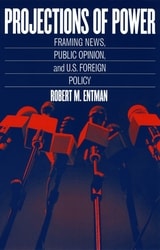
Projections of Power
Framing News, Public Opinion, and U.S. Foreign PolicyRobert M. Entman
University of Chicago Press, 2003
To answer these questions, Robert M. Entman develops a powerful new model of how media framing works—a model that allows him to explain why the media cheered American victories over small-time dictators in Grenada and Panama but barely noticed the success of far more difficult missions in Haiti and Kosovo. Discussing the practical implications of his model, Entman also suggests ways to more effectively encourage the exchange of ideas between the government and the media and between the media and the public. His book will be an essential guide for political scientists, students of the media, and anyone interested in the increasingly influential role of the media in foreign policy.

Prologue to a Farce
Communication and Democracy in AmericaMark Lloyd
University of Illinois Press, 2006
Mark Lloyd has crafted a complex and powerful assessment of the relationship between communication and democracy in the United States. In Prologue to a Farce, he argues that citizens’ political capabilities depend on broad public access to media technologies, but that the U.S. communications environment has become unfairly dominated by corporate interests.
Drawing on a wealth of historical sources, Lloyd demonstrates that despite the persistent hope that a new technology (from the telegraph to the Internet) will rise to serve the needs of the republic, none has solved the fundamental problems created by corporate domination. After examining failed alternatives to the strong publicly owned communications model, such as antitrust regulation, the public trustee rules of the Federal Communications Commission, and the underfunded public broadcasting service, Lloyd argues that we must re-create a modern version of the Founder’s communications environment, and offers concrete strategies aimed at empowering citizens.

Prometheus Reimagined
Technology, Environment, and Law in the Twenty-first CenturyAlbert C. Lin
University of Michigan Press, 2013
Technologies such as synthetic biology, nanotechnology, artificial intelligence, and geoengineering promise to address many of our most serious problems, yet they also bring environmental and health-related risks and uncertainties. Moreover, they can come to dominate global production systems and markets with very little public input or awareness. Existing governance institutions and processes do not adequately address the risks of new technologies, nor do they give much consideration to the concerns of persons affected by them.
Instead of treating technology, health, and the environment as discrete issues, Albert C. Lin argues that laws must acknowledge their fundamental relationship, anticipating both future technological developments and their potential adverse effects. Laws should encourage international cooperation and the development of common global standards, while allowing for flexibility and reassessment.

Prometheus Wired
The Hope for Democracy in the Age of Network TechnologyDarin Barney
University of Chicago Press, 2000
In Prometheus Wired, Darin Barney debunks claims that a networked society will provide the infrastructure for a political revolution and shows that the resources we need for understanding and making sound judgments about this new technology are surprisingly close at hand. By looking to thinkers who grappled with the relationship of society and technology, such as Plato, Aristotle, Marx, and Heidegger, Barney critically examines such assertions about the character of digital networks.
Along the way, Barney offers an eye-opening history of digital networks and then explores a wide range of contemporary issues, such as electronic commerce, telecommuting, privacy, virtual community, digital surveillance, and the possibility of sovereign governance in an age of global networks. Ultimately, Barney argues that instead of placing power back in the hands of the public, a networked economy seems to exacerbate the worst features of industrial capitalism, and, in terms of the surveillance and control it exerts, reduces our political freedom.
Of vital interest to politicians, communicators, and anyone concerned about the future of democracy in the digital age, Prometheus Wired adds a provocative new voice to the debate swirling around "the Net" and the ways in which it will, or will not, change our political lives.
Promises of 1968
Crisis, Illusion and UtopiaVladimir Tismaneanu
Central European University Press, 2011

Proper Women
Feminism and the Politics of Respectability in IranFae Chubin
Temple University Press, 2024
Chubin brings attention to the varying class, ethnic, religious, and national identities of NGO staff and clients that shaped their differing understandings of oppression and justice. Her examination of the tensions within the organization reveals why the efforts of the NGO workers failed to gain purchase among the intended beneficiaries.
Proper Women concludes by encouraging feminist activists to not only examine the role of local politics and transnational connections in shaping their definitions of empowerment, but also consider the advantages of a justice-enhancing practice as opposed to justice monism for their target populations.
Prophecy in Politics
Or, the Wigram AspectKenneth Weisbrode
Haus Publishing, 2026
Ralph Wigram was a minor British bureaucrat who is known to a small part of posterity only because Winston Churchill paid tribute to him as the man who warned of the Nazi threat with such persistence, conviction, and hard evidence that Churchill had the wherewithal to make the case to the British people. Wigram died at the end of 1936, just before the war he warned against had begun. He might have changed the course of history—if only people had believed him.
Prophets like Wigram are a permanent fixture of a world without certainty. Oracles, shamans, wiseacres, astrologers, and swamis of all shades populate our myths, legends, and Bibles. Today, our lives are inundated with the wisdom of professional forecasters, intelligence analysts, and threat mongers. Why do many of us, and especially our leaders, find it so difficult to heed warnings? We tend to underreact to some, overreact to others, and then point fingers when what “nobody ever anticipated” comes to pass. Why is prophecy so dogged?
Prophecy in Politics takes up a vast, complex, and well-worn subject—the future—and reduces it to its most essential aspects, especially belief. It revisits a half-dozen familiar and not-so-familiar incidents of prophecy, from the warnings given to Stalin about Operation Barbarossa to those given to Bill Clinton and George W. Bush about “terrorism,” to the Cassandras periodically promising collapse in the financial markets, to uncover a pattern of complacency and neglect. Finally, Ken Weisbrode proposes what all of us might do to overcome complacency and make prophecy work better for us. This is not a handbook or an attempt to stand in the vanguard of political or strategic thought on futurism, futures studies, or futurology; rather, it is a concise overview and an idiosyncratic but nevertheless useful guide to thinking about the past and present condition of prophecy.
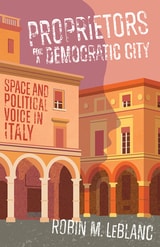
Proprietors for a Democratic City
Space and Political Voice in ItalyRobin M. LeBlanc
University of Minnesota Press, 2026
Lessons from Bologna on how ordinary people take charge of urban spaces and make their cities more democratic
Proprietors for a Democratic City examines how nonelite individuals politically engage with urban spaces—even when they do not formally own them. Drawing on more than a decade of fieldwork throughout Bologna, Italy, Robin M. LeBlanc presents valuable models of democratic community-making through imaginative occupation, curation, and coalition-building projects, with critical implications for the study of cities and democracy.
Once a standard-bearer of progressive governance, contemporary Bologna now faces globally emergent challenges to its democratic functioning, from a lack of affordable housing to the rise of an authoritarian and xenophobic Far Right. But amid this precarity, everyday citizens employ the spaces around them to influence the political life of the city. Through interviews with a wide range of Bolognese, from urban planners and real estate developers to housing office staff, retirees in public gardening plots, and members of immigrant and youth squatter collectives, LeBlanc illuminates the humble origins of coalitional work that can meaningfully address today’s urban economic, environmental, and demographic crises.
Challenging both capitalistic and Marxist conventional wisdom, Proprietors for a Democratic City is a vivid portrait of the urban landscape and an inspiring call to empower regular people to create vibrant democratic spaces.
Retail e-book files for this title are screen-reader friendly with images accompanied by short alt text and/or extended descriptions.

Prosperity Far Distant
The Journal of an American Farmer, 1933–1934Charles M. Wiltse
Ohio University Press, 2012
Fresh from receiving a doctorate from Cornell University in 1933, but unable to find work, Charles M. Wiltse joined his parents on the small farm they had recently purchased in southern Ohio. There, the Wiltses scratched out a living selling eggs, corn, and other farm goods at prices that were barely enough to keep the farm intact.
In wry and often affecting prose, Wiltse recorded a year in the life of this quintessentially American place during the Great Depression. He describes the family’s daily routine, occasional light moments, and their ongoing frustrations, small and large—from a neighbor’s hog that continually broke into the cornfields to the ongoing struggle with their finances. Franklin Roosevelt’s New Deal had little to offer small farmers, and despite repeated requests, the family could not secure loans from local banks to help them through the hard economic times. Wiltse spoke the bitter truth when he told his diary, “We are not a lucky family.” In this he represented millions of others caught in the maw of a national disaster.
The diary is introduced and edited by Michael J. Birkner, Wiltse’s former colleague at the Papers of Daniel Webster Project at Dartmouth College, and coeditor, with Wiltse, of the final volume of Webster’s correspondence.
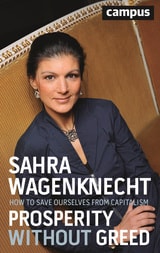
Prosperity without Greed
How to Save Ourselves from CapitalismSahra Wagenknecht
Campus Verlag, 2016

Prosthetic Memories
Postcolonial Feminisms in a More-Than-Human WorldHyaesin Yoon
Duke University Press, 2025
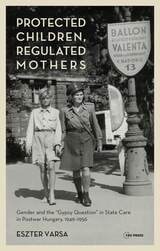
Protected Children, Regulated Mothers
Gender and the "Gypsy Question" in State Care in Postwar Hungary, 1949–1956Eszter Varsa
Central European University Press, 2021
Protected Children, Regulated Mothers examines child protection in Stalinist Hungary as a part of twentieth-century East Central, Eastern, and Southeastern European history. Across the communist bloc, the prewar foster care system was increasingly replaced after 1945 by institutionalization in residential homes. This shift was often interpreted as a further attempt to establish totalitarian control. However, this study—based on hundreds of children's case files and interviews with institution leaders, teachers, and people formerly in state care—provides a new perspective. Rather than being merely a tool of political repression, state care in postwar Hungary was often shaped by the efforts of policy actors and educators to address the myriad of problems engendered by the social and economic transformations that emerged after World War II. This response built on, rather than broke with, earlier models of reform and reformatory education. Yet child protection went beyond safeguarding and educating children; it also focused on parents, particularly lone mothers, regulating not only their entrance to paid work but also their sexuality. In so doing, children's homes both reinforced and changed existing cultural and social patterns, whether about gendered division of work or the assimilation of minorities. Indeed, a major finding of the book is that state socialist child protection continued a centuries-long national project of seeking a “solution to the Gypsy question,” rooted in efforts to eliminate the perceived “workshyness” of Roma.

Protection of Global Biodiversity
Converging StrategiesLakshman D. Guruswamy and Jeffrey A. McNeely, eds.
Duke University Press, 1998
Although the global community has recently adopted a Convention of Biological Diversity, the agreement sets forth only abstract goals. Contributors to this volume advance the Convention’s initial steps by providing workable solutions that can be implemented regionally, nationally, and locally. The contributors—including natural, social, and political scientists; economists; lawyers; and environmentalists; and decisionmakers in business, agriculture, and government—have united to create a common discourse and to evaluate and propose strategies for halting this alarming loss of biodiversity. In recognizing the diverse aspects of this task—scientific, economic, institutional, moral, and legal—this book presents a new picture of emerging action.
Contributors. S. James Anaya, Gregory Benford, Graciela Chichilnisky, S. Todd Crider, Yvonne Cripps, Robert T. Fraley, Anil K. Gupta, Lakshman D. Guruswamy, G. M. Heal, Brent Hendricks, Robert B. Horsch, Laura L. Jackson, Annie Lovejoy, Ariel E. Lugo, Jeffrey A. McNeely, Brian G. Norton, Elinor Ostrom, Peter H. Raven, John W. Reid, Walter V. Reid, Mark Sagoff, Roger A. Sedgo, R. David Simpson, Ana Sittenfeld, Christopher D. Stone, Gary H. Toenniessen

Protest In Belgrade
Winter of DiscontentMladen Lazic
Central European University Press, 1999
Protest in Belgrade addresses one of the most important social movements of this decade - the civil and student peace demonstrations which took place in Belgrade during the winter of 1996/97. The demonstrations, the largest ever in history, were in response to Milošević’s nullifying of the results of local elections in fourteen towns in Serbia which created global media attention and attracted worldwide sympathy.
This in-depth study of a society calling for democracy is based on interviews with over 1000 civilians and students. The book is unique because much of the research was carried out and completed while the demonstrations were still in progress and before the outcome of events was known. A chronology of events is also included.
The book provides an abundance of valuable information for analysts of post-socialist transformation, researchers of social movements and social change, and for all those concerned with the tragic events in Southeast Europe.
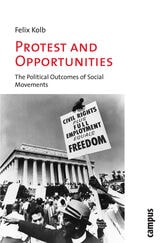
Protest and Opportunities
A Theory of Social Movements and Political ChangeFelix Kolb
Campus Verlag, 2007
In addition to reviewing the existing literature on the political outcomes of social movements, this volume analyzes the examples of the American civil rights movement and anti-nuclear energy efforts in eighteen countries to forge a new understanding of their momentous impact.
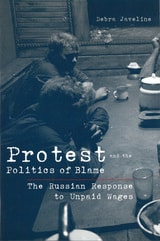
Protest and the Politics of Blame
The Russian Response to Unpaid WagesDebra Javeline
University of Michigan Press, 2003
Protest on the Page
Essays on Print and the Culture of Dissent since 1865Edited by James L. Baughman, Jennifer Ratner-Rosenhagen, and James P. Danky
University of Wisconsin Press, 2015

Protestantism and Politics in Eastern Europe and Russia
The Communist and Post-Communist ErasSabrina P. Ramet, ed.
Duke University Press, 1993
Based on extensive field research, including interviews with notable figures in the Protestant churches in the region, the essays in this volume address broad topics such as the church's involvment in environmentalism, pacifism, and other dissident movements, as well as issues particular to Russia, Poland, Czechoslovakia, East Germany, (1949–1989), Hungary, Yugoslavia (1945-1991), Bulgaria, and Romania. The final volume in the three-volume work "Christianity Under Stress," Protestantism and Politics in Eastern Europe and Russia will prove invaluable to anyone hoping to understand not only the workings of religion under Communism, but the historical and contemporary interactions of church and state in general.
Contributors. Paul Bock, Lawrence Klippenstein, Paul Mojzes, Earl A. Pope, Joseph Pungur, Sabrina Petra Ramet, Walter Sawatsky, N. Gerald Shenk, Gerd Stricker, Sape A. Zylstra
Protocols of Liberty
Communication Innovation and the American RevolutionWilliam B. Warner
University of Chicago Press, 2013

Proxmire
Bulldog of the SenateJonathan Kasparek
Wisconsin Historical Society Press, 2019

Psychiatric Contours
New African Histories of MadnessNancy Rose Hunt and Hubertus Büschel, editors
Duke University Press, 2024
Contributors. Hubertus Büschel, Raphaël Gallien, Matthew M. Heaton, Richard Hölzl, Nancy Rose Hunt, Richard C. Keller, Sloan Mahone, Nana Osei Quarshie, Jonathan Sadowsky, Romain Tiquet

Psychiatric Encounters
Madness and Modernity in Yucatan, MexicoReyes-Foster, Beatriz M.
Rutgers University Press, 2019
Psychology and Constructivism in International Relations
An Ideational AllianceVaughn P. Shannon and Paul A. Kowert, Editors
University of Michigan Press, 2011
"The conversation between political psychology and constructivism is essential and long overdue. By exploring the interaction of individual cognition and social processes, this 'ideational alliance' more fully explains how ideas work all the way down to shape world politics."
---Theo Farrell, King's College London
"This is a worthwhile and engaging volume. Political psychology is gaining ground as an essential perspective to consider when analyzing international relations, and the book's focus on constructivism provides key insights into the relationship between identity, norms, and behavior---bedrock concepts in understanding the social underpinnings of global politics."
---Mira Sucharov, Carleton University
"An indispensable guide to understanding what distinguishes and what unites psychology and constructivism. A wonderful resource for political psychologists, constructivists, and their critics."
---Jonathan Mercer, University of Washington
Constructivist IR scholars study the ways in which international norms, culture, and identities---all intersubjective phenomena---inform foreign policy and affect the reaction to and outcomes of international events. Political psychologists similarly investigate divergent national self-conceptions as well as the individual cognitive and emotional propensities that shape ideology and policy. Given their mutual interest in human subjectivity and identity politics, a dialogue and synthesis between constructivism and political psychology is long overdue.
The contributors to this volume discuss both theoretical and empirical issues of complementarity and critique, with an emphasis on the potential for integrating the viewpoints within a progressive ideational paradigm. Moreover, they make a self-conscious effort to interrogate, rather than gloss over, their differences in the hope that such disagreements will prove particularly rich sources of analytical and empirical insight.
Jacket illustration © Ocean Photography/Veer