Results by title
28167 books match the query 'History' and 1297 start with p
Postfeminist War
Women in the Media-Military-Industrial ComplexMary Douglas Vavrus
Rutgers University Press, 2019
Posthegemony
Political Theory and Latin AmericaJon Beasley-Murray
University of Minnesota Press, 2010
In his thorough examination, Beasley-Murray undoes the dominant narrative of hegemonic projects and counterhegemonic resistance, of civilization and subalternity, to reveal instead a history of failed contracts and unpredicted insurgencies.
Posthumous Images
Contemporary Art and Memory Politics in Post–Civil War LebanonChad Elias
Duke University Press, 2018
Postmodern Advertising in Japan
Seduction, Visual Culture, and the Tokyo Art Directors ClubOry Bartal
Dartmouth College Press, 2015

Postmodern Animal
Steve Baker
Reaktion Books, 2000
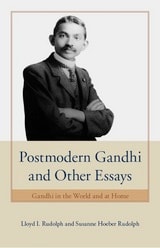
Postmodern Gandhi and Other Essays
Gandhi in the World and at HomeLloyd I. Rudolph and Susanne Hoeber Rudolph
University of Chicago Press, 2006
Gandhi, with his loincloth and walking stick, seems an unlikely advocate of postmodernism. But in Postmodern Gandhi, Lloyd and Susanne Rudolph portray him as just that in eight thought-provoking essays that aim to correct the common association of Gandhi with traditionalism.
Combining core sections of their influential book Gandhi: The Traditional Roots of Charisma with substantial new material, the Rudolphs reveal here that Gandhi was able to revitalize tradition while simultaneously breaking with some of its entrenched values and practices. Exploring his influence both in India and abroad, they tell the story of how in London the young activist was shaped by the antimodern “other West” of Ruskin, Tolstoy, and Thoreau and how, a generation later, a mature Gandhi’s thought and action challenged modernity’s hegemony. Moreover, the Rudolphs argue that Gandhi’s critique of modern civilization in his 1909 book Hind Swaraj was an opening salvo of the postmodern era and that his theory and practice of nonviolent collective action (satyagraha) articulate and exemplify a postmodern understanding of situational truth.
This radical interpretation of Gandhi's life will appeal to anyone who wants to understand Gandhi’s relevance in this century, as well as students and scholars of politics, history, charismatic leadership, and postcolonialism.
Postmodernism and China
Arif Dirlik and Xudong Zhang, eds.
Duke University Press, 2000
Collectively, these essays question the implications of specific phenomena, like literature, architecture, rock music, and film, in a postsocialist society. Some essays address China’s complicity in—as well as its resistance to—the culture of global capitalism. Others evaluate the impact of efforts to redefine national culture in terms of enhanced freedoms and expressions of the imagination in everyday life. Still others discuss the general relaxation of political society in post-Mao China, the emergence of the market and its consumer mass culture, and the fashion and discourse of nostalgia. The contributors make a clear case for both the historical uniqueness of Chinese postmodernism and the need to understand its specificity in order to fully grasp the condition of postmodernity worldwide. Although the focus is on mainland China, the volume also includes important observations on social and cultural realities in Hong Kong and Taiwan, whose postmodernity has so far been confined—in both Chinese and English-speaking worlds—to their economic and consumer activities instead of their political and cultural dynamism.
First published as a special issue of boundary 2, Postmodernism and China includes seven new essays. By juxtaposing postmodernism with postsocialism and by analyzing China as a producer and not merely a consumer of the culture of the postmodern, it will contribute to critical discourses on globalism, modernity, and political economics, as well as to cultural and Asian studies.
Contributors. Evans Chan, Arif Dirlik, Dai Jinhua, Liu Kang, Anthony D. King, Jeroen de Kloet, Abidin Kusno, Wendy Larson, Chaoyang Liao, Ping-hui Liao, Sebastian Hsien-hao Liao, Sheldon Hsiao-peng Lu, Wang Ning, Xiaobing Tang, Xiaoying Wang, Chen Xiaoming, Xiaobin Yang, Zhang Yiwu, Xudong Zhang
Postmodernism and Japan
Masao Miyoshi and H. D. Harootunian, eds.
Duke University Press, 1989
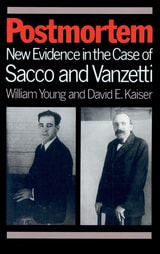
Postmortem
New Evidence in the Case of Sacco and VanzettiWilliam Young
University of Massachusetts Press, 1985
Over six decades after the polemical Sacco and Vanzetti case, in which the two anarchist Italian immigrants were convicted of first-degree murder and executed by the Commonwealth of Massachusetts, Young and Kaiser revisit the case's evidence as well as the key actors who determined its outcome. The authors situate their meticulous reexamination of the court evidence and prosecuting and defense arguments within the long-standing dispute between political leftists and conservatives regarding the integrity of the conviction, edifying the left's accusations of anti-Italianism and anti-anarchism. Their analysis magnifies both the likelihood of contrived evidence and the fallibility of our criminal justice system's impartiality, pointing to important questions concerning the nature of a fair trial and the influence of prejudice and politics in juridical processes. As such, Postmortem functions as a detailed introduction to the infamous 1921 Sacco and Vanzetti trial as well as a meditation on enduring dilemmas of the American judicial branch.
Postsocialism and Cultural Politics
China in the Last Decade of the Twentieth CenturyXudong Zhang
Duke University Press, 2008
Zhang examines the reactions of intellectuals, authors, and filmmakers to the cultural and political conflicts in China during the 1990s. He offers a nuanced assessment of the changing divisions and allegiances within the intellectual landscape, and he analyzes the postsocialist realism of the era through readings of Mo Yan’s fiction and the films of Zhang Yimou. With Postsocialism and Cultural Politics, Zhang applies the same keen insight to China’s long 1990s that he brought to bear on the 1980s in Chinese Modernism in the Era of Reforms.
Postwar Architecture Between Italy and the UK
Exchanges and Transcultural InfluencesEdited by Lorenzo Ciccarelli and Clare Melhuish
University College London, 2021
In the aftermath of World War II’s devastation, Italy and the United Kingdom reimagined urban space. Post-war Architecture Between Italy and the UK explores how architects, urbanists, and historians in both countries collaborated around the shared need to rebuild. The authors discuss the far-reaching effects of this cultural exchange, including the influence of historic Italian town centers on British public space and the origin of postmodernism in clashes between British critics and Italian architects. Drawing on a wealth of archival materials, this volume offers new insights into architectural history in post-war Europe.
Postwar Revisited
A Global Art HistoryOkwui Enwezor and Atreyee Gupta, editors
Duke University Press, 2025
Contributors. Iftikhar Dadi, Okwui Enwezor, Patrick Flores, Hal Foster, Boris Groys, Atreyee Gupta, Elizabeth Harney, Jennifer Josten, Vivian Li, Tara McDowell, Alexandra Munroe, Nada Shabout, Terry Smith, Jenni Sorkin, Ming Tiampo
Postzionism
A ReaderSilberstein, Laurence
Rutgers University Press, 2008
Postzionism first emerged in the mid-1980s in writings by historians and social scientists that challenged the dominant academic versions of Israeli history, society, and national identity. Subsequently, this critique was expanded and sharpened in the writings of philosophers, cultural critics, legal scholars, and public intellectuals.
This reader provides a broad spectrum of innovative and highly controversial views on Zionism and its place in the global Jewish world of the twenty-first century. While not questioning Israel’s legitimacy as a state, many contributors argue that it has yet to become a fully democratic, pluralistic state in which power is shared among all of its citizens. Essays explore current attitudes about Jewish homeland and diaspora as well as the ways that zionist discourse contributes to the marginalization and exclusion of such minority communities as Palestinian citizens, Jews of Middle-Eastern origin (Mizrahim), women, and the queer community.
An introductory essay describes Postzionism and contextualizes each contribution within the broader discourse. The most complete collection of postzionist documents available in English, this anthology is essential reading for students and scholars of Jewish identity, Middle-Eastern conflict, and Israeli history.

Pot Roast, Politics, and Ants in the Pantry
Missouri's Cookbook HeritageCarol Fisher & John Fisher
University of Missouri Press, 2008
When is a cookbook more than just a cookbook? When it’s a gateway to our culinary heritage. For well over a hundred years, Missouri’s cookbooks have helped readers serve up tasty dishes to the state’s tables, but these publications also document the evolution of our kitchens and households.
Pot Roast,Politics, and Ants in the Pantry, a treasure trove of anecdotes and nuggets of historical information about cookery in the Show-Me State, draws from more than 150 publications to reveal Missouri’s cookbook heritage and to deliver a generous sampling of recipes. Carol Fisher and John Fisher look back to manuscript cookbooks from 1821 St. Louis, then progress through the years and around Missouri before arriving at today’s online recipes. Along the way, they dish out servings of kitchen medicine, household hints, and cookbook literature gleaned from the state’s cache of culinary gems.
From handwritten family recipe collections and mimeographed publications to glossy color editions, the texts the Fishers have obtained from libraries and historical societies as well as their own extensive cookbook collection include such curiosities as the Julia Clark Household Memoranda Book from the William Clark papers, an 1880 production by the Ladies of St. Louis called My Mother’s Cookbook, Mary Foote Henderson’s Practical Cooking and Dinner Giving, and Albert E. Brumley’s All-Day Singin’ and Dinner on the Ground. They tell how various ethnic communities raised money by creating cookbooks, how the state’s Beef Council and Pork Association put recipes on the Internet, and how restaurants like the Blue Owl in Kimmswick and Stephenson’s Apple Farm Restaurant near Kansas City enhanced their reputations with their own cookbooks. Festival cookbooks, company cookbooks, even cookbooks tied to world events—they’re all here in one delightful book.
In this vastly entertaining review, readers will learn where to find recipes for dandelion wine, mock turtle soup (requiring a large calf’s head split open by the butcher), and vinegar pie—as well as the curative properties of potato water, tips for raising chickens in the basement, and even “how to cook a husband.” An extensive bibliography includes information to help readers track down the books discussed and also those on their own wish lists.
Pot Roast, Politics, and Ants in the Pantry: Missouri’s Cookbook Heritage shows how, instead of being just collections of recipes, cookbooks provide history lessons, document changing food ways, and demonstrate the cultural diversity of the state. From Julia Clark’s simple frontier recipes for puddings and preserves to Irma Rombauer’s encyclopedic Joy of Cooking—originally self-published in Missouri—Carol Fisher and John Fisher have laid out a smorgasbord of reading pleasure for cookbook collectors, nostalgia buffs, and gourmands alike.
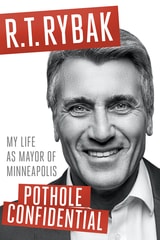
Pothole Confidential
My Life as Mayor of MinneapolisR.T. Rybak
University of Minnesota Press, 2016
A pajama party at the Minneapolis–St. Paul International Airport inadvertently helped launch R.T. Rybak’s political career (imagine a rumba line one hundred protesters long chanting, “We deserve to sleep, hey!”), but his earliest lessons in leadership occurred during his childhood. Growing up in a middle-class neighborhood, attending private school with students who had much more than he did, spending evenings at his family’s store in an area where people lived with much less, he witnessed firsthand the opportunity and injustice of the city he called home.
In a memoir that is at once a political coming-of-age story and a behind-the-scenes look at the running of a great city, the three-term mayor takes readers into the highs and lows and the daily drama of a life inextricably linked with Minneapolis over the past fifty years. With refreshing candor and insight, Rybak describes his path through journalism, marketing, and community activism that led to his unlikely (to him, at least) primary election—on September 11, 2001. His personal account of the challenges and crises confronting the city over twelve years, including the tragic collapse of the I-35W bridge, the rising scourge of youth violence, and the bruising fight over a ban on gay marriage (with Rybak himself conducting the first such ceremony at City Hall on August 1, 2013), is also an illuminating, often funny depiction of learning the workings of the job, frequently on the fly, while trying to keep up with his most important constituency, his family.
As bracing as the “fresh air” campaign that swept him into office, Rybak’s memoir is that rare document from a politician: one more concerned with the people he served and the issues of his time than with burnishing his own credentials. As such, it reflects what leadership truly looks like.
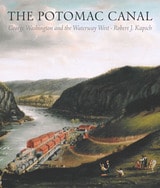
Potomac Canal
George Washington and the Waterway WestROBERT J. KAPSCH
West Virginia University Press, 2007
The Potomac Canal: George Washington and the Waterway West is a history of a new nation’s first effort to link the rich western agricultural lands with the coastal port cities of the east. The Potomac Canal Company was founded in 1785, and was active until it was overtaken by the Chesapeake and Ohio Canal Company in 1828. During its operation, the canal system was used to ship flour from mills in the foothills of Appalachia to the tidewater of the Chesapeake, where the flour was shipped to the Caribbean as trade for sugar and other goods. This trade soon became the basis of agricultural wealth in West Virginia’s eastern panhandle and throughout the Appalachian Piedmont. Coal was also shipped via the canal system from the upper reaches of the Potomac River to workshops at Harpers Ferry and beyond. This industrial trade route laid the foundation for what would eventually become the Chesapeake and Ohio Canal and the Baltimore and Ohio Railroad.
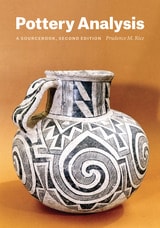
Pottery Analysis, Second Edition
A SourcebookPrudence M. Rice
University of Chicago Press, 2015
This new edition fully incorporates more than two decades of growth and diversification in the fields of archaeological and ethnographic study of pottery. It begins with a summary of the origins and history of pottery in different parts of the world, then examines the raw materials of pottery and their physical and chemical properties. It addresses ethnographic and ethnoarchaeological perspectives on pottery production; reviews the methods of studying pottery’s physical, mechanical, thermal, mineralogical, and chemical properties; and discusses how proper analysis of artifacts can reveal insights into their culture of origin. Intended for use in the classroom, the lab, and out in the field, this essential text offers an unparalleled basis for pottery research.
Pottery Analysis
A SourcebookPrudence M. Rice
University of Chicago Press, 1987
Pottery and Chronology at Angel
Sherri Hilgeman
University of Alabama Press, 2000
By analyzing the pottery found at a well-known archaeological site, Hilgeman constructs the long-awaited timeline for the rise and decline of this ancient society.
Located near present-day Evansville, Indiana, the Angel site is one of the important archaeological towns associated with prehistoric Mississippian society. More than two million artifacts were collected from this site during excavations from 1939 to 1989, but, until now, no systematic survey of the pottery sherds had been conducted. This volume, documenting the first in-depth analysis of Angel site pottery, also provides scholars of Mississippian culture with a chronology of this important site.
Angel is generally thought to have been occupied from before A.D. 1200 to 1450, but scholars have been forced to treat this period as one chronological unit without any sense of the growth and decline of the society that occupied it. Using radiocarbon assays and an analysis of its morphological and stylistic attributes of pottery, Sherri Hilgeman is able to divide the occupation of Angel into a series of recognizable stages. She then correlates those stages with similar ones at other archaeological excavations—especially nearby Kincaid—making it possible to compare Angel society with other native cultures of the lower Ohio Valley. Through this important contribution to native pottery studies, Hilgeman opens a window into the lifeways of prehistoric Angel society and places that society in the larger context of Mississippian culture.
Pound in Purgatory
From Economic Radicalism to Anti-SemitismLeon Surette
University of Illinois Press, 1999
From 1931 to 1945 Pound's poetry took a back seat to his activities as an economic reformer and propagandist for the corporate state. Pound believed he had a simple and practical solution for the economic woes of the world brought on by the Great Depression, and he became increasingly preoccupied with capturing political power for the economic reform he envisioned.
As the world spiraled toward war, Pound's program of economic reform foundered and he gradually succumbed to a paranoid belief in a Jewish conspiracy. Through an incisive analysis of Pound's correspondence and writings, much of it previously unexamined, Surette shows how this belief fostered the virulent anti-Semitism that pervades his work-–both poetry and prose-–from this time forward.

Poverty and Antitheatricality
Form and Formlessness in Latin American Literature, Art, and TheoryStephen Buttes
Rutgers University Press, 2025
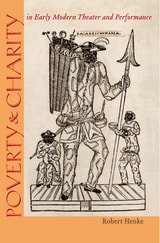
Poverty and Charity in Early Modern Theater and Performance
Robert Henke
University of Iowa Press, 2015
The actor-based theatre and performance traditions examined in this study, which persistently explore felt connections between the itinerant actor and the vagabond beggar, evoke the poor through complex and variegated forms of imagination, thought, and feeling. Early modern theatre does not simply reflect the social ills of hunger, poverty, and degradation, but works them through the forms of poverty, involving displacement, condensation, exaggeration, projection, fictionalization, and marginalization. As the critical mass of medieval charity was put into question, the beggar-almsgiver encounter became more like a performance. But it was not a performance whose script was prewritten as the inevitable exposure of the dissembling beggar. Just as people’s attitudes toward the poor could rapidly change from skepticism to sympathy during famines and times of acute need, fictions of performance such as Edgar’s dazzling impersonation of a mad beggar in Shakespeare’s King Lear could prompt responses of sympathy and even radical calls for economic redistribution.
Poverty and Leadership in the Later Roman Empire
Peter Brown
Brandeis University Press, 2001

Poverty and Society
The Growth of the American Welfare State in International ComparisonLevine, Daniel
Rutgers University Press, 1988
Poverty and Wealth in East Africa
A Conceptual HistoryRhiannon Stephens
Duke University Press, 2022
Poverty in Common
The Politics of Community Action during the American CenturyAlyosha Goldstein
Duke University Press, 2012

Poverty in the Pandemic
Policy Lessons from COVID-19Zachary Parolin
Russell Sage Foundation, 2023
Drawing on dozens of data sources ranging from debit and credit card spending, the first national databases of school and childcare center closures in the U.S., and bi-weekly Census-run surveys on well-being, Parolin finds that entering the pandemic in poverty substantially increased a person’s likelihood of experiencing negative health outcomes due to the pandemic, such as contracting and dying from COVID, as well as losing their job. Additionally, he found that students from poor families suffered the greatest learning losses as a result of school closures and the shift to distance learning during the pandemic.
However, unprecedented legislative action by the U.S. government, including the passage of the Families First Coronavirus Response Act (FFCRA), the Coronavirus Aid, Relief, and Economic Security (CARES) Act, and the American Rescue Plan (ARP) helped mitigate the economic consequences of the pandemic and lifted around 18 million Americans out of poverty. Based on the success of these policies, Parolin concludes with policy suggestions that the U.S. can implement in more ‘normal’ times to improve the living conditions of low-income households after the pandemic subsides, including expanding access to Unemployment Insurance, permanently expanding the Child Tax Credit, promoting greater access to affordable, high-quality healthcare coverage, and investing more resources into the Census Bureau’s data-collection capabilities. He also details a method of producing a monthly measurement of poverty, to be used in conjunction with the traditional annual measurement, in order to better understand the intra-year volatility of poverty that many Americans experience.
Poverty in the Pandemic provides the most complete account to date of the unique challenges that low-income households in the U.S. faced during the COVID-19 pandemic.
Poverty of the Imagination
The Cold War and the Social Science of Development in Latin AmericaPatrick Iber
University of Chicago Press, 2026
Explores the history of the “science of development” during the Cold War and how experts across the social sciences tried to create the tools to address the problem of poverty across Latin America.
In the mid-twentieth century, Latin America had the world’s starkest internal inequality. In Brazil in 1960, for example, the top 10 percent took upward of 60 percent of the country’s total income, while its entire bottom half took only 10 percent. As Patrick Iber shows in Poverty of the Imagination, this problem of poverty and social inequality focused the attention of social scientists on the task of articulating a “science of development.” In the context of the Cold War, this project drew the attention of the US government and the Ford Foundation, which hoped that peaceful development would prevent revolutions.
This book examines the five central frameworks that emerged to explain poverty: from dependency theory on the Marxist left; to theories of modernization, the culture of poverty, and marginality in the center; to neoliberalism on the right. Iber shows how each rose (and fell) by connecting them to political projects such as the War on Poverty in the United States and the dictatorship of Augusto Pinochet in Chile. Through vivid portraits of key thinkers, he shows how each was shaped by the environment of the Cold War and the presence of the Ford Foundation. It is a story with surprising turns: What began for Ford as a Cold War project to support university “modernization” changed as dictatorships took control of much of the region. Then, Ford took the side of the dissidents, supporting an antipoverty agenda for the restoration of democracy. A guide to some of the most important ideas in global development and Latin American studies alike, this book also shows how scholars and institutions faced down authoritarian threats—and won.
Poverty, Charity, and Motherhood
Maternal Societies in Nineteenth-Century FranceChristine Adams
University of Illinois Press, 2010
Poverty, Law, and Divine Justice in Persian and Hellenistic Judah
Johannes Unsok Ro
SBL Press, 2018
A view of Persian and Hellenistic Judean communities through theological and socioeconomic lenses
Johannes Unsok Ro employs philological, historical, and sociological approaches to investigate the close connections between socioeconomic structures, social inequality, and theological developments in the Judean communities in Persian- and Hellenistic-era Palestine. Ro contends that competing points of view from communities of lay returnees, priestly returnees, and communities of resident Judeans and Samaritans were juxtaposed within the Hebrew Bible, which took shape during the postexilic period. By exploring issues such as the relationship between the shaping of the canon and literacy in the Judean community, the term strangers in the biblical law codes, the socioeconomic structures of Judean communities reflected in the biblical law codes, the development of the theological concept of divine punitive justice, the piety of the poor in certain psalms, and the concept of poverty in the Dead Sea Scrolls, Ro illustrates that the communities behind each text and its redactions can be ascertained through sociological and theological lenses.
Features
- Demonstration that a theology of the poor materialized orally among the poor but found written expression among Levites
- Insight into the socioeconomic and theological concerns of the authorial groups behind various biblical law codes
- A case that biblical “poverty” sometimes refers to humility and a theologically reflected consciousness of lowliness toward God
Power & Persuasion Late Antiquity
Towards A Christian EmpirePeter Brown
University of Wisconsin Press, 1992
Power / Knowledge / Land
Contested Ontologies of Land and Its Governance in AfricaLaura A. German
University of Michigan Press, 2022
The 2008 outcry over the “global land grab” made headlines around the world, leading to a sustained interest in the dynamics and fate of customary land among both academics and development practitioners. In Power/Knowledge/Land, author Laura German profiles the consolidation of a global knowledge regime surrounding land and its governance within international development circles in the decade following this outcry, and the growing enrollment of previously antagonistic actors within it. Drawing theoretical insights on the inseparability of power and knowledge, German reveals the dynamics of knowledge practices that have enabled the longstanding project of commodifying customary land – and the more contemporary interests in acquiring and financializing it – to be advanced and legitimated by capturing the energies of socially progressive forces. By bringing theories of change from the emergent land governance orthodoxy into dialogue with the ethnographic evidence from across the African continent and beyond, concepts masquerading as universal and self-evident truths are provincialized, and their role in commodifying customary land and entrenching colonial futurities put on display. In doing so, the volume brings wider academic debates surrounding productive forms of power into the heart of the land grab debate, while enhancing their accessibility to a wider audience.
Power/Knowledge/Land takes current scholarly debates surrounding land grabs beyond their theoretical moorings in critical agrarian studies, political economy and globalization into contemporary debates surrounding the politics of knowledge—from theories of coloniality to ontological anthropology, thereby enabling new dynamics of the phenomenon to be revealed. The book deploys a pioneering epistemology integrating deconstructionist approaches (to reveal the tactics, truth claims and ontological assumptions of global knowledge brokers), with systematic qualitative reviews and comparative study (to contrast these dominant constructs with the evidence and reveal alternative ways of knowing “land” and practicing “security” from the ethnographic literature). This helps to reveal the Western and modernist biases in the narratives that have been advanced about women, custom, and security, revealing how the coloniality of knowledge works to grease the wheels of land takings by advancing highly provincialized constructs aligned with western interests as universal truths.
Power Moves
Transportation, Politics, and Development in HoustonBy Kyle Shelton
University of Texas Press, 2017
Since World War II, Houston has become a burgeoning, internationally connected metropolis—and a sprawling, car-dependent city. In 1950, it possessed only one highway, the Gulf Freeway, which ran between Houston and Galveston. Today, Houston and Harris County have more than 1,200 miles of highways, and a third major loop is under construction nearly thirty miles out from the historic core. Highways have driven every aspect of Houston’s postwar development, from the physical layout of the city to the political process that has transformed both the transportation network and the balance of power between governing elites and ordinary citizens.
Power Moves examines debates around the planning, construction, and use of highway and public transportation systems in Houston. Kyle Shelton shows how Houstonians helped shape the city’s growth by attending city council meetings, writing letters to the highway commission, and protesting the destruction of homes to make way for freeways, which happened in both affluent and low-income neighborhoods. He demonstrates that these assertions of what he terms “infrastructural citizenship” opened up the transportation decision-making process to meaningful input from the public and gave many previously marginalized citizens a more powerful voice in civic affairs. Power Moves also reveals the long-lasting results of choosing highway and auto-based infrastructure over other transit options and the resulting challenges that Houstonians currently face as they grapple with how best to move forward from the consequences and opportunities created by past choices.
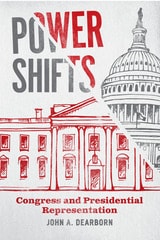
Power Shifts
Congress and Presidential RepresentationJohn A. Dearborn
University of Chicago Press, 2021
The emergence of the modern presidency in the first half of the twentieth century transformed the American government. But surprisingly, presidents were not the primary driving force of this change—Congress was. Through a series of statutes, lawmakers endorsed presidential leadership in the legislative process and augmented the chief executive’s organizational capacities.
But why did Congress grant presidents this power? In Power Shifts, John A. Dearborn shows that legislators acted on the idea that the president was the best representative of the national interest. Congress subordinated its own claims to stand as the nation’s primary representative institution and designed reforms that assumed the president was the superior steward of all the people. In the process, Congress recast the nation’s chief executive as its chief representative.
As Dearborn demonstrates, the full extent to which Congress’s reforms rested on the idea of presidential representation was revealed when that notion’s validity was thrown into doubt. In the 1970s, Congress sought to restore its place in a rebalanced system, but legislators also found that their earlier success at institutional reinvention constrained their efforts to reclaim authority. Chronicling the evolving relationship between the presidency and Congress across a range of policy areas, Power Shifts exposes a fundamental dilemma in an otherwise proud tradition of constitutional adaptation.
Power Ties
Economic Interdependence, Balancing, and WarPaul A. Papayoanou
University of Michigan Press, 1999
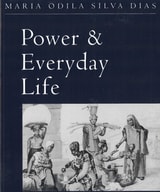
Power and Everyday Life
The Lives of Working Women in Nineteenth-Century BrazilDias, Maria Odila Silva
Rutgers University Press, 1995
This important new work is a study of the everyday lives of the inhabitants of São Paulo in the nineteenth century. Full of vivid detail, the book concentrates on the lives of working women--black, white, Indian, mulatta, free, freed, and slaves, and their struggles to survive. Drawing on official statistics, and on the accounts of travelers and judicial records, the author paints a lively picture of the jobs, both legal and illegal, that were performed by women. Her research leads to some surprising discoveries, including the fact that many women were the main providers for their families and that their work was crucial to the running of several urban industries. This book, which is a unique record of women’s lives across social and race strata in a multicultural society, should be of interest to students and researchers in women’s studies, urban studies, historians, geographers, economists, sociologists, and anthropologists.
Power and Everyday Life
The Lives of Working Women in Nineteenth-Century BrazilDias, Maria Odila Silva
Rutgers University Press, 1995
This important new work is a study of the everyday lives of the inhabitants of São Paulo in the nineteenth century. Full of vivid detail, the book concentrates on the lives of working women--black, white, Indian, mulatta, free, freed, and slaves, and their struggles to survive. Drawing on official statistics, and on the accounts of travelers and judicial records, the author paints a lively picture of the jobs, both legal and illegal, that were performed by women. Her research leads to some surprising discoveries, including the fact that many women were the main providers for their families and that their work was crucial to the running of several urban industries. This book, which is a unique record of women’s lives across social and race strata in a multicultural society, should be of interest to students and researchers in women’s studies, urban studies, historians, geographers, economists, sociologists, and anthropologists.
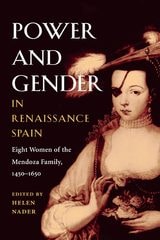
Power and Gender in Renaissance Spain
Eight Women of the Mendoza Family, 1450-1650Edited by Helen Nader
University of Illinois Press, 2003
These essays explore the lives of powerful women whose lineage gave them status within a patriarchal society designed to keep women from public life. Each of the influential and literary women discussed in this volume handled her status differently, and their concerns were not dissimilar from the concerns of feminists today: the blurring of the personal and the political, public versus private space, language and voice, and property.
Spanning the two centuries between Juana Pimentel, a widow who manipulated the patronage system to her own ends, and Luisa de Carvajal y Mendoza, who rejected both convent and marriage in favor of missionary work, Power and Gender in Renaissance Spain reveals a complex society in which women were limited by law, and yet their social status made those laws negotiable.
These women found that their personal agendas had a broad societal impact, challenging the laws of the land and patriarchal assumptions about women's inferiority.
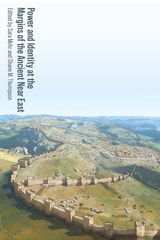
Power and Identity at the Margins of the Ancient Near East
Sara Mohr
University Press of Colorado, 2022
The borderlands of hegemonic entities within the Near East and Egypt pressed against each other, creating cities and societies with influence from several competing polities. The peoples, cities, and cultures that resulted present a unique lens by which to examine how states controlled and influenced the lives, political systems, and social hierarchies of these subjects (and vice versa). This volume addresses the distinct traditions and experiences of areas beyond the core; terminology used when discussing empire, core, periphery, borderlands, and frontiers; conceptualization of space; practices and consequences of warfare, captive-taking, and slavery; identity- and secondary state–formation; economy and society; ritual; diplomacy; and the negotiation of claims to power.
It is imperative that historians and social scientists understand the ways in which these cultures developed, spread, and interacted with others along frontier edges. Using an intersectional approach across disciplines, Power and Identity at the Margins of the Ancient Near East brings together professionals from archaeology, religious studies, history, sociology, and anthropology to make new contributions to the study of the frontier.
Contributors: Alexander Ahrens, Peter Dubovský, Avraham Faust, Daniel E. Fleming, Mahri Leonard-Fleckman, Alvise Matessi, Ellen Morris, Valeria Turriziani, Eric M. Trinka
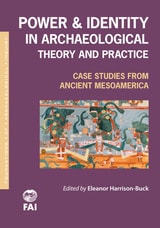
Power and Identity in Archaeological Theory and Practice
Case Studies from Ancient MesoamericaEleanor Harrison-Buck
University of Utah Press, 2012
The contributions to this volume represent a diverse array of Mesoamerican archaeological studies that are all theo-retically rooted to larger, global debates concerning issues of power and identity—two logically paired concepts. While social identity has been the focus of more critical analysis in recent years, the concept of power has received far less attention. Most studies focus on large-scale, institutional forms of power and the ruling body. Here, the focus is on relations of power, addressing broader segments of society outside the dominant group, that often are ignored in traditional reconstructions of past societies.
Harrison-Buck has compiled works that address a common criticism of social theory in the field of anthropological archaeology—the lack of strong case studies and corroborating facts supporting the abstract and often complex social theoretical concepts presented by scholars. Each contributor offers innovative method and theory and provides alternative and varied approaches to understanding power and identity in the archaeological record. They draw from a wide range of related disciplines and theoretical frameworks, including feminism, queer theory, cognitive studies, and postcolonial theory. The provocative case studies and exciting theoretical applications presented here will stimulate lively debate among scholars working both in and outside of Mesoamerica.
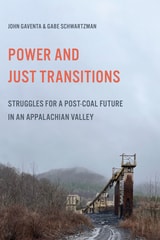
Power and Just Transitions
Struggles for a Post-Coal Future in an Appalachian ValleyJohn Gaventa and Gabe Schwartzman
University of Illinois Press, 2026
Power and Knowledge Under Communism
A Political History of Economic and Sociological Research in HungaryGyorgy Peteri
Central European University Press, 2026
Power and Powerlessness
Quiescence and Rebellion in an Appalachian ValleyJohn Gaventa
University of Illinois Press, 1980
Using Clear Fork Valley in central Appalachia as an empirical example, Gaventa attempts to discern the "hidden faces of power" - those forces which shape actions and consciousness in ways not readily apparent in formal American political processes. He seeks to clarify and expand upon past theories (by such writers as Bachrach and Lukes) on the nature and maintenance of power.
The region studied here is characterized by stark incongruity - the co-existence of massive natural wealth (coal and land) with pervasive human poverty attended by high unemployment, limited education, malnutrition, and the prevalent hazards of mining coal: black lung, dismemberment, death, and ecological ruin. This has been the region's status quo under the decades of domination by a British company and its absentee owners. Despite these departure conditions and frequently violent union struggles, culminating in the 1969 murder of UMW reformist Jock Yablonski, acquiescence to this status quo has been maintained. Gaventa searches out the answers to how and why wealth and poverty continue to coexist and the powerless continue to accede to the powerful. His astute analysis poses broader questions about the politics of poverty, working-class consciousness, and corporate power in America.
Power and Time
Temporalities in Conflict and the Making of HistoryEdited by Dan Edelstein, Stefanos Geroulanos, and Natasha Wheatley
University of Chicago Press, 2020
A collection of essays that challenges how we interpret history by focusing on the nexus of two concepts— “power” and “time”—as they manifest in a wide variety of case studies.
Time is the backdrop of historical inquiry, yet it is much more than a featureless setting for events. Different temporalities interact dynamically; sometimes they coexist tensely, sometimes they clash violently. In this innovative volume, editors Dan Edelstein, Stefanos Geroulanos, and Natasha Wheatley challenge how we interpret history by focusing on the nexus of two concepts—“power” and “time”—as they manifest in a wide variety of case studies. Analyzing history, culture, politics, technology, law, art, and science, this engaging book shows how power is constituted through the shaping of temporal regimes in historically specific ways. Power and Time includes seventeen essays on human rights; sovereignty; Islamic, European, Chinese, and Indian history; slavery; capitalism; revolution; the Supreme Court; the Anthropocene; and even the Manson Family. Power and Time will be an agenda-setting volume, highlighting the work of some of the world’s most respected and original contemporary historians and posing fundamental questions for the craft of history.
Power at Sea, Volume 1
The Age of Navalism, 1890-1918Lisle A. Rose
University of Missouri Press, 2006

Power at Sea, Volume 2
The Breaking Storm, 1919-1945Lisle A. Rose
University of Missouri Press, 2006

Power at Sea, Volume 3
A Violent Peace, 1946-2006Lisle A. Rose
University of Missouri Press, 2006
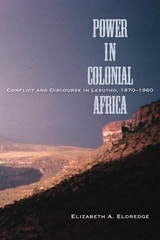
Power in Colonial Africa
Conflict and Discourse in Lesotho, 1870–1960Elizabeth A. Eldredge
University of Wisconsin Press, 2007
In Power in Colonial Africa: Conflict and Discourse in Lesotho, 1870–1960, Elizabeth A. Eldredge analyzes a panoply of archival and oral resources, visual signs and symbols, and public and private actions to show how power may be exercised not only by rulers but also by the ruled. The BaSotho—best known for their consolidation of a kingdom from the 1820s to 1850s through primarily peaceful means, and for bringing colonial forces to a standstill in the Gun War of 1880–1881—struggled to maintain sovereignty over their internal affairs during their years under the colonial rule of the Cape Colony (now part of South Africa) and Britain from 1868 to 1966. Eldredge explores instances of BaSotho resistance, resilience, and resourcefulness in forms of expression both verbal and non-verbal. Skillfully navigating episodes of conflict, the BaSotho matched wits with the British in diplomatic brinksmanship, negotiation, compromise, circumvention, and persuasion, revealing the capacity of a subordinate population to influence the course of events as it selectively absorbs, employs, and subverts elements of the colonial culture.
“A refreshing, readable and lucid account of one in an array of compositions of power during colonialism in southern Africa.”—David Gordon, Journal of African History
“Elegantly written.”—Sean Redding, Sub-Saharan Africa
“Eldredge writes clearly and attractively, and her studies of the war between Lerotholi and Masupha and of the conflicts over the succession to the paramountcy are essential reading for anyone who wants to understand those crises.”—Peter Sanders, Journal of Southern African Studies
Power in Concert
The Nineteenth-Century Origins of Global GovernanceJennifer Mitzen
University of Chicago Press, 2013
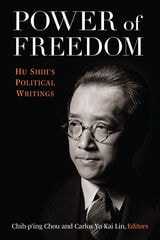
Power of Freedom
Hu Shih's Political WritingsChih-p'ing Chou and Carlos Yu-Kai Lin, Editors
University of Michigan Press, 2022
For decades—and today to a certain extent—Hu Shih’s political writings were considered sensitive and even dangerous. As a strident critic of the Chinese Communist Party’s oligarchical practices, he was targeted by the CCP in a concerted national campaign to smear his reputation, cast aspersions on his writings, and generally destroy any possible influence he might have in China. This volume brings together a collection of Hu Shih’s most important, mostly unpublished, English-language speeches, interviews, and commentaries on international politics, China-U.S. relations, and the International Communist Movement. Taken together, these works provide an insider’s perspective on Sino-American relations and the development of the International Communist Movement over the course of the 20th century.