Results by title
1832 books match the query 'Essays' and 90 start with p
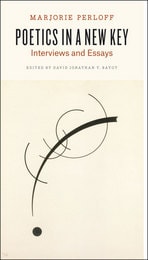
Poetics in a New Key
Interviews and EssaysMarjorie Perloff
University of Chicago Press, 2014
The fourteen interviews in Poetics in a New Key—conducted by scholars, poets, and critics from the United States, Denmark, Norway, France, and Poland, including Charles Bernstein, Hélène Aji, and Peter Nicholls—cover a broad spectrum of topics in the study of poetry: its nature as a literary genre, its current state, and its relationship to art, politics, language, theory, and technology. Also featured in the collection are three pieces by Perloff herself: an academic memoir, an exploration of poetry pedagogy, and an essay on twenty-first-century intellectuals. But across all the interviews and essays, Perloff’s distinctive personality and approach to reading and talking resound, making this new collection an inspiring resource for scholars both of poetry and writing.
Poetry On and Off the Page
Essays for Emergent OccasionsMarjorie Perloff
Northwestern University Press, 1998
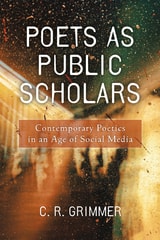
Poets as Public Scholars
Contemporary Poetics in an Age of Social MediaC. R. Grimmer
University of Michigan Press, 2026
Poets as Public Scholars is a multimedia project that interrogates how poet-scholars use digital platforms to expand access and visibility for underrepresented voices, but also to critique the commodification, extraction, and erasure practices embedded in neoliberal literary circulation. Framed by two core questions—how poets teach public scholarship through networked media, and how to support underrepresented poets without reinforcing market-driven erasure—the collection offers videos for student and public engagement, essays for scholarly audiences, and discussion questions for classroom use.
Structured around seven video dialogues and seven critical essays, the book features contributions from poet-scholars including Camea Davis, A.D. Carson, Tyrone Williams, Patrick Milian, Stevi Costa, Cameron Awkward-Rich, and Woogee Bae. Each chapter examines the material and affective economies that shape poetic production and reception, while proposing alternative, community-rooted infrastructures for literary and cultural labor. Designed for layered audiences, the video interviews model public-facing discourse, while the companion essays situate the work within critical conversations in literature, cultural theory, and media studies. With included discussion questions by Dr. Molly Ubbesen (University of Minnesota Rochester) and open access availability, Poets as Public Scholars functions as both a teaching tool and a theoretical intervention for scholars and educators seeking to integrate anti-racist, anti-capitalist approaches to literary and digital humanities pedagogy.
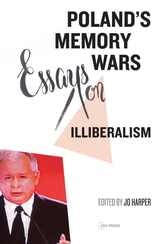
Poland's Memory Wars
Essays on IlliberalismJo Harper
Central European University Press, 2018
This volume of essays and interviews by Polish, British, and American academics and journalists provides an overview of current Polish politics for both informed and non-specialist readers. The essays consider why and how PiS, Law and Justice, the party of Jarosław Kaczynski, returned to power, and the why and how of its policies while in power. They help to make sense of how “history” plays a key role in Polish public life and politics.
The descriptions of PiS in Western media tend to rework old stereotypes about Eastern Europe that had lain dormant for some time. The book addresses the underlying question whether PiS was simply successful in understanding its electorate, and just helped Poland to revert to its normal state. This new Normal seems quite similar to the old one: insular, conservative, xenophobic, and statist.
The book looks at the current struggle between one ‘Poland’ and another; between a Western-looking Poland and an inward-looking Poland, the former more interested in opening to the world, competing in open markets, and working within the EU, and the latter more concerned with holding onto tradition.
The question of illiberalism has gone from an ‘Eastern’ problem (Russia, Turkey, Hungary, etc.) to a global one (Brexit and the U.S. elections). This makes the very specific analysis of Poland’s illiberalism applicable on a broader scale.
Police Interrogation and Confessions
Essays in Law and PolicyYale Kamisar
University of Michigan Press, 2025
Police in Transition
Essays on the Police Forces in Transition CountriesAndrás Kádár
Central European University Press, 2001
The police forces of the transition countries in Central and Eastern Europe have to undergo profound reform to be able to respond to the needs of society; to serve the public and not just the government, and to prove that they can effectively combat crime. This volume is the result of a survey by the Hungarian Helsinki Committee concerning the mode and extent of changes police forces of the post-communist countries have undergone since 1989 – 1990. Information is provided about the relevant tasks, organization, personnel, accountability, and international relations of the national police forces and about the coercive measures they are entitled to use.
Written by internationally acknowledged experts of policing and representatives of human-rights organizations, Police in Transition deals with the questions of transition, European trends in the governance of the police, the relationship between police and criminality, the role of the police in the constitutional framework, the limits of policing, police brutality, civilian oversight of the police and the possibilities of a democratic reform of police forces in Central and Eastern Europe.
Political Fictions
Jean-Paul Sartre
Seagull Books, 2021
Iconic French novelist, playwright, and essayist Jean-Paul Sartre is widely recognized as one of the most important philosophers of the twentieth century, and his work has remained relevant and thought-provoking through the decades. The Seagull Sartre Library now presents some of his most incisive philosophical, cultural, and literary critical essays in twelve newly designed and affordable editions.
Political Fictions includes Sartre’s long foreword to André Gorz’s The Traitor, which has often been called the most intimate and profound book to emerge from the existentialist movement. Sartre also presents a detailed portrait of his friend and fellow writer Paul Nizan (1905–1940), once a committed communist, who died fighting the Nazis at the Battle of Dunkirk. Also featured here is Sartre’s famous foreword to Nizan’s novel The Conspiracy, which made the novel famous on its republication in the 1960s, when it was adopted as an iconic text during the events of May ’68.
Political Writings
Jean-Francois Lyotard
University of Minnesota Press, 1993

Politics by Humans
Research on American LeadershipJames David Barber
Duke University Press, 0
Politics, Language, and Time
Essays on Political Thought and HistoryJ. G. A. Pocock
University of Chicago Press, 1989
Pocock argues that the solution has already been approached by, first, the linguistic philosophers, with their emphasis on the importance of language study to understanding human thought, and, second, by Thomas Kuhn's The Structure of Scientific Revolutions, with its notion of controlling intellectual paradigms. Those paradigms within and through which the scientist organizes his intellectual enterprise may well be seen as analogous to the worlds of political discourse in which political problems are posed and political solutions are proffered. Using this notion of successive paradigms, Pocock demonstrates its effectiveness by analyzing a wide range of subjects, from ancient Chinese philosophy to Machiavelli, Hobbes, and Burke.
Politics, Metaphysics, and Death
Essays on Giorgio Agamben's Homo SaceAndrew Norris, ed.
Duke University Press, 2005
The contributors analyze Agamben’s thought from the perspectives of political theory, philosophy, jurisprudence, and the history of law. They consider his work not only in relation to that of his major interlocutors—Hannah Arendt, Michel Foucault, Carl Schmitt, Walter Benjamin, and Martin Heidegger—but also in relation to the thought of Plato, Pindar, Heraclitus, Descartes, Kafka, Bataille, and Derrida. The essayists’ approaches are varied, as are their ultimate evaluations of the cogency and accuracy of Agamben’s arguments. This volume also includes an original essay by Agamben in which he considers the relation of Benjamin’s “Critique of Violence” to Schmitt’s Political Theology. Politics, Metaphysics, and Death is a necessary, multifaceted exposition and evaluation of the thought of one of today’s most important political theorists.
Contributors: Giorgio Agamben, Andrew Benjamin, Peter Fitzpatrick, Anselm Haverkamp, Paul Hegarty, Andreas Kalyvas, Rainer Maria Kiesow , Catherine Mills, Andrew Norris, Adam Thurschwell, Erik Vogt, Thomas Carl Wall
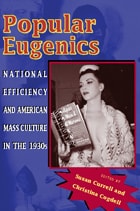
Popular Eugenics
National Efficiency and American Mass Culture in the 1930sSusan Currell
Ohio University Press, 2006
The essays in this generously illustrated collection demonstrate how, after the scientific foundations of the eugenics movement had been weakened in the 1930s, eugenic beliefs spread into the popular media, including newspapers, movies, museum exhibits, plays, and novels, and even fashion shows and comic strips.
Popular Eugenics shows that eugenic thought persisted in science and culture as well as in social policy and goes a long way toward explaining the durability of eugenic thinking and its effects on social policy in the United States. Popular Eugenics will be of interest to scholars and students in a broad range of disciplines, especially American literature and history, popular culture, media studies, and the history of science.

Popular Music in Leeds
Histories, Heritage, People and PlacesEdited by Brett Lashua, Karl Spracklen, and Kitty Ross
Intellect Books, 2023
This is the first scholarly volume to focus on popular music in Leeds. It delves into the rich musical history of Leeds and its long tradition of vibrant venues, nightclubs, dance halls, pubs, and other sites of musical entertainment. The contributors use the popular music of Leeds to exemplify and inform understandings of broader cultural and urban changes, the social and historical significance of music as mass media; music and migration; music, racialization, and social equity; and industrial decline, deindustrialization, neoliberalism, and the rise of the twenty-four-hour city. Charting moments of stark musical politicization and de-politicization, while also tracing arguments about heritagizing popular music within discussions about music’s place in museums and in the urban economy, this book contributes to debates about why music matters, has mattered, and continues to matter in Leeds and beyond.
Portraits of Medieval and Renaissance Living
Essays in Memory of David HerlihySamuel K. Cohn, Jr. and Steven A. Epstein, Editors
University of Michigan Press, 1996
This volume--a collection of essays dedicated to one of this century's most distinguished medieval historians, David Herlihy--introduces the general reader to the new social history of the Middle Ages and the Renaissance. The essays address three themes: sex and the family, power and patronage in local history, and society in town and countryside. The authors use current research to illustrate how Herlihy's ideas continue to shape work about the lives of powerful and ordinary people in this long and important period of Western history. Portraits of Medieval and Renaissance Living opens with Herlihy's final summary of his views on family history, followed by a reminiscence by his most important collaborator, Christiane Klapisch-Zuber. The first group of essays takes us inside specific familial settings, using recent methods in anthropological, legal, and women's studies to uncover new dimensions of medieval and Renaissance family life. A second group of studies focuses on the question of authority in medieval society and advances new theses about politics and society in Florence and other local settings. The final group of authors considers the special circumstances of town and countryside in Italy, England, and Spain and draws insightful generalizations across territorial and national boundaries. Like Herlihy's own work, these essays present innovative and challenging hypotheses about significant problems in the history of medieval and Renaissance Europe. Important new material on Florence, family history, religion, the Inquisition, and taxation is presented for the first time, but the essays are not simply technical exercises focused on small or isolated pieces of research. Thus the volume will go beyond the interest of specialists in medieval and Renaissance social history and will attract a wide audience of students and scholars.
Postphenomenology
Essays in the Postmodern ContextDon Ihde
Northwestern University Press, 1995

Postures of the Mind
Essays on Mind and MoralsAnnette Baier
University of Minnesota Press, 1975
Postures of the Mind was first published in 1985. Minnesota Archive Editions uses digital technology to make long-unavailable books once again accessible, and are published unaltered from the original University of Minnesota Press editions.
Annette Baier develops, in these essays, a posture in philosophy of mind and in ethics that grows out of her reading of Hume and the later Wittgenstein, and that challenges several Kantian or analytic articles of faith. She questions the assumption that intellect has authority over all human feelings and traditions; that to recognize order we must recognize universal laws—descriptive or prescriptive; that the essential mental activity is representing; and that mental acts can be analyzed into discrete basic elements, combined according to statable rules of synthesis.
In the first group of essays—"Varieties of Mental Postures"—Baier evaluates the positions taken by philosophers ranging from Descartes to Dennett and Davidson. Among her topics are remembering, intending, realizing, caring, representing, changing one's mind, justifying one's actions and feelings, and having conflicting reasons for them. The second group of essays—"Varieties of Moral Postures" - explores the sort of morality we get when all of these capacities become reflective and self-corrective. Some deal with particular moral issues—our treatment of animals, our policies regarding risk to human life, our contractual obligations; others, with more general questions on the role of moral philosophers and the place of moral theory. These essays respond to the theories of Hobbes, Kant, Rawls, and MacIntyre, but Baier's most positive reaction is to David Hume; Postures of the Mind affirms and cultivates his version of a moral reflection that employs feeling and tradition as well as reason.
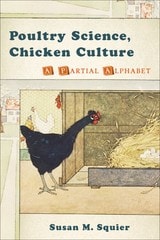
Poultry Science, Chicken Culture
A Partial AlphabetSquier, Susan M
Rutgers University Press, 2010
Spanning fascinating and diverse fields, Susan Merrill Squier assesses the chicken as the focus of film, photography, and visual art in many media; details some of the roles played by chickens and eggs in the development of embryology, biology, and regenerative medicine; traces the iconic figure of the chicken (and the chicken thief) in political discourse during the 2008 presidential election; demonstrates the types of knowledge that have been lost as food production moved from small-scale farming to industrial agriculture; investigates the connection between women and chickens; analyzes the fears and risks behind the panic around avian flu; and scrutinizes the role of chicken farming in international development. A combination of personal passion and surprising scholarly information, Poultry Science, Chicken Culture will change forever the way you think about chickens.
Power and Possibility
Essays, Reviews, and InterviewsElizabeth Alexander
University of Michigan Press, 2007
A volume in the Poets on Poetry series, which collects critical works by contemporary poets, gathering together the articles, interviews, and book reviews by which they have articulated the poetics of a new generation.
Elizabeth Alexander is considered one of the country's most gifted contemporary poets, and the publication of her essays in The Black Interior in 2004 established her as an astute critic and cultural commentator as well. Arnold Rampersad has called Alexander "one of the brightest stars in our literary sky . . . a superb, invaluable commentator on the American scene." In this new collection of her essays, reviews, and interviews, Alexander again focuses on African American artistic production, particularly poetry, and the cultural contexts in which it is created and experienced.
The book's first section, "Black Arts 101," takes up the poetry of Paul Laurence Dunbar, Sterling Brown, Lucille Clifton, Gwendolyn Brooks, and Rita Dove (among others); artist Romare Bearden; dancer Bill T. Jones; and dramatist August Wilson. A second section, "Black Feminist Thinking," provides engaging meditations ranging from "My Grandmother's Hair" and "A Very Short History of Black Women and Food" to essays on the legacies of Toni Cade, Audre Lorde, and June Jordan. The collection's final section, "Talking," includes interviews, a commencement address---"Black Graduation"---and the essay "Africa and the World."
Elizabeth Alexander received a B.A. from Yale University, an M.A. from Boston University, and a Ph.D. in English from the University of Pennsylvania. She has published four books of poems: The Venus Hottentot (1990); Body of Life (1996); Antebellum Dream Book (2001); and, most recently, American Sublime (2005), which was one of three finalists for the Pulitzer Prize. Her play, Diva Studies, was produced at the Yale School of Drama. She is presently Professor of American and African American Studies at Yale University.
Power, Culture and Place
Essays on New York CityJohn H. Mollenkopf
Russell Sage Foundation, 1988
Power, Trust, and Meaning
Essays in Sociological Theory and AnalysisS. N. Eisenstadt
University of Chicago Press, 1995
Framed by a new introduction and an extensive epilogue, which are themselves important statements about processes of institutional formations and cultural creativity, the essays trace the major developments of contemporary sociological theory and analysis. Examining themes of trust and solidarity among immigrants, youth groups, and generations, and in friendships, kinships, and patron-client relationships, Eisenstadt explores larger questions of social structure and agency, conflict and change, and the reconstitution of the social order. He looks also at political and religious systems, paying particular attention to great historical empires and the major civilizations.
United by what they reveal about three major dimensions of social life—power, trust, and meaning—these essays offer a vision of culture as both a preserving and a transforming aspect of social life, thus providing a new perspective on the relations between culture and social structure.

Pre-Text/Text/Context
Essays on Nineteenth-Century French LiteratureEdited by Robert L. Mitchell
The Ohio State University Press, 1900
Precision and Soul
Essays and AddressesRobert Musil
University of Chicago Press, 1990
Best known as author of the novel The Man without Qualities, Robert Musil wrote these essays in Vienna and Berlin between 1911 and 1937. Offering a perspective on modern society and intellectual life, they are concerned with the crisis of modern culture as it manifests itself in science and mathematics, capitalism and nationalism, the changing roles of women and writers, and more. Writing to find his way in a world where moral systems everywhere were seemingly in decay, Musil strives to reconcile the ongoing conflict between functional relativism and the passionate search for ethical values.
Robert Musil was born in 1880 and died in 1942. His first novel, Young Törless, is available in English. A new two-volume translation by Burton Pike and Sophie Wilkins of The Man without Qualities is forthcoming from Alfred A. Knopf.
"Now we have these thirty-one invaluable and entertaining pieces, from an article on 'The Obscene and Pathological in Art' to the equally provocative talk 'On Stupidity,' which, with a new translation of The Man without Qualities forthcoming . . . amount to a literary event for the reader of English comparable to Constance Garnett's massive translation of Chekhov's stories."—Joseph Coates, Chicago Tribune
"Musil is one of the few great moderns, one of the handful who ventured to confront the issues that shape and define our time. . . . He has a range and a striking capacity every bit as great as that of Mann, Joyce, or Beckett."—Boston Review
"These essays are crucial in understanding a writer and critic whose lifelong task was an attempt to resolve the dichotomy between the precision of scientific form and the soul—the matter of life and art."—Choice
Predecessors, Et Cetera
EssaysAmy Clampitt
University of Michigan Press, 1991
Predicting Politics
Essays in Empirical Public ChoiceW. Mark Crain and Robert D. Tollison, Editors
University of Michigan Press, 1990
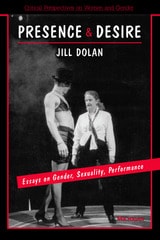
Presence and Desire
Essays on Gender, Sexuality, PerformanceJill Dolan
University of Michigan Press, 1993
This book critically bridges feminist theory and theatrical practice. Dolan examines how performance can subvert normative constructs of gender and sexuality. The collection evaluates mainstream theater, academic stages, subcultural venues, and performance in daily life. It centers sexuality as a primary analytical framework to explore queer visibility and cultural representation. It bridges contemporary feminist theory, poststructuralism, and theatrical practice and places sexuality at the center of its analytical framework to explore how theatrical representation can subvert normative constructs of gender and desire. Dolan evaluates a vast spectrum of performance spaces—ranging from mainstream professional and academic stages to subcultural venues, pornography, and everyday social interactions—to champion queer visibility and claim recognition for women's bodies. Ultimately, the volume functions as a foundational text in performance studies and LGBTQ+ cultural criticism, demonstrating how deliberate theatrical strategies can provoke American culture to actively dismantle and reimagine its traditional social relations
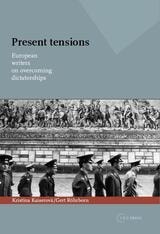
Present Tensions
European Writers on Overcoming DictatorshipsKristina Kaiserová
Central European University Press, 2009

Presenting the Past
Essays on History and the PublicRoy Rosenzweig
Temple University Press, 1986
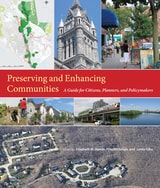
Preserving and Enhancing Communities
A Guide for Citizens, Planners, and PolicymakersElisabeth M. Hamin
University of Massachusetts Press, 2007
This book starts from the premise that each community chooses its future every day, through the incremental decisions made by planning and zoning boards and other citizen volunteers, as well as professional staff. The challenge is to ensure that these decisions support the preservation of what is special about the community, while still fostering necessary and appropriate growth.
In this volume, twenty-nine experts from a variety of fields describe in very practical terms the “community preservation” approach to these issues. As opposed to the top-down regulatory mechanisms that are sometimes used to manage growth, the contributors favor a more flexible, locally based approach that has proven successful in Massachusetts and elsewhere. They show how residents can be empowered to become involved in local decision-making, building coalitions and expressing their views on a wide range of issues, such as zoning, water and land protection, transportation, historic preservation, economic diversity, affordable housing, and reuse of brown-fields. When done properly, development can enhance the sense of place and provide needed homes and jobs. Done improperly, it can generate sprawl and a multitude of problems.
Preserving and Enhancing Communities will be particularly useful to members of planning and other regulatory boards, as well as students of community planning. The book covers not just typical ways of doing things, but also the full spectrum of innovative and emerging practices. Each chapter includes illustrations and case studies, some from Massachusetts and many from other states. The volume concludes with a set of indicators that communities can use to track their progress in community preservation and enhancement.
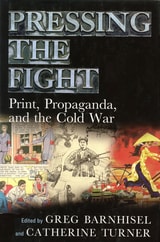
Pressing the Fight
Print, Propaganda, and the Cold WarGreg Barnhisel
University of Massachusetts Press, 2010
In this volume, scholars from a variety of disciplines explore the myriad ways print was used in the Cold War. Looking at materials ranging from textbooks and cookbooks to art catalogs, newspaper comics, and travel guides, they analyze not only the content of printed matter but also the material circumstances of its production, the people and institutions that disseminated it, and the audiences that consumed it. Among the topics discussed are the infiltration of book publishing by propagandists East and West; the distribution of pro-American printed matter in postwar Japan through libraries, schools, and consulates; and the collaboration of foundations, academia, and the government in the promotion of high culture as evidence of the superiority of Western values.
At the same time, many of the qualities that made print the preferred medium of official propaganda also made it an effective instrument for challenging Cold War orthodoxies at home and abroad. Because printed materials were relatively easy to transport, to copy, and to share, they could just as well be used to bridge differences among people and cultures as to exploit them. They also provided a vehicle for disseminating satire and other expressions of dissent.
In addition to the volume editors, contributors include Ed Brunner, Russell Cobb, Laura Jane Gifford, Patricia Hills, Christian Kanig, Scott Laderman, Amanda Laugesen, Martin Manning, Kristin Matthews, Hiromi Ochi, Amy Reddinger, and James Smith. Together their essays move beyond traditional Cold War narratives to gauge the role of a crucial cultural medium in the ideological battle between the superpowers and their surrogates.
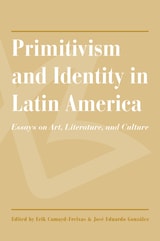
Primitivism and Identity in Latin America
Essays on Art, Literature, and CultureErik Camayd-Freixas
University of Arizona Press, 2000
Although primitivism has received renewed attention in recent years, studies linking it with Latin America have been rare. This volume examines primitivism and its implications for contemporary debates on Latin American culture, literature, and arts, showing how Latin American subjects employ a Western construct to "return the gaze" of the outside world and redefine themselves in relation to modernity.
Examining such subjects as Julio Cortázar and Frida Kahlo and such topics as folk art and cinema, the volume brings together for the first time the views of scholars who are currently engaging the task of cultural studies from the standpoint of primitivism. These varied contributions include analyses of Latin American art in relation to social issues, popular culture, and official cultural policy; essays in cultural criticism touching on ethnic identity, racial politics, women's issues, and conflictive modernity; and analytical studies of primitivism's impact on narrative theory and practice, film, theater, and poetry.
This collection contributes offers a new perspective on a variety of significant debates in Latin American cultural studies and shows that the term primitive does not apply to these cultures as much as to our understanding of them.
CONTENTSParadise Subverted: The Invention of the Mexican Character / Roger Bartra
Between Sade and the Savage: Octavio Paz’s Aztecs / Amaryll Chanady
Under the Shadow of God: Roots of Primitivism in Early Colonial Mexico / Delia Annunziata Cosentino
Of Alebrijes and Ocumichos: Some Myths about Folk Art and Mexican Identity / Eli Bartra
Primitive Borders: Cultural Identity and Ethnic Cleansing in the Dominican Republic / Fernando Valerio-Holguín
Dialectics of Archaism and Modernity: Technique and Primitivism in Angel Rama’s Transculturación narrativa en América Latina / José Eduardo González
Narrative Primitivism: Theory and Practice in Latin America / Erik Camayd-Freixas
Narrating the Other: Julio Cortázar’s "Axolotl" as Ethnographic Allegory / R. Lane Kauffmann
Jungle Fever: Primitivism in Environmentalism; Rómulo Gallegos’s Canaima and the Romance of the Jungle / Jorge Marcone
Primitivism and Cultural Production: Future’s Memory; Native Peoples’ Voices in Latin American Society / Ivete Lara Camargos Walty
Primitive Bodies in Latin American Cinema: Nicolás Echevarría’s Cabeza de Vaca / Luis Fernando Restrepo
Subliminal Body: Shamanism, Ancient Theater, and Ethnodrama / Gabriel Weisz
Primitivist Construction of Identity in the Work of Frida Kahlo / Wendy B. Faris
Mi andina y dulce Rita: Women, Indigenism, and the Avant-Garde in César Vallejo / Tace Megan Hedrick
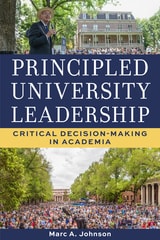
Principled University Leadership
Critical Decision-Making in AcademiaMarc A. Johnson
University of Nevada Press, 2025
Rooted in Johnson’s small-town origins and passion for civic engagement, this narrative offers unique insights into the path to university leadership and the key decisions leaders face. It is an invaluable resource for aspiring and current academic leaders seeking guidance in navigating the complexities of higher education.
Prior to Meaning
The Protosemantic and PoeticsSteve McCaffery
Northwestern University Press, 2000
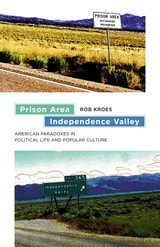
Prison Area, Independence Valley
American Paradoxes in Political Life and Popular CultureRob Kroes
Dartmouth College Press, 2015
Professing Criticism
Essays on the Organization of Literary StudyJohn Guillory
University of Chicago Press, 2022
As the humanities in higher education struggle with a labor crisis and with declining enrollments, the travails of literary study are especially profound. No scholar has analyzed the discipline’s contradictions as authoritatively as John Guillory. In this much-anticipated new book, Guillory shows how the study of literature has been organized, both historically and in the modern era, both before and after its professionalization. The traces of this volatile history, he reveals, have solidified into permanent features of the university. Literary study continues to be troubled by the relation between discipline and profession, both in its ambivalence about the literary object and in its anxious embrace of a professionalism that betrays the discipline’s relation to its amateur precursor: criticism.
In a series of timely essays, Professing Criticism offers an incisive explanation for the perennial churn in literary study, the constant revolutionizing of its methods and objects, and the permanent crisis of its professional identification. It closes with a robust outline of five key rationales for literary study, offering a credible account of the aims of the discipline and a reminder to the professoriate of what they already do, and often do well.
Promise of Justice
Essays on Brown v. Board of EducationMac A. Stewart
The Ohio State University Press, 2008
Prophecy in Politics
Or, the Wigram AspectKenneth Weisbrode
Haus Publishing, 2026
Ralph Wigram was a minor British bureaucrat who is known to a small part of posterity only because Winston Churchill paid tribute to him as the man who warned of the Nazi threat with such persistence, conviction, and hard evidence that Churchill had the wherewithal to make the case to the British people. Wigram died at the end of 1936, just before the war he warned against had begun. He might have changed the course of history—if only people had believed him.
Prophets like Wigram are a permanent fixture of a world without certainty. Oracles, shamans, wiseacres, astrologers, and swamis of all shades populate our myths, legends, and Bibles. Today, our lives are inundated with the wisdom of professional forecasters, intelligence analysts, and threat mongers. Why do many of us, and especially our leaders, find it so difficult to heed warnings? We tend to underreact to some, overreact to others, and then point fingers when what “nobody ever anticipated” comes to pass. Why is prophecy so dogged?
Prophecy in Politics takes up a vast, complex, and well-worn subject—the future—and reduces it to its most essential aspects, especially belief. It revisits a half-dozen familiar and not-so-familiar incidents of prophecy, from the warnings given to Stalin about Operation Barbarossa to those given to Bill Clinton and George W. Bush about “terrorism,” to the Cassandras periodically promising collapse in the financial markets, to uncover a pattern of complacency and neglect. Finally, Ken Weisbrode proposes what all of us might do to overcome complacency and make prophecy work better for us. This is not a handbook or an attempt to stand in the vanguard of political or strategic thought on futurism, futures studies, or futurology; rather, it is a concise overview and an idiosyncratic but nevertheless useful guide to thinking about the past and present condition of prophecy.

Protect Yourself at All Times
An Inside Look at Another Year in BoxingThomas Hauser
University of Arkansas Press, 2018
—Booklist
Each year, readers, writers, and critics alike anticipate Thomas Hauser’s newest collection of articles about the contemporary boxing scene, where his award-winning investigative journalism is on display. The annual retrospective of the previous year in boxing is always a notable moment in the sport that no one knows better than Hauser.
Protect Yourself at All Times offers a behind-the-scenes look at Floyd Mayweather vs. Conor McGregor, dressing room reports from big fights like Canelo Alvarez vs. Gennady Golovkin, and compelling portraits of luminaries like Muhammad Ali, Joe Louis, Mike Tyson, and Don King, all filtered through the perspective of a true champion of boxing.
Public Philosophy and Patriotism
Essays on the Declaration and UsPaul Seaton
St. Augustine's Press, 2024
Paul Seaton’s Public Philosophy and Patriotism: The Declaration and Us is a very countercultural book. It advances the provocative thesis that not only is the Declaration worthy of our study today, but its principles and way of thinking about politics can and should be used to judge us and our politics today. That’s countercultural. While conservatives still have a warm place for the document in their hearts, one rarely hears them apply it to today’s debates. Progressives tend to take two contradictory tacks toward the founding document: on one hand, it’s the negligible product of hypocritical white males, on another, it limns the “ideals” and “values” of the American project that History is charged with fulfilling. Neither of these views takes the document intellectually seriously. Jefferson, however, articulated a different view when he called the Declaration “an expression of the American mind” at the time of the Revolution. Here was a self-conscious, self-confident American mind, ready to take on the world. Taking his cue from Jefferson, Seaton takes the Declaration seriously. He takes it seriously as the expression of a mind that confidently judged despotic designs, but also grasped the principles of free government and free and reasonable politics and looked forward to a country embodying them. Seaton argues that both these dimensions of Declaration political thought are applicable today.
He does so in an interesting way. For a number of years, he penned a Fourth of July essay on “the Declaration and Us” for the Law & Liberty website. On that occasion, he provided an exposition of some theme of the Declaration and applied it to a contemporary debate or issue. Over the years, they added up to a rather full exposition of the document, as well as an ongoing commentary on American political life. With this collection, the essentials of the Declaration’s view of politics are laid bare, and significant threats to freedom-loving Americans are identified. This is the bold claim and aim of this unique book.
At the beginning and end of the collection, Seaton makes a point of dating the completion of the manuscript on April 18th. When the curious reader looks up the date, he finds that it is the date when Paul Revere undertook his famous ride. In this way, the author indicates his judgment of the dire circumstances in which we live today and the patriotic models to which he hearkens. In the form of an explication de texte, this collection is a call to arms against today’s enemies of ordered liberty.
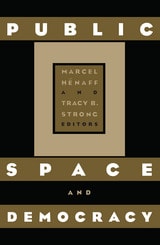
Public Space And Democracy
Marcel Henaff
University of Minnesota Press, 2001
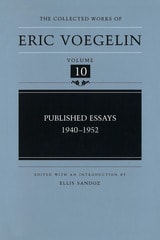
Published Essays, 1940-1952 (CW10)
Eric Voegelin & Edited & Intro by Ellis Sandoz.
University of Missouri Press, 2000
Published Essays, 1940-1952, includes some of Eric Voegelin's most provocative and interesting essays. Containing his first publications after he fled Vienna and settled in the United States following Hitler's annexation of Austria, this volume provides eyewitness commentary on the rise of National Socialism from the first days of World War II onward. A major study entitled "Growth of the Race Idea" presents a masterful summary of the two volumes on that subject Voegelin first published in 1933. A related essay of wide interest is entitled "Nietzsche, the Crisis, and the War."
Another facet of Voegelin's thought incorporated within this volume of the Essays is his extraordinary analysis of the diplomatic correspondence conducted between the Western powers, the papacy, and the Great Khans, whose breathtaking expansion of the Mongol Empire for a time threatened to extinguish Western civilization itself and resulted in a two-century domination of Russia. Another major study is "The Origins of Scientism," an illuminating analysis of the grounds of much of modern philosophy and of all modern political ideologies.
There are also surveys of the state of political theory in the late forties, penetrating studies of utopian thought with essays on Thomas More and Goethe, and a concluding essay that explores the intricacies of "Gnostic Politics"—a familiar theme from Voegelin's contemporaneous New Science of Politics. This volume of published essays shows Eric Voegelin at his most accessible best.