Results by title
2706 books match the query 'European' and 147 start with p
Plague Writing in Early Modern England
Ernest B. Gilman
University of Chicago Press, 2009
During the seventeenth century, England was beset by three epidemics of the bubonic plague, each outbreak claiming between a quarter and a third of the population of London and other urban centers. Surveying a wide range of responses to these epidemics—sermons, medical tracts, pious exhortations, satirical pamphlets, and political commentary—Plague Writing in Early Modern England brings to life the many and complex ways Londoners made sense of such unspeakable devastation.
Ernest B. Gilman argues that the plague writing of the period attempted unsuccessfully to rationalize the catastrophic and that its failure to account for the plague as an instrument of divine justice fundamentally threatened the core of Christian belief. Gilman also trains his critical eye on the works of Jonson, Donne, Pepys, and Defoe, which, he posits, can be more fully understood when put into the context of this century-long project to “write out” the plague. Ultimately, Plague Writing in Early Modern England is more than a compendium of artifacts of a bygone era; it holds up a distant mirror to reflect our own condition in the age of AIDS, super viruses, multidrug resistant tuberculosis, and the hovering threat of a global flu pandemic.

Planets in Peril
A Critical Study of C. S. Lewis's Ransom TrilogyDavid C. Downing
University of Massachusetts Press, 1992
A critical study of C.S. Lewis's “Ransom Trilogy” which analyses Lewis's methods and meanings, concentrating on this trilogy but also including relevant secondary work. Lewis's literary scholarship and display of Christian values are incorporated into this discussion.
Play in the Age of Goethe
Theories, Narratives, and Practices of Play around 1800Edgar Landgraf
Bucknell University Press, 2020
Published by Bucknell University Press. Distributed worldwide by Rutgers University Press.
Playing Dirty
Sexuality and Waste in Early Modern ComedyWill Stockton
University of Minnesota Press, 2010
Noting that psychoanalysis has traditionally operated in a paranoid framework that relentlessly produces evidence of the same “truths,” Stockton turns to a minority practice in psychoanalysis—associated with Jean Laplanche—to develop a more “playful” analytic for literary studies. This analytic brings together different discourses of sexuality and the body and allows individual writings to reform psychoanalytic wisdom about sexuality, waste, and comedy. Through original explorations of works by William Shakespeare, Ben Jonson, Sir John Harington, Thomas Nashe, and Geoffrey Chaucer, Stockton further encourages the reconciliation of psychoanalysis and queer historicism. He focuses in large part on the less-often-read texts of the early modern English canon, assessing the ways in which these books have been purged from the canon in the name of generic purity.
Playing Dirty builds on recent calls by Renaissance and medieval queer scholars for a method of literary analysis that is less constrained by the boundaries of periodicity and the supposed exigencies of historicism. To take Playing Dirty seriously is to accept its invitation to “play”—to queerly disrupt the modern divide in moving promiscuously between texts past and present.
Plays
Luigi Pirandello
Northwestern University Press, 1998
“How has the art of theater managed to survive at all into the era of modernism and the era of what is currently, however ineptly, called postmodernism?” asks preeminent theater scholar Eric Bentley. “Through the work of [Luigi] Pirandello, I should think, more than any other single individual.”
Bentley’s English versions of four of Pirandello’s most celebrated plays—collected here for the first time—capture the playwright’s voice with remarkable perception. He has provided texts that are the standard for American productions, sensitive both to what is uniquely “Sicilian” in Pirandello’s language and to the rigors of the American stage.
Along with Pirandello’s better-known works, Six Characters in Search of an Author, Emperor Henry, and Right You Are, this edition includes the widely performed The Man with the Flower in His Mouth, unavailable in any other collection.
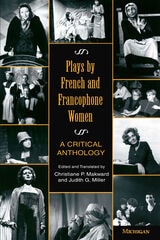
Plays by French and Francophone Women
A Critical AnthologyChristiane P. Makward and Judith G. Miller, Editors
University of Michigan Press, 1994
Plays by French and Francophone Women presents eight recent plays by contemporary French and francophone women writers. The plays vary in style and form from the satirical to the poetic, from the comedic one-woman show to the potential multi-media esoteric production, and have been written by French, Qué becois, Acadian, and Caribbean francophone writers. The editors have provided informative headnotes to introduce each play, then faithful translations rendered with an ear toward production in English. A general introduction to the volume situates each work within the broader context of contemporary French-language theater by women. The volume also includes an annotated bibliography by Cynthia Running-Johnson of thirty-one additional plays by women in French.
Featured plays and playwrights are The Scent of Sulphur by S. Corinna Bille; When Fairies Thirst by Denise Boucher; Island Memories by Ina Césaire; Warmth: A Bloodsong by Chantal Chawaf; The Goddess Lar or Centuries of Women by Andrée Chedid; The Name of Oedipus: Song of the Forbidden Body by Hélène Cixous; The Table: Womenspeak by Michèle Foucher; and The Rabble by Antonine Maillet.
Pleasures in Socialism
Leisure and Luxury in the Eastern BlocDavid Crowley
Northwestern University Press, 2012
Much has been written about the workings of communist governments in the USSR and the Soviet bloc, yet there is still a great deal to explore regarding their relationship to the everyday lives of the citizens living under them. This third volume builds on the editors’ Style and Socialism and Socialist Spaces, showing how the rise of consumer culture took a unique form in these countries.
Essays from top scholars address topics ranging from fashion and game shows to smoking and camping. The authors of the essays in this collection investigate the ways in which pleasurable activities, like many other facets of daily life, were both a space in which these communist governments tried to insinuate themselves and thereby further expand the reach of their authority,
and also an opportunity for people to assert their individuality.
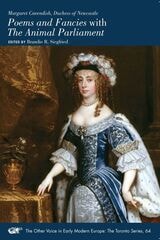
Poems and Fancies with The Animal Parliament
Margaret Cavendish, Duchess of Newcastle
Iter Press, 2018
The Other Voice in Early Modern Europe. The Toronto Series: Volume 64

Poems and Meditations
Anne Bradstreet
Iter Press, 2019
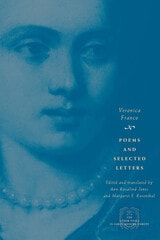
Poems and Selected Letters
Veronica Franco
University of Chicago Press, 1998
As an "honored courtesan", Franco made her living by arranging to have sexual relations, for a high fee, with the elite of Venice and the many travelers—merchants, ambassadors, even kings—who passed through the city. Courtesans needed to be beautiful, sophisticated in their dress and manners, and elegant, cultivated conversationalists. Exempt from many of the social and educational restrictions placed on women of the Venetian patrician class, Franco used her position to recast "virtue" as "intellectual integrity," offering wit and refinement in return for patronage and a place in public life.
Franco became a writer by allying herself with distinguished men at the center of her city's culture, particularly in the informal meetings of a literary salon at the home of Domenico Venier, the oldest member of a noble family and a former Venetian senator. Through Venier's protection and her own determination, Franco published work in which she defended her fellow courtesans, speaking out against their mistreatment by men and criticizing the subordination of women in general. Venier also provided literary counsel when she responded to insulting attacks written by the male Venetian poet Maffio Venier.
Franco's insight into the power conflicts between men and women and her awareness of the threat she posed to her male contemporaries make her life and work pertinent today.
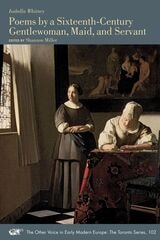
Poems by a Sixteenth-Century Gentlewoman, Maid, and Servant
Isabella Whitney
Iter Press, 2023
Isabella Whitney (c. 1547–after 1624) was the first English woman to publish original secular poetry under her own name. She published two poetic miscellanies of poems: The Copy of a Letter (1567) and A Sweet Nosegay (1573), which include her own work as well as a total of six poems by five different male authors. This edition of her writings prints modernized texts of the complete miscellanies and adds to them six poems attributed to Whitney by largely twentieth-century critics. These poems provide a rich portrait of sixteenth-century female courtship and its dangers, a unique view of class and gender in Whitney’s lifetime, and a portrait of London as a burgeoning market of practical goods and luxury items from foodstuffs to imported silk.
Poems in Absentia & Poems from The Island and the World
Pedro da Silveira, Translated by George Monteiro
Tagus Press, 2019
Poems, 1922-1961
Donald Davidson
University of Minnesota Press, 1966
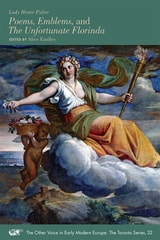
Poems, Emblems, and The Unfortunate Florinda
Lady Hester Pulter
Iter Press, 2014
Poetic Relations
Intimacy and Faith in the English ReformationConstance M. Furey
University of Chicago Press, 2017
As Furey demonstrates, John Donne, George Herbert, Anne Bradstreet, and others describe inner lives that are surprisingly crowded, teeming with human as well as divine companions. The same early modern writers who bequeathed to us the modern distinction between self and society reveal here a different way of thinking about selfhood altogether. For them, she argues, the self is neither alone nor universally connected, but is forever interactive and dynamically constituted by specific relationships. By means of an analysis equally attentive to theological ideas, social conventions, and poetic form, Furey reveals how poets who understand introspection as a relational act, and poetry itself as a form ideally suited to crafting a relational self, offer us new ways of thinking about selfhood today—and a resource for reimagining both secular and religious ways of being in the world.

Poetic Writing and the Vietnam War in West Germany
On fireMererid Puw Davies
University College London, 2023
Though the Vietnam War did not directly involve West Germany, it was nonetheless a decisive catalyst for the era’s wider protest movements in that country, and it gave rise to an ardent anti-war discourse. Poetry and poetic writing were key to anti-war work. Hundreds of poems and related writings about Vietnam circulated in West Germany, yet they are almost entirely forgotten today. Poetic Writing and the Vietnam War in West Germany uncovers and explores some of that rich artistic production in order to present a new history of engaged poetic writing in West Germany in the 1960s and 1970s and to draw out distinctive characteristics of wider protest culture. In doing so, it makes the case for attending to marginal, non-canonical, or neglected literary and cultural forms, and for critical thinking about why they might, over time, have been obscured. The book also offers a case study for reflection on the representation of war, on ways in which German oppositional culture could imagine its others, and on the relationship of poetry to the historical world.
Poetics Of Plot
The Case of English Renaissance DramaThomas Pavel
University of Minnesota Press, 1985
Thomas Pavel has written extensively on poetics, linguistics, and narratology. In this book he proposes an original theory and methodology of plot analysis—a reading that draws upon the most fruitful aspects of literary structuralism and upon contemporary linguistic models (specifically generative grammar). Theorists have tended to use formal plot analysis to examine relatively simple literary artifacts, like folk tales and short stories; Pavel, however, applies his model to a group of English Renaissance tragedies and demonstrates that plot analysis can make a major contribution to the understanding of sophisticated literary texts.
Pavel leads the reader through step-by-step analyses of increasingly complex plot structures as he explicates Marlowe’s Tamburlaine I, the Jew of Malta, Doctor Faustus and Edward the Second; Kyd’s Spanish Tragedy; The Arden Feversham; and, finally, Shakespeare’s King Lear. He has chosen these plays for their chronological proximity, yet their diversity allows for contrasts and typological considerations. The inclusion of most of Marlowe’s tragedies enables Pavel to gain new insights into a single writer’s strategies of plot construction.The Poetics of Plot moves beyond the establishment and application of a new theory of plot to address broader issues in cultural studies: the role of linguistic models in literary studies, the nature and function of agency in plot advancement and history, the universal features of plot organization, and the relation of plot patterns to period styles and dominant modes of organized knowledge. In his foreword to The Poetics of Plot, Wlad Godzich sketches the historical context in which Pavel’s discussion of plot appears and makes explicit the way that the study of plot challenges both the presuppositions of linguistic analysis and the status of action in philosophical thought.
Poetics of Relation
Édouard Glissant
University of Michigan Press, 1997
In Poetics of Relation, Glissant turns the concrete particulars of Caribbean reality into a complex, energetic vision of a world in transformation. He sees the Antilles as enduring suffering imposed by history, yet as a place whose unique interactions will one day produce an emerging global consensus. Arguing that the writer alone can tap the unconscious of a people and apprehend its multiform culture to provide forms of memory capable of transcending "nonhistory," Glissant defines his "poetics of relation"--both aesthetic and political--as a transformative mode of history, capable of enunciating and making concrete a French-Caribbean reality with a self-defined past and future. Glissant's notions of identity as constructed in relation and not in isolation are germane not only to discussions of Caribbean creolization but also to our understanding of U.S. multiculturalism. In Glissant's view, we come to see that relation in all its senses--telling, listening, connecting, and the parallel consciousness of self and surroundings--is the key to transforming mentalities and reshaping societies.
This translation of Glissant's work preserves the resonating quality of his prose and makes the richness and ambiguities of his voice accessible to readers in English.
"The most important theoretician from the Caribbean writing today. . . . He is central not only to the burgeoning field of Caribbean studies, but also to the newly flourishing literary scene in the French West Indies." --Judith Graves Miller, University of Wisconsin, Madison
Édouard Glissant is Distinguished Professor of French at City University of New York, Graduate Center. Betsy Wing's recent translations include Lucie Aubrac's Outwitting the Gestapo (with Konrad Bieber), Didier Eribon's Michel Foucault and Hélêne Cixous's The Book of Promethea.
Poetry Of Resistance
Seamus HeaneySidney Burris
Ohio University Press, 1990
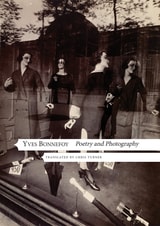
Poetry and Photography
Yves Bonnefoy
Seagull Books, 2017
Bonnefoy's compact essay focuses on one of the disturbing effects of the earliest photographs: their introduction of a notion of non-being—if not, indeed, nothingness—into the world of images. But it also foregrounds a tale which seems to have picked up figuratively on this effect and examined its dangers with a sense of horror: Guy de Maupassant’s extraordinary short story “The Night,” one of the nightmarish works of his last period of conscious creation.
Poetry as a Way of Life
Aesthetics and Askesis in the German Eighteenth CenturyGabriel Trop
Northwestern University Press, 2014
What would it mean to make a work of art the focal point of one’s life practice? Poetry as a Way of Life goes back to the origins of aesthetics as a philosophical discipline in the early eighteenth century in order to uncover an understanding of the work of art as an exercise of the self. Engaging in close readings of works by both canonical and less well-known eighteenth-century German poets such as Friedrich Holderlin, Novalis, Friedrich von Hagedorn, and Johann Wilhelm Ludwig Gleim, Gabriel Trop illustrates the ways in which these authors tap into the potential of poetic form to redefine the limits of human perception and generate alternative ways of being in the world.
Poetry in Exile
Czech Poets during the Cold War and the Western Poetic TraditionJosef Hrdlicka
Karolinum Press, 2021
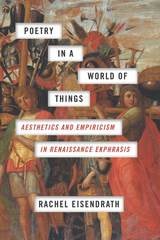
Poetry in a World of Things
Aesthetics and Empiricism in Renaissance EkphrasisRachel Eisendrath
University of Chicago Press, 2018
In Poetry in a World of Things, Rachel Eisendrath explores how poetry responded to this new detachment by becoming a repository for a more complex experience of the world. The book focuses on ekphrasis, the elaborate literary description of a thing, as a mode of resistance to this new empirical objectivity. Poets like Petrarch, Spenser, Marlowe, and Shakespeare crafted highly artful descriptions that recovered the threatened subjective experience of the material world. In so doing, these poets reflected on the emergence of objectivity itself as a process that was often darker and more painful than otherwise acknowledged. This highly original book reclaims subjectivity as a decidedly poetic and human way of experiencing the material world and, at the same time, makes a case for understanding art objects as fundamentally unlike any other kind of objects.
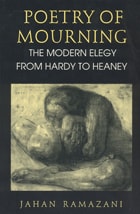
Poetry of Mourning
The Modern Elegy from Hardy to HeaneyJahan Ramazani
University of Chicago Press, 1994
Through subtle readings of elegies, self-elegies, war poems, and the blues, Ramazani greatly enriches our critical understanding of a wide range of poets, including Thomas Hardy, Wilfred Owen, Wallace Stevens, Langston Hughes, W. H. Auden, Sylvia Plath, and Seamus Heaney. He also interprets the signal contributions to the American family elegy of Robert Lowell, Allen Ginsberg, Anne Sexton, John Berryman, Adrienne Rich, Michael Harper, and Amy Clampitt. Finally, he suggests analogies between the elegy and other kinds of contemporary mourning art—in particular, the AIDS Memorial Quilt and the Vietnam Veterans Memorial.
Grounded in genre theory and in the psychoanalysis of mourning, Ramazani's readings also draw on various historical, formal, and feminist critical approaches. This book will be of interest to anyone concerned with the psychology of mourning or the history of modern poetry.
"Consists of full, intelligent and lucid exposition and close reading. . . . Poetry of Mourning is itself a welcome contribution to modern poetry's search for a 'resonant yet credible vocabulary of grief in our time."—Times Literary Supplement
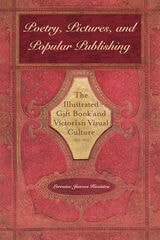
Poetry, Pictures, and Popular Publishing
The Illustrated Gift Book and Victorian Visual Culture, 1855–1875Lorraine Janzen Kooistra
Ohio University Press, 2011
In Poetry, Pictures, and Popular Publishing eminent Rossetti scholar Lorraine Janzen Kooistra demonstrates the cultural centrality of a neglected artifact: the Victorian illustrated gift book. Turning a critical lens on “drawing-room books” as both material objects and historical events, Kooistra reveals how the gift book’s visual/verbal form mediated “high” and popular art as well as book and periodical publication.
A composite text produced by many makers, the poetic gift book was designed for domestic space and a female audience; its mode of publication marks a significant moment in the history of authorship, reading, and publishing. With rigorous attention to the gift book’s aesthetic and ideological features, Kooistra analyzes the contributions of poets, artists, engravers, publishers, and readers and shows how its material form moved poetry into popular culture. Drawing on archival and periodical research, she offers new readings of Eliza Cook, Adelaide Procter, and Jean Ingelow and shows the transatlantic reach of their verses. Boldly resituating Tennyson’s works within the gift-book economy he dominated, Kooistra demonstrates how the conditions of corporate authorship shaped the production and receptionof the laureate’s verses at the peak of his popularity.
Poetry, Pictures, and Popular Publishing changes the map of poetry’s place—in all its senses—in Victorian everyday life and consumer culture.

Poets and Playwrights
Shakespeare, Jonson, Spenser, MiltonElmer Edgar Stoll
University of Minnesota Press, 1967
Poets and Playwrights was first published in 1967. Minnesota Archive Editions uses digital technology to make long-unavailable books once again accessible, and are published unaltered from the original University of Minnesota Press editions.
Poets and Playwrights is a collection of nine essays by the eminent Shakespearean scholar and critic, the late Elmer Edgar Stoll. In this work, which was first published by the University of Minnesota Press in 1930, Professor Stoll presents his maturest consideration of the art of the poets and playwrights of his subtitle—Shakespeare, Jonson, Spenser, and Milton. The most extensive essay, "Shakespeare and the Moderns," includes, in Mr. Stoll's words, "a review of Shakespeare as I conceive him, in order the better to compare him with those who in some respect or other are his peers."
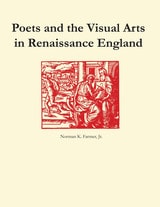
Poets and the Visual Arts in Renaissance England
By Norman K. Farmer, Jr.
University of Texas Press, 1984
In the twentieth century, the pioneering work of such art historians as Erwin Panofsky and Edgar Wind heightened our awareness of the relationship between Renaissance literature and the visual arts. By focusing on that relationship in the work of such poets as Sir Philip Sidney, John Donne, Richard Crashaw, Edmund Waller, and Robert Herrick, Norman K. Farmer, Jr., convincingly shows that they and other writers of the late sixteenth and early seventeenth centuries in England wrote with a lively and creative sense of the visual—a sense richly informed by the theory and practice of Renaissance art.
Farmer begins by describing the powerful visual matrix that underlies the narrative structure of Sidney's New Arcadia. He compares the role of the visual in the poetry of Donne and Ben Jonson, and demonstrates how works by both Thomas Carew and Lord Herbert exhibit poetic invention according to familiar Renaissance pictorial themes. Herrick's Hesperides is shown to be the major seventeenth-century poetic application of the Horatian idea ut pictura poesis.
A special feature of this gracefully written and enlightening volume is Farmer's discussion of Lady Drury's oratory at Hawstead Hall. Published here for the first time are photographs of this uniquely decorated oratory, in which themes from a variety of English and Continental emblem books were painted on the walls of a room apparently designed for private meditation.

Poets as Readers in Nineteenth-Century France
Critical ReflectionsEdited by Joseph Acquisto, Adrianna M. Paliyenko, and Catherine Witt
University of London Press, 2015
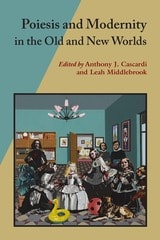
Poiesis and Modernity in the Old and New Worlds
Anthony J. Cascardi
Vanderbilt University Press, 2012
Points of Departure
Samuel Weber between Spectrality and ReadingEdited by Peter Fenves, Kevin McLaughlin, and Marc Redfield
Northwestern University Press, 2016
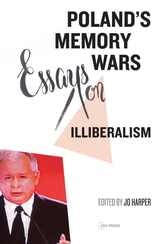
Poland's Memory Wars
Essays on IlliberalismJo Harper
Central European University Press, 2018
This volume of essays and interviews by Polish, British, and American academics and journalists provides an overview of current Polish politics for both informed and non-specialist readers. The essays consider why and how PiS, Law and Justice, the party of Jarosław Kaczynski, returned to power, and the why and how of its policies while in power. They help to make sense of how “history” plays a key role in Polish public life and politics.
The descriptions of PiS in Western media tend to rework old stereotypes about Eastern Europe that had lain dormant for some time. The book addresses the underlying question whether PiS was simply successful in understanding its electorate, and just helped Poland to revert to its normal state. This new Normal seems quite similar to the old one: insular, conservative, xenophobic, and statist.
The book looks at the current struggle between one ‘Poland’ and another; between a Western-looking Poland and an inward-looking Poland, the former more interested in opening to the world, competing in open markets, and working within the EU, and the latter more concerned with holding onto tradition.
The question of illiberalism has gone from an ‘Eastern’ problem (Russia, Turkey, Hungary, etc.) to a global one (Brexit and the U.S. elections). This makes the very specific analysis of Poland’s illiberalism applicable on a broader scale.
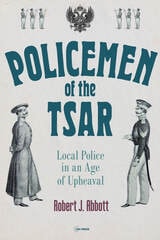
Policemen of the Tsar
Local Police in an Age of UpheavalRobert J. Abbott
Central European University Press, 2022
Founded by Peter the Great in 1718, Russia’s police were key instruments of tsarist power. In the reign of Alexander II (1855-1881), local police forces took on new importance. The liberation of 23 million serfs from landlord control, growing fear of crime, and the terrorist violence of the closing years challenged law enforcement with new tasks that made worse what was already a staggering burden. (“I am obliged to inform Your Imperial Highness that the police often fail to carry out their assignments and, when they do execute them, they do so poorly because of their moral corruption…”) This book describes the regime’s decades-long struggle to reform and strengthen the police. The author reviews the local police’s role and performance in the mid-nineteenth century and the implications of the largely unsuccessful effort to transform them. From a longer-term perspective, the study considers how the police’s systemic weaknesses undermined tsarist rule, impeded a range of liberalizing reforms, perpetuated reliance on the military to maintain law and order, and gave rise to vigilante justice.
While its primary focus is on European Russia, the analysis also covers much of the imperial periphery, discussing the police systems in the Baltic Provinces, Congress Poland, the Caucasus, Central Asia, and Siberia.
Polish Literature and the Holocaust
Eyewitness Testimonies, 1942–1947Rachel Feldhay Brenner
Northwestern University Press, 2019
Polish Literature and the Holocaust: Eyewitness Testimonies,1942–1947 is a particularly timely book in view of the continuing debate about the attitudes of Poles toward the Jews during the war. The literary voices from the past that Brenner examines posit questions that are as pertinent now as they were then. And so, while this book speaks to readers who are interested in literary responses to the Holocaust, it also illuminates the universal issue of the responsibility of witnesses toward the victims of any atrocity.
Political Aesthetics in the Era of Shakespeare
Edited by Christopher Pye
Northwestern University Press, 2020
Taking up this expansive conception of aesthetics, Political Aesthetics in the Era of Shakespeare suggests that the political stakes of the literary work—and Shakespeare’s work in particular—extend from the most intimate dimensions of affective response to the problem of the grounds of political society. The approaches to aesthetic thought included in this volume explore the intersections between the literary work and the full range of concerns animating the field today: political philosophy, affect theory, and ecocritical analysis of environs and habitus.
Political Appetites
Food in Medieval English RomanceAaron Hostetter
The Ohio State University Press, 2017
If humanity has attempted through its brief history to render the material world edible, then food and food practice not only influence our aspirations but also shift focus to the limits of human existence on this planet. In studying the foodways of the past as a fundamental economic activity, Political Appetites questions contemporary attitudes towards consumption as their proliferation and abuses create social inequities, menace ecosystems, and threaten to bring about the end of the Anthropocene Era.
Political Landscape
The Art History of NatureMartin Warnke
Reaktion Books, 2004
The Political Landscape is underpinned with a fascinating array of examples and illustrations, many of which will be new even to experts in the art of landscape and related disciplines.
Political Theology and Early Modernity
Edited by Graham Hammill and Julia Reinhard Lupton
University of Chicago Press, 2012

Politicized Property
Network Ties and Renationalization in SerbiaMiloš Resimic
University of Michigan Press, 2027
Politicized Property analyzes the under-researched phenomenon of renationalization—the return of previously privatized firms to state ownership. Highlighting the evolving relationship between political parties and firms, the book demonstrates that renationalization of newly privatized firms is influenced by varying patterns of their embeddedness in political and ownership networks operating within the context of political and institutional uncertainty. These ownership reversals underpin the construction of new political and social orders and have far-reaching consequences for democratic governance. By placing renationalization at the center of postcommunist transformation, Miloš Resimić also links it to contemporary processes of democratic backsliding.
Using Serbia as a case study, Resimić tests the argument with an original administrative dataset tracking political affiliations and ownership structures of 125 strategic Serbian firms privatized through tender sale, complemented by in-depth case studies and interviews with oligarchs, politicians, and bureaucrats. Tracing over a decade of political and ownership ties among strategic Serbian firms, the book uncovers the micro-level foundations of renationalization. To demonstrate that these dynamics are observable across the postcommunist world and beyond, comparative chapters extend the analysis to Hungary under Viktor Orbán, Poland, Montenegro, and Argentina, showing that reversals of privatization are integral to the political economy of postcommunist capitalism.

Politicizing Islam in Austria
The Far-Right Impact in the Twenty-First CenturyFarid Hafez
Rutgers University Press, 2024
Politicizing Islam in Austria examines this anti-Muslim swerve in Austrian politics through a comprehensive analysis of government policies and regulations, as well as party and public discourses. In their innovative study, Hafez and Heinisch show how the far-right Austrian Freedom Party (FPÖ) adapted anti-Muslim discourse to their political purposes and how that discourse was then appropriated by the conservative center-right Austrian People’s Party (ÖVP). This reconfiguration of the political landscape prepared the way for a right-wing coalition government between conservatives and far-right actors that would subsequently institutionalize anti-Muslim political demands and change the shape of the civic conditions and public perceptions of Islam and the Muslim community in the republic.
Politics and History in William Golding
The World Turned Upside DownPaul Crawford
University of Missouri Press, 2002

Politics of James Connolly
Kieran Allen
Pluto Press, 1990
Kieran Allen breaks this mould, assessing the founder of the Irish Marxist movement ideas from a revolutionary socialist perspective. Allen considers the strengths and weaknesses of Connolly’s revolutionary strategy, the effect of his commitment to international socialism on his nationalist loyalties and arguing that, ultimately, Connolly's enduring relevance derives from his anti-imperialism. Any socialist movement today ignores this book at its peril.
Pompadour's Medium
Luxury and Reproduction in Eighteenth-Century FranceSusan M. Wager
University of Delaware Press, 2027
Pompadour's Medium reveals the depth of patron, amateur artist, and royal mistress Madame de Pompadour's contributions to the visual arts, long dismissed as superficial and trivial. Her artistic activities centered on an innovative exploration of the relationships between painting, sculpture, and the decorative arts at a moment when advances in reproductive printmaking threatened to flatten the differences between individual mediums. Eighteenth-century France experienced an unprecedented surge in the circulation of images. Increasingly faithful and affordable reproductive prints introduced works of art to ever-widening audiences, while a culture of reproduction was simultaneously thriving at the highest end of the artistic and economic spectrum—in luxury media, such as ceramics, textiles, and metalwork. This book recovers the pivotal role of luxury reproduction in Pompadour’s artistic endeavors, and her essential role in cultivating the intermedial approach of her frequent collaborator, painter François Boucher, who tended to think between media. It is only by restoring the centrality of reproductive media in this artist-patron relationship that we can understand the magnitude of Pompadour’s and Boucher’s contributions to the history of modern art.
Poor Tom
Living "King Lear"Simon Palfrey
University of Chicago Press, 2014
In Poor Tom, Simon Palfrey asks us to go beyond any such received understandings—and thus to experience King Lear as never before. He argues that the part of Edgar is Shakespeare’s most radical experiment in characterization, and his most exhaustive model of both human and theatrical possibility. The key to the Edgar character is that he spends most of the play disguised, much of it as “Poor Tom of Bedlam,” and his disguises come to uncanny life. The Edgar role is always more than one person; it animates multitudes, past and present and future, and gives life to states of being beyond the normal reach of the senses—undead, or not-yet, or ghostly, or possible rather than actual. And because the Edgar role both connects and retunes all of the figures and scenes in King Lear, close attention to this particular part can shine stunning new light on how the whole play works.
The ultimate message of Palfrey’s bravura analysis is the same for readers or actors or audiences as it is for the characters in the play: see and listen feelingly; pay attention, especially when it seems as though there is nothing there.
Porcelain
Poem on the Downfall of My CityDurs Grünbein
Seagull Books, 2020
Porcelain is a book-length cycle of forty-nine poems written over the course of more than a decade that together serve as a lament for Durs Grünbein’s hometown, Dresden, which was destroyed in the Allied firebombing of February 1945. The book is at once a history and “declaration of love” to the famed “Venice on the Elbe,” so catastrophically razed by British bombs; a musical fusion of eyewitness accounts, family memories, and stories, of monuments and relics; the story of the city’s destiny as seen through a prism of biographical enigmas, its intimate relation to the “white gold” porcelain that made its fortune and reflections on the power and limits of poetry. Musical, fractured, ironic, and elegiac, Porcelain is controversial, too, in setting itself against what Grünbein calls the “myth” of the Germans as innocent victims of a war crime. At the same time, it never loses sight of the horror deliberately visited on an unwitting civilian population, nor the devastation that looms so large in the German memory. Published for the first time in English, on the seventy-fifth year anniversary of the firebombing, this edition contains new images, notes, Grünbein’s own reflections, and an additional canto—an extraordinary act of poetic kintsugi for the fractured remains of Dresden’s memory.

Portrait of a Greek Imagination
An Ethnographic Biography of Andreas NenedakisMichael Herzfeld
University of Chicago Press, 1997
Herzfeld explores how personal vision intersects with national cultures by examining the Greek author's novels and recollections as historical accounts. Bringing together the methods of the novelist and the anthropologist in their common concern with both social and lived experience, Herzfeld shows how different perspectives shape the historical record. Nenedakis has endured persecution, exile, imprisonment, and torture under Greece's military dictatorship, and his novels—excerpted here in English for the first time—offer an individual version of historical events. As one of his characters ask, "For was not his life, and are not the lives of all of us, a novel?"
Portrait of a Marriage
Vita Sackville-West and Harold NicolsonNigel Nicolson
University of Chicago Press, 1998
Portraits of the Artist as a Young Woman
Painting and the Novel in France and Britain, 1800–1860Alexandra K. Wettlaufer
The Ohio State University Press, 2011
Portraits of the Queen Mother
Polemics, Panegyrics, LettersCatherine de Médicis and Others
Iter Press, 2014
Post-Authoritarian Cultures
Spain and Latin America's Southern ConeLuis Martín-Estudillo
Vanderbilt University Press, 2008
Post-Communist Mafia State
The Case of HungaryBálint Magyar
Central European University Press, 2016