Results by title
4030 books match the query 'Language Arts & Disciplines' and 204 start with p
Perspectives in Phonology
Edited by Jennifer S. Cole and Charles Kisseberth
CSLI, 1997
Perspectives on Fluency
Heidi Riggenbach
University of Michigan Press, 2000
Section 1, What Is Fluency? presents papers that all describe fluency, but in different ways.
The articles in Section 2, Essential Components of Fluency, consider features or components that contribute to impressions of fluency.
Section 3, Cognitive Processes Underlying Fluency, is devoted to an exploration of the psycholinguistic factors underlying fluency.
Three studies are presented in Section 4, Empirical Studies on Nonnative Fluency, and they exemplify the range of approaches to characterizing learners as fluent or nonfluent in their target language.
One objective of Perspectives on Fluency is to provide a starting point for language researchers interested in exploring the concept of fluency, a foundation that, until the arrival of this volume, did not exist. The book can be useful to those approaching fluency from a language assessment perspective, and those interested in the relationship of fluency to oral proficiency.

Perspectives on Women's Archives
Tanya Zanish-Belcher
American Library Association, 2017

Phantom Politics
Bots, Humans, AI, and Social MediaMina Momeni
Rutgers University Press, 2027
Phantom Politics develops a new framework for understanding how humans, bots, and AI systems interact on social media platforms and structure political communication. Focusing primarily on X (formerly Twitter), it analyzes three cases: the 2017 Women’s March, the 2019 “Build the Wall” discourse, and U.S. federal election discourse in 2024, to demonstrate how X functions not only as a mirror of political trends but also as a driver of change in the digital public sphere. The book shows how political participation is shaped by both authentic political expression and bot-driven narratives. It introduces new concepts to explain how AI-generated political speech can appear human while remaining detached from a human speaker, raising urgent questions about agency, accountability, and political voice. At a time when AI technologies are becoming increasingly integrated into public life, the book examines how emerging forms of automation are reshaping democratic discourse, challenging traditional understandings of participation, and transforming the ways political ideas circulate, gain visibility, and influence public debate.

Phil Jasner "On the Case"
His Best Writing on the Sixers, the Dream Team, and BeyondAndy Jasner
Temple University Press, 2017
Allen Iverson loved Philadelphia Daily News basketball beat reporter Phil Jasner, calling him “the best” in the world of sports journalism. From 1981 until his death in 2010, Jasner was always “on the case,” going to great lengths to track athletes down for a quote or a story. He was most known for covering the team’s famous players, including World B. Free and Bobby Jones, Julius Erving and Moses Malone, Charles Barkley, and, of course, Iverson. His tremendous output was beloved by players and fans alike, earning him many honors, including inductions into six Halls of Fame.
Phil Jasner “On the Case” collects the best of Jasner’s writing throughout his illustrious career. Jasner wrote about baseball, the Eagles, and the Philadelphia Atoms’ soccer with the same insight and aplomb he showed in his coverage of The Big 5, the 76ers’ championship season in 1983, and the Dream Team. Lovingly assembled—each chapter is introduced by some of the most prominent figures Jasner covered, from Vince Papale, Doug Collins, and Billy Cunningham to Iverson and Barkley—this collection recounts a distinguished sportswriter’s remarkable career.
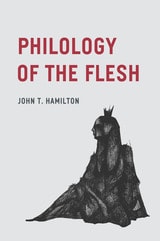
Philology of the Flesh
John T. Hamilton
University of Chicago Press, 2018
In Philology of the Flesh, John T. Hamilton explores writing and reading practices that engage this notion in a range of poetic enterprises and theoretical reflections. By pressing the notion of philology as “love” (philia) for the “word” (logos), Hamilton’s readings investigate the breadth, depth, and limits of verbal styles that are irreducible to mere information. While a philologist of the body might understand words as corporeal vessels of core meaning, the philologist of the flesh, by focusing on the carnal qualities of language, resists taking words as mere containers.
By examining a series of intellectual episodes—from the fifteenth-century Humanism of Lorenzo Valla to the poetry of Emily Dickinson, from Immanuel Kant and Johann Georg Hamann to Friedrich Nietzsche, Franz Kafka, and Paul Celan—Philology of the Flesh considers the far-reaching ramifications of the incarnational metaphor, insisting on the inseparability of form and content, an insistence that allows us to rethink our relation to the concrete languages in which we think and live.

Philosophy in the First Person
A ManifestoHelena de Bres
University of Chicago Press, 0
A bold argument and model for how to bring one’s personal voice and experience into philosophical writing.
Contemporary philosophical writing is deeply impersonal: technical, abstract, and stripped of an individual human voice. In contrast, many of the historical philosophers we most admire saw emotion, style, narrative and humor as essential parts of doing philosophy well. What if they were on to something?
Philosophy in the First Person offers a deft and engaging case for the philosophical personal essay, a genre of writing that unites intimate revelation with intellectual depth and literary flair. As a manifesto, the book argues for a return to the more personal forms of philosophy that preceded academic professionalization. As a guide, it provides substantive advice for aspiring personal-philosophical writers, drawing on ideas from creative nonfiction. As a demonstration, the book is itself a set of philosophical personal essays, tracing one philosopher’s sentimental-intellectual journey through a vocation that frustrates and captivates her in equal measure.
Blending memoir, theory, and model, the book offers a roadmap for writing philosophy that’s enlightening as well as moving, gripping, and fun. Along the way, it makes a refreshing argument for reconnecting a philosophical vocation with a fully human way of life.
Philosophy, Rhetoric, Literary Criticism
(Inter)viewsGary A. Olson
Southern Illinois University Press, 1994
Susan Wells and Reed Way Dasenbrock provide distinctly divergent assessments of the application of Donald Davidson’ s language theory to rhetoric and composition, and especially to writing pedagogy. Patricia Bizzell and John Trimbur explore how Stanley Fish’ s neopragmatism might be useful both to composition theory and to literacy education. And Joyce Irene Middleton and Tom Fox discuss bell hooks’ s notions of how race and gender affect pedagogy. In two frank and sometimes angry responses, Patricia Harkin and Jasper Neel take J. Hillis Miller to task for seeming to support rhetoric and composition while continuing to maintain the political status quo. Similarly, Susan C. Jarratt and Elizabeth A. Flynn express skepticism about Jane Tompkins’ s vocal support of composition and of radical pedagogy particularly. And Arabella Lyon and C. Jan Swearingen analyze Stephen Toulmin’ s thoughts on argumentation and postmodernism.
Internationally respected anthropologist Clifford Geertz provides a foreword; literacy expert Patricia Bizzell contributes an introduction to the text; and noted reader-response critic David Bleich supplies critical commentary.
This book is a follow-up to the editor’ s (Inter)views: Cross-Disciplinary Perspectives on Rhetoric and Literacy, already a major work of scholarship in the field.
Phonetic Symbol Guide
Geoffrey K. Pullum and William A. Ladusaw
University of Chicago Press, 1996
This fully revised second edition incorporates the major revisions to the International Phonetic Alphabet made in 1989 and 1993. Also covered are the American tradition of transcription stemming from the anthropological school of Franz Boas; the Bloch/Smith/Trager style of transcription; the symbols used by dialectologists of the English language; usages of specialists such as Slavicists, Indologists, Sinologists, and Africanists; and the transcription proposals found in all major textbooks of phonetics.
With sixty-one new entries, an expanded glossary of phonetic terms, added symbol charts, and a full index, this book will be an indispensable reference guide for students and professionals in linguistics, phonetics, anthropology, philology, modern language study, and speech science.
Phonetics
A Critical Analysis of Phonetic Theory and a Technique for the Practical Description of SoundsKenneth L. Pike
University of Michigan Press, 1943
Phonology as Human Behavior
Theoretical Implications and Clinical ApplicationsYishai Tobin
Duke University Press, 1997
Tobin describes the methodological connection between phonological theory and phonetics by way of a comprehensive and insightful survey of phonology’s controversial role in twentieth-century linguistics. He reviews the work of Saussure, Jakobson, Troubetzkoy, Martinet, Zipf, and Diver, among others, and discusses issues in distributional phonology through analyses of English, Italian, Latin, Hebrew, and Yiddish. Using his theory to explain various functional and pathological speech disorders, Tobin examines a wide range of deviant speech processes in aphasia, the speech of the hearing-impaired, and other syndromes of organic origin. Phonology as Human Behavior provides a unique set of principles connecting the phylogeny, ontogeny, and pathology of sound systems in human language.
Phonology in the Twentieth Century
Theories of Rules and Theories of RepresentationsStephen R. Anderson
University of Chicago Press, 1985
Picture Books for Children
Fiction, Folktales, and PoetryMary Northrup
American Library Association, 2012
Picturing the World
Informational Picture Books for ChildrenKathleen T. Isaacs
American Library Association, 2012

Pil 58,Center For Learning
Writing Centers & LibrariesJames Elmborg
Assoc of College & Research Libraries, 2011
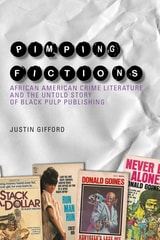
Pimping Fictions
African American Crime Literature and the Untold Story of Black Pulp PublishingJustin Gifford
Temple University Press, 2013
Gifford draws from an impressive array of archival materials to provide a first-of-its-kind literary and cultural history of this distinctive genre. He evaluates the artistic and symbolic representations of pimps, sex-workers, drug dealers, and political revolutionaries in African American crime literature-characters looking to escape the racial containment of prisons and the ghetto.
Gifford also explores the struggles of these black writers in the literary marketplace, from the era of white-owned publishing houses like Holloway House-that fed books and magazines like Players to eager black readers-to the contemporary crop of African American women writers reclaiming the genre as their own.
Pinky Extension and Eye Gaze
Language Use in Deaf CommunitiesCeil Lucas
Gallaudet University Press, 1998
The Sociolinguistics in Deaf Communities Series continues its detailed exploration of language dynamics among deaf people in the fourth entry, Pinky Extension and Eye Gaze: Language Use in Deaf Communities. This volume’s ten meticulously prepared chapters reflect the refinements of research in six major sociolinguistics areas. Rob Hoopes’ work, “A Preliminary Examination of Pinky Extension: Suggestions Regarding Its Occurrence, Constraints, and Function,” commences Part One: Variation with a sound explanation of this American Sign Language (ASL) phonological characteristic. Part Two: Languages in Contact includes findings by Jean Ann on contact between Taiwanese Sign Language and written Taiwanese.
Priscilla Shannon Gutierrez considers the relationship of educational policy with language and cognition in deaf children in Part Three: Language in Education, and in Part Four: Discourse Analysis, Melanie Metzger discusses eye gaze and pronominal reference in ASL. Part Five: Second-Language Learning presents the single chapter “An Acculturation Model for ASL Learners,” by Mike Kemp. Sarah E. Burns defines Irish Sign Language as Ireland’s second minority language after Gaelic, in Part Six: Language Attitudes, the final area of concentration in this rigorously researched volume. These studies and the others by the respected scholars featured in Pinky Extension and Eye Gaze make it an outstanding and eminently valuable addition to this series.
Piracy
The Intellectual Property Wars from Gutenberg to GatesAdrian Johns
University of Chicago Press, 2009
Since the rise of Napster and other file-sharing services in its wake, most of us have assumed that intellectual piracy is a product of the digital age and that it threatens creative expression as never before. The Motion Picture Association of America, for instance, claimed that in 2005 the film industry lost $2.3 billion in revenue to piracy online. But here Adrian Johns shows that piracy has a much longer and more vital history than we have realized—one that has been largely forgotten and is little understood.
Piracy explores the intellectual property wars from the advent of print culture in the fifteenth century to the reign of the Internet in the twenty-first. Brimming with broader implications for today’s debates over open access, fair use, free culture, and the like, Johns’s book ultimately argues that piracy has always stood at the center of our attempts to reconcile creativity and commerce—and that piracy has been an engine of social, technological, and intellectual innovations as often as it has been their adversary. From Cervantes to Sonny Bono, from Maria Callas to Microsoft, from Grub Street to Google, no chapter in the story of piracy evades Johns’s graceful analysis in what will be the definitive history of the subject for years to come.
Piros and Prehistory
A Study in TanoanDavid Leedom Shaul
University of Utah Press, 2024
Shaul’s arguments use linguistic analyses coupled with historic and prehistoric records of migration and cultural interaction. Following the establishment of Piro as a Tanoan language, much of the linguistic analysis involves determining the aspects of Piro that were inherited from the earlier Proto-Tanoan versus those that were incorporated later as a result of borrowing from other languages through cultural interaction. This book lays out the linguistic argument that the similarities between Piro and Tiwan languages result from borrowing, not common ancestry, and it provides a record of contact between groups and linguistic evolution based on these movements.
Pivotal Strategies
Claiming Writing Studies as DisciplineLynn C. Lewis
Utah State University Press, 2024
Because undergraduate degrees in writing studies are relatively new, claiming the discipline has required reinvention and revision at personal and professional levels far different than any other discipline. Suspicions about the viability of the discipline linger in many departments and universities, as well as outside the academy, leading writing studies scholars to develop innovative strategies to deal with covertly hostile attitudes. Within the collection, contributors name explicit claiming strategies from the discipline’s beginnings to the contemporary moment, locating opportune spaces, negotiating identities and fostering resilience, and developing allegiances by foregrounding their embodiment as underrepresented members of academia through a commitment to social justice and equity.
Responding to current conversations on the worth of education with honest stories about the burdens and joys of becoming and being an academic, Pivotal Strategies features a spectrum of voices across racial, gender, class, and age categories. This collection not only makes the discipline more visible but also helps map the contemporary state of writing studies.
Pivoting during the Pandemic
Ideas for Serving Your Community Anytime, AnywhereKathleen Hughes and Jamie Santoro
American Library Association, 2020
When the pandemic suddenly forced many public libraries to close their doors or limit patron access, library staff redoubled their efforts to serve their communities in every way possible. Demonstrating their resilience by quickly pivoting to new modes of service, public libraries are continuing to offer innovative yet practical ways to connect patrons to the information and services they need and enjoy. Offering real-life examples of what it means to be a 24/7 library, this collection from the Public Library Association (PLA) and ALA Editions shares how several libraries transitioned to virtual and socially-distanced services. No matter your library’s current situation or outlook for the future, you’ll be inspired to adapt their ideas to suit the needs of your own organization. Among the initiatives and topics explored are
- homebound delivery;
- citizen science programs;
- virtual reference advice;
- services to small businesses;
- remote readers' advisory and book chats;
- early literacy storytimes;
- health services outreach;
- tech guidance for patrons;
- wifi hotspot lending; and
- tips for social media and marketing.
Places of Public Memory
The Rhetoric of Museums and MemorialsEdited by Greg Dickinson, Carole Blair, and Brian L. Ott
University of Alabama Press, 2010
A sustained and rigorous consideration of the intersections of memory, place, and rhetoric
Though we live in a time when memory seems to be losing its hold on communities, memory remains central to personal, communal, and national identities. And although popular and public discourses from speeches to films invite a shared sense of the past, official sites of memory such as memorials, museums, and battlefields embody unique rhetorical principles.
Places of Public Memory: The Rhetoric of Museums and Memorials is a sustained and rigorous consideration of the intersections of memory, place, and rhetoric. From the mnemonic systems inscribed upon ancient architecture to the roadside accident memorials that line America’s highways, memory and place have always been deeply interconnected. This book investigates the intersections of memory and place through nine original essays written by leading memory studies scholars from the fields of rhetoric, media studies, organizational communication, history, performance studies, and English. The essays address, among other subjects, the rhetorical strategies of those vying for competing visions of a 9/11 memorial at New York City’s Ground Zero; rhetorics of resistance embedded in the plans for an expansion of the National Civil Rights Museum; representations of nuclear energy—both as power source and weapon—in Cold War and post–Cold War museums; and tours and tourism as acts of performance.
By focusing on “official” places of memory, the collection causes readers to reflect on how nations and local communities remember history and on how some voices and views are legitimated and others are minimized or erased.
Placing Papers
The American Literary Archives MarketAmy Hildreth Chen
University of Massachusetts Press, 2020
The market for contemporary authors' archives began when research libraries needed to cheaply provide primary sources for the swelling number of students and faculty following World War II. Demand soon grew, and while writers and their families found new opportunities to make money, so too did book dealers and literary agents with the foresight to pivot their businesses to serve living authors. Public interest surrounding celebrity writers had exploded by the late twentieth century, and as Placing Papers illustrates, even the best funded institutions were forced to contend with the facts that acquiring contemporary literary archives had become cost prohibitive and increasingly competitive.
Planning Our Future Libraries
Blueprints for 2025Kim Leeder
American Library Association, 2013

Planting the Anthropocene
Rhetorics of NaturecultureJennifer Clary-Lemon
Utah State University Press, 2019
Using the results of interviews with seasonal Canadian tree planters, Jennifer Clary-Lemon interrogates the complex and messy imbrication of nature-culture through the inadequate terminology used to describe the actual circumstances of the planters’ work and lives—and offers alternative ways to conceptualize them. Although silvicultural workers do engage with the limiting rhetoric of efficiency and humanism, they also make rhetorical choices that break down the nature-culture divide and orient them on a continuum that blurs the boundaries between the given and the constructed, the human and nonhuman. Tree-planting work is approached as a site of a deep-seated materiality—a continued re-creation of the land’s “disturbance”—rather than a simplistic form of doing good that further separates humans from landscapes.
Jennifer Clary-Lemon’s view of nature and the Anthropocene through the lens of material rhetorical studies is thoroughly original and will be of great interest to students and scholars of rhetoric and composition, especially those focused on the environment.
Plato, Derrida, and Writing
Jasper Neel
Southern Illinois University Press, 1988
Winner, Mina P. Shaughnessy Prize
Achieving the remarkable feat of linking composition theory, deconstruction, and classical rhetoric, this book has been admirably summarized by the theorist G. Douglas Atkins, who writes: "This lively and engaging, informed and informative book constitutes an important contribution. Though its ‘field’ is most obviously composition, composition theory, and pedagogy, part of its importance derives from the way it transcends disciplinary boundaries to bear on writing in general. . . I know of no book that so fully and well discusses, and evaluates, the implications of deconstruction for composition and pedagogy. That [it] goes ‘beyond deconstruction,’ rather than merely ‘applying’ it, increases its importance and signals a clear contribution to the understanding of writing."
Jasper Neel analyzes the emerging field of composition studies within the epistemological and ontological debate over writing precipitated by Plato, who would have us abandon writing entirely, and continued by Derrida, who argues that all human beings are written. This book offers a three-part exploration of that debate. In the first part, a deconstructive reading of Plato’s Phaedrus, Neel shows the elaborate sleight-of-hand that Plato must employ as he uses writing to engage in a semblance of spoken dialogue.
The second part describes Derrida’s theory of writing and presents his famous argument that "the history of truth, of the truth of truth, has always been. . .the debasement of writing, and its repression outside full speech." A lexicon of nine Derridean terms, the key to his theory of writing, is also included. At the end of this section, Neel turns deconstruction against itself, demonstrating that Derridean analysis collapses of its own weight.
The concluding section of the book juxtaposes the implications of Platonic and Derridean views of writing, warning that Derrida’s approach may lock writing inside philosophy. The conclusion suggests that writing may be liberated from philosophical judgment by turning to Derrida’s predecessors, the sophists, particularly Protagoras and Gorgias. Drawing on Protagoras’s idea of strong discourse, Neel shows that sophistry is the foundation of democracy: "Strong discourse is public discourse, which, though based on probability and not truth, remains persuasive over a long period of time to a great number of people. This publicly tested discourse exists only among competitors, never alone, but its ability to remain persuasive even when surrounded by other discourses enables the ideas of democracy to emerge and then keeps democracy alive."
Play Reconsidered
Sociological Perspectives on Human ExpressionThomas S. Henricks
University of Illinois Press, 2006
Understanding the significance of adult play in the life of modern societies
Within the social sciences, few matters are as significant as the study of human play--or as neglected. In Play Reconsidered, rather than viewing play simply as a preoccupation of the young and a vehicle for skill development, Thomas S. Henricks argues that it’s a social and cultural phenomenon of adult life, enveloped by wider structures and processes of society. In that context, he argues that a truly sociological approach to play should begin with a consideration of the largely overlooked writings on play and play-related topics by some of the classic sociological thinkers of the twentieth century.
Henricks explores Karl Marx’s analysis of creativity in human labor, examines Emile Durkheim’s observations on the role of ritual and the formation of collective consciousness, extends Max Weber’s ideas about the process of rationalization to the realm of expressive culture and play, surveys Georg Simmel’s distinctive approach to sociology and sociability, and discusses Erving Goffman’s focus on human conduct as process and play as “encounter.” These and other discussions of the contributions of more recent sociologists are framed by an initial consideration of Johan Huizinga’s famous challenge to understand the nature and significance of play. In a closing synthesis, Henricks distinguishes play from other forms of human social expression, particularly ritual, communitas, and work.

Players, Teams, and Stadium Ghosts
Bob Hunter on SportsBob Hunter
Ohio University Press, 2019
In Players, Teams, and Stadium Ghosts, sportswriter Bob Hunter has assembled a Hall of Fame collection of his best writing from the Columbus Dispatch. Fans will encounter some of the biggest names in sports and relive great moments from games played by amateurs and pros. They’ll encounter forgotten players and teams that struggled.
Hunter shows us LeBron James when he was a 15-year-old high school freshman, already capturing the world’s attention; 20-year-old Derek Jeter’s meteoric rise through the minors, including the Columbus Clippers; a strange encounter with Pete Rose hustling frozen pizzas; and the excitement of watching future WNBA star Katie Smith dominate a Columbus Quest championship game. The common thread is the personal touch that Hunter consistently uses to take readers beyond the final scores and the dazzle of lights. These are the people behind the athletes. They’re remembered for how they played, but Hunter reminds us who they were.
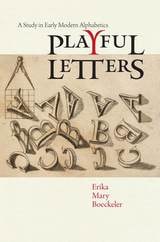
Playful Letters
A Study in Early Modern AlphabeticsErika Mary Boeckeler
University of Iowa Press, 2017
Drawing on Shakespeare, anthropomorphic typography, figured letters, and Cyrillic pedagogy and politics, this book explores the ways in which alphabetic thinking and writing inform literature and the visual arts, and it develops reading strategies for the “letterature” that underwrites such cultural production. Playful Letters begins with early modern engagements with the alphabet and the human body—an intersection where letterature emerges with startling force. The linking of letters and typography with bodies produced a new kind of literacy. In turn, educational habits that shaped letter learning and writing permeated the interrelated practices of typography, orthography, and poetry. These mutually informing processes render visible the persistent crumbling of words into letters and their reconstitution into narrative, poetry, and image.
In addition to providing a rich history of literary and artistic alphabetic interrogation in early modern Western Europe and Russia, Playful Letters contributes to the continuous story of how people use new technologies and media to reflect on older forms, including the alphabet itself.
Playing the Archive
From the Opies to the Digital PlaygroundEdited by Andrew Burn, John Potter, Kate Cowan, and Julia Bishop
University College London, 2025
Playing the Archive: From the Opies to the Digital Playground revisits the trailblazing work of Iona and Peter Opie, who documented children’s playground games, rhymes, and traditions in mid-20th century Britain, and brings their research into the digital age. Through a major new study, this book explores how children’s play has evolved, drawing on fresh ethnographic research, digital storytelling, and interactive media to compare past and present-day playground cultures.
By making the Opie Archive publicly accessible and involving children through digital interfaces, the project opens up new ways of understanding play as a dynamic, ever-changing practice. The chapters offer novel theoretical insights into the shifting landscapes of play, considering the role of archives and digital media in shaping children’s cultural expressions. Playing the Archive questions stereotypes about childhood in the digital era, positioning children as active creators of their own play cultures.
Pleasure and Pain in US Public Culture
edited by Christopher J. Gilbert and John Louis Lucaites
University of Alabama Press, 2025
A critical examination of how pleasure and pain are constructed, represented, and contested within American public culture.
Mainstream news and social media often highlight presentations of pain that invite a voyeuristic, pleasurable experience, whether the result of war, disasters, crime, accidents, or other catastrophes. This collection of essays explores pleasurable pains and painful pleasures, showing how they pervade contemporary western public culture.
Deploying methodologies drawn from psychoanalysis, rhetoric and communication, political theory, and visual culture, Pleasure and Pain in US Public Culture offers insightful criticisms and theories about how pleasure and pain function in public discourse, media, and everyday communication practices.
The contributors provide a sample of fascinating range of news reportage, television, film and cinema, stage drama, comic performances, street art, and other forms of popular culture. The media cited and analyzed include Spike Lee’s films, Afrofuturism, autoethnography, and the #MeToo movement.
The collection takes up engrossing topics such as the cathartic allure of pain, ethical dilemmas surrounding public displays of suffering, and the transformative power of narratives that confront trauma. The essays also draw connections between theory and real-world outcomes, explore the implications of enjoying traumatic comedy, and link the natural world to otherwise mundane instances of interspecies violence. Brett Kavanaugh's Supreme Court nomination hearings and what they suggest about witnessing trauma is also discussed.
Pleasure and Pain in US Public Culture will change how a reader sees the world. It imparts a startling vision of western culture permeated by pain and pleasure.
Poems Talking to Poems
Setting Your Poetry Manuscript ApartEdited by Jeffrey Levine and Kristina Marie Darling
Tupelo Press, 2025
Poems Talking to Poems presents practical guidance for sequencing, structure and architecture, revision, and choosing titles for sections as well as the poetry manuscript as a whole. This guide also includes insider tips about how contests work, the literary marketplace, and how you can set your work apart.
With essays by such literary luminaries as Ilya Kaminsky, Katie Farris, Kristina Marie Darling, Jeffrey Levine, and many other distinguished contributors, this anthology is a concise and comprehensive field guide to perfecting your book and getting it into print.
Poems of the Five Mountains
An Introduction to the Literature of the Zen MonasteriesMarian Ury
University of Michigan Press, 1992
Poet's Work, Poet's Play
Essays on the Practice and the ArtEdited by Daniel Tobin and Pimone Triplett
University of Michigan Press, 2008
A follow-up to the highly praised Poets Teaching Poets, Daniel Tobin and Pimone Triplett's Poet's Work, Poet's Play gathers together essays by some of the most important voices in contemporary poetry: Carl Dennis, Stephen Dobyns, Tony Hoagland, Heather McHugh, Ellen Bryant Voigt, Eleanor Wilner, Dean Young, and the late Larry Levis and Agha Shahid Ali.
Lively, accessible, and erudite, the pieces range from discussions on syntax and the syllable to an exploration of the complexities of canon formation under the shadow of imperialism, race, and history. Exploring the work of John Donne, William Butler Yeats, Robert Frost, Philip Larkin, Charles Olsen, Ezra Pound, Anne Carson, Robert Herrick, Harryette Mullen, and many others, Poet's Work, Poet's Play---like its predecessor volume---will be an invaluable tool for teachers, students, and poets at every level.
"Much more than a set of essays on poetic craft or aesthetic understandings, this collection takes on two of the most prevalent anxieties about writing poetry in our time: the place of subjectivity in poetry, and how to make a significant shape in language while both affirming and interrogating the poetic I's authority. This is a book for anyone who wants to write better poems, who wants to read with greater passion, and who believes that poetry is an independent category of human consciousness that can be as capaciousness as the world, and as nuanced."
---Tom Sleigh, author of Space Walk and Far Side of the Earth
"Gathering together essays by unquestionably important poets, Poet's Work, Poet's Play has immense pedagogical value in the way it demonstrates how to discover in poetry resources of language and structure often overlooked in first, and ensuing, readings of complex texts."
---Laurence Goldstein, Professor of English, University of Michigan, and Editor, Michigan Quarterly Review
"A valuable document illuminating critical aspects of the contemporary American poetry scene."
---John Koethe, Distinguished Professor of Philosophy at the University of Wisconsin, Milwaukee, and author of Sally's Hair: Poems
Poetry Aloud Here 2
Sharing Poetry with ChildrenSylvia M. Vardell
American Library Association, 2014
Poetry Aloud Here!
Sharing Poetry with Children in the LibrarySylvia M. Vardell
American Library Association, 2006
Poets Beyond the Barricade
Rhetoric, Citizenship, and Dissent after 1960Dale M. Smith
University of Alabama Press, 2012
Poets Laureate in the Long Eighteenth Century, 1668-1813
Leo Shipp
University of London Press, 2022
The office of the poet laureate of Britain was a highly prominent, relevant, and respectable institution throughout the long eighteenth century. First instituted for John Dryden in 1668, the laureateship developed from an honorific into a functionary office with a settled position in court, and in 1813 was bestowed upon Robert Southey, whose tenure transformed the office. Taking an interdisciplinary approach, this book examines the office’s institutional changes and public reception, the mechanics of each laureate’s appointment, and the works produced by the laureates before and after their appointments. It argues that the laureateship played a key part in some of the most vital trends in eighteenth-century culture.
At the core of the book is a new research paradigm that Leo Shipp calls the conceptual geography of culture. It shows that Britons routinely used spatial concepts to understand culture throughout the period, which became increasingly abstract over time. As part of this, Shipp shows, the court evolved from a concrete space in London to an abstract space capable of hosting the entire British public. The laureateship was a dynamic office positioned at the interface of court and public, evolving in line with its audiences. An important intervention in eighteenth-century historiography, this book presents a nuanced understanding of eighteenth-century culture and society, in which the laureateship exemplified the enduring centrality of the court to the British conceptual geography of culture.
Poets Teaching Poets
Self and the WorldGregory Orr and Ellen Bryant Voigt, Editors
University of Michigan Press, 1996
Points of Departure
Rethinking Student Source Use and Writing Studies Research MethodsTricia Serviss
Utah State University Press, 2017
The contributors offer methodologies, techniques, and suggestions for research that move beyond decontextualized guides to grapple with the messiness of research-in-process, as well as design, development, and expansion. Serviss and Jamieson’s model of RAD writing studies research is transcontextual and based on hybridized or mixed methods. Among these methods are citation context analysis, research-aloud protocols, textual and genre analysis, surveys, interviews, and focus groups, with an emphasis on process and knowledge as contingent. Chapters report on research projects at different stages and across institution types—from pilot to multi-site, from community college to research university—focusing on the methods and artifacts employed.
A rich mosaic of research about research, Points of Departure advances knowledge about student writing and serves as a guide for both new and experienced researchers in writing studies.
Contributors: Crystal Benedicks, Katt Blackwell-Starnes, Lee-Ann Kastman Breuch, Kristi Murray Costello, Anne Diekema, Rebecca Moore Howard, Sandra Jamieson, Elizabeth Kleinfeld, Brian N. Larson, Karen J. Lunsford, M. Whitney Olsen, Tricia Serviss, Janice R. Walker
Policy Debate
A Guide for High School and College DebatersShawn F. Briscoe
Southern Illinois University Press, 2017
Briscoe addresses all aspects of policy debate, including stock issues, judging paradigms and effective engagement with judges, the responsibilities of both affirmative and negative teams, and the evaluation of policy proposals through the use of disadvantages, counterplans, and critical argumentation. In addition, Briscoe helps debaters better establish their credibility, improve their cross-examination skills, and understand the specialized notetaking method called flowing. The book models for readers how to effectively cross-examine an opposing team, features a transcript of a mock debate designed to help clarify the lessons taught in previous chapters, and includes a glossary of key terms. Briscoe also considers contemporary trends in the debate community, exploring the evolution of policy debate and the rise of performance-based approaches, while providing insight into how best to engage with performance teams.
Offering a unique approach presented by a seasoned debate coach, Policy Debate: A Guide for High School and College Debaters goes beyond the basics to explore how policy is an ever-evolving form of debate. This attention to the progression of policy styles will make readers better at adapting to opponents during a debate and will make them more adept at arguing against a wider range of cases.
Policy Regimes
College Writing and Public Education Policy in the United StatesTyler S. Branson
Southern Illinois University Press, 2021
Author Tyler S. Branson argues that education reform initiatives in the twentieth century can be understood in terms of historical shifts in the ideas, interests, and governing arrangements that inform the teaching of writing. Today, policy regimes of “accountability” shape education reform programs such as Common Core in K-12 and Dual Enrollment in postsecondary institutions. This book reopens the conversation between policy makers and writing teachers, empirically describing the field’s institutional/historical relationship to policy and the ways teachers work on a daily basis to carry out policy. Federal and state accountability policy significantly shapes classrooms before teachers even enter them, but Branson argues the classroom is where teachers leverage disciplinary knowledge about writing to bridge, partner with, support, and sometimes resist education policies.
Branson deftly blends policy critique, archival analysis, and participant observation to offer the first scholarly treatment of the National Council of Teachers of English (NCTE) Washington Task Force as well as a rare empirical study of a dual enrollment course offered in a high school. This book’s macro-and-micro-level analysis of education policy reveals how writing teachers, researchers, and administrators can strengthen their commitments to successfully teaching their students across all levels of education, while deepening their understanding of the ways education policy helps—and hinders—those commitments.
Political Literacy in Composition and Rhetoric
Defending Academic Discourse against Postmodern PluralismDonald Lazere
Southern Illinois University Press, 2015
Political Perversion
Rhetorical Aberration in the Time of TrumpeteeringJoshua Gunn
University of Chicago Press, 2020
Drawing on insights from critical theory, media ecology, and psychoanalysis, Gunn argues that perverse rhetorics dominate not only the political sphere but also our daily interactions with others, in person and online. From sexting to campaign rhetoric, Gunn advances a new way to interpret our contemporary political context that explains why so many of us have difficulty deciphering the appeal of aberrant public figures. In this book, Trump is only the tip of a sinister, rapidly growing iceberg, one to which we ourselves unwittingly contribute on a daily basis.
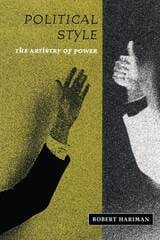
Political Style
The Artistry of PowerRobert Hariman
University of Chicago Press, 1995
In critical studies of classic texts, Hariman identifies four dominant political styles. The realist style, as found in Machiavelli's The Prince, creates a world of sheer power, constant calculation, and emotional control; this style is the common sense of modern political science. The courtly style, depicted in Kapuscinski's The Emperor, is characterized by high decorousness, hierarchies, and fixation on the body of the sovereign; this style infuses mass media coverage of the American presidency. The republican style, reflected in Cicero's letters to Atticus, promotes the art of oratory, consensus, and civility; it informs our ideal of democratic conversation. The bureaucratic style, as captured in Kafka's The Castle, emphasizes institutional procedures, official character, and the priority of writing; this style structures everday life.
Hariman looks at effective political artistry in figures from antiquity to modern politicians such as Vaclav Havel, Ronald Reagan, and Bill Clinton. He discusses the crises to which each style is susceptible, as well as the social and moral consequences of each style's success.
Political Tone
How Leaders Talk and WhyRoderick P. Hart, Jay P. Childers, and Colene J. Lind
University of Chicago Press, 2013
Political Vocabularies
FDR, the Clergy Letters, and the Elements of Political ArgumentMary E. Stuckey
Michigan State University Press, 2018
Politicizing Digital Space
Theory, the Internet, and Renewing DemocracyTrevor Garrison Smith
University of Westminster Press, 2017
The objective of this book is to outline how a radically democratic politics can be reinvigorated in theory and practice through the use of the internet. The author argues that politics in its proper sense can be distinguished from anti-politics by analyzing the configuration of public space, subjectivity, participation, and conflict. Each of these terrains can be configured in a more or less political manner, though the contemporary status quo heavily skews them towards anti-political configuration.
Using this understanding of what exactly politics entails, this book considers how the internet can both help and hinder efforts to move each area in a more political direction. By explicitly interpreting contemporary theories of the political in terms of the internet, this analysis avoids the twin traps of both technological determinism and technological cynicism.
Raising awareness of what the word ‘politics’ means, the author develops theoretical work by Arendt, Rancière, Žižek and Mouffe to present a clear and coherent view of how in theory, politics can be digitized and alternatively how the internet can be deployed in the service of trulydemocratic politics.
Politics and the News Media in Japan
Ofer Feldman
University of Michigan Press, 1993
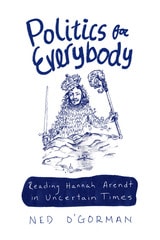
Politics for Everybody
Reading Hannah Arendt in Uncertain TimesNed O'Gorman
University of Chicago Press, 2020