Results by title
2335 books match the query 'Modern' and 103 start with p
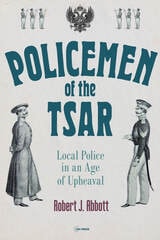
Policemen of the Tsar
Local Police in an Age of UpheavalRobert J. Abbott
Central European University Press, 2022
Founded by Peter the Great in 1718, Russia’s police were key instruments of tsarist power. In the reign of Alexander II (1855-1881), local police forces took on new importance. The liberation of 23 million serfs from landlord control, growing fear of crime, and the terrorist violence of the closing years challenged law enforcement with new tasks that made worse what was already a staggering burden. (“I am obliged to inform Your Imperial Highness that the police often fail to carry out their assignments and, when they do execute them, they do so poorly because of their moral corruption…”) This book describes the regime’s decades-long struggle to reform and strengthen the police. The author reviews the local police’s role and performance in the mid-nineteenth century and the implications of the largely unsuccessful effort to transform them. From a longer-term perspective, the study considers how the police’s systemic weaknesses undermined tsarist rule, impeded a range of liberalizing reforms, perpetuated reliance on the military to maintain law and order, and gave rise to vigilante justice.
While its primary focus is on European Russia, the analysis also covers much of the imperial periphery, discussing the police systems in the Baltic Provinces, Congress Poland, the Caucasus, Central Asia, and Siberia.
Polish Liberal Thought Before 1918
Maciej Janowski
Central European University Press, 2004
Polish Literature and the Holocaust
Eyewitness Testimonies, 1942–1947Rachel Feldhay Brenner
Northwestern University Press, 2019
Polish Literature and the Holocaust: Eyewitness Testimonies,1942–1947 is a particularly timely book in view of the continuing debate about the attitudes of Poles toward the Jews during the war. The literary voices from the past that Brenner examines posit questions that are as pertinent now as they were then. And so, while this book speaks to readers who are interested in literary responses to the Holocaust, it also illuminates the universal issue of the responsibility of witnesses toward the victims of any atrocity.
Polish-Jewish Relations During the Second World War
Emmanuel Ringelblum
Northwestern University Press, 1992
This book represents Ringelbaum's attempt to answer the questions he knew history would ask about the Polish people: what did the Poles do while millions of Jews were being led to the stake? What did the Polish underground do? What did the Government-in-Exile do? Was it inevitable that the Jews, looking their last on this world, should have to see indifference or even gladness on the faces of their neighbors? These questions have haunted Polish-Jewish relations for the last fifty years. Behind them are forces that have haunted Polish-Jewish relations for a thousand years.

Political Affairs of the Heart
Female Travel Writers, the Sentimental Travelogue, and Revolution, 1775-1800Linda Van Netten Blimke
Bucknell University Press, 2022
Political Corruption in Transition
A Sceptic's HandbookAndrás Sajó
Central European University Press, 2002
Based on two international conferences at Princeton University and the Central European University, this is a handy guide to the problem of corruption in transition countries, with an important comparative content. Political Corruption in Transition is distinguished from similar publications by at least two features: by the quality of the carefully selected and edited essays ans by its original treatment. Instead of the usual preaching and excommunications, this Skeptic`s Handbook represents down-to-earth realism.
Combines general issues with case studies and original research. The geographic coverage is wide, though it is ideas rather than a geography that drive the volume`s organization.
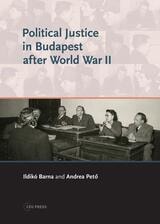
Political Justice in Budapest after World War II
Andrea Peto
Central European University Press, 2015
In Hungary, which fell under Soviet influence at the end of World War II, those who had participated in the wartime atrocities were tried by so called people’s courts. This book analyses this process in an objective, quantitative way, contributing to the present timely discussion on the Hungarian war guilt. The authors apply a special focus on the gender aspect of the trials.
Political justice had a specific nature in Hungary. War criminals began to be brought to trial while fighting was still underway in the western part of the country, well before the Nuremberg trials. Not only crimes committed during the war were tried in the same frame but also post-war ones. As far as the post-war period is concerned, legal proceedings regarding these crimes were most often launched on the basis of Act VII of 1946. This act of law concerned “the criminal law protection of the democratic constitutional order and the republic” and its basic aim was to facilitate the creation of a communist dictatorship and to deal with perceived or real enemies of the regime.
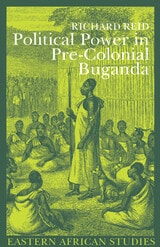
Political Power in Pre-Colonial Buganda
Economy, Society, and Warfare in the Nineteenth CenturyRichard Reid
Ohio University Press, 2002
Blessed with fertile and well-watered soil, East Africa’s kingdom of Buganda supported a relatively dense population and became a major regional power by the mid-nineteenth century. This complex and fascinating state has also long been in need of a thorough study that cuts through the image of autocracy and military might.
Political Power in Pre-Colonial Buganda explores the material basis of Ganda political power, gives us a new understanding of what Ganda power meant in real terms, and relates the story of how the kingdom used the resources at its disposal to meet the challenges that confronted it. Reid further explains how these same challenges ultimately limited Buganda’s dominance of the East African great lakes region.
Politics and Policies in Post-Communist Transition
Primary and Secondary Privatisation in Central Europe and the Former Soviet UnionKároly Attila Soós
Central European University Press, 2011
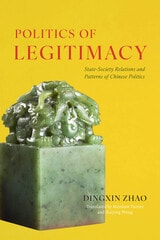
Politics of Legitimacy
State-Society Relations and Patterns of Chinese PoliticsDingxin Zhao
University of Chicago Press, 2026
The Chinese communist state has survived massive social changes, including the introduction of capitalist markets, an ongoing explosion of technological innovation, and an unprecedented jump in wealth and education, accompanied by a major cultural transformation. How has China managed to maintain its power even as the ground has so profoundly shifted? In Politics of Legitimacy, Dingxin Zhao argues that state power can be legitimized in three ideal-typical ways: a set of values upheld by the state (ideological legitimacy), recognized political processes such as regular competitive elections (procedural legitimacy), and the state’s capacity to provide public goods (performance legitimacy).
Building on this theoretical framework, Zhao analyzes different aspects of Chinese politics, including the tragic ending of the 1989 pro-democracy movement, the weak development of mass-based nationalism in post-Mao China, the reasons behind China’s economic success, the anti-establishment tendency of the Chinese mass media and social media, and the sources of political tension in China, despite a superb economy. Moreover, Zhao’s innovative framework is widely applicable beyond China, shifting our attention from regime-type categories to the tools and relationships that determine their survival or collapse, and illuminating the current global emergence of conservatism and religious nationalism.
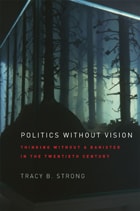
Politics without Vision
Thinking without a Banister in the Twentieth CenturyTracy B. Strong
University of Chicago Press, 2012
From Plato through the nineteenth century, the West could draw on comprehensive political visions to guide government and society. Now, for the first time in more than two thousand years, Tracy B. Strong contends, we have lost our foundational supports. In the words of Hannah Arendt, the state of political thought in the twentieth and twenty-first centuries has left us effectively “thinking without a banister.”
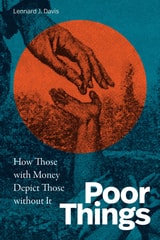
Poor Things
How Those with Money Depict Those without ItLennard J. Davis
Duke University Press, 2024
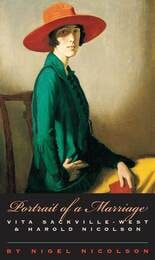
Portrait of a Marriage
Vita Sackville-West and Harold NicolsonNigel Nicolson
University of Chicago Press, 1998

Portraits of Violence
War and the Aesthetics of DisfigurementSuzannah Biernoff
University of Michigan Press, 2017
Suzannah Biernoff draws on a wide variety of sources mainly from WWI but also contemporary photography and computer games. Each chapter revolves around particular images: Marine Wedding is discussed alongside Stuart Griffiths’ portraits of British veterans; Henry Tonks’ drawings of WWI facial casualties are compared to the medical photographs in the Gillies Archives; the production of portrait masks for the severely disfigured is approached through the lens of documentary film and photography; and finally the haunting image of one of Tonks’s patients reappears in BioShock, a highly successful computer game. The book simultaneously addresses a neglected area in disability studies; puts disfigurement on the agenda for art history and visual studies; and makes a timely and provocative contribution to the literature on the First World War.
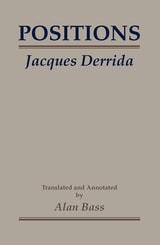
Positions
Jacques Derrida
University of Chicago Press, 1982
The interviews included in this volume offer a multifaceted view of Derrida. "Implications: Interview with Henri Ronse" contains a succinct statement of principles. "Seminology and Grammatology: Interview with Julia Kristeva" provides important clarifications of the role played by linguistics in Derrida's work. "Positions: Interview with Jean-Louis Houdebine and Guy Scarpetta" is a wide-ranging discussion that touches on many of the polemics that Derrida's work has provoked.
Alan Bass, whose translation of Writing and Difference was highly praised for its clarity, accuracy, and readability, has provided extremely useful critical notes, full of vital information, including historical background.

Post-Postmodernist Fiction and the Rise of Digital Epitexts
Virginia Pignagnoli
The Ohio State University Press, 2023
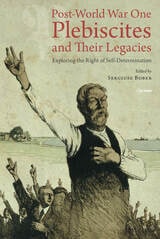
Post-World War One Plebiscites and Their Legacies
Exploring the Right of Self-DeterminationSergiusz Bober
Central European University Press, 2024
Plebiscites, or referendums, are epitomes of direct democracy and the right of self-determination. While direct democracy has always been a key subject in the theory and practice of western liberal democracies, the issue of self-determination has been propelled to the fore by the hegemonistic moves of Russia. By providing a historical analysis of the post-World War One plebiscites, this book deals with enduring, painfully contemporary, and in in any case fundamental, concepts.
The contributors to this edited volume approach the referendums comparatively. After grounding the analysis theoretically, the authors look at detailed aspects of individual cases, with the two plebiscites held in the Danish-German border region of Schleswig in the winter of 1920 as points of departure. They then extend the exploration through the inter-war period and address the effects of border delimitations on everyday life or gender roles in the context of ethnic mobilization. Finally, the book places the post-World War One plebiscites in a long-term perspective. The concluding essays assess, among others, the applicability of plebiscitary solutions to contemporary conflicts, taking into consideration issues of borders, religion, language, identity, and minority rights.
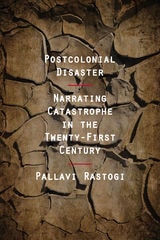
Postcolonial Disaster
Narrating Catastrophe in the Twenty-First CenturyPallavi Rastogi
Northwestern University Press, 2020
Rastogi creates a narratology for postcolonial disaster fiction and brings concepts from Disaster Studies into the realm of literary analysis.
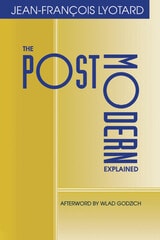
Postmodern Explained
Correspondence 1982-1985Jean-Fracois Lyotard
University of Minnesota Press, 1992
Postmodern Fables
Jean-Francois Lyotard
University of Minnesota Press, 1999

Postmodern Platos
Nietzsche, Heidegger, Gadamer, Strauss, DerridaCatherine H. Zuckert
University of Chicago Press, 1996
Postmodern/Postwar and After
Rethinking American LiteratureJason Gladstone, Andrew Hoberek, and Daniel Worden
University of Iowa Press, 2016
The first section of essays returns to the category of the “post-modern” and argues for the usefulness of key concepts and themes from postmodernism to the study of contemporary literature, or reevaluates postmodernism in light of recent developments in the field and historical and economic changes in the late twentieth and early twenty-first centuries. These essays take the contemporary abandonments of postmodernism as an occasion to assess the current states of postmodernity. After that, the essays move to address the critical shift away from postmodernism as a description of the present, and toward a new sense of postmodernism as just one category among many that scholars can use to describe the recent past. The final section looks forward and explores the question of what comes after the postwar/postmodern.
Taken together, these essays from leading and emerging scholars on the state of twenty-first-century literary studies provide a number of frameworks for approaching contemporary literature as influenced by, yet distinct from, postmodernism. The result is an indispensable guide that seeks to represent and understand the major overhauling of postwar American literary studies that is currently underway.
Poststructuralism and Critical Theory's Second Generation
Edited by Alan D. Schrift
University of Chicago Press, 2010
From Kant to Kierkegaard, from Hegel to Heidegger, continental philosophers have indelibly shaped the trajectory of Western thought since the eighteenth century. Although much has been written about these monumental thinkers, students and scholars lack a definitive guide to the entire scope of the continental tradition. The most comprehensive reference work to date, this eight-volume History of Continental Philosophy will both encapsulate the subject and reorient our understanding of it. Beginning with an overview of Kant’s philosophy and its initial reception, the History traces the evolution of continental philosophy through major figures as well as movements such as existentialism, phenomenology, hermeneutics, and poststructuralism. The final volume outlines the current state of the field, bringing the work of both historical and modern thinkers to bear on such contemporary topics as feminism, globalization, and the environment. Throughout, the volumes examine important philosophical figures and developments in their historical, political, and cultural contexts.
The first reference of its kind, A History of Continental Philosophy has been written and edited by internationally recognized experts with a commitment to explaining complex thinkers, texts, and movements in rigorous yet jargon-free essays suitable for both undergraduates and seasoned specialists. These volumes also elucidate ongoing debates about the nature of continental and analytic philosophy, surveying the distinctive, sometimes overlapping characteristics and approaches of each tradition. Featuring helpful overviews of major topics and plotting road maps to their underlying contexts, A History of Continental Philosophy is destined to be the resource of first and last resort for students and scholars alike.
Poverty of the Imagination
The Cold War and the Social Science of Development in Latin AmericaPatrick Iber
University of Chicago Press, 2026
Explores the history of the “science of development” during the Cold War and how experts across the social sciences tried to create the tools to address the problem of poverty across Latin America.
In the mid-twentieth century, Latin America had the world’s starkest internal inequality. In Brazil in 1960, for example, the top 10 percent took upward of 60 percent of the country’s total income, while its entire bottom half took only 10 percent. As Patrick Iber shows in Poverty of the Imagination, this problem of poverty and social inequality focused the attention of social scientists on the task of articulating a “science of development.” In the context of the Cold War, this project drew the attention of the US government and the Ford Foundation, which hoped that peaceful development would prevent revolutions.
This book examines the five central frameworks that emerged to explain poverty: from dependency theory on the Marxist left; to theories of modernization, the culture of poverty, and marginality in the center; to neoliberalism on the right. Iber shows how each rose (and fell) by connecting them to political projects such as the War on Poverty in the United States and the dictatorship of Augusto Pinochet in Chile. Through vivid portraits of key thinkers, he shows how each was shaped by the environment of the Cold War and the presence of the Ford Foundation. It is a story with surprising turns: What began for Ford as a Cold War project to support university “modernization” changed as dictatorships took control of much of the region. Then, Ford took the side of the dissidents, supporting an antipoverty agenda for the restoration of democracy. A guide to some of the most important ideas in global development and Latin American studies alike, this book also shows how scholars and institutions faced down authoritarian threats—and won.
Power at Sea, Volume 1
The Age of Navalism, 1890-1918Lisle A. Rose
University of Missouri Press, 2006
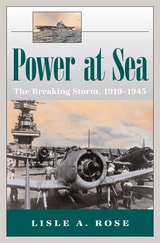
Power at Sea, Volume 2
The Breaking Storm, 1919-1945Lisle A. Rose
University of Missouri Press, 2006
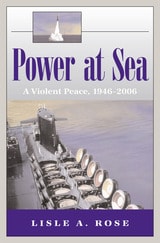
Power at Sea, Volume 3
A Violent Peace, 1946-2006Lisle A. Rose
University of Missouri Press, 2006

Practice, Power, and Forms of Life
Sartre’s Appropriation of Hegel and MarxTerry Pinkard
University of Chicago Press, 2022
Jean-Paul Sartre’s Critique of Dialectical Reason, released to great fanfare in 1960, has since then receded in philosophical visibility. As Sartre’s reputation is now making a comeback, it is time for a reappraisal of his later work. In Practice, Power, and Forms of Life, philosopher Terry Pinkard interprets Sartre’s late work as a fundamental reworking of his earlier ideas, especially in terms of his understanding of the possibility of communal action as genuinely free, which the French philosopher had previously argued was impossible.
Pinkard reveals how Sartre was drawn back to Hegel, a move that was itself incited by Sartre’s newfound interest in Marxism. Pinkard argues that Sartre constructed a novel position on freedom that has yet to be adequately taken up and analyzed within philosophy and political theory. Through Sartre, Pinkard advances an argument that contributes to the history of philosophy as well as key debates on action and freedom.
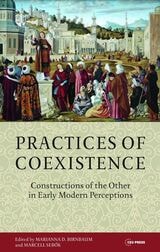
Practices of Coexistence
Constructions of the Other in Early Modern PerceptionsMarianna D. Birnbaum
Central European University Press, 2017
Pre-Modern Philosophy Defended
Josef Kleutgen
St. Augustine's Press, 2014
“Pre-modern philosophy” means the line of reflection that started with Plato andvAristotle, passed through Augustine and Boethius, and reached its acme in Aquinas, Scotus, and Suarez. The whole line was harshly judged by Descartes, then mocked by the empiricsts of the 18th Century. Why, then, did Pope Leo XII make a determined effort to revive it? And, more importantly, why was the revival a stunning success by the middle of the 20th Century?
The answers to both questions are found in a famous German book, Philosophie der Vorzeit by Josef Kleutgen, now available for the first time in English. Pre-ModernPhilosophy Defended shaped and strengthened Pope Leo’s resolve. It showed how inaccurate the harsh judgments had been and how sadly inferior the modern replacements from Descartes to Hegel had turned out to be in many respects.
Not in all. Kleutgen was no knee-jerk reactionary. He made no bones about the obsolete status of pre-Newtonian physics and cosmology. Rather, he focused on the central boast of “modern” thought, namely, that it had turned at least to the “subject” and had provided a long-needed thing called a “critique of knowledge.”
This book is must reading for intellectual historians and for philosophers working today in epistemology. But most of all, it is essential reading for laity and clergy concerned about revivals of modernism in the church. What was modernism, after all, but an attempt to make the Church revise her theology in the “light” of Kant or Hegel? This is why every Modernist knew Kleutgen’s name and hated this book.
Here is the first English translation (from the German) of the master work of Josef Kleutgen, the nineteenth century social philosopher whose thought lies at, or near, the heart of Catholic Social Thought. Kleutgen is widely and rightly seen as the shadow author of the social encyclicals of Leo XII. Leo’s Rerum Novarum remains the origin and constant reference point of all Catholic Social Teaching. And Popes since have dated their own social encyclicals from Rerum Novarum – hence, Quadragesimo anno and Centesimus annus. —Gerard V. Bradley, University of Notre Dame
Pre-Modern Philosophy Defended is must reading for intellectual historians and for philosophers working today in epistemology. And it is essential reading for laity and clergy concerned about revivals of modernism in the church. What was modernism, after all, but an attempt to make the Church revise her theology in the ‘light’ of Kant or Hegel? This is why every Modernist knew Kleutgen's name and hated Philosophie der Vorzeit (Pre-Modern Philosophy Defended).
Precarious Workers
History of Debates, Political Mobilization, and Labor Reforms in ItalyEloisa Betti
Central European University Press, 2023
The recent vast upsurge in social science scholarship on job precarity has generally little to say about earlier forms of this phenomenon. Eloisa Betti’s monograph convincingly demonstrates on the example of Italy that even in the post-war phase of Keynesian stability and welfare state, precarious labor was an underlying feature of economic development. She examines how in this short period exceptional politics of labor stability prevailed. The volume then presents the processes whereby labor precarity regained momentum— under the name of flexibility— in the post-Fordist phase from the early 1980s, taking on new forms in the Craxi and Berlusconi eras.
Multiple actors are addressed in the analysis. The book gives voice to intellectuals, scholars, politicians and trade unionists as they have framed the concept and debates on precarious work from the 1950s onwards. Views of labor law experts, politicians and public servants are investigated in regard to labor regulations. Positions of the very precarians are explored, ranging from rural women, industrial homeworkers and blue-collar workers to physicians, university researchers and trainees, unveiling the emergence of anti-precarity social movements. The continuous role of women’s associations and feminist groups in opposing labor precarity since the 1950s is prominently exposed.
Pregnancy in the Victorian Novel
Livia Arndal Woods
The Ohio State University Press, 2023
In Pregnancy in the Victorian Novel—the first book-length study of the topic—Livia Arndal Woods traces the connections between literary treatments of pregnancy and the medicalization of pregnancy and childbirth occurring over the long nineteenth century. Woods uses the problem of pregnancy in the Victorian novel (in which pregnancy is treated modestly as a rule and only rarely as an embodied experience) to advocate for “somatic reading,” a practice attuned to impressions of the body on the page and in our own messy lived experiences.
Examining works by Emily Brontë, Charlotte Mary Yonge, Anthony Trollope, George Eliot, Thomas Hardy and others, Woods considers instances of pregnancy that are tied to representations of immodesty, poverty, and medical diagnosis. These representations, Woods argues, should be understood in the arc of Anglo-American modernity and its aftershocks, connecting backward to early modern witch trials and forward to the criminalization of women for pregnancy outcomes in twenty-first-century America. Ultimately, she makes the case that by clearing space for the personal and anecdotal in scholarship, somatic reading helps us analyze with uncertainty rather than against it and allows for richer and more relevant textual interpretation.

Present Past
Ava Kadishson Schieber
Northwestern University Press, 2016
The focus of Present Past is her life after the Shoah. Rejecting stereotypes of survivors as traumatized or broken, Schieber is stark yet exuberant, formidable yet nuanced. The woman who emerges in Schieber’s Present Past is a multifaceted, heterogeneous figure—poet, artist, and survivor. In it, she plays the passionate observer who dispassionately curates the kaleidoscopic memories of her tumultuous personal and professional life in Belgrade, Prague, Tel Aviv, New York, and Chicago.
Organized into thirteen chapters, each a blend of images, poems, and narrative, this moving new work offers myriad points of entry to readers of these genres, those fascinated in the relationship between the Holocaust and art, as well as readers interested in memory and survivorship.
Pressing the Fight
Print, Propaganda, and the Cold WarGreg Barnhisel
University of Massachusetts Press, 2010
In this volume, scholars from a variety of disciplines explore the myriad ways print was used in the Cold War. Looking at materials ranging from textbooks and cookbooks to art catalogs, newspaper comics, and travel guides, they analyze not only the content of printed matter but also the material circumstances of its production, the people and institutions that disseminated it, and the audiences that consumed it. Among the topics discussed are the infiltration of book publishing by propagandists East and West; the distribution of pro-American printed matter in postwar Japan through libraries, schools, and consulates; and the collaboration of foundations, academia, and the government in the promotion of high culture as evidence of the superiority of Western values.
At the same time, many of the qualities that made print the preferred medium of official propaganda also made it an effective instrument for challenging Cold War orthodoxies at home and abroad. Because printed materials were relatively easy to transport, to copy, and to share, they could just as well be used to bridge differences among people and cultures as to exploit them. They also provided a vehicle for disseminating satire and other expressions of dissent.
In addition to the volume editors, contributors include Ed Brunner, Russell Cobb, Laura Jane Gifford, Patricia Hills, Christian Kanig, Scott Laderman, Amanda Laugesen, Martin Manning, Kristin Matthews, Hiromi Ochi, Amy Reddinger, and James Smith. Together their essays move beyond traditional Cold War narratives to gauge the role of a crucial cultural medium in the ideological battle between the superpowers and their surrogates.
Pretexts for Writing
German Romantic Prefaces, Literature, and PhilosophyWilliams, Seán M
Bucknell University Press, 2019
Published by Bucknell University Press. Distributed worldwide by Rutgers University Press.
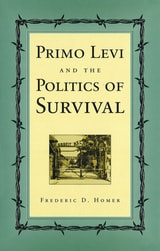
Primo Levi and the Politics of Survival
Frederic D. Homer
University of Missouri Press, 2001
At the age of twenty-five, Primo Levi was sent to Hell. Levi, an Italian chemist from Turin, was one of many swept up in the Holocaust of World War II and sent to die in the German concentration camp in Auschwitz. Of the 650 people transported to the camp in his group, only 15 men and 9 women survived. After Soviet liberation of the camp in 1945, Levi wrote books, essays, short stories, poetry, and a novel, in which he painstakingly described the horrors of his experience at Auschwitz. He also spent the rest of his life struggling with the fact that he was not among those who were killed.
In Primo Levi and the Politics of Survival, Frederic D. Homer looks at Primo Levi's life but, more important, shows him to be a significant political philosopher. In the course of his writings, Levi asked and answered his most haunting question: can someone be brutalized by a terrifying experience and, upon return to "ordinary life," recover from the physical and moral destruction he has suffered? Levi used this question to develop a philosophy positing that although man is no match for life, he can become better prepared to contend with the tragedies in life.
According to Levi, the horrors of the world occur because of the strength of human tendencies, which make relationships between human beings exceedingly fragile. He believed that we are ill-constituted beings who have tendencies toward violence and domination, dividing ourselves into Us and Them, with very shallow loyalties. He also maintained that our only refuge is in education and responsibility, which may counter these tendencies. Homer calls Levi's philosophy "optimistic pessimism."
As Homer demonstrates, Levi took his past experiences into account to determine that goodwill and democratic institutions do not come easily to people. Liberal society is to be earned through discipline and responsibility toward our weaknesses. Levi's answer is "civilized liberalism." To achieve this we must counter some of our most stubborn tendencies.
Homer also explores the impact of Levi's death, an apparent suicide, on the way in which his work and theories have been perceived. While several critics discount Levi's work because of the nature of his death, Homer argues that his death is consistent with his philosophy. A book rich in brutally honest philosophy, Primo Levi and the Politics of Survival compels one to look at serious questions about life, tragedy, optimism, solidarity, violence, and human nature.
Printed Writings by George W. Russell
A BibliographyGeorge W. Russell; Compiled by Alan Denson
Northwestern University Press, 2019
Profiles and Plotlines
Data Surveillance in Twenty-first Century LiteratureKatherine D. Johnston
University of Iowa Press, 2023
In Profiles and Plotlines, Katherine Johnston engages this energetic reformation of contemporary literature to account for a society and economy of frenetic counting. Fiction and poetry are capable of addressing precisely that for which algorithms cannot or do not account: the effects of profile culture; the ideologies and supposed truth-power of data; the gendered and racialized dynamics of watching and being watched; and the politics of who counts and what gets counted. Johnston analyzes prescient work by contemporary authors such as Jennifer Egan, Claudia Rankine, Mohsin Hamid, and William Gibson to probe how the claims of data surveillance serve to make lives seem legible, intelligible, and sometimes even expendable.
Progress and Religion
An Historical Inquiry (The Works of Christopher Dawson)Christopher Dawson
Catholic University of America Press, 2001
Projections of Power
The United States and Europe in Colonial Southeast Asia, 1919-1941Anne L. Foster
Duke University Press, 2010
Prolific Ground
Landscape and British Women's Writing, 1690–1790Nicolle Jordan
Bucknell University Press, 2025
Prologues and Epilogues of Restoration Theater
Gender and Comedy, Performance and PrintDiana Solomon
University of Delaware Press, 2013
Published by University of Delaware Press. Distributed worldwide by Rutgers University Press.
Promises of 1968
Crisis, Illusion and UtopiaVladimir Tismaneanu
Central European University Press, 2011
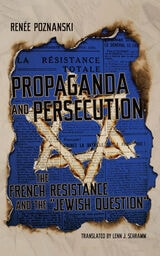
Propaganda and Persecution
Renée Poznanski
University of Wisconsin Press, 2024
Poznanski argues that Jews in France suffered a double persecution: one led by the Vichy government, the other imposed by the Nazis. Marginalization and exclusion soon led to internment and deportation to terrifying places. Meanwhile, a propaganda war developed between the Resistance and the official voice of Vichy. Poznanski draws on a breathtaking array of sources, especially clandestine publications and French-language BBC transmissions, to show how the Resistance both fought and accommodated the deeply entrenched antisemitism within French society. Her close readings of propaganda texts against public opinions probe ambiguities and silences in Resistance writing about the persecution of the Jews and, in parallel, the numerous and detailed denunciations that could be read in the Jewish clandestine press. This extensive synthesis extends to the post-Liberation period, during which the ongoing persecution of Jews in Europe and North Africa would be portrayed as secondary to the suffering of the nation.
The winner of the 2009 Henri Hertz Prize by the Chancellerie des Universités de Paris, Sorbonne, Propaganda and Persecution makes major contributions to the study of the Resistance and of antisemitism. Lenn J. Schramm’s English translation brings Poznanski’s dynamic prose to life.

Prospects for Natural Theology
Eugene Thomas Long
Catholic University of America Press, 2018
Protected cruiser Gelderland
Jantinus Mulder
Amsterdam University Press, 2023
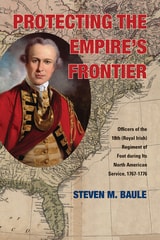
Protecting the Empire’s Frontier
Officers of the 18th (Royal Irish) Regiment of Foot during Its North American Service, 1767–1776Steven M. Baule
Ohio University Press, 2013
Protecting the Empire’s Frontier tells stories of the roughly eighty officers who served in the 18th (Royal Irish) Regiment of Foot, which served British interests in America during the crucial period from 1767 through 1776. The Royal Irish was one of the most wide-ranging regiments in America, with companies serving on the Illinois frontier, at Fort Pitt, and in Boston, New York, and Philadelphia, with some companies taken as far afield as Florida, Spanish Louisiana, and present-day Maine. When the regiment was returned to England in 1776, some of the officers remained in America on staff assignments. Others joined provincial regiments, and a few joined the American revolutionary army, taking up arms against their king and former colleagues.
Using a wide range of archival resources previously untapped by scholars, the text goes beyond just these officers’ service in the regiment and tells the story of the men who included governors, a college president, land speculators, physicians, and officers in many other British regular and provincial regiments. Included in these ranks were an Irishman who would serve in the U.S. Congress and as an American general at Yorktown; a landed aristocrat who represented Bath as a member of Parliament; and a naval surgeon on the ship transporting Benjamin Franklin to France. This is the history of the American Revolutionary period from a most gripping and everyday perspective.
An epilogue covers the Royal Irish’s history after returning to England and its part in defending against both the Franco-Spanish invasion attempt and the Gordon Rioters. With an essay on sources and a complete bibliography, this is a treat for professional and amateur historians alike.

Protestant Diplomacy and the Near East
Missionary Influence on American Policy, 1810-1927Joseph L. Grabill
University of Minnesota Press, 1971
Protestant Diplomacy and the Near East was first published in 1971. Minnesota Archive Editions uses digital technology to make long-unavailable books once again accessible, and are published unaltered from the original University of Minnesota Press editions.
For understand of the Middle East today, it is essential to know something of the historical background of that region, traditionally known as the Near East. In tracing the influence of American Protestant missionary activities on American foreign policy and diplomacy in the Near East, Professor Grabill contributes significantly to an understanding of contemporary affairs.
It becomes clear, in this account, that missionaries and philanthropists were the most influential force in the United States' relations with the Near East through the First World War and its aftermath. An important turning point in the history occurred in 1915 when officials of the Ottoman Empire massacred or deported several hundred thousand Turkish Armenians, among whom were the principal constituents of the American missionaries. This prompted the mission groups to shift their emphasis from evangelism and education to the development of the second largest relief organization in the United States history ) eventually called Near East Relief). Through powerful lobbying, the missionaries got their government to consider seriously a protectorate over Armenia or all of Asia Minor. Despite their political failure, the religionists succeeded as cultural frontiersmen through their colleges, such as the American University of Beirut, and their technical assistance programs, which showed the way for the Fulbright, foreign aid, and Peace Corps programs.
The archives of the American Board of Commissioners for Foreign Missions
(Congregational) and the Presbyterian Board of Missions provided rich source material for this book. The illustrations include photographs and maps.Provinces of the Mind
The Modern Novel on Provincial TimeVictoria Baena
University of Chicago Press, 2027
How the provinces, rather than cities or capitals, became the key setting dramatized in—but also transformed by—modern novels in English and French.
To be provincial is to mistake one’s narrow milieu for the world: it is to fall prey to an error of scale. But it is also to feel behind, belated, and excluded from the possibilities of the modern world. In this elegant study of the novel “on provincial time,” Victoria Baena argues that the literary geography of “the provinces” played a key role in forging European narratives of modernity.
In the wake of French revolutionaries’ suppression of older provincial identities and as Britain expanded its imperial reach, the provinces were reinvented on various scales: from countryside to small town, from domestic region to faraway colony. Baena brings together Marxist and feminist spatial theory with a close attention to the politics of narrative form in order to show how the remarkably mobile concept of the provinces developed across social and cultural frameworks from 1800 to 1933. Offering new interpretations of novels of the realist tradition—by Honoré de Balzac, George Eliot, Emily Brontë, George Sand, Thomas Hardy, Marcel Proust, Alain-Fournier, James Joyce, and Claude McKay—she shows how the question of representing the provinces transformed the modern novel.
Provinces of the Mind illuminates some of the more pernicious fictions of provincialism. But it also describes, often movingly, the desire no longer to be provincial, along with the ambivalence and alienation that can entail. Ultimately, the book shows how literary critics can use the provinces to translate questions of literary geography across borders. By interrogating the provincialisms of our own time and place, Baena suggests, critics might make a better case for those worth retaining, as well as a better grasp of those to be left behind.
Published Essays, 1953-1965 (CW11)
Eric Voegelin & Edited & Intro by Ellis Sandoz
University of Missouri Press, 2000
The period covered by the material published in this volume marks the transition in Eric Voegelin's career from Louisiana to Munich. After twenty years in the United States, in 1958 Voegelin accepted an invitation to fill the political science chair at Ludwig Maximilian University, a position left vacant throughout the Nazi period and last occupied by the famous Max Weber, who had died in 1920.
The themes most prominent in the fourteen items reprinted here reflect the concerns of a transition, not only in a scholar's career, and in the momentous shifts in world politics taking place around him, but also in the development of his understanding of the stratification of reality and the attendant demands for a science of human affairs adequate to the challenges posed by the persistent crisis of the West in its latest configurations and by contemporary philosophy.
Several of the items herein originated as talks to a specific organization on problems facing German democratization and the development of a market economy amid the ruins of a fragmented culture and infrastructure in a society without historically evolved institutional supports for a satisfactory social and political order. Accordingly, pragmatic matters occupy a central place in a number of these pieces, especially the overriding question of how Germany could move from an illiberal and ideological political order into a modern liberal democratic one.
Those accustomed to the theoretical profundity of Voegelin's writings may find welcome relief in the down-to-earth, commonsensical drift of this material addressed, often, to laymen and businessmen. But, of course, the philosophical subject matter lurks everywhere. It finds full expression in several instances as the controlling context of even the least pretentious presentations. One of the attractions of these essays is what the author brings forward as serviceable elementary guideposts under adverse conditions of intellectual disarray, social decay, and turmoil.