Results by title
8812 books match the query 'Political Science' and 592 start with p
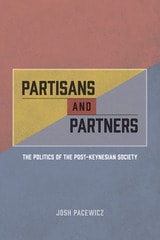
Partisans and Partners
The Politics of the Post-Keynesian SocietyJosh Pacewicz
University of Chicago Press, 2016
Wheels-down in Iowa—that most important of primary states—Pacewicz looks to two cities, one traditionally Democratic, the other traditionally Republican, and finds that younger voters are rejecting older-timers’ strict political affiliations. A paradox is emerging—as the dividing lines between America’s political parties have sharpened, Americans are at the same time growing distrustful of traditional party politics in favor of becoming apolitical or embracing outside-the-beltway candidates. Pacewicz sees this change coming not from politicians and voters, but from the fundamental reorganization of the community institutions in which political parties have traditionally been rooted. Weaving together major themes in American political history—including globalization, the decline of organized labor, loss of locally owned industries, uneven economic development, and the emergence of grassroots populist movements—Partisans and Partners is a timely and comprehensive analysis of American politics as it happens on the ground.

Partitioning Palestine
Legal Fundamentalism in the Palestinian-Israeli ConflictJohn Strawson
Pluto Press, 2010
Law lies at the roots of the Palestinian-Israeli conflict. Jews sought a national home by “Public Law” while Palestinians reject the project as illegal. Britain, the League of Nations and the United Nations all mobilised international law to justify their interventions. After the 1967 war, Israel organised an occupation with excessive legalism that most of the world viewed, in fact, as illegal.
Partitioning Palestine focuses on three key moments in the Palestinian-Israeli conflict: the League of Nations Mandate, the United Nations partition plan and the Oslo agreements. None of these documents are neutral but, rather, encode a variety of meanings. The book traces the way in which these legal narratives have both shaped national identity and sharpened the conflict.
In this pioneering text, John Strawson argues that a committed attachment to the belief in legal justice has hampered the search for a settlement. Law, far from offering conflict resolution, has reinforced the trenches from which Palestinians and Israelis confront one another.
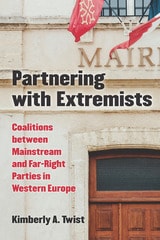
Partnering with Extremists
Coalitions between Mainstream and Far-Right Parties in Western EuropeKimberly A. Twist
University of Michigan Press, 2019
As long as far-right parties—known chiefly for their vehement opposition to immigration—have competed in contemporary Western Europe, many have worried about these parties’ acceptability to democratic voters and mainstream parties. Yet, rather than treating the far right as pariahs, major mainstream-right parties have included the far right in 15 governing coalitions from 1994 to 2017. Parties do not care equally about all issues at any given time, and Kimberly Twist demonstrates that far-right parties will agree to support the mainstream right’s goals more readily than many other parties, making them appealing partners.
Partnering with Extremists builds on existing work on coalition formation and party goals to propose a theory of coalition formation that works across countries and over time. The evidence comes from 19 case studies of coalition formation in Austria and the Netherlands, countries where far-right parties have been excluded when they could have been included and included when the mainstream right had other options. The argument is then extended to countries where coalitions are less common, France and the United Kingdom, and to cases of mainstream-right adoption of far-right themes. Twist incorporates both office and policy considerations in her argument and reimagines “policy” to be a two-dimensional factor; it matters not just where parties are located on an issue but how firmly they hold those positions.
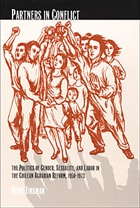
Partners in Conflict
The Politics of Gender, Sexuality, and Labor in the Chilean Agrarian Reform, 1950–1973Heidi Tinsman
Duke University Press, 2002
Tinsman restores women to a scholarly narrative that has been almost exclusively about men, recounting the centrality of women’s labor to the pre-Agrarian Reform world of the hacienda during the 1950s and recovering women’s critical roles in union struggles and land occupations during the Agrarian Reform itself. Providing a theoretical framework for understanding why the Agrarian Reform ultimately empowered men more than women, Tinsman argues that women were marginalized not because the Agrarian Reform ignored women but because, under both the Frei and Allende governments, it promoted the male-headed household as the cornerstone of a new society. Although this emphasis on gender cooperation stressed that men should have more respect for their wives and funneled unprecedented amounts of resources into women’s hands, the reform defined men as its protagonists and affirmed their authority over women.
This is the first monographic social history of Chile’s Agrarian Reform in either English or Spanish, and the first historical work to make sexuality and gender central to the analysis of the reforms.
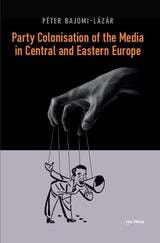
Party Colonisation of the Media in Central and Eastern Europe
Péter Bajomi-Lázár
Central European University Press, 2014
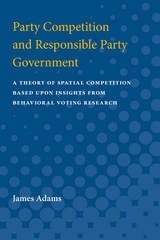
Party Competition and Responsible Party Government
A Theory of Spatial Competition Based Upon Insights from Behavioral Voting ResearchJames Adams
University of Michigan Press, 2001
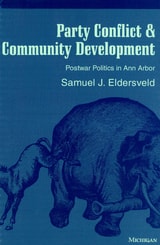
Party Conflict & Community Development
Postwar Politics in Ann ArborSamuel J. Eldersveld
University of Michigan Press, 1995
Party Discipline in the U.S. House of Representatives
Kathryn Pearson
University of Michigan Press, 2015
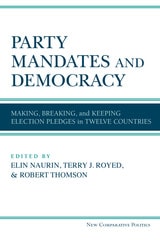
Party Mandates and Democracy
Making, Breaking, and Keeping Election Pledges in Twelve CountriesElin Naurin, Terry J. Royed, and Robert Thomson, Editors
University of Michigan Press, 2019
The fulfillment of parties’ election pledges is an essential part of the democratic process. This book is the first major, genuinely comparative study of promises across a broad range of countries and elections, including the United States, Canada, nine Western European countries, and Bulgaria. The book thus adds to the body of literature on the variety of outcomes stemming from alternative democratic institutions.
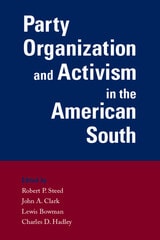
Party Organization and Activism in the American South
Robert P. Steed
University of Alabama Press, 1998
Maps the ways political parties remain vital components in the American political system, especially in the eleven states in the South
As Tocqueville noted more than 100 years ago, “No countries need associations more . . . than those with a democratic social state.” Although some contemporary observers see a decline in associations, especially in the political sphere, the contributors in this volume argue not only that political parties remain an essential component of the American political system but also that grassroots political groups have revitalized the political process, especially in the South.
Using data gathered from local party officials in the eleven southern states, the authors examine such key issues as: Who becomes involved in local party organizations and why? How do parties recruit and retain workers? What are the ideological and issue orientations of these activists? How does intraparty factionalism affect local party organizations? What is the connection between the party organization and its external environment?
The large regional database provides these contributors with the opportunity to extend the study of local party organization and activists, thus addressing some of the significant gaps in previous research. The additional data enable them to clarify the nature of local party organizations and, in a larger sense, the role of the parties in the contemporary American political system.

Party and Factional Division in Texas
By James R. Soukup, Clifton McCleskey, and Harry Holloway
University of Texas Press, 1964
Here is the first attempt by scholars to make a comprehensive analysis of voting patterns in Texas. Examining the results of fourteen elections from 1946 through 1962 and organizing a vast fund of statistics relative to Texas political parties and voters, the authors have laid a solid groundwork for further studies in this field.
The previously ineffectual Texas Republican Party made great strides in the twentieth century and became a competitor in state as well as national races. Specifically, the authors maintain that Texas in the 1960s was a “one and two-thirds party state.” Within the Democratic Party, factions analogous to warring camps immensely complicated the political struggle. Although the conservative elements within the Democratic Party still had a slight edge, growing liberal strength forced them to moderate their policies and tactics.
The authors also contend that there were significant changes in the nature of the issues and the modes of political operation. Though some of the old motivations and tactics lingered on in less significant rural areas, friendship-oriented campaigns appealing to regional and family-like sentiments were being quickly replaced by an organized politics in which political activists made strong ideological appeals to economic and social interests.
The Republicans, the conservative Democrats, and the liberal Democrats are each analyzed in relation to regionalism, demography, ethnic elements, and the economic system in Texas; and the history, present status, and future prospects of these factions are discussed in detail. Of special interest are the last two chapters, which analyze the 1962 elections and their bearings on evolving patterns of competition. The developments within the Republican Party and its challenge to the traditional Democratic Party are seen in the perspectives of the growing importance of minority groups and the impact of urbanization.
All those interested in Texas politics and the history of the rise of the Republican Party in the state will find this study indispensable for an intelligent appraisal of historical developments.

Passage To England
Barbadian Londoners Speak of HomeJohn Western
University of Minnesota Press, 1992
Since World War II London has become a significantly multiracial city. Some of the earliest agents of its transformation were young men and women recruited in the late 1950s from Barbados, then a British colony, to work in the metropolis’s nationalized public transportation system and in its hospitals. These Barbadians met, married, settled in London, and raised Londoner children. In 1987-88 John Western conducted a series of interviews with twelve such families--both parents and children. Their vivid words fill A Passage to England with insight, human, and, often, poignancy. Here is a rich perspective on thirty years or more of London social history.
Western structured the interviews to allow the Barbadians a lot of freedom to discuss whatever came to mind concerning either their own life histories and achievements, or wider themes of culture, politics, and society. Topics covered range from matters of “race” to Margaret Thatcher and the change her decade in power has wrought in Britain. One development, for example, is the strikingly entrepreneurial spirit now embraced by some of the young British blacks, veritably “Mrs. Thatcher’s Children.” Ultimately, many of the interviewees focused on the changes they see in their ancestral island in the Caribbean, to which all of them have returned for visits. For this migrant generation especially, as the prospect of retirement begins to grow increasingly important, inevitable questions regard the definitions of “home” and “belonging” must be confronted: Does one stay in London--with one’s children and grandchildren--or does one return to Barbados, which for many seems no longer the same island as the one they left a working lifetime ago? Within the context of an ever-increasing complement of geographically mobile people worldwide, Western’s study provides unique insights into the particular ambiguities a particular set of person have wrestled with at a particular moment in history...but the import of the Barbadian Londoners’ story is universal.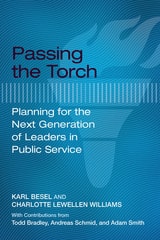
Passing the Torch
Planning for the Next Generation of Leaders in Public ServiceKarl Besel
University of Arkansas Press, 2016
Public-service executives, both elected and appointed within the public and nonprofit sectors, are retiring at record levels, and the number of Americans reaching age sixty-five annually will continue to rise over the next decade and is expected to surpass four million in 2020. Finding qualified, motivated leaders to fill vital public-service positions will challenge the public and nonprofit sectors.
Unfortunately, recent studies show that few proactive steps are being taken by public-service organizations to plan for the next generation. Passing the Torch: Planning for the Next Generation of Public-Service Leaders provides an outline for those who will be facing and managing these looming changes.
In this valuable guide, the factors that influence selection of a career in public service are explored through the authors’ years of experience as leaders in public-service organizations and through interviews with other public-service professionals. Passing the Torch will be essential for leaders of nonprofit organizations, university faculty, researchers in the field of nonprofit management, and students in nonprofit management courses.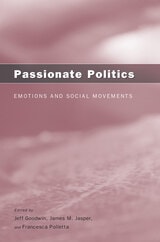
Passionate Politics
Emotions and Social MovementsEdited by Jeff Goodwin, James M. Jasper, and Francesca Polletta
University of Chicago Press, 2001
With this new collection of essays, Jeff Goodwin, James M. Jasper, and Francesca Polletta reverse this trend, reincorporating emotions such as anger, indignation, fear, disgust, joy, and love into research on politics and social protest. The tools of cultural analysis are especially useful for probing the role of emotions in politics, the editors and contributors to Passionate Politics argue. Moral outrage, the shame of spoiled collective identities, or the joy of imagining a new and better society, are not automatic responses to events. Rather, they are related to moral institutions, felt obligations and rights, and information about expected effects, all of which are culturally and historically variable.
With its look at the history of emotions in social thought, examination of the internal dynamics of protest groups, and exploration of the emotional dynamics that arise from interactions and conflicts among political factions and individuals, Passionate Politics will lead the way toward an overdue reconsideration of the role of emotions in social movements and politics generally.
Contributors:
Rebecca Anne Allahyari
Edwin Amenta
Collin Barker
Mabel Berezin
Craig Calhoun
Randall Collins
Frank Dobbin
Jeff Goodwin
Deborah B. Gould
Julian McAllister Groves
James M. Jasper
Anne Kane
Theodore D. Kemper
Sharon Erickson Nepstad
Steven Pfaff
Francesca Polletta
Christian Smith
Arlene Stein
Nancy Whittier
Elisabeth Jean Wood
Michael P. Young
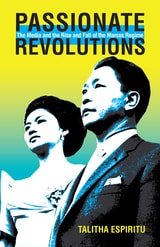
Passionate Revolutions
The Media and the Rise and Fall of the Marcos RegimeTalitha Espiritu
Ohio University Press, 2017
In the last three decades, the dictatorship of Ferdinand Marcos has commanded the close scrutiny of scholars. These studies have focused on the political repression, human rights abuses, debt-driven growth model, and crony capitalism that defined Marcos’ so-called Democratic Revolution in the Philippines. But the relationship between the media and the regime’s public culture remains underexplored.
In Passionate Revolutions, Talitha Espiritu evaluates the role of political emotions in the rise and fall of the Marcos government. Focusing on the sentimental narratives and melodramatic cultural politics of the press and the cinema from 1965 to 1986, she examines how aesthetics and messaging based on heightened feeling helped secure the dictator’s control while also galvanizing the popular struggles that culminated in “people power” and government overthrow in 1986.
In analyzing news articles, feature films, cultural policy documents, and propaganda films as national allegories imbued with revolutionary power, Espiritu expands the critical discussion of dictatorships in general and Marcos’s in particular by placing Filipino popular media and the regime’s public culture in dialogue. Espiritu’s interdisciplinary approach in this illuminating case study of how melodrama and sentimentality shape political action breaks new ground in media studies, affect studies, and Southeast Asian studies.
Passions and Constraint
On the Theory of Liberal DemocracyStephen Holmes
University of Chicago Press, 1995
According to Holmes, three elements of classical liberal theory are commonly used to attack contemporary liberalism as antagonistic to genuine democracy and the welfare state: constitutional constraints on majority rule, the identification of individual freedom with an absence of government involvement, and a strong emphasis on the principle of self-interest. Through insightful essays on Hobbes's analysis of the English Civil War in Behemoth, Bodin's writings on the benefits of limited government, and Mill's views on science and politics, Holmes shows that these basic principles provide, to the contrary, a necessary foundation for the development of democratic, regulatory, and redistributionist politics in the modern era.
Holmes argues that the aspirations of liberal democracy—including individual liberty, the equal dignity of citizens, and a tolerance for diversity—are best understood in relation to two central themes of classical liberal theory: the psychological motivations of individuals and the necessary constraint on individual passions provided by institutions. Paradoxically, Holmes argues that such institutional restraints serve to enable, rather than limit, effective democracy.
In explorations of subjects ranging from self-interest to majoritarianism to "gag rules," Holmes shows that limited government can be more powerful than unlimited government—indeed, that liberalism is one of the most effective philosophies of state building ever contrived. By restricting the arbitrary powers of government officials, Holmes states, a liberal constitution can increase the state's capacity to focus on specific problems and mobilize collective resources for common purposes.
Passions and Constraint is an assessment of what that tradition has meant and what it can mean today.
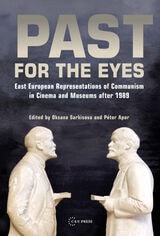
Past for the Eyes
East European Representations of Communism in Cinema and Museums After 1989Oksana Sarkisova
Central European University Press, 2008

Pasta, Pizza and Propaganda
A Political History of Italian Food TVFrancesco Buscemi
Intellect Books, 2021
In this dynamic interdisciplinary study at the intersection of food studies, media studies, and politics, Francesco Buscemi explores the central role of food in Italian culture through a political history of Italian food on national television. A highly original work of political history, the book tells the story of Italian food television from a political point of view: from the pioneering shows developed under strict Catholic control in the 1950s and 1960s to the left-wing political twists of the 1970s, the conservative riflusso or resurgence of the 1980s, through the disputed Berlusconian era, and into the contemporary rise of the celebrity chef. Through this lively and engaging work, we learn that cooking spaghetti in a TV studio is a political act, and by watching it, we become citizens.
Patchwork Nation
Sectionalism and Political Change in American PoliticsJames G. Gimpel and Jason E. Schuknecht
University of Michigan Press, 2004
Patents for Power
Intellectual Property Law and the Diffusion of Military TechnologyRobert M. Farley and Davida H. Isaacs
University of Chicago Press, 2020
The book probes two major issues: the effect of IP law on innovation itself and the effect of IP law on the international diffusion, or sharing, of technology. Discussing a range of inventions, from the AK-47 rifle to the B-29 Superfortress bomber to the MQ-1 Predator drone, the authors show how IP systems (or their lack) have impacted domestic and international relations across a number of countries, including the United States, Russia, China, and South Korea. The study finds, among other results, that while the open nature of the IP system may encourage industrial espionage like cyberwarfare, increased state uptake of IP law is helping to establish international standards for IP protection. This clear-eyed approach to law and national security is thus essential for anyone interested in history, political science, and legal studies.
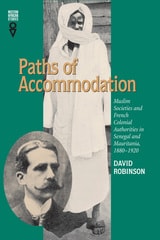
Paths of Accommodation
Muslim Societies and French Colonial Authorities in Senegal and Mauritania, 1880–1920David Robinson
Ohio University Press, 2000
Between 1880 and 1920, Muslim Sufi orders became pillars of the colonial regimes and economies of Senegal and Mauritania. In Paths of Accommodation, David Robinson examines the ways in which the leaders of the orders negotiated relations with the Federation of French West Africa in order to preserve autonomy within the religious, social, and economic realms while abandoning the political sphere to their non-Muslim rulers.
This was a striking development because the local inhabitants had a strong sense of belonging to the Dar al-Islam, the “world of Islam” in which Muslims ruled themselves.
Drawing from a wide variety of archival, oral, and Arabic sources, Robinson describes the important roles played by Muslim merchants and the mulatto community of St. Louis, Senegal. He also examines the impact of the electoral institutions established by the Third Republic, and the French effort to develop a reputation as a “Muslim power”—a European imperial nation with a capacity for ruling over Islamic subjects.
By charting the similarities and differences of the trajectories followed by leading groups within the region as they responded to the colonial regimes, Robinson provides an understanding of the relationship between knowledge and power, the concepts of civil society and hegemony, and the transferability of symbolic, economic, and social capital.
Paths to Power
Elite Mobility in Contemporary ChinaBy David M. Lampton with the assistance of Yeung Sai-cheung
University of Michigan Press, 2000
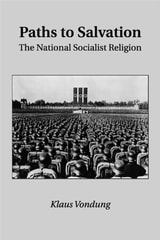
Paths to Salvation
The National Socialist ReligionKlaus Vondung
St. Augustine's Press, 2017
In order to understand National Socialism one must recognize its religious nature. Many Germans were attracted to the party by its pledge to re-establish a true community of the people, a goal that was celebrated as “holy”.
Not only did Hitler promise to solve political, social, and economic problems, he also responded to a widely felt need for salvation. The prospect of salvation elevated politics into the realm of religion and lent meaning to the lives of those who embraced it.
In this work Klaus Vondung explores the various forms in which the elevation of politics into the sphere of religion was expressed in the Third Reich: in the faith of committed National Socialists, in the party’s cult events which celebrated the “community of the people” as a “community of faith” and the Fuhrer as “savior”, and in the persecution of the Jews that was ‘justified’ in religious terms by demonizing Jews as the “evil enemies of humanity” responsible for the world’s ills. This apocalyptic worldview was the extreme manifestation of the religious nature of National Socialism and, in the final analysis, the only plausible explanation for the intention of exterminating the Jews that led to the holocaust.
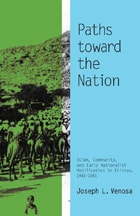
Paths toward the Nation
Islam, Community, and Early Nationalist Mobilization in Eritrea, 1941–1961Joseph L. Venosa
Ohio University Press, 2014
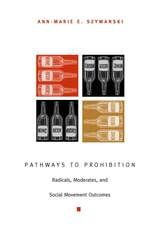
Pathways to Prohibition
Radicals, Moderates, and Social Movement OutcomesAnn-Marie E. Szymanski
Duke University Press, 2003
Combining historical research with the insights of social movement theory, Pathways to Prohibition shows how a locally based, moderate strategy allowed the early-twentieth-century prohibition crusade both to develop a potent grassroots component and to transcend the limited scope of local politics. Szymanski describes how the prohibition movement’s strategic shift toward moderate goals after 1900 reflected the devolution of state legislatures’ liquor licensing power to localities, the judiciary’s growing acceptance of these local licensing regimes, and a collective belief that local electorates, rather than state legislatures, were best situated to resolve controversial issues like the liquor question. "Local gradualism" is well suited to the porous, federal structure of the American state, Szymanski contends, and it has been effectively used by a number of social movements, including the civil rights movement and the Christian right.
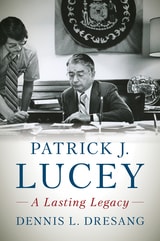
Patrick J. Lucey
A Lasting LegacyDennis L. Dresang
Wisconsin Historical Society Press, 2020
Preceding his service as governor, Lucey played a key role in rebuilding the Democratic Party in Wisconsin, returning a state that had been dominated by Republicans to a more moderate two-party system. As party chairman, he built coalitions between World War II veterans, remnants of the defunct Progressive Party, urban socialists, and activists in rural communities throughout the state.
Through exclusive interviews and unprecedented access to archival materials, Dennis L. Dresang shares the story of this pivotal figure in Wisconsin history, from his small-town rural roots to his wide-ranging influence.

Patriotic Education in a Global Age
Randall Curren and Charles Dorn
University of Chicago Press, 2018
In Patriotic Education in a Global Age, philosopher Randall Curren and historian Charles Dorn address these questions as they seek to understand what role patriotism might legitimately play in schools as an aspect of civic education. They trace the aims and rationales that have guided the inculcation of patriotism in American schools over the years, the methods by which schools have sought to cultivate patriotism, and the conceptions of patriotism at work in those aims, rationales, and methods. They then examine what those conceptions mean for justice, education, and human flourishing. Though the history of attempts to cultivate patriotism in schools offers both positive and cautionary lessons, Curren and Dorn ultimately argue that a civic education organized around three components of civic virtue—intelligence, friendship, and competence—and an inclusive and enabling school community can contribute to the development of a virtuous form of patriotism that is compatible with equal citizenship, reasoned dissent, global justice, and devotion to the health of democratic institutions and the natural environment. Patriotic Education in a Global Age mounts a spirited defense of democratic institutions as it situates an understanding of patriotism in the context of nationalist, populist, and authoritarian movements in the United States and Europe, and will be of interest to anyone concerned about polarization in public life and the future of democracy.
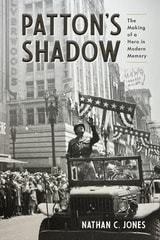
Patton's Shadow
The Making of a Hero in Modern MemoryNathan C. Jones
University of Alabama Press, 2024
An engrossing account of the myth and legend of George S. Patton and what his reputation illuminates about American culture and hero worship
Patton’s Shadow by Nathan C. Jones, a leading authority on George S. Patton, offers a definitive account of the creation of the Patton legend and what it illuminates about American culture and the worship of heroes. Jones traces how the persona of Patton, a brash and brilliant general in the European theater of World War II, transcended the individual man and became a cultural icon and byword for triumphal American might.
Patton was a hero lionized and celebrated in his own time. Patton as well as the US Army cultivated his persona during and after the war. His image was used to promote patriotism, commercial goods, and military recruitment. The 1970 Academy Award–winning film starring George C. Scott cemented his iconic image for millions of Americans, further embellishing Patton’s persona and introducing him to entirely new generations of young Americans.
Patton’s Shadow is an intellectually omnivorous tour de force that draws on ideas about heroes from sources as timeless as ancient mythology and as contemporary as Abraham Maslow, Max Weber, and Carl Jung. Jones artfully locates the honored altar that heroes occupy in the human heart and then answers insightful questions about what America’s embrace of Patton in particular as a military hero illuminates about the United States, about Patton’s generation, and about our own.
Jones’s engrossing work will fascinate readers interested in American history, military history, and the psychology of heroism.
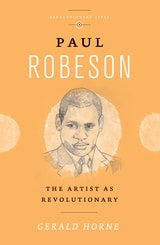
Paul Robeson
The Artist as RevolutionaryGerald Horne
Pluto Press, 2015
“A fine, taut analysis of the great African American athlete, singer, actor, and political activist.”
—Choice, Highly Recommended
Paul Robeson should be remembered today as the forerunner of Malcolm X, Dr. Martin Luther King, Jr. and Muhammad Ali. He sacrificed his fame and fortune a performer and athlete in order to fight for the rights of African Americans during the time of Jim Crow and U.S. Apartheid.
A world-famous singer and actor, a trained lawyer, an early star of American professional football and a polyglot who spoke over a dozen languages: these could be the crowning achievements of a life well-lived. Yet for Paul Robeson the higher calling of social justice led him to abandon both the NFL and Hollywood and become one of the most important political activists of his generation, a crusader for freedom and equality who battled both Jim Crow and US Senator Joseph McCarthy during the communist witch hunt of the 1950s.
In Paul Robeson: The Artist as Revolutionary, Gerald Horne discovers within Robeson's remarkable and revolutionary life the story of the twentieth century's great political struggles: against racism, against colonialism, against poverty—and for international socialism. Chapters include:
*”The Best Known American in the World"
*Rising Revolutionary
*From Moscow to Madrid
*"Black Stalin"?
*Robeson: Primary Victim of the "Blacklist"
*Triumph—and Tragedy
*Death of a Revolutionary
In the Introduction, Horne writes: “Paul Robeson—activist, artist, athlete—experienced a dramatic rise and fall, perhaps unparalleled in U.S. history. From mingling with the elite of London society and Hollywood in the 1930s, by the time he died in 1976, he was a virtual recluse in a plain abode in a working-class neighborhood of Philadelphia. What helps to explicate this tragic art of his life is a fateful decision he made when fascism was rising: he threw in his lot with those battling for socialism and decide to sacrifice his thriving artistic career on behalf of the struggle against Jim Crow—or U.S. apartheid.”
This critical and searching biography provides an opportunity for readers to comprehend the triumphs and tragedies of the revolutionary progressive movement of which Paul Robeson was not just a part, but perhaps its most resonant symbol.
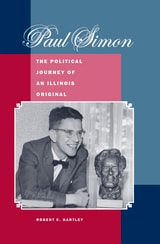
Paul Simon
The Political Journey of an Illinois OriginalRobert E. Hartley
Southern Illinois University Press, 2009
With Paul Simon: The Political Journey of an Illinois Original, author Robert E. Hartley presents the first thorough, objective volume on the journalistic and political career of one of Illinois’s most respected public figures. Hartley’s detailed account offers a fully rounded portrait of a man whose ideals and tenacity not only spurred reform on both state and national levels during his celebrated forty-year career but also established the lasting legacy of a political legend.
Simon first became a public figure at the age of nineteen, when he assumed the post of editor and publisher of a weekly newspaper in Troy, Illinois. From there, he used his paper to launch a fierce crusade against the crime and corruption plaguing Madison County. This battle sparked his entry into politics, helping to land him a seat in the state legislature in 1954. While serving, he campaigned tirelessly according to his principles, earning him the mass voter approval that would usher him into the seat of lieutenant governor in 1968—the first person elected to that position who did not share party affiliation with the governor.
As lieutenant governor, Simon initiated many changes to the position, remaking it to better serve the citizens of the state of Illinois. The cornerstone of his reform plan was an ombudsman program designed to allow the people of the state to voice problems they had with government and state agencies. The program, extremely popular with the public and the press, solved problems and helped to make Simon a household name throughout Illinois. Although he faced challenges along the way, including racial upheaval in Cairo and the student and police riots on the Carbondale campus of Southern Illinois University, Simon’s outspoken honesty and strong support of his constituents earned him the utmost esteem and popularity.
While his 1972 bid for governor of Illinois ultimately failed, this did not deter Simon from his dedication to social progress. In 1974 he began his remarkable twenty-two-year career in the U.S. House of Representatives and Senate, where he earned the admiration of the country for his political integrity. Despite the praise and support Simon had earned during his time in Washington, he was unable to win the Democratic presidential nomination in 1988 and returned to the Senate, winning a second term in 1990. Simon committed time and energy to the myriad issues of interest to him, especially in the field of education, with one of his biggest successes coming with the passage of the National Literacy Act, which he sponsored. He continued to foster his ties to journalism throughout his lengthy political career, authoring numerous books, articles, and columns, all of which he used to relentlessly promote open government and social programs.
This vivid account of the public life of Paul Simon reveals a man whose personal honor and dedication were unshakeable throughout nearly half a century in the political arena. Robert E. Hartley provides a candid perspective on Simon’s accomplishments and victories, as well as his mistakes and losses, revealing new insights into the life of this dynamic and widely respected public figure.
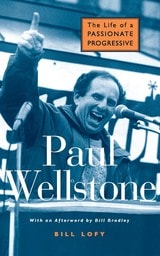
Paul Wellstone
The Life of a Passionate ProgressiveBill Lofy
University of Michigan Press, 2005
---Arianna Huffington, columnist and editor of HuffingtonPost.com
"This book captures the vibrant spirit of my friend Paul Wellstone---the fierce commitment to justice that defined his life, and that shapes his enduring legacy."
---U.S. Senator Russ Feingold
"Paul Wellstone was a great leader because he fused progressive idealism with a stubbornly pragmatic politics. Bill Lofy's book captures that dual commitment in his story of Wellstone's life, and also shows us the extraordinary human appeal that Wellstone emanated in his relationships with people in all walks of life. This book is an engaging read that also tells us a lot about the political practice to which we should aspire."
---Frances Fox Piven, author of The War at Home
"This vividly written book captures the life and personal qualities of the late Senator Paul Wellstone. In so doing it provides an illuminating gloss on Max Weber's seminal exposition of the political vocation. It is a jewel of a book."
-Fred Greenstein, Princeton University
Bill Lofy's fast-paced and readable biography tells the inspirational story of one of the most compelling figures in the history of American politics---Senator Paul Wellstone.
Yet Lofy's book is more than just the chronicle of Wellstone's life and political career; it's also an indispensable guide to what ails political life today. Readers politically inclined or not will find in its pages a handbook to the uncertain and often treacherous business of politics and a stirring example for living a courageous and honest life---whether as public servant or private individual.
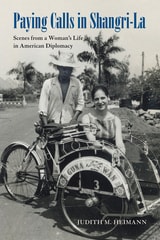
Paying Calls in Shangri-La
Scenes from a Woman’s Life in American DiplomacyJudith M. Heimann
Ohio University Press, 2016
Judith M. Heimann entered the diplomatic life in 1958 to join her husband, John, in Jakarta, Indonesia, at his American Embassy post. This, her first time out of the United States, would set her on a path across the continents as she mastered the fine points of diplomatic culture. She did so first as a spouse, then as a diplomat herself, thus becoming part of one of the Foreign Service’s first tandem couples.
Heimann’s lively recollections of her life in Africa, Asia, and Europe show us that when it comes to reconciling our government’s requirements with the other government’s wants, shuttle diplomacy, Skype, and email cannot match on-the-ground interaction. The ability to gauge and finesse gesture, tone of voice, and unspoken assumptions became her stock-in-trade as she navigated, time and again, remarkably delicate situations.
This insightful and witty memoir gives us a behind-the-scenes look at a rarely explored experience: that of one of the very first married female diplomats, who played an unsung but significant role in some of the important international events of the past fifty years. To those who know something of today’s world of diplomacy, Paying Calls in Shangri-La will be an enlightening tour through the way it used to be—and for aspiring Foreign Service officers and students, it will be an inspiration.
Published in association with ADST-DACOR Diplomats and Diplomacy Series
Paying for the Party
How Fundraising Demands Lead to Less Productive and Less Representative LegislaturesMichael R. Kistner
University of Chicago Press, 2026
A revealing, data-rich exploration of how American legislators transformed from active policymakers into party fundraisers.
Lawmakers in Congress and state legislatures across the United States spend enormous amounts of time and effort fundraising, not just for their own seats but for the party. Whether dialing for dollars or hosting high-priced fundraising events, the pursuit of campaign funds is now a massive part of the American legislator’s job description. What explains this transformation, and what are the consequences for public policy?
In Paying for the Party, Michael Kistner uses new theory and new data to answer these questions. He shows that state legislative party organizations—Democratic and Republican caucuses in capitols across the country—are responsible for turning their members into single-minded seekers of money. Parties reward legislators who contribute the most with powerful leadership and committee positions. Consequently, the members who now hold these agenda-setting positions are increasingly neither the most productive nor knowledgeable lawmakers, but rather those who can raise the most money. And when legislators are asked to raise more money, they skip committee hearings for fundraising events, enacting fewer substantive policies as a result. Paying for the Party shows that parties in contemporary American legislatures have hollowed out the policymaking capacity of their institutions and empowered a decidedly non-representative set of legislators.
Peace and Mind
Part 3: Seriatim Symposium on Dispute, Conflict, and Enmity, Volume 8Jeffrey M. Perl, ed.
Duke University Press, 0
One contributor, a longtime president of the American Council of Learned Societies, calls for "intellectual philanthropy" and suggests that academics should transcend their ideological differences and form cooperative partnerships in the public service. A pair of essays, by key figures of the 1989 Velvet Revolution in Eastern Europe, analyze the ways that self-confidence and self-regard undercut efforts toward the resolution of complex social problems. The qualities of ideological self-subversion and even weakness, Common Knowledge maintains, are essential if the intellectual community is to become an agent for peace in a time of war.
Contributors. Wayne Andersen, Sissela Bok, Yves Bonnefoy, Caroline Walker Bynum, Clare Cavanagh, Charles-Albert Cingria, Caryl Emerson, Clifford Geertz, Stanley N. Katz, Aileen Kelly, Adam Michnik, Péter Nádas, Eugene Ostashevsky, Jeffrey M. Perl, Marjorie Perloff, Nina Pelikan Straus, Rei Terada, Gianni Vattimo, William Vesterman, Aleksandr Vvedensky, Adam Zagajewski.

Peace as War
Bosnia-Herzegovina Post-DaytonDrazen Pehar
Central European University Press, 2019
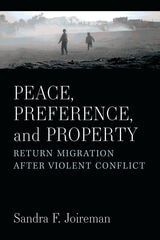
Peace, Preference, and Property
Return Migration after Violent ConflictSandra F. Joireman
University of Michigan Press, 2022
Growing numbers of people are displaced by war and violent conflict. In Ukraine, Afghanistan, Ethiopia, Myanmar, Syria, and elsewhere violence pushes civilian populations from their homes and sometimes from their countries, making them refugees. In previous decades, millions of refugees and displaced people returned to their place of origin after conflict or were resettled in countries in the Global North. Now displacements last longer, the number of people returning home is lower, and opportunities for resettlement are shrinking. More and more people spend decades in refugee camps or displaced within their own countries, raising their children away from their home communities and cultures. In this context, international policies encourage return to place of origin.
Using case studies and first-person accounts from interviews and fieldwork in post-conflict settings such as Uganda, Liberia, and Kosovo, Sandra F. Joireman highlights the divergence between these policies and the preferences of conflict-displaced people. Rather than looking from the top down, at the rights that people have in international and domestic law, the perspective of this text is from the ground up—examining individual and household choices after conflict. Some refugees want to go home, some do not want to return, some want to return to their countries of origin but live in a different place, and others are repatriated against their will when they have no other options. Peace, Preference, and Property suggests alternative policies that would provide greater choice for displaced people in terms of property restitution and solutions to displacement.
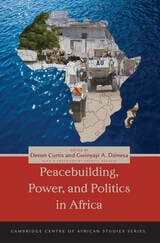
Peacebuilding, Power, and Politics in Africa
Devon Curtis
Ohio University Press, 2012
Peacebuilding, Power, and Politics in Africa is a critical reflection on peacebuilding efforts in Africa. The authors expose the tensions and contradictions in different clusters of peacebuilding activities, including peace negotiations; statebuilding; security sector governance; and disarmament, demobilization, and reintegration. Essays also address the institutional framework for peacebuilding in Africa and the ideological underpinnings of key institutions, including the African Union, NEPAD, the African Development Bank, the Pan-African Ministers Conference for Public and Civil Service, the UN Peacebuilding Commission, the World Bank, and the International Criminal Court. The volume includes on-the-ground case study chapters on Sudan, the Great Lakes Region of Africa, Sierra Leone and Liberia, the Niger Delta, Southern Africa, and Somalia, analyzing how peacebuilding operates in particular African contexts.
The authors adopt a variety of approaches, but they share a conviction that peacebuilding in Africa is not a script that is authored solely in Western capitals and in the corridors of the United Nations. Rather, the writers in this volume focus on the interaction between local and global ideas and practices in the reconstitution of authority and livelihoods after conflict. The book systematically showcases the tensions that occur within and between the many actors involved in the peacebuilding industry, as well as their intended beneficiaries. It looks at the multiple ways in which peacebuilding ideas and initiatives are reinforced, questioned, reappropriated, and redesigned by different African actors.
A joint project between the Centre for Conflict Resolution in Cape Town, South Africa, and the Centre of African Studies at the University of Cambridge.

Peak Oil
Apocalyptic Environmentalism and Libertarian Political CultureMatthew Schneider-Mayerson
University of Chicago Press, 2015
In Peak Oil, Matthew Schneider-Mayerson takes readers deep inside the world of “peakists,” showing how their hopes and fears about the postcarbon future led them to prepare for the social breakdown they foresee—all of which are fervently discussed and debated via websites, online forums, videos, and novels. By exploring the worldview of peakists, and the unexpected way that the fear of peak oil and climate change transformed many members of this left-leaning group into survivalists, Schneider-Mayerson builds a larger analysis of the rise of libertarianism, the role of oil in modern life, the political impact of digital technologies, the racial and gender dynamics of post-apocalyptic fantasies, and the social organization of environmental denial.

Peasants Against the State
The Politics of Market Control in Bugisu, Uganda, 1900-1983Stephen G. Bunker
University of Chicago Press, 1991
Focusing on peasant struggles for market control over coffee exports in Bugisu from colonial times through the reign and overthrow of Idi Amin, Bunker shows that these freeholding peasants acted collectively and used the state's dependence on coffee export revenues to effectively influence and veto government programs inimical to their interests.
Bunker's work vividly portrays the small victories and great trials of ordinary people struggling to control their own economic destiny while resisting the power of the world economy.
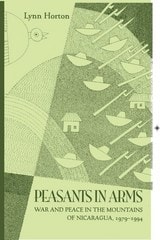
Peasants In Arms
War and Peace in the Mountains of Nicaragua, 1979–1994Lynn Horton
Ohio University Press, 1999
Drawing on testimonies from contra collaborators and ex-combatants, as well as pro-Sandinista peasants, this book presents a dynamic account of the growing divisions between peasants from the area of Quilalí who took up arms in defense of revolutionary programs and ideals such as land reform and equality and those who opposed the FSLN.
Peasants in Arms details the role of local elites in organizing the first anti-Sandinista uprising in 1980 and their subsequent rise to positions of field command in the contras. Lynn Horton explores the internal factors that led a majority of peasants to turn against the revolution and the ways in which the military draft, and family and community pressures reinforced conflict and undermined mid-decade FSLN policy shifts that attempted to win back peasant support.
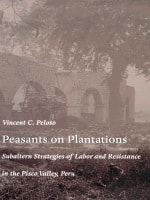
Peasants on Plantations
Subaltern Strategies of Labor and Resistance in the Pisco Valley, PeruVincent Peloso
Duke University Press, 1999
Grounded in the theoretical perspectives of subaltern studies and drawing on an extremely complete archive of landed estates that includes detailed regular reports by plantation managers on all aspects of farming life, Peasants on Plantations reveals the intricate ways peasants, managers, and owners manipulated each other to benefit their own interests. As Peloso demonstrates, rather than a simple case of domination of the peasants by the owners, both parties realized that negotiation was the key to successful growth, often with the result that peasants cooperated with plantation growth strategies in order to participate in a market economy. Long-term contracts gave tenants and sharecroppers many opportunities to make farming choices, to assert claims on the land, compete among themselves, and participate in plantation expansion. At the same time, owners strove to keep the peasants in debt and well aware of who maintained ultimate control.
Peasants on Plantations offers a largely untold view of the monumental struggle between planters and peasants that was fundamental in shaping the agrarian history of Peru. It will interest those engaged in Latin American studies, anthropology, and peasant and agrarian studies.
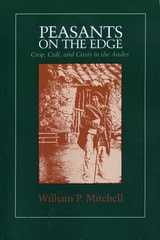
Peasants on the Edge
Crop, Cult, and Crisis in the AndesBy William P. Mitchell
University of Texas Press, 1991
Throughout Latin America and the rest of the Third World, profound social problems are growing in response to burgeoning populations and unstable economic and political systems. In Peru, terrorist acts by the Shining Path guerilla movement are the most visible manifestation of social discontent, but rapid economic and religious changes have touched the lives of almost everyone, radically altering traditional lifeways. In this twenty-year study of the community of Quinua in the Department of Ayacucho, William Mitchell looks at changes provoked by population growth within a severely limited ecological and economic setting, including increasing conversion to a cash economy and out-migration, the decline of the Catholic fiesta system and the rise of Protestantism, and growing poverty and revolution.
When Mitchell first began his field studies in Quinua in 1966, farming was still the Quinueños' principal means of livelihood. But while the population was increasing rapidly, the amount of arable land in the community remained the same, creating increased food shortfalls. At the same time, government controls on food prices and subsidies of cheap food imports drove down the value of rural farm production. These ecological and economic factors forced many people to enter the nonfarm economy to feed themselves.
Using a materialist approach, Mitchell charts the new economic strategies that Quinueños use to confront the harsh pressures of their lives, including ceramic production, wage labor, petty commerce, and migration to cash work on the coat and in the eastern tropical forests. In addition, he shows how the growing conversion from Catholicism to Protestantism is also an economic strategy, since Protestant ideology offers acceptable reasons for redirecting the money that used to be spent on elaborate religious festivals to household needs and education.
The twenty-year span of this study makes it especially valuable for students of social change. Mitchell's unique, interdisciplinary approach, considering ecological, economic, and population factors simultaneously, offers a model that can be widely applied in many Third World areas. Additionally, the inclusion of an entire chapter of family histories reveals how economic and ecological forces are played out at the individual level.

Pedaling Resistance
Sympathy, Subversion, and Vegan CyclingCarol J. Adams
University of Arkansas Press, 2024
The essays in this collection explore the unity between cycling for health, work, competition, transport, and joy, and the issues of animal suffering, environmentalism, and speciesism inherent in veganism—all through lenses of class, race, gender, and disability. Pedaling Resistance illuminates themes of everyday resistance and boundary crossing to uncover the greater social and political issues that underlie the decisions to give up animal products and choose cycling over driving.
Penchant for Prejudice
Unraveling Bias in Judicial Decision-MakingLinda G. Mills
University of Michigan Press, 1999
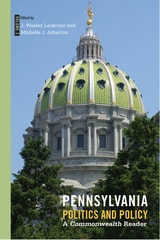
Pennsylvania Politics and Policy, Volume 2
A Commonwealth ReaderEdited by Michelle J. Atherton and J. Wesley Leckrone
Temple University Press, 2019
Designed to showcase current issues of interest, Pennsylvania Politics and Policy, Volume 2 isthe second reader consisting of updated chapters from recent issues of Commonwealth: A Journal of Pennsylvania Politics and Policy. The editors and contributors to this volume focus on government institutions, election laws, the judiciary, government finance and budgeting, the opioid crisis, childcare, property taxes, environmental policy, demographics, and more. Each chapter is supplemented by discussion questions, suggestions for further reading, and forums with arguments in support of or opposed to contested elements of state policy.
In addition, Pennsylvania Politics and Policy, Volume 2 includes a detailed guide to researching state government and policy online, as well as a comprehensive chapter on the structure of Pennsylvania government. It is designed as a text or supplement for college or advanced high school classes in American government, state and local politics, public policy, and public administration.
Contributors include: John Arway, Jenna Becker Kane, Jeffrey Carroll, Bob Dick, Ashley Harden, Stefanie I. Kasparek, Vera Krekanova, Maureen W. McClure, John F. McDonald, Josh Shapiro, Marc Stier, Jennie Sweet-Cushman, James Vike, and the editors.
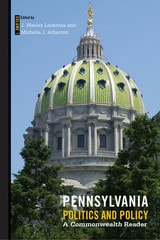
Pennsylvania Politics and Policy
A Commonwealth ReaderJ. Wesley Leckrone
Temple University Press, 2018
The activities of state governments have always been important in the American federal system. However, recent partisan gridlock in Washington, DC has placed states at the forefront of policymaking as the national government maintains the status quo. Pennsylvania Politics and Policy, Volume 1 is designed to showcase current issues of interest to Pennsylvanians. This reader contains updated chapters from recent issues of Commonwealth: A Journal of Pennsylvania Politics and Policy on education, health care, public finance, tax policy, environmental policy, alcohol policy and more. Each chapter is supplemented by forums with arguments in support of or opposed to contested elements of state policy, discussion questions, and suggestions for further reading.
In addition, Pennsylvania Politics and Policy, Volume 1 includes a comprehensive guide to researching state government and policy online. It is designed as a text or supplement for college or advanced high school classes in American government, state and local politics, public policy, and public administration.
Contributors include: David G. Argall, Tom Baldino, Michele Deegan, Michael Dimino, George Hale, Rachel L. Hampton , Paula Duda Holoviak Jon Hopcraft, Vera Krekanova, Maureen W. McClure, Barry G. Rabe, Marguerite Roza, Lanethea Mathews Shultz, Jennie Sweet-Cushman, Amanda Warco, and the editors.

Pension Puzzles
Social Security and the Great DebateMelissa Hardy
Russell Sage Foundation, 2007
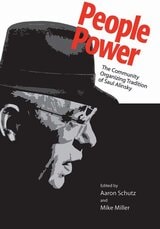
People Power
The Community Organizing Tradition of Saul AlinskyAaron Schutz
Vanderbilt University Press, 2015
--Fred Ross, Cesar Chavez, Dolores Huerta, and the Community Service Organization and National Farm Workers Association
--Nicholas von Hoffman and the Woodlawn Organization
--Tom Gaudette and the Northwest Community Organization
--Ed Chambers, Richard Harmon, and the Industrial Areas Foundation
--Shel Trapp, Gale Cincotta, and National People's Action
--Heather Booth, Midwest Academy, and Citizen Action
--Wade Rathke and ACORN
Weaving classic texts with interviews and their own context-setting commentaries, the editors of People Power provide the first comprehensive history of Alinsky-based organizing in the tumultuous period from 1955 to 1980, when the key organizing groups in the United States took form. Many of these selections--previously available only on untranscribed audiotapes or in difficult-to-read mimeograph or Xerox formats--appear in print here for the first time.
People Power
Unarmed Resistance and Global SolidarityHoward Clark
Pluto Press, 2009
Across the world, nonviolent movements are at the forefront of resistance against repression, imperial aggression and corporate abuse. However, it is often difficult for activists in other countries to know how best to assist such movements.
The contributors to People Power place nonviolent struggles in an international context where solidarity can play a crucial role. Yet they also warn that good intentions are not enough, solidarity has to listen to local movements.
Examining movements from Zimbabwe to Burma and Palestine, the contributors assess various forms of solidarity, arguing that a central role of solidarity is to strengthen the counter-power of those resisting domination and oppression.
People on the Move
The Security, Social, and Economic Implications of Mass Migration, Volume 15Nikolas A. Stavrou, ed.
Duke University Press, 0
This collection gathers a unique group of contributors, including representatives from Congress, the United Nations, and Israel’s Ministry of Justice, as well as senior diplomats from Canada, Bulgaria, Portugal, Spain, and Turkey. Presenting their diverse perspectives, the contributors address regional and policy issues related to the mass migration of people, as well as questions concerning citizenship and national security, human trafficking in the form of prostitution, and cultural discrimination. The result is a multifaceted exploration of issues underlying many of the world’s economic, security, and social challenges. Other topics include the impact of state failure on migration, immigration in California, security measures and “preferred” immigrants in Canada after September 11, 2001, and Albanian migration into Greece.
Contributors. Alexandre Afonso, David Binder, Andrew C. Danopoulos, Constantine P. Danopoulos, Francis M. Deng, Mohamed A. El-Khawas, Omar G. Encarnación, Rochelle Gershuni, Larry L. Gerston, Ahmet Içduygu, Benjamin Kline, Bojan Korenic, Erin Kruger, Robert S. Leiken, Marlene Mulder, Elena Poptodorova, Tom Tancredo