Results by title
4743 books match the query 'Religion' and 206 start with p
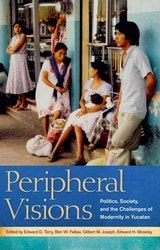
Peripheral Visions
Politics, Society, and the Challenges of Modernity in YucatanEdward D. Terry
University of Alabama Press, 2010
The essays in this collection illuminate both the processes of change and the negative reactions that they frequently elicited
Yucatan has been called “a world apart”—cut off from the rest of Mexico by geography and culture. Yet, despite its peripheral location, the region experienced substantial change in the decades after independence. As elsewhere in Mexico, apostles of modernization introduced policies intended to remold Yucatan in the image of the advanced nations of the day. Indeed, modernizing change began in the late colonial era and continued throughout the 19th century as traditional patterns of land tenure were altered and efforts were made to divest the Catholic Church of its wealth and political and intellectual influence. Some changes, however, produced fierce resistance from both elites and humbler Yucatecans and modernizers were frequently forced to retreat or at least reach accommodation with their foes.
Covering topics from the early 19th century to the late 20th century, the essays in this collection illuminate both the processes of change and the negative reactions that they frequently elicited. The diversity of disciplines covered by this volume—history, anthropology, sociology, economics—illuminates at least three overriding challenges for study of the peninsula today. One is politics after the decline of the Institutional Revolutionary Party: What are the important institutions, practices, and discourses of politics in a post-postrevolutionary era? A second trend is the scholarly demystification of the Maya: Anthropologists have shown the difficulties of applying monolithic terms like Maya in a society where ethnic relations are often situational and ethnic boundaries are fluid. And a third consideration: researchers are only now beginning to grapple with the region’s transition to a post-henequen economy based on tourism, migration, and the assembly plants known as maquiladoras. Challenges from agribusiness and industry will no doubt continue to affect the peninsula’s fragile Karst topography and unique environments.
Contributors: Eric N. Baklanoff, Helen Delpar, Paul K. Eiss, Ben W. Fallaw, Gilbert M. Joseph, Marie Lapointe, Othón Baños Ramírez, Hernán Menéndez Rodríguez, Lynda S. Morrison, Terry Rugeley, Stephanie J. Smith
Personal Catholicism
The Theological Epistemologies of John Henry Newman and Michal PolanyiMartin X. Moleski
Catholic University of America Press, 2020
Personalist Papers
John F. Crosby
Catholic University of America Press, 2004
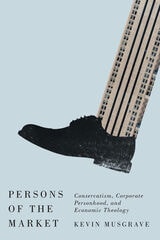
Persons of the Market
Conservatism, Corporate Personhood, and Economic TheologyKevin Musgrave
Michigan State University Press, 2022
light on their seemingly odd marriage in contemporary American politics. Author Kevin Musgrave highlights the ways that theories of corporate and human personhood have long been and remain bound together by examining four case studies: the U.S. Supreme Court’s 1886 Santa Clara decision, the role of early twentieth-century advertisers in endowing corporations with souls, Justice Lewis Powell Jr.’s eponymous memo of 1971, and the arc of the conservative movement from Ronald Reagan to Donald Trump. Tracing this rhetorical history of the extension and attribution of personhood to the corporate form illustrates how the corporation has for many increasingly become a normative model or ideal to which human persons should aspire. In closing, the book offers preliminary ideas about how we might fashion a more democratic and humane understanding of what it means to be a person.
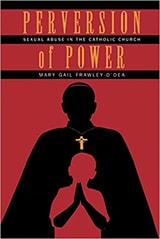
Perversion of Power
Sexual Abuse in the Catholic ChurchMary Gail Frawley-O'Dea
Vanderbilt University Press, 2007
Celibacy, homosexuality in the priesthood, the infiltration into the priesthood of secular moral relativism, too much liberalism in the Church since Vatican II, damaging rollback of Vatican II reforms by conservative prelates--all have been suggested as causes for the crisis. This book, however, begins with the premise that, because the pattern of abuse and cover-up was so similar across the world, there is something fundamentally awry with Church traditions and power structures in relationship to sexuality and sexual abuse.
Specifically, in chapters on suffering and sadomasochism, bodies and gender, desire and sexuality, celibacy and homosexuality, the author concludes that aspects of the Catholic theology of sexuality set the stage for the abuse of minors and its cover-up. Frawley-O'Dea also analyzes the American bishops' lack of pastoral care and tendency towards clerical narcissism--the belief that the needs of the hierarchy represent the needs of the wider Church--as central factors in the scandal. She balances this criticism with a discussion of the backgrounds of the bishops presiding over the crisis and the challenges they faced in their relationships with the Pope and Vatican officials.
Drawing on twenty years of clinical experience, she imagines the dynamics of sexual abuse both from the victim's point of view and from the priest's, and she probes why the Church hierarchy, fellow priests, and lay people were silent for so long. Finally, Frawley-O'Dea examines factors internal to the Church and outside of it that drew this scandal into the public square and kept it there.
Peter Comestor's Lectures on the Glossed Gospel of John
A Study with a Critical Edition and TranslationPeter Comestor
Catholic University of America Press, 2023

Peter Comestor's Lectures on the Gospel of Luke and its Glosses
Peter Comestor
Catholic University of America Press, 0
Peter Lombard and the Biblical Gloss
Textual Fluidity in Mid-Twelfth-Century ParisMark Clark
Catholic University of America Press, 2026
Peter and Caesar
Political Authority and the Catholic ChurchEdward A. Goerner
St. Augustine's Press, 2020
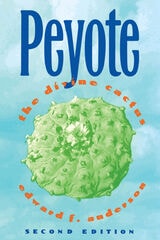
Peyote
The Divine CactusEdward F. Anderson
University of Arizona Press, 1996
What is it in peyote that causes such unusual effects? Can modern medical science learn anything from Native Americans’ use of peyote in curing a wide variety of ailments? What is the Native American Church, and how do its members use peyote? Does anyone have the legal right to use drugs or controlled substances in religious ceremonies?
Within this volume are answers to these and dozens of other questions surrounding the controversial and remarkable cactus. Greatly expanded and brought up-to-date from the 1980 edition, these pages describe peyote ceremonies and the users’ experiences, and also cover the many scientific and legal aspects of using the plant. Well written, informative, comprehensive, and enlightening, the book will be welcomed by counselors, anthropologists, historians, physicians, chemists, lawyers, and observers of the contemporary drug scene, as well as by interested general readers.
Philo of Alexandria's Exposition on the Tenth Commandment
Hans Svebakken
SBL Press, 2012
Philo's Influence on Valentinian Tradition
Risto Auvinen
SBL Press, 2024
Philodemus, On Death
W. Benjamin Henry
SBL Press, 2009
Philology of the Flesh
John T. Hamilton
University of Chicago Press, 2018
In Philology of the Flesh, John T. Hamilton explores writing and reading practices that engage this notion in a range of poetic enterprises and theoretical reflections. By pressing the notion of philology as “love” (philia) for the “word” (logos), Hamilton’s readings investigate the breadth, depth, and limits of verbal styles that are irreducible to mere information. While a philologist of the body might understand words as corporeal vessels of core meaning, the philologist of the flesh, by focusing on the carnal qualities of language, resists taking words as mere containers.
By examining a series of intellectual episodes—from the fifteenth-century Humanism of Lorenzo Valla to the poetry of Emily Dickinson, from Immanuel Kant and Johann Georg Hamann to Friedrich Nietzsche, Franz Kafka, and Paul Celan—Philology of the Flesh considers the far-reaching ramifications of the incarnational metaphor, insisting on the inseparability of form and content, an insistence that allows us to rethink our relation to the concrete languages in which we think and live.
Philosophy's Violent Sacred
Heidegger and Nietzsche through Mimetic TheoryDuane Armitage
Michigan State University Press, 2021
Phoenician Aniconism in Its Mediterranean and Ancient Near Eastern Contexts
Brian R. Doak
SBL Press, 2015
The Hebrew Bible contains a prohibition against divine images (Exod 20:2-5a). Explanations for this command are legion, usually focusing on the unique status of Israel's deity within the context of the broader Near Eastern and Mediterranean worlds. Doak explores whether or not Israel was truly alone in its severe stance against idols. This book focuses on one particular aspect of this iconographic context in Israel's Iron Age world: that of the Phoenicians. The question of whether Phoenicians employed aniconic (as opposed to iconic) representational techniques has significance not only for the many poorly understood aspects of Phoenician religion generally, but also for the question of whether aniconism can be considered a broader trend among the Semitic populations of the ancient Near East.
Features:
- More than fifty images and illustrations
- Examination of textual and archaeological evidence
- Application of art historical methods
Phoenician Inscriptions
Robert D. Holmstedt
SBL Press, 2026
Pickin’ Cotton on the Way to Church
The Life and Work of Father Boniface Hardin, OSBNancy Van Note Chism
Indiana Historical Society Press, 2019
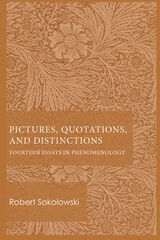
Pictures, Quotations, and Distinctions
Fourteen Essays in PhenomenologyRobert Sokolowski
Catholic University of America Press, 2022
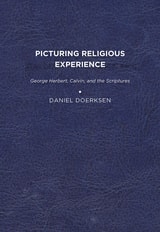
Picturing Religious Experience
George Herbert, Calvin, and the ScripturesDaniel Doerksen
University of Delaware Press, 2012
Published by University of Delaware Press. Distributed worldwide by Rutgers University Press.

Piercing the Clouds
Lectio Divina and the Preparation for MinistryKevin Zilverberg
Saint Paul Seminary Press, 2021
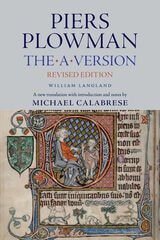
Piers Plowan
The A Version, Revised EditionWilliam Langland
Catholic University of America Press, 2023

Piety and Charity in Late Medieval Florence
John Henderson
University of Chicago Press, 1997
"[A] long-awaited book. . . . [It is] the most complete survey of confraternities and charity, not only for Florence, but for any Italian city state to date. . . . This book recovers more vividly than other recent works what it meant to be a member of a confraternity in the late middle ages."—Samuel K. Cohn, Jr., Economic History Review
"Henderson offers new and fascinating information. . . . A stimulating and suggestive book that deserves a wide readership." —Gervase Rosser, Times Higher Education Supplement
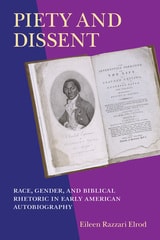
Piety and Dissent
Race, Gender, and Biblical Rhetoric in Early American AutobiographyEileen R. Elrod
University of Massachusetts Press, 2008
For pious converts to Christianity in late eighteenth- and early nineteenth-century New England, all reality was shaped by religious devotion and biblical text. It is therefore not surprising that earnest believers who found themselves marginalized by their race or sex relied on their faith to reconcile the tension between the spiritual experience of rebirth and the social ordeal of exclusion and injustice.
In Piety and Dissent, Eileen Razzari Elrod examines the religious autobiographies of six early Americans who represented various sorts of marginality: John Marrant, Olaudah Equiano, and Jarena Lee, all of African or African American heritage; Samson Occom (Mohegan) and William Apess (Pequot); and Abigail Abbott Bailey, a white woman who was subjected to extreme domestic violence. Through close readings of these personal narratives, Elrod uncovers the complex rhetorical strategies employed by pious outsiders to challenge the particular kinds of oppression each experienced. She identifies recurrent ideals and images drawn from Scripture and Protestant tradition—parables of liberation, rage, justice, and opposition to authority—that allowed them to see resistance as a religious act and, more than that, imbued them with a sense of agency.
What the life stories of these six individuals reveal, according to Elrod, is that conventional Christianity in early America was not the hegemonic force that church leaders at the time imagined, and that many people since have believed it to be. Nor was there a clear distinction between personal piety and religious, social, and political resistance. To understand fully the role of religion in the early period of American letters, we must rethink some of our most fundamental assumptions about the function of Christian faith in the context of individual lives.

Pilgram Marpeck
His Life and Social TheologyStephen B. Boyd
Duke University Press, 1992
Drawing on extensive archival data documenting Marpeck’s professional life, as well as on his numerous published and unpublished writings on theology and religious reform, Stephen B. Boyd traces Marpeck’s unconventional transition from mining magistrate to Anabaptist leader, establishes his connections with various radical social and religious groups, and articulates aspects of his social theology. Marpeck’s distinctive and eclectic theology, Boyd demonstrates, focused on the need for personal, uncoerced conversion, rejected state interference in the affairs of the church, denied the need for a monastic withdrawal from the secular world, and called for the Christian’s active pursuit of justice before God and among human beings.
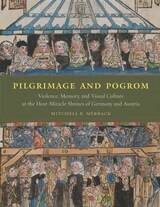
Pilgrimage and Pogrom
Violence, Memory, and Visual Culture at the Host-Miracle Shrines of Germany and AustriaMitchell B. Merback
University of Chicago Press, 2013
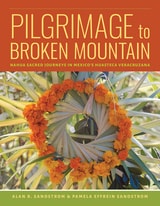
Pilgrimage to Broken Mountain
Nahua Sacred Journeys in Mexico's Huasteca Veracruzanaby Alan R. Sandstrom & Pamela Effrein Sandstrom illustrated by Michael K. Aakhus, Ana Laura Ávila-Myers & Michael A. Sandstrom
University Press of Colorado, 2022
Pilgrimage to Broken Mountain contains richly detailed descriptions and analyses of ritual procedures as well as translations from the Nahuatl of core myths, chants performed before decorated altars, and statements from participants. Particular emphasis is placed on analyzing the role of sacred paper figures that are produced by the thousands for each pilgrimage. The work contains drawings of these cuttings of spirit entities along with hundreds of color photographs illustrating how they are used throughout the pilgrimages. The analysis reveals the monist philosophy that underlies Nahua religious practice in which altars, dancing, chanting, and the paper figures themselves provide direct access to the sacred.
In the context of their pilgrimage traditions, the ritual practices of Nahua religion show one way that people interact effectively with the forces responsible for not only their own prosperity but also the very survival of humanity. A magnum opus with respect to Nahua religion and religious practice, Pilgrimage to Broken Mountain is a significant contribution to several fields, including but not limited to anthropology, Indigenous literatures of Mesoamerica, Nahuatl studies, Latinx and Chicanx studies, and religious studies.
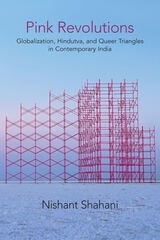
Pink Revolutions
Globalization, Hindutva, and Queer Triangles in Contemporary IndiaNishant Shahani
Northwestern University Press, 2021
Eschewing structures of absolute complicity or abject alterity, Pink Revolutions pays attention to the logics of triangulation in various contexts: gay tourism, university campus politics, diasporic cultural productions, and AIDS activism. The book articulates a framework through which queer politics can challenge rather than participate in neoliberal imperatives, an approach that will interest scholars engaged with queer studies and postcolonial scholarship, as well as activists and academics wrestling with global capitalism and right-wing regimes around the world.

Pious Property
Islamic Mortgages in the United StatesBill Maurer
Russell Sage Foundation, 2006
Pirkei Avot
A Social Justice CommentaryRabbi Dr. Shmuly Yanklowitz
Central Conference of American Rabbis, 2018
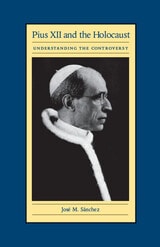
Pius XII and the Holocaust
Understanding the ControversyJosé M. Sánchez
Catholic University of America Press, 2002
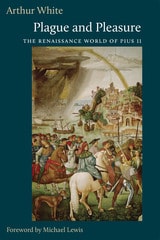
Plague and Pleasure
The Renaissance World of Pius IIArthur White
Catholic University of America Press, 2014
Plain
A Memoir of Mennonite GirlhoodMary Alice Hostetter
University of Wisconsin Press, 2022
This quietly powerful memoir of longing and acceptance casts a humanizing eye on a little-understood American religious tradition and a woman’s striving to grow within and beyond it.

Planets in Peril
A Critical Study of C. S. Lewis's Ransom TrilogyDavid C. Downing
University of Massachusetts Press, 1992
A critical study of C.S. Lewis's “Ransom Trilogy” which analyses Lewis's methods and meanings, concentrating on this trilogy but also including relevant secondary work. Lewis's literary scholarship and display of Christian values are incorporated into this discussion.
Plant Metaphors in Prophetic Condemnations of Israel and Judah
Tina M. Sherman
SBL Press, 2023
Tina M. Sherman offers a first-of-its-kind, detailed analysis of prophetic passages that depict people as plants—from grasses and grains to fruit trees and grapevines—examining how the biblical authors exploited these metaphors to portray the condemnation and punishment of Israel and Judah in terms of the everyday work of crop farming and plant husbandry. Additionally, she explores how the prophetic authors employed plant imagery to construct national identities that emphasize the people’s collective responsibility for the kingdoms’ fate. Plant Metaphors in Prophetic Condemnations of Israel and Judah demonstrates the usefulness of combining conceptual metaphor theory with aspects of frame semantics in the analysis of patterns of thought and expression in biblical metaphor.
Plant Metaphors in the Old Greek of Isaiah
Benjamin M. Austin
SBL Press, 2019
A thorough analysis of metaphor translation techniques used in Isaiah
In this study Benjamin M. Austin analyzes all the plant metaphors in Isaiah and classifies them according to the metaphor translation techniques used by the Septuagint translator. Austin illustrates how the translator took the context of each metaphor into account and demonstrates how the natural features of the plants under discussion at times influenced their translation. He argues that the translator tried to render metaphors vividly and with clarity, sometimes adjusting them to match the experience of his audience living in Egypt. Austin also examines metaphors in terms of their vehicles (the objects of comparison), so that the translation of similar metaphors can be compared.
Features
- A comparison of the Masoretic Text to the Septuagint and Targum
- A classification of metaphor translation strategies
- An introduction to the Hellenistic and the Jewish conception of metaphors

Playing God
The Bible on the Broadway StageHenry Bial
University of Michigan Press, 2015
Plotinus on Beauty (Enneads 1.6 and 5.8.1–2)
The Greek Text with NotesAndrew Smith
SBL Press, 2019
A Greek edition of Plotinus's philosophical works with notes for students of Classical Greek
Plotinus, the father of Neoplatonism, composed the treatise On Beauty (Ennead 1.6) as the first of a series of philosophical essays devoted to interpreting and elucidating Platonic ideas. This treatise is one of the most accessible and influential of Plotinus's works, and it provides a stimulating entrée into the many facets of his philosophical activity. In this volume Andrew Smith first introduces readers to the Greek of Plotinus and to his philosophy in general, then provides the Greek text of and English notes on Plotinus's systematic argument and engaging exhortation to foster the inner self. The volume ends with the text of and notes on Plotinus's complementary statements in On Intelligible Beauty (Ennead 5.8.1–2).
Features:
- An overview of Plotinus's life
- Background discussion of Plotinus's thought and outline of his philosophical system
- Analysis of the relationship of Plotinus's thought to Plato’s
Plurality and Ambiguity
Hermeneutics, Religion, HopeDavid Tracy
University of Chicago Press, 1994
Poetic Relations
Intimacy and Faith in the English ReformationConstance M. Furey
University of Chicago Press, 2017
As Furey demonstrates, John Donne, George Herbert, Anne Bradstreet, and others describe inner lives that are surprisingly crowded, teeming with human as well as divine companions. The same early modern writers who bequeathed to us the modern distinction between self and society reveal here a different way of thinking about selfhood altogether. For them, she argues, the self is neither alone nor universally connected, but is forever interactive and dynamically constituted by specific relationships. By means of an analysis equally attentive to theological ideas, social conventions, and poetic form, Furey reveals how poets who understand introspection as a relational act, and poetry itself as a form ideally suited to crafting a relational self, offer us new ways of thinking about selfhood today—and a resource for reimagining both secular and religious ways of being in the world.
Poetics of the Flesh
Mayra Rivera
Duke University Press, 2015

Poetry and Politics in the Play Sir Thomas More
L. Joseph Hebert
Catholic University of America Press, 2026
Poetry and the Cult of the Martyrs
The Liber Peristephanon of PrudentiusMichael Roberts
University of Michigan Press, 1993
Poles, Jews, and the Politics of Nationality
The Bund and the Polish Socialist Party in Late Tsarist Russia, 1892–1914Joshua D. Zimmerman
University of Wisconsin Press, 2004

Political Memory in and after the Persian Empire
Jason M. Silverman
SBL Press, 2015
An interdisciplinary study of the Persian Period
Various disciplines that deal with Achaemenid rule offer starkly different assessments of Persian kingship. While Assyriologists treat Cyrus's heirs as legitimate successors of the Babylonian kings, biblical scholars often speak of a "kingless era" in which the priesthood took over the function of the Davidic monarch. Egyptologists see their land as uniquely independently minded despite conquests, while Hellenistic scholarship tends to evaluate the interface between Hellenism and native traditions without reference to the previous two centuries of Persian rule. This volume brings together in dialogue a broad array of scholars with the goal of seeking a broader context for assessing Persian kingship through the anthropological concept of political memory.
Features
- Articles present the results of an international symposium held in Leiden, the Netherlands, 2014
- More than twenty illustrations
- Seventeen articles, an introduction, and a summary response
Political Myth
On the Use and Abuse of Biblical ThemesRoland Boer
Duke University Press, 2009
Boer elaborates a theory of political myth in dialogue with Ernst Bloch, Theodor Adorno, Alain Badiou, Jacques Lacan, and Slavoj Žižek. Through close readings of well-known biblical stories he then scrutinizes the nature of political myth in light of feminism, psychoanalysis, and Marxism. Turning to contemporary politics, he examines the statements of prominent American and Australian politicians to show how the stories of Creation, conquest, Paradise, and the Promised Land have been distorted into a fantasy of Israel as a perpetual state in the making and a land in need of protection. Boer explains how this fantasy of Israel shapes U.S. and Australian foreign and domestic policies, and he highlights the links between it and the fantasy of unfettered global capitalism. Contending that political myths have repressed dimensions which if exposed undermine the myths’ authority, Boer urges the Left to expose the weakness in the Right’s mythos. He suggests that the Left make clear what the world would look like were the dream of unconstrained capitalism to be realized.
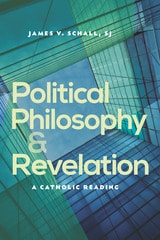
Political Philosophy and Revelation
James V. Schall, SJ
Catholic University of America Press, 2013
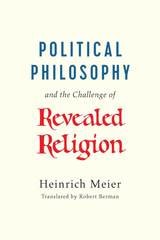
Political Philosophy and the Challenge of Revealed Religion
Heinrich Meier
University of Chicago Press, 2017
In the first of three chapters, Meier determines four intertwined moments constituting the concept of political philosophy as an articulated and internally dynamic whole. The following two chapters develop the concept through the interpretation of two masterpieces of political philosophy that have occupied Meier’s attention for more than thirty years: Leo Strauss’s Thoughts on Machiavelli and Jean-Jacques Rousseau’s Social Contract. Meier provides a detailed investigation of Thoughts on Machiavelli, with an appendix containing Strauss’s original manuscript headings for each of his paragraphs. Linking the problem of Socrates (the origin of political philosophy) with the problem of Machiavelli (the beginning of modern political philosophy), while placing between them the political and theological claims opposed to philosophy, Strauss’s most complex and controversial book proves to be, as Meier shows, the most astonishing treatise on the challenge of revealed religion. The final chapter, which offers a new interpretation of the Social Contract, demonstrates that Rousseau’s most famous work can be adequately understood only as a coherent political-philosophic response to theocracy in all its forms.
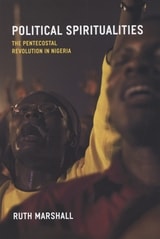
Political Spiritualities
The Pentecostal Revolution in NigeriaRuth Marshall
University of Chicago Press, 2009
After an explosion of conversions to Pentecostalism over the past three decades, tens of millions of Nigerians now claim that “Jesus is the answer.” But if Jesus is the answer, what is the question? What led to the movement’s dramatic rise and how can we make sense of its social and political significance? In this ambitiously interdisciplinary study, Ruth Marshall draws on years of fieldwork and grapples with a host of important thinkers—including Foucault, Agamben, Arendt, and Benjamin—to answer these questions.
To account for the movement’s success, Marshall explores how Pentecostalism presents the experience of being born again as a chance for Nigerians to realize the promises of political and religious salvation made during the colonial and postcolonial eras. Her astute analysis of this religious trend sheds light on Nigeria’s contemporary politics, postcolonial statecraft, and the everyday struggles of ordinary citizens coping with poverty, corruption, and inequality.
Pentecostalism’s rise is truly global, and Political Spiritualities persuasively argues that Nigeria is a key case in this phenomenon while calling for new ways of thinking about the place of religion in contemporary politics.
Political Theology Reimagined
Alex Dubilet and Vincent W. Lloyd, editors
Duke University Press, 2025
Contributors. Prathama Banerjee, Agata Bielik-Robson, Kirill Chepurin, Alex Dubilet, James Edward Ford III, Lucia Hulsether, Basit Kareem Iqbal, Ada S. Jaarsma, Siobhan Kelly, David Kline, Adam Kotsko, Dana Lloyd, Vincent W. Lloyd, Beatrice Marovich, Aseel Najib, Milad Odabaei, Inese Radzins, George Shulman, Martin Shuster, Rafael Vizcaíno