Results by title
1441 books match the query 'World' and 77 start with p
Pomponius Mela's Description of the World
F. E. Romer
University of Michigan Press, 1998
F.E. Romer is Professor and Chair of the Department of Foreign Languages and Literatures, East Carolina University. He is the author of numerous articles and has received awards for both his writing and teaching.

Popular Politics and Rebellion in Mexico
Manuel Lozada and La Reforma, 1855-1876Zachary Brittsan
Vanderbilt University Press, 2015
Popular Politics and Rebellion in Mexico also explores the conditions under which a significant segment of Mexican society aligned itself with conservative interests and French interlopers, revealing this constituency to be more than a collection of reactionary traitors to the nation. To the contrary, armed rebellion--or at least the specter of force--protected local commercial interests in the short run and enhanced the long-term prospects for political autonomy. Manuel Lozada's story adds a necessary layer of complexity to our understanding of the practical and ideological priorities that informed the tumultuous conflicts of the mid-nineteenth century.

Populism in Latin America
Michael L. Conniff
University of Alabama Press, 1999
Populism in Latin America provides a lively, accessible, and up-to- date introduction to the fascinating populist leaders who dominated much of 20th-century Latin American politics.
From the earliest years in the La Plata region to the end of the 1990s, Latin American populists proved amazingly successful at gaining high office, holding onto power, maintaining their followings, and renewing their careers. They raised more campaign money, got more voters to the polls, and held followers' allegiances far better than traditional politicians. Certainly some populist leaders corrupted their countries, others manipulated their followers, and still others disgraced themselves. Nevertheless, populist leaders were extraordinarily effective in reaching masses of voters, and some left positive legacies for future generations. Populism in Latin America provides an in-depth and thought-provoking assessment of the most prominent of these colorful and charismatic leaders, whose impact has been profound yet not fully recognized.
Latin American scholars here survey the populist experiences in those nations most profoundly influenced by this distinctively Latin American way of conducting the public's business--Argentina, Brazil, Chile, Mexico, Peru, Venezuela, Ecuador, and Panama. Joel Horowitz, for example, examines Argentina's strong legacy of populism, beginning with the remarkable Hip-lito Yrigoyen, moving through the archetypal Juan and Evita Perón, and ending with still-active president Carlos Menem. Ximena Sosa-Buchholz provides a fascinating view of populism in Ecuador, a country often overlooked by students of modern politics. Kurt Weyland challenges the notion that neoliberal, or monetarist, economic policies are incompatible with populism. Other populist leaders profiled include Lazaro Cardenas, Romulo Betancourt, and Alberto Fujimori to name a few.
In his epilogue and bibliographic essay, volume editor Michael Conniff suggests new directions for further research and offers a comprehensive survey of the evolution of major writings, theories, and methodologies in the field.
Populism in Latin America
Second EditionMichael L. Conniff
University of Alabama Press, 2012
A scholarly analysis of the origins, evolution, and enduring impact of populism in Latin American political life.
This updated edition of Populism in Latin America discusses new developments in populism as a political phenomenon and the emergence of new populist political figures in Mexico, Argentina, and Venezuela in particular.
For more than one hundred years—from the beginning of the twentieth to the early twenty-first century—Latin American populists proved amazingly successful at gaining high office, holding on to power, maintaining their followings, and renewing their careers. They raised more campaign money, got more voters to the polls,and held followers’ allegiances far better than traditional politicians. Certainly some populist leaders were corrupt, others manipulated their followers, and still others disgraced themselves. Nevertheless, populist leaders were extraordinarily effective in reaching masses of voters, and some left positive legacies for future generations.
Populism in Latin America examines the notion of populism in the political and social culture of Latin American societies as expressed through the populist leaders of several Latin American countries including Argentina, Brazil, Mexico, Chile, Ecuador, Panama, Peru, and Venezuela. This second edition also includes a new preface by Kenneth M. Roberts, professor of comparative and Latin American politics and the Robert S. Harrison Director of the Institute for the Social Sciences at Cornell University.
Contributors
Jorge Basurto / Michael L. Conniff / Paul W. Drake / Steve Ellner / Joel Horowitz /
Kenneth M. Roberts / W. Frank Robinson /Ximena Sosa / Steve Stein / Kurt Weyland

Portraits
A Gallery of IntellectualsEdward Shils
University of Chicago Press, 1997
Highlights include an affectionate treatment of Leo Szilard, the physicist whose involvement with the development of the atomic bomb led him to work ceaselessly to address its social consequences; a discussion of the educational philosophy of Robert Maynard Hutchins, the University of Chicago's fifth and most controversial president; an appreciative account of the Polish emigré Leopold Labedz's well-informed and outspoken resistance to Communism; and an essay about the extraordinary Indian writer Nirad Chaudhuri.
Many of these essays have appeared in The American Scholar, edited by Joseph Epstein, who introduces this volume with his own portrait of Edward Shils.
"Though professionally a sociologist, Edward Shils was a man of wide cosmopolitan culture and experience, greatly concerned with the public problems of his time: in particular with those created by the rise of new and dangerous ideologies, the frightening possibilities of science, and the apparent abrogation of public responsibility by many Western intellectuals."—Hugh Trevor-Roper
The late Edward Shils was a member of the University of Chicago's Committee on Social Thought for forty-five years and a fellow of Peterhouse, Cambridge University. His many books include The Calling of Sociology and The Intellectuals and the Powers, both published by the University of Chicago Press.
Post-Communist Mafia State
The Case of HungaryBálint Magyar
Central European University Press, 2016
Post-Communist Malaise
Cinematic Responses to European IntegrationZoran Samardzija
Rutgers University Press, 2020
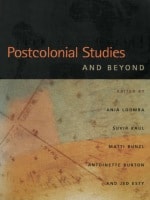
Postcolonial Studies and Beyond
Ania Loomba, Suvir Kaul, Matti Bunzl, Antoinette Burton, and Jed Esty, eds.
Duke University Press, 2005
The contributors represent many of the fields altered by postcolonial studies over the past two decades, including literary studies, history, anthropology, Asian and African studies, and political science. They model diverse applications of postcolonial theory to Latin America, East Asia, the Middle East, and the United States. Postcolonial Studies and Beyond propels the field forward. It showcases scholars coming from intellectual precincts usually considered outside the purview of the postcolonial finding new ways to deploy classic techniques of postcolonial analysis, and scholars strongly associated with postcolonial studies offering substantial critiques designed to challenge the field’s most fundamental assumptions.
Contributors. Tani E. Barlow, Ali Behdad, Daniel Boyarin, Timothy Brennan, Matti Bunzl, Antoinette Burton, Laura Chrisman, Jean Comaroff, Frederick Cooper, Vilashini Cooppan, Jed Esty, James Ferguson, Peter Hulme, Suvir Kaul, Neil Lazarus, Ania Loomba, Florencia E. Mallon, Nivedita Menon, Rob Nixon, Elizabeth A. Povinelli, David Scott, Ella Shohat, Kelwyn Sole, Robert Stam, Rebecca L. Stein
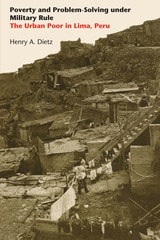
Poverty and Problem-Solving under Military Rule
The Urban Poor in Lima, PeruBy Henry A. Dietz
University of Texas Press, 1980
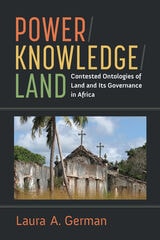
Power / Knowledge / Land
Contested Ontologies of Land and Its Governance in AfricaLaura A. German
University of Michigan Press, 2022
The 2008 outcry over the “global land grab” made headlines around the world, leading to a sustained interest in the dynamics and fate of customary land among both academics and development practitioners. In Power/Knowledge/Land, author Laura German profiles the consolidation of a global knowledge regime surrounding land and its governance within international development circles in the decade following this outcry, and the growing enrollment of previously antagonistic actors within it. Drawing theoretical insights on the inseparability of power and knowledge, German reveals the dynamics of knowledge practices that have enabled the longstanding project of commodifying customary land – and the more contemporary interests in acquiring and financializing it – to be advanced and legitimated by capturing the energies of socially progressive forces. By bringing theories of change from the emergent land governance orthodoxy into dialogue with the ethnographic evidence from across the African continent and beyond, concepts masquerading as universal and self-evident truths are provincialized, and their role in commodifying customary land and entrenching colonial futurities put on display. In doing so, the volume brings wider academic debates surrounding productive forms of power into the heart of the land grab debate, while enhancing their accessibility to a wider audience.
Power/Knowledge/Land takes current scholarly debates surrounding land grabs beyond their theoretical moorings in critical agrarian studies, political economy and globalization into contemporary debates surrounding the politics of knowledge—from theories of coloniality to ontological anthropology, thereby enabling new dynamics of the phenomenon to be revealed. The book deploys a pioneering epistemology integrating deconstructionist approaches (to reveal the tactics, truth claims and ontological assumptions of global knowledge brokers), with systematic qualitative reviews and comparative study (to contrast these dominant constructs with the evidence and reveal alternative ways of knowing “land” and practicing “security” from the ethnographic literature). This helps to reveal the Western and modernist biases in the narratives that have been advanced about women, custom, and security, revealing how the coloniality of knowledge works to grease the wheels of land takings by advancing highly provincialized constructs aligned with western interests as universal truths.

Power Of Prayer Around The World
Glenn Mosley
Templeton Press, 2005
Universally, the power of prayer has been recognized by many cultures for immeasurable time. Whether it be a part of a formal service recited with a congregation of worshipers or an individual, quiet moment, prayer is part of the lives of people from a variety of religions.
There seems to be an innate urge among humanity to connect with a higher source of energy and love when we need guidance or direction, and this is called prayer. By reading the prayers from religions such as Buddhism, Hinduism, Christianity, and Islam, from cultures in Africa, India, Egypt, and China, we begin to share the sense of a common experience.
The deepest inner feelings and longings are similar—concern for family, assistance in healing, a longing for peace, or a wish for greater wisdom. For some people, prayer can be thought of as a way to ask for specific goals or special favors. This type of prayer may or may not be effective. Another type of prayer exists when all selfish desire is put aside and we feel ourselves in communion with God. At this point, our greatest wish is that God's will be done.
There may be pressing concerns that make us turn our sights upward, but we learn to let go of the end result. At this point, prayer becomes a way of opening up to the universal, loving, creative energy that exists and is far greater than any person could imagine. This is the source of miracles, of faith and unconditional love. Prayer then becomes more than a means to an end; it becomes a state of humility and of awe. It can exist whether we are washing the floor or composing a symphony. Prayer is communion with the Divine, a universal loving creative force that exists in a variety of ways for people around the world.
This book brings together an inspirational collection of prayer suitable for all ages and traditions. In addition, it offers insight and guidance about the nature of prayer that will be useful for the serious seeker.
Power Politics
How China and Russia Reshape the WorldRob de Wijk
Amsterdam University Press, 2015
Power in Concert
The Nineteenth-Century Origins of Global GovernanceJennifer Mitzen
University of Chicago Press, 2013
Power, Institutions, and Leadership in War and Peace
Lessons from Peru and Ecuador, 1995–1998By David R. Mares and David Scott Palmer
University of Texas Press, 2012
In January 1995, fighting broke out between Ecuadorian and Peruvian military forces in a remote section of the Amazon. It took more than three years and the interplay of multiple actors and factors to achieve a definitive peace agreement, thus ending what had been the region's oldest unresolved border dispute. This conflict and its resolution provide insights about other unresolved and/or disputed land and sea boundaries which involve almost every country in the Western Hemisphere.
Drawing on extensive field research at the time of the dispute and during its aftermath, including interviews with high-ranking diplomats and military officials, Power, Institutions, and Leadership in War and Peace is the first book-length study to relate this complex border dispute and its resolution to broader theories of conflict. The findings emphasize an emerging leadership approach in which individuals are not mere captives of power and institutions. In addition, the authors illuminate an overlap in national and international arenas in shaping effective articulation, perception, and selection of policy.
In the “new” democratic Latin America that emerged in the late 1970s through the early 1990s, historical memory remains influential in shaping the context of disputes, in spite of presumed U.S. post–Cold War influence. This study offers important, broader perspectives on a hemisphere still rife with boundary disputes as a rising number of people and products (including arms) pass through these borderlands.
Power, Resistance, Ideology and the State
Charles Tripp and the Comparative Politics of the Middle EastEdited by Daniel Neep, Toby Dodge, and Ali M. Ansari
Gingko, 2025
Power, Resistance, Ideology and the State: Charles Tripp and the Comparative Politics of the Middle East seeks to present a new understanding of a region of unprecedented volatility, where postcolonial projects of state-driven development have now expired, old ruling elites have been delegitimized, and political Islam discredited. The work of Charles Tripp, professor at the School of Oriental and African Studies (SOAS) for over three decades, has shaped a distinct approach to the study of Middle East politics with an analytical sensibility that is empirically rich, theoretically insightful, and historically sensitive. This volume brings together contributions from ten political scientists and historians from across Europe, the United States, and the Middle East, each of which takes Tripp’s work as an intellectual point of departure for studying Middle East politics.
Against this background, the contributors explore the contemporary developments that have emerged to fill the intellectual and material shortcomings created by the systemic failures of economics and politics in the region.
The contributions focus on four themes that are central to an understanding of Middle East politics—power, resistance, ideology, and the state—to examine political trends in cases ranging from Iran and Iraq to Jordan, Lebanon, and Syria. Each chapter combines extensive field research and a knowledge of regional politics with methodological and philosophical reflexivity to produce a collection of papers at the cutting edge of contemporary Middle East Studies.

Practicing Electoral Assistance
A Critical EthnographyEva Johais
University of Michigan Press, 2027
Electoral assistance is the prototypical tool to promote democracy and the related goals of peace and development. Rather than assessing whether this tool achieves its intentions, Practicing Electoral Assistance explains how international support for election processes has become normal practice. For this practice-theoretical approach to world politics, Eva Johais combines theories and methods from anthropology, international relations, political science, and sociology. Based on multisited ethnographic fieldwork, she presents detailed empirical knowledge of the relevant institutions, organizations, actors, and actions. Practicing Electoral Assistance takes readers to hotel rooftops, embassies, government buildings, and offices in Abidjan (Côte d’Ivoire), Addis Ababa (Ethiopia), Conakry (Guinea), and to the United Nations headquarters in New York. Through this journey, readers come to understand that electoral assistance means different things: it is a mission for democracy promoters, an intervention tool for peacebuilders, a work for election experts, and a business line for managers of development organizations. While the practice is anchored in the aid system, it has gained independence from the system’s structural constraints through the professionalization of election administration and the establishment of the transnational election profession.
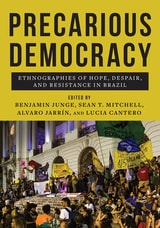
Precarious Democracy
Ethnographies of Hope, Despair, and Resistance in BrazilBenjamin Junge
Rutgers University Press, 2021
Precarity and Belonging
Labor, Migration, and NoncitizenshipCatherine S. Ramírez
Rutgers University Press, 2021

Pride, Not Prejudice
National Identity as a Pacifying Force in East AsiaEunbin Chung
University of Michigan Press, 2022
As shown by China’s relationship to Japan, and Japan’s relationship to South Korea, even growing regional economic interdependencies are not enough to overcome bitter memories grounded in earlier wars, invasions, and periods of colonial domination. Although efforts to ease historical animosity have been made, few have proven to be successful in Northeast Asia. In previous research scholars anticipated an improvement in relations through thick economic interdependence or increased societal contact. In economic terms, however, Japan and China already trade heavily: Japan has emerged as China’s largest trading partner and China as second largest to Japan. Societal contact is already intense, as millions of Chinese, Koreans, and Japanese visit one another’s countries annually as students, tourists, and on business trips. But these developments have not alleviated international distrust and negative perception, or resolved disagreement on what constitutes “adequate reparation” regarding the countries’ painful history.
Noticing clashes of strong nationalisms around the world in areas like Northeast Asia, numerous studies have suggested that more peaceful relations are likely only if countries submerge or paper over existing national identities by promoting universalism. Pride, Not Prejudice argues, to the contrary, that affirmation of national identities may be a more effective way to build international cooperation. If each national population reflects on the values of their national identity, trust and positive perception can increase between countries. This idea is consistent with the theoretical foundation that those who have a clear, secure, and content sense of self, in turn, can be more open, evenhanded, and less defensive toward others. In addition, this reduced defensiveness also enhances guilt admission by past “inflictors” of conflict and colonialism. Eunbin Chung borrows the social psychological theory of self-affirmation and applies it to an international context to argue that affirmation of a national identity, or reflecting on what it means to be part of one’s country, can increase trust, guilt recognition, and positive perception between countries.

Principles of Catholic Theology, Book 5
No One is More Human Than God: On the Trinitarian Presence of God in the WorldThomas Joseph White
Catholic University of America Press, 2026
Private Aid, Political Activism
American Medical Relief to Spain and China, 1936–1949Aelwen D. Wetherby
University of Missouri Press, 2017
Privileged Precarities
An Organizational Ethnography of Early Career Workers at the United NationsLinda M. Mülli
Campus Verlag, 2021
This ethnography focuses on the work and lifeworld at the United Nations in Geneva and Vienna. By emphasizing the perspectives of entry-level workers, this book addresses the increasing flexibility and job insecurity for those at the beginning of their potential UN careers. It explores questions such as: How do career aspirants reconcile their narratives with the organization’s image built over the past decades? How can we understand institutional power and individual agency through the lens of ritual theory and the theory of social orders? This study finally examines the entangled discourses around privilege and prestige on the one hand and the precarity and vulnerability of a growing number of UN workers on the other hand. It shows that these phenomena are not contractionary but two sides of the coin. Using the UN as an example, the study considers mechanisms of flexible and unstable work environments in times of cognitive and affective capitalism.
Progress
Fact or Illusion?Leo Marx and Bruce Mazlish, Editors
University of Michigan Press, 1996
Projecting the Nation
History and Ideology on the Israeli ScreenEran Kaplan
Rutgers University Press, 2020
Promise and Despair
The First Struggle for a Non-Racial South AfricaMartin Plaut
Ohio University Press, 2016
The struggle for freedom in South Africa goes back a long way. In 1909, a remarkable interracial delegation of South Africans traveled to London to lobby for a non-racialized constitution and franchise for all. Among their allies was Mahatma Gandhi, who later encapsulated lessons from the experience in his most important book, Hind Swaraj. Though the mission failed, the London debates were critical to the formation of the African National Congress in 1912.
With impeccable storytelling and rich character depictions, Martin Plaut describes the early quest for black franchise and the seeds it planted for a new South Africa. While most people believe that black South Africans obtained the vote in 1994, men of all races voted in the Cape Colony for almost a century, sometimes deciding election outcomes. The London mission was part of a long history of nonwhite political agency.
Taking as its centerpiece the 1909 delegation, Promise and Despair covers the twelve years between the South African War and the First World War, during which the major forces that would shape twentieth-century South Africa were forged. Plaut reveals new details of the close collaboration between Gandhi and the ANC leadership during the Indian-South African community’s struggle for their rights, the influence of the American South on South African racial practices, and the workings of the Imperial system.
Proprietors for a Democratic City
Space and Political Voice in ItalyRobin M. LeBlanc
University of Minnesota Press, 2026
Lessons from Bologna on how ordinary people take charge of urban spaces and make their cities more democratic
Proprietors for a Democratic City examines how nonelite individuals politically engage with urban spaces—even when they do not formally own them. Drawing on more than a decade of fieldwork throughout Bologna, Italy, Robin M. LeBlanc presents valuable models of democratic community-making through imaginative occupation, curation, and coalition-building projects, with critical implications for the study of cities and democracy.
Once a standard-bearer of progressive governance, contemporary Bologna now faces globally emergent challenges to its democratic functioning, from a lack of affordable housing to the rise of an authoritarian and xenophobic Far Right. But amid this precarity, everyday citizens employ the spaces around them to influence the political life of the city. Through interviews with a wide range of Bolognese, from urban planners and real estate developers to housing office staff, retirees in public gardening plots, and members of immigrant and youth squatter collectives, LeBlanc illuminates the humble origins of coalitional work that can meaningfully address today’s urban economic, environmental, and demographic crises.
Challenging both capitalistic and Marxist conventional wisdom, Proprietors for a Democratic City is a vivid portrait of the urban landscape and an inspiring call to empower regular people to create vibrant democratic spaces.
Retail e-book files for this title are screen-reader friendly with images accompanied by short alt text and/or extended descriptions.
Putting Federalism in Its Place
The Territorial Politics of Social Policy RevisitedScott L. Greer, Daniel Béland, André Lecours, and Kenneth A. Dubin
University of Michigan Press, 2023
What does federalism do to welfare states? This question arises in scholarly debates about policy design as well as in discussions about the right political institutions for a country. It has frustrated many, with federalism seeming to matter in all sorts of combinations with all sorts of issues, from nationalism to racism to intergovernmental competition. The diffuse federalism literature has not come to compelling answers for very basic questions.
Scott L. Greer, Daniel Béland, André Lecours, and Kenneth A. Dubin argue for a new approach—one methodologically focused on configurations of variables within cases rather than a fruitless attempt to isolate “the” effect of federalism; and one that is substantively engaged with identifying key elements in configurations as well as with when and how their interactions matter. Born out of their work on a multi-year, eleven-country project (published as Federalism and Social Policy: Patterns of Redistribution in Eleven Countries, University of Michigan Press, 2019), this book comprises a methodological and substantive agenda. Methodologically, the authors shift to studies that embraced and understood the complexity within which federal political institutions operate. Substantively, they make an argument for the importance of plurinationalism, changing economic interests, and institutional legacies.