Results by title
28167 books match the query 'History' and 1297 start with p

Precarious Intimacies
The Politics of Touch in Contemporary Western European CinemaMaria Stehle and Beverly Weber
Northwestern University Press, 2020
Twenty-first-century Europe is undergoing dramatic political and economic transformations that produce new forms of transnational contact as well as new regimes of exclusion and economic precarity. These political and economic shifts both circumscribe and enable new possibilities for intimacy. Many European films of the last two decades depict experiences of political and economic vulnerability in narratives of precarious intimacies. In these films, stories of intimacy, sex, love, and friendship are embedded in violence and exclusion, but, as Maria Stehle and Beverly Weber show, the politics of touch and connection also offers avenues to theorize forms of attention and affection that challenge exclusive notions of race, citizenship, and belonging.
Precarious Intimacies examines the aesthetic strategies that respond to this tension and proposes a politics of interpretation that identifies the potential and possibility of intimacy.

Precarious Japan
Anne Allison
Duke University Press, 2013

Precarious Motherhood
Navigating Relationships and Support Post-Migration in the UKRachel Benchekroun
University College London, 2025
Precarious Motherhood is a deeply human investigation of the lives of racially minoritized mothers as they navigate the intersecting challenges of financial hardship and the UK’s hostile immigration policies. Based on thorough ethnographic research, Rachel Benchekroun examines how these mothers forge relationships to access support, maintain their children’s well-being, and carve out spaces of belonging in an often unwelcoming system. The book captures the resilience and the relentless precarity of motherhood in migration, where every relationship shapes social barriers and everyday survival.
Through the voices of over twenty migrant mothers, this work sheds light on the personal and political dimensions of motherhood. It provides critical insights into state policies and social infrastructures that shape migrant lives, making it a valuable resource for scholars of migration and social justice.
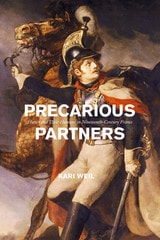
Precarious Partners
Horses and Their Humans in Nineteenth-Century FranceKari Weil
University of Chicago Press, 2020
Weil traces the evolving partnerships established between French citizens and their horses through this era. She considers the newly designed “races” of workhorses who carried men from the battlefield to the hippodrome, lugged heavy loads through the boulevards, or paraded women riders, amazones, in the parks or circus halls—as well as those unfortunate horses who found their fate on a dinner plate. Moving between literature, painting, natural philosophy, popular cartoons, sports manuals, and tracts of public hygiene, Precarious Partners traces the changing social, political, and emotional relations with these charismatic creatures who straddled conceptions of pet and livestock in nineteenth-century France.
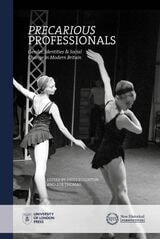
Precarious Professionals
Gender, Identities and Social Change in Modern BritainEdited by Heidi Egginton and Zoë Thomas
University of London Press, 2021
Precarious Professionals uncovers the inequalities and insecurities which lay at the heart of professional life in nineteenth and twentieth-century Britain. This book challenges conventional categories in the history of work, exploring instead the everyday labor of maintaining a professional identity on the margins of the traditional professions. Situating new historical perspectives on gender at the forefront of their research, the contributors explore how professional cultures could not only define themselves against but often flourished outside of, the confines of patriarchal codes and structures.
Precarious Professionals offers twelve fascinating case studies, ranging between the 1840s and the 1960s. From pioneering female lawyers and scientists to ballet dancers, secretaries, historians, humanitarian relief workers, social researchers, and Cold War diplomats, this book reveals that precarity was a thread woven throughout the very fabric of modern professional life. Together, these essays enrich our understanding of the histories and mysteries of professional identity and help us to reimagine the future of work in precarious times.
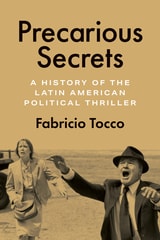
Precarious Secrets
A History of the Latin American Political ThrillerFabricio Tocco
University of Texas Press, 2025
An exploration of the political thriller genre and its context in Latin American politics and entertainment.
For the past five decades, a distinctive type of political thriller has been steadily developing in Latin America. Precarious Secrets is a panoramic overview of the genre in the hands of renowned writers and filmmakers from Argentina, Mexico, Chile, and Brazil, as well as lesser-known Peruvian, Uruguayan and Paraguayan artists for whom the style has been a vehicle for pungent narratives shot through with menace and conspiracy.
Fabricio Tocco explores the genre’s unique role in Latin American entertainment and activism. Precarious Secrets traces the evolutions of the Latin American political thriller from its emergence in the 1970s, through the silence imposed by dictatorships and the genre’s resurgence after the Cold War. The political thriller has dramatized the region’s turbulent past, through assassinations, coups, mass killings, revolutions and the search of desaparecidos by human rights organizations. In the process, Tocco isolates the Latin American political thriller’s particular grammar of secrecy. In the Hollywood thriller, revealing secrets involves high stakes and transformative consequences. In Latin American political thrillers, by contrast, secrets produce only more precarity—moral ambiguity as unsettling as it is unshakeable.
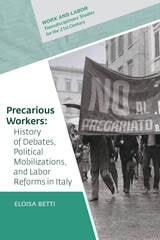
Precarious Workers
History of Debates, Political Mobilization, and Labor Reforms in ItalyEloisa Betti
Central European University Press, 2023
The recent vast upsurge in social science scholarship on job precarity has generally little to say about earlier forms of this phenomenon. Eloisa Betti’s monograph convincingly demonstrates on the example of Italy that even in the post-war phase of Keynesian stability and welfare state, precarious labor was an underlying feature of economic development. She examines how in this short period exceptional politics of labor stability prevailed. The volume then presents the processes whereby labor precarity regained momentum— under the name of flexibility— in the post-Fordist phase from the early 1980s, taking on new forms in the Craxi and Berlusconi eras.
Multiple actors are addressed in the analysis. The book gives voice to intellectuals, scholars, politicians and trade unionists as they have framed the concept and debates on precarious work from the 1950s onwards. Views of labor law experts, politicians and public servants are investigated in regard to labor regulations. Positions of the very precarians are explored, ranging from rural women, industrial homeworkers and blue-collar workers to physicians, university researchers and trainees, unveiling the emergence of anti-precarity social movements. The continuous role of women’s associations and feminist groups in opposing labor precarity since the 1950s is prominently exposed.

Precious Fire
Maud Russell and the Chinese RevolutionKaren Garner
University of Massachusetts Press, 0
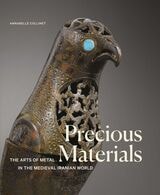
Precious Materials
The Arts of Metal in the Medieval Iranian WorldAnnabelle Collinet
Gingko, 2024
Medieval metalwork is one of the artistic highlights of the Iranian world, as well as of the Département des Arts de l’Islam at the Louvre in Paris, which holds more than one hundred and fifty objects from this period. A new approach to the study of a historic collection, Precious Material: The Arts of Metal in the Medieval Iranian World is a comprehensive overview of the production of metal in medieval Iran. Although this is one of the most important collections in the world, the objects, some well-known but many more unpublished, have never been studied or published as an ensemble. This volume includes a presentation of the collection through the lens of its centers of manufacture, a full technical analysis, as well as the functions and contexts in which the pieces were used. Each object is fully described and illustrated in color with close-up or X-ray images, and many inscriptions have been translated and are included in the catalog entries.
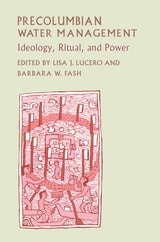
Precolumbian Water Management
Ideology, Ritual, and PowerEdited by Lisa J. Lucero and Barbara W. Fash
University of Arizona Press, 2006
Precolumbian Water Management examines water management from both economic and symbolic perspectives. Water management facilities, settlement patterns, shrines, and water-related imagery associated with civic-ceremonial and residential architecture provide evidence that water systems pervade all aspects of ancient society. Through analysis of such data, the contributors seek to combine an understanding of imagery and the religious aspects of water with its functional components, thereby presenting a unified perspective of how water was conceived, used, and represented in ancient greater Mesoamerica. The collection boasts broad chronological and geographical coverage—from the irrigation networks of Teotihuacan to the use of ritual water technology at Casas Grandes—that shows how procurement and storage systems were adapted to local conditions.
The articles consider the mechanisms that were used to build upon the sacredness of water to enhance political authority through time and space and show that water was not merely an essential natural resource but an important spiritual one as well, and that its manipulation was socially far more complex than might appear at first glance. As these papers reveal, an understanding of materials associated with water can contribute much to the ways that archaeologists study ancient cultural systems. Precolumbian Water Management underscores the importance of water management research and the need to include it in archaeological projects of all types.
Predatory Bureaucracy
The Extermination of Wolves and the Transformation of the WestMichael Robinson
University Press of Colorado, 2005
Robinson follows wolves' successful adaptation to the arrival of explorers, mountain men, and bounty hunters, through their disastrous century-long entanglement with the federal government. He shares the parallel story of the Biological Survey's rise, detailing the personal, social, geographic, and political forces that allowed it to thrive despite opposition from hunters, animal lovers, scientists, environmentalists, and presidents.
Federal predator control nearly eliminated wolves throughout the United States and Mexico and radically changed American lands and wildlife populations. It undercut the livelihoods of countless homestead families in order to benefit an emerging western elite of livestock owners. The extermination of predators led to problems associated with prey overpopulation, but, as Robinson reveals, extermination and control programs still continue. Predatory Bureaucracy will fascinate readers interested in wildlife, ecosystems, agriculture, and environmental politics.
Predicting the Past
The Utah War's Twenty-First Century FutureWilliam Mackinnon
Utah State University Press, 2009
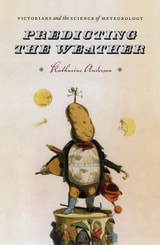
Predicting the Weather
Victorians and the Science of MeteorologyKatharine Anderson
University of Chicago Press, 2005
Studying meteorology as a means to examine the historical identity of prediction, Katharine Anderson offers here an engrossing account of forecasting that analyzes scientific practice and ideas about evidence, the organization of science in public life, and the articulation of scientific values in Victorian culture. In Predicting the Weather, Anderson grapples with fundamental questions about the function, intelligibility, and boundaries of scientific work while exposing the public expectations that shaped the practice of science during this period.
A cogent analysis of the remarkable history of weather forecasting in Victorian Britain, Predicting the Weather will be essential reading for scholars interested in the public dimensions of science.
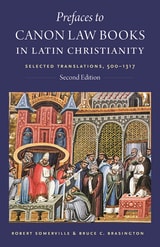
Prefaces to Canon Law Books in Latin Christianity
Selected Translations, 500-1317, second editionRobert Somerville
Catholic University of America Press, 2021
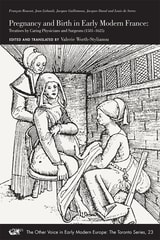
Pregnancy and Birth in Early Modern France
Treatises by Caring Physicians and Surgeons (1581–1625)François Rousset, Jean Liebault, Jacques Guillemeau, Jacques Duval, and Louis de Serres
Iter Press, 2013
—Gianna Pomata
Professor of the History of Medicine, Johns Hopkins University
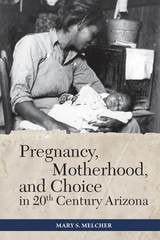
Pregnancy, Motherhood, and Choice in Twentieth-Century Arizona
Mary S. Melcher
University of Arizona Press, 2012
Early twentieth-century Arizona was a life-threatening place for new and expectant mothers. Towns were small and very far apart, and the weather and harsh landscape often delayed midwives. It was not uncommon for a woman to give birth without medical care and with the aid of only family members. By the 1920s, Arizona was at the top of the list for the highest number of infant deaths.
Mary Melcher’s Pregnancy, Motherhood, and Choice in Twentieth-Century Arizona provides a deep and diverse history of the dramatic changes in childbirth, birth control, infant mortality, and abortion over the course of the last century. Using oral histories, memoirs, newspaper accounts, government documents, letters, photos, and biographical collections, this fine-grained study of women’s reproductive health places the voices of real women at the forefront of the narrative, providing a personal view into some of the most intense experiences of their lives.
Tackling difficult issues such as disparities in reproductive health care based on race and class, abortion, and birth control, this book seeks to change the way the world looks at women’s health. An essential read for both historians and public health officials, this book reveals that many of the choices and challenges that women once faced remain even today.
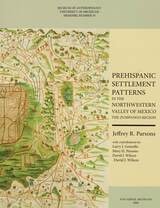
Prehispanic Settlement Patterns in the Northwestern Valley of Mexico
The Zumpango RegionJeffrey R. Parsons with contributions by Larry J. Gorenflo, Mary H. Parsons, and David J. Wilson
University of Michigan Press, 2008
Prehispanic Settlement Patterns in the Southern Valley of Mexico
The Chalco-Xochimilco RegionJeffrey R. Parsons, Elizabeth Brumfiel, Mary H. Parsons, and David J. Wilson
University of Michigan Press, 1982
Prehispanic Settlement Patterns in the Upper Mantaro and Tarma Drainages, Junín, Peru
The Tarama-Chinchaycocha Region, Vol. 1, Parts 1 and 2Jeffrey R. Parsons, Charles M. Hastings, Ramiro Matos M.
University of Michigan Press, 2000
Prehispanic Settlement Patterns in the Upper Mantaro and Tarma Drainages, Junín, Peru
Volume 2, The Wanka RegionEdited by Jeffrey R. Parsons, Charles M. Hastings and Ramiro Matos M.
University of Michigan Press, 2000
Prehistoric Architecture in Micronesia
William N. Morgan
University of Texas Press, 1988
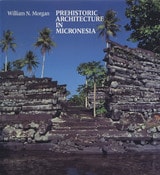
In the many centuries preceding Western contact, a richly diverse and innovative architectural tradition reached maturity in the western Pacific. Prehistoric Architecture in Micronesia, the first modern study of this remarkable work, reveals that there is no such thing as primitive architecture but only primitive means.
This study presents five distinctly different examples of Micronesia's ancient architecture. The sites include the extraordinary stone cities of Leluh and Nan Madol on the islands of Kosrae and Pohnpei, respectively. Other structures include the meeting houses and residences built on hexagonal stone platforms in the Yap Islands, the earth terraces and ornately decorated meeting houses of Palau, and the megalithic columns and capstones of prehistoric houses in the Mariana Islands.
These structures are illustrated by photographs, maps, plans, and other drawings. Many of the basic data come from archaeological investigations of the specific sites. Summaries at the ends of chapters and in the concluding section compare the architectural characteristics of the island groups with each other and with monuments outside Micronesia. One of the most remarkable achievements of any ancient people, the prehistoric architecture of Micronesia is a source of continuing inspiration for persons who search for meaning in the built form of our present-day environment.
Prehistoric Biological Relationships in the Great Lakes Region
Richard Guy Wilkinson
University of Michigan Press, 1971
Prehistoric Copper Mining in Michigan
The Nineteenth-Century Discovery of “Ancient Diggings” in the Keweenaw Peninsula and Isle RoyaleJohn R Halsey
University of Michigan Press, 2018
Prehistoric Food Production in North America
Edited by Richard I. Ford
University of Michigan Press, 1985
Prehistoric Future
Max Ernst and the Return of Painting between the WarsRalph Ubl
University of Chicago Press, 2013
Prehistoric Households at Turkey Creek Pueblo, Arizona
Julie C. Lowell
University of Arizona Press, 1991
Prehistoric Peoples of South Florida
William E. McGoun
University of Alabama Press, 1993
To many people in South Florida, and "oldtimer" is someone who has lived there for more than five years. Prehistoric Peoples of South Florida considers the culture history of the real South Florida "oldtimers" dating from 10,000 B.C. through the invasion by Europeans and analyzes the ways in which they adapted to their environment through time—or caused their environment to adapt to them.
South Florida is a biological island, its plant communities circumscribed by the southern limits of frost. Its peoples were distinct from those to the north and were less studied by scholars. In recent years the pace of research has increased, but there has been no attempt at synthesis since John M. Goggin wrote his still-unpublished manuscript on the Glades nearly half a century ago. Prehistoric Peoples of South Florida assembles the available knowledge and discusses competing theories, and does so in terms that are understandable to the general reader. McGoun outlines a cultural system that maintained an impressive continuity for 10,000 years—before being destroyed by two centuries of European contact.
Prehistoric Settlement Patterns in the Texcoco Region, Mexico
Jeffrey R. Parsons
University of Michigan Press, 1971
Prehistoric Social, Political, and Economic Development in the Area of the Tehuacan Valley
Some Results of the Palo Blanco ProjectEdited by Robert D. Drennan
University of Michigan Press, 1979
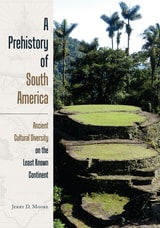
Prehistory of South America
Ancient Cultural Diversity on the Least Known ContinentJerry D. Moore
University Press of Colorado, 2014
For more than 12,000 years, South American cultures ranged from mobile hunters and gatherers to rulers and residents of colossal cities. In the process, native South American societies made advancements in agriculture and economic systems and created great works of art—in pottery, textiles, precious metals, and stone—that still awe the modern eye. Organized in broad chronological periods, A Prehistory of South America explores these diverse human achievements, emphasizing the many adaptations of peoples from a continent-wide perspective. Moore examines the archaeologies of societies across South America, from the arid deserts of the Pacific coast and the frigid Andean highlands to the humid lowlands of the Amazon Basin and the fjords of Patagonia and beyond.
Illustrated in full color and suitable for an educated general reader interested in the Precolumbian peoples of South America, A Prehistory of South America is a long overdue addition to the literature on South American archaeology.
Prehistory of the Ayacucho Basin, Peru
Volume II: Excavations and ChronologyRichard S. MacNeish, Angel Garcia Cook, Luis G. Lumbreras, Robert K. Vierra, and Antoinette Nelken-Terner
University of Michigan Press, 1982
Prehistory of the Ayacucho Basin, Peru
Volume III: Nonceramic ArtifactsRichard S. MacNeish, Angel Garcia Cook, Luis G. Lumbreras, Robert K. Vierra, and Antoinette Nelken-Terner
University of Michigan Press, 1980

Prehistory of the Ayacucho Basin, Peru
Volume IV: The Preceramic Way of LifeRichard S. MacNeish, Angel Garcia Cook, Luis G. Lumbreras, Robert K. Vierra, and Antoinette Nelken-Terner
University of Michigan Press, 1983
Prehistory of the Central Mississippi Valley
Edited by Charles H. McNutt
University of Alabama Press, 1996
The Central Mississippi Valley, defined as the region along the Mississippi River from where the Ohio River joins in the north to its confluence with the Arkansas River in the south, lies between the two most important archaeological areas of the Southeast: American Bottom/Cahokia and the Lower Yazoo Basin. The valley has been influenced by these major centers and has a complex history of its own. Contributions from experts throughout the region present current, if sometimes conflicting, views of the regional cultural sequences supported by data from recent surveys and excavations, as well as radiocarbon and chronometric determinations. By examining this new information and reevaluating earlier interpretations of local archaeological sequences, this volume provides a comprehensive overview of the valley and defines future research goals.
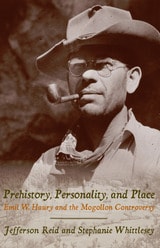
Prehistory, Personality, and Place
Emil W. Haury and the Mogollon ControversyJefferson Reid and Stephanie Whittlesey
University of Arizona Press, 2011
Reid and Whittlesey present the arguments and actions surrounding the Mogollon discovery, definition, and debate. Drawing on extensive interviews conducted with Haury before his death in 1992, they explore facets of the debate that scholars pursued at various times and places and how ultimately the New Archaeology shifted attention from the research questions of cultural affiliation and antiquity that had been at the heart of the controversy. In gathering the facts and anecdotes surrounding the debate, Reid and Whittlesey offer a compelling picture of an academician who was committed to understanding the unwritten past, who believed wholeheartedly in the techniques of scientific archaeology, and who used his influence to assist scholarship rather than to advance his own career.
Prehistory, Personality, and Place depicts a real archaeologist practicing real archaeology, one that fashioned from potsherds and pit houses a true understanding of prehistoric peoples. But more than the chronicle of a controversy, it is a book about places and personalities: the role of place in shaping archaeologists’ intellect and personalities, as well as the unusual intersections of people and places that produced resolutions of some intractable problems in Southwest history.

Prejudice and Pride
LGBT Activist Stories from Manchester and BeyondLGBT North West
Intellect Books, 2015
LGBT activist and civil rights history from the 1960s to the 2000s has had a huge impact on our social and political landscape in the UK, yet much of this history remains hidden.
Prejudice and Pride: LGBT Activist Stories from Manchester and Beyond explores aspects of LGBT activist history. It covers educational activism, youth work activism, and the history of the LGBT Centre in Manchester.
Through personal stories of activists, heard and recorded by young people from LGBT Youth North West, the book explores the "wibbly wobbly" nature of people's histories. It reveals how they interlink in surprising and creative ways to form the current landscape of both prejudice and pride. Also contains exercises for interpreting and ideas for collecting activist histories within youth work.
Preliminary Discourse to the Encyclopedia of Diderot
Jean Le Rond d'Alembert
University of Chicago Press, 1995

Prelude to Genocide
Arusha, Rwanda, and the Failure of DiplomacyDavid Rawson
Ohio University Press, 2018
As the initial US observer, David Rawson participated in the 1993 Rwandan peace talks at Arusha, Tanzania. Later, he served as US ambassador to Rwanda during the last months of the doomed effort to make them hold. Despite the intervention of concerned states in establishing a peace process and the presence of an international mission, UNAMIR, the promise of the Arusha Peace Accords could not be realized. Instead, the downing of Rwandan president Habyarimana’s plane in April 1994 rekindled the civil war and opened the door to genocide.
In Prelude to Genocide, Rawson draws on declassified documents and his own experiences to seek out what went wrong. How did the course of political negotiations in Arusha and party wrangling in Kigali, Rwanda, bring to naught a concentrated international effort to establish peace? And what lessons are there for other international humanitarian interventions? The result is a commanding blend of diplomatic history and analysis that is a milestone read on the Rwandan crisis and on what happens when conflict resolution and diplomacy fall short.
Published in partnership with the ADST-DACOR Diplomats and Diplomacy Series.

Prelude to Hospice
Florence Wald, Dying People, and their FamiliesAbel, Emily K.
Rutgers University Press, 2018
Prelude to Protectorate in Morocco
Pre-Colonial Protest and Resistance, 1860-1912Edmund Burke, III
University of Chicago Press, 1977
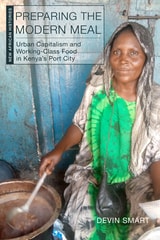
Preparing the Modern Meal
Urban Capitalism and Working-Class Food in Kenya's Port CityDevin Smart
Ohio University Press, 2025
A case study on how urban capitalism created a new working-class food system in the port city of Mombasa during the twentieth century.
In the early twentieth century, East Africans lived primarily in rural areas, cultivating most of the food they consumed. By the start of the twenty-first century, though, millions of people lived in cities, where they purchased their food from markets and eateries. This transformation reflects broader historical shifts in food production, preparation, and consumption throughout the world from a rural subsistence model to a commercial system. Preparing the Modern Meal explores this economic revolution in Mombasa, Kenya, and examines the experiences of those who migrated from rural settings to an Indian Ocean town where they became dependent on the capitalist market for their daily meals.
The change to a commercial food system reshaped the culinary culture of East Africa. In rural communities, diets were diverse and varied with the seasons. Conversely, Mombasa’s commercial supply chains, which steadily delivered staples like maize meal, wheat flour, tea, and meat, led to a more uniform urban cuisine that remained consistent throughout the year.
Urbanization also altered gender roles in cooking. In rural households women prepared the food, but in Mombasa many workers lived in all-male housing and had to cook for themselves. Some even took up cooking as a profession, thus expanding the role of men in the culinary domain. In addition to these themes, Preparing the Modern Meal reviews the emergence of new businesses, particularly those of street food vendors who provided affordable meals in residential neighborhoods and to nearby workplaces. However, these makeshift eateries often clashed with the vision for commerce in a modern city held by municipal officials, who often sought to eliminate these businesses through fines, arrests, and demolition campaigns. Through the lens of food, this book explores the conflicts between elite ideas about urban modernity and the actual ways that poor communities made their lives work in an unequal city.
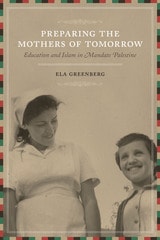
Preparing the Mothers of Tomorrow
Education and Islam in Mandate PalestineBy Ela Greenberg
University of Texas Press, 2009
From the late nineteenth century onward, men and women throughout the Middle East discussed, debated, and negotiated the roles of young girls and women in producing modern nations. In Palestine, girls' education was pivotal to discussions about motherhood. Their education was seen as having the potential to transform the family so that it could meet both modern and nationalist expectations.
Ela Greenberg offers the first study to examine the education of Muslim girls in Palestine from the end of the Ottoman administration through the British colonial rule. Relying upon extensive archival sources, official reports, the Palestinian Arabic press, and interviews, she describes the changes that took place in girls' education during this time. Greenberg describes how local Muslims, often portrayed as indifferent to girls' education, actually responded to the inadequacies of existing government education by sending their daughters to missionary schools despite religious tensions, or by creating their own private nationalist institutions.
Greenberg shows that members of all socioeconomic classes understood the triad of girls' education, modernity, and the nationalist struggle, as educated girls would become the "mothers of tomorrow" who would raise nationalist and modern children. While this was the aim of the various schools in Palestine, not all educated Muslim girls followed this path, as some used their education, even if it was elementary at best, to become teachers, nurses, and activists in women's organizations.
Presence and Resistance
Postmodernism and Cultural Politics in Contemporary American PerformancePhilip Auslander
University of Michigan Press, 1994

Present Past
Ava Kadishson Schieber
Northwestern University Press, 2016
The focus of Present Past is her life after the Shoah. Rejecting stereotypes of survivors as traumatized or broken, Schieber is stark yet exuberant, formidable yet nuanced. The woman who emerges in Schieber’s Present Past is a multifaceted, heterogeneous figure—poet, artist, and survivor. In it, she plays the passionate observer who dispassionately curates the kaleidoscopic memories of her tumultuous personal and professional life in Belgrade, Prague, Tel Aviv, New York, and Chicago.
Organized into thirteen chapters, each a blend of images, poems, and narrative, this moving new work offers myriad points of entry to readers of these genres, those fascinated in the relationship between the Holocaust and art, as well as readers interested in memory and survivorship.
Present Shock in Late Fifth-Century Greece
Francis M. Dunn
University of Michigan Press, 2010
Francis M. Dunn's Present Shock in Late Fifth-Century Greece examines the widespread social and cultural disorientation experienced by Athenians in a period that witnessed the revolution of 411 B.C.E. and the military misadventures in 413 and 404---a disturbance as powerful as that described in Alvin Toffler's Future Shock. The late fifth century was a time of vast cultural and intellectual change, ultimately leading to a shift away from Athenians' traditional tendency to seek authority in the past toward a greater reliance on the authority of the present. At the same time, Dunn argues, writers and thinkers not only registered the shock but explored ways to adjust to living with this new sense of uncertainty. Using literary case studies from this period, Dunn shows how narrative techniques changed to focus on depicting a world in which events were no longer wholly predetermined by the past, impressing upon readers the rewards and challenges of struggling to find their own way forward.
Although Present Shock in Late Fifth-Century Greece concentrates upon the late fifth century, this book's interdisciplinary approach will be of broad interest to scholars and students of ancient Greece, as well as anyone fascinated by the remarkably flexible human understanding of time.
Francis M. Dunn is Professor of Classics at the University of California, Santa Barbara. He is author of Tragedy's End: Closure and Innovation in Euripidean Drama (Oxford, 1996), and coeditor of Beginnings in Classical Literature (Cambridge, 1992) and Classical Closure: Reading the End in Greek and Latin Literature (Princeton, 1997).
"In this fascinating study, Francis Dunn argues that in late fifth-century Athens, life became focused on the present---that moving instant between past and future. Time itself changed: new clocks and calendars were developed, and narratives were full of suspense, accident, and uncertainty about things to come. Suddenly, future shock was now."
---David Konstan, John Rowe Workman Distinguished Professor of Classics and the Humanistic Tradition and Professor of Comparative Literature, Brown University
"In this fascinating work, Dunn examines the ways in which the Greeks constructed time and then shows how these can shed new light on various philosophical, dramatic, historical, scientific and rhetorical texts of the late fifth century. An original and most interesting study."
---Michael Gagarin, James R. Dougherty, Jr., Centennial Professor of Classics, the University of Texas at Austin
"Interesting, clear, and compelling, Present Shock in Late Fifth-Century Greece analyzes attitudes toward time in ancient Greece, focusing in particular on what Dunn terms 'present shock,' in which rapid cultural change undermined the authority of the past and submerged individuals in a disorienting present in late fifth-century Athens. Dunn offers smart and lucid analyses of a variety of complex texts, including pre-Socratic and sophistic philosophy, Euripidean tragedy, Thucydides, and medical texts, making an important contribution to discussions about classical Athenian thought that will be widely read and cited by scholars working on Greek cultural history and historiography."
---Victoria Wohl, Associate Professor, Department of Classics, University of Toronto
Present Tensions
European Writers on Overcoming DictatorshipsKristina Kaiserová
Central European University Press, 2009
Present at the Fermentation
The Moves, Mishaps, and Magic Behind the Pacific Northwest Microbrew RevolutionTom Gauntt
Oregon State University Press, 2027
From ale romantics to hopheads, the Pacific Northwest is a haven for beer lovers. Considered a mecca for beer enthusiasts, the Northwest earned its reputation from a group of emerging brewers in the 1980s who established a demand for craft beer throughout and beyond the region. Brewing guru Fred Eckhardt, the Grateful Dead–loving McMenamin brothers, the effervescent Art Larrance, the determined Widmer brothers, and entrepreneurial pub owner Don Younger were among the open-minded, vibrant crew who founded a microbrewery industry that became a model for a new era.
“For those intimately involved or those who merely had a barstool view of the microbrewing revolution, the first decade of the movement was an intoxicating passage from anonymity to celebrity,” writes Tom Gauntt in the introduction. Present at the Fermentation celebrates the rich history of beermaking and those who transformed the business in the Pacific Northwest. Through press coverage of the time, interviews, oral histories, and personal memory, Gauntt offers an engaging history of one of Oregon’s signature industries.
With more than 9,700 craft brewers now operating in the US, there remains a passion for craft brewing and pride in creating the perfect ale in this evolving market. So, pour a pint and learn how Pacific Northwest microbreweries persevered through risk, hard work, foibles, and a lot of luck to create award-winning beer, connect with their communities, and build thriving businesses.

Presenting the Past
Essays on History and the PublicRoy Rosenzweig
Temple University Press, 1986

Preserving Maritime America
A Cultural History of the Nation's Great Maritime MuseumsJames M. Lindgren
University of Massachusetts Press, 2019
Begun by activists with unique agendas—whether overseas empire, economic redevelopment, or cultural preservation—these museums have displayed the nation's complex interrelationship with the sea. Yet they all faced chronic shortfalls, as policymakers, corporations, and everyday citizens failed to appreciate the oceans' formative environment. Preserving Maritime America shows how these institutions shifted course to remain solvent and relevant and demonstrates how their stories tell of the nation's rise and decline as a commercial maritime power.
Preserving Punishment
The Public History of Prison Sites in AmericaC. Morgan Grefe and Megan Cullen Tewell
University of Massachusetts Press, 2027
Examining how former prisons became tourist destinations and what that means for past, present, and future carceral spaces
Beginning in the 1970s, the U.S. War on Drugs and tougher crime policies drove incarceration rates to unprecedented levels, leading to severe prison overcrowding and a surge in prison construction. As new facilities opened, many older prisons, some dating to the nineteenth century, were closed and abandoned. Communities faced difficult decisions about their future. Demolition was expensive, and adaptive reuse was often constrained by the distinctive architecture of confinement.
One response, often inspired by the success of institutions such as Alcatraz Island and Eastern State Penitentiary, has been to preserve former prisons as historic sites and tourist attractions, welcoming visitors and using tours and exhibits to shape public understanding of incarceration. Today former prisons operating as such exist in every region of the United States. For many visitors, these sites provide a primary point of contact with the history and realities of imprisonment.
Yet transforming places of confinement into destinations for tourism and heritage raises important questions. How should these sites interpret difficult histories? For whom? What responsibilities do they have to the formerly incarcerated, previous staff, and affected communities? How can they balance education, commemoration, entertainment, and economic development?
Preserving Punishment offers the first sustained historical study of prison museums in the United States. Examining how these institutions preserve, interpret, and present the history of incarceration, C. Morgan Grefe and Megan Cullen Tewell highlight the role of preservationists and public historians in shaping narratives, addressing ethical challenges, and fostering critical engagement with America's past and present systems of punishment. Grounded in local and regional contexts, they argue that historic prison sites are uniquely positioned to encourage informed public conversations about incarceration, memory, and criminal justice.