Results by title
2916 books match the query 'Politics and government' and 195 start with p
Political Vocabularies
FDR, the Clergy Letters, and the Elements of Political ArgumentMary E. Stuckey
Michigan State University Press, 2018
Political Woman
FlorenceSharon Strom
Temple University Press, 2001
Politcal Women counters the traditional narratives that place men at the center of political thinking and history. Showing how three generations of Luscomb's family had set the stage for her activism, this biography presents her story against the backdrop of Boston's politics and larger struggles for social justice. Luscomb participated in every significant social reform movement of her time -- from securing women's right to vote and supporting trade unionism to advocating an end to the war in Vietnam. Luscomb also ran for public office; she was narrowly defeated when she ran for Boston's city council in 1922. Although unsuccessful as a third-party candidate for Congress (in 1936 and 1950) and for Governor of Massachusetts (in 1952), she was one of the few women of her time to seek office. Independent, athletic, and spirited, she apparently never thought that traditional gender prescriptions applied to her. A practicing architect before the First World War, an exuberant hiker all her life, and a member in collective-living arrangements, Luscomb enjoyed a life of rich experiences and sustaining relationships.
In Florence Luscomb's biography, Sharon Hartman Strom suggests that although women were excluded from the activities and sites associated with conventional politics until recently, they did political work that gave purpose to their lives and affected political thinking in their communities, states, and ultimately the nation.
Politics Over Process
Partisan Conflict and Post-Passage Processes in the U.S. CongressHong Min Park, Steven S. Smith, and Ryan J. Vander Wielen
University of Michigan Press, 2018
Politics after Violence
Legacies of the Shining Path Conflict in PeruEdited by Hillel David Soifer and Alberto Vergara
University of Texas Press, 2019
Between 1980 and 1994, Peru endured a bloody internal armed conflict, with some 69,000 people killed in clashes involving two insurgent movements, state forces, and local armed groups. In 2003, a government-sponsored “Truth and Reconciliation Committee” reported that the conflict lasted longer, affected broader swaths of the national territory, and inflicted higher costs in both human and economic terms than any other conflict in Peru’s history. Of those killed, 75 percent were speakers of an indigenous language, and almost 40 percent were among the poorest and most rural members of Peruvian society. These unequal impacts of the violence on the Peruvian people revealed deep and historical disparities within the country.
This collection of original essays by leading international experts on Peruvian politics, society, and institutions explores the political and institutional consequences of Peru’s internal armed conflict in the long 1980s. The essays are grouped into sections that cover the conflict itself in historical, comparative, and theoretical perspectives; its consequences for Peru’s political institutions; its effects on political parties across the ideological spectrum; and its impact on public opinion and civil society. This research provides the first systematic and nuanced investigation of the extent to which recent and contemporary Peruvian politics, civil society, and institutions have been shaped by the country’s 1980s violence.
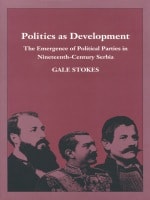
Politics as Development
The Emergence of Political Parties in Nineteenth-Century SerbiaGale Stokes
Duke University Press, 1990

Politics for People
Finding a Responsible Public VoiceDavid Mathews
University of Illinois Press, 1999
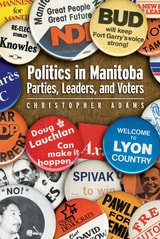
Politics in Manitoba
Parties, Leaders, and VotersChristopher Adams
University of Manitoba Press, 2008
Politics in the Pews
The Political Mobilization of Black ChurchesEric L. McDaniel
University of Michigan Press, 2008
"Politics in the Pews probes the internal dynamics of political decision making within the Black church."
---William E. Nelson, Jr., Research Professor, Department of African American and African Studies, Ohio State University
As Eric McDaniel demonstrates in his study of Black congregations in the U.S., a church's activism results from complex negotiations between the pastor and the congregation. The church's traditions, its institutional organization, and its cultural traditions influence the choice to make politics part of the church's mission. The needs of the local community and opportunities to vote, lobby, campaign, or protest are also significant factors.
By probing the dynamics of churches as social groups, McDaniel opens new perspectives on civil rights history and the evangelical politics of the twenty-first century. Politics in the Pews contributes to a clearer understanding of the forces that motivate any organization, religious or otherwise, to engage in politics.
Eric L. McDaniel is Assistant Professor in the Department of Government at the University of Texas at Austin.

Politics of James Connolly
Kieran Allen
Pluto Press, 1990
Kieran Allen breaks this mould, assessing the founder of the Irish Marxist movement ideas from a revolutionary socialist perspective. Allen considers the strengths and weaknesses of Connolly’s revolutionary strategy, the effect of his commitment to international socialism on his nationalist loyalties and arguing that, ultimately, Connolly's enduring relevance derives from his anti-imperialism. Any socialist movement today ignores this book at its peril.
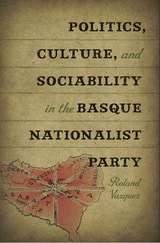
Politics, Culture, and Sociability in the Basque Nationalist Party
Roland Vazquez
University of Nevada Press, 2010
Until now, social scientists studying Spanish politics have focused on party systems, regime transition, and election analysis, and anthropologists studying Spain have largely neglected its political parties. This book is a pathbreaking work of political anthropology and an ethnographic study of the Basque Nationalist Party (PNV). Author Roland Vazquez studies Basque nationalism as not merely a political phenomenon but as a cultural and social one as well. He examines the forces that have shaped the Basque political panorama, the nature of Basque political campaigns, Basque cultural and social movements both inside and outside the explicitly partisan milieu, and the role of other parties in the Basque Country. The study is enhanced by extensive interviews and broad fieldwork among Basque contacts of diverse backgrounds and loyalties. The result is a vivid portrait of political life in the contemporary Basque Country, of the tensions between various nationalist parties and philosophies, and of the way politics are influenced by Basque notions of community, social connections, and national identity. The book also serves as a model for studies of other political and nationalist movements and the cultural and social ties and values that drive them.
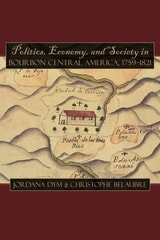
Politics, Economy, and Society in Bourbon Central America, 1759-1821
Jordana Dym
University Press of Colorado, 2007
These reforms profoundly changed aspects of Central America's politics and society; however, these essays reveal that changes in the region were shaped both internally and externally and that they weakened the region's ties to metropolitan Spain as often as they reinforced them. Contributors focus on specific policy changes and their consequences as well as transformations throughout the region for which no direct Bourbon inspiration appears to be responsible. Together they demonstrate that whether or not the Crown achieved its primary goals of centralization and control, its policies nevertheless provided opportunities for evident, often subtle, and occasionally unintentional shifts in the colonial government's relationship to its constituent populations. Contributors include Christophe Belaubre, Michel Bertrand, Jordana Dym, Jorge H. González, Timothy Hawkins, Sajid Alfredo Herrera, Gustavo Palma, Eugenia Rodriguez, Doug Tompson, and Stephen Webre.

Politics, Faith, and the Making of American Judaism
Peter Adams
University of Michigan Press, 2014
In 1862, in the only instance of a Jewish expulsion in America, General Ulysses S. Grant banished Jewish citizens from the region under his military command. Although the order was quickly revoked by President Lincoln, it represented growing anti-Semitism in America. Convinced that assimilation was their best defense, Jews sought to Americanize by shedding distinctive dress, occupations, and religious rituals.
American Jews recognized the benefit and urgency of bridging the divide between Reform and Orthodox Judaism to create a stronger alliance to face the challenges ahead. With Grant’s 1868 presidential campaign, they also realized they could no longer remain aloof from partisan politics. As they became a growing influence in American politics, both political parties courted the new Jewish vote.
Once in office, Grant took notice of the persecution of Jews in Romania and Russia, and he appointed more Jews to office than any president before him. Indeed, Simon Wolf, a Washington lawyer who became one of Grant’s closest advisers, was part of a new generation of Jewish leaders to emerge in the post–Civil War era—thoroughly Americanized, politically mature, and committed to the modernized Judaism of the Reform movement.
In Politics, Faith, and the Making of American Judaism, Peter Adams recounts the history of the American Jewish Community’s assimilation efforts, organization, and political mobilization in the late 19th century, as political and cultural imperatives crafted a new, American brand of Judaism.
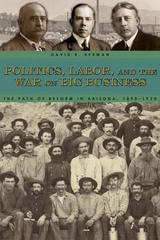
Politics, Labor, and the War on Big Business
The Path of Reform in Arizona, 1890-1920David R. Berman
University Press of Colorado, 2012
In the 1890s, once-heavily courted corporations had become, in the eyes of many, outside "money interests" or "beasts" that exploited the wealth of the sparsely settled area. Arizona's anticorporate reformers condemned the giant corporations for mistreating workers, farmers, ranchers, and small-business people and for corrupting the political system. During a thirty-year struggle, Arizona reformers called for changes to ward off corporate control of the political system, increase corporate taxation and regulation, and protect and promote the interests of working people.
Led by George W.P. Hunt and progressive Democrats, Arizona's brand of Progressivism was heavily influenced by organized labor, third parties, and Socialist activists. As highly powerful railroad and mining corporations retaliated, conflict took place on both political levels and industrial backgrounds, sometimes in violent form.
Politics, Labor and the War on Big Business places Arizona's experience in the larger historical discussion of reform activity of the period, considering issues involving the role of government in the economy and the possibility of reform, topics highly relevant to current debates.

Politics, Religion, and Art
Hegelian DebatesDouglas Moggach
Northwestern University Press, 2011
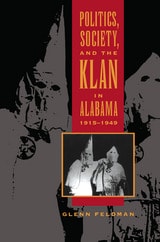
Politics, Society, and the Klan in Alabama, 1915-1949
Glenn Feldman
University of Alabama Press, 1999
This first book-length examination of the Klan in Alabama represents exhaustive research that challenges traditional interpretations.
The Ku Klux Klan has wielded considerable power both as a terrorist group and as a political force. Usually viewed as appearing in distinct incarnations, the Klans of the 20th century are now shown by Glenn Feldman to have a greater degree of continuity than has been previously suspected. Victims of Klan terrorism continued to be aliens, foreigners, or outsiders in Alabama: the freed slave during Reconstruction, the 1920s Catholic or Jew, the 1930s labor organizer or Communist, and the returning black veteran of World War II were all considered a threat to the dominant white culture. Feldman offers new insights into this "qualified continuity" among Klans of different eras, showing that the group remained active during the 1930s and 1940s when it was presumed dormant, with elements of the "Reconstruction syndrome" carrying over to the smaller Klan of the civil rights era.
In addition, Feldman takes a critical look at opposition to Klan activities by southern elites. He particularly shows how opponents during the Great Depression and war years saw the Klan as an impediment to attracting outside capital and federal relief or as a magnet for federal action that would jeopardize traditional forms of racial and social control. Other critics voiced concerns about negative national publicity, and others deplored the violence and terrorism.
This in-depth examination of the Klan in a single state, which features rare photographs, provides a means of understanding the order's development throughout the South. Feldman's book represents definitive research into the history of the Klan and makes a major contribution to our understanding of both that organization and the history of Alabama.
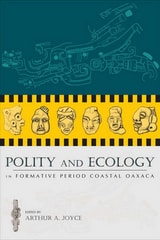
Polity and Ecology in Formative Period Coastal Oaxaca
Arthur A. Joyce
University Press of Colorado, 2012
This period saw the earliest agricultural settlements in the region as well as the origins of sedentism and social complexity, and witnessed major changes in floodplain and coastal environments that expanded the productivity of subsistence resources. The book addresses theoretically significant questions of broad relevance such as the origins and spread of agriculture, the social negotiation of complex political formations, the effects of long-distance trade and interaction, the macroregional effects of landscape change, and prehispanic ideology and political power.
Focusing on questions of interregional interaction, environmental change, and political centralization, Polity and Ecology in Formative Period Coastal Oaxaca provides a comprehensive understanding of the Formative period archaeology of this important and long neglected region of Oaxaca.

Pompeis Difficile Est
Studies in the Political Life of Imperial PompeiiJames L. Franklin, Jr.
University of Michigan Press, 2001
By collecting, sifting, and cross-referencing these varied documents, Franklin proves it possible to trace the major political alliances of the times, explore the remains of their houses, and find traces of their personalities. A few families, like the powerful Holconii, developers of the region's most famous grape vine, prove to have been steady players throughout Pompeii's history; but most families rose and fell within two generations at most. Chapters examine the men and families most prominent in each imperial period, including an analysis of their houses, and concludes with family trees. The documents themselves, elsewhere difficult to access, are prominently featured and translated in the text, making these discussions available and vivid to all readers.
This book is the first such attempt to cross-reference and animate all kinds of writing found at this legendary site. Outside of the city of Rome itself, this is the largest collection of writing from Roman antiquity, and it has lain mostly unexamined in the course of three centuries of excavations at Pompeii. This volume will interest not only students of Pompeii and classical scholars, but also historians, political scientists, sociologists, and enthusiasts of human behavior of all eras.
James L. Franklin is Professor of Classical Studies, Indiana University.
Popular Organization and Democracy in Rio De Janeiro
A Tale of Two FavelasRobert Gay
Temple University Press, 1993
Popular Protest in Palestine
The History and Uncertain Future of Unarmed ResistanceMarwan Darweish and Andrew Rigby
Pluto Press, 2015
Popular Resistance in Palestine
A History of Hope and EmpowermentMazin B. Qumsiyeh
Pluto Press, 2011
The book contains hundreds of stories of the heroic and highly innovative methods of resistance employed by the Palestinians over more than 100 years. The author also analyses the successes, failures, missed opportunities and challenges facing ordinary Palestinians as they struggle for freedom against incredible odds. This is the only book to critically and comparatively study the uprisings of 1920-21, 1929, 1936-9, 1970s, 1987-1991 and 2000-2006.
The compelling human stories told in this book will inspire people of all faiths and political backgrounds to chart a better and more informed direction for a future of peace with justice.
Popular Sovereignty and the Crisis of German Constitutional Law
The Theory and Practice of Weimar ConstitutionalismPeter C. Caldwell
Duke University Press, 1997
Caldwell makes accessible the rich literature in German constitutional thought of the Weimar period, most of which has been unavailable in English until now. On the liberal left, Hugo Preuss and Hans Kelsen defended a concept of democracy that made the constitution sovereign and, in a way, created the "Volk" through constitutional procedure. On the right, Carl Schmitt argued for a substantial notion of the "Volk" that could overrule constitutional procedure in a state of emergency. Rudolf Smend and Heinrich Triepel located in the constitution a set of inviolable values of the political community, while Hermann Heller saw in it a guarantee of substantial social equality. Drawing on the work of these major players from the 1920s, Caldwell reveals the various facets of the impassioned constitutional struggles that permeated German legal and political culture during the Weimar Republic.
Popular Tyranny
Sovereignty and Its Discontents in Ancient GreeceEdited by Kathryn A. Morgan
University of Texas Press, 2003
The nature of authority and rulership was a central concern in ancient Greece, where the figure of the king or tyrant and the sovereignty associated with him remained a powerful focus of political and philosophical debate even as Classical Athens developed the world's first democracy. This collection of essays examines the extraordinary role that the concept of tyranny played in the cultural and political imagination of Archaic and Classical Greece through the interdisciplinary perspectives provided by internationally known archaeologists, literary critics, and historians.
The book ranges historically from the Bronze and early Iron Age to the political theorists and commentators of the middle of the fourth century B.C. and generically across tragedy, comedy, historiography, and philosophy. While offering individual and sometimes differing perspectives, the essays tackle several common themes: the construction of authority and of constitutional models, the importance of religion and ritual, the crucial role of wealth, and the autonomy of the individual. Moreover, the essays with an Athenian focus shed new light on the vexed question of whether it was possible for Athenians to think of themselves as tyrannical in any way. As a whole, the collection presents a nuanced survey of how competing ideologies and desires, operating through the complex associations of the image of tyranny, struggled for predominance in ancient cities and their citizens.

Populism in Latin America
Michael L. Conniff
University of Alabama Press, 1999
Populism in Latin America provides a lively, accessible, and up-to- date introduction to the fascinating populist leaders who dominated much of 20th-century Latin American politics.
From the earliest years in the La Plata region to the end of the 1990s, Latin American populists proved amazingly successful at gaining high office, holding onto power, maintaining their followings, and renewing their careers. They raised more campaign money, got more voters to the polls, and held followers' allegiances far better than traditional politicians. Certainly some populist leaders corrupted their countries, others manipulated their followers, and still others disgraced themselves. Nevertheless, populist leaders were extraordinarily effective in reaching masses of voters, and some left positive legacies for future generations. Populism in Latin America provides an in-depth and thought-provoking assessment of the most prominent of these colorful and charismatic leaders, whose impact has been profound yet not fully recognized.
Latin American scholars here survey the populist experiences in those nations most profoundly influenced by this distinctively Latin American way of conducting the public's business--Argentina, Brazil, Chile, Mexico, Peru, Venezuela, Ecuador, and Panama. Joel Horowitz, for example, examines Argentina's strong legacy of populism, beginning with the remarkable Hip-lito Yrigoyen, moving through the archetypal Juan and Evita Perón, and ending with still-active president Carlos Menem. Ximena Sosa-Buchholz provides a fascinating view of populism in Ecuador, a country often overlooked by students of modern politics. Kurt Weyland challenges the notion that neoliberal, or monetarist, economic policies are incompatible with populism. Other populist leaders profiled include Lazaro Cardenas, Romulo Betancourt, and Alberto Fujimori to name a few.
In his epilogue and bibliographic essay, volume editor Michael Conniff suggests new directions for further research and offers a comprehensive survey of the evolution of major writings, theories, and methodologies in the field.
Populism in Latin America
Second EditionMichael L. Conniff
University of Alabama Press, 2012
A scholarly analysis of the origins, evolution, and enduring impact of populism in Latin American political life.
This updated edition of Populism in Latin America discusses new developments in populism as a political phenomenon and the emergence of new populist political figures in Mexico, Argentina, and Venezuela in particular.
For more than one hundred years—from the beginning of the twentieth to the early twenty-first century—Latin American populists proved amazingly successful at gaining high office, holding on to power, maintaining their followings, and renewing their careers. They raised more campaign money, got more voters to the polls,and held followers’ allegiances far better than traditional politicians. Certainly some populist leaders were corrupt, others manipulated their followers, and still others disgraced themselves. Nevertheless, populist leaders were extraordinarily effective in reaching masses of voters, and some left positive legacies for future generations.
Populism in Latin America examines the notion of populism in the political and social culture of Latin American societies as expressed through the populist leaders of several Latin American countries including Argentina, Brazil, Mexico, Chile, Ecuador, Panama, Peru, and Venezuela. This second edition also includes a new preface by Kenneth M. Roberts, professor of comparative and Latin American politics and the Robert S. Harrison Director of the Institute for the Social Sciences at Cornell University.
Contributors
Jorge Basurto / Michael L. Conniff / Paul W. Drake / Steve Ellner / Joel Horowitz /
Kenneth M. Roberts / W. Frank Robinson /Ximena Sosa / Steve Stein / Kurt Weyland
Populism in Twentieth Century Mexico
The Presidencies of Lázaro Cárdenas and Luis EcheverríaEdited by Amelia M. Kiddle and María L. Muñoz; Foreword by Cuauhtémoc Cárdenas
University of Arizona Press, 2010
This volume brings together twelve original essays that explore the concept of populism in twentieth century Mexico. Contributors analyze the presidencies of two of the century’s most clearly populist figures, evaluating them against each other and in light of other Latin American and Mexican populist leaders. In order to examine both positive and negative effects of populist political styles, contributors also show how groups as diverse as wild yam pickers in 1970s Oaxaca and intellectuals in 1930s Mexico City had access to and affected government projects.
The chapters on the Echeverría presidency are written by contributors at the forefront of emerging scholarship on this topic and demonstrate new approaches to this critical period in Mexican history. Through comparisons to Echeverría, contributors also shed new light on the Cárdenas presidency, suggesting fresh areas of investigation into the work of Mexico’s quintessentially populist leader. Ranging in approach from environmental history to labor history, the essays in this volume present a complex picture of twentieth century populism in Mexico.
Populism to Progressivism In Alabama
Sheldon Hackney
University of Alabama Press, 2010
WINNER OF THE ALBERT J. BEVERIDGE AWARD OF THE AMERICAN HISTORICAL ASSOCIATION
A classic study of race, reform, and political change in the New South.
Populism to Progressivism in Alabama by Sheldon Hackney is a landmark study of the political and social transformation of Alabama during the pivotal years between 1890 and 1910. Widely recognized as a classic work of Southern history, the book examines the rise of the Populist movement, the emergence of Progressive reform, and the forces that reshaped political power in the state at the turn of the twentieth century.
Hackney explores the complex relationships among race, class, economic change, agrarian protest, and democratic participation. He investigates how farmers, laborers, political leaders, and reformers responded to industrialization, shifting economic conditions, and the challenges of governance in the New South. Central to the narrative are debates over voting rights, disfranchisement, race relations, and the creation of new political institutions that would shape Alabama's future for generations.
Combining quantitative methods with traditional historical scholarship, Hackney provides a nuanced interpretation of both Populism and Progressivism, challenging simplistic accounts of reform and political change. Essential reading for understanding Alabama and the modern South, this influential volume remains a foundational resource for historians, political scientists, students, and anyone interested in the history of American democracy and regional transformation.
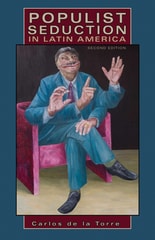
Populist Seduction in Latin America
Carlos de la Torre
Ohio University Press, 2010
Is Latin America experiencing a resurgence of leftwing governments, or are we seeing a rebirth of national-radical populism? Are the governments of Hugo Chávez, Evo Morales, and Rafael Correa becoming institutionalized as these leaders claim novel models of participatory and direct democracy? Or are they reenacting older traditions that have favored plebiscitary acclamation and clientelist distribution of resources to loyal followers? Are we seeing authentic forms of expression of the popular will by leaders who have empowered those previously disenfranchised? Or are these governments as charismatic, authoritarian, and messianic as their populist predecessors?
This new and expanded edition of Populist Seduction in Latin America explores the ambiguous relationships between democracy and populism and brings de la Torre’s earlier work up to date, comparing classical nationalist, populist regimes of the 1940s, such as those of Juan Perón and José María Velasco Ibarra, with their contemporary neoliberal and radical successors. De la Torre explores their similarities and differences, focusing on their discourses and uses of political symbols and myths.
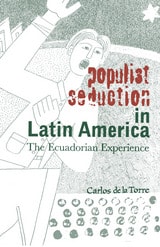
Populist Seduction in Latin America
The Ecuadorian ExperienceCarlos De La Torre
Ohio University Press, 2000
earlier work up to date, comparing classical nationalist, populist regimes of the 1940s, such as those of Juan Perón and José María Velasco Ibarra, with their contemporary neoliberal and radical successors. De la Torre explores their similarities and differences, focusing on their discourses and uses of political symbols and myths.
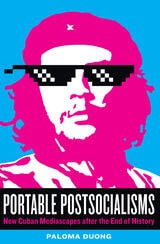
Portable Postsocialisms
New Cuban Mediascapes after the End of HistoryPaloma Duong
University of Texas Press, 2024
2025 Honorable Mention, Bryce Wood Book Award, Latin American Studies Association
A study of Cuban culture and media in the twenty-first century as both a global phenomenon and a local reality, at a time when the declared death of socialism coexists in tension with emerging anticapitalist movements worldwide.
Why does Cuban socialism endure as an object of international political desire, while images of capitalist markets consume Cuba’s national imagination? This bold new study argues that Cuba’s changing media cultures are key to our understanding of the global postsocialist condition and its competing political imaginaries.
Portable Postsocialisms calls on a vast multimedia archive to offer a groundbreaking cultural interpretation of Cuban postsocialism. Paloma Duong examines songs, artworks, advertisements, memes, literature, jokes, and networks that refuse exceptionalist and exoticizing visions of Cuba. Expanding postsocialist critical theory to read this complex mediascape, Duong argues that a materialist critique of Cuba’s revolutionary legacy must account for Cubans’ everyday demands for agency and self-representation. This long overdue reassessment of Cuba’s place in Latin American and post-Marxist studies shows Cuban postsocialism to be an urgent and indispensable referent for core debates on the politics of participatory cultures in new media studies. Portable Postsocialisms performs the crucial task of redefining how we envision imaginaries of social change in Latin America and the Caribbean.
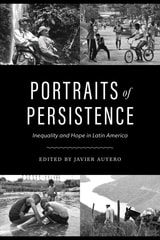
Portraits of Persistence
Inequality and Hope in Latin AmericaJavier Auyero
University of Texas Press, 2024
Profiles of triumph and hardship amid massive inequality in Latin America.
Each chapter of Portraits of Persistence, a project of the University of Texas Urban Ethnography Lab, offers an intimate portrait of one or two individual lives. The subjects are a diverse group of individuals from across the continent: grassroots activists and political brokers, private security entrepreneurs, female drug dealers, shantytown dwellers, and rural farmers, as well as migrants finding routes into and out of the region. Through these accounts, the writers explore issues that are common throughout today's world: precarious work situations, gender oppression, housing displacement, experiences navigating the bureaucracy for asylum seekers, state violence, environmental devastation, and access to good and affordable health care. Carefully situating these experiences within the sociohistorical context of their specific local regions or countries, editor Javier Auyero and his colleagues consider how people make sense of the paths their lives have taken, the triumphs and hardships they have experienced, and the aspirations they hold for the future. Ultimately, these twelve compelling profiles offer unique and personal windows into the region’s complex and multilayered reality.

Portraits of the Queen Mother
Polemics, Panegyrics, LettersCatherine de Médicis and Others
Iter Press, 2014
Post-Communism
An IntroductionLeslie Holmes
Duke University Press, 1997
Post-Communist Mafia State
The Case of HungaryBálint Magyar
Central European University Press, 2016
Post-Racial or Most-Racial?
Race and Politics in the Obama EraMichael Tesler
University of Chicago Press, 2016
Michael Tesler shows how, in the years that followed the 2008 election—a presidential election more polarized by racial attitudes than any other in modern times—racial considerations have come increasingly to influence many aspects of political decision making. These range from people’s evaluations of prominent politicians and the parties to issues seemingly unrelated to race like assessments of public policy or objective economic conditions. Some people even displayed more positive feelings toward Obama’s dog, Bo, when they were told he belonged to Ted Kennedy. More broadly, Tesler argues that the rapidly intensifying influence of race in American politics is driving the polarizing partisan divide and the vitriolic atmosphere that has come to characterize American politics.
One of the most important books on American racial politics in recent years, Post-Racial or Most-Racial? is required reading for anyone wishing to understand what has happened in the United States during Obama’s presidency and how it might shape the country long after he leaves office.
Post-World War One Plebiscites and Their Legacies
Exploring the Right of Self-DeterminationSergiusz Bober
Central European University Press, 2024
Plebiscites, or referendums, are epitomes of direct democracy and the right of self-determination. While direct democracy has always been a key subject in the theory and practice of western liberal democracies, the issue of self-determination has been propelled to the fore by the hegemonistic moves of Russia. By providing a historical analysis of the post-World War One plebiscites, this book deals with enduring, painfully contemporary, and in in any case fundamental, concepts.
The contributors to this edited volume approach the referendums comparatively. After grounding the analysis theoretically, the authors look at detailed aspects of individual cases, with the two plebiscites held in the Danish-German border region of Schleswig in the winter of 1920 as points of departure. They then extend the exploration through the inter-war period and address the effects of border delimitations on everyday life or gender roles in the context of ethnic mobilization. Finally, the book places the post-World War One plebiscites in a long-term perspective. The concluding essays assess, among others, the applicability of plebiscitary solutions to contemporary conflicts, taking into consideration issues of borders, religion, language, identity, and minority rights.
Post/Revolutionary Conditions
Renewed Visions of the Iranian Freedom StruggleAlborz Ghandehari
Northwestern University Press, 2025
An exploration of how the Iranian people have renewed their longtime struggle for freedom
The Woman, Life, Freedom uprising is only the latest manifestation of a century-long struggle for liberation in Iran. This ongoing movement for justice has encompassed two revolutions against domestic dictatorship and foreign imperialism, as well as a series of uprisings since the 1979 Iranian Revolution, which was followed by a new era of repression. Post/Revolutionary Conditions: Renewed Visions of the Iranian Freedom Struggle offers an intersectional analysis of how progressive and radical movement builders have reenvisioned liberation in the post-’79 era, despite new forms of oppression under the Islamic Republic and from US and other foreign imperial powers. Bringing together a diverse array of sources, including oral histories with Iranian labor, student, and gender justice organizers, as well as resistance literature and art, Alborz Ghandehari challenges narratives that treat working-class, feminist, queer, and oppressed ethnic minorities’ movements as separate from one another. Post/Revolutionary Conditions demonstrates how such potent reimaginings of collective liberation and a radically democratic future have been shaped by multiple generations of protest and kindred struggles globally.
Postcolonial Configurations
Dictatorship, the Racial Cold War, and Filipino AmericaJosen Masangkay Diaz
Duke University Press, 2023
Postcolonial Insecurities
India, Sri Lanka, and the Question of NationhoodSankaran Krishna
University of Minnesota Press, 1999
An exploration of the connections between ethnicity and nation-building.
This ambitious work explores the vexed connections among nation-building, ethnic identity, and regional conflict by focusing on a specific event: Indian political and military intervention in the ethnic conflict between the Sinhalese and Tamils in Sri Lanka.
Drawing on interviews with leading players in the Indian–Sri Lankan debacle, Sankaran Krishna offers a persuasive analysis of this episode. The intervention serves as a springboard to a broader inquiry into the interworkings of nation building, ethnicity, and “foreign” policy. Krishna argues that the modernist effort to construct nation-states on the basis of singular notions of sovereignty and identity has reached a violent dead end in the postcolonial world of South Asia. Showing how the nationalist agenda that seeks to align territory with identity has unleashed a spiral of regional, statist, and insurgent violence, he makes an eloquent case for reimagining South Asia along postnational lines—as a “confederal” space.Postcolonial Insecurities counters the perception of “ethnicity” as an inferior and subversive principle compared with the progressive ideal of the “nation.” Krishna, in fact, shows ethnicity to be indispensable to the production and reproduction of the nation itself.
Posthegemony
Political Theory and Latin AmericaJon Beasley-Murray
University of Minnesota Press, 2010
In his thorough examination, Beasley-Murray undoes the dominant narrative of hegemonic projects and counterhegemonic resistance, of civilization and subalternity, to reveal instead a history of failed contracts and unpredicted insurgencies.
Posting for Power
Congressional Partisanship on Social MediaJeremy Gelman and Steven Lloyd Wilson
University of Michigan Press, 2026
In the US Congress, lawmakers regularly choose to bicker for political gain, whether or not they disagree on issues. By classifying millions of social media posts as partisan or not, Gelman and Wilson quantify a legislator’s partisan intensity through the time and effort they spend supporting their party and bickering with the opposition. The authors argue that the partisan personas politicians create are both a home style, to help them win reelection, and hill style, to help them become politically influential by showing off as good team players. Bringing together a wide range of data on leadership races, elections, voting records, cosponsorship patterns, and lawmaking outcomes, they demonstrate the nearly consequence-free way that legislators strategically deploy partisanship to impress their copartisans and voters. Gelman and Wilson closely examine what motivates members to differ so much in developing this part of their public personas and offer clear recommendations for how to turn down the partisan heat on Capitol Hill.
Postsocialism and Cultural Politics
China in the Last Decade of the Twentieth CenturyXudong Zhang
Duke University Press, 2008
Zhang examines the reactions of intellectuals, authors, and filmmakers to the cultural and political conflicts in China during the 1990s. He offers a nuanced assessment of the changing divisions and allegiances within the intellectual landscape, and he analyzes the postsocialist realism of the era through readings of Mo Yan’s fiction and the films of Zhang Yimou. With Postsocialism and Cultural Politics, Zhang applies the same keen insight to China’s long 1990s that he brought to bear on the 1980s in Chinese Modernism in the Era of Reforms.
Pothole Confidential
My Life as Mayor of MinneapolisR.T. Rybak
University of Minnesota Press, 2016
A pajama party at the Minneapolis–St. Paul International Airport inadvertently helped launch R.T. Rybak’s political career (imagine a rumba line one hundred protesters long chanting, “We deserve to sleep, hey!”), but his earliest lessons in leadership occurred during his childhood. Growing up in a middle-class neighborhood, attending private school with students who had much more than he did, spending evenings at his family’s store in an area where people lived with much less, he witnessed firsthand the opportunity and injustice of the city he called home.
In a memoir that is at once a political coming-of-age story and a behind-the-scenes look at the running of a great city, the three-term mayor takes readers into the highs and lows and the daily drama of a life inextricably linked with Minneapolis over the past fifty years. With refreshing candor and insight, Rybak describes his path through journalism, marketing, and community activism that led to his unlikely (to him, at least) primary election—on September 11, 2001. His personal account of the challenges and crises confronting the city over twelve years, including the tragic collapse of the I-35W bridge, the rising scourge of youth violence, and the bruising fight over a ban on gay marriage (with Rybak himself conducting the first such ceremony at City Hall on August 1, 2013), is also an illuminating, often funny depiction of learning the workings of the job, frequently on the fly, while trying to keep up with his most important constituency, his family.
As bracing as the “fresh air” campaign that swept him into office, Rybak’s memoir is that rare document from a politician: one more concerned with the people he served and the issues of his time than with burnishing his own credentials. As such, it reflects what leadership truly looks like.
Poverty Of Amer Pol 2Nd Ed
H. Mark Roelofs
Temple University Press, 1998
Based on his novel understanding of the American political system, Roelofs presents a devastating and closely reasoned critique that traces our nation's political ills to fundamental flaws in the very design of its founding principles, the character of its major institutions, and the basic pattern of its processes. Dissecting our political and societal problems, he explains the limitations and basic contributions arising from the social democratic/liberal democratic dichotomy that result in our current political poverty.
While Roelofs's analysis remains the same as in the earlier edition, in this revised edition he has sharpened and extended the argument and expanded and updated his illustrative materials. Improved bibliographical citations and new diagrams make the book an even more useful teaching tool.
Poverty and Leadership in the Later Roman Empire
Peter Brown
Brandeis University Press, 2001
Power & Persuasion Late Antiquity
Towards A Christian EmpirePeter Brown
University of Wisconsin Press, 1992
Power Shifts
Congress and Presidential RepresentationJohn A. Dearborn
University of Chicago Press, 2021
The emergence of the modern presidency in the first half of the twentieth century transformed the American government. But surprisingly, presidents were not the primary driving force of this change—Congress was. Through a series of statutes, lawmakers endorsed presidential leadership in the legislative process and augmented the chief executive’s organizational capacities.
But why did Congress grant presidents this power? In Power Shifts, John A. Dearborn shows that legislators acted on the idea that the president was the best representative of the national interest. Congress subordinated its own claims to stand as the nation’s primary representative institution and designed reforms that assumed the president was the superior steward of all the people. In the process, Congress recast the nation’s chief executive as its chief representative.
As Dearborn demonstrates, the full extent to which Congress’s reforms rested on the idea of presidential representation was revealed when that notion’s validity was thrown into doubt. In the 1970s, Congress sought to restore its place in a rebalanced system, but legislators also found that their earlier success at institutional reinvention constrained their efforts to reclaim authority. Chronicling the evolving relationship between the presidency and Congress across a range of policy areas, Power Shifts exposes a fundamental dilemma in an otherwise proud tradition of constitutional adaptation.
Power and Identity in Archaeological Theory and Practice
Case Studies from Ancient MesoamericaEleanor Harrison-Buck
University of Utah Press, 2012
The contributions to this volume represent a diverse array of Mesoamerican archaeological studies that are all theo-retically rooted to larger, global debates concerning issues of power and identity—two logically paired concepts. While social identity has been the focus of more critical analysis in recent years, the concept of power has received far less attention. Most studies focus on large-scale, institutional forms of power and the ruling body. Here, the focus is on relations of power, addressing broader segments of society outside the dominant group, that often are ignored in traditional reconstructions of past societies.
Harrison-Buck has compiled works that address a common criticism of social theory in the field of anthropological archaeology—the lack of strong case studies and corroborating facts supporting the abstract and often complex social theoretical concepts presented by scholars. Each contributor offers innovative method and theory and provides alternative and varied approaches to understanding power and identity in the archaeological record. They draw from a wide range of related disciplines and theoretical frameworks, including feminism, queer theory, cognitive studies, and postcolonial theory. The provocative case studies and exciting theoretical applications presented here will stimulate lively debate among scholars working both in and outside of Mesoamerica.
Power and Society in Greater NY
David C. Hammack
Russell Sage Foundation, 1982
Power in Colonial Africa
Conflict and Discourse in Lesotho, 1870–1960Elizabeth A. Eldredge
University of Wisconsin Press, 2007
In Power in Colonial Africa: Conflict and Discourse in Lesotho, 1870–1960, Elizabeth A. Eldredge analyzes a panoply of archival and oral resources, visual signs and symbols, and public and private actions to show how power may be exercised not only by rulers but also by the ruled. The BaSotho—best known for their consolidation of a kingdom from the 1820s to 1850s through primarily peaceful means, and for bringing colonial forces to a standstill in the Gun War of 1880–1881—struggled to maintain sovereignty over their internal affairs during their years under the colonial rule of the Cape Colony (now part of South Africa) and Britain from 1868 to 1966. Eldredge explores instances of BaSotho resistance, resilience, and resourcefulness in forms of expression both verbal and non-verbal. Skillfully navigating episodes of conflict, the BaSotho matched wits with the British in diplomatic brinksmanship, negotiation, compromise, circumvention, and persuasion, revealing the capacity of a subordinate population to influence the course of events as it selectively absorbs, employs, and subverts elements of the colonial culture.
“A refreshing, readable and lucid account of one in an array of compositions of power during colonialism in southern Africa.”—David Gordon, Journal of African History
“Elegantly written.”—Sean Redding, Sub-Saharan Africa
“Eldredge writes clearly and attractively, and her studies of the war between Lerotholi and Masupha and of the conflicts over the succession to the paramountcy are essential reading for anyone who wants to understand those crises.”—Peter Sanders, Journal of Southern African Studies
Power, Community and the State
The Political Anthropology of Organisation in MexicoMonique Nuijten
Pluto Press, 2003