Results by title
4127 books match the query 'Science' and 223 start with p

Plant Communities of Southern Illinois
Robert H. Mohlenbrock and John C. Voigt
Southern Illinois University Press, 1964
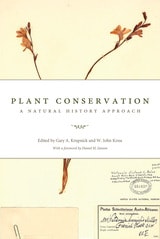
Plant Conservation
A Natural History ApproachEdited by Gary A. Krupnick and W. John Kress
University of Chicago Press, 2005
Plant Conservation opens with a broad view of plant biodiversity and then considers evolutionary and taxonomic threats and consequences of habitat alteration; specific threats to plant diversity, such as invasive species and global climate change; consequences of plant population decline at the ecological, evolutionary, and taxonomic levels; and, finally, management strategies that protect plant biodiversity from further decline. With a unique perspective on biodiversity and scientific collections, Plant Conservation ultimately emphasizes the role museums and botanical gardens will play in future conservation.
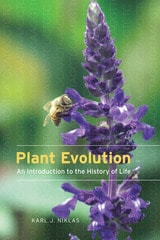
Plant Evolution
An Introduction to the History of LifeKarl J. Niklas
University of Chicago Press, 2016
Tapping such wide-ranging topics as genetics, gene regulatory networks, phenotype mapping, and multicellularity, as well as paleobotany, Karl J. Niklas’s Plant Evolution offers fresh insight into these differences. Following up on his landmark book The Evolutionary Biology of Plants—in which he drew on cutting-edge computer simulations that used plants as models to illuminate key evolutionary theories—Niklas incorporates data from more than a decade of new research in the flourishing field of molecular biology, conveying not only why the study of evolution is so important, but also why the study of plants is essential to our understanding of evolutionary processes. Niklas shows us that investigating the intricacies of plant development, the diversification of early vascular land plants, and larger patterns in plant evolution is not just a botanical pursuit: it is vital to our comprehension of the history of all life on this green planet.
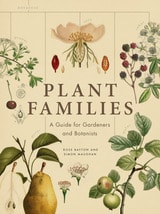
Plant Families
A Guide for Gardeners and BotanistsRoss Bayton and Simon Maughan
University of Chicago Press, 2017
Plant Families is an easy-to-use, beautifully illustrated guide to the more than one hundred core plant families every horticulturist, gardener, or budding botanist needs to know. It introduces the basics of plant genealogy and teaches readers how to identify and understand the different structures of flowers, trees, herbs, shrubs, and bulbs. It then walks through each family, explaining its origins and range, and describing characteristics such as size, flowers, and seeds. Each family is accompanied by full-color botanical illustrations and diagrams. “Uses For” boxes planted throughout the book provide practical gardening tips related to each family.
We have much to gain by learning about the relationships between plant families. By understanding how botanists create these groupings, we can become more apt at spotting the unique characteristics of a plant and identify them faster and more accurately. Understanding plant families also helps us to make sense of—and better appreciate—the enormous biological diversity of the plant kingdom.
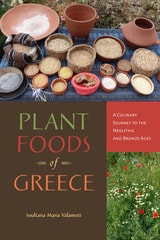
Plant Foods of Greece
A Culinary Journey to the Neolithic and Bronze AgesSoultana Maria Valamoti
University of Alabama Press, 2023
2024 INAUGURAL MARY BEAUDRY BOOK AWARD FOR THE ARCHAEOLOGY OF FOOD
A synthesis of culinary practices of prehistoric Greece based on plant food ingredients
In Plant Foods of Greece, Greek archaeologist Soultana Maria Valamoti takes readers on a culinary journey, reconstructing the plant foods and culinary practices of Neolithic and Bronze Age Greece. For more than thirty years, she has been analyzing a large body of archaeobotanical data that was retrieved from nearly twenty sites in mainland Greece and the Greek islands, with an additional analysis of other sites as referenced by published colleagues. Plant foods were the main ingredients of daily meals in prehistoric Greece and most likely of special dishes prepared for feasts and rituals.
Valamoti’s approach allows an exploration of culinary variability through time. The thousands of charred seeds identified from occupation debris correspond to minuscule time capsules. She is able to document changes from the cooking of the first farmers to the sophisticated cuisines of the elites who inhabited palaces in the first cities of Europe in the south of Greece during the Late Bronze Age. Along the way, she explains the complex processes for the addition of new ingredients (such as millet and olives), condiments, sweet tastes, and complex recipes. Valamoti also addresses regional variability and diversity as well as detailing experimentation and research using occasional input from ancient written sources.
Comprehensive and synthetic coverage encompasses bread/cereals, pulses, oils, fruit and nuts, fermented brews, healing foods, cooking, and identity. In addition, Valamoti offers insight into engaging in public archaeology and provides recipes that incorporate ancient plant ingredients and connect prehistory to the present in a critical way. A definitive source for a range of food scientists and scholars, it will also appeal to foodies.
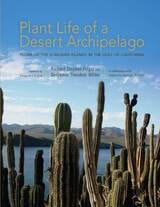
Plant Life of a Desert Archipelago
Flora of the Sonoran Islands in the Gulf of CaliforniaRichard Stephen Felger and Benjamin Theodore Wilder, in collaboration with Humberto Romero-Morales; Foreword by Exequiel Ezcurra
University of Arizona Press, 2012
The desert islands of the Gulf of California are among the world's best-preserved archipelagos. The diverse and unique flora, from the cardón forests of Cholludo to the agave-dominated slopes of San Esteban remain much as they were centuries ago, when the Comcaac (Seri people) were the only human presence in the region. Almost 400 plant species exist here, with each island manifesting a unique composition of vegetation and flora. For thousands of years, climatic and biological forces have sculpted a set of unparalleled desert worlds.
Plant Life of a Desert Archipelago is the first in-depth coverage of the plants on islands in the Gulf of California found in between the coasts of Baja California and Sonora. The work is the culmination of decades of study by botanist Richard Felger and recent investigations by Benjamin Wilder, in collaboration with Sr. Humberto Romero-Morales, one of the most knowledgeable Seris concerning the region's flora. Their collective effort weaves together careful and accurate botanical science with the rich cultural and stunning physical setting of this island realm.
The researchers surveyed, collected, and studied thousands of plants—seen here in meticulous illustrations and stunning color photographs—providing the most precise species accounts of the islands ever made. To access remote parts of the islands the authors worked directly with the Comcaac, an indigenous community who have lived off marine and terrestrial life in this coastal desert region for centuries. Invaluable information regarding indigenous names and distributions are an intrinsic part of this work.
The flora descriptions are extraordinarily detailed and painstakingly crafted for field biologists. Conservationists, students, and others who are interested in learning about the natural wealth of the Gulf of California, desert regions, or islands in general are sure to be captivated by this rich and fascinating volume.
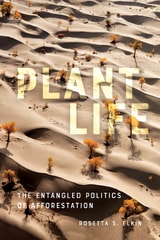
Plant Life
The Entangled Politics of AfforestationRosetta S. Elkin
University of Minnesota Press, 2022
How afforestation reveals the often-concealed politics between humans and plants
In Plant Life, Rosetta S. Elkin explores the procedures of afforestation, the large-scale planting of trees in otherwise treeless environments, including grasslands, prairies, and drylands. Elkin reveals that planting a tree can either be one of the ultimate offerings to thriving on this planet, or one of the most extreme perversions of human agency over it.
Using three supracontinental case studies—scientific forestry in the American prairies, colonial control in Africa’s Sahelian grasslands, and Chinese efforts to control and administer territory—Elkin explores the political implications of plant life as a tool of environmentalism. By exposing the human tendency to fix or solve environmental matters by exploiting other organisms, this work exposes the relationship between human and plant life, revealing that afforestation is not an ecological act: rather, it is deliberately political and distressingly social.
Plant Life ultimately reveals that afforestation cannot offset deforestation, an important distinction that sheds light on current environmental trends that suggest we can plant our way out of climate change. By radicalizing what conservation protects and by framing plants in their total aliveness, Elkin shows that there are many kinds of life—not just our own—to consider when advancing environmental policy.
Plant Physics
Karl J. Niklas and Hanns-Christof Spatz
University of Chicago Press, 2012
From Galileo, who used the hollow stalks of grass to demonstrate the idea that peripherally located construction materials provide most of the resistance to bending forces, to Leonardo da Vinci, whose illustrations of the parachute are alleged to be based on his study of the dandelion’s pappus and the maple tree’s samara, many of our greatest physicists, mathematicians, and engineers have learned much from studying plants.
Plant Resistance to Herbivores and Pathogens
Ecology, Evolution, and GeneticsEdited by Robert S. Fritz and Ellen L. Simms
University of Chicago Press, 1992
Plant Resistance to Herbivores and Pathogens not only reviews the literature pertaining to plant resistance from a number of traditionally separate fields but also examines significant questions that will drive future research. Among the topics explored are selection for resistance in plants and for virulence in phytophages; methods for studying natural variation in plant resistance; the factors that maintain intraspecific variation in resistance; and the ecological consequences of within-population genetic variation for herbivorous insects and fungal pathogens.
"A comprehensive review of the theory and information on a large, rapidly growing, and important subject."—Douglas J. Futuyma, State University of New York, Stony Brook
Plant Sensing and Communication
Richard Karban
University of Chicago Press, 2015
In Plant Sensing and Communication, Richard Karban provides the first comprehensive overview of what is known about how plants perceive their environments, communicate those perceptions, and learn. Facing many of the same challenges as animals, plants have developed many similar capabilities: they sense light, chemicals, mechanical stimulation, temperature, electricity, and sound. Moreover, prior experiences have lasting impacts on sensitivity and response to cues; plants, in essence, have memory. Nor are their senses limited to the processes of an individual plant: plants eavesdrop on the cues and behaviors of neighbors and—for example, through flowers and fruits—exchange information with other types of organisms. Far from inanimate organisms limited by their stationary existence, plants, this book makes unquestionably clear, are in constant and lively discourse.
Plant-Pollinator Interactions
From Specialization to GeneralizationEdited by Nickolas M. Waser and Jeff Ollerton
University of Chicago Press, 2005
Nickolas M. Waser and Jeff Ollerton bring together experts from around the world to offer a comprehensive analysis of pollination, including the history of thinking about specialization and generalization and a comparison of pollination to other mutualisms. An overview of current thinking and of future research priorities, Plant-Pollinator Interactions covers an important theme in evolutionary ecology with far-reaching applications in conservation and agriculture. This book will find an eager audience in specialists studying pollination and other mutualisms, as well as with biologists who are interested in ecological, evolutionary, and behavioral aspects of the specialization and generalization of species.
Plantlore/Dena'ina K'et'una
An Ethnobotany of the Dena'ina People of Southcentral AlaskaPriscilla N. Russell
University of Alaska Press, 2020
This book is the culmination of more than a decade of ethnobotanical study and provides accounts of the traditional lore associated with these plants based on a wealth of interviews with Dena’ina people. This new edition includes new graphical content consolidating practical plant information and traditional uses.
Plants That We Eat
Nauriat Nigiñaqtaut - From the traditional wisdom of the Iñupiat Elders of Northwest AlaskaAnore Jones
University of Alaska Press, 2010
Plants for Food and Medicine
Edited by H. D. V. Prendergast, N. L. Etkin, D. R. Harris, and P. J. Houghton
Royal Botanic Gardens, Kew, 2000
Plants from the Past
Works Of Leonard W. Blake & Hugh C. CutlerLeonard W. Blake and Hugh C. Cutler; With an Introduction by Gayle J. Fritz and Patty Jo Watson
University of Alabama Press, 2001
Plants from the Past is a fascinating, comprehensive record of the work of two dedicated plant scientists who were instrumental in the establishment of archaeobotany and paleoethnobotany as vigorous subdisciplines within American archaeology. Hugh Carson Cutler and Leonard Watson Blake worked together for many decades at the Missouri Botanical Garden in St. Louis, identifying and interpreting plant remains from archaeological sites all over North America.
Covering a period of 30 years and tracing the development of the study of plant remains from archaeological sites, the volume will give archaeologists access to previously unavailable data and interpretations. It features the much-sought-after extensive inventory "Plants from Archaeological Sites East of the Rockies," which serves as a reference to archaeobotanical collections curated at the Illinois State Museum. The chapters dealing with protohistory and early historic foodways and trade in the upper Midwest are especially relevant at this time of increasing attention to early Indian-white interactions.
The editors' introduction provides coherence and historical context for the papers and points to the book's potential as a resource for future research. Graced by Dr. Blake's brief introductions to each chapter, Plants from the Past neatly compiles the earliest research in archaeobotany by two originators of the science.
Plants of the World
Maarten J. M. Christenhusz, Michael F. Fay, and Mark W. Chase
Royal Botanic Gardens, Kew, 2017
Plants of the World
An Illustrated Encyclopedia of Vascular PlantsMaarten J. M. Christenhusz, Michael F. Fay, and Mark W. Chase
University of Chicago Press, 2017
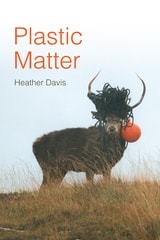
Plastic Matter
Heather Davis
Duke University Press, 2022
Plasticity in the Life Sciences
Antonine Nicoglou
University of Chicago Press, 2024
Plasticity has become an important topic in biology, with some even wondering if it has now acquired the theoretical importance in biology that the concept of the gene enjoyed at the beginning of the last century. In this historical and epistemological study, philosopher Antonine Nicoglou shows how the recurrence of the general idea of plasticity—throughout the history of the life sciences—indicates its essential role in the way we think about life processes. Although plasticity has become a key element in new evolutionary thinking, she argues, its role in contemporary biology is also not insignificant. Rather, as mobilized in contemporary biology, plasticity most often seeks to account for the specific nature of living systems.
The book is divided into two parts. The first takes up the history of plasticity from Aristotle to contemporary biology; the second part offers an original way of distinguishing between different phenomena described by “plasticity.” In the process, the author explores what has led some biologists to speak of plasticity as a way of overcoming genetic determinism.
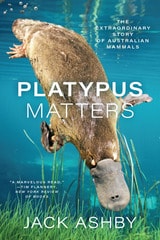
Platypus Matters
The Extraordinary Story of Australian MammalsJack Ashby
University of Chicago Press, 2022
Think of a platypus: They lay eggs (that hatch into so-called platypups), produce milk without nipples and venom without fangs, and can detect electricity. Or a wombat: Their teeth never stop growing, they poop cubes, and they defend themselves with reinforced rears. And what about antechinuses—tiny marsupial carnivores whose males don’t see their first birthday, as their frenzied sex lives take so much energy that their immune systems fail? Platypuses, possums, wombats, echidnas, devils, kangaroos, quolls, dibblers, dunnarts, kowaris: Australia has some truly astonishing mammals, with incredible, unfamiliar features. But how does the world regard these creatures? And what does that mean for their conservation?
In Platypus Matters, naturalist Jack Ashby shares his love for these often-misunderstood animals. Informed by his own experiences meeting living marsupials and egg-laying mammals during fieldwork in Tasmania and mainland Australia, as well as his work with thousands of zoological specimens collected for museums over the last two-hundred-plus years, Ashby’s tale not only explains historical mysteries and debunks myths (especially about the platypus), but also reveals the toll these myths can take. Ashby makes clear that calling these animals “weird” or “primitive”—or incorrectly implying that Australia is an “evolutionary backwater,” a perception that can be traced back to the country’s colonial history—has undermined conservation: Australia now has the worst mammal extinction rate of any place on Earth. Important, timely, and written with humor and wisdom by a scientist and self-described platypus nerd, this celebration of Australian wildlife will open eyes and change minds about how we contemplate and interact with the natural world—everywhere.
Playing God?
Human Genetic Engineering and the Rationalization of Public Bioethical DebateJohn H. Evans
University of Chicago Press, 2001
Playing God? asks why and explores the social forces that have led to the thinning out of public debate over human genetic engineering. John H. Evans contends that the problem lies in the structure of the debate itself. Disputes over human genetic engineering concern the means for achieving assumed ends, rather than being a healthy discussion about the ends themselves. According to Evans, this change in focus occurred as the jurisdiction over the debate shifted from scientists to bioethicists, a change which itself was caused by the rise of the bureaucratic state as the authority in such matters. The implications of this timely study are twofold. Evans not only explores how decisions about the ethics of human genetic engineering are made, but also shows how the structure of the debate has led to the technological choices we now face.

Playing the Ponies and Other Medical Mysteries Solved
Stuart B. Mushlin, MD, FACP
Rutgers University Press, 2017
With over forty years of experience as a sought after diagnostician, Dr. Stuart Mushlin has cracked his share of medical mysteries, ones in which there are bigger gambles than playing the ponies at the track. Some of his patients show up with puzzling symptoms, calling for savvy medical detective work. Others seem to present cut-and-dry cases, but they turn out to be suffering from rare or serious conditions.
In Playing the Ponies and Other Medical Mysteries Solved, Dr. Mushlin shares some of the most intriguing cases he has encountered, revealing the twists and turns of each patient’s diagnosis and treatment process. Along the way, he imparts the secrets to his success as a medical detective—not specialized high-tech equipment, but time-honored techniques like closely observing, touching, and listening to patients. He also candidly describes cases where he got things wrong, providing readers with honest insights into both the joys and dilemmas of his job.
Dr. Mushlin does not just treat diseases; he treats people. And this is not just a book about the ailments he diagnosed; it is also about the scared, uncertain, ailing individuals he helped in the process. Filled with real-life medical stories you’ll have to read to believe, Playing the Ponies is both a suspenseful page-turner and a heartfelt reflection on a life spent caring for patients.
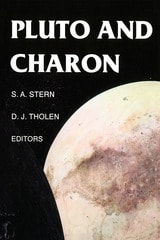
Pluto and Charon
Edited by S. Alan Stern and David J. Tholen
University of Arizona Press, 1997
This Space Science Series volume focuses on the scientific issues associated with Pluto and Charon. Fifty collaborating authors here review the latest research on the Pluto-Charon binary, from bulk properties, surfaces, and interiors to atmospheric structure, composition, and dynamics. They also provide historical perspectives on Pluto-Charon research and discuss the population of the trans-Neptunian region and the origin of the Pluto-Charon binary. Also included are prefatory remarks by Pluto's and Charon's discoverers, Clyde Tombaugh and James Christy.
Pluto and Charon offers the most comprehensive available compendium of research work for understanding these far-off members of our solar system, at a time following dramatic developments in our knowledge but before that knowledge can be advanced by spacecraft missions.
Originally published in 1997; now available as an e-book
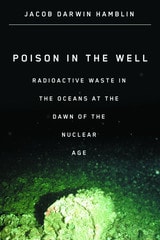
Poison in the Well
Radioactive Waste in the Oceans at the Dawn of the Nuclear AgeHamblin, Jacob D
Rutgers University Press, 2009
In the early 1990s, Russian President Boris Yeltsin revealed that for the previous thirty years the Soviet Union had dumped vast amounts of dangerous radioactive waste into rivers and seas in blatant violation of international agreements. The disclosure caused outrage throughout the Western world, particularly since officials from the Soviet Union had denounced environmental pollution by the United States and Britain throughout the cold war.
Poison in the Well provides a balanced look at the policy decisions, scientific conflicts, public relations strategies, and the myriad mishaps and subsequent cover-ups that were born out of the dilemma of where to house deadly nuclear materials. Why did scientists and politicians choose the sea for waste disposal? How did negotiations about the uses of the sea change the way scientists, government officials, and ultimately the lay public envisioned the oceans? Jacob Darwin Hamblin traces the development of the issue in Western countries from the end of World War II to the blossoming of the environmental movement in the early 1970s.
This is an important book for students and scholars in the history of science who want to explore a striking case study of the conflicts that so often occur at the intersection of science, politics, and international diplomacy.
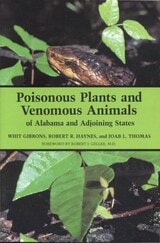
Poisonous Plants and Venomous Animals of Alabama and Adjoining States
Whit Gibbons, Robert R. Haynes, and Joab L. Thomas
University of Alabama Press, 1989
The essential guide to identifying and understanding the Southeast's toxic plants and venomous wildlife.
Wisteria, mistletoe, oleander, milkweed, narcissus, yellow Jessamine, wild hydrangea, trillium, all are plants easily recognized by most people. But these and more that 200 other plants in Alabama and the Southeast can cause systemic poisoning if ingested by human beings and livestock. This book describes these poisonous plants, including various mushrooms, and discusses the toxic properties, symptoms of poisoning, habitat occurrence, and geographic distribution. One chapter describes plants that cause dermatitis or other allergic reactions-plants including poison ivy, poison sumac, ragweed, clematis, and red maple.
Other chapters of the book discuss venous animals-not only the six venomous snakes of the Southeast but also certain jellyfishes, centipedes, spiders, scorpions, stinging caterpillars, wasps, hornets, bees, catfishes, stingrays, and others- that might be encountered by people during recreation or work. The authors describe habitat occurrence, geographic distribution, and general life history and behavior for these animals. Numerous color photographs and drawings of both plants and animals are included for identification, as well as hundreds of range maps.
The authors encourage an appreciation for the protective mechanisms hat help plants and animals defend themselves against predators or other threats. Although people must be able to recognize a poisonous plant or venomous animal in order to avoid suffering unwary contact, the book reassures the reader that Alabama’s flora and fauna gives us little cause to worry on a relative scale. The information provided increases our understanding of and admiration for these species and their environments.
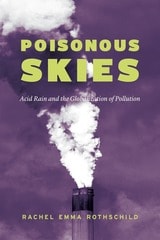
Poisonous Skies
Acid Rain and the Globalization of PollutionRachel Emma Rothschild
University of Chicago Press, 2019
The identification of acid rain in the 1960s changed scientific and popular understanding of fossil fuel pollution’s potential to cause regional—and even global—environmental harms. It showed scientists that the problem of fossil fuel pollution was one that crossed borders—it could travel across vast stretches of the earth’s atmosphere to impact ecosystems around the world. This unprecedented transnational reach prompted governments, for the first time, to confront the need to cooperate on pollution policies, transforming environmental science and diplomacy. Studies of acid rain and other pollutants brought about a reimagining of how to investigate the natural world as a complete entity, and the responses of policy makers, scientists, and the public set the stage for how societies have approached other prominent environmental dangers on a global scale, most notably climate change.
Grounded in archival research spanning eight countries and five languages, as well as interviews with leading scientists from both government and industry, Poisonous Skies is the first book to examine the history of acid rain in an international context. By delving deep into our environmental past, Rothschild hopes to inform its future, showing us how much is at stake for the natural world as well as what we risk—and have already risked—by not acting.
Political Descent
Malthus, Mutualism, and the Politics of Evolution in Victorian EnglandPiers J. Hale
University of Chicago Press, 2014
These two traditions, Hale shows, developed in a context of mutual hostility, debate, and refutation. Participants disagreed not only about evolutionary processes but also on broader questions regarding the kind of creature our evolution had made us and in what kind of society we ought therefore to live. Significantly, and in spite of Darwin’s acknowledgement that natural selection was “the doctrine of Malthus, applied to the whole animal and vegetable kingdoms,” both sides of the debate claimed to be the more correctly “Darwinian.” By exploring the full spectrum of scientific and political issues at stake, Political Descent offers a novel approach to the relationship between evolution and political thought in the Victorian and Edwardian eras.
Political Economy of Environmental Protection
Analysis and EvidenceRoger D. Congleton, Editor
University of Michigan Press, 1996
Political Essay on the Island of Cuba
A Critical EditionAlexander von Humboldt
University of Chicago Press, 2011
The research Alexander von Humboldt amassed during his five-year trek through the Americas in the early nineteenth-century proved foundational to the fields of botany, geography, and geology. But his visit to Cuba during this time yielded observations that extended far beyond the natural world. Political Essay on the Island of Cuba is a physical and cultural study of the island nation. In it, Humboldt denounces colonial slavery on both moral and economic grounds and stresses the vital importance of improving intercultural relations throughout the Americas.
Humboldt’s most controversial book, Political Essay on the Island of Cuba was banned, censored, and willfully mistranslated to suppress Humboldt’s strong antislavery sentiments. It reemerges here, newly translated from the original two volume French edition, to introduce a new generation of readers to Humboldt’s astonishing multiplicity of scientific and philosophical perspectives. In their critical introduction, Vera Kutzinski and Ottmar Ette emphasize Humboldt’s rare ability to combine scientific rigor with a cosmopolitan consciousness and a deeply felt philosophical humanism. The result is a work on Cuba of historical import that will attract historians of science as well as cultural historians, political scientists, and literary scholars.
Political Essay on the Kingdom of New Spain, Volume 1
A Critical EditionAlexander von Humboldt
University of Chicago Press, 2019
Alexander von Humboldt was the most celebrated modern chronicler of North and South America and the Caribbean, and this translation of his essay on New Spain—the first modern regional economic and political geography—covers his travels across today’s Mexico in 1803–1804. The work canvases natural-scientific and cultural-scientific objects alike, combining the results of fieldwork with archival research and expert testimony.
To show how people, plants, animals, goods, and ideas moved across the globe, Humboldt wrote in a variety of styles, bending and reshaping familiar writerly conventions to keep readers attentive to new inputs. Above all, he wanted his readers to be open-minded when confronted with cultural and other differences in the Americas. Fueled by his comparative global perspective on politics, economics, and science, he used his writing to support Latin American independence and condemn slavery and other forms of colonial exploitation. It is these voluminous and innovative writings on the New World that made Humboldt the undisputed father of modern geography, early American studies, transatlantic cultural history, and environmental studies.
This two-volume critical edition—the third installment in the Alexander von Humboldt in English series—is based on the full text, including all footnotes, tables, and maps, of the second, revised French edition of Essai politique sur le royaume de de Nouvelle Espagne from 1825 to 1827, which has never been translated into English before. Extensive annotations and full-color atlases are available on the series website.
Political Essay on the Kingdom of New Spain, Volume 2
A Critical EditionAlexander von Humboldt
University of Chicago Press, 2019
Alexander von Humboldt was the most celebrated modern chronicler of North and South America and the Caribbean, and this translation of his essay on New Spain—the first modern regional economic and political geography—covers his travels across today’s Mexico in 1803–1804. The work canvases natural-scientific and cultural-scientific objects alike, combining the results of fieldwork with archival research and expert testimony.
To show how people, plants, animals, goods, and ideas moved across the globe, Humboldt wrote in a variety of styles, bending and reshaping familiar writerly conventions to keep readers attentive to new inputs. Above all, he wanted his readers to be open-minded when confronted with cultural and other differences in the Americas. Fueled by his comparative global perspective on politics, economics, and science, he used his writing to support Latin American independence and condemn slavery and other forms of colonial exploitation. It is these voluminous and innovative writings on the New World that made Humboldt the undisputed father of modern geography, early American studies, transatlantic cultural history, and environmental studies.
This two-volume critical edition—the third installment in the Alexander von Humboldt in English series—is based on the full text, including all footnotes, tables, and maps, of the second, revised French edition of Essai politique sur le royaume de de Nouvelle Espagne from 1825 to 1827, which has never been translated into English before. Extensive annotations and full-color atlases are available on the series website.
Political Matter
Technoscience, Democracy, and Public LifeBruce Braun
University of Minnesota Press, 2010
Exploring the frictions that come from linking the work of scholars in science and technology studies and political theory, these essays spark new ways of understanding the matter of politics.
Contributors: Andrew Barry, U of Oxford; Jane Bennett, Johns Hopkins U; Stephen J. Collier, New School; William E. Connolly, Johns Hopkins U; Rosalyn Diprose, U of New South Wales; Lisa Disch, U of Michigan; Gay Hawkins, U of New South Wales; Andrew Lakoff, UC San Diego; Noortje Marres, U of London; Isabelle Stengers, U Libre de Bruxelles; Nigel Thrift, U of Warwick.
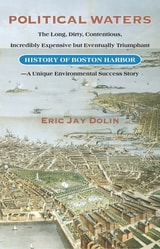
Political Waters
The Long, Dirty, Contentious, Incredibly Expensive but Eventually Triumphant History of Boston Harbor-A Unique Environmental Success StoryEric Jay Dolin
University of Massachusetts Press, 2004
Boston Harbor served as a colonial gateway to the world, witnessed the Boston Tea Party, and helped the community transform itself from an outpost of a few hardy settlers into a bustling metropolis and self-proclaimed hub of the universe. Yet for hundreds of years Boston Harbor was also a cesspool. Long before Bostonians dumped tea into the harbor to protest English taxes, they dumped sewage there.
As the Boston area grew and prospered, its sewage problems worsened, as did the harbor's health, to the point where in the 1980s it was considered the most polluted harbor in the country and ridiculed as the “harbor of shame.” Then, in one of the most impressive environmental comebacks in American history, Boston Harbor was dramatically cleaned up. All it took was two lawsuits, two courts, dozens of lawyers, the creation of a powerful sewage authority, thousands of workers, millions of labor hours, and billions of dollars.
Sewage management is rarely as compelling and exciting as higher profile environmental issues such as global climate change, preserving endangered species, or protecting tropical rainforests. But it can be, as Eric Jay Dolin shows in this engaging narrative account. Boston's struggle to deal with its sewage is an epic story of failure and success, replete with colorful characters, political, bureaucratic, and legal twists and turns, engineering feats, and massive amounts of money. In the end, success hinged on the often overlooked yet monumentally important act of responsibly disposing of the waste people produce every day.

Politics on the Endless Frontier
Postwar Research Policy in the United StatesDaniel Lee Kleinman
Duke University Press, 1995
Although it ended up as only one among a host of federal research policymaking agencies, the National Science Foundation was originally conceived as central to the federal research policymaking system. Kleinman’s historical examination of the National Science Foundation exposes the sociological and political workings of the system, particularly the way in which a small group of elite scientists shaped the policymaking process and defined the foundation’s structure and future. Beginning with Vannevar Bush’s 1945 manifesto The Endless Frontier, Kleinman explores elite and populist visions for a postwar research policy agency and shows how the structure of the American state led to the establishment of a fragmented and uncoordinated system for federal research policymaking. His book concludes with an analysis of recent efforts to reorient research policy and to remake federal policymaking institutions in light of the current "crisis" of economic competitiveness.
A particularly timely study, Politics on the Endless Frontier will be of interest to historians and sociologists of science and technology and to science policy analysts.
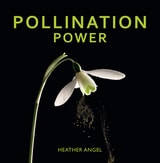
Pollination Power
Heather Angel
University of Chicago Press, 2016
In stunning full-color images, employing the latest photographic techniques, esteemed photographer Heather Angel has captures the intimate interactions of plants with their floral pollinators. The plants come not only from Angel’s Surrey backyard and the Royal Botanic Garden at Kew, but from twenty countries where Angel has travelled—from the rich floral kingdoms of the Cape of South Africa to the diversity of China and the Americas. The photos illustrate the varied techniques that flowers use to communicate with their pollinators. Some, for example, change color when the flower no longer has rewards to offer. Others control precisely when pollinators enter or leave by timing when they open and close their petals or when they emit a scent. This fascinating array of pollination repertoires crossfertilizes Angel’s photos with a descriptive text.
Featuring both common and exotic plants and temperate and tropical floral, Pollination Power will entice anyone with a passion for botanicals, from gardeners to botanists alike.
Pollution Is Colonialism
Max Liboiron
Duke University Press, 2021
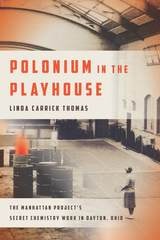
Polonium in the Playhouse
The Manhattan Project's Secret Chemistry Work in Dayton, OhioLinda Carrick Thomas
The Ohio State University Press, 2017
Seized by the War Department in 1944 for the bomb project, the Runnymede Playhouse was transformed into a polonium processing facility, providing a critical radioactive ingredient for the bomb initiator—the mechanism that triggered a chain reaction. With the help of a Soviet spy working undercover at the site, it was also key to the Soviet Union’s atomic bomb program.
The work was directed by industrial chemist Charles Allen Thomas who had been chosen by J. Robert Oppenheimer and General Leslie Groves to coordinate Manhattan Project chemistry and metallurgy. As one of the nation’s first science administrators, Thomas was responsible for choreographing the plutonium work at Los Alamos and the Project’s key laboratories. The elegant glass-roofed building belonged to his wife’s family.
Weaving Manhattan Project history with the life and work of the scientist, industrial leader and singing-showman Thomas, Polonium in the Playhouse offers a fascinating look at the vast and complicated program that changed world history and introduces the men and women who raced against time to build the initiator for the bomb.
Pond and Brook
A Guide to Nature in Freshwater EnvironmentsMichael J. Caduto
University Press of New England, 1990
Popular Errors
Laurent Joubert
University of Alabama Press, 1989
Laurent Joubert was an important figure in the medical world of the French Renaissance. Born in 1529, he became a doctor at age 29 and shortly thereafter was appointed personal physician to Catherine de Medici and later became physician to three French monarchs. Joubert was an educator as well as a physician, and he wrote several works of medical literature, including his most controversial work, Erreurs populaires. While the work focuses on popular misconceptions concerning medicine and physicians in France in the 1500s, it also represents a wealth of information on the social, economic, political, and religious worldviews that framed and thus supported the development and conduct of medical science.
Popular Eugenics
National Efficiency and American Mass Culture in the 1930sSusan Currell
Ohio University Press, 2006
The essays in this generously illustrated collection demonstrate how, after the scientific foundations of the eugenics movement had been weakened in the 1930s, eugenic beliefs spread into the popular media, including newspapers, movies, museum exhibits, plays, and novels, and even fashion shows and comic strips.
Popular Eugenics shows that eugenic thought persisted in science and culture as well as in social policy and goes a long way toward explaining the durability of eugenic thinking and its effects on social policy in the United States. Popular Eugenics will be of interest to scholars and students in a broad range of disciplines, especially American literature and history, popular culture, media studies, and the history of science.
Population Dynamics in Ecological Space and Time
Olin E. Rhodes Jr., Ronald K. Chesser, and Michael H. Smith
University of Chicago Press, 1996
This volume is the first to integrate mathematical and biological approaches to these crucial topics. The editors include not only a wide variety of theoretical approaches, but also a broad range of experimental and field studies, with chapters written by renowned experts in community ecology, ecological modeling, population genetics, and conservation biology.
In addition to providing new insights into well-known topics such as migration, the authors also introduce some less familiar subjects, including bacterial population genetics and ecotoxicology. For anyone interested in the study, management, and conservation of populations, this book will prove to be a valuable resource.
Population Ecology of Roosevelt Elk
Conservation and Management in Redwood National and State ParksButch Weckerly
University of Nevada Press, 2017
In a study spanning more than twenty years, Weckerly made key observations and conducted various investigations under a multitude of ecological conditions. Few authors have dedicated this much time and effort into a single research area. It is a testament to perseverance that his groundbreaking study of the Roosevelt elk was so successful. He was able to document the independent dynamics of several herds of female elk, experience the extinction of one of their subpopulations, and record scientific conclusions in the context of resiliency and redundancy of the elk population.
This book will be of considerable interest to those who investigate the ecology of big game animals, including naturalists, hunters, and individuals with particular interest in Redwood State and National Parks. It is an important book that contributes substantially to the persistence and viability of Roosevelt elk in the parks and the surrounding area.
Population Fluctuations in Rodents
Charles J. Krebs
University of Chicago Press, 2013

Population Genetics, Molecular Evolution, and the Neutral Theory
Selected PapersMotoo Kimura
University of Chicago Press, 1994
Kimura's neutral theory, first presented in 1968, challenged the notion that natural selection was the sole directive force in evolution. Arguing that mutations and random drift account for variations at the level of DNA and amino acids, Kimura advanced a theory of evolutionary change that was strongly challenged at first and that eventually earned the respect and interest of evolutionary biologists throughout the world. This volume includes the seminal papers on the neutral theory, as well as many others that cover such topics as population structure, variable selection intensity, the genetics of quantitative characters, inbreeding systems, and reversibility of changes by random drift.
Background essays by Naoyuki Takahata examine Kimura's work in relation to its effects and recent developments in each area.
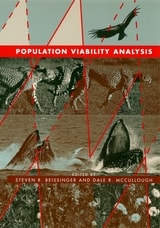
Population Viability Analysis
Edited by Steven R. Beissinger and Dale R. McCullough
University of Chicago Press, 2002
In this book, many of the world's leading conservation and population biologists evaluate what has become a key tool in estimating extinction risk and evaluating potential recovery strategies—population viability analysis, or PVA. PVA integrates data on the life history, demography, and genetics of a species with information on environmental variability, using computer models ranging from simple measures of population growth rate to complex spatial simulations, to predict whether a given population will remain viable (i.e., not go extinct) under various management options. A synthetic and objective overview of the latest theoretical and methodological advances, Population Viability Analysis will be crucial reading for conservationists, land managers, and policy makers.
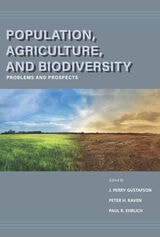
Population, Agriculture, and Biodiversity
Problems and ProspectsJ. Perry Gustafson
University of Missouri Press, 2020
The world population is projected to be nine to ten billion by 2050, signaling the need to increase world food production by more than 70 percent on the same amount of land currently under production—and this without further damaging our fragile environment. The essays in this collection, written by experts for laypersons, present the problems we face with clarity and assess our prospects for solving them, calling for action but holding out viable solutions.

Population-Environment Dynamics
Ideas and ObservationsGayl D. Ness, Steven R. Brechin, and William D. Drake, Editors
University of Michigan Press, 1993
Porous Becomings
Anthropological Engagements with Michel SerresAndreas Bandak and Daniel M. Knight, editors
Duke University Press, 2024
Contributors. Andreas Bandak, Jane Bennett, Tom Boylston, Steven D. Brown, Matei Candea, Alberto Corsín Jiménez, David Henig, Michael Jackson, Daniel M. Knight, Celia Lowe, Morten Nielsen, Stavroula Pipyrou, Elizabeth Povinelli, Andrew Shryock, Arpad Szakolczai
Positive Youth Development and Spirituality
From Theory to ResearchRichard M. Lerner
Templeton Press, 2008
<p>Bringing together a never-before-assembled network of biologists, psychologists, and sociologists, <em>Positive Youth Development and Spirituality</em> scientifically examines how spirituality and its cultivation may affect the positive development of adolescents. </p>
<p>Chapters provide groundbreaking new discussions of conceptual, theoretical, definitional, and methodological issues that need to be addressed when exploring the relationships between spirituality and development. Throughout the book, contributors recommend ways in which the research on the spirituality/positive youth development connection may be integral in building the larger field of spiritual development as a legitimate and active domain of developmental science. This volume, which is sure to be seen as a seminal contribution to a field in need of theoretical underpinnings, will be of interest to scholars and scientists in the fields of biology and the social and behavioral sciences.</p>
<p>Contributors include: Mona Abo-Zena, Jeffrey Jensen Arnnett, Peter L. Benson, Marina Umaschi Bers, Aerika Brittian, William Damon, Angela M. DeSilva, Jacquelynne S. Eccles, David Henry Feldman, Simon Gächter, Elena L. Grigorenko, Sonia S. Isaac, Lene Arnett Jensen, Carl N. Johnson, Linda Juang, Pamela Ebstyne King, Richard M. Lerner, Jennifer Menon, Na'ilah Sued Nasir, Guerda Nicolas, Toma´š Paus, Stephen C. Peck, Erin Phelps, Alan P. Poey, Robert W. Roeser, W. George Scarlett, Lonnie R. Sherrod, Gabriel S. Spiewak, Chris Starmer, Moin Syed, Janice L. Templeton, Heather L. Urry, and Richard Wilkinson.</p>
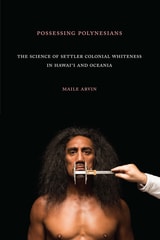
Possessing Polynesians
The Science of Settler Colonial Whiteness in Hawai`i and OceaniaMaile Arvin
Duke University Press, 2019