Results by title
3576 books match the query 'American' and 162 start with p
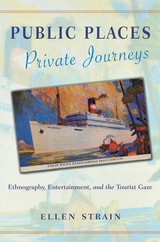
Public Places, Private Journeys
Ethnography, Entertainment, and the Tourist GazeStrain, Ellen
Rutgers University Press, 2003
In this globally interconnected planet, we are increasingly able to access exotic locales without ever actually seeing these places firsthand. Instead, what we perceive to be fresh cultural experiences are actually second-hand moments, filtered through mediums such as television, film, the internet, CD-Roms, and various other media.
Ellen Strain posits that the images in film and popular culture not only fill in the gaps of a person’s first-hand—or rather, lack of first-hand—experience with other cultural situations, but also predisposes the “tourist gaze” to view particular locales in a predetermined way. She theorizes the idea of a touristic way of understanding the world in general. How, she asks, are our cross-cultural perceptions of places and peoples created in the first place? Can a set of images—such as postcards—mediate our vision of distant geographies? Are there culturally constructed strategies set up to mediate our cross-cultural perceptions of the exotic? Strain includes the works of Jules Verne, E. M. Forster, and Michael Crichton, as well as film, CD-Rom travel games and virtual reality in her own authorial gaze.
Public Places, Private Journeys is a unique postmodern exploration of how individuals see across cultural differences in an era of increasingly commercialized and globalized culture.
Published Poems
The Writings of Herman Melville Vol. 11Herman Melville
Northwestern University Press, 2009
Although he surprised the world in 1866 with his first published book of poetry, Battle-Pieces and Aspects of the War, Herman Melville had long been steeped in poetry. This new offering in the authoritative Northwestern-Newberry series, The Writings of Herman Melville, with a historical note by Hershel Parker, is testament to Melville the poet. Penultimate in the publication of the series, Published Poems follows the release of Melville’s verse epic, Clarel (1876), and with it, contains the entirety of the poems published during Melville’s lifetime: Battle-Pieces, as well as John Marr and Other Sailors, with Some Sea-Pieces (1888), and Timoleon Etc. (1891).
Battle-Pieces and Aspects of the War has long been recognized as a great contribution to the poetry of the Civil War, comparable only to Whitman’s Drum-Taps. Its idiosyncrasies, many of them grounded in British poetry, kept it from immediate popularity, but it was not the production of a novice. Melville had made himself over into a poet in the late 1850s and had tried to publish a previous collection of poetry—now lost—in 1860.
John Marr and Other Sailors is a retrospective nautical book. Its portraits of sailors were influenced by Melville’s own experience of aging as well as by his long acquaintance with wasted mariners at the Sailors’ Snug Harbor on Staten Island, where his brother was governor.
The book modulates into "Sea-Pieces," including the grisly "Maldive Shark" and "To Ned," a powerful reflection on how Melville’s personal adventures with the Typee islanders in 1842 had accrued rich historical significance over the decades.
Thematically less unified, Timoleon Etc. contains poems with many European and exotic settings from ancient to modern times. The most famous are "After the Pleasure Party" and "The Age of the Antonines." Published in the last year of Melville’s life, some of the poems were first written many years earlier; for example, Melville copied "The Age of the Antonines" out for his brother-in-law in 1877, describing it as something found in a bundle of old papers. One whole section seems to have been almost entirely salvaged from the unpublished 1860 volume of poetry. As with the other volumes in the Northwestern-Newberry series, the aim of this edition of Published Poems is to present a text as close to the author’s intention as surviving evidence permits. To that end, the editorial appendix includes a historical note by Hershel Parker, the dean of Melville scholars, which gives a compelling, in-depth account of how one of America’s greatest writers grew into the vocation of a poet; an essay by G. Thomas Tanselle on the printing and publishing history of the works in Published Poems; a textual record that identifies the copy-texts for the present edition and explains the editorial policy; and substantial scholarly notes on individual poems.
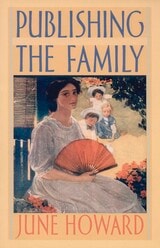
Publishing the Family
June Howard
Duke University Press, 2001
Publishing the Family describes the sources and controversial outcome of a fascinating literary experiment. Howard embeds the story of The Whole Family in the story of Harper & Brothers’ powerful and pervasive presence in American cultural life, treating the publisher, in effect, as an author.
Each chapter of Publishing the Family casts light on some aspect of life in the United States at a moment that arguably marked the beginning of our own era. Howard revises common views of the turn-of-the-century literary marketplace and discusses the perceived crisis in the family as well as the popular and expert discourses that emerged to remedy it. She also demonstrates how creative women like Bazar editor Elizabeth Jordan blended their own ideas about the “New Woman” with traditional values. Howard places these analyses in the framework of far-reaching historical changes, such as the transformation of the public meaning of emotion and “sentimentality.” Taken together, the chapters in Publishing the Family show how profoundly the modern mapping of social life relies on boundaries between family and business, culture and commerce, which The Whole Family and Publishing the Family constantly unsettle.
Publishing the Family will interest students and scholars of American history, literature, and culture, as well as those studying gender, sexuality, and the family.
Pure
Carol Frost
Northwestern University Press, 1994

Pure Waters
Frank Waters and the Quest for the CosmicFrank Waters
Ohio University Press, 2002
The novels and nonfiction work of writer Frank Waters stand as a monument to his genius and to his lifetime quest to plumb the spiritual depths that he found for himself in the landscape and people of his beloved Southwest. In a career spanning more than half a century, he shared, through his many books, his insights and discoveries with countless readers across the globe.
Now, drawn from rare editorials, speeches, and essays that Frank Waters authored over the years as a reflection and a formation of his life-long themes, Pure Waters provides a treasure trove of exciting new material from this giant of the American Southwest.
In celebration of the centenary of his birth, Swallow Press is pleased to offer this new collection by one of its bestselling and most inspiring authors.
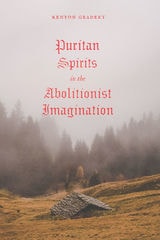
Puritan Spirits in the Abolitionist Imagination
Kenyon Gradert
University of Chicago Press, 2020
Puritan Spirits in the Abolitionist Imagination reveals how the leaders of the nineteenth-century abolitionist movement—from landmark figures like Ralph Waldo Emerson to scores of lesser-known writers and orators—drew upon the Puritan tradition to shape their politics and personae. In a striking instance of selective memory, reimagined aspects of Puritan history proved to be potent catalysts for abolitionist minds. Black writers lauded slave rebels as new Puritan soldiers, female antislavery militias in Kansas were cast as modern Pilgrims, and a direct lineage of radical democracy was traced from these early New Englanders through the American and French Revolutions to the abolitionist movement, deemed a “Second Reformation” by some. Kenyon Gradert recovers a striking influence on abolitionism and recasts our understanding of puritanism, often seen as a strictly conservative ideology, averse to the worldly rebellion demanded by abolitionists.
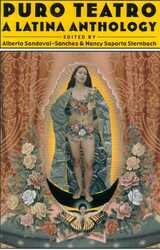
Puro Teatro, A Latina Anthology
Edited by Alberto Sandoval-Sánchez and Nancy Sandoval Sternbach
University of Arizona Press, 2000
Puro Teatro, A Latina Anthology includes a variety of theatrical genres: plays, performance pieces, puppet shows, innovative collaborations, and testimonials. It features previously unpublished plays from a broad range of experiences within the Latino/a community, including families and home, friends and community building, coming of age and empowerment, and sexual and ethnic identities. The editors' introduction provides a comprehensive survey of contemporary Latina theater, placing it in its theatrical context and examining its divergent roots. Puro Teatro, A Latina Anthology is the first book of its kind to reflect in print a diversified body of writing that turns the spotlight on some of America's most talented and prolific artists. A subsequent volume will complement this anthology with a theoretical, critical reading of Latina theater and performance.
CONTENTS
Botánica by Dolores Prida
Heart of the Earth: A Popul Vuh Story by Cherríe Moraga
The Fat-Free Chicana and the Snow Cap Queen by Elaine Romero
One-act Plays
Las nuevas tamaleras by Alicia Mena
And Where Was Pancho Villa When You Really Needed Him? by Silviana Wood
Fuschia by Janis Astor del Valle
Performance Pieces
Nostalgia Maldita: 1-900-MEXICO : A StairMaster Piece by Yareli Arizmendi
Good Grief, Lolita by Wilma Bonet
A Roomful of Men by Amparo García Crow
Describe Your Work by Monica Palacios
Testimonials
"Battle Worn," by Laura Esparza
"Dancing with the Voice of Truth," by María Mar
"Searching for Sanctuaries: Cruising through Town in a Red Convertible," by Diane Rodríguez
"Home, Desire, Memory: There Are No Borders Here," by Caridad Svich
"Tales of a South-of-the-Border/North-of-the-Stereotype Theatre Director, by Susana Tubert
"Catching the Next Play: The Joys and Perils of Playwriting," by Edit Villarreal
Full-Length Plays, Collaborative Works
Frida: The Story of Frida Kahlo by Migdalia Cruz and Hilary Blecher
Memorias de la revolución by Carmelita Tropicana and Uzi Parnes

Purple Heart and The Infidel
Two PlaysBruce Norris
Northwestern University Press, 2005
Loosely based on a true story, The Infidel tells of a charismatic and well-respected state Supreme Court justice who is faced with disciplinary action after his out-of-control affair with a young Latina junior staffer. He confers with his friend and attorney as he examines the consequences of his behavior and tries to judge the most difficult case of his life-his own. With dark irony and sharp, cutting dialogue, Bruce Norris explores sexual obsession and the legislation of human behavior.
Push
A Collection of PoemsRonald F. Smits
University of Scranton Press, 2009
In this sophisticated debut collection, Ronald F. Smits deftly weaves the comic with the tragic as he vividly recreates days past in rural Pennsylvania. With a boyish charm, the eighty poems in Push lyrically recall baseball games, campouts under the stars, and dusty treks along lonely back roads—bringing to life a vision of mid-century America that is by turns nostalgic and clear-eyed, humorous and heartfelt. A masterly evocation of a place and a time that feel quintessentially American, Push opens our eyes to the twinned power of literature and memory.

Putting Down Roots
Gardening Insights from Wisconsin’s Early SettlersMarcia C. Carmichael
Wisconsin Historical Society Press, 2013

Pynchon's California
Scott McClintock and John Miller
University of Iowa Press, 2014
Contributors explore such topics as the relationship of the “California novels” to Pynchon’s more historical and encyclopedic works; the significance of California's beaches, deserts, forests, freeways, and “hieroglyphic” suburban sprawl; the California-inspired noir tradition; and the surprising connections to be uncovered between drug use and realism, melodrama and real estate, private detection and the sacred. The authors bring insights to bear from an array of critical, social, and historical discourses, offering new ways of looking not only at Pynchon’s California novels, but at his entire oeuvre. They explore both how the history, geography, and culture of California have informed Pynchon’s work and how Pynchon’s ever-skeptical critical eye has been turned on the state that has been, in many ways, the flagship for postmodern American culture.
CONTRIBUTORS: Hanjo Berressem, Christopher Coffman, Stephen Hock, Margaret Lynd, Scott MacLeod, Scott McClintock, Bill Millard, John Miller, Henry Veggian
Pynchon’s Sound of Music
Christian Hänggi
Diaphanes, 2020