3258 books match the query 'Art' and 209 start with p
cover of Portable Gray, volume 6 number 2 (Fall 2023)

Portable Gray, volume 6 number 2 (Fall 2023)

The University of Chicago Press

University of Chicago Press Journals, 2023
This is volume 6 issue 2 of Portable Gray. Portable Gray (PG), interdisciplinary in scope and dedicated to experimentation, offers a forum for artists and scholars to consider how collaboration can enrich their practices and foster new discoveries. Encouraging contributors to play with artistic and literary forms and modes in order to challenge long-held ideas, PG features essays, interviews, poetry, art, and musical compositions, among other works.
[more]
cover of Portable Gray, volume 7 number 1 (Spring 2024)

Portable Gray, volume 7 number 1 (Spring 2024)

The University of Chicago Press

University of Chicago Press Journals, 2024
This is volume 7 issue 1 of Portable Gray. Portable Gray (PG), interdisciplinary in scope and dedicated to experimentation, offers a forum for artists and scholars to consider how collaboration can enrich their practices and foster new discoveries. Encouraging contributors to play with artistic and literary forms and modes in order to challenge long-held ideas, PG features essays, interviews, poetry, art, and musical compositions, among other works.
[more]
cover of Portable Gray, volume 7 number 2 (Fall 2024)

Portable Gray, volume 7 number 2 (Fall 2024)

The University of Chicago Press

University of Chicago Press Journals, 2024
This is volume 7 issue 2 of Portable Gray. Portable Gray (PG), interdisciplinary in scope and dedicated to experimentation, offers a forum for artists and scholars to consider how collaboration can enrich their practices and foster new discoveries. Encouraging contributors to play with artistic and literary forms and modes in order to challenge long-held ideas, PG features essays, interviews, poetry, art, and musical compositions, among other works.
[more]
cover of Portable Gray, volume 8 number 1 (Spring 2025)

Portable Gray, volume 8 number 1 (Spring 2025)

The University of Chicago Press

University of Chicago Press Journals, 2025
This is volume 8 issue 1 of Portable Gray. Portable Gray (PG), interdisciplinary in scope and dedicated to experimentation, offers a forum for artists and scholars to consider how collaboration can enrich their practices and foster new discoveries. Encouraging contributors to play with artistic and literary forms and modes in order to challenge long-held ideas, PG features essays, interviews, poetry, art, and musical compositions, among other works.
[more]
cover of Portable Gray, volume 8 number 2 (Fall 2025)

Portable Gray, volume 8 number 2 (Fall 2025)

The University of Chicago Press

University of Chicago Press Journals, 2025
This is volume 8 issue 2 of Portable Gray. Portable Gray (PG), interdisciplinary in scope and dedicated to experimentation, offers a forum for artists and scholars to consider how collaboration can enrich their practices and foster new discoveries. Encouraging contributors to play with artistic and literary forms and modes in order to challenge long-held ideas, PG features essays, interviews, poetry, art, and musical compositions, among other works.
[more]
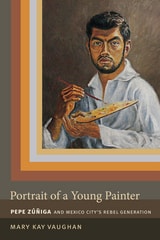
cover of Portrait of a Young Painter: Pepe Zuniga and Mexico City's Rebel Generation

Portrait of a Young Painter

Pepe Zuniga and Mexico City's Rebel Generation

Mary Kay Vaughan

Duke University Press, 2015
In Portrait of a Young Painter, the distinguished historian Mary Kay Vaughan adopts a biographical approach to understanding the culture surrounding the Mexico City youth rebellion of the 1960s. Her chronicle of the life of painter Pepe Zúñiga counters a literature that portrays post-1940 Mexican history as a series of uprisings against state repression, injustice, and social neglect that culminated in the student protests of 1968. Rendering Zúñiga's coming of age on the margins of formal politics, Vaughan depicts midcentury Mexico City as a culture of growing prosperity, state largesse, and a vibrant, transnationally-informed public life that produced a multifaceted youth movement brimming with creativity and criticism of convention. In an analysis encompassing the mass media, schools, politics, family, sexuality, neighborhoods, and friendships, she subtly invokes theories of discourse, phenomenology, and affect to examine the formation of Zúñiga's persona in the decades leading up to 1968. By discussing the influences that shaped his worldview, she historicizes the process of subject formation and shows how doing so offers new perspectives on the events of 1968.
[more]
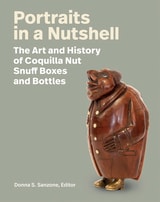
cover of Portraits in a Nutshell: The Art and History of Coquilla Nut Snuff Boxes and Bottles

Portraits in a Nutshell

The Art and History of Coquilla Nut Snuff Boxes and Bottles

Donna S. Sanzone

Brandeis University Press, 2025

A gorgeously illustrated look at snuff boxes and bottles carved from the Brazilian coquilla nut reveals a larger history of commerce, cultural exchange, and power in the Atlantic world.
 
Portraits in a Nutshell showcases intricately carved snuff boxes and bottles sculpted from the Brazilian coquilla nut between the seventeenth and mid-nineteenth centuries. Both utilitarian and decorative, these bottles and boxes were produced and used by diverse people of wide-ranging geographic origin, racial background, and social standing. As a result, coquilla nut snuff boxes present a rich material archive of the Atlantic world and the central role of Indigenous and Black histories within it.
 
Despite being just three or four inches long, these coquilla nut snuff boxes encapsulate an early modern history of transoceanic movement and creativity. The carvings depict animals and fantastical creatures, scenes of religious and courtly life, portraits of political and military leaders, abolitionists and activists, and people at the margins of colonial society. These images are available to the public and to scholars for the first time in this book and will be of interest to antique collectors, art historians, social historians, and anyone interested in the unusual and the curious.
 
Over 250 detailed photographs of snuff bottles and boxes from the unique and wide-ranging collection of David Badger not only illustrate the exceptional skill of their creators but also tell the story of millions of Africans transported to Brazil during centuries of the transatlantic slave trade. The text demonstrates the interconnectedness of the Atlantic world, the movements of peoples and ideas, and the commercial exchange of goods and cultural and material objects in Africa, Brazil, the Caribbean, and North America. In this beautiful book, these objects reveal a story never before told.
 
With a preface by Matthew Francis Rarey, associate professor of African and Black Atlantic art history at Oberlin College, and an introduction by Gwendolyn DuBois Shaw, professor of art history at the University of Pennsylvania and director of the Arthur Ross Gallery.
[more]
cover of Portraits of Clay: Potters of Mata Ortíz

Portraits of Clay

Potters of Mata Ortíz

Sandra S. Smith

University of Arizona Press, 1998
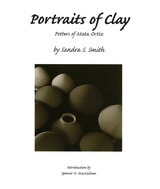
Not long ago, pottery was a lost art in Chihuahua, Mexico. But in the 1970s, near the ruins of Casas Grandes, an art revolution was born. Inspired by ancient pottery fragments from a tradition that had disappeared before the arrival of the first Europeans, a self-taught woodcutter-turned-artist reinvented an entire ceramic technology. Today Casas Grandes pottery, made by hand from local clays and mineral colors by a handful of artists, claims high prices and sets the standard for contemporary pottery. Photographer Sandra Smith traveled to Mata Ortíz to photograph the potters and to record their reflections on their work. Her portraits document their techniques—collecting and preparing the clay, forming by hand, sanding, and painting. They also capture intimate moments between artists and their art. For anyone who has ever admired Casas Grandes pottery, Portraits of Clay is a beautiful introduction to the potters and their work.
[more]
cover of Portraits of Remembrance: Painting, Memory, and the First World War

Portraits of Remembrance

Painting, Memory, and the First World War

Edited by Margaret Hutchison and Steven Trout

University of Alabama Press, 2020

Interdisciplinary collection of essays on fine art painting as it relates to the First World War and commemoration of the conflict
 
Although photography and moving pictures achieved ubiquity during the First World War as technological means of recording history, the far more traditional medium of paint­ing played a vital role in the visual culture of combatant nations. The public’s appetite for the kind of up-close frontline action that snapshots and film footage could not yet pro­vide resulted in a robust market for drawn or painted battle scenes.
 
Painting also figured significantly in the formation of collective war memory after the armistice. Paintings became sites of memory in two ways: first, many governments and communities invested in freestanding pan­oramas or cycloramas that depicted the war or featured murals as components of even larger commemorative projects, and second, certain paintings, whether created by official artists or simply by those moved to do so, emerged over time as visual touchstones in the public’s understanding of the war.
 
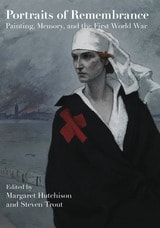
Portraits of Remembrance: Painting, Memory, and the First World War examines the relationship between war painting and collective memory in Australia, Austria, Belgium, Canada, Croatia, France, Germany, Great Britain, New Zealand, Russia, Serbia, Turkey, and the United States. The paintings discussed vary tremendously, ranging from public murals and panoramas to works on a far more intimate scale, including modernist masterpieces and crowd-pleasing expressions of sentimentality or spiritualism. Contribu­tors raise a host of topics in connection with the volume’s overarching focus on memory, including national identity, constructions of gender, historical accuracy, issues of aesthetic taste, and connections between painting and literature, as well as other cultural forms.
 
[more]
cover of Portraits of Shakespeare

Portraits of Shakespeare

Katherine Duncan-Jones

Bodleian Library Publishing, 2015

Most of us can recall with clarity a favorite scene from Shakespeare. But call to mind the playwright’s appearance and there are many depictions to choose from with few widely accepted. Shakespeare himself left no description of his appearance nor can any evidence be found that he commissioned a portrait.

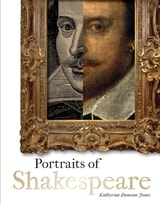
With Portraits of Shakespeare, Katherine Duncan-Jones poses a series of questions about the mysterious physical appearance of the brilliant writer of plays, poems, and sonnets: Why is it so difficult to find images of Shakespeare that were made during his lifetime? Which images are most likely to have been made by those close to the writer? And why do newly discovered images emerge with such startling regularity? With an eye toward answering these questions, the book begins with a broad analysis of the tradition of the “author portrait” before, during, and after Shakespeare’s lifetime. Duncan-Jones provides a detailed critique of three of the most widely accepted portraits: the engraving facing the First Folio’s title page; the sculptured stone bust that adorns Shakespeare’s funerary monument at Holy Trinity Church, Stratford-upon-Avon; and the “Chandos portrait,” an early seventeenth-century painting on canvas which is widely recognized as the best image. Through a painstaking historical analysis of the painting’s early history and provenance, Duncan-Jones arrives at a plausible new identification of both the artist and the artist’s personal connections with Shakespeare. Finally, taking the book into the present, she considers the afterlife of all three images in memorials, advertising, and in graphic art—all evidence of a continuing desire to put a face to one of literature’s most famous names.

[more]
cover of Portraits of Violence: War and the Aesthetics of Disfigurement

Portraits of Violence

War and the Aesthetics of Disfigurement

Suzannah Biernoff

University of Michigan Press, 2017

Portraits of Violence explores the image and idea of facial disfigurement in one of its most troubling modern formations, as a symbol and consequence of war. It opens with Nina Berman’s iconic photograph Marine Wedding, which provoked a debate about the medical, military, and psychological response to serious combat injuries. While these issues remain urgent, it is equally crucial to interrogate the representation of war and injury. The concepts of valor, heroism, patriotism, and courage assume visible form and do their cultural work when they are personified and embodied. The mutilated or disabled veteran’s body can connote the brutalizing, dehumanizing potential of modern combat.
 
Suzannah Biernoff draws on a wide variety of sources mainly from WWI but also contemporary photography and computer games. Each chapter revolves around particular images: Marine Wedding is discussed alongside Stuart Griffiths’ portraits of British veterans; Henry Tonks’ drawings of WWI facial casualties are compared to the medical photographs in the Gillies Archives; the production of portrait masks for the severely disfigured is approached through the lens of documentary film and photography; and finally the haunting image of one of Tonks’s patients reappears in BioShock, a highly successful computer game. The book simultaneously addresses a neglected area in disability studies; puts disfigurement on the agenda for art history and visual studies; and makes a timely and provocative contribution to the literature on the First World War.
[more]
cover of Portraits of the New Negro Woman: Visual and Literary Culture in the Harlem Renaissance

Portraits of the New Negro Woman

Visual and Literary Culture in the Harlem Renaissance

Cherene M. Sherrard-Johnson

Rutgers University Press, 2007

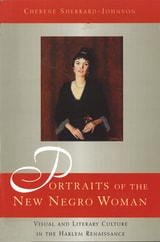
Of all the images to arise from the Harlem Renaissance, the most thought-provoking were those of the mulatta. For some writers, artists, and filmmakers, these images provided an alternative to the stereotypes of black womanhood and a challenge to the color line. For others, they represented key aspects of modernity and race coding central to the New Negro Movement. Due to the mulatta’s frequent ability to pass for white, she represented a variety of contradictory meanings that often transcended racial, class, and gender boundaries.

In this engaging narrative, Cherene Sherrard-Johnson uses the writings of Nella Larsen and Jessie Fauset as well as the work of artists like Archibald Motley and William H. Johnson to illuminate the centrality of the mulatta by examining a variety of competing arguments about race in the Harlem Renaissance and beyond.
[more]
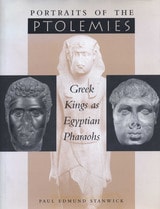
cover of Portraits of the Ptolemies: Greek Kings as Egyptian Pharaohs

Portraits of the Ptolemies

Greek Kings as Egyptian Pharaohs

By Paul Edmund Stanwick

University of Texas Press, 2003

As archaeologists recover the lost treasures of Alexandria, the modern world is marveling at the latter-day glory of ancient Egypt and the Greeks who ruled it from the ascension of Ptolemy I in 306 B.C. to the death of Cleopatra the Great in 30 B.C. The abundance and magnificence of royal sculptures from this period testify to the power of the Ptolemaic dynasty and its influence on Egyptian artistic traditions that even then were more than two thousand years old.

In this book, Paul Edmund Stanwick undertakes the first complete study of Egyptian-style portraits of the Ptolemies. Examining one hundred and fifty sculptures from the vantage points of literary evidence, archaeology, history, religion, and stylistic development, he fully explores how they meld Egyptian and Greek cultural traditions and evoke surrounding social developments and political events. To do this, he develops a "visual vocabulary" for reading royal portraiture and discusses how the portraits helped legitimate the Ptolemies and advance their ideology. Stanwick also sheds new light on the chronology of the sculptures, giving dates to many previously undated ones and showing that others belong outside the Ptolemaic period.
[more]
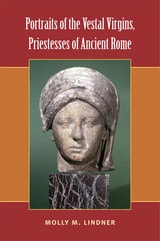
cover of Portraits of the Vestal Virgins, Priestesses of Ancient Rome

Portraits of the Vestal Virgins, Priestesses of Ancient Rome

Molly M. Lindner

University of Michigan Press, 2015
For more than eleven hundred years, the Vestal Virgins dedicated their lives to the goddess Vesta, protector of the Roman state. Though supervised by a male priest, the Pontifex Maximus, they had privileges beyond those of most women; like Roman men, they dispensed favors and influence on behalf of their clients and relatives. In 1883, Rodolfo Lanciani, Director of Antiquities for Rome, discovered the first Vestal statues. The recovery of the Vestals’ house, and the objects contained therein, was an exciting moment in Roman archaeology. Newspapers were filled with details about the huge numbers of sculptures, inscriptions, jewelry, coins, and terracotta figures.

Molly M. Lindner examines the sculptural presentation of the Vestal Virgins and investigates what images of long-dead women tell us about their lives. She addresses why these portraits were created, and why they only began to appear in the late first or second century CE—much later than portraits of other Roman priestesses and nonimperial women. Lindner sheds light on the distinctions between a Vestal portrait and portraits of other priestesses, and considers why Vestal portraits do not copy each other’s headdresses and hairstyles. In addition to the extensive illustrations that complement the text, a catalog of all known Vestal portraits displays historical clues embedded in the hairstyles and facial features of the Vestals and other women of their day. In Portraits of the Vestal Virgins, Priestesses of Ancient Rome, Lindner has given a voice to the long-silent women of these extraordinary marble portraits.
 
[more]
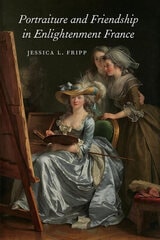
cover of Portraiture and Friendship in Enlightenment France

Portraiture and Friendship in Enlightenment France

Jessica Fripp

University of Delaware Press, 2011
Portraiture and Friendship in Enlightenment France examines how new and often contradictory ideas about friendship were enacted in the lives of artists in the eighteenth century. It demonstrates that portraits resulted from and generated new ideas about friendship by analyzing the creation, exchange, and display of portraits alongside discussions of friendship in philosophical and academic discourse, exhibition criticism, personal diaries, and correspondence. This study provides a deeper understanding of how artists took advantage of changing conceptions of social relationships and used portraiture to make visible new ideas about friendship that were driven by Enlightenment thought.
[more]
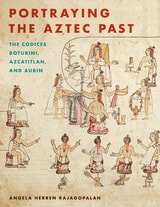
cover of Portraying the Aztec Past: The Codices Boturini, Azcatitlan, and Aubin

Portraying the Aztec Past

The Codices Boturini, Azcatitlan, and Aubin

By Angela Herren Rajagopalan

University of Texas Press, 2019

During the period of Aztec expansion and empire (ca. 1325–1525), scribes of high social standing used a pictographic writing system to paint hundreds of manuscripts detailing myriad aspects of life, including historical, calendric, and religious information. Following the Spanish conquest, native and mestizo tlacuiloque (artist-scribes) of the sixteenth century continued to use pre-Hispanic pictorial writing systems to record information about native culture. Three of these manuscripts—Codex Boturini, Codex Azcatitlan, and Codex Aubin—document the origin and migration of the Mexica people, one of several indigenous groups often collectively referred to as “Aztec.”

In Portraying the Aztec Past, Angela Herren Rajagopalan offers a thorough study of these closely linked manuscripts, articulating their narrative and formal connections and examining differences in format, style, and communicative strategies. Through analyses that focus on the materials, stylistic traits, facture, and narrative qualities of the codices, she places these annals in their historical and social contexts. Her work adds to our understanding of the production and function of these manuscripts and explores how Mexica identity is presented and framed after the conquest.
[more]
cover of Post-Authoritarian Cultures: Spain and Latin America's Southern Cone

Post-Authoritarian Cultures

Spain and Latin America's Southern Cone

Luis Martín-Estudillo

Vanderbilt University Press, 2008
This volume explores the role played by culture in the transition to democracy in Latin America's Southern Cone (Argentina, Uruguay, Chile) and Spain, with a focus on opposing stances of acceptance and defiance by artists and intellectuals in post-authoritarian regimes.
[more]
cover of Post-Post-Soviet?: Art, Politics and Society in Russia at the Turn of the Decade

Post-Post-Soviet?

Art, Politics and Society in Russia at the Turn of the Decade

Edited by Marta Dziewanska, Ekaterina Degot, and Ilya Budratskis

Museum of Modern Art in Warsaw, 2013

By placing emerging artists in their political and social contexts, this collection attempts to confront the new activist scene that has arisen in the Russian art world during the past years. The recent explosion of protests in Russia—often with their very purpose being to decry the lack of artistic freedom—is a symptom of a fundamental change in culture heralded by Vladimir Putin’s first election. This shift was precipitated by the change to a highly commercial, isolated world, financed and informed by oligarchs. In response, the Russian contemporary art scene has faced shrinking freedom yet an even more urgent need for expression. While much of what is emerging from the Moscow art scene is too new to be completely understood, the editors of this volume seek to bring to light the important work of Russian artists today and to explicate the political environment that has given rise to such work. Post-Post-Soviet? will feature both criticism by writers and scholars, as well as dialogues with artists. Contributors include Boris Kagarlitsky, Ekaterina Degot, Keti Chukhrov, Boris Buden, Artur Zmijewski, and others.

[more]
cover of Post-Specimen Encounters Between Art, Science and Curating: Rethinking Art Practice and Objecthood through Scientific Collections.

Post-Specimen Encounters Between Art, Science and Curating

Rethinking Art Practice and Objecthood through Scientific Collections.

Edited by Edward Juler and Alistair Robinson

Intellect Books, 2020

Post-Specimen Encounters in Art, Science and Curating examines the ways in which scientific objects held within museums and other collections act as inspiration to contemporary art practices, curating strategies, and their histories. With cross-disciplinary contributions from art historians, artists, poets, anthropologists, critics, and curators, this volume looks at how artistic encounters in museums, ranging from anatomy museums to contemporary cabinets of curiosity, can provoke new modes of thinking.

In particular, this volume draws upon the concept of the specimen—a paradigmatic object in science—as a way of critically investigating these hybrid art–science practices and a means of innovating the practice of art writing itself. Edward Juler and Alistair Robinson bring together a variety of interdisciplinary perspectives from leading specialists in the visual arts that inspire new understandings of the relationships between art, science, and curating.
[more]
cover of Postcards from Utopia: The Art of Political Propaganda

Postcards from Utopia

The Art of Political Propaganda

Edited by the Bodleian Library

Bodleian Library Publishing, 2009

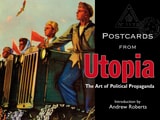
Politicians are famous for making extravagant campaign promises. But there are few promises as powerful—or as idealistically utopian—as those put forth by state-sponsored propaganda. Collected here are colorful images of political ideology created and disseminated by the political regimes of Europe, the Soviet Union, and China from the 1920s through the ‘70s.

State leaders of the twentieth century were highly conscious of the need to present a unified national image during a time of serious political transition in Europe, and state-sanctioned art performed a key function in an attempt to consolidate a country behind an idea. These spectacular images provide a rare opportunity to witness how abstract political ideas were rendered as visual picture for a mass audience. Fifty compelling postcards, held in the collection of the Bodleian Library, from the former Soviet Union, China, Germany, Italy, Spain, Czechoslovakia, Hungary, and Albania, reveal that despite national differences there are surprising similarities in political expression and the idealized images presented by each government. An introduction that contextualizes the images within a broader understanding of the ideologies and political powers of the time is provided by European historian, Andrew Roberts.

Taken together, the images in Postcards from Utopia offer a striking look at the art of power and its mythical representation at a time of great political upheaval and experiment.
[more]
cover of Postcards of Lost Royals

Postcards of Lost Royals

Edited by the Bodleian Library

Bodleian Library Publishing, 2009

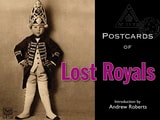
This enchanting, unique collection of postcards recovers an old world swept away and forgotten over the decades. The lost royals captured here have not been misplaced or gone missing—what has been lost is the very foundation of their royalty. Collected here are royal figures from around the world who lost their titles and were displaced as a result of World War I and other early twentieth-century political movements.

            The royal houses of Europe, Africa, and Asia once ruled a continent and held dominions beyond the seas. Today, just ten monarchs still reign in Europe, and those with only limited powers. Captured in these distinctive postcards held in the collection of the Bodleian Library are these lost emperors, kings and queens, czars and czarinas, princes and princess, and grand dukes and duchesses, who were left behind by the sweep of history. Featuring monarchs from the Balkans to the Iberian Peninsula, from Ethiopia to Korea, these portraits include members of the Russian imperial family, and royals from Romania, Bulgaria, and Germany, among others. But this is more than just a picture book; it provides a narrative snapshot of world history—alongside each postcard is an intriguing mini-biography of the pictured royal that provides a gripping account of his or her story.

            Reminiscent of a forgotten era of glamour, grace, and regal power, Postcards of Lost Royals brings history to life and distills the essence of a long-vanished world of royalty.
[more]
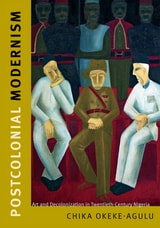
cover of Postcolonial Modernism: Art and Decolonization in Twentieth-Century Nigeria

Postcolonial Modernism

Art and Decolonization in Twentieth-Century Nigeria

Chika Okeke-Agulu

Duke University Press, 2015
Written by one of the foremost scholars of African art and featuring 129 color images, Postcolonial Modernism chronicles the emergence of artistic modernism in Nigeria in the heady years surrounding political independence in 1960, before the outbreak of civil war in 1967. Chika Okeke-Agulu traces the artistic, intellectual, and critical networks in several Nigerian cities. Zaria is particularly important, because it was there, at the Nigerian College of Arts, Science and Technology, that a group of students formed the Art Society and inaugurated postcolonial modernism in Nigeria. As Okeke-Agulu explains, their works show both a deep connection with local artistic traditions and the stylistic sophistication that we have come to associate with twentieth-century modernist practices. He explores how these young Nigerian artists were inspired by the rhetoric and ideologies of decolonization and nationalism in the early- and mid-twentieth century and, later, by advocates of negritude and pan-Africanism. They translated the experiences of decolonization into a distinctive "postcolonial modernism" that has continued to inform the work of major Nigerian artists.
[more]
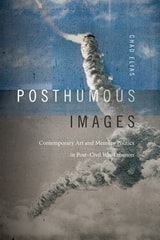
cover of Posthumous Images: Contemporary Art and Memory Politics in Post–Civil War Lebanon

Posthumous Images

Contemporary Art and Memory Politics in Post–Civil War Lebanon

Chad Elias

Duke University Press, 2018

For almost two decades of its history (1975-90), Lebanon was besieged by sectarian fighting, foreign invasions, and complicated proxy wars. In Posthumous Images, Chad Elias analyzes a generation of contemporary artists who have sought, in different ways, to interrogate the contested memory of those years of civil strife and political upheaval. In their films, photography, architectural projects, and multimedia performances, these artists appropriate existing images to challenge divisive and violent political discourses. They also create new images that make visible individuals and communities that have been effectively silenced, rendered invisible, or denied political representation. As Elias demonstrates, these practices serve to productively unsettle the distinctions between past and present, the dead and the living, official history and popular memory. In Lebanon, the field of contemporary art is shown to be critical to remembering the past and reimagining the future in a nation haunted by a violent and unresolved war.
[more]
cover of Postmodern Advertising in Japan: Seduction, Visual Culture, and the Tokyo Art Directors Club

Postmodern Advertising in Japan

Seduction, Visual Culture, and the Tokyo Art Directors Club

Ory Bartal

Dartmouth College Press, 2015
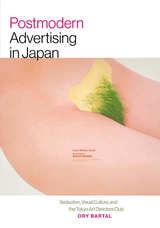
In a study driven by stunning images of Japanese advertisements and the artworks they quote from, Ory Bartal offers a first-of-its-kind interpretation of the “postmodern” genre of advertising in Japan, which both shaped and reflected the new consumer-driven culture that arose during the bubble era of the 1980s and 1990s. Through a fascinating tale of art directors and their works and influences, Bartal shows how this postmodern visual language, like postmodernism in other streams, is distinguished by its mélange of styles, blurring of boundaries between art and design, and reliance on visual and textual quotations from sources past and present, domestic and foreign. Although this advertising culture partakes of global trends, Bartal draws attention to the varied local artistic sensibilities, structures of thought, and underlying practices, challenging the often-simplistic characterization of “Japaneseness” as being rooted in a Zen tradition of aesthetic indirectness and ambiguity. Combining multilingual scholarship with a wealth of information gleaned through years of personal interviews with the principals involved, this is a truly original contribution to the discussion of Japanese art and advertising as well as an insightful reading of more general issues in the study of visual culture and media.
[more]
cover of Postmodern Animal

Postmodern Animal

Steve Baker

Reaktion Books, 2000
An insightful new way of looking at modern and contemporary art and performance that focuses on representations of animals 
 
In The Postmodern Animal, Steve Baker explores how animal imagery has been used in modern and contemporary art and performance, and in postmodern philosophy and literature, to suggest and shape ideas about identity and creativity. Baker cogently analyses the work of such European and American artists as Olly and Suzi, Mark Dion, Paula Rego and Sue Coe, at the same time looking critically at the constructions, performances and installations of Robert Rauschenberg, Louise Bourgeois, Joseph Beuys and other significant late twentieth-century artists. Baker's book draws parallels between the animal's place in postmodern art and poststructuralist theory, drawing on works as diverse as Jacques Derrida's recent analysis of the role of animals in philosophical thought and Julian Barnes's best-selling Flaubert's Parrot.
[more]
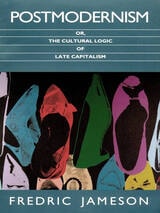
cover of Postmodernism, or, The Cultural Logic of Late Capitalism

Postmodernism, or, The Cultural Logic of Late Capitalism

Fredric Jameson

Duke University Press, 1992
Now in paperback, Fredric Jameson’s most wide-ranging work seeks to crystalize a definition of ”postmodernism”. Jameson’s inquiry looks at the postmodern across a wide landscape, from “high” art to “low” from market ideology to architecture, from painting to “punk” film, from video art to literature.
 
[more]
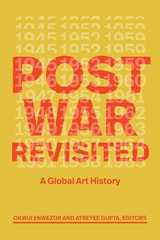
cover of Postwar Revisited: A Global Art History

Postwar Revisited

A Global Art History

Okwui Enwezor and Atreyee Gupta, editors

Duke University Press, 2025

Okwui Enwezor’s 2016 exhibition Postwar: Art between the Pacific and the Atlantic, 1945–1965 redefined the history of art produced in those two decades. Nearly a decade later, Postwar Revisited returns to these debates to present an image of a historical period in which Western conceptions of art, aesthetics, and philosophy are all thrown into intense flux after Auschwitz and Hiroshima, while the cultural energies of decolonization generate myriad artistic and intellectual practices across the globe, which re-engage the connections of art to life itself. Focusing on modernist artists, artist collectives, and architects central to dissonant regional traditions, as well as influential exhibitions and patronage systems, the contributors produce a new understanding of emergent postwar global art. Provoking new ways of thinking, engaging, and narrating art history, Postwar Revisited is essential reading for those interested in debates on global art history and global modernism, the intersections between art and decolonization, the cultural aspects of the Cold War and the Non-Aligned Movement, and modern and contemporary art more generally.

Contributors. Iftikhar Dadi, Okwui Enwezor, Patrick Flores, Hal Foster, Boris Groys, Atreyee Gupta, Elizabeth Harney, Jennifer Josten, Vivian Li, Tara McDowell, Alexandra Munroe, Nada Shabout, Terry Smith, Jenni Sorkin, Ming Tiampo
 
[more]
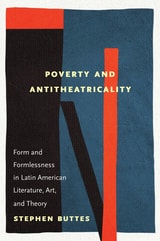
cover of Poverty and Antitheatricality: Form and Formlessness in Latin American Literature, Art, and Theory

Poverty and Antitheatricality

Form and Formlessness in Latin American Literature, Art, and Theory

Stephen Buttes

Rutgers University Press, 2025
Poverty and Antitheatricality argues that many major analytical approaches today misunderstand the problem of poverty by emphasizing its status as an experience. These experiential models transform poverty from a specific socioeconomic status lived in a particular historical sequence into a transhistorical presence of marginality that is not only inevitable but necessary. Embedded in capitalist, socialist, and populist forms of socioeconomic organization, these models paradoxically suggest that if we want to have a world free of poverty, we must always have the poor and their experience of formlessness. Taking up the paired terms—form and formlessness—Stephen Buttes demonstrates how they sustain not only debates about poverty and its political role within modernity but also the idea of the work of art within the history of modernism. Offering critiques of critical theory alongside new readings of both canonical and little-studied Latin American authors and artists, Poverty and Antitheatricality makes a compelling case that understanding the kind of problem the work of art is opens up overlooked but essential pathways to understanding poverty and the kind of problem it is.
[more]
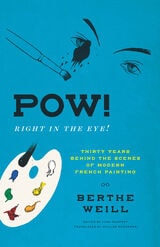
cover of Pow! Right in the Eye!: Thirty Years behind the Scenes of Modern French Painting

Pow! Right in the Eye!

Thirty Years behind the Scenes of Modern French Painting

Berthe Weill

University of Chicago Press, 2022

Memoir of a provocative Parisian art dealer at the heart of the 20th-century art world, available in English for the first time.
  
Berthe Weill, a formidable Parisian dealer, was born into a Jewish family of very modest means. One of the first female gallerists in the business, she first opened the Galerie B. Weill in the heart of Paris’s art gallery district in 1901, holding innumerable exhibitions over nearly forty years. Written out of art history for decades, Weill has only recently regained the recognition she deserves.
 
Under five feet tall and bespectacled, Weill was beloved by the artists she supported, and she rejected the exploitative business practices common among art dealers. Despite being a self-proclaimed “terrible businesswoman,” Weill kept her gallery open for four decades, defying the rising tide of antisemitism before Germany’s occupation of France. By the time of her death in 1951, Weill had promoted more than three hundred artists—including Henri Matisse, Pablo Picasso, Amedeo Modigliani, Diego Rivera, and Suzanne Valadon—many of whom were women and nearly all young and unknown when she first exhibited them.
 
Pow! Right in the Eye! makes Weill’s provocative 1933 memoir finally available to English readers, offering rare insights into the Parisian avant-garde and a lively inside account of the development of the modern art market.
 
[more]
cover of Power of Material - Politics of Materiality

Power of Material - Politics of Materiality

Edited by Susanne Witzgall and Kerstin Stakemeier

Diaphanes, 2014

In the last years a new focus on material phenomena has become increasingly oberservable in the arts and sciences. Most diverse disciplines are stressing the momentum and the agency of matter, material and things and underline their status as agents within the web of relationships of culture and nature. The book "Power of Material / Politics of Materiality“ deepens this current discourse and for the time brings materialist tendencies within the arts, design and architecture into a direct dialogue with a range of scientific approaches from a "New Materialism“ within the humanities and social sciences.

This publication is the result of the first year of program at the newly established cx centre for interdisciplinary studies at the Academy of Fine Arts Munich.
[more]
cover of Power to the People: The Graphic Design of the Radical Press and the Rise of the Counter-Culture, 1964-1974

Power to the People

The Graphic Design of the Radical Press and the Rise of the Counter-Culture, 1964-1974

Geoff Kaplan

University of Chicago Press, 2013
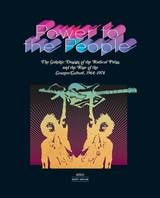
Though we think of the 1960s and the early ‘70s as a time of radical social, cultural, and political upheaval, we tend to picture the action as happening on campuses and in the streets. Yet the rise of the underground newspaper was equally daring and original. Thanks to advances in cheap offset printing, groups involved in antiwar, civil rights, and other social liberation issues began to spread their messages through provocatively designed newspapers and broadsheets. This vibrant new media was essential to the counterculture revolution as a whole—helping to motivate the masses and proliferate ideas. Power to the People presents more than 700 full-color images and excerpts from these astonishing publications, many of which have not been seen since they were first published almost fifty years ago.
 
From the psychedelic pages of the Oracle, Haight-Ashbury’s paper of choice, to the fiery editorials of the Black Panther Party Paper, these papers were remarkable for their editors’ fervent belief in freedom of expression and their DIY philosophy. They were also extraordinary for their graphic innovations. Experimental typography and wildly inventive layouts reflect an alternative media culture as much informed by the space age, television, and socialism as it was by the great trinity of sex, drugs, and rock ‘n’ roll. Assembled by renowned graphic designer Geoff Kaplan, Power to the People pays homage in its layout to the radical press. Beyond its unparalleled images, Power to the People includes essays by Gwen Allen, Bob Ostertag, and Fred Turner, as well as a series of recollections edited by Pamela M. Lee, all of which comment on the critical impact of the alternative press in the social and popular movements of those turbulent years. Power to the People treats the design practices of that moment as activism in its own right that offers a vehement challenge to the dominance of official media and a critical form of self-representation.
 
No other book surveys in such variety the highly innovative graphic design of the underground press, and certainly no other book captures the era with such an unmatched eye toward its aesthetic and look. Power to the People is not just a major compendium of art from the ’60s and ’70s—it showcases how the radical media graphically fashioned the image of a countercultural revolution that still resounds to this day.

[more]
cover of Powers of No: The Infra Noir Surrealist Group

Powers of No

The Infra Noir Surrealist Group

Catherine L. Hansen

University of Minnesota Press, 2026

How five dissident poets applied Surrealism to everyday life under totalitarian rule

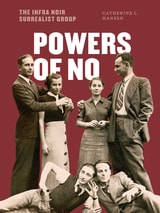
A collective biography of the Surrealist group Infra Noir, Powers of No reveals an important chapter in the history of the postwar European avant-garde. Detailing the group’s innovative program for cultivating community and political resistance, Catherine L. Hansen examines how its five members reimagined Surrealism as a means to endure life under totalitarianism and war.

Encompassing the careers and friendships of Gherasim Luca, Gellu Naum, Trost, Paul Păun, and Virgil Teodorescu, Powers of No is the first English-language book about this Francophone Romanian group active between 1941 and 1947. The members of Infra Noir created radical art and publications that attracted the attention of André Breton and other central figures in the wider Surrealist movement. Charting their course from the Bucharest avant-garde amid the rising tide of fascism through the turbulent intellectual and political scene of postwar France and Stalinist repression, Hansen unpacks the concepts this group developed, which envisioned new possibilities for emancipatory thought and praxis.

Grounded in a wealth of archival materials and original translations, Powers of No situates the unique legacy of Infra Noir’s revolutionary project among the various intellectual currents of a tumultuous era. Establishing Infra Noir as more than an obscure clique of dissident poets and artists, this book presents their work as a repertoire of lessons for resisting authoritarian oppression and avoiding despair even under the harshest political conditions.

Retail e-book files for this title are screen-reader friendly with images accompanied by short alt text and/or extended descriptions.

[more]
cover of Practices of Coexistence: Constructions of the Other in Early Modern Perceptions

Practices of Coexistence

Constructions of the Other in Early Modern Perceptions

Marianna D. Birnbaum

Central European University Press, 2017

The essays in this book provide interesting contributions to the ongoing debate concerning the representation of differing cultures, i.e., the “image of the Other” in the early modern period . They deal with images, projections, and perceptions, based on various experiences of coexistence. Although the individual contributions contain sources and references of iconography, this is not just another volume of art history or visual studies. As examples of practices in diverse historical contexts, the book includes a variety of textual material, such as literary productions, rhetorical exercises, dramatic applications, chronicles, epistles, and diary-like historical accounts that express ethnographic sensitivities. Thus, supported by a thorough research apparatus, these studies propose a new cultural history of the early modern coexistence of various communities, as identified in current research by young scholars. Another novel feature of the volume is the deliberate digression of traditional scholars’ focus and the investigation of rarely examined regions and practices. This approach allows the contributors to spotlight their special areas of research and to share a fresh new look at “the Renaissance.”
[more]
cover of Precarious Spaces: The Arts, Social and Organizational Change

Precarious Spaces

The Arts, Social and Organizational Change

Edited by Katarzyna Kosmala and Miguel Imas

Intellect Books, 2016
Using an arts-based inquiry, Precarious Spaces addresses current concerns around the instrumentality and agency of art in the context of the precarity of daily life. The book offers a survey of socially and community-engaged art practices in South America, focusing in particular on Brazil’s “informal” situation, and contributes much to the ongoing debate of the possibility for change through social, environmental, and ecological solutions. The individual chapters, compiled by Katarzyna Kosmala and Miguel Imas, present a wide spectrum of contemporary social agency models with a particular emphasis on detailed case studies and local histories. Featuring critical reflections on the spaces of urban voids, derelict buildings, self-built communities such as favela, and roadside occupations, Precarious Spaces will make readers question their assumptions about precarity, and life in precarious realms.
[more]
cover of Precious Materials: The Arts of Metal in the Medieval Iranian World

Precious Materials

The Arts of Metal in the Medieval Iranian World

Annabelle Collinet

Gingko, 2024

A historic collection of metal art from ancient Iran, featuring images of more than 150 objects described in detail and fully illustrated, some with X-rays.

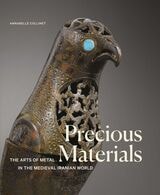
Medieval metalwork is one of the artistic highlights of the Iranian world, as well as of the Département des Arts de l’Islam at the Louvre in Paris, which holds more than one hundred and fifty objects from this period. A new approach to the study of a historic collection, Precious Material: The Arts of Metal in the Medieval Iranian World is a comprehensive overview of the production of metal in medieval Iran. Although this is one of the most important collections in the world, the objects, some well-known but many more unpublished, have never been studied or published as an ensemble. This volume includes a presentation of the collection through the lens of its centers of manufacture, a full technical analysis, as well as the functions and contexts in which the pieces were used. Each object is fully described and illustrated in color with close-up or X-ray images, and many inscriptions have been translated and are included in the catalog entries.
 
[more]
cover of Prehistoric Future: Max Ernst and the Return of Painting between the Wars

Prehistoric Future

Max Ernst and the Return of Painting between the Wars

Ralph Ubl

University of Chicago Press, 2013

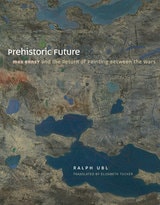
One of the most admired artists of the twentieth century, Max Ernst was a proponent of Dada and founder of surrealism, known for his strange, evocative paintings and drawings. In Prehistoric Future, Ralph Ubl approaches Ernst like no one else has, using theories of the unconscious—surrealist automatism, Freudian psychoanalysis, the concept of history as trauma—to examine how Ernst’s construction of collage departs from other modern artists.
 
Ubl shows that while Picasso, Braque, and Man Ray used scissors and glue to create collages, Ernst employed techniques he himself had forged—rubbing and scraping to bring images forth onto a sheet of paper or canvas to simulate how a screen image or memory comes into the mind’s view. In addition, Ernst scoured the past for obsolete scientific illustrations and odd advertisements to illustrate the rapidity with which time passes and to simulate the apprehension generated when rapid flows of knowledge turn living culture into artifact. Ultimately, Ubl reveals, Ernst was interested in the construction and phenomenology of both collective and individual modern history and memory. Shedding new light on Ernst’s working methods and the reasons that his pieces continue to imprint themselves in viewers’ memories, Prehistoric Future is an innovative work of critical writing on a key figure of surrealism.
[more]
cover of Preserving Maritime America: A Cultural History of the Nation's Great Maritime Museums

Preserving Maritime America

A Cultural History of the Nation's Great Maritime Museums

James M. Lindgren

University of Massachusetts Press, 2019

The United States has long been dependent on the seas, but Americans know little about their maritime history. While Britain and other countries have established national museums to nurture their seagoing traditions, America has left that responsibility to private institutions. In this first-of-its-kind history, James M. Lindgren focuses on a half-dozen of these great museums, ranging from Salem's East India Marine Society, founded in 1799, to San Francisco's Maritime Museum and New York's South Street Seaport Museum, which were established in recent decades.

Begun by activists with unique agendas—whether overseas empire, economic redevelopment, or cultural preservation—these museums have displayed the nation's complex interrelationship with the sea. Yet they all faced chronic shortfalls, as policymakers, corporations, and everyday citizens failed to appreciate the oceans' formative environment. Preserving Maritime America shows how these institutions shifted course to remain solvent and relevant and demonstrates how their stories tell of the nation's rise and decline as a commercial maritime power.

[more]
cover of Presidential Libraries as Performance: Curating American Character from Herbert Hoover to George W. Bush

Presidential Libraries as Performance

Curating American Character from Herbert Hoover to George W. Bush

Jodi Kanter

Southern Illinois University Press, 2016

How do the funding, setting architecture, and exhibition of a presidential library shape our understanding of the president’s character? And how do diverse performances of the presidency create radically different opportunities for the practice of American citizenship? In Presidential Libraries as Performance: Curating American Character from Herbert Hoover to George W. Bush, Jodi Kanter analyzes presidential libraries as performances that encourage visitors to think in particular ways about executive leadership and about their own roles in public life.

Kanter considers the moments in the presidents’ lives the museums choose to interpret, and not to interpret, and how the libraries approach common subjects in the presidential museum narrative—the presidents’ early years in relation to cultural ideals, the libraries’ representations of presidential failures, personal and political, and the question of presidential legacy. Identifying the limited number of strategies the libraries currently use to represent the diversity of the American experience and American character, Kanter offers concrete suggestions for reinventing and reshaping the practices of museum professionals and visitors within the walls of these institutions.

Presidential museums can tell us important things about the relationships between performance and politics, entertainment and history, and leaders and the people they lead. Kanter demonstrates how the presidential libraries generate normative narratives about individual presidents, historical events, and what it means to be an American.
 
[more]
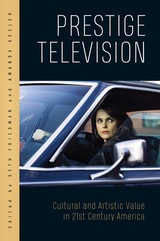
cover of Prestige Television: Cultural and Artistic Value in Twenty-First-Century America

Prestige Television

Cultural and Artistic Value in Twenty-First-Century America

Seth Friedman

Rutgers University Press, 2023

Prestige Television explores how a growing array of 21st century US programming is produced and received in ways that elevate select series above the competition in a saturated market. Contributing authors demonstrate that these shows are positioned and understood as comprising an increasingly recognizable genre characterized by familiar markers of distinction. In contrast to most accounts of elite categorizations of contemporary US television programming that center on HBO and its primary streaming rivals, these essays examine how efforts to imbue series with prestigious or elevated status now permeate the rest of the medium, including network as well as basic and undervalued premium cable channels. Case study chapters focusing on diverse series, ranging from widely recognized examples such as The Americans (2013-2018) and The Knick (2014-15) to contested examples like Queen of the South (2016-2021) and How I Met Your Mother (2005-2014), highlight how contributing authors extend conceptions of the genre beyond expected parameters.
 
[more]
cover of Preston Sturges: The Last Years of Hollywood's First Writer-Director

Preston Sturges

The Last Years of Hollywood's First Writer-Director

Nick Smedley and Tom Sturges

Intellect Books, 2019
Few directors of the 1930s and ‘40s were as distinctive and popular as Preston Sturges, whose whipsmart comedies have entertained audiences for decades. Beginning with a foreword by Peter Bogdanovich, this book offers a new critical appreciation of Sturges’ whole oeuvre, incorporating a detailed study of the last ten years of his life from new primary sources. Preston Sturges details the many unfinished projects of Sturges’ last decade, including films, plays, TV series and his autobiography. Drawing on diaries, sketchbooks, correspondence, unpublished screenplays and more, Nick Smedley and Tom Sturges present the writer-director’s final years in more detail than we’ve ever seen, showing a master still at work—even if very little of that work ultimately made it to the screen or stage.
 
 
[more]
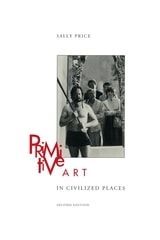
cover of Primitive Art in Civilized Places: Second Edition

Primitive Art in Civilized Places

Second Edition

Sally Price

University of Chicago Press, 2002

What is so "primitive" about primitive art? And how do we dare to use our standards to judge it? Drawing on an intriguing mixture of sources-including fashion ads and films, her own anthropological research, and even comic strips like Doonesbury—Price explores the cultural arrogance implicit in Westerners' appropriation of non-Western art.

"[Price] presents a literary collage of the Western attitude to other cultures, and in particular to the visual art of the Third and Fourth Worlds. . . . Her book is not about works of 'primitive art' as such, but about the Western construction 'Primitive Art.' It is a critique of Western ignorance and arrogance: ignorance about other cultures and arrogance towards them."—Jeremy Coote, Times Literary Supplement

"The book is infuriating, entertaining, and inspirational, leaving one feeling less able than before to pass judgment on 'known' genres of art, but feeling more confident for that."—Joel Smith, San Francisco Review of Books

"[A] witty, but scholarly, indictment of the whole primitive-art business, from cargo to curator. And because she employs sarcasm as well as pedagogy, Price's book will probably forever deprive the reader of the warm fuzzies he usually gets standing before the display cases at the local ethnographic museum."—Newsweek
[more]
cover of Primitivism and Identity in Latin America: Essays on Art, Literature, and Culture

Primitivism and Identity in Latin America

Essays on Art, Literature, and Culture

Erik Camayd-Freixas

University of Arizona Press, 2000

Although primitivism has received renewed attention in recent years, studies linking it with Latin America have been rare. This volume examines primitivism and its implications for contemporary debates on Latin American culture, literature, and arts, showing how Latin American subjects employ a Western construct to "return the gaze" of the outside world and redefine themselves in relation to modernity.

Examining such subjects as Julio Cortázar and Frida Kahlo and such topics as folk art and cinema, the volume brings together for the first time the views of scholars who are currently engaging the task of cultural studies from the standpoint of primitivism. These varied contributions include analyses of Latin American art in relation to social issues, popular culture, and official cultural policy; essays in cultural criticism touching on ethnic identity, racial politics, women's issues, and conflictive modernity; and analytical studies of primitivism's impact on narrative theory and practice, film, theater, and poetry.

This collection contributes offers a new perspective on a variety of significant debates in Latin American cultural studies and shows that the term primitive does not apply to these cultures as much as to our understanding of them.

CONTENTS
Paradise Subverted: The Invention of the Mexican Character / Roger Bartra
Between Sade and the Savage: Octavio Paz’s Aztecs / Amaryll Chanady
Under the Shadow of God: Roots of Primitivism in Early Colonial Mexico / Delia Annunziata Cosentino
Of Alebrijes and Ocumichos: Some Myths about Folk Art and Mexican Identity / Eli Bartra
Primitive Borders: Cultural Identity and Ethnic Cleansing in the Dominican Republic / Fernando Valerio-Holguín
Dialectics of Archaism and Modernity: Technique and Primitivism in Angel Rama’s Transculturación narrativa en América Latina / José Eduardo González
Narrative Primitivism: Theory and Practice in Latin America / Erik Camayd-Freixas
Narrating the Other: Julio Cortázar’s "Axolotl" as Ethnographic Allegory / R. Lane Kauffmann
Jungle Fever: Primitivism in Environmentalism; Rómulo Gallegos’s Canaima and the Romance of the Jungle / Jorge Marcone
Primitivism and Cultural Production: Future’s Memory; Native Peoples’ Voices in Latin American Society / Ivete Lara Camargos Walty
Primitive Bodies in Latin American Cinema: Nicolás Echevarría’s Cabeza de Vaca / Luis Fernando Restrepo
Subliminal Body: Shamanism, Ancient Theater, and Ethnodrama / Gabriel Weisz
Primitivist Construction of Identity in the Work of Frida Kahlo / Wendy B. Faris
Mi andina y dulce Rita: Women, Indigenism, and the Avant-Garde in César Vallejo / Tace Megan Hedrick
[more]
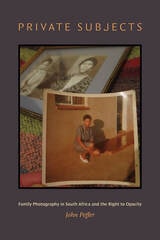
cover of Private Subjects: Family Photography in South Africa and the Right to Opacity

Private Subjects

Family Photography in South Africa and the Right to Opacity

John Peffer

Duke University Press, 2026
In Private Subjects, John Peffer presents perspectives about everyday uses of photography in predominantly Black South African communities during apartheid to give insight into how these images are seen through the eyes of those who own them today. In South Africa, portrait photography was used to create positive self-images during times of hardship and subjection. Peffer shows how owners limited the distribution of their photographs to close networks of family and friends as a means of establishing control over their own image. He develops an intersubjective method for writing about vernacular photographic experience that keeps the people that appear in those photographs at the center of the story, creating a space to converse about race and history in their own ways rather than be explained from outside the frame. He then considers cultural and legal histories of the ownership of the self-image, theorizes an ethics for looking at others’ private family photographs, and argues for a model of writing and scholarship that protects people’s desires for opacity.
[more]
cover of Prize Volumes: Catalogue for Designer Bookbinders International Competition 2013

Prize Volumes

Catalogue for Designer Bookbinders International Competition 2013

Edited by Jeanette Koch

Bodleian Library Publishing, 2013

Designer Bookbinders is one of the foremost bookbinding societies and its International Bookbinding Competition in association with Mark Getty and the Bodleian Library continues to attract top binders from around the world. For 2013, the theme of the competition was Shakespeare and entries reflect a remarkable range of styles, materials, and approaches to the dramatic and poetic works of the Great Bard.

Prize Volumes
collects the full 250 entries from the 2013 competition, highlighting the twenty-eight winning bindings and offering a veritable showcase for the creativity and craftsmanship of the international bookbinding community. As beautifully designed as many of the bindings it displays, this showcase of the best in modern bookbinding will become a collector’s item among aficionados of bookbinding—as well as a handsome addition to any personal library.
[more]
cover of Probing Arts and Emergent Forms of Life

Probing Arts and Emergent Forms of Life

Michael M. J. Fischer

Duke University Press, 2023

In Probing Arts and Emergent Forms of Life Michael M. J. Fischer calls for a new anthropology of the arts that attends to the materialities and technologies of the world as it exists today. Fischer examines the work of key Southeast and East Asian artists within the crucibles of unequal access, geopolitics, reverberating past traumas, and emergent socialities. He outlines the work of artist-theorists---including Entang Wiharso, Sally Smart, Charles Lim, Zai Kuning, and Kiran Kumar---who speculate about changing the world in ways that are attuned to its cultivation, repair, and rethinking in the Anthropocene. Their artistic vocabulary not only undoes Western art models and categories; it probes the unfolding future, addresses past trauma, and creates contested, vibrant, and flourishing spaces. Throughout Indonesia, Korea, Singapore, Thailand, and Vietnam---and from Kumar’s experimental dance to Kuning’s rattan and beeswax ghost ships to Lim’s videography of Singapore from the sea---Fischer argues that these artists’ theoretical discourses should be privileged over those of the curators, historians, critics, and other gatekeepers who protect and claim art worlds for themselves.
[more]
cover of Producing

Producing

Lewis, Jon

Rutgers University Press, 2015

Of all the job titles listed in the opening and closing screen credits, producer is certainly the most amorphous. There are businessmen (and women)-producers, writer-director- and movie-star-producers; producers who work for the studio; executive producers whose reputation and industry clout alone gets a project financed (though their day-to-day participation in the project may be negligible). The job title, regardless of the actual work involved, warrants a great deal of prestige in the film business; it is the credited producers, after all, who collect the Oscar for Best Picture. But what producers do and what they don’t or won’t do varies from project to project.
 
Producing is the first book to provide a comprehensive overview of the roles that producers have played in Hollywood, from the dawn of the twentieth century to the present day. It introduces readers to the colorful figures who helped to define and reimagine the producer’s role, including inventors like Thomas Edison, moguls like Darryl F. Zanuck, entrepreneurs like Walt Disney, and mavericks like Roger Corman. Readers also get an inside look at the less glamorous jobs producers have often performed: shepherding projects through many years of development, securing financial backers, and supervising movie shoots.  
 
The latest book in the acclaimed Behind the Silver Screen series, Producing includes essays written by seven film scholars, each an expert in a different period of cinema history. Together, they give readers a full picture of how the art and business of producing films has changed over time—and how the producer’s myriad job duties continue to evolve in the digital era. 
 
[more]
cover of Producing Children’s Television in the On-demand Age

Producing Children’s Television in the On-demand Age

Anna Potter

Intellect Books, 2020

Much like the rest of the traditional television industry, children’s programming is undergoing a revolution. In this book, Anna Potter provides a detailed insider account of the creative circumstances that are transforming contemporary children’s screen content and reshaping the surrounding digital media landscape. Drawing on extended interviews with leading screen industry figures, Potter explores television’s distribution revolution and reveals how creative practices, funding models, and production norms in children’s TV have adapted to fit the changing times. 

Combining comprehensive case studies, scholarly research, and industry perspectives, Potter presents a rigorous study of success stories in the children’s screen production sector. The book explores effects on the industry from disruptions by streaming giants like Netflix, Amazon, and YouTube, and describes the challenges faced by public service broadcasters like the BBC in their efforts to stay relevant to adolescent culture in the UK. Interdisciplinary and informative, this volume is compulsory reading for anyone struggling to make sense of television’s distribution revolution and what it means for children and young people.
[more]
cover of Producing Local Color: Art Networks in Ethnic Chicago

Producing Local Color

Art Networks in Ethnic Chicago

Diane Grams

University of Chicago Press, 2010

In big cities, major museums and elite galleries tend to dominate our idea of the art world. But beyond the cultural core ruled by these moneyed institutions and their patrons are vibrant, local communities of artists and art lovers operating beneath the high-culture radar. Producing Local Color is a guided tour of three such alternative worlds that thrive in the Chicago neighborhoods of Bronzeville, Pilsen, and Rogers Park.

These three neighborhoods are, respectively, historically African American, predominantly Mexican American, and proudly ethnically mixed. Drawing on her ethnographic research in each place, Diane Grams presents and analyzes the different kinds of networks of interest and support that sustain the making of art outside of the limelight. And she introduces us to the various individuals—from cutting-edge artists to collectors to municipal planners—who work together to develop their communities, honor their history, and enrich the experiences of their neighbors through art. Along with its novel insights into these little examined art worlds, Producing Local Color also provides a thought-provoking account of how urban neighborhoods change and grow.

[more]
cover of Product Design, Technology, and Social Change: A Short Cultural History

Product Design, Technology, and Social Change

A Short Cultural History

Laura Scherling

Intellect Books, 2024

A pocket history of product design from the birth of cities to the digital design revolution.

This cultural history critically examines the development of product design, considering major milestones in the mass production of goods and services and aiming to incorporate a more inclusive worldview than traditional surveys of the topic.

The breadth and versatility of product design throughout history have been profound. Products have long supported the integration and interpretation of emerging technologies into our lives. These objects include everything from tools, accessories, furniture, and clothing to types of transportation, websites, and mobile applications. Products provide singular or multiple functions, are tangible and intangible, and in many instances have affected the quality of our lives by saving time or money or by increasing feelings of personal satisfaction. At the same time, many products have negatively affected people and the environment. For nearly every product that makes it into the hands of a consumer, there is also a designer who created it and someone who labored to make it.

An eye-opening survey of product design from preindustrial times to the present day, Product Design, Technology, and Social Change provides a thorough examination of the relationship between products, consumption, sustainability, politics, and social movements.
 
[more]
cover of Promises Beyond Memory: Archives, Art, and the Afterlives of Violence in Latin America

Promises Beyond Memory

Archives, Art, and the Afterlives of Violence in Latin America

Vikki Bell

Duke University Press, 2026

In Promises Beyond Memory, Vikki Bell shows how archives of contemporary political violence in Argentina, Chile, and Colombia challenge the idea that simply sheltering the documentation of violence is sufficient to fulfill the obligations of attending to the past. Beyond mere preservation, these archives, museums, and sites of memory invite exploratory modes of enlivening the past through aesthetic practices like photography, installation, film, and performance. These practices foster the “survivance” of memory where populations still grapple with legacies of violence and often state-sponsored mass disappearance and torture. Rather than produce a definitive account of the past, such survivance facilitates polyvocal articulations that open deeply political and ethical questions around contested histories. They may even create moments for what Bell terms “tender forgetting”—the ability to remember without reawakening trauma. Integrating theory, extensive archival work, and interviews with artists, archivists, museum workers, and survivors of state violence, Bell analyses the creative ways that archives pass on stories of violence as they seek to defend against attempts to rewrite the past.
[more]