Results by title
4155 books match the query 'State & Local' and 170 start with p
Prehistory of the Central Mississippi Valley
Edited by Charles H. McNutt
University of Alabama Press, 1996
The Central Mississippi Valley, defined as the region along the Mississippi River from where the Ohio River joins in the north to its confluence with the Arkansas River in the south, lies between the two most important archaeological areas of the Southeast: American Bottom/Cahokia and the Lower Yazoo Basin. The valley has been influenced by these major centers and has a complex history of its own. Contributions from experts throughout the region present current, if sometimes conflicting, views of the regional cultural sequences supported by data from recent surveys and excavations, as well as radiocarbon and chronometric determinations. By examining this new information and reevaluating earlier interpretations of local archaeological sequences, this volume provides a comprehensive overview of the valley and defines future research goals.
Present at the Fermentation
The Moves, Mishaps, and Magic Behind the Pacific Northwest Microbrew RevolutionTom Gauntt
Oregon State University Press, 2027
From ale romantics to hopheads, the Pacific Northwest is a haven for beer lovers. Considered a mecca for beer enthusiasts, the Northwest earned its reputation from a group of emerging brewers in the 1980s who established a demand for craft beer throughout and beyond the region. Brewing guru Fred Eckhardt, the Grateful Dead–loving McMenamin brothers, the effervescent Art Larrance, the determined Widmer brothers, and entrepreneurial pub owner Don Younger were among the open-minded, vibrant crew who founded a microbrewery industry that became a model for a new era.
“For those intimately involved or those who merely had a barstool view of the microbrewing revolution, the first decade of the movement was an intoxicating passage from anonymity to celebrity,” writes Tom Gauntt in the introduction. Present at the Fermentation celebrates the rich history of beermaking and those who transformed the business in the Pacific Northwest. Through press coverage of the time, interviews, oral histories, and personal memory, Gauntt offers an engaging history of one of Oregon’s signature industries.
With more than 9,700 craft brewers now operating in the US, there remains a passion for craft brewing and pride in creating the perfect ale in this evolving market. So, pour a pint and learn how Pacific Northwest microbreweries persevered through risk, hard work, foibles, and a lot of luck to create award-winning beer, connect with their communities, and build thriving businesses.
Preserving The Glory Days
Ghost Towns And Mining Camps Of Nye County, NevadaShawn Hall
University of Nevada Press, 1999
Nye County is Nevada’s largest and least populated county, but it is also the site of many of the state’s most colorful ghost towns and mining camps. The county’s economy throughout its history has been largely based on its mines--first, exploiting veins of gold and silver, and more recently deposits of raw materials for modern industry, such as molybdenum and barite. It was here that famous boomtowns like Tonopah and Rhyolite sprang up after the discovery of nearby lodes brought in rushes of prospectors and the merchants who supported them. But the county includes many smaller, shorter-lived camps and numerous abandoned stagecoach and railroad stops associated with defunct mining operations.This book offers a lively, informative record of Nevada’s isolated interior. Hall first published a guide to Nye County’s ghost towns in 1981. Since then, he has continued his research into the county’s past and has uncovered much new information and corrected some errors. To prepare this revised and greatly expanded edition, he revisited all 175 sites recorded earlier and has added more than 20 previously unlisted sites.
Preserving the Vanishing City
Historic Preservation amid Urban Decline in Cleveland, OhioStephanie Ryberg-Webster
Temple University Press, 2023
Stephanie Ryberg-Webster uncovers the motivations, strategies, and constraints driving Cleveland’s historic preservation sector, led by the public-sector Cleveland Landmarks Commission, nonprofit Cleveland Restoration Society, and a cadre of advocates. She sheds light on the ways in which preservationists confronted severe, escalating, and sustained urban decline, which plagued Cleveland, a prototypical rust-belt industrial city.
Preserving the Vanishing City chronicles the rise of the historic preservation profession in Cleveland and provides six case studies about targeted projects and neighborhood efforts, including industrial heritage, housing preservation and restoration, commercial district revitalization, securing local historic district designations, as well as grassroots organizing, coalition building, and partnerships. Ryberg-Webster also addresses the complexities of historic preservation within the context of rapid racial change in Cleveland’s neighborhoods.
A comprehensive history of preservation within the context of one city’s urban decline, Preserving the Vanishing Cityrecounts the successes, failures, and creative strategies employed to save Cleveland’s built environment.
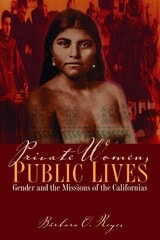
Private Women, Public Lives
Gender and the Missions of the CaliforniasBy Bárbara O. Reyes
University of Texas Press, 2009
Through the lives and works of three women in colonial California, Bárbara O. Reyes examines frontier mission social spaces and their relationship to the creation of gendered colonial relations in the Californias. She explores the function of missions and missionaries in establishing hierarchies of power and in defining gendered spaces and roles, and looks at the ways that women challenged, and attempted to modify, the construction of those hierarchies, roles, and spaces.
Reyes studies the criminal inquiry and depositions of Barbara Gandiaga, an Indian woman charged with conspiracy to murder two priests at her mission; the divorce petition of Eulalia Callis, the first lady of colonial California who petitioned for divorce from her adulterous governor-husband; and the testimonio of Eulalia Pérez, the head housekeeper at Mission San Gabriel who acquired a position of significant authority and responsibility but whose work has not been properly recognized. These three women's voices seem to reach across time and place, calling for additional, more complex analysis and questions: Could women have agency in the colonial Californias? Did the social structures or colonial processes in place in the frontier setting of New Spain confine or limit them in particular gendered ways? And, were gender dynamics in colonial California explicitly rigid as a result of the imperatives of the goals of colonization?
Profiles in Judicial Excellence
Territorial and Supreme Court Justices of NevadaDavid A. Hardy
University of Nevada Press, 2025
Until the publication of Judge David A. Hardy’s Profiles in Judicial Excellence: Territorial and Supreme Court Justices of Nevada, there has been no single source containing biographies of these influential figures from the state’s history from 1861 to 1997. Hardy curates various sources and presents profiles of these judges in sequential order of their service. He also examines the influence of territorial judges in the 1864 vote for statehood. The Nevada judiciary has played an integral, but often unrecognized, role in shaping the unique character of the Silver State.
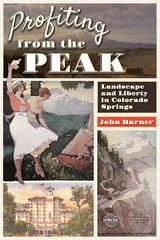
Profiting from the Peak
Landscape and Liberty in Colorado SpringsJohn Harner
University Press of Colorado, 2021
Colorado Springs, Colorado, has long profited from Pikes Peak and built an urban infrastructure to sustain that relationship. In Profiting from the Peak, geographer John Harner surveys the events and socioeconomic conditions that formed the city, analyzing the built landscape to offer insight into the origins of its urban forms and spatial layout, focusing particularly on historic downtown architecture and public spaces. He examines the cultural values that have come to define the city, showing how military and other institutions, tourism, political and economic conditions, cultural movements, key individual actors, and administrative policies have created a singular urban personality.
Capital accumulation has been a defining theme of Colorado Springs from its very beginning, with enormous profits generated from regional industrialization, railroads, land sales, water appropriation, and extraction of coal and gold. These conditions and its setting in the Rocky Mountain West formed a libertarian-oriented, limited governance philosophy.
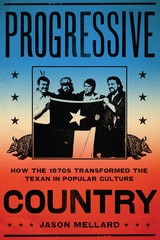
Progressive Country
How the 1970s Transformed the Texan in Popular CultureBy Jason Mellard
University of Texas Press, 2013
Winner, Coral Horton Tullis Memorial Prize, Texas State Historical Association, 2014
During the early 1970s, the nation’s turbulence was keenly reflected in Austin’s kaleidoscopic cultural movements, particularly in the city’s progressive country music scene. Capturing a pivotal chapter in American social history, Progressive Country maps the conflicted iconography of “the Texan” during the ’70s and its impact on the cultural politics of subsequent decades.
This richly textured tour spans the notion of the “cosmic cowboy,” the intellectual history of University of Texas folklore and historiography programs, and the complicated political history of late-twentieth-century Texas. Jason Mellard analyzes the complex relationship between Anglo-Texan masculinity and regional and national identities, drawing on cultural studies, American studies, and political science to trace the implications and representations of the multi-faceted personas that shaped the face of powerful social justice movements. From the death of Lyndon Johnson to Willie Nelson’s picnics, from the United Farm Workers’ marches on Austin to the spectacle of Texas Chic on the streets of New York City, Texas mattered in these years not simply as a place, but as a repository of longstanding American myths and symbols at a historic moment in which that mythology was being deeply contested.
Delivering a fresh take on the meaning and power of “the Texan” and its repercussions for American history, this detail-rich exploration reframes the implications of a populist moment that continues to inspire progressive change.
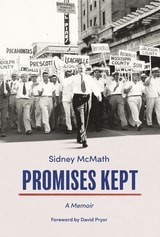
Promises Kept
A MemoirSidney S. McMath
University of Arkansas Press, 2003
Winner of the 2006 Booker Worthen Literary Prize and the 2004 Ragsdale Award
A dominating spirit of public service animated the life of Sidney Sanders McMath (1912–2003), the thirty-fourth governor of Arkansas. Promises Kept, completed and published when McMath was in his nineties, tells his story in his own words—from the piney hills of South Arkansas to the battlefields of World War II; through the human dramas of the courtroom to the marbled corridors of the State Capitol.
In Promises Kept, McMath recounts a rural upbringing that grounded him in the concerns of everyday Arkansans. He tells his life story through key milestones, including distinguished military service and a dramatic political rise to governor of Arkansas. During his four years in office, he pursued reform and modernization by expanding roads and electricity to rural areas, fighting the poll tax, building the state’s first medical center, opening Democratic primaries to Black voters, and standing with President Harry Truman in resisting the segregationist Dixiecrats. McMath’s political career ended amid unproven allegations tied to the highway program—charges he addresses directly here—and concludes with his return to the law, where landmark cases earned him honors.
Throughout, McMath reveals the excitement and the hard choices of real democracy, offering compelling human stories and a crucial perspective of a pivotal time in Arkansas history.
Property Rules
Political Economy in Chicago, 1833-1872Robin L. Einhorn
University of Chicago Press, 1991
A Choice "Outstanding Academic Book"
"[A] masterful study of policy-making in Chicago."—Choice
"[A] major contribution to urban and political history. . . . [A]n excellent book."—Jeffrey S. Adler, American Historical Review
"[A]n enlightening trip. . . . Einhorn's foray helps make sense out of the transition from Jacksonian to Gilded Age politics on the local level. . . . [She] has staked out new ground that others would do well to explore."—Arnold R. Hirsch, American Journal of Legal History
"A well-documented and informative classic on urban politics."—Daniel W. Kwong, Law Books in Review
Prostitution, Polygamy, and Power
Salt Lake City, 1847-1918Jeffrey Nichols
University of Illinois Press, 2002
Jeffrey Nichols examines how prostitution became a focal point in the moral contest between Mormons and gentiles and aided in the construction of gender systems, moral standards, and the city's physical and economic landscapes. Gentiles likened polygamy to prostitution and accused polygamous Mormons of violating Christian norms of family structure and sexual behavior. Defending their church and its ideals, Mormons blamed gentiles for introducing the sinful business of prostitution into their honorable city. Nichols traces the interplay of prostitution and reform from the 1890s, when the Church of Jesus Christ of Latter-day Saints began to move away from polygamy, to World War I, when Mormon and gentile moral codes converged at the expense of prostitutes. He also considers how the conflict over polygamy distinguished Salt Lake City from other cities struggling to abolish prostitution in the Progressive Era.
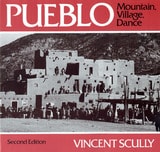
Pueblo
Mountain, Village, DanceVincent Scully
University of Chicago Press, 1989
Scully's observations, presented in lively prose and exciting photographs, are based on his own personal experiences of the Southwest; on his exploration of the region of the Rio Grande and the Hopi mesas; on his witnessing of the dances and ceremonies of the Pueblos and others; and on his research into their culture and history. He draws on the vast literature inspired by the Native Americans—from early exploration narratives to the writing of D. H. Lawrence to recent scholarship—to enrich and support his unique approach to the subject.
To this second edition Scully has added a new preface that raises issues of preservation and development. He has also written an extensive postscript that reassesses the relationship between nature and culture in Native American tradition and its relevance to contemporary architecture and landscape.
"Coming to Pueblo architecture as he does from a provocative study of sacred architecture in ancient Greece, Scully has much to say that is both striking and moving of the Pueblo attitudes toward sacred places, the arrangement of structures in space, the lives of men and beasts, and man's relation to rain, earth, vegetation."—Robert M. Adams, New York Review of Books
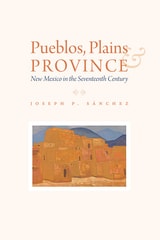
Pueblos, Plains, and Province
New Mexico in the Seventeenth CenturyJoseph P. Sánchez
University Press of Colorado, 2024
In Pueblos, Plains, and Province Joseph P. Sánchez offers an in-depth examination of sociopolitical conflict in seventeenth-century New Mexico, detailing the effects of Spanish colonial policies on settlers’, missionaries’, and Indigenous peoples’ struggle for economic and cultural control of the region. Sánchez explores the rich archival documentation that provides cultural, linguistic, and legal perspectives of the values of the period.
Spanish dual Indian policies for Pueblo and Plains tribes challenged Indigenous political and social systems to conform to the imperial structure for pacification purposes. Meanwhile, missionary efforts to supplant Indigenous religious beliefs with a Christian worldview resulted, in part, in a syncretism of the two worlds. Indigenous resentment of these policies reflected the contentious disagreements between Spanish clergymen and civil authorities, who feuded over Indigenous labor and encroachment on tribal sovereignties with demands for sworn loyalty to Spanish governance. The little-studied “starvation period” adversely affected Spanish-Pueblo relationships for the remainder of the century and contributed significantly to the battle at Acoma, the Jumano War, and the Pueblo Revolt of 1680.
Pueblos, Plains, and Province shows how history, culture, and tradition in New Mexico shaped the heritage shared by Spain, Mexico, the United States, and Native American tribes and will be of interest to scholars and students of Indigenous, colonial, and borderlands history.
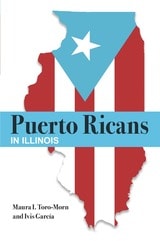
Puerto Ricans in Illinois
Maura I. Toro-Morn and Ivis Garcia
Southern Illinois University Press, 2024
As the first book to document the experiences of Puerto Ricans in the state of Illinois, this inviting book maps the pedacito de patria (little piece of home) that many Puerto Ricans have carved from the bitter hardships faced in Illinois. Authors Maura Toro-Morn and Ivis García illustrate the multiple paradoxes underlying the experience of Puerto Ricans in Illinois: an island people in a heartland state, native-born citizens living an immigrant’s experience, climate refugees in the Midwest. They live a vaivén (coming and going). This volume partially exposes these paradoxes through a narrative of common survival and achievement. Along the proud Paseo Boricua (Puerto Rican Promenade) in Chicago and in smaller cities around the state, Puerto Ricans find and create the means to keep their national identity while contributing to the health and wealth of their adopted state.
From the voices of the people, the authors offer readers an opportunity to learn about the history of Puerto Rico, the migration of Puerto Ricans to Illinois, and the cultural, economic, and political contributions of the Puerto Rican women, men, and families that call Illinois home. In Chicago and across the heartland, Puerto Ricans have negotiated the gap between home and country, mobilized state-wide against the federal government’s virtual abandonment in the aftermath of Hurricane Maria. A compelling weave of scholarship summary, archival research, and extensive sociological study including interviews conducted across the state, the book documents just how much many fail to know about a growing and transforming community in Illinois. The stories of Puerto Ricans are here.
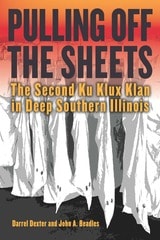
Pulling off the Sheets
The Second Ku Klux Klan in Deep Southern IllinoisDarrel Dexter and John A. Beadles
Southern Illinois University Press, 2024
WINNER, Certificate of Excellence in “Scholarly Publications” from the Illinois State Historical Society’s 2025 Best of Illinois History Awards!
Unmasking old-time racism in southern Illinois
Pulling off the Sheets tells the previously obscured history of the Second Ku Klux Klan which formed in deep southern Illinois in the early 1920s. Through meticulous research into both public and private records, Darrel Dexter and John A. Beadles recount the Klan’s mythical origins, reemergence, and swift disappearance. This important historical account sets out to expose the lasting impact of the Klan on race relations today.
The ideation of the Klan as a savior of the white race and protector of white womanhood was perpetuated by books, plays, and local news sources of the time. The very real but misplaced fear of Black violence on whites created an environment in which the Second Klan thrived, and recruitment ran rampant in communities such as the Protestant church. Events like the murder of Daisy Wilson intensified the climate of racial segregation and white supremacy in the region, and despite attempts at bringing justice to the perpetrators, most failed. The Second Klan’s presence may have been short-lived, but the violence and fear it inflicted continues to linger.
This disturbing historical account challenges readers to “pull back the sheet” and confront the darkest corners of their past. Dexter and Beadles emphasize the importance of acknowledging the damage that white supremacy and racism cause and how we can move toward healing.
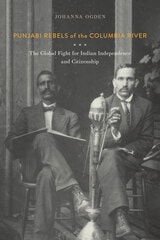
Punjabi Rebels of the Columbia River
The Global Fight for Indian Independence and CitizenshipJohanna Ogden
Oregon State University Press, 2024
Oregon is commonly perceived to have little, let alone notable, South Asian history. Yet in the early 1900s Oregon was at the center of two entwined quests for Indian independence and civic belonging that rocked the world.
Punjabi Rebels of the Columbia River traces the stories of the radical Indian independence organization known as Ghadar and Bhagat Singh Thind’s era-defining US Supreme Court citizenship case. Ghadar sought the overthrow of India’s British colonizers while Thind utilized sanctioned legal channels to do so. Despite widely differing strategies, both the movement and the man were targeted, often in coordination, by the highest levels of the US and British governments. The empires’ united message: India would not be an independent country and Indians could not be citizens. In the decades that followed, it was a verdict Indians refused to abide.
Johanna Ogden’s detailed history of migrants’ experience expands the time frame, geographic boundaries, and knowledge of the conditions and contributions of Indians in North America. It is the story of a people’s awakening amid a rich community of international workers in an age of nationalist uprisings. To understand why one of the smallest western Indian settlements became a resistance center, Punjabi Rebels mines the colonial underpinnings of labor, race, and place-making and their regional and global connections, rendering a history of whiteness and labor as much as of Indian-ness and migration. The first work to rejoin the lived experience of Thind and Ghadar activists, Punjabi Rebels complicates our understanding not just of the global fight for Indian political rights but of multi-racial democracy.

Punks in Peoria
Making a Scene in the American HeartlandJonathan Wright and Dawson Barrett
University of Illinois Press, 2021
Synonymous with American mediocrity, Peoria was fertile ground for the boredom- and anger-fueled fury of punk rock. Jonathan Wright and Dawson Barrett explore the do-it-yourself scene built by Peoria punks, performers, and scenesters in the 1980s and 1990s. From fanzines to indie record shops to renting the VFW hall for an all-ages show, Peoria's punk culture reflected the movement elsewhere, but the city's conservatism and industrial decline offered a richer-than-usual target environment for rebellion. Eyewitness accounts take readers into hangouts and long-lost venues, while interviews with the people who were there trace the ever-changing scene and varied fortunes of local legends like Caustic Defiance, Dollface, and Planes Mistaken for Stars. What emerges is a sympathetic portrait of a youth culture in search of entertainment but just as hungry for community—the shared sense of otherness that, even for one night only, could unite outsiders and discontents under the banner of music.
A raucous look at a small-city underground, Punks in Peoria takes readers off the beaten track to reveal the punk rock life as lived in Anytown, U.S.A.

Purshia
The Wild And Bitter RosesJames A. Young
University of Nevada Press, 2002
A useful and complete summary of all the scientific information available on one of the most significant plant species in the western and intermountain regions. Among the plant species of the great Basin rangeland, the Purshia—ancient members of the rose family evolved to survive the aridity and temperature extremes of this harsh region—are one of the most important. This book-length study of this key plant species provides a comprehensive examination of the biology and ecology of the species and region.
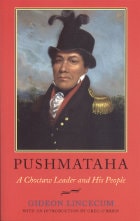
Pushmataha
A Choctaw Leader and His PeopleGideon Lincecum, with an introdution by Greg O'Brien
University of Alabama Press, 2004
Comprises two valuable, original, and difficult-to-find pieces on Choctaw history and culture that originally appeared in the 1904 and 1906 volumes of Publications of the Mississippi Historical Society
This important book comprises two articles that appeared in the 1904 and 1906 volumes of Publications of the Mississippi Historical Society. In “Life of Apushimataha,” Gideon Lincecum tells the story of Choctaw chief Pushmataha, who was born in Mississippi in 1764. A fearless warrior, his name literally means “one whose tomahawk is fatal in war or hunting.” As a charismatic leader, his foresight in making an alliance with General Andrew Jackson brought the Choctaws into war with the Creek Nation and into the War of 1812 but served to their benefit for many years with the United States government. In 1824, Pushmataha traveled to Washington, DC, to negotiate the Treaty of Doak’s Stand as pressure grew for Choctaw removal to Oklahoma Territory, but he fell ill and died there. He was buried with full military honors in the Congressional Cemetery at Arlington.
In “Choctaw Traditions about Their Settlement in Mississippi and the Origin of Their Mounds,” Lincecum translates a portion of the Skukhaanumpula—the traditional history of the tribe, which was related to him verbally by Chata Immataha, “the oldest man in the world, a man that knew everything.” It explains how and why the sacred Nanih Waya mound was erected and how the Choctaws formed new towns, and it describes the structure of leadership roles in their society.
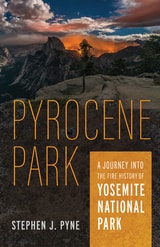
Pyrocene Park
A Journey into the Fire History of Yosemite National ParkStephen J. Pyne
University of Arizona Press, 2023
In the last decade, fire has blasted into public attention. California’s blazes have captured national and global media interest with their drama and urgency. Expand the realm of fire to include the burning of fossil fuels, and the fire story also subsumes climate change. Renowned fire historian Stephen J. Pyne argues that the relationship between fire and humans has become a defining feature of our epoch, and he reveals how Yosemite offers a cameo of how we have replaced an ice age with a fire age: the Pyrocene.
Organized around a backcountry trek to a 50-year experiment in restoring fire, Pyrocene Park describes the 150-year history of fire suppression and management that has led us, in part, to where the park is today. But there is more. Yosemite’s fire story is America’s, and the Earth’s, as it shifts from an ice-informed world to a fire-informed one. Pyrocene Park distills that epic story into a sharp miniature.
Flush with people, ideas, fires, and controversy, Pyrocene Park is a compelling and accessible window into the American fire scene and the future it promises.