Results by title
4413 books match the query 'Anthropology' and 18 start with q

Qanemcit Amllertut/Many Stories to Tell
Tales of Humans and Animals from Southwest AlaskaEdited by Ann Fienup-Riordan
University of Alaska Press, 2017
This is the first region-wide collection of traditional Yup’ik tales and stories from Southwest Alaska. The elders and translators who contributed to this collection embrace the great irony of oral traditions: that the best way to keep these stories is to give them away. By retelling these stories, they hope to create a future in which the Yup’ik view of the world will be both recognized and valued.

Qing Colonial Enterprise
Ethnography and Cartography in Early Modern ChinaLaura Hostetler
University of Chicago Press, 2001
Although mapping in China is almost as old as Chinese civilization itself, the Qing insistence on accurate, to-scale maps of their territory was a new response to the difficulties of administering a vast and growing empire. Likewise, direct observation became increasingly important to Qing ethnographic writings, such as the illustrated manuscripts known as "Miao albums" (from which twenty color paintings are reproduced in this book). These were intended to educate Qing officials about various non-Han peoples so that they could govern these groups more effectively.Hostetler's groundbreaking account will interest anyone studying the history of the early modern period and colonialism.
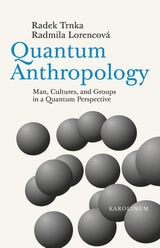
Quantum Anthropology
Man, Cultures, and Groups in a Quantum PerspectiveRadek Trnka and Radmila Lorencová
Karolinum Press, 2017

Queen for a Day
Transformistas, Beauty Queens, and the Performance of Femininity in VenezuelaMarcia Ochoa
Duke University Press, 2014
Beauty pageants play an outsized role in Venezuela. The country has won more international beauty contests than any other. The femininity performed by Venezuelan women in high-profile, widely viewed pageants defines a kind of national femininity. Ochoa argues that as transformistas and misses work to achieve the bodies, clothing and makeup styles, and postures and gestures of this national femininity, they come to embody Venezuelan modernity.

Queer Activism in India
A Story in the Anthropology of EthicsNaisargi Dave
Duke University Press, 2012
Dave argues that activism is an ethical practice comprised of critique, invention, and relational practice. Her analysis investigates the relationship between the ethics of activism and the existing social norms and conditions from which activism emerges. Through her study of different networks and institutions, Dave documents how activism oscillates between the potential for new social arrangements and the questions that arise once the activists' goals have been accomplished. Dave's book addresses a relevant and timely phenomenon and makes an important contribution to the anthropology of queer communities, social movements, affect, and ethics.

Queer Beirut
By Sofian Merabet
University of Texas Press, 2014
Gender and sexual identity formation is an ongoing anthropological conversation in both Middle Eastern studies and urban studies, but the story of gay and lesbian identity in the Middle East is only just beginning to be told. Queer Beirut is the first ethnographic study of queer lives in the Arab Middle East. Drawing on anthropology, urban studies, gender studies, queer studies, and sociocultural theory, Sofian Merabet’s compelling ethnography suggests a critical theory of gender and religious identity formations that will disrupt conventional anthropological premises about the contingent role that society and particular urban spaces have in facilitating the emergence of various subcultures within the city.
From 1995 to 2014, Merabet made a series of ethnographic journeys to Lebanon, during which he interviewed numerous gay men in Beirut. Through their life stories, Merabet crafts moving ethnographic narratives and explores how Lebanese gays inhabit and perform their gender as they formulate their sense of identity. He also examines the notion of “queer space” in Beirut and the role that this city, its class and sectarian structure, its colonial history, and religion have played in these people’s discovery and exploration of their sexualities. In using Beirut as a microcosm for the complexities of homosexual relationships in contemporary Lebanon, Queer Beirut provides a critical standpoint from which to deepen our understandings of gender rights and citizenship in the structuring of social inequality within the larger context of the Middle East.
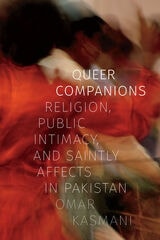
Queer Companions
Religion, Public Intimacy, and Saintly Affects in PakistanOmar Kasmani
Duke University Press, 2022
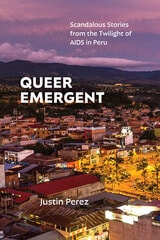
Queer Emergent
Scandalous Stories from the Twilight of AIDS in PeruJustin Perez
Duke University Press, 2025

Queer Kinship and Family Change in Taiwan
Brainer, Amy
Rutgers University Press, 2019
Interweaving the narratives of multiple family members, including parents and siblings of her queer and trans informants, Amy Brainer analyzes the strategies that families use to navigate their internal differences. In Queer Kinship and Family Change in Taiwan, Brainer looks across generational cohorts for clues about how larger social, cultural, and political shifts have materialized in people’s everyday lives. Her findings bring light to new parenting and family discourses and enduring inequalities that shape the experiences of queer and heterosexual kin alike.
Brainer’s research takes her from political marches and support group meetings to family dinner tables in cities and small towns across Taiwan. She speaks with parents and siblings who vary in whether and to what extent they have made peace with having a queer or transgender family member, and queer and trans people who vary in what they hope for and expect from their families of origin. Across these diverse life stories, Brainer uses a feminist materialist framework to illuminate struggles for personal and sexual autonomy in the intimate context of family and home.

Queer Kinship
Race, Sex, Belonging, FormTeagan Bradway and Elizabeth Freeman, editors
Duke University Press, 2022
Contributors. Aqdas Aftab, Leah Claire Allen, Teagan Bradway, Juliana Demartini Brito, Judith Butler, Dilara Çalışkan, Christopher Chamberlin, Aobo Dong, Brigitte Fielder, Elizabeth Freeman, John S. Garrison, Nat Hurley, Joseph M. Pierce, Mark Rifkin, Poulomi Saha, Kath Weston
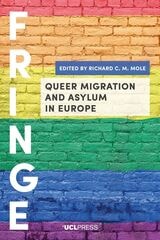
Queer Migration and Asylum in Europe
Edited by Richard C. M. Mole
University College London, 2021
Europe is a popular destination for LGBTQ people seeking to escape discrimination and persecution. Yet, while European institutions have done much to promote the legal equality of sexual minorities and a number of states pride themselves on their acceptance of sexual diversity, the image of European tolerance is often quite different from the reality faced by LGBTQ migrants and asylum seekers. Queer Migration and Asylum in Europe brings together scholars from politics, sociology, urban studies, anthropology, and law to analyze how and why queer individuals migrate to Europe, as well as the legal, social, and political frameworks they are forced to navigate in the destination societies. The subjects covered include LGBTQ Latino migrants in queer and diasporic spaces in London; the diasporic consciousness of queer Polish, Russian, and Brazilian migrants in Berlin; the role of the Council of Europe in shaping legal and policy frameworks relating to queer migration and asylum; the challenges facing bisexual asylum seekers; queer asylum and homonationalism in the Netherlands; and the role of space, faith, and LGBTQ organizations in Germany, Italy, the UK, and France in supporting queer asylum seekers.
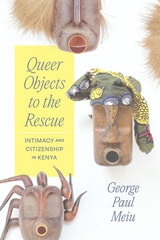
Queer Objects to the Rescue
Intimacy and Citizenship in KenyaGeorge Paul Meiu
University of Chicago Press, 2023
Campaigns calling on police and citizens to purge their countries of homosexuality have taken hold across the world. But the “homosexual threat” they claim to be addressing is not always easy to identify. To make that threat visible, leaders, media, and civil society groups have deployed certain objects as signifiers of queerness. In Kenya, for example, bead necklaces, plastics, and even diapers have come to represent the danger posed by homosexual behavior to an essentially “virile” construction of national masculinity.
In Queer Objects tothe Rescue, George Paul Meiu explores objects that have played an important and surprising role in both state-led and popular attempts to rid Kenya of various imagined threats to intimate life. Meiu shows that their use in the political imaginary has been crucial to representing the homosexual body as a societal threat and as a target of outrage, violence, and exclusion, while also crystallizing anxieties over wider political and economic instability. To effectively understand and critique homophobia, Meiu suggests, we must take these objects seriously and recognize them as potential sources for new forms of citizenship, intimacy, resistance, and belonging.
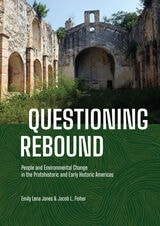
Questioning Rebound
People and Environmental Change in the Protohistoric and Early Historic AmericasEmily Lena Jones and Jacob L. Fisher
University of Utah Press, 2022
The extent of human impact on world environments is undeniable. At scales ranging from local to global, investigations continue to demonstrate that the ecosystems to which we currently belong are structured by human behavior. Catastrophic events such as war, disaster, disease, or economic decay have, at various times throughout history, led to the human abandonment of particular environments. What happens to a human-structured environment when the manner in which people use it abruptly changes? In Questioning Rebound, authors Emily Lena Jones and Jacob L. Fisher explore the archaeological record of the Americas during the period immediately following European contact, a time when the human footprint on the land abruptly shifted. During this era of disease-driven mortality, genocide, incarceration, and forced labor of Indigenous peoples, American landscapes changed in fundamental ways, producing short-lived ecosystems that later became the basis of myths regarding the natural state of environments across the Americas.
Questioning Rebound explores the record and the causes of environmental change during the period following European contact, featuring case studies throughout the Americas. While both the record for and the apparent causes of the changes in the human footprint vary, the record of post- contact environmental change consistently reflects the impacts of past social upheaval.
Questioning Secularism
Islam, Sovereignty, and the Rule of Law in Modern EgyptHussein Ali Agrama
University of Chicago Press, 2012
Questions Of Modernity
Timothy Mitchell
University of Minnesota Press, 2000
Well-known contributors offer an illuminating look at how modernity develops in non-Western contexts.
Modernity has always laid claim to universal certainty—which meant assigning a different and lesser significance to anything deemed purely local, non-Western, or lacking a universal expression. This book makes those very non-Western, non-universal elements the tools for fashioning a more complex, rigorous, and multifaceted understanding of how the modern comes about. Focusing on the making of modernity outside the West, eight leading anthropologists, historians, and political theorists explore the production of new forms of politics, sensibility, temporality, and selfhood in locations ranging from nineteenth-century Bengal to contemporary Morocco.
Topics include the therapeutics of colonial medical practice, the multiple registers of popular film, television serials and their audiences, psychiatrists and their patients, the iconic figure of the young widow, and the emergence of new political forms beyond the grasp of civil society. Contributors: Lila Abu-Lughod, Columbia U; Dipesh Chakrabarty, U of Chicago; Partha Chatterjee, Centre for Studies in Social Sciences, Calcutta; Veena Das, U of Delhi; Nicholas B. Dirks, Columbia U; Stefania Pandolfo, UC Berkeley; and Gyan Prakash, Princeton U.
Quetzalcoatl and the Irony of Empire
Myths and Prophecies in the Aztec TraditionDavid Carrasco
University of Chicago Press, 1992
"This book, rich in ideas, constituting a novel approach . . . represents a stimulating and provocative contribution to Mesoamerican studies. . . . Recommended to all serious students of the New World's most advanced indigenous civilization."—H. B. Nicholson, Man

Quiché Rebelde
Religious Conversion, Politics, and Ethnic Identity in GuatemalaBy Ricardo Falla
University of Texas Press, 2001
Since the arrival of the Spanish in the sixteenth century, the Maya population of Guatemala has been forced to adapt to extraordinary challenges. Under colonial rule, the Indians had to adapt enough to satisfy the Spanish while resisting those changes not necessary for survival, applying their understanding of the world to the realities they confronted daily. Despite the major changes wrought in their way of life by centuries of submission, the Maya have managed to regenerate, and thus maintain, their self-identity.
Among the major challenges they have faced has been the imposition of outside religions. Quiché Rebelde examines what happened when Acción Católica came into the Guatemalan municipio of San Antonio Ilotenango, Quiché, to convert its inhabitants.
Ricardo Falla, a Guatemalan Jesuit priest and anthropologist, analyzes the movement's origins and why some people became part of it while others resisted. He shows how religion was used as another tool to readapt to the changing environment—natural, economic, political, and social. His work is the first major empirical study of how change occurred in a Maya community with no serious loss of Maya identity—and how the process of conversion is related to more general processes of cultural change that actually strengthen ethnic identity.
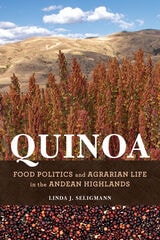
Quinoa
Food Politics and Agrarian Life in the Andean HighlandsLinda J. Seligmann
University of Illinois Press, 2023
The untold story behind the popular health food, Quinoa illuminates how Indigenous communities have engaged with the politics and policies surrounding their production of a traditional and minor crop that became a global foodstuff.