Results by title
935 books match the query 'Ancient' and 46 start with r

READING THUCYDIDES
James V. Morrison
The Ohio State University Press, 2006
Ramesses III
The Life and Times of Egypt's Last HeroEdited by Eric H. Cline and David O'Connor
University of Michigan Press, 2012

Reading Akkadian Prayers and Hymns
An IntroductionAlan Lenzi
SBL Press, 2011
A thorough text for students of ancient Mesopotamian religion and the Hebrew Bible
Alan Lenzi places Akkadian prayers and hymns within both a religious studies perspective and a Mesopotamian studies perspective. Complete with vocabulary glosses, grammatical notes, literary commentary, and comparative suggestions to biblical material, this book provides a crucial tool for accessing ancient texts related to our understanding of the Hebrew Bible.
Features:
- Background essays
- Discussion of classes of Mesopotamian prayers and their comparative use in biblical studies
- Akkadian text, transliteration, translation, and commentary
- Notes on vocabulary and grammar
Alan Lenziis Associate Professor of Hebrew Bible and Ancient Near East at University of the Pacific. He is the author of Secrecy and the Gods: Secret Knowledge in Ancient Mesopotamia and Biblical Israel (Neo-Assyrian Text Corpus Project).
Reading Death in Ancient Rome
Mario Erasmo
The Ohio State University Press, 2008
Reading Greek with Jonah
A Mini-Course in Ancient GreekJames McDonough
Catholic University of America Press, 2026
Reading Virgil and His Texts
Studies in IntertextualityRichard F. Thomas
University of Michigan Press, 2000
The articles and notes included in this volume have been selected for their diachronic aspect in addition to the synchronic status they had in their original context. Dealing with the intricate ways in which Virgil, and in the introductory chapter his predecessor Catullus, manipulated and appropriated their inherited Greek and Roman literary tradition, this book presents a coherent profile, through these detailed studies, of the mechanics of one of the most dynamic periods in the literary history of any culture.
Richard Thomas--one of the most important voices in Latin literary studies today--shows little anxiety about objections to authorial intentionality. Throughout there is a working assumption that intertextual connections can be established and, further, that functions and purposes, even intended ones, may be inferred from those connections.
This book will be of interest to scholars and students of Greek and Latin literature but will also be of great value to students of medieval, Renaissance, and early modern vernacular literatures, most of whose poets see themselves as closely connected to Virgil.
Richard F. Thomas is Professor of Greek and Latin, Harvard University.
Reading and Teaching Ancient Fiction
Jewish, Christian, and Greco-Roman NarrativesSara R. Johnson
SBL Press, 2018
The third volume of research on ancient fiction
This volume includes essays presented in the Ancient Fiction and Early Christian and Jewish Narrative section of the Society of Biblical Literature. Contributors explore facets of ongoing research into the interplay of history, fiction, and narrative in ancient Greco-Roman, Jewish, and Christian texts. The essays examine the ways in which ancient authors in a variety of genre and cultural settings employed a range of narrative strategies to reflect on pressing contemporary issues, to shape community identity, or to provide moral and educational guidance for their readers. Not content merely to offer new insights, this volume also highlights strategies for integrating the fruits of this research into the university classroom and beyond.
Features
- Insight into the latest developments in ancient Mediterranean narrative
- Exploration of how to use ancient texts to encourage students to examine assumptions about ancient gender and sexuality or to view familiar texts from a new perspective
- Close readings of classical authors as well as canonical and noncanonical Jewish and Christian texts
Reciprocity, Truth, and Gender in Pindar and Aeschylus
Arum Park
University of Michigan Press, 2023
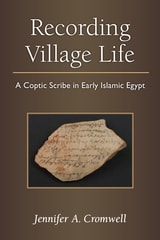
Recording Village Life
A Coptic Scribe in Early Islamic EgyptJennifer A. Cromwell
University of Michigan Press, 2017
Papyrological analysis of Aristophanes’ documents, within the context of the textual record of the village, shows a new and divergent scribal practice that reflects broader trends among his contemporaries: Aristophanes was part of a larger, national system of administrative changes, enacted by the country’s Arab rulers in order to better control administrative practices and fiscal policies within the country. Yet Aristophanes’ dossier shows him not just as an administrator, revealing details about his life, his role in the community, and the elite networks within which he operated. This unique perspective provides new insights into both the micro-history of an individual’s experience of eighth-century Theban village life, and its reflection in the macro social, economic, and political trends in Egypt at this time.
This book will prove valuable to scholars of late antique studies, papyrology, philology, early Islamic history, social and economic history, and Egyptology.
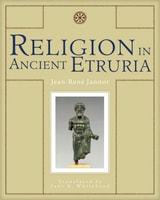
Religion in Ancient Etruria
Jean-René Jannot, Translated by Jane K. Whitehead
University of Wisconsin Press, 2005
Provocative insights and thoughtful discussions contribute to an understanding of the prophetic nature of Etruscan culture. Jannot investigates the elaborate systems of defining space and time that so distinctly characterize this ancient society. Religion in Ancient Etruria offers a unique perspective that illuminates the origins of some of our own "modern" religious beliefs.
This updated edition includes more than 100 illustrations that demonstrate early temples, statues, mirrors, tablets, and sculptures.
1998 French edition, Picard
Religion in Ancient Mesopotamia
Jean Bottéro
University of Chicago Press, 2001
Religion, Empire, and Torture
The Case of Achaemenian Persia, with a Postscript on Abu GhraibBruce Lincoln
University of Chicago Press, 2007
Lincoln identifies three core components of an imperial theology that have transhistorical and contemporary relevance: dualistic ethics, a theory of divine election, and a sense of salvific mission. Beyond this, he asks, how did the Achaemenians understand their place in the cosmos and their moral status in relation to others? Why did they feel called to intervene in the struggle between good and evil? What was their sense of historic purpose, especially their desire to restore paradise lost? And how did this lead them to deal with enemies and critics as imperial power ran its course? Lincoln shows how these religious ideas shaped Achaemenian practice and brought the Persians unprecedented wealth, power, and territory, but also produced unmanageable contradictions, as in a gruesome case of torture discussed in the book’s final chapter. Close study of that episode leads Lincoln back to the present with a postscript that provides a searing and utterly novel perspective on the photographs from Abu Ghraib.
Religious Competition in the Greco-Roman World
Nathaniel P. DesRosiers
SBL Press, 2016
Essays that broaden the historical scope and sharpen the parameters of competitive discourses
Scholars in the fields of late antique Christianity, neoplatonism, New Testament, art history, and rabbinics examine issues related to authority, identity, and change in religious and philosophical traditions of late antiquity. The specific focus of the volume is the examination of cultural producers and their particular viewpoints and agendas in an attempt to shed new light on the religious thinkers, texts, and material remains of late antiquity. The essays explore the major creative movements of the era, examining the strategies used to develop and designate orthodoxies and orthopraxies. This collection of essays reinterprets dialogues between individuals and groups, illuminating the mutual competition and influence among these ancient thinkers and communities.
Features:
- Essays feature competitive discourse as the central organizing theme
- Articles present unique theoretical models that are adaptable to different contexts and highly applicable to religious discourses before and after the Late Antique Period
- Scholars cover a much wider range of traditions including Judaism, Christianity, paganism, and philosophy in order to provide the most complete portrait of the religious landscape
Repeat Performances
Ovidian Repetition and the <i>Metamorphoses<i/>Edited by Laurel Fulkerson and Tim Stover
University of Wisconsin Press, 2016
A shared vision of the possibilities of Latin epic poetry unites the essays, as does a series of attempts to realize those opportunities. Some of the pieces represent a traditional vein of allusion and intertextuality; others are more innovative in their approaches. Each, in a sense, stands as a placeholder for a methodology of theorizing the repetitive practices of poetry, of epic, and of Ovid in particular.
Contributors: Antony Augoustakis, Neil W. Bernstein, Barbara Weiden Boyd, Andrew Feldherr, Peter Heslin, Stephen Hinds, Sharon L. James, Alison Keith, Peter E. Knox, Darcy Krasne
Responses to Oliver Stone’s Alexander
Film, History, and Cultural StudiesEdited by Paul Cartledge and Fiona Rose Greenland; Afterword by Oliver Stone
University of Wisconsin Press, 2009
This volume brings together an intriguing mix of leading scholars in Macedonian and Greek history, Persian culture, film studies, classical literature, and archaeology—including some who were advisors for the film—and includes an afterword by Oliver Stone discussing the challenges he faced in putting Alexander’s life on the big screen. The contributors scrutinize Stone’s project from its inception and design to its production and reception, considering such questions as: Can a film about Alexander (and similar figures from history) be both entertaining and historically sound? How do the goals of screenwriters and directors differ from those of historians? How do Alexander’s personal relationships—with his mother Olympias, his wife Roxane, his lover Hephaistion, and others—affect modern perceptions of Alexander? Several of the contributors also explore reasons behind the film’s tepid response at the box office and subsequent controversies.
Retelling the Siege of Jerusalem in Early Modern England
Vanita Neelakanta
University of Delaware Press, 2019
Published by University of Delaware Press. Distributed worldwide by Rutgers University Press.

Rethinking Reality
Lucretius and the Textualization of NatureDuncan F. Kennedy
University of Michigan Press, 2002
The book engages in a sustained argument about realist assumptions in scientific and other discourses through detailed analysis and discussion of some of the most important recent contributions to this debate. Engaging sympathetically but not uncritically with constructivist accounts of scientific knowledge, the book takes up a sustained critique of recent contributions to that debate, including those of Ian Hacking, Evelyn Fox Keller, Bruno Latour, and Hans-Jörg Rheinberger. What are the implications of regarding such knowledge as "discovered" or "invented"? How is the rhetoric of such claims to be identified and the pretentions of those claims assessed?In what ways can realist and constructivist approaches be reconciled? How do these considerations affect the way we read scientific texts from the past and regard them historically?
What emerges is a fresh and challenging assessment of the role of time and temporal perspective in assessing claims to knowledge in scientific thought and of the importance of textuality to the history of knowledge. A wide variety of readers, from classicists and intellectual historians to epistemologists of science, will enjoy and learn from Rethinking Reality.
Duncan Kennedy is Reader in Latin Literature and the Theory of Criticism, University of Bristol. He is also the author of The Arts of Love: Five Studies in the Discourse of Roman Love Elegy.
Revolution Squared
Tahrir, Political Possibilities, and Counterrevolution in EgyptAtef Shahat Said
Duke University Press, 2024

Revolution
Modern Uprisings in Ancient TimeMiriam Leonard
University of Chicago Press, 2025
Despite its Latin etymology, “revolution” in its modern understanding arguably did not exist in antiquity, and revolution as we know it today is considered by many theorists to be a term born in modernity. While they certainly had times of momentous political upheaval, the Greeks and Romans tended to understand such events as part of a narrative of political continuity rather than novelty or rupture. Nevertheless, modern revolutions have repeatedly appropriated tropes of classical discourse, such as freedom, tyranny, tragedy, and fraternity.
With this book, Miriam Leonard offers a conceptual history of revolution, unraveling modernity’s yearning for the new and questioning why ancient concepts continue to play such an important role in political uprisings. Leonard looks at examples of appeals to antiquity during the French and Haitian Revolutions, in anticolonial struggles, and feminist and queer movements and considers works of theorists such as Karl Marx, Hannah Arendt, and Sigmund Freud that foreground an engagement with antiquity.
Revolutionizing a World
From Small States to Universalism in the Pre-Islamic Near EastMark Altaweel and Andrea Squitieri
University College London, 2018
The authors argue that the persistence of large states and empires starting in the eighth/seventh centuries BCE, which continued for many centuries, led to new sociopolitical structures and institutions emerging in the Near East. The primary processes that enabled this emergence were large-scale and long-distance movements, or population migrations. These patterns of social developments are analyzed under different aspects: settlement patterns, urban structure, material culture, trade, governance, language spread, and religion, all pointing at movement as the main catalyst for social change. This book’s argument is framed within a larger theoretical framework termed as "universalism," a theory that explains many of the social transformations that happened to societies in the Near East, starting from the Neo-Assyrian period and continuing for centuries. Among other influences, the effects of these transformations are today manifested in modern languages, concepts of government, universal religions and monetized and globalized economies.
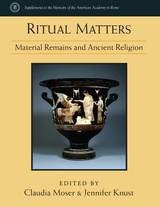
Ritual Matters
Material Remains and Ancient ReligionClaudia Moser and Jennifer Knust, editors
University of Michigan Press, 2017
Material remains of religious practices may reveal striking local continuity, but they also highlight points of change, as distinct moments of manufacture and use transformed both sites and objects. Yet not every religious practice leaves a trace: the embodied use of imperial statuary, the rationale for the design of particular sacred books or the ephemeral “magical” implements designed by local religious experts leave few traces, if any, and are therefore less amenable to material investigation. What does remain, however, challenges any neat association between representation and reality or literary claim and practical application.
This volume represents a significant contribution to the material approach of studying the ancient Mediterranean’s diverse religious practices. In addition to volume editors Claudia Moser and Jennifer Knust, contributors include Henri Duday, Gunnel Ekroth, David Frankfurter, Richard Gordon, Valérie Huet, William Van Andringa, and Zsuzsanna Várhelyi. Topics covered include funerary remains, sacrificial practices, “magic,” Roman altars, imperial reliefs and statuary, and the role of sacred books.
Rival Praises
Ovid and the Metamorphosis of the Hymnic TraditionCelia M. Campbell
University of Wisconsin Press, 2024
Role Models in the Roman World
Identity and AssimilationSinclair Bell and Inge Lyse Hansen, Editors
University of Michigan Press, 2008
Roman Aristocrats in Barbarian Gaul
Strategies for Survival in an Age of TransitionBy Ralph W. Mathisen
University of Texas Press, 1992
Skin-clad barbarians ransacking Rome remains a popular image of the "decline and fall" of the Roman Empire, but why, when, and how the Empire actually fell are still matters of debate among students of classical history. In this pioneering study, Ralph W. Mathisen examines the "fall" in one part of the western Empire, Gaul, to better understand the shift from Roman to Germanic power that occurred in the region during the fifth century AD.
Mathisen uncovers two apparently contradictory trends. First, he finds that barbarian settlement did provoke significant changes in Gaul, including the disappearance of most secular offices under the Roman imperial administration, the appropriation of land and social influence by the barbarians, and a rise in the overall level of violence. Yet he also shows that the Roman aristocrats proved remarkably adept at retaining their rank and status. How did the aristocracy hold on?
Mathisen rejects traditional explanations and demonstrates that rather than simply opposing the barbarians, or passively accepting them, the Roman aristocrats directly responded to them in various ways. Some left Gaul. Others tried to ignore the changes wrought by the newcomers. Still others directly collaborated with the barbarians, looking to them as patrons and holding office in barbarian governments. Most significantly, however, many were willing to change the criteria that determined membership in the aristocracy. Two new characteristics of the Roman aristocracy in fifth-century Gaul were careers in the church and greater emphasis on classical literary culture.
These findings shed new light on an age in transition. Mathisen's theory that barbarian integration into Roman society was a collaborative process rather than a conquest is sure to provoke much thought and debate. All historians who study the process of power transfer from native to alien elites will want to consult this work.

Roman Art in the Private Sphere
New Perspectives on the Architecture and Decor of the Domus, Villa, and InsulaElaine K. Gazda, Editor
University of Michigan Press, 1991
The essays treat works of art that belonged to every major Roman housing type: the single-family atrium houses and the insula apartment blocks in Italian cities, the dramatically sited villas of the Campanian coast and countryside, and the palatial mansions of late antique provincial aristocrats.
In a complementary fashion the essays consider domestic art in relation to questions of decorum, status, wealth, social privilege, and obligation. Patrons emerge as actively interested in the character of their surroundings; artists appear as responsive to the desire of their patrons. The evidence in private art of homosexual conduct in high society is also set forth.
Originality of subject matter, sophisticated appreciation of stylistic and compositional nuance, and philosophical perceptions of the relationship of humanity and nature are among the themes that the essays explore. Together they demonstrate that Roman domestic art must be viewed on its own terms.
Elaine K. Gazda is Professor of the History of Art and Curator of Hellenistic and Roman Antiquities at the Kelsey Museum of Archaeology, University of Michigan.
Roman Art in the Private Sphere
New Perspectives on the Architecture and Decor of the Domus, Villa, and InsulaElaine K. Gazda, Editor
University of Michigan Press, 2010
---Classical Review
---Classical World
Roman Artists, Patrons, and Public Consumption
Familiar Works ReconsideredBrenda Longfellow and Ellen E. Perry, editors
University of Michigan Press, 2018
The work gathered in Roman Artists, Patrons, and Public Consumption displays the breadth and depth of scholarship in the field made possible by these fundamental changes. The first five essays approach individual objects and artistic tropes, as well as their cultural contexts and functions, from fresh and dynamic angles. The latter essays focus on case studies in Pompeii, demonstrating how close visual analysis firmly rooted in local and temporal contexts not only strengthens understanding of ancient interactions with monuments but also sparks a reconsideration of long-held assumptions reinforced by earlier scholarship.
These rigorous essays reflect and honor the groundbreaking scholarship of Elaine K. Gazda. In addition to volume editors Brenda Longfellow and Ellen E. Perry, contributors include Bettina Bergmann, Elise Friedland, Barbara Kellum, Diana Y. Ng, Jessica Powers, Melanie Grunow Sobocinski, Lea M. Stirling, Molly Swetnam-Burland, Elizabeth Wolfram Thill, and Jennifer Trimble.
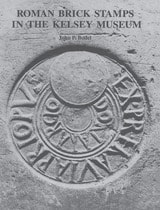
Roman Brick Stamps in the Kelsey Museum
John P. Bodel
University of Michigan Press, 1983
Roman Coins and Public Life under the Empire
E. Togo Salmon Papers IIGeorge M. Paul and Michael Ierardi, Editors
University of Michigan Press, 1999
Coins are a unique source of information about the Roman world. In the case of the Roman Empire they were issued by or with the approval of the ruling power. The representations and legends they show therefore present an official view of contemporary affairs. The coins themselves, minted for official purposes such as paying the army, when studied carefully can help reconstruct official policies. They can also occasionally reveal what monuments now lost may have looked like.
It is not infrequent to come across pleas that the ancient historian should make more frequent use of numismatic evidence. These essays make clear that efforts are being made both by numismatists and by historians to bring the two disciplines together. At the same time the papers reveal that the task is by no means a straightforward one. The survival of Roman coins is variable, and so attempts to reconstruct the size and distribution of issues calls for skilled and experienced analysis. This collection of papers provides evidence for the kind of deductions that the historian may make from Roman coins as well as the illustrations of the pitfalls that await the unwary.
Those interested in Roman history, amateur coin collectors, and professional numismatists will all find much here to widen their knowledge of the public context of Roman coins.
George Paul is Professor of Classics, McMaster University. Michael Ierardi is Lecturer in Classics, McMaster University.
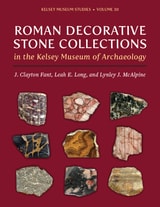
Roman Decorative Stone Collections in the Kelsey Museum of Archaeology
J. Clayton Fant, Leah E. Long, and Lynley J. McAlpine
University of Michigan Press, 2024
In keeping with the nature of the collection, Roman Decorative Stone Collections focuses on archaeological contexts and object biographies, from the stones’ first use to their eventual display in the Kelsey Museum. Entries are accompanied by rich photographs detailing the stones’ appearances, environmental factors, and their collectors. The fully illustrated catalog includes essays deriving from Kelsey’s original notes on sources, buildings, sites, and dealers. As the first formal catalog of these items, Roman Decorative Stone Collections is an accessible resource of Roman archaeology, antiquities, and the decorative arts.
Roman Family Festivals
Fanny Dolansky
University of Michigan Press, 2027
Fanny Dolansky’s Roman Family Festivals explores the vital role religious ritual played in domestic life for Roman families from 200 BCE to 200 CE. Seven festivals, from the Parentalia in February to the Saturnalia in December, are reconstructed and analyzed from varied perspectives, including those of men, women, and children who were free, enslaved, or formerly enslaved. The festivals addressed key concerns for families such as relations between freeborn and enslaved members of the household, spouses, adults and children, and the living and the dead, and played an important role in the ongoing processes of socialization and enculturation of Roman identity. Integrating literary, epigraphic, papyrological, archaeological, and art historical sources, the study pays careful attention to the critical categories of age, gender, and juridical status to understand better who celebrated the festivals and how, and what their participation meant to them individually and to the collective. Roman Family Festivals demonstrates the longevity of family festivals and their continued relevance in late antiquity, despite a rapidly changing religious and cultural landscape.

Roman Military Diplomas VI
Edited by Paul Holder
University of London Press, 2024
Each of the 179 diplomas collected here has been cataloged, transcribed, and reconstructed alongside information relating to its physical description, findspot, state of preservation, current location, and new readings, helping to illuminate everything from the commanders of units to the social lives of soldiers. The volume also includes a revised chronology of the diplomas, appendices providing important criteria in dating the fragments, comprehensive indices of witnesses, persons, places, and units, and—for the first time—a table of concordances enabling concurrent work with previous volumes in the Roman Military Diplomas series. Collectively, the volume offers new insights into Roman military procedures and personnel, the social and legal status of soldiers, and the afterlife of the diplomas. It is an essential reference tool for anyone researching Roman imperial history, the Roman army, and the Roman study of ancient inscriptions.
Roman Military Law
By C. E. Brand
University of Texas Press, 1968
Rome was the law-giver for much of the modern world. She was also the greatest military power of antiquity, operating her military organization with remarkable efficiency and effectiveness throughout most of the then-known world. In view of the importance of both the legal and military aspects of the Roman Empire, an account of their combination in a system of disciplinary control for the Roman armies is of considerable significance to historians in both fields—and, in fact, to scholars in general. In Roman Military Law, C. E. Brand describes this system of control.
Since a characterization of such a system can be made most meaningful only against a background of Roman constitutional government and in the light of ideologies current at the time, Brand follows his initial “Note on Sources” with a sketch of the contemporary Roman scene. This first section includes a discussion of the Roman constitution and an examination of Roman criminal law.
The history of Rome, as a republic, principate, and empire, extended over a period of a thousand years, so any attempt to represent a generalized picture must be essentially a matter of extraction and condensation from the voluminous literature of the whole era. Nevertheless, from the fantastic evolution that is the history of Rome, Brand has been able to construct a more or less static historical mosaic that may be considered typically “Roman.” This comes into sharpest focus during the period of the Punic Wars, when the city and its people were most intensely Roman. The picture of the Roman armies is set into this basic framework, in chapters dealing with military organization, disciplinary organization, religion and discipline, and offenses and punishments.
The final section of the book considers briefly the vast changes in Roman institutions that came about under the armies of the Empire, and then concludes with the Latin text and an English translation of the only known code of Roman military justice, promulgated sometime during the later Empire, preserved in Byzantine literature, and handed down to medieval times in Latin translations of Byzantine Greek law, which it has heretofore been confused.
Roman Political Ideas and Practice
F. E. Adcock
University of Michigan Press, 1964
Roman Propertius and the Reinvention of Elegy
Jeri Blair DeBrohun
University of Michigan Press, 2003
DeBrohun finds the most striking element of Book 4 to be the apparent polarity of the poems, whose themes are split between new, aetiological subjects of Roman national significance and amatory affairs that evoke the themes of Propertius' first three books. In her compelling reassessment of Propertius' aspirations in Book 4, DeBrohun identifies the conflict between his new ambitions to produce Roman aetiological elegy and his traditional, exclusive devotion to erotic concerns as the central dynamic of his collection. Roman Propertius and the Reinvention of Elegy reveals how the poet came to find in the subcodes of the elegiac genre a medium of interaction between the opposing values of the two themes.
Roman Propertius will interest not only scholars and students of Greek and Roman Poetry but also students of later traditions who are interested in the questions of genre and the relationship between poetry and wider cultural discourses.
Jeri Blair DeBrohun is Associate Professor of Classics, Brown University.
Roman Siege Warfare
Josh Levithan
University of Michigan Press, 2013
Roman siege warfare had its own structure and customs, and expectations both by the besieged and by the attacking army. Sieges are typically sorted by the techniques and technologies that attackers used, but the more fruitful approach offered in Roman Siege Warfare examines the way a siege follows or diverges from typical narrative and operational plotlines. Author Josh Levithan emphasizes the human elements—morale and motivation—rather than the engineering, and he recaptures the sense of a siege as an event in progress that offers numerous attitudes, methods, and outcomes. Sieges involved a concentration of violent effort in space and the practical challenge posed by a high wall: unlike field battles they were sharply defined in time, in space, and in operational terms.
Chapters examine motivation and behavior during a siege and focus on examples from both the Roman Republic and the Empire: Polybius, Livy, Julius Caesar, Flavius Josephus, and Ammianus Marcellinus. Levithan examines the “gadgetary turn,” during which writers began to lavish attention on artillery and wall-damaging techniques, fetishizing technology and obscuring the centrality of the assault and of human behavior.
This volume speaks to classicists and historians of all stripes. All passages are translated, and references are accessible to nonspecialists. Military historians will also find much of interest in the volume, in its treatment both of Roman military conduct and of wider military practice.
Roman Theater and Society
E. Togo Salmon Papers IWilliam J. Slater, Editor
University of Michigan Press, 1996
William Slater's new volume Roman Theater and Society brings an important perspective to the much-maligned status of the Roman theater, which has only recently been reappraised and appreciated as uniquely Roman rather than criticized for not being Greek. From this point of embarkation, William Slater and the nine contributors discuss theater in Rome and the Greek east with a definition of performance incorporating not only stage performances but also dinnertime entertainment, sporting events, and political events. Contributors are T. D. Barnes, K. M. Coleman, J. C. Edmonson, E. R. Gebhard, J. R. Green, E. J. Jory, W. D. Lebek, and D. S. Potter.
Individual chapters combine literary evidence with archaeological, thereby engendering a deeper appreciation for the social and political roles of Roman theater. It becomes clear that these roles were of great influence in giving voice to the popular demands of the average Roman. In examining the roles of theater the contributors turn to the players and audience themselves for deeper understanding.
Roman Theater and Society will be of great interest to classicists, theater specialists, and anyone interested in the interplay among plays, theaters, and the people on stage and in the audience.
William J. Slater is Professor of Classics, McMaster University.
Roman Voting Assemblies
From the Hannibalic War to the Dictatorship of CaesarLily Ross Taylor
University of Michigan Press, 1991
Roman Women
Edited by Augusto Fraschetti
University of Chicago Press, 2001
Through this investigation, we encounter a number of idiosyncratic personalities. They include the vestal virgin Claudia; Cornelia, a matron; the passionate Fulvia; a mime known as "Lycoris"; the politician Livia; the martyr and writer Vibia Perpetua; a hostess named Helena Augusta; the intellectual Hypatia; and the saint Melania the Younger. Unlike their silent female counterparts, these women stood out in a culture where it was terribly difficult and odd to do so.
Romans and Barbarians
The Decline of the Western EmpireE. A. Thompson
University of Wisconsin Press, 2002
Available for the first time in paperback, this classic work by renowned historian E.A. Thompson examines the fall of the Roman Empire in the West from the barbarian perspective and experience. Standard interpretations of the decline of the Roman Empire in the West view the barbarian invaders as destroyers. Thompson, however, argues that the relationship between the invaders and the invaded was far more complex than the common interpretation would suggest. This edition includes a new foreword by F.M. Clover and J.H.W.G. Liebeschuetz.
Romans in a New World
Classical Models in Sixteenth-Century Spanish AmericaDavid A. Lupher
University of Michigan Press, 2006
In the course of this debate, many Spaniards were inspired to think more deeply on their own ethnic ancestry and identity, as Spanish treatment of the New World natives awakened the slumbering memory of Roman treatment of the Iberian tribes whom modern Spaniards were now embracing as their truest ancestors. At the same time, growing awareness of the cultural practices--especially the religious rituals--of the American natives framed a new perspective on both the pre-Christian ancestors of modern Europeans and even on the survival of "pagan" customs among modern Europeans themselves. In this incisive study, David A. Lupher addresses the increasingly debated question of the impact the discovery of the New World had upon Europeans' perceptions of their identity and place in history.
Romans in a New World holds much to interest both classicists and students of the history and culture of early modern Europe--especially, though not exclusively, historians of Spain. David A. Lupher's concern with the ideology of imperialism and colonization and with cross-cultural negotiations will be useful to students of cultural studies, as well.
David A. Lupher is Professor of Classics, University of Puget Sound.

Rome's Visceral Reactions
Politics and Poetics in Flesh and BloodCaitlin Hines
University of Michigan Press, 2026
Caitlin Hines follows the history of viscera from its earliest attestations through the end of the Julio-Claudian period and considers the works of Lucretius, Cicero, Vergil, Livy, Ovid, Seneca, and Lucan. Applying theories of embodied cognition and semantic change, Hines demonstrates how Roman authors influenced the development of their language through the invention, reception, and affirmation of innovative meanings and how pressing political and cultural crises could shape, and be shaped in return, by the sophisticated linguistic games of the Roman literary elite.
Rome
A City out of PrintRose Marie San Juan
University of Minnesota Press, 2001
Royal Apologetic in the Ancient Near East
Andrew Knapp
SBL Press, 2015
A fresh exploration of apologetic material that pushes beyond form criticism
Andrew Knapp applies modern genre theory to seven ancient Near Eastern royal apologies that served to defend the legitimacy of kings who came to power under irregular circumstances. Knapp examines texts and inscriptions related to Telipinu, Hattusili III, David, Solomon, Hazael, Esarhaddon, and Nabonidus to identify transhistorical common issues that unite each discourse.
Features:
- Compares Hittite, Israelite, Aramean, Assyrian, and Babylonian apologies
- Examination of apologetic as a mode instead of a genre
- Charts and illustrations
Royal Hittite Instructions and Related Administrative Texts
Jared L. Miller
SBL Press, 2013
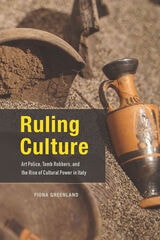
Ruling Culture
Art Police, Tomb Robbers, and the Rise of Cultural Power in ItalyFiona Greenland
University of Chicago Press, 2021
In 2006, the then-president of Italy declared his country to be “the world’s greatest cultural power.” With Ruling Culture, Fiona Greenland traces how Italy came to wield such extensive legal authority, global power, and cultural influence—from the nineteenth century unification of Italy and the passage of novel heritage laws, to current battles with the international art market. Today, Italy’s belief in its cultural superiority is evident through interactions between citizens, material culture, and the state—crystallized in the Art Squad, the highly visible military-police art protection unit. Greenland reveals the contemporary actors in this tale, taking a close look at the Art Squad and state archaeologists on one side and unauthorized excavators, thieves, and smugglers on the other. Drawing on years in Italy interviewing key figures and following leads, Greenland presents a multifaceted story of art crime, cultural diplomacy, and struggles between international powers.