343 books match the query 'Capitalism' and 16 start with r
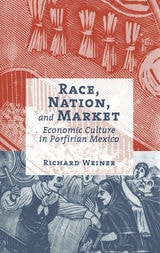
cover of Race, Nation, and Market: Economic Culture in Porfirian Mexico

Race, Nation, and Market

Economic Culture in Porfirian Mexico

Richard Weiner

University of Arizona Press, 2004
Prior to the Revolution of 1910, economic ideals were a dominant mode of political and social discourse in Mexico. Scholars have focused considerable attention on the expansion of the market economy during this period—particularly its political, economic, and social importance. Richard Weiner now enhances our understanding of the emergence of modern Mexico by exploring the market's immense symbolic significance. Race, Nation, and Market traces the intellectual strands of economic thought during the late Porfiriato. Even in the face of Díaz's political reign, the market became the dominant theme in national discourse as contemporaries of all political persuasions underscored its social and cultural effects. This work documents the ways in which liberals, radicals, and conservatives employed market rhetoric to establish their political identities and map out their courses of action, and it shows how the market became an emblem linked to the identity of each group. Weiner explains how the dominant political interests—the científicos, the Mexican Liberal Party, and the social Catholics—each conceived economic issues, and he compares how they rhetorically used their conceptions of the market to promote their political objectives. Some worshiped it as a deity that created social peace, political harmony, and material abundance, while others demonized it as a source of social destruction. Weiner delineates their approaches and reveals how distinct notions of race, gender, community, and nationality informed economic culture and contradicted a laissez-faire conception of society and economy. By focusing on these rhetorical contests, Race, Nation, and Market offers a new perspective on social mobilization in late nineteenth-century Mexico as it also explores the related field of Porfirian economic culture and thought, about which little thus far has been written. In the face of today's controversy over globalization, it offers a unique historical perspective on the market's long-standing significance to political activism.
[more]
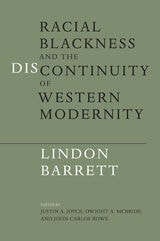
cover of Racial Blackness and the Discontinuity of Western Modernity

Racial Blackness and the Discontinuity of Western Modernity

Edited by Justin A. Joyce, Dwight A. McBride, and John Carlos Rowe

University of Illinois Press, 2013
The unfinished manuscript of literary and cultural theorist Lindon Barrett, this study offers a genealogy of how the development of racial blackness within the mercantile capitalist system of Euro-American colonial imperialism was constitutive of Western modernity. Masterfully connecting historical systems of racial slavery to post-Enlightenment modernity, this pathbreaking publication shows how Western modernity depended on a particular conception of racism contested by African American writers and intellectuals from the eighteenth century to the Harlem Renaissance.

[more]
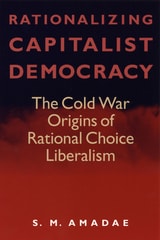
cover of Rationalizing Capitalist Democracy: The Cold War Origins of Rational Choice Liberalism

Rationalizing Capitalist Democracy

The Cold War Origins of Rational Choice Liberalism

S.M. Amadae

University of Chicago Press, 2003
In Rationalizing Capitalist Democracy, S. M. Amadae tells the remarkable story of how rational choice theory rose from obscurity to become the intellectual bulwark of capitalist democracy. Amadae roots Rationalizing Capitalist Democracy in the turbulent post-World War II era, showing how rational choice theory grew out of the RAND Corporation's efforts to develop a "science" of military and policy decisionmaking. But while the first generation of rational choice theorists—William Riker, Kenneth Arrow, and James Buchanan—were committed to constructing a "scientific" approach to social science research, they were also deeply committed to defending American democracy from its Marxist critics. Amadae reveals not only how the ideological battles of the Cold War shaped their ideas but also how those ideas may today be undermining the very notion of individual liberty they were created to defend.
[more]
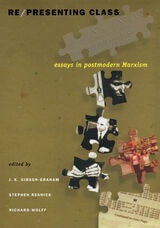
cover of Re/presenting Class: Essays in Postmodern Marxism

Re/presenting Class

Essays in Postmodern Marxism

J . K. Gibson-Graham, Stephen Resnick, and Richard Wolff, eds.

Duke University Press, 2001

Re/presenting Class is a collection of essays that develops a poststructuralist Marxian conception of class in order to theorize the complex contemporary economic terrain. Both building upon and reconsidering a tradition that Stephen Resnick and Richard Wolff—two of this volume’s editors—began in the late 1980s with their groundbreaking work Knowledge and Class, contributors aim to correct previous research that has largely failed to place class as a central theme in economic analysis. Suggesting the possibility of a new politics of the economy, the collection as a whole focuses on the diversity and contingency of economic relations and processes.
Investigating a wide range of cases, the essays illuminate, for instance, the organizational and cultural means by which unmeasured surpluses—labor that occurs outside the formal workplace‚ such as domestic work—are distributed and put to use. Editors Resnick and Wolff, along with J. K. Gibson-Graham, bring theoretical essays together with those that apply their vision to topics ranging from the Iranian Revolution to sharecropping in the Mississippi Delta to the struggle over the ownership of teaching materials at a liberal arts college. Rather than understanding class as an element of an overarching capitalist social structure, the contributors—from radical and cultural economists to social scientists—define class in terms of diverse and ongoing processes of producing, appropriating, and distributing surplus labor and view class identities as multiple, changing, and interacting with other aspects of identity in contingent and unpredictable ways.
Re/presenting Class will appeal primarily to scholars of Marxism and political economy.

Contributors. Carole Biewener, Anjan Chakrabarti, Stephen Cullenberg, Fred Curtis, Satyananda Gabriel, J. K. Gibson-Graham, Serap Kayatekin, Bruce Norton, Phillip O’Neill, Stephen Resnick, David Ruccio, Dean Saitta, Andriana Vlachou, Richard Wolff

[more]
cover of Ready-Made Democracy: A History of Men's Dress in the American Republic, 1760-1860

Ready-Made Democracy

A History of Men's Dress in the American Republic, 1760-1860

Michael Zakim

University of Chicago Press, 2003

Ready-Made Democracy explores the history of men's dress in America to consider how capitalism and democracy emerged at the center of American life during the century between the Revolution and the Civil War. Michael Zakim demonstrates how clothing initially attained a significant place in the American political imagination on the eve of Independence. At a time when household production was a popular expression of civic virtue, homespun clothing was widely regarded as a reflection of America's most cherished republican values: simplicity, industriousness, frugality, and independence.

By the early nineteenth century, homespun began to disappear from the American material landscape. Exhortations of industry and modesty, however, remained a common fixture of public life. In fact, they found expression in the form of the business suit. Here, Zakim traces the evolution of homespun clothing into its ostensible opposite—the woolen coats, vests, and pantaloons that were "ready-made" for sale and wear across the country. In doing so, he demonstrates how traditional notions of work and property actually helped give birth to the modern industrial order. For Zakim, the history of men's dress in America mirrored this transformation of the nation's social and material landscape: profit-seeking in newly expanded markets, organizing a waged labor system in the city, shopping at "single-prices," and standardizing a business persona.

In illuminating the critical links between politics, economics, and fashion in antebellum America, Ready-Made Democracy will prove essential to anyone interested in the history of the United States and in the creation of modern culture in general.
[more]
cover of Recasting Welfare Capitalism: Economic Adjustment in Contemporary France and Germany

Recasting Welfare Capitalism

Economic Adjustment in Contemporary France and Germany

Mark I. Vail

Temple University Press, 2009

In Recasting Welfare Capitalism, Mark Vail employs a sophisticated and original theoretical approach to compare welfare states and political-economic adjustment in Germany and France. He examines how and why institutional change takes place and what factors characterize economic evolution when moving from times of prosperity to more austere periods and back again. Covering the 1970s to the present, Vail analyzes social and economic reforms, including labor policy, social-insurance, and anti-poverty programs. He focuses on the tactics and actions of key political players, and demolishes the stagnation argument that suggests that France and Germany have largely frozen political economies, incapable of reform.

Vail finds that these respective evolutions involve interrelated changes in social and economic policies and are characterized by political relationships that are continuously renegotiated—often in unpredictable ways. In the process, he presents a compelling reconceptualization of change in both the welfare state and the broader political economy during an age of globalization.
[more]
cover of Reckoning with Slavery: Gender, Kinship, and Capitalism in the Early Black Atlantic

Reckoning with Slavery

Gender, Kinship, and Capitalism in the Early Black Atlantic

Jennifer L. Morgan

Duke University Press, 2021
In Reckoning with Slavery Jennifer L. Morgan draws on the lived experiences of enslaved African women in the sixteenth and seventeenth centuries to reveal the contours of early modern notions of trade, race, and commodification in the Black Atlantic. From capture to transport to sale to childbirth, these women were demographically counted as commodities during the Middle Passage, vulnerable to rape, separated from their kin at slave markets, and subject to laws that enslaved their children upon birth. In this way, they were central to the binding of reproductive labor with kinship, racial hierarchy, and the economics of slavery. Throughout this groundbreaking study, Morgan demonstrates that the development of Western notions of value and race occurred simultaneously. In so doing, she illustrates how racial capitalism denied the enslaved their kinship and affective ties while simultaneously relying on kinship to reproduce and enforce slavery through enslaved female bodies.
[more]
cover of Reconfiguring Racial Capitalism: South Africa in the Chinese Century

Reconfiguring Racial Capitalism

South Africa in the Chinese Century

Mingwei Huang

Duke University Press, 2024

In Reconfiguring Racial Capitalism, Mingwei Huang traces the development of new forms of racial capitalism in the twenty-first century. Through fieldwork in one of the “China malls” that has emerged along Johannesburg’s former mining belt, Huang identifies everyday relations of power and difference between Chinese entrepreneurs and African migrant workers in these wholesale shops. These relations, Huang contends, replicate and perpetuate global structures of white supremacy, anti-Blackness, capitalism, and colonialism, even when whiteness is not present. Huang argues that this dynamic reflects the sedimented legacies and continued operation of white supremacy and colonialism, which have been transformed in the shift of capitalism’s center of gravity toward China and the Global South. These new forms of racial capitalism and empire layer onto and extend histories of exploitation and racialization in South Africa. Taking a palimpsestic approach, Huang offers tools for understanding this shift and decentering contemporary Western conceptions of race, empire, and racial capitalism in the Chinese Century.
[more]
cover of Religion and Economic Justice

Religion and Economic Justice

edited by Michael Zweig

Temple University Press, 1992

As Eastern European economies move to capitalism, many people there hope for a better life. But capitalism is no guarantee of prosperity. Economic deprivation, war, social marginalization, and powerlessness mark the lives of millions and spark social movements for economic justice aimed at correcting these conditions. Often these movements are based in religious communities, their activists motivated by religious commitment to human dignity and the need for personal empowerment. Although the new theology contains an economic critique, little dialogue has taken place between the religious and economic communities on matters of economic analysis. Religion and Economic Justice seeks to develop this exchange.

This book contains original essays by distinguished contributors from economics, religious ethics, and biblical studies. The authors provide a powerful critique of the individualism which underlies mainstream economic analysis and which fragments our communities, a critique that extends to the values implicit in the market system. The authors also show how social marginalization and economic deprivation are the consequences of economic organization, not simply the failings of individuals.
[more]
cover of Religion, Order, and Law

Religion, Order, and Law

David Little

University of Chicago Press, 1984

"The issue of the Protestant ethic and the spirit of capitalism has been debated endlessly, but few scholars have seriously continued Weber's own research into the Reformation sources of seventeenth-century England. David Little's study was one of the first to do so, and remains an important contribution."—Guenther Roth, University of Washington
[more]
cover of Remaindered Life

Remaindered Life

Neferti X. Tadiar

Duke University Press, 2022
In Remaindered Life Neferti X. M. Tadiar offers a new conceptual vocabulary and framework for rethinking the dynamics of a global capitalism maintained through permanent imperial war. Tracking how contemporary capitalist accumulation depends on producing life-times of disposability, Tadiar focuses on what she terms remaindered life—practices of living that exceed the distinction between life worth living and life worth expending. Through this heuristic, Tadiar reinterprets the global significance and genealogy of the surplus life-making practices of migrant domestic and service workers, refugees fleeing wars and environmental disasters, criminalized communities, urban slum dwellers, and dispossessed Indigenous people. She also examines artists and filmmakers in the Global South who render forms of various living in the midst of disposability. Retelling the story of globalization from the side of those who reach beyond dominant protocols of living, Tadiar demonstrates how attending to remaindered life can open up another horizon of possibility for a radical remaking of our present global mode of life.
[more]
cover of Repatriating Polanyi: Market Society in the Visegrád States

Repatriating Polanyi

Market Society in the Visegrád States

Chris Hann

Central European University Press, 2019

Karl Polanyi’s “substantivist” critique of market society has found new popularity in the era of neoliberal globalization. The author reclaims this polymath for contemporary anthropology, especially economic anthropology, in the context of Central Europe, where Polanyi (1886–1964) grew up. The Polanyian approach illuminates both the communist era, in particular the “market socialist” economy which evolved under János Kádár in Hungary, as well as the post-communist transformations of property relations, civil society and ethno-national identities throughout the region.

Hann’s analyses are based primarily on his own ethnographic investigations in Hungary and South-East Poland. They are pertinent to the rise of neo-nationalism in those countries, which is theorized as a malign countermovement to the domination of the market. At another level, Hann’s adaptation of Polanyi’s social philosophy points beyond current political turbulence to an original concept of “social Eurasia”.

[more]
cover of Revolutions of Capitalism: The Politics of the Event

Revolutions of Capitalism

The Politics of the Event

Maurizio Lazzarato. Translated by Brian Whitener and Geo Maher.

Duke University Press, 2026
Framed by brilliant readings of Gilles Deleuze and Félix Guattari, Gabriel Tarde, and Mikhail Bakhtin, Maurizio Lazzarato’s Revolutions of Capitalism charts a new theory of contemporary capitalism and the politics against it. Originally published in French in 2004, this newly translated work sees capitalism as driven, not only by labor or value, but by the capture of cooperation and by the taming of possibles. Lazzarato theorizes how contemporary capitalism depends on noo-politics, or the “action of brains at a distance on other brains,” which seeks to control memory and attention and to trap the proliferation of possibles. Against this, Lazzarato reveals how current social movements attack established institutions and their vision of a single possible world to liberate the creation and actualization of a multiplicity of possible worlds.
[more]
cover of Reworking Modernity: Capitalisms and Symbolic Discontent

Reworking Modernity

Capitalisms and Symbolic Discontent

Pred, Allan

Rutgers University Press, 1992

Using both grand conceptualizations and grounded case studies, Allan Pred and Michael Watts look at how people cope with and give meaning to capitalism and modernity in different times and places. As capital accumulation has grown and taken new forms, it has affected technology and labor relations which in turn have affected people's daily lives. These changes have not always been either welcome or easy. Pred and Watts focus on the symbolic discontent and cultural confrontations that accompany capitalism. They depict people struggling over the meaning of change in their lives and over new relations of power.

Modernity is experienced differently in different times and places. To illustrate this point, Pred and Watts offer four case studies that range across time and space. These studies remind us that there are multiple capitalisms and mutiple reactions to capitalisms. Watts begins with a study of a Muslim millenarian movement that arose alongside the Nigerian oil boom of the 1970s. When a Muslim prophet and disenfranchised followers tried to create a distinctive community and identity, they came into brutal conflict with state authorities. Thousands died in the resulting oppression. Watts's next case is less bloody, at least in the short run. He tell us what happened when technological change was introduced in rice production in West African peasant society. Peasants were drawn into the world economy as contract farmers. This changed work relations and affected everyday life in peasant households. Families began to fight over who would work and under what conditions. They struggled over gender indentity and property rights. We move back in time and across space for ther third case study. Pred discusses changes in the daily life of the Stockholm working class at the end of the nineteenth century. He writes of the various forms their discontent took as they struggled with economic restructuring. Even conflict over street names took on special meaning. For the last case Pred takes us to a steel mill in California. When a South Korean company became half owner of the mill, there was money for modernization and the threat of layoffs was reduced.  But the workers remained unhappy. They protested low wages, unsafe conditions, and unfair recruitment practices. Their labor issues turned into issues of nationalism, morality and identity. All four case studies demonstrate the shock of modernity and how the resulting struggles affect daily life.
[more]
cover of Romance of Commerce and Culture: Capitalism, Modernism, and the Chicago-Aspen Crusade for Cultural Reform, Revised Edition

Romance of Commerce and Culture

Capitalism, Modernism, and the Chicago-Aspen Crusade for Cultural Reform, Revised Edition

James Sloan Allen

University Press of Colorado, 2002
The Romance of Commerce and Culture is a lively and provocative history of how art and intellect formed an alliance with consumer capitalism in the mid-twentieth century and put Aspen, Colorado, on the map.
[more]
cover of Royal Capitalism: Wealth, Class, and Monarchy in Thailand

Royal Capitalism

Wealth, Class, and Monarchy in Thailand

Puangchon Unchanam

University of Wisconsin Press, 2022

Thanks to its active role in national politics, the market economy, and popular culture, the Thai crown remains both the country's dominant institution and one of the world's wealthiest monarchies. Puangchon Unchanam examines the reign of Thailand's King Bhumibol Adulyadej or Rama IX (1946–2016) and how the crown thrived by transforming itself into a distinctly "bourgeois" monarchy that co-opted middle-class values of hard work, frugality, and self-sufficiency.
The kingdom positioned itself to connect business elites, patronize local industries, and form strategic partnerships with global corporations. Instead of restraining or regulating royal power, white-collar workers joined with the crown to form a dynamic, symbiotic force that has left the lower classes to struggle in their wake. Unchanam presents a surprising case study that kings and queens live long and large in cooperation with the bourgeoisie's interests and ideology.
[more]