Results by title
617 books match the query 'Civil War Period (1850-1877)' and 20 start with r
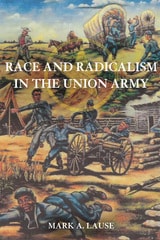
Race and Radicalism in the Union Army
Mark A. Lause
University of Illinois Press, 2013
In this compelling portrait of interracial activism, Mark A. Lause documents the efforts of radical followers of John Brown to construct a triracial portion of the Federal Army of the Frontier. Mobilized and inspired by the idea of a Union that would benefit all, black, Indian, and white soldiers fought side by side, achieving remarkable successes in the field. Against a backdrop of idealism, racism, greed, and the agonies and deprivations of combat, Lause examines links between radicalism and reform, on the one hand, and racialized interactions among blacks, Indians, and whites, on the other.
Lause examines how this multiracial vision of American society developed on the Western frontier. Focusing on the men and women who supported Brown in territorial Kansas, Lause examines the impact of abolitionist sentiment on relations with Indians and the crucial role of nonwhites in the conflict. Through this experience, Indians, blacks, and whites began to see their destinies as interdependent, and Lause discusses the radicalizing impact of this triracial Unionism upon the military course of the war in the upper Trans-Mississippi.
The aftermath of the Civil War destroyed much of the memory of the war in the West, particularly in the Indian Territory (now Oklahoma). The opportunity for an interracial society was quashed by the government's willingness to redefine the lucrative field of Indian exploitation for military and civilian officials and contractors.
Assessing the social interrelations, ramifications, and military impact of nonwhites in the Union forces, Race and Radicalism in the Union Army explores the extent of interracial thought and activity among Americans in this period and greatly expands the historical narrative on the Civil War in the West.
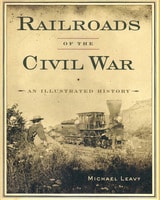
Railroads of the Civil War
An Illustrated HistoryMichael Leavy
Westholme Publishing, 2010
The Photographic Record of the First Wide-Scale Mechanization of War
Over the course of the first half of the nineteenth century, America would find itself following two increasingly divergent tracks: an industrialized North and an agricultural South. By 1860 railroads were firmly entrenched in our culture, reshaping our cities and steering us through the industrial age towards worldwide prominence. From sleepy post towns to the largest east coast cities, the distant hooting of the locomotive whistle drew ever closer and louder, filling listeners with fascination while brightening the eyes of profit-driven industrialists. But this admirable invention, lavishly adorned in brass and iron trimmings, was about to take on a new and deadly role. America’s regional differences would result in a spectacular collision over slavery, and between 1861–1865, the nation fought a savage war. The “iron horse” became a major weapon in the first war fully dependent on railroads. Moreover railroads would escalate and prolong the war, leading to its terrible carnage. Trains were used to move troops rapidly and over great distances, completely changing military strategy. Trains were also used as mobile artillery, armed with large-caliber cannons that could pound cities and fortifications. Trains were a crucial means for supplying the armies on both sides, and it was the severing of the railway lines providing food and munitions to the Army of Northern Virginia that led to Robert E. Lee’s surrender at Appomattox Court House.
In Railroads of the Civil War: An Illustrated History, Michael Leavy uses compelling period photographs and drawings and a rich narrative to reevaluate and illuminate the role of railroads in the Civil War. In addition to identifying details about the various trains and ancillary equipment and buildings in the illustrations, the author explains how trains influenced the outcome of battles and the war in general.
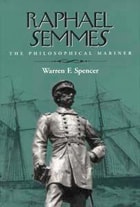
Raphael Semmes
The Philosophical MarinerWarren F. Spencer
University of Alabama Press, 1997
Naval hero for all the South, Raphael Semmes (1809-1877) sailed two famous Confederate raiders. He outfitted CSS Sumter in 1861 and captured 18 Union merchant ships in six months before the raider was blockaded at Gibraltar. Next he took command of CSS Alabama, an English-built raider, and terrorized U.S. merchant vessels on the high seas from August 1862 until the raider was sunk in battle off Cherbourg in June 1864. During that two-year period, he captured more enemy merchant ships than any other cruiser captain in maritime history. He is considered one of the greatest ship's commanders that America has produced.
In this first, full-scale biography that relies on Semmes's private papers, unpublished diaries, and correspondence, Spencer has produced a well-balanced and comprehensive account of the man, as well as the naval officer. The biographer paints a vivid portrait of Semmes—the intellectual, the family man, lawyer, romanticist, nationalist—providing a greater understanding of the man behind the heroic deeds.
Semmes was born in Maryland to a slave-holding family and entered the United States Navy in 1826. In 1849, he moved his family to Mobile, Alabama, to be near the navy base at Pensacola, Florida, and to practice law during leaves. Semmes was an astute student, not only of international and maritime law but also of weather patterns; astronomy; flora and fauna; naval, social, and cultural history; and the classics. His study of constitutional law led him to side with his adopted state in 1861, a move that set the stage for his place in history.
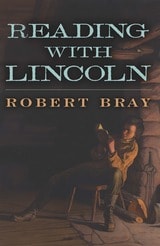
Reading With Lincoln
Robert Bray
Southern Illinois University Press, 2010
Through extensive reading and reflection, Abraham Lincoln fashioned a mind as powerfully intellectual and superlatively communicative as that of any other American political leader. Reading with Lincoln uncovers the how of Lincoln’s inspiring rise to greatness by connecting the content of his reading to the story of his life.
At the core of Lincoln’s success was his self-education, centered on his love of and appreciation for learning through books. From his early studies of grammar school handbooks and children’s classics to his interest in Shakespeare’s Macbeth and the Bible during his White House years, what Lincoln read helped to define who he was as a person and as a politician. This unique study delves into the books, pamphlets, poetry, plays, and essays that influenced Lincoln’s thoughts and actions.
Exploring in great depth and detail those readings that inspired the sixteenth president, author Robert Bray follows Lincoln’s progress closely, from the young teen composing letters for illiterate friends and neighbors to the politician who keenly employed what he read to advance his agenda. Bray analyzes Lincoln’s radical period in New Salem, during which he came under the influence of Anglo-American and French Enlightenment thinkers such as Thomas Paine, C. F. Volney, and Voltaire, and he investigates Lincoln’s appreciation of nineteenth-century lyric poetry, which he both read and wrote. Bray considers Lincoln’s fascination with science, mathematics, political economics, liberal social philosophy, theology, and the Bible, and devotes special attention to Lincoln’s enjoyment of American humor. While striving to arrive at an understanding of the role each subject played in the development of this remarkable leader, Bray also examines the connections and intertextual relations between what Lincoln read and how he wrote and spoke.
This comprehensive and long-awaited book provides fresh insight into the self-made man from the wilderness of Illinois. Bray offers a new way to approach the mind of the political artist who used his natural talent, honed by years of rhetorical study and practice, to abolish slavery and end the Civil War.
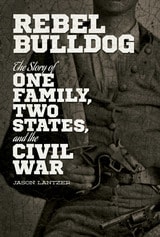
Rebel Bulldog
The Story of One Family, Two States, and the Civil WarJason Lantzer
Indiana Historical Society Press, 2017
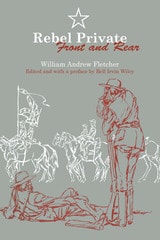
Rebel Private Front and Rear
By William Andrew Fletcher
University of Texas Press, 1954
Rebel Private Front and Rear is a line soldier’s account of the Civil War without heroics. Private Fletcher tells how at Gettysburg he was overcome by a “bad case of cowardly horror” when an order came on the third day to get ready to charge. “I tried to force manhood to the front, but fright would drive it back with a shudder,” he confessed. The attack of jitters lasted about fifteen minutes, and then he fell asleep while awaiting the order to advance.
But Fletcher could be brave to a fault. He was restless and venturesome and during the lulls between fighting would sometimes ask for permission to go on dangerous scouts into enemy territory. Once, just before Fredericksburg, he slipped out to a haystack in the no-man’s-land near the Rappahannock so that he could watch the Yankees build a bridge. And in his last fight at Bentonville he risked his life on a rash and futile impulse to capture a whole squad of Federals. At Second Manassas, Fletcher was struck by a bullet that grazed his bowels and lodged in his hip. His detailed description of his subsequent sensations and experiences is one of the most interesting portions of his narrative. He begged the surgeons to operate, but when they started cutting he howled so profanely that they threatened to abandon him. His reply was: “It don’t hurt as badly when I am cursing.”
Wounded again at Chickamauga, Fletcher was incapacitated for further infantry service and was transferred to Company E, Eighth Texas Cavalry, and served with Terry’s Rangers until the end of the war. In north Georgia he participated in a number of thrilling skirmishes with mounted forces of Sherman’s command, and in one of these encounters he lost his horse. A short time later, in a daring effort to capture a mount from the Yankees, he was taken prisoner. The story of the forming and execution of his plan to escape by jumping from a moving boxcar is full of suspense and excitement.
Rebel Private also reveals Fletcher as something of a philosopher. The narrative is sprinkled with dissertations on unexpected subjects, such as God, justice, and war. He reflects on the rightness and the necessity of “foraging,” in home as well as enemy territory, but he tells with evident relish how he and his “pard” of the occasion “pressed” whiskey, honey, and chickens.
Fletcher set down his experiences some forty years after the close of the Civil War. His story is told with the artlessness of the natural raconteur. Though the style is unpolished, the memoir makes lively reading because of the author’s eye for detail, his straightforward language, and his sense of humor. One of the most frequently cited narratives written by soldiers of Lee’s army, it derives its value as a historical source mainly from Fletcher’s honesty, his close observations, the richness and variety of his experiences, and the sharpness of his memory.
Rebellion and Realignment
Arkansas's Road to SecessionJames M. Woods
University of Arkansas Press, 1987
Arkansas, the Old South’s last frontier, was forced, after the election of Lincoln, to face the issue of secession. A decade earlier, the state had spurned all efforts from within to withdraw from the Union, but the following ten years drew Arkansas deeper into the economic and cultural community that bound it to the other slaveholding states. Now rumblings of secession were heard even before the president-elect assumed office on March 4, 1861. The question was asked on street corners, in offices, barbershops and living rooms: Would Arkansas leave the Union?
Answers to that question caused a fundamental realignment of politics in Arkansas during the winter of 1860–61. The former political coalition of Democrat and Whig fell away in a geographical split between the uplands and the lowlands. In this important and exciting book, the first to tell the story of Arkansas’s road to secession, James Woods examines the differences between uplanders, whose mountain regions offered little useful farmland for any crop, and lowlanders, whose vast deltas were ideally suited for cotton farming. The southern portion of the state began to rely increasingly upon slavery as it became linked to the economy of cotton and Southern antebellum values, but the northern region of the state did not. Woods focuses upon the resulting social, economic, and geographic divisions that grew within Arkansas before and during the secession crisis. He captures the political struggles of the state as it tore away from the nation, and as it threatened, in so doing, to tear itself apart.
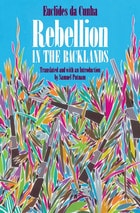
Rebellion in the Backlands
Euclides da Cunha
University of Chicago Press, 1957
Euclides da Cunha's classic account of the brutal campaigns against religious mystic Antonio Conselheiro has been praised by readers around the world as perhaps the greatest book ever written about Brazil. An epic of nonfiction that reads like a novel, it has been hailed by the likes of Stefan Zweig and Elizabeth Hardwick for its prose and its insights into the character of Brazil as the nation was being formed. Da Cunha tells the story of a guerrilla rebellion in the remote village of Canudos that fought the central government from 1893 to 1897, of the challenging conditions that led the people to revolt, and of the violent repression that resulted. A national epic like no other, Rebellion in the Backlands is a lasting classic, a book that has been handed from reader to reader for decades.
Recollections of Past Days
The Autobiography of Patience Loader Rozsa Archeredited by Sandra Ailey Petree
Utah State University Press, 2006
For visitors to the Martin's Cove historic site in Wyoming, Patience Loader has become an icon of the disastrous winter entrapment of the Martin and Willie handcart companies. Her record of those events is important, but there is much else of interest in her autobiography. In fact, it is a bit unusual that someone such as her would have left such an engaging record of her life.
The daughter of an English gardener, Patience Loader became a boarding house servant, domestic maid, and seamstress. Converted to Mormonism, she shipped with her parents to America. They joined the ill-fated Martin company, which because of poor planning and a late start west, was caught poorly prepared by severe high plains snowstorms in October and November 1856. The combined fatalities of the Martin and Willie companies made this the worst disaster in the history of overland travel. Patience = s father was one of those who died. After reaching Utah, Patience took the unusual step for a Mormon of marrying a soldier, John Rozsa, stationed at Camp Floyd. The troops there had made up the Utah Expedition, sent to ensure federal authority over the Mormons. Rozsa was a Hungarian immigrant and Mormon convert. When the Utah troops were recalled for the Civil War, Patience accompanied her husband, as an army laundress, to Washington, D.C., running a boarding house while Rozsa fought. After the war, he died at Fort Leavenworth of consumption, and Patience returned alone to Utah, where she became a cook at a mining camp in American Fork Canyon. Her autobiography ends there in 1872, though she lived till 1922.
Recollections of War Times
By An Old Veteran while under Stonewall Jackson and Lieutenant General James LongstreetWilliam A. McClendon, with an introduction by Keith S. Bohannon
University of Alabama Press, 2010
"Gus" McClendon joined the 15th Alabama Infantry Regiment, and served in many of the Eastern Theater engagements. More than fifty years later, he sent down his reminiscences, still an unreconstructed Southern patriot, although able to look back with some amusement on his younger self.
Reconstruction Politics in a Deep South State
Alabama, 1865–1874William Warren Rogers Jr.
University of Alabama Press, 2021
The battle for democracy in reconstruction-era Alabama.
Following the end of the Civil War, white Southerners were forced to concede equal rights to those who had been enslaved, ushering in a new and ruthless brand of politics. Suddenly, the status and place of some four million former slaves dominated the national and regional political dialogue. In Alabama, the Republican Party established itself quickly and powerfully with the participation of a newly freed constituency, firmly aligned against the Democratic Party that had long dictated the governance of the state. Well-heeled planters, merchants, and bankers, joined by yeoman farmers, staged a counterrevolution by gravitating strongly to the Democratic Party and its unabashedly white supremacist measures. The ensuing power struggle in the birthplace of the Confederacy is at the heart of Reconstruction Politics in a Deep South State: Alabama, 1865–1874.
What emerges in William Warren Rogers Jr.’s comprehensive study of the era is a detailed examination of Reconstruction politics, particularly in Alabama. This book explores an explosive and unpredictable political environment that a few years earlier would have been inconceivable. A vivid picture emerges of courthouse rallies and bitter infighting in legislative circles. Rogers’s narrative ventures into darker places as well: to the Tennessee Valley and the Black Belt regions of Alabama, where Klan nightriders used violence against an enemy and ideology they could not abide.
The attempt to capture and account for the unforgiving political landscape created by the extraordinary circumstances of Reconstruction constitutes this study’s most central contribution. Rogers often quotes black and white citizens, Democrats and Republicans. Drawn from newspapers, correspondence, and various federal investigations, these firsthand voices are passionate, unvarnished, and filled with conviction. They offer a startling immediacy and illustrate the temper—or distemper—of the times. Readers are treated to a panoramic unveiling of Reconstruction Alabama politics that provides a sense of what was truly at stake: the values by which a region and the nation as a whole would chart its future for the century to come.
Reconstruction after the Civil War, Third Edition
John Hope Franklin
University of Chicago Press, 2012
Reconstruction after the Civil War explores the role of former slaves during this period in American history. Looking past popular myths and controversial scholarship, John Hope Franklin uses his astute insight and careful research to provide an accurate, comprehensive portrait of the era. His arguments concerning the brevity of the North’s occupation, the limited power wielded by former slaves, the influence of moderate southerners, the flawed constitutions of the radical state governments, and the downfall of Reconstruction remain compelling today. This new edition of Reconstruction after the Civil War also includes a foreword by Eric Foner and a perceptive essay by Michael W. Fitzgerald.
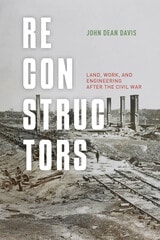
Reconstructors
Land, Work, and Engineering After the Civil WarJohn Dean Davis
University of Chicago Press, 2026
Explores the institutional and environmental transformations that occurred during the Reconstruction Era.
While the Reconstruction Era in America saw a paradigmatic realignment of the country’s core institutions and values, there was a physical quality to Reconstruction as well: the country was not only rebuilding the South after the Civil War, but flat-out building as it expanded westward.
In Reconstructors, John Dean Davis details how the Army Corps of Engineers and its subcontractors designed and redesigned the infrastructural landscape to support the republic’s rebirth. The Corps’ projects not only transformed the landscape; they created markets, fostered a distinctive expansionist culture, and—for a time—enacted a less discriminatory economic and social agenda across the South and West. Davis aims to bring federal power, environmentalism, and capitalism into a frame that reveals the landscape's power to further ideology.
Reflections of a Civil War Historian
Essays on Leadership, Society, and the Art of WarHerman Hattaway & Foreword by Frank E. Vandiver
University of Missouri Press, 2003
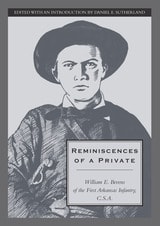
Reminiscences of a Private
William E. Bevens of the First Arkansas Infantry C.S.A.Daniel E. Sutherland
University of Arkansas Press, 1999
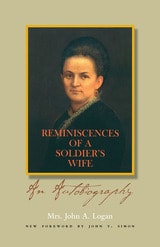
Reminiscences of a Soldier's Wife
An AutobiographyMrs. John A. Logan. Foreword by John Y. Simon
Southern Illinois University Press, 1997
"To tell my own story is to tell that of my famous husband, General John A. Logan," explains Mary S. Logan in the preface to her autobiography.
Married to John A. Logan for thirty-one years, Mary Logan shared in her distinguished husband’s career as a prosecutor in southern Illinois, as a Civil War general, and as a senator from Illinois. She observed firsthand the extraordinary events before, during, and after the Civil War, and she knew personally those world leaders who held the power to shape history. After the death of her husband, she maintained her influence in Washington, D.C. "Under the brightest and darkest skies," she explains, "I have passed than a half-century at the national capital."
Born in 1838, Logan writes of her early days growing up in southern Illinois through 1913, when this book was first published. A skillful observer, she recounts events that are personal, regional, and national in scope. In charming detail, she shares her courtship and subsequent marriage to a young prosecutor from Jackson County and the births of their children. She writes proudly of the Lincoln-Douglas debates in 1858 and her husband’s election to the Thirty-seventh Congress that same year. Logan tells of the coming of the Civil War and of her husband—formerly a Democrat and an enemy of Lincoln—casting his fate with the Union and raising a regiment in southern Illinois. She poignantly describes her brother’s defection to the Confederate Army, her life in war-torn Cairo, Illinois, and her horror at her husband’s severe war wounds. She recounts the battles, the political campaigns, and Lincoln’s reelection and subsequent assassination from her point of view—and, as the wife of a politician and general, hers is a decidedly privileged perspective.
In a position to observe and to participate in events ranging from momentous to minute throughout the latter half of the nineteenth and early twentieth centuries, she reports the essential episodes of history with the flair of journalism, a career she in fact embraced after the death of her husband. She writes movingly of a wounded captain on the road to recovery who suddenly died when the minié shifted next to his lung, amusingly of the excuses soldiers invented to wrangle a pass to town, and elegantly of her trips to Europe and of the pomp and circumstance of the parties attended by the great men and women of the time. Drawing on events grand and small, she re-creates history as only a skillful writer who was in the right place at the right time could.

Right or Wrong, God Judge Me
THE WRITINGS OF JOHN WILKES BOOTHJohn W. Booth
University of Illinois Press, 1997
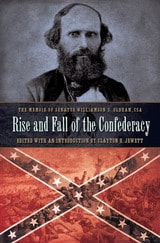
Rise and Fall of the Confederacy
The Memoir of Senator Williamson S. Oldham, CSAEdited & Intro by Clayton E. Jewett
University of Missouri Press, 2006
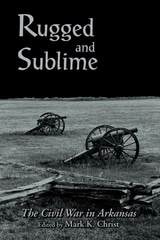
Rugged and Sublime
The Civil War in ArkansasMark Christ
University of Arkansas Press, 1994
When one thinks of the American Civil War, such names as Vicksburg, Gettysburg, and Chancellorsville come immediately to mind. Few recall the battles in the Trans-Mississippi theater.
Rugged and Sublime goes a long way toward filling regrettable blanks in our memory of Arkansas’s role in Civil War. It explore the major clashes and locales of the war, including the state secession convention, seizure of the Little Rock Arsenal, the Battle of Wilson’s Creek, the Pea Ridge campaign, Marmaduke’s invasion of Missouri, the Battle of Helena, and the fall of Little Rock, as well as other actions. Rounding out this new and very readable account are studies of the devolution of Arkansas society when bands of guerillas and jayhawkers menaced the state, the surrender of the Confederate armies, and an assessment of losses.
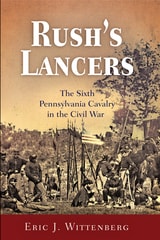
Rush's Lancers
The Sixth Pennsylvania Cavalry in the Civil WarEric J. Wittenberg
Westholme Publishing, 2007
The Sixth Pennsylvania Cavalry, also known as Rush’s Lancers, was a completely volunteer unit and one of the finest regiments to serve in the Civil War. Tracing their history from George Washington’s personal bodyguard during the Revolutionary War, many of the men of the Sixth Pennsylvania were the cream of Philadelphia society, including Richard H. Rush, grandson of Dr. Benjamin Rush, Maj. Robert Morris, Jr., great-grandson of the financier of the Revolutionary War, Capt. Charles Cadwalader, whose great-grandfather was a general under George Washington, Frank H. Furness, architect and Medal of Honor recipient, and George G. Meade, Jr. But it was their actions in battle, not their illustrious family histories, that distinguished Rush’s Lancers. The Sixth Pennsylvania Cavalry earned a reputation for being a highly trained and reliable unit, despite being armed initially with antiquated weapons, leaving their mark on key battlefields, including Antietam, Fredericksburg, Hanover Court House, Chancellorsville, Gettysburg, Brandy Station—where they conducted one of the most famous charges of the war—and Appomattox.
Drawing upon letters, diaries, memoirs, service and pension files, contemporary newspaper coverage, official records, and other primary sources, Rush’s Lancers: The Sixth Pennsylvania Cavalry in the Civil War by distinguished military historian Eric J. Wittenberg is an engrossing account of these young men from both Philadelphia’s social elite and the city’s working classes who, despite not being professional soldiers, answered the Nation’s call to war.