Results by title
440 books match the query 'Colonialism & Post-Colonialism' and 23 start with r

Race, Resistance, and the Boy Scout Movement in British Colonial Africa
In British Colonial AfricaTimothy H. Parsons
Ohio University Press, 2004
Conceived by General Sir Robert Baden-Powell as a way to reduce class tensions in Edwardian Britain, scouting evolved into an international youth movement. It offered a vision of romantic outdoor life as a cure for disruption caused by industrialization and urbanization. Scouting’s global spread was due to its success in attaching itself to institutions of authority. As a result, scouting has become embroiled in controversies in the civil rights struggle in the American South, in nationalist resistance movements in India, and in the contemporary American debate over gay rights.
In Race, Resistance, and the Boy Scout Movement in British Colonial Africa, Timothy Parsons uses scouting as an analytical tool to explore the tensions in colonial society. Introduced by British officials to strengthen their rule, the movement targeted the students, juvenile delinquents, and urban migrants who threatened the social stability of the regime. Yet Africans themselves used scouting to claim the rights of full imperial citizenship. They invoked the Fourth Scout Law, which declared that a scout was a brother to every other scout, to challenge racial discrimination.
Parsons shows that African scouting was both an instrument of colonial authority and a subversive challenge to the legitimacy of the British Empire. His study of African scouting demonstrates the implications and far-reaching consequences of colonial authority in all its guises.
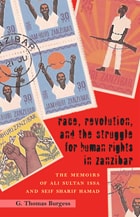
Race, Revolution, and the Struggle for Human Rights in Zanzibar
The Memoirs of Ali Sultan Issa and Seif Sharif HamadG. Thomas Burgess
Ohio University Press, 2009
Zanzibar has had the most turbulent postcolonial history of any part of the United Republic of Tanzania, yet few sources explain the reasons why. The current political impasse in the islands is a contest over the question of whether to revere and sustain the Zanzibari Revolution of 1964, in which thousands of islanders, mostly Arab, lost their lives. It is also about whether Zanzibar’s union with the Tanzanian mainland—cemented only a few months after the revolution—should be strengthened, reformed, or dissolved. Defenders of the revolution claim it was necessary to right a century of wrongs. They speak the language of African nationalism and aspire to unify the majority of Zanzibaris through the politics of race. Their opponents instead deplore the violence of the revolution, espouse the language of human rights, and claim the revolution reversed a century of social and economic development. They reject the politics of race, regarding Islam as a more worthy basis for cultural and political unity.
From a series of personal interviews conducted over several years, Thomas Burgess has produced two highly readable first-person narratives in which two nationalists in Africa describe their conflicts, achievements, failures, and tragedies. Their life stories represent two opposing arguments, for and against the revolution. Ali Sultan Issa traveled widely in the 1950s and helped introduce socialism into the islands. As a minister in the first revolutionary government he became one of Zanzibar’s most controversial figures, responsible for some of the government’s most radical policies. After years of imprisonment, he reemerged in the 1990s as one of Zanzibar’s most successful hotel entrepreneurs. Seif Sharif Hamad came of age during the revolution and became disenchanted with its broken promises and excesses. In the 1980s he emerged as a reformist minister, seeking to roll back socialism and authoritarian rule. After his imprisonment he has ever since served as a leading figure in what has become Tanzania’s largest opposition party
As Burgess demonstrates in his introduction, both memoirs trace Zanzibar’s postindependence trajectory and reveal how Zanzibaris continue to dispute their revolutionary heritage and remain divided over issues of memory, identity, and whether to remain a part of Tanzania. The memoirs explain how conflicts in the islands have become issues of national importance in Tanzania, testing that state’s commitment to democratic pluralism. They engage our most basic assumptions about social justice and human rights and shed light on a host of themes key to understanding Zanzibari history that are also of universal relevance, including the legacies of slavery and colonialism and the origins of racial violence, poverty, and underdevelopment. They also show how a cosmopolitan island society negotiates cultural influences from Africa, the Middle East, Asia, and Europe.
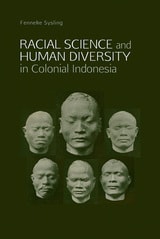
Racial Science and Human Diversity in Colonial Indonesia
Fenneke Sysling
National University of Singapore Press, 2016
In this new monograph, Fenneke Sysling draws on published works and private papers to describe the way Dutch racial scientists tried to make sense of the human diversity in the Indonesian archipelago. The making of racial knowledge, it contends, cannot be explained solely in terms of internal European intellectual developments. It was ‘on the ground’ that ideas about race were made and unmade with a set of knowledge strategies that did not always combine well. Sysling describes how skulls were assembled through the colonial infrastructure, how measuring sessions were resisted, what role photography and plaster casting played in racial science and shows how these aspects of science in practice were entangled with the Dutch colonial Empire.

Radical Desires
French Gay Liberation and Anticolonial CritiqueEdited by Hauke Branding and Julian Volz
Diaphanes, 2025
Despite a historically rich tradition of thinking about the relation between sexuality, desire, and revolution, there is little engagement with desire’s radicality today. This volume attends to the radicality of desire as a starting point for overcoming heteropatriarchal capitalism by turning to the specific radical homosexual critique as it was first formulated in France in the 1970s in the writings of the Mouvement de Libération des Femmes and the Front Homosexuel d’Action Révolutionnaire, as well as in the conceptions of their most important protagonists, Monique Wittig and Guy Hocquenghem.
Radical Desires seeks to emphasize the anti-identitarian character of the French gay liberation movement, as well as its implicit and explicit critique of gender and sexual binaries. At the same time, the volume is also interested in intersectionally expanding this critique by confronting it with anticolonial and queer of color perspectives. As French gay liberation activists’ relations to North African men were often problematic, several contributions engage with the latent orientalist and racist tropes that appear in the movement’s writings. By aiming to go beyond a mere historicization of these ambivalences and exploring which contemporary problems appear in a different light as a result, Radical Desires highlights the (dis-)continuous relationship between current debates and those in 1970s France.
To explore the multiplicity of forms with or in which these critiques were expressed, this volume places theoretical perspectives in conversation with artistic perspectives on queer liberation in a transnational context. Contributors include Friederike Beier, Antoine Idier, Émilie Notéris, Lukas Betzler, Mohammad Shawky Hassan, Sido Lansari, Todd Shepard, and Julian Volz.

Ralph Johnson Bunche
Public Intellectual and Nobel Peace LaureateEdited by Beverly Lindsay; Foreword by John Hope Franklin
University of Illinois Press, 2007
Nobel Peace Prize winner Ralph Johnson Bunche (1904-71) was one of the twentieth century’s foremost diplomats and intellectuals. In the wake of centennial celebrations of his birth, leading scholars and diplomats assess Bunche’s historical importance and enduring impact on higher education, public policy, and international politics. Their essays reveal not only the breadth of Bunche’s influence, such as his United Nations work to broker peace during times of civil war in Africa, the Middle East, and Asia, but also the depth of his intellectual perspectives on race, civil rights, higher education, and international law. Probing his publications, speeches, and public policy initiatives, the volume offers telling insights into the critical roles of universities, public intellectuals, and diplomats in working together to find solutions to domestic and international problems through public and scholarly engagement. In this way, the volume highlights the very connections that Bunche exhibited as an academic, intellectual, and diplomat.
Contributors include Lorenzo DuBois Baber, John Hope Franklin, Jonathan Scott Holloway, Charles P. Henry, Ben Keppel, Beverly Lindsay, Princeton Lyman, Edwin Smith, and Hanes Walton Jr.
Rational Empires
Institutional Incentives and Imperial ExpansionLeo J. Blanken
University of Chicago Press, 2012
The nineteenth century marked the high point of imperialism, when tsarist Russia expanded to the Pacific and the sun was said never to set on the British Empire. Imperialism remains a perennial issue in international relations today, and nowhere is this more evident than in the intensifying competition for global resources.
Leo J. Blanken explains imperialism through an analysis of the institutions of both the expanding state and its targets of conquest. While democratic states favoring free trade generally resort to imperialism only to preempt aggressive rivals—or when they have reason to believe another state’s political institutions will not hold up when making bargains—authoritarian states tend toward imperialism because they don’t stand to benefit from free trade. The result is three distinct strategies toward imperialism: actors fighting over territory, actors peaceably dividing territory among themselves, and actors refraining from seizing territory altogether. Blanken examines these dynamics through three case studies: the scramble for Africa, the unequal treaties imposed on Qing Dynasty China, and the evolution of Britain’s imperial policy in India. By separating out the different types of imperialism, Blanken provides insight into its sources, as well as the potential implications of increased competition in the current international arena.
Reclaiming Haiti's Futures
Returned Intellectuals, Placemaking, and Radical ImaginationDarlène Elizabeth Dubuisson
Rutgers University Press, 2025
Winner of the 2024 Annual Book Award from the Society for Latin American and Caribbean Anthropology (SLACA)
Co-winner of the Isis Duarte Book Prize from the Latin American Studies Association
Haiti was once a beacon of Black liberatory futures, but now it is often depicted as a place with no future where emigration is the only way out for most of its population. But Reclaiming Haiti's Futures tells a different story. It is a story about two generations of Haitian scholars who returned home after particular crises to partake in social change. The first generation, called jenerasyon 86, were intellectuals who fled Haiti during the Duvalier dictatorship (1957–1986). They returned after the regime fell to participate in the democratic transition through their political leadership and activism. The younger generation, dubbed the jenn doktè, returned after the 2010 earthquake to partake in national reconstruction through public higher education reform. An ethnography of the future, the book explores how these returned scholars resisted coloniality's fractures and displacements by working toward and creating inhabitability or future-oriented places of belonging through improvisation, rasanblaj (assembly), and radical imagination. By centering on Haiti and the Caribbean, the book offers insights not just into the Haitian experience but also into how fractures have come to typify more aspects of life globally and what we might do about it.

Reclaiming the Nation
The Return of the National Question in Africa, Asia and Latin AmericaEdited by Sam Moyo and Paris Yeros
Pluto Press, 2011
This book compares the trajectories of states and societies in Africa, Asia and Latin America under neoliberalism, a time marked by serial economic crises, escalating social conflicts, the re-militarisation of North-South relations and the radicalisation of social and nationalist forces.
Sam Moyo and Paris Yeros bring together researchers and activists from the three continents to assess the state of national sovereignty and the challenges faced by popular movements today. They show that global integration has widened social and regional inequalities within countries, exacerbated ethnic, caste, and racial conflicts, and generally reduced the bureaucratic capacities of states to intervene in a defensive way. Moreover, inequalities between the countries of the South have also widened. These structural tensions have all contributed to several distinct political trajectories among states: from fracture and foreign occupation, to radicalisation and uncertain re-stabilisation.
This book re-draws the debate on the political economy of the contemporary South and provides students of international studies with an important collection of readings.
Reimaging Britain
500 Years of Black and Asian HistoryRon Ramdin
Pluto Press, 1999
Blacks and Asians have a long history in the British Isles. Ramdin illustrates this by covering a 500-year period, from 1500 to the present day. He recounts the major historical episodes and covers all the major figures, including Ottobah Cugoano, William Cuffay, William Davidson, George Padmore, Mary Seacole, C.L.R. James, V.S. Naipaul, Sam Selvon, Walter Tull, Shirley Bassey, Bill Morris, Salman Rushdie, Hanif Kureshi and Bernie Grant.
In bringing the largely hidden histories of these immigrant communities to the fore, Ron Ramdin’s wide-ranging study challenges conventional histories of the British Isles. Reimaging Britain will lead to a reappraisal of how ‘British’ history is written in the future.

Remapping Sovereignty
Decolonization and Self-Determination in North American Indigenous Political ThoughtDavid Myer Temin
University of Chicago Press, 2023
An examination of anticolonial thought and practice across key Indigenous thinkers.
Accounts of decolonization routinely neglect Indigenous societies, yet Native communities have made unique contributions to anticolonial thought and activism. Remapping Sovereignty examines how twentieth-century Indigenous activists in North America debated questions of decolonization and self-determination, developing distinctive conceptual approaches that both resonate with and reformulate key strands in other civil rights and global decolonization movements. In contrast to decolonization projects that envisioned liberation through state sovereignty, Indigenous theorists emphasized the self-determination of peoples against sovereign state supremacy and articulated a visionary politics of decolonization as earthmaking. Temin traces the interplay between anticolonial thought and practice across key thinkers, interweaving history and textual analysis. He shows how these insights broaden the political and intellectual horizons open to us today.

Reparations and the Human
David L. Eng
Duke University Press, 2025

Rescuing the Enlightenment from the Europeans
Critical Theories of DecolonizationNikita Dhawan
Duke University Press, 2026
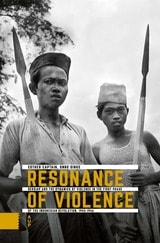
Resonance of Violence
Bersiap and the Dynamics of Violence in the First Phase of the Indonesian Revolution, 1945-1946Esther Captain
Amsterdam University Press, 2026
The authors expressly situate this terrifying period within the wider context of mutual Indonesian violence and the use of violence by the Japanese, British and Dutch against Indonesian citizens. Java, Sumatra, and other islands are discussed in the book, as well as the complex issue of the number of victims. Finally, they discuss the development of the term "bersiap" over the past 75 years, which grew into a key concept in the Netherlands to describe the earliest phase of the Indonesian War of Independence.
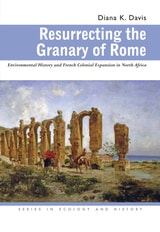
Resurrecting the Granary of Rome
Environmental History and French Colonial Expansion in North AfricaDiana K. Davis
Ohio University Press, 2007
Tales of deforestation and desertification in North Africa have been told from the Roman period to the present. Such stories of environmental decline in the Maghreb are still recounted by experts and are widely accepted without question today. International organizations such as the United Nations frequently invoke these inaccurate stories to justify environmental conservation and development projects in the arid and semiarid lands in North Africa and around the Mediterranean basin. Recent research in arid lands ecology and new paleoecological evidence, however, do not support many claims of deforestation, overgrazing, and desertification in this region.
Diana K. Davis’s pioneering analysis reveals the critical influence of French scientists and administrators who established much of the purported scientific basis of these stories during the colonial period in Algeria, Morocco, and Tunisia, illustrating the key role of environmental narratives in imperial expansion. The processes set in place by the use of this narrative not only systematically disadvantaged the majority of North Africans but also led to profound changes in the landscape, some of which produced the land degradation that continues to plague the Maghreb today.
Resurrecting the Granary of Rome exposes many of the political, economic, and ideological goals of the French colonial project in these arid lands and the resulting definition of desertification that continues to inform global environmental and development projects. The first book on the environmental history of the Maghreb, this volume reframes much conventional thinking about the North African environment. Davis’s book is essential reading for those interested in global environmental history.

Revenant Ecologies
Defying the Violence of Extinction and ConservationAudra Mitchell
University of Minnesota Press, 2024
Engaging a broad spectrum of ecological thought to articulate the ethical scale of global extinction
As global rates of plant and animal extinctions mount, anxieties about the future of the earth’s ecosystems are fueling ever more ambitious efforts at conservation, which draw on Western scientific principles to manage species and biodiversity. In Revenant Ecologies, Audra Mitchell argues that these responses not only ignore but also magnify powerful forms of structural violence like colonialism, racism, genocide, extractivism, ableism, and heteronormativity, ultimately contributing to the destruction of unique life forms and ecosystems.
Critiquing the Western discourse of global extinction and biodiversity through the lens of diverse Indigenous philosophies and other marginalized knowledge systems, Revenant Ecologies promotes new ways of articulating the ethical enormity of global extinction. Mitchell offers an ambitious framework—(bio)plurality—that focuses on nurturing unique, irreplaceable worlds, relations, and ecosystems, aiming to transform global ecological–political relations, including through processes of land return and critically confronting discourses on “human extinction.”
Highlighting the deep violence that underpins ideas of “extinction,” “conservation,” and “biodiversity,” Revenant Ecologies fuses political ecology, global ethics, and violence studies to offer concrete, practical alternatives. It also foregrounds the ways that multi-life-form worlds are actively defying the forms of violence that drive extinction—and that shape global efforts to manage it.
Retail e-book files for this title are screen-reader friendly with images accompanied by short alt text and/or extended descriptions.

Revenge Capitalism
The Ghosts of Empire, the Demons of Capital, and the Settling of Unpayable DebtsMax Haiven
Pluto Press, 2020
In Revenge Capitalism, Max Haiven argues that this economic vengeance helps us explain the culture and politics of revenge we see in society more broadly. Moving from the history of colonialism and its continuing effects today, he examines the opioid crisis in the US, the growth of 'surplus populations' worldwide and unpacks the central paradigm of unpayable debts - both as reparations owed, and as a methodology of oppression.
Revenge Capitalism offers no easy answers, but is a powerful call to the radical imagination.

Revisionary Interventions into the Americanist Canon
Donald E. Pease
Duke University Press, 1994
Originally published as a special issue of boundary 2, the essays gathered here discuss writers as diverse as Kate Chopin, Frederick Douglass, Emerson, Melville, W. D. Howells, Henry James, W. E. B. DuBois, and Mark Twain, plus the historical figure John Brown. Two major sections devoted to the theory of romance and to cultural-historical analyses emphasize the political perspective of "New Americanist" literary and cultural study.
Contributors. William E. Cain, Wai-chee Dimock, Howard Horwitz, Gregory S. Jay, Steven Mailloux, John McWilliams, Susan Mizruchi, Donald E. Pease, Ivy Schweitzer, Priscilla Wald, Michael Warner, Robert Weimann

Revival and Reconciliation
The Anglican Church and the Politics of RwandaPhillip A. Cantrell II
University of Wisconsin Press, 2022
Drawing from new archival materials as well as on-the-ground field research, Revival and Reconciliation is a Rwanda-centered account of the country's ecclesiastical and national historiography. Cantrell calls attention to the harms the postgenocide church risks doing should it continue to support false narratives about Rwanda's colonial and postcolonial past—with dangerous consequences for the future.
Revolution and Disenchantment
Arab Marxism and the Binds of EmancipationFadi A. Bardawil
Duke University Press, 2020
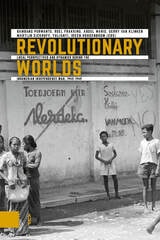
Revolutionary Worlds
Local Perspectives and Dynamics during the Indonesian Independence War, 1945-1949Bambang Purwanto
Amsterdam University Press, 2023
Bringing together two national historiographical traditions which have long remained largely separate, Revolutionary Worlds is the result of a collaboration between the Indonesian research project Proklamasi Kemerdekaan, Revolusi dan Perang di Indonesia ('Proclamation of Independence, Revolution and War in Indonesia', Universitas Gadjah Mada, Yogyakarta) and the Dutch research group of the Regional Studies project, under the umbrella of the research programme Independence, Decolonization, Violence and War in Indonesia, 1945-1950.
The authors of this book – Taufik Ahmad, Galuh Ambar Sasi, Maarten van der Bent, Martijn Eickhoff, Farabi Fakih, Roel Frakking, Apriani Harahap, Anne-Lot Hoek, Sarkawi B. Husain, Julianto Ibrahim, Gerry van Klinken, Erniwati, Mawardi Umar, Anne van der Veer, Abdul Wahid, Tri Wahyuning M. Irsyam, and Muhammad Yuanda Zara – work with various universities and research institutes in Indonesia and the Netherlands.
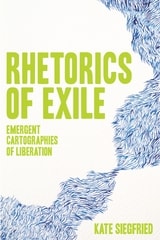
Rhetorics of Exile
Emergent Cartographies of LiberationKate Siegfried
The Ohio State University Press, 2027
Rhetorics of Exile forwards the concept of rhetorical cartographies of liberation to offer an alternative history of the Cold War period. Exile, Kate Siegfried argues, is used as a powerful rhetorical practice that reveals alternative maps of power, resistance, and liberation. Drawing on archival research, she reveals how political insurgents from Paul Robeson to Gerry Adams leveraged experiences of exile and containment to advocate for the eradication of colonialism, imperialism, racialization, and global capitalism and to advance a vision of transnational solidarity that defied the hegemonic political and geographic binaries of the time. Examining movements and political figures across the globe, from Cuba to the American Black Belt, through southern Africa’s colonial borders, to China, Ireland, and elsewhere, Rhetorics of Exile reveals how seemingly disparate political ruptures during the second half of the twentieth century shaped an emergent world system. Siegfried not only broadens our view of Cold War–era social movements but also adapts rhetorical cartography to better account for racialized power dynamics—showing its applicability to understanding activism today.

Rising Up, Living On
Re-Existences, Sowings, and Decolonial CracksCatherine E. Walsh
Duke University Press, 2023
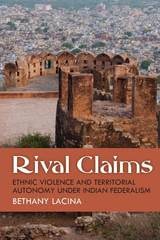
Rival Claims
Ethnic Violence and Territorial Autonomy under Indian FederalismBethany Lacina
University of Michigan Press, 2017
Using new data on ethnicity and sub-national discrimination in India, national and state archives, parliamentary records, cross-national analysis and her original fieldwork, Lacina explains ethnoterritorial politics as a three-sided interaction of the center and rival interests in the periphery. Ethnic entrepreneurs use militancy to create national political pressure in favor of their goals when the prime minister lacks clear electoral reasons to court one regional group over another. Second, ethnic groups rarely win autonomy or mobilize for violence in regions home to electorally influential anti-autonomy interests. Third, when a regional ethnic majority is politically important to the prime minister, its leaders can deter autonomy demands within their borders, while actively discriminating against minorities.
Rival Claims challenges the conventional beliefs that territorial autonomy demands are a reaction to centralized power and that governments resist autonomy to preserve central prerogatives. The center has allegiances in regional politics, and ethnoterritorial violence reflects the center’s entanglement with rival interests in the periphery.