Results by title
1882 books match the query 'Criticism and interpretation' and 105 start with r

R. K. Narayan
A Critical AppreciationWilliam Walsh
University of Chicago Press, 1982
This lucid and often eloquent study provides both new and devoted Narayan readers with an introduction to his life and work. William Walsh, who makes generous and apt use of quotations from Narayan's work, traces Narayan's artistic development and brings into clear relief the qualities that characterize his fiction: gentle irony, humor, and a tolerance of human foibles. Both a criticism and an appreciation, this work will prove valuable to those already acquainted with this delightful and important novelist and will lead others to his work for the first time.
R. K. Narayan
Contemporary Critical EssaysGeoffrey Kain
Michigan State University Press, 1993
REGIONALISM AND REFORM
ART AND CLASS FORMATION IN ANTEBELLUM CIWENDY JEAN KATZ
The Ohio State University Press, 2002
Race and Affect in Early Modern English Literature
Carole Mejia LaPerle
Arizona Center for Medieval and Renaissance Studies, 2021
Race and Affect in Early Modern English Literature puts the fields of critical race studies and affect theory into dialogue. Doing so opens a new set of questions: What are the emotional experiences of racial formation and racist ideologies? How do feelings—through the physical senses, emotional passions, or sexual encounters—come to signify race? What is the affective register of anti-blackness that pervades canonical literature? How can these visceral forms of racism be resisted in discourse and in practice? By investigating how race feels, this book offers new ways of reading and interpreting literary traditions, religious differences, gendered experiences, class hierarchies, sexuality, and social identities. So far scholars have shaped the discussion of race in the early modern period by focusing on topics such as genealogy, language, economics, religion, skin color, and ethnicity. This book, however, offers something new: it considers racializing processes as visceral, affective experiences.
Race and Culture in New Orleans Stories
Kate Chopin, Grace King, Alice Dunbar-Nelson, and George Washington CableJames Nagel
University of Alabama Press, 2013
Race and Culture in New Orleans Stories is a study of four volumes of interrelated short stories set in New Orleans and the surrounding Louisiana bayous: Kate Chopin’s Bayou Folk; George Washington Cable’s Old Creole Days; Grace King’s Balcony Stories; and Alice Dunbar-Nelson’s The Goodness of St. Rocque and Other Stories. James Nagel argues that the conflicts and themes in these stories cannot be understood without a knowledge of the unique historical context of the founding of Louisiana, its four decades of rule by the Spanish, the Louisiana Purchase and the resulting cultural transformations across the region, Napoleonic law, the Code Noir, the plaçage tradition, the immigration of various ethnic and natural groups into the city, and the effects of the Civil War and Reconstruction. All of these historical factors energize and enrich the fiction of this important region.
The literary context of these volumes is also central to understanding their place in literary history. They are short-story cycles—collections of short fiction that contain unifying settings, recurring characters or character types, and central themes and motifs. They are also examples of the “local color” tradition in fiction, a movement that has been much misunderstood. Nagel maintains that regional literature was meant to be the highest form of American writing, not the lowest, and its objective was to capture the locations, folkways, values, dialects, conflicts, and ways of life in the various regions of the country in order to show that the lives of common citizens were sufficiently important to be the subject of serious literature.
Finally, Nagel shows that New Orleans provided a profoundly rich and complex setting for the literary exploration of some of the most crucial social problems in America, including racial stratification, social caste, economic exploitation, and gender roles, all of which were undergoing rapid transformation at the end of the nineteenth century and the beginning of the twentieth.
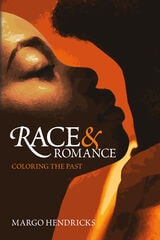
Race and Romance
Coloring the PastMargo Hendricks
Arizona Center for Medieval and Renaissance Studies, 2021
Race and Romance: Coloring the Past explores the literary and cultural genealogy of colorism, white passing, and white presenting in the romance genre. The scope of the study ranges from Heliodorus’ Aithiopika to the short novels of Aphra Behn, to the modern romance novel Forbidden by Beverly Jenkins. This analysis engages with the troublesome racecraft of “passing” and the instability of racial identity and its formation from the premodern to the present. The study also looks at the significance of white settler colonialism to early modern romance narratives. A bridge between studies of early modern romance and scholarship on twenty-first-century romance novels, this book is well-suited for those interested in the romance genre.

Race, Rock, and Elvis
Michael T. Bertrand
University of Illinois Press, 2000
Did Elvis Presley's brand of rock 'n' roll help revise racial attitudes in postwar America? Michael T. Bertrand delves into this question and many others to investigate popular music's revolutionary influence on black-white relations in the South.
Youthful fans of rhythm and blues, rock 'n' roll, and other black-inspired music often broke from their segregationist elders and ignored the color line. Not coincidentally, these same young white people--the southern branch of a national and commercialized youth culture--led a general relaxation of racist attitudes. Bertrand argues that African American music facilitated a new recognition of black people as fellow human beings. African American audiences welcomed Elvis with enthusiasm while racially mixed audiences flocked to music venues at a time when adults expected separate performances for black and white audiences. Bertrand also describes the critical role of radio and recordings in making African American culture available to white fans on an unprecedented scale. Over time, southern working-class youth used the new music to define and express new values and build their own identities.
Racial Beings
Experiments in Asian American New MaterialismsMichelle N. Huang
Duke University Press, 2026

Racine
From Ancient Myth to Tragic ModernityMitchell Greenberg
University of Minnesota Press, 2009
A study of all of the major tragedies of Jean Racine, France's preeminent dramatist-and, according to many, its greatest and most representative author-Mitchell Greenberg's work offers an exploration of Racinian tragedy to explain the enigma of the plays' continued fascination.
Greenberg shows how Racine uses myth, in particular the legend of Oedipus, to achieve his emotional power. In the seventeenth-century tragedies of Racine, almost all references to physical activity were banned from the stage. Yet contemporary accounts of the performances describe vivid emotional reactions of the audiences, who were often reduced to tears. Greenberg demonstrates how Racinian tragedy is ideologically linked to Absolutist France's attempt to impose the "order of the One" on its subjects. Racine's tragedies are spaces where the family and the state are one and the same, with the result that sexual desire becomes trapped in a closed, incestuous, and highly formalized universe.
Greenberg ultimately suggests that the politics and sexuality associated with the legend of Oedipus account for our attraction to charismatic leaders and that this confusion of the state with desire explains our continued fascination with these timeless tragedies.
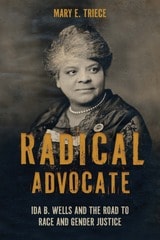
Radical Advocate
Ida B. Wells and the Road to Race and Gender JusticeMary E. Triece
University of Alabama Press, 2025
Pinpoints the persuasive strategies that typified Wells’s efforts to shape broader cultural conversations concerning the causes of racial, social, and gender inequity
Born into the brutal reality of slavery, Ida B. Wells rose to become an audacious journalist, teacher, and activist for racial and gender justice. In Radical Advocate, Mary E. Triece examines the rhetorical strategies employed by Wells to challenge deeply rooted systems of oppression, strategies that remain powerful and relevant today.
Triece introduces the concept of “radical embodied advocacy” to give an account of Wells’s unique position as a Black woman whose personal encounters with white violence were palpable, experienced physically and mentally. White men lynched Wells’s friends and threatened her own life, forcing her into exile after destroying the very press on which she wrote and edited. From this perspective, Wells understood lynching as linked to white economic and political control. Through a close analysis of Wells’s speeches, writings, and journalism, Triece reveals how Wells pioneered a form of “intersectional journalism” that centered the voices of those marginalized by race, gender, and class.
By examining Wells’s work through the lens of philosophy, rhetoric, and Black feminism, Triece underscores the epistemic challenges faced by marginalized advocates and the importance of their perspectives in shaping social change. Radical Advocate ultimately positions Wells as a prophetic figure whose insights into the systemic nature of racism remain profoundly relevant in today’s world.
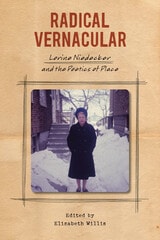
Radical Vernacular
Lorine Niedecker and the Poetics of PlaceElizabeth Willis
University of Iowa Press, 2008
Aesthetically linked with the New York Objectivist poets, Niedecker remained committed to her community in rural Wisconsin despite the grinding poverty that dogged her throughout her life. Largely self-taught, Niedecker formed attachments through her voracious reading and correspondence, but she also delighted in the disruptive richness of vernacular usage and in the homegrown, improvisational aesthetics that thrived within her immediate world. Niedecker wrote from a highly attenuated concern with biological, cultural, and political sustainability and, in her stridently modernist poems, anticipated many of the most urgent concerns in twenty-first-century poetics. In Radical Vernacular, Elizabeth Willis collects essays by leading poets and scholars that make a major contribution to the study of an important but long overlooked American poet.
This pathbreaking volume contains essays by seventeen leading scholars: Rae Armantrout, Glenna Breslin, Michael Davidson, Rachel Blau DuPlessis, Ruth Jennison, Peter Middleton, Jenny Penberthy, Mary Pinard, Patrick Pritchett, Peter Quartermain, Lisa Robertson, Elizabeth Robinson, Eleni Sikelianos, Jonathan Skinner, Anne Waldman, Eliot Weinberger, and Elizabeth Willis.
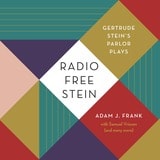
Radio Free Stein
Gertrude Stein's Parlor PlaysAdam J. Frank
Northwestern University Press, 2025
Returns us to Gertrude Stein’s theater by way of the modernist medium of radio
What happens when we listen to Gertrude Stein’s plays as radio and music theater? This book explores the sound of Stein’s theater and proposes that radio, when approached both historically and phenomenologically, offers technical solutions to her texts’ unique challenges. Adam J. Frank documents the collaborative project of staging Stein’s early plays and offers new critical interpretations of these lesser-known works. Radio Free Stein grapples with her innovative theater poetics from a variety of disciplinary perspectives: sound and media studies, affect and object relations theory, linguistic performativity, theater scholarship, and music composition.

Raising the Dust
The Literary Housekeeping of Mary Ward, Sarah Grand, and Charlotte Perkins GilmanBeth Sutton-Ramspeck
Ohio University Press, 2004
To Mary Augusta Ward, Sarah Grand, and Charlotte Perkins Gilman, housekeeping represented public responsibilities: making the food supply safe, reforming politics, and improving the human race itself. Raising the Dust places their writing in the context of the late-Victorian era, in particular the eugenics movement, the proliferation of household conveniences, the home economics movement, and decreased reliance on servants. These changes affected relationships between the domestic sphere and the public sphere, and hence shaped the portrayal of domesticity in the era's fiction and nonfiction.
Moreover, Ward, Grand, and Gilman articulated a domestic aesthetic that swept away boundaries. Sutton-Ramspeck uncovers a new paradigm here: literature as engaging the public realm through the devices and perspectives of the domestic. Her innovative and ambitious book also connects fixations on cleaning with the discovery of germs (the first bacterium discovered was anthrax, and knowledge of its properties increased fears of dust); analyzes advertising cards for soap; and links the mental illness in Gilman's “The Yellow Wall-Paper” to fears during the period of arsenic poisoning from wallpaper.
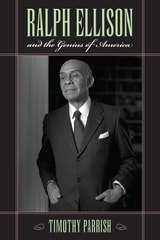
Ralph Ellison and the Genius of America
Timothy Parrish
University of Massachusetts Press, 2012
Ralph Ellison has long been admired as the author of one of the most important American novels of the twentieth century, Invisible Man. Yet he has also been dismissed by some critics as a writer who only published one major work of fiction and a black intellectual out of touch with his times. In this book, Timothy Parrish offers a fundamentally different assessment of Ellison's legacy, describing him as the most important American writer since William Faulkner and someone whose political and cultural achievements have not been fully recognized.
Embracing jazz artist Wynton Marsalis's characterization of Ellison as the unacknowledged “political theorist” of the civil rights movement, Parrish argues that the defining event of Ellison's career was not Invisible Man but the 1954 Supreme Court decision that set his country on the road to racial integration. In Parrish's view, no other American intellectual, black or white, better grasped the cultural implications of the new era than Ellison did; no other major American writer has been so misunderstood.
Drawing on Ellison's recently published “unfinished” novel, newly released archival materials, and unpublished correspondence, Parrish provides a sustained reconsideration of the writer's crucial friendships with Richard Wright, Robert Penn Warren, and C. Vann Woodward to show how his life was dedicated to creating an American society in which all could participate equally. By resituating Ellison's career in the historical context of its making, Parrish challenges the premises that distorted the writer's reception in his own lifetime to make the case for Ellison as the essential visionary of post–Civil War America.
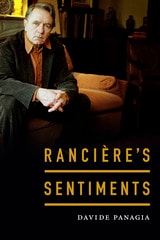
Rancière's Sentiments
Davide Panagia
Duke University Press, 2018
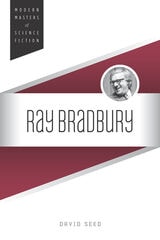
Ray Bradbury
David Seed
University of Illinois Press, 2015
David Seed follows Bradbury's long career from the early short story masterpieces through his work in a wide variety of broadcast and film genres to the influential cultural commentary he spread via essays, speeches, and interviews. Mining Bradbury's classics and hard-to-find archival, literary, and cultural materials, Seed analyzes how the author's views on technology, authoritarianism, and censorship affected his art; how his Midwest of dream and dread brought his work to life; and the ways film and television influenced his creative process and visually-oriented prose style. The result is a passionate statement on Bradbury's status as an essential literary writer deserving of a place in the cultural history of his time.
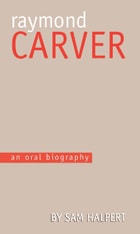
Raymond Carver
An Oral BiographySam Halpert
University of Iowa Press, 1995
Raymond Carver has become a literary icon for our time. When he died in 1988 at the age of fifty, he was acclaimed as the greatest influence on the American short story since Hemingway. Carver's friends were the stuff of legend as well. In this rich collection—greatly expanded from the earlier When We Talk about Raymond Carver—of interviews with close companions, acquaintances, and family, Sam Halpert has chronologically arranged the reminiscences of Carver's adult life, recalling his difficult “Bad Raymond” days through his second life as a recovering alcoholic and triumphantly successful writer. The result is a spirited Irish wake—toasts, anecdotes, lies, songs, confessions, laments—all beautifully orchestrated by Halpert into a very readable and moving narrative.
These funny, poignant, intensely remembered interviews juxtapose personal anecdotes and enlightening criticism. Memory mixes with analysis, and a lively picture of Carver emerges as we hear different stories about him—of the same story told from different viewpoints. He is here presented as hero, victim, and even villain—Carver's readers will recognize the woof and warp of his stories in these affectionate narratives.
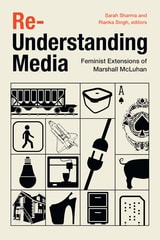
Re-Understanding Media
Feminist Extensions of Marshall McLuhanSarah Sharma and Rianka Singha, editors
Duke University Press, 2022
Contributors. Nasma Ahmed, Morehshin Allahyari, Sarah Banet-Weiser, Wendy Hui Kyong Chun, Brooke Erin Duffy, Ganaele Langlois, Sara Martel, Shannon Mattern, Cait McKinney, Jeremy Packer, Craig Robertson, Sarah Sharma, Ladan Siad, Rianka Singh, Nicholas Taylor, Armond R. Towns, and Jennifer Wemigwans
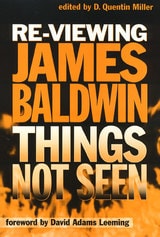
Re-Viewing James Baldwin
Quentin Miller
Temple University Press, 2000
This is an important book for anyone interested in Baldwin's work. It will engage readers interested in literature and African American Studies.
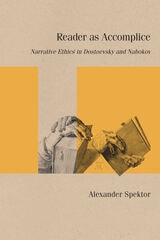
Reader as Accomplice
Narrative Ethics in Dostoevsky and NabokovAlexander Spektor
Northwestern University Press, 2021
Reader as Accomplice: Narrative Ethics in Dostoevsky and Nabokov argues that Fyodor Dostoevsky and Vladimir Nabokov seek to affect the moral imagination of their readers by linking morally laden plots to the ethical questions raised by narrative fiction at the formal level. By doing so, these two authors ask us to consider and respond to the ethical demands that narrative acts of representation and interpretation place on authors and readers.
Using the lens of narrative ethics, Alexander Spektor brings to light the important, previously unexplored correspondences between Dostoevsky and Nabokov. Ultimately, he argues for a productive comparison of how each writer investigates the ethical costs of narrating oneself and others. He also explores the power dynamics between author, character, narrator, and reader. In his readings of such texts as “The Meek One” and The Idiot by Dostoevsky and Bend Sinister and Despair by Nabokov, Spektor demonstrates that these authors incite the reader’s sense of ethics by exposing the risks but also the possibilities of narrative fiction.
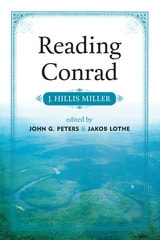
Reading Conrad
Edited by John G. Peters and Jakob Lothe
The Ohio State University Press, 2017
Reading Conrad by J. Hillis Miller demonstrates a surprising cohesiveness across Miller’s career as well as the richness of Conrad’s fiction, which affords varied opportunities for critical approaches as different as phenomenology, new criticism, deconstruction, narrative theory, and narrative ethics. Miller’s analyses emphasize literature’s rhetorical and performative power, ultimately suggesting that while narrative fiction is an effect of a series of complex phenomena in society and in the human psyche, as literary language it can also refer to the external world indirectly and contribute to the formation of history from within.
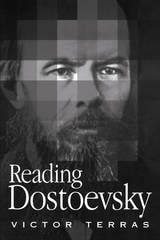
Reading Dostoevsky
Victor Terras
University of Wisconsin Press, 1998
“A substantial contribution both to Dostoevsky scholarship and to scholarship on the novel. . . . The first book in quite a while to address itself to all of Dostoevsky’s opus, certainly a bold move that only someone of Terras’s stature could pull off.”—Gary Rosenshield, University of Madison–Wisconsin
Admirers have praised Fedor Dostoevsky as the Russian Shakespeare, while his critics have slighted his novels as merely cheap amusements. In this stimulating critical introduction to Dostoevsky’s fiction, literary scholar Victor Terras asks readers to draw their own conclusions about the nineteenth-century Russian writer. Discussing psychological, political, mythical, and philosophical approaches, Terras deftly guides readers through the range of diverse and even contradictory interpretations of Dostoevsky's rich novels.
Moving through the novelist's career, Terras presents a general analysis of the novel at issue, each chapter focusing on a particular aspect of Dostoevsky's art. He probes the form and style of Crime and Punishment, and explores the ambiguity of The Brothers Karamazov. Terras emphasizes the "markedness," of Dostoevsky's novels, their wealth of literary devices such as irony, literary allusions, scenic effects, puns, and witticisms.
Terras conveys the vital contradictions and ambiguities of the novels. In this informative, engaging literary study, Terras brings Dostoevsky and his art to life.
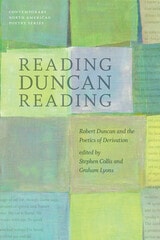
Reading Duncan Reading
Robert Duncan and the Poetics of DerivationStephen Collis
University of Iowa Press, 2012
In part two, the volume turns to examinations of poets who can be seen to in some way derive from Duncan—and so in turn reveals another angle of Duncan’s derivative poetics. J. P. Craig traces Nathaniel MacKey’s use of Duncan’s “would-be shaman,” Catherine Martin sees Duncan’s influence in Susan Howe’s “development of a poetics where the twin concepts of trespass and ‘permission’ hold comparable sway,” and Ross Hair explores poet Ronald Johnson’s “reading to steal.” These and other essays collected here trace paths of poetic affiliation and affinity and hold them up as provocative possibilities in Duncan’s own inexhaustible work.
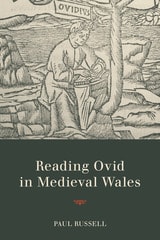
Reading Ovid in Medieval Wales
Paul Russell
The Ohio State University Press, 2017
Russell argues that this annotated version of the Ars amatoria arose out of the teaching traditions of the Carolingian world and that the annotation, as we have it, was the product of a cumulative process of glossing and commenting on the text. He then surveys other glossed Ovid manuscripts to demonstrate how that accumulation was built up. Russell also explores the fascinating issue of why Ovid’s love poetry should be used to teach Latin verse in monastic contexts. Finally, he discusses the connection between this manuscript and the numerous references to Ovid in later Welsh poetry, suggesting that the Ovidian references should perhaps be taken to refer to love poetry more generically.
Reading Ronell
Edited by Diane Davis
University of Illinois Press, 2008
Avital Ronell has won worldwide acclaim for her work across literature and philosophy, psychoanalysis and popular culture, political theory and feminism, art and rhetoric, drugs and deconstruction. In works such as The Test Drive, Stupidity, Crack Wars, and The Telephone Book, she has perpetually raised new and powerful questions about how we think, what thinking does, and how we fool ourselves about the troubled space between thought and action.
In this collection, some of today's most distinguished and innovative thinkers turn their attention to Ronell's teaching, writing, and provocations, observing how Ronell reads and what comes from reading her. By reading Ronell, and reading Ronell reading, contributors examine the ethico-political implications of her radical dislocations and carefully explicate, extend, and explore the paraconcepts addressed in her works.
Reading Sedgwick
Lauren Berlant, editor
Duke University Press, 2019
Contributors. Lauren Berlant, Kathryn Bond Stockton, Judith Butler, Lee Edelman, Jason Edwards, Ramzi Fawaz, Denis Flannery, Jane Gallop, Jonathan Goldberg, Meridith Kruse, Michael Moon, José Esteban Muñoz, Chris Nealon, Andrew Parker, H. A. Sedgwick, Karin Sellberg, Michael D. Snediker, Melissa Solomon, Robyn Wiegman
Reading With Clarice Lispector
Helene Cixous
University of Minnesota Press, 1990
Reading and Writing Instruction in the Twenty-First Century
Recovering and Transforming the Pedagogy of Robert ScholesEllen C. Carillo
Utah State University Press, 2021
In this volume, Scholes’s scholarship is included alongside original essays, providing a resource for those considering everything from the place of the English major in the twenty-first century to best practices for helping students navigate misinformation and disinformation. Reading and Writing Instruction in the Twenty-First Century not only keeps Scholes’s legacy alive but carries it on through a commitment, in Scholes’s (1998) own words, to “offer our students . . . the cultural equipment they are going to need when they leave us.”
Contributors:
Angela Christie, Paul T. Corrigan, Lynée Lewis Gaillet, Doug Hesse, Alice S. Horning, Emily J. Isaacs, Christopher La Casse, Robert Lestón, Kelsey McNiff, Thomas P. Miller, Jessica Rivera-Mueller, Christian Smith, Kenny Smith
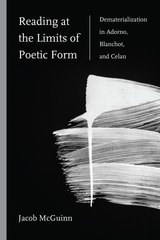
Reading at the Limits of Poetic Form
Dematerialization in Adorno, Blanchot, and CelanJacob McGuinn
Northwestern University Press, 2024
How does literary objecthood contend with the challenge of writing objects that emerge at an extreme limit of material presence? Jacob McGuinn delves into the ways literature writes this indeterminate presence in the context of pre- and post-’68 Paris, a vital moment in the history of criticism. The works of poet Paul Celan, philosopher Theodor Adorno, and writer Maurice Blanchot highlight how the complexities of reading such a dematerialized object are part of the indeterminacy of material itself. Indeterminate objects—glass, snow, walls, screens—are subjects Celan describes as existing in “meridian” space, while for Adorno and Blanchot, criticism not only responds to this indeterminacy but also takes it as its condition. Reading at the Limits of Poetic Form: Dematerialization in Adorno, Blanchot, and Celan shows how these readings simultaneously limit the object of criticism and outline alternative ways of thinking that lie between the models of critical formalism and historicism, ultimately revealing the possible materiality of literature in unrealized history, incomplete politics, and nondetermining thinking.
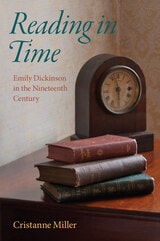
Reading in Time
Emily Dickinson in the Nineteenth CenturyCristanne Miller
University of Massachusetts Press, 2012
Before 1865, Dickinson at least ambivalently considered publication, circulated relatively few poems, and saved almost everything she wrote in organized booklets. After this date, she wrote far fewer poems, circulated many poems without retaining them, and took less interest in formally preserving her work. Yet, Miller argues, even when circulating relatively few poems, Dickinson was vitally engaged with the literary and political culture of her day and, in effect, wrote to her contemporaries. Unlike previous accounts placing Dickinson in her era, Reading in Time demonstrates the extent to which formal properties of her poems borrow from the short-lined verse she read in schoolbooks, periodicals, and single-authored volumes. Miller presents Dickinson's writing in relation to contemporary experiments with the lyric, the ballad, and free verse, explores her responses to American Orientalism, presents the dramatic lyric as one of her preferred modes for responding to the Civil War, and gives us new ways to understand the patterns of her composition and practice of poetry.
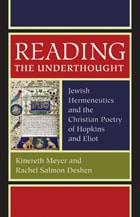
Reading the Underthought
Jewish Hermeneutics and the Christian Poetry of Hopkins and EliotKinereth Meyer
Catholic University of America Press, 2010
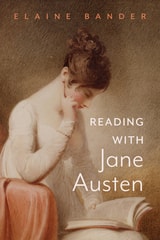
Reading with Jane Austen
Elaine Bander
Bucknell University Press, 2026
Jane Austen has more readers today than at any time in history. Many of Austen’s legions of fans, however, came to her novels after first seeing films or other adaptations made for twenty-first-century audiences. Austen herself conversely spent her literary career undermining romantic clichés and rethinking novel conventions. Confident that she and her contemporaries shared a common reading culture, Austen deliberately constructed her novels to set readerly expectations, only to disrupt or confound those expectations by challenging her readers’ assumptions and values. In Reading with Jane Austen, Elaine Bander carefully rereads the great author’s novels—beginning with her late work of juvenilia, “Catharine, or The Bower,” and ending with her final fragment, “Sanditon”—against the rich context of late Georgian literary and intellectual culture. In doing so, Bander invites us into the transformative experience that Austen intentionally designed for her earliest readers, adding new layers of appreciation for those who love her work.
Published by Bucknell University Press. Distributed worldwide by Rutgers University Press.
Elaine Bander speaking at the Atwater Library in Quebec (https://youtu.be/UeEjFOfp9cQ?si=Wv2hsLxkGK157WZI)
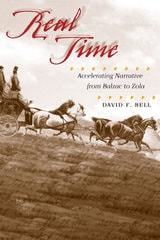
Real Time
Accelerating Narrative from Balzac to ZolaDavid F. Bell
University of Illinois Press, 2003
Nineteenth-century technological advances radically altered the infrastructure of France, changing the ways ordinary citizens–-and literary characters--viewed time, space, distance, and speed. The most influential of these advances included the improvement of the stagecoach, the growth of road and canal networks leading to the advent of the railway, and the increasing use of mail, and of the optical telegraph. Citing examples from a wide range of novels and stories, Bell demonstrates the numerous ways in which these trends of acceleration became not just literary devices and themes but also structuring principles of the novels themselves.
Beginning with both the provincial and the Parisian communications networks of Balzac, Bell proceeds to discuss the roles of horses and optical telegraphs in Stendhal and the importance of domination of communication channels to the characters of Dumas, whose Count of Monte-Cristo might be seen as the ultimate fictional master of this accelerated culture. Finally, Bell analyzes the cinematic vision created by the arrival of the railroad, as depicted by Zola in La Bète Humaine.
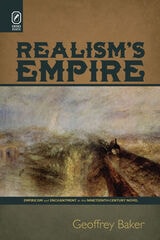
Realism's Empire
Empiricism and Enchantment in the Nineteenth-Century NovelGeoffrey Baker
The Ohio State University Press, 2009
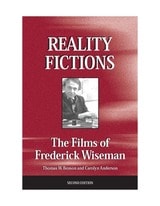
Reality Fictions
The Films of Frederick WisemanThomas W. Benson and Carolyn Anderson
Southern Illinois University Press, 2002
Providing in-depth accounts and close critical examinations of nine of Wiseman’s films—Titicut Follies, High School, Basic Training, Essene, Juvenile Court, Primate, Welfare, Canal Zone, and The Store—thissecond edition features a new introduction, a revised and updated filmography, and an updated bibliography.
No book on documentary film has ever analyzed in such detail the work of a single filmmaker. In impeccable close readings of his films, Tom Benson and Carolyn Anderson explore how Frederick Wiseman has elaborated his widely admired sensibility.
A special feature is an extended chapter on the legal difficulties encountered by Wiseman’s first documentary, Titicut Follies, an unflinching depiction of conditions in the Massachusetts Correctional Institution at Bridgewater. The Commonwealth of Massachusetts took Wiseman to court, seeking to prevent the exhibition of Titicut Follies. In New York State, three judges refused to issue an injunction against the film. In Massachusetts, the film was the subject of a sensational series of legislative hearings and a court trial, in which the principals gave very different stories of the conditions and terms under which the film had been negotiated and produced.
Wiseman, himself an attorney, exchanged charges and countercharges with Massachusetts Attorney General Elliot Richardson, and the controversy split the civil liberties community. Judge Harry Kalus, calling Titicut Follies "a nightmare of ghoulish obscenities," not only ruled for the Commonwealth but ordered that the film be destroyed. On appeal, the Massachusetts Supreme Judicial Court modified the Kalus ruling, allowing the film to be seen only by professional audiences. Titicut Follies became the only American film whose exhibition is restricted for reasons other than obscenity or national security.
After Titicut Follies, Wiseman went on to become a major independent documentary producer. Many of his films have been shown on public television in the United States and at film festivals around the world. The films are widely admired and often highly controversial. Wiseman has developed a unique cinematic rhetoric that draws from both the documentary and fiction traditions to describe American institutions: a high school, basic training, a monastery, a juvenile court, a primate research center, a welfare agency, the Panama canal zone, and a department store. Benson and Anderson scrutinize each of these films, record the reactions of some of his subjects and audiences, and present the heretofore neglected contributions of his four cinematographers: John Marshall, Richard Leiterman, William Brayne, and John Davey.
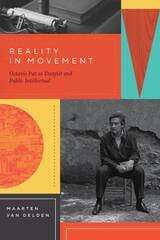
Reality in Movement
Octavio Paz as Essayist and Public IntellectualMaarten van Delden
Vanderbilt University Press, 2021
Reality in Movement looks at a wide range of topics of interest in Paz's career, including his engagement with the subversive, adversary strain in Western culture; his meditations on questions of cultural identity and intercultural contact; his dialogue with both leftist and conservative ideological traditions; his interest in feminism and psychoanalysis, and his theory of poetry. It concludes with a chapter on Octavio Paz as a literary character—a kind of reception study.
Offering a complex and nuanced portrait of Paz as a writer and thinker—as well as an understanding of the era in which he lived—Reality in Movement will appeal to students of Octavio Paz and of Mexican literature more generally, and to readers with an interest in the many significant literary, cultural, political, and historical topics Paz wrote about over the course of his long career.
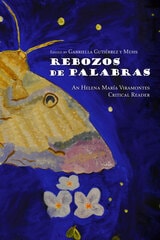
Rebozos de Palabras
An Helena María Viramontes Critical ReaderEdited by Gabriella Gutiérrez y Muhs
University of Arizona Press, 2013
As Gabriella Gutiérrez y Muhs points out in her insightful introduction, not only has Viramontes’s work not yet received the broad critical engagement it richly deserves, but there remains a monumental gap in the interpretations of Chicana literature that reach mainstream audiences. Rebozos de Palabras addresses this void by focusing on how the Chicana image has evolved through Viramontes’s body of work. With a foreword by Sonia Saldívar-Hull, this collection addresses Viramontes entire oeuvre through newly produced articles by major literary critics and emerging scholars who engage Viramontes’s writing from multiple perspectives.
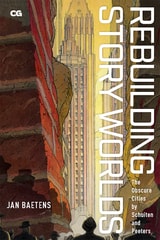
Rebuilding Story Worlds
The Obscure Cities by Schuiten and PeetersJan Baetens
Rutgers University Press, 2020
Rebuilding Story Worlds offers the first full-length study of this seminal series, exploring both the artistic traditions from which it emerges and the innovative ways it plays with genre, gender, and urban space. Comics scholar Jan Baetens examines how Schuiten’s work as an architectural designer informs the series’ concerns with the preservation of historic buildings. He also includes an original interview with Peeters, which reveals how poststructuralist critical theory influenced their construction of a rhizomatic fictional world, one which has made space for fan contributions through the Alta Plana website.
Synthesizing cutting-edge approaches from both literary and visual studies, Rebuilding Story Worlds will give readers a new appreciation for both the aesthetic ingenuity of The Obscure Cities and its nuanced conception of politics.
Reciprocity, Truth, and Gender in Pindar and Aeschylus
Arum Park
University of Michigan Press, 2023
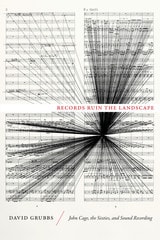
Records Ruin the Landscape
John Cage, the Sixties, and Sound RecordingDavid Grubbs
Duke University Press, 2014
In their day, few of these works circulated in recorded form. By contrast, contemporary listeners can encounter this music not only through a flood of LP and CD releases of archival recordings but also in even greater volume through Internet file sharing and online resources. Present-day listeners are coming to know that era's experimental music through the recorded artifacts of composers and musicians who largely disavowed recordings. In Records Ruin the Landscape, Grubbs surveys a musical landscape marked by altered listening practices.
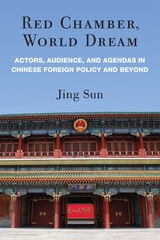
Red Chamber, World Dream
Actors, Audience, and Agendas in Chinese Foreign Policy and BeyondJing Sun
University of Michigan Press, 2021
Chinese president Xi Jinping is most famously associated with his “Chinese Dream” campaign, envisioning a great rejuvenation of the nation. Many observers, though, view China’s pursuit of this dream as alarming. They see a global power ready to abandon its low-profile diplomacy and eager to throw its weight around.
Red Chamber, World Dream represents an interdisciplinary effort of deciphering the Chinese Dream and its global impact. Jing Sun employs methods from political science and journalism and concepts from literature, sociology, psychology and drama studies, to offer a multilevel analysis of various actors’ roles in Chinese foreign policy making: the leaders, the bureaucrats, and its increasingly diversified public. This book rejects a simple dichotomy of an omnipotent, authoritarian state versus a suppressed society. Instead, it examines how Chinese foreign policy is constantly being forged and contested by interactions among its leaders, bureaucrats, and people. The competition for shaping China’s foreign policy also happens on multiple arenas: intraparty fighting, inter-ministerial feuding, social media, TV dramas and movies, among others. This book presents vast amounts of historical detail, many unearthed the first time in the English language. Meanwhile, it also examines China’s diplomatic responses to ongoing issues like the Covid-19 crisis. The result is a study multidisciplinary in nature, rich in historical nuance, and timely in contemporary significance.
Redefining History
Ghosts, Spirits, and Human Society in P'u Sung-ling's World, 1640-1715Chun-shu Chang and Shelley Hsueh-lun Chang
University of Michigan Press, 1998
While P'u did not attain his goal of becoming a statesman, having failed exam after exam for fifty years, he was not impeded in his intellectual and literary pursuits. When he died in 1715, he left a body of work including over 500 essays, 1,295 poems, 119 lyrics, 18 encyclopedias and handbooks, 20 operas, 100 folk songs, and 500 short stories. He went on to become one of the most well-known scholar-writers and the best known short-story author in Chinese history. The 500 stories in Liao-chai chih-i, which P'u composed in his self-styled capacity as historian, had the most lasting influence of any single work on the shaping of popular consciousness in China.
Following the life and literature of one man, this study sets out to detail the history of the Ming-Ch'ing dynastic transition in the East Shantung region. It is based on an exhaustive exploration of contemporary Chinese historical and literary sources, including local histories, clan and family records, autobiographical and biographical materials, folklore, essays, poems, and plays: in short, the entire range of literary sources. Using a comprehensive historical approach, the authors cover a broad array of issues relevant to the topic at hand.
Redefining History is an important source for the study of Chinese history and literature and comparative historical studies. It will also appeal to people interested in the relation between history and literature, issues of gender and class, race relations, biographical studies, and popular culture movements.
Chun-shu Chang is Professor of History, University of Michigan, and Honorary Professor of Chinese History, China. Shelley Hsueh-lun Chang is Visiting Associate Professor of History and Research Associate, Center for Chinese Studies, University of Michigan.
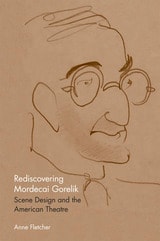
Rediscovering Mordecai Gorelik
Scene Design and the American TheatreAnne Fletcher
Southern Illinois University Press, 2009
Rediscovering Mordecai Gorelik explores the life and work of the pioneering scene designer whose career spanned decades in American theatre. Anne Fletcher’s insightful volume draws intriguing parallels and contrasts between Gorelik’s productions and the theatrical movements of the twentieth century, exposing the indelible mark he left on the stage. Through in-depth analysis of his letters, diaries, designs, and theoretical works, Fletcher examines the ways in which Gorelik’s productions can be used as a mirror to reflect the shifting dramatic landscapes of his times.
Fletcher places Gorelik against the colorful historical backdrops that surrounded him—including the avant-garde movement of the 1920s, World War II, the Cold War, and absurdism—using the designer’s career as a window into the theatre during these eras. Within these cultural contexts, Gorelik sought to blaze his own unconventional path through the realms of theatre and theory. Fletcher traces Gorelik’s tenures with such companies as the Provincetown Players, the Theatre Guild, and the Theatre Union, as well as his relationships with icons such as Bertolt Brecht, revealing how his interactions with others influenced his progressive designs and thus set the stage for major dramatic innovations. In particular, Fletcher explores Gorelik’s use of scenic metaphor: the employment of stage design techniques to subtly enhance the tone or mood of a production. Fletcher also details the designer’s written contributions to criticism and theory, including the influential volume New Theatres for Old, as well as other articles and publications.
In addition to thorough examinations of several of Gorelik’s most famous projects, Rediscovering Mordecai Gorelik contains explications of productions by such legends as John Howard Lawson, Clifford Odets, and Arthur Miller. Also included are numerous full-color and black-and-white illustrations of Gorelik’s work, most of which have never been available to the public until now. More than simply a portrait of one man, this indispensable volume is a cultural history of American theatre as seen through the career of a visionary designer and theoretician.

Refiguring Race and Risk
Counternarratives of Care in the US Security StateRoberta Wolfson
The Ohio State University Press, 2024
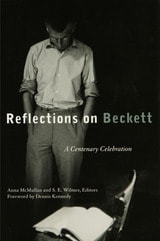
Reflections on Beckett
A Centenary CelebrationAnna McMullan and S. E. Wilmer, Editors. Foreword by Dennis Kennedy
University of Michigan Press, 2009
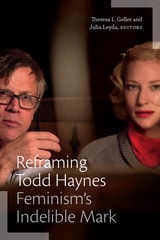
Reframing Todd Haynes
Feminism’s Indelible MarkTheresa L. Geller and Julia Leyda, editors
Duke University Press, 2022
Contributors. Danielle Bouchard, Nick Davis, Jigna Desai, Mary R. Desjardins, Patrick Flanery, Theresa L. Geller, Rebecca M. Gordon, Jess Issacharoff, Lynne Joyrich, Bridget Kies, Julia Leyda, David E. Maynard, Noah A. Tsika, Patricia White, Sharon Willis
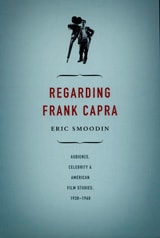
Regarding Frank Capra
Audience, Celebrity, and American Film Studies, 1930–1960Eric Smoodin
Duke University Press, 2004
Drawing on archival sources including fan letters, exhibitor reports, military and prison records, government and corporate documents, and trade journals, Smoodin explains how the venues where Capra’s films were seen and the strategies used to promote the films affected audience response and how, in turn, audience response shaped film production. He analyzes issues of foreign censorship and government intervention in the making of The Bitter Tea of General Yen; the response of high school students to It Happened One Night; fan engagement with the overtly political discourse of Meet John Doe and Mr. Smith Goes to Washington; San Quentin prisoners’ reaction to a special screening of It’s a Wonderful Life; and at&t’s involvement in Capra’s later documentary work for the Bell Science Series. He also looks at the reception of Capra’s series Why We Fight, used by the American military to train recruits and re-educate German prisoners of war. Illuminating the role of the famous director and his films in American culture, Regarding Frank Capra signals new directions for significant research on film reception and promotion.
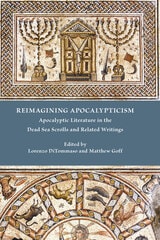
Reimagining Apocalypticism
Apocalyptic Literature in the Dead Sea Scrolls and Related WritingsLorenzo DiTommaso
SBL Press, 2023
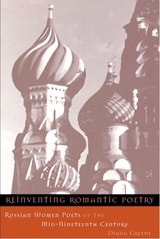
Reinventing Romantic Poetry
Russian Women Poets of the Mid-Nineteenth CenturyDiana Greene
University of Wisconsin Press, 2003
Reinventing Romantic Poetry offers a new look at the Russian literary scene in the nineteenth century. While celebrated poets such as Aleksandr Pushkin worked within a male-centered Romantic aesthetic—the poet as a bard or sexual conqueror; nature as a mother or mistress; the poet’s muse as an idealized woman—Russian women attempting to write Romantic poetry found they had to reinvent poetic conventions of the day to express themselves as women and as poets. Comparing the poetry of fourteen men and fourteen women from this period, Diana Greene revives and redefines the women’s writings and offers a thoughtful examination of the sexual politics of reception and literary reputation.
The fourteen women considered wrote poetry in every genre, from visions to verse tales, from love lyrics to metaphysical poetry, as well as prose works and plays. Greene delves into the reasons why their writing was dismissed, focusing in particular on the work of Evdokiia Rostopchina, Nadezhda Khvoshchinskaia, and Karolina Pavlova. Greene also considers class as a factor in literary reputation, comparing canonical male poets with the work of other men whose work, like the women’s, was deemed inferior at the time. The book also features an appendix of significant poems by Russian women discussed in the text. Some, found in archival notebooks, are published here for the first time, and others are reprinted for the first time since the mid-nineteenth century.
Religion and Spanish Film
Luis Buñuel, the Franco Era, and Contemporary DirectorsElizabeth Scarlett
University of Michigan Press, 2014