Results by title
4531 books match the query 'Cultural & Ethnic Studies' and 272 start with r
RSF
The Russell Sage Foundation Journal of the Social SciencesJennifer Lee
Russell Sage Foundation, 2026
Stereotyped as “model minorities” who excel in the classroom, Asian Americans are more highly educated than all other U.S. groups. Once in the labor market, they outearn White Americans. Some believe this is evidence that White privilege, racial bias, and gender discrimination are fictitious narratives of a liberal “woke” agenda. Others use it as proof that confirms their stereotypes that Asian Americans are inherently smarter and harder working than other groups. While much attention has focused on Asian Americans’ academic achievement, far less research considers whether their later careers mirror their early success. In this issue of RSF, sociologists Jennifer Lee, Kimberly Goyette, Xi Song, and Yu Xie, management scholar Jackson G. Lu, and an interdisciplinary group of contributors examine how Asian Americans fare in the workplace.
The ten articles in this issue examine the ways in which Asian Americans, due to geographic clustering, are advantaged at a national level but disadvantaged at the regional level, how gender, family, and marriage impact Asian Americans in the workplace, and the different ways Asian Americans strategically adapt to the labor market. Robert Manduca and Jane Furey reveal that while, on average, Asian Americans outearn White Americans at a national level, when compared to Whites living in the same metropolitan area, Asians earn only 88 percent as much. Sharon Sassler and Gabrielle Sorresso find that among computer science professionals, Indian women have a larger gender wage gap than White and Chinese women and experience larger marriage and parenthood penalties in earnings. Sojung Lim and Wonjeong Jeong show that Asian women are more likely to live with extended family than White women, leading to higher rates of employment among Asian women with children. Angelina Grigoryeva finds that while Asian Americans are more likely to receive stock-based compensation than White Americans, this is because they are more likely to work in jobs where stock options are provided. Asians and Whites working in the same types of jobs are equally likely to receive stock-based compensation and in similar amounts. Shih-Chun Chien and colleagues find that despite being the fastest-growing racial minority group entering the legal profession, Asian Americans are underrepresented in leadership positions. They find this pattern is attributed, in part, to employers’ pervasive stereotypes that Asian Americans lack traits typically associated with leadership, such as creativity and assertiveness.
This issue of RSF reveals that the perception of the Asian American advantage in the workplace is illusory and sheds light on the lived experiences of the “model minority” when they go to work.

RSF
The Russell Sage Foundation Journal of the Social Sciences: Beyond Deaths of Despair: New Research on the Health and Well-Being of Low- and Moderately-Educated AmericansAnne Case
Russell Sage Foundation, 2026
The term “deaths of despair” was coined in 2015 by economists Anne Case and Agnus Deaton to describe the increasing mortality rate for White Americans without college degrees due to drug overdoses, suicide, and alcoholic liver disease. These deaths were attributed to the despondency experienced by the White working class, who were left behind by changes in the American economy. However, the mortality picture has changed since then. Mortality rates are now rising among both Black and White Americans without a college degree. Nearly all major causes of death are increasing more, or decreasing less, for people without college degrees. The educational gap in mortality has become so severe that, in 2021, adult life expectancy was more than eight years higher among college graduates. In this double issue of RSF, Case, Deaton, sociologist Andrew J. Cherlin, and an interdisciplinary group of contributors move beyond the concept of “deaths of despair” to explore the widening educational gap in mortality.
Issue 1 provides new perspectives on the education gap in mortality as well as new viewpoints on the non-college population. Christopher L. Foote and colleagues show that much of the educational gap in mortality may be due to smoking. One of the most popular explanations for the growing mortality gap is that college unlocks better job opportunities. However, Sam Arenberg and Sam Stripling find that what may matter for longer life expectancy is not so much having a “good” job as having a job at all, as high school dropouts with jobs have lower mortality rates than college graduates without them. Victor Tan Chen and colleagues reveal that people with opioid use disorders experience “precarity chains:” overlapping, connected hazards that combine to put people at increased risk of substance abuse.
Issue 2 also gives new viewpoints on the non-college population and examines geographic and international variation in mortality. Grace Landrum-Hall and colleagues discover that men with health issues repeatedly enter and exit the formal labor force—referred to as “churning”—due to inflexible employer policies and income support program policies. Jennifer Karas Montez and colleagues show that rural areas and small cities have seen increases in mortality, while large urban areas have seen decreases. Iliya Gutin and colleagues find that the educational gap in health and wellbeing is typically larger in the U.S. than in Britian. This may be because education in the U.S.—and the resulting higher salaries—allows for more access to health-promoting resources.
This double issue of RSF provides fascinating insights into the stark and alarming mortality gap between those with and without a college degree in the U.S.
RSF
The Russell Sage Foundation Journal of the Social Sciences: Black Reparations: Insights from the Social SciencesWilliam Darity, Jr.
Russell Sage Foundation, 2024
Slavery in the United States was a brutal, racialized system of forced labor which helped provide the startup capital for the U.S. economy’s meteoric rise. Post-slavery legal race discrimination produced segregation not only the Jim Crow South but also in northern states, where Blacks were denied many benefits of the New Deal that helped lift whites into the middle class. The 60 years since the passage of the Civil Rights Act of 1964 have witnessed mass incarceration, ongoing police killings of unarmed Blacks, continued discrimination in housing, employment, and credit markers, and a persistent devaluation of Black lives. This history of enslavement and discrimination has yielded disastrous intergenerational consequences for Black wealth and socioeconomic well-being, and calls for reparations have gained currency as a way to redress these historical wrongs. This special double issue of RSF brings together the most current social science research and policy options with regard to reparations for Black Americans.
While reparations have been issued to many peoples around the world, including in the U.S., reparations to Black Americans remain highly contested. Contributor Kathryn Anne Edwards and co-authors use case studies of previous reparations policies to offer important insights into the features that might shape reparations policy for Black Americans. Trina Shanks and colleagues argue that the structure of existing child development accounts provides a practical framework for delivering reparations payments to recipients of all ages through structured savings plans that promote asset growth and fiscal autonomy.
The political feasibility of reparations programs will largely depend on public opinion. Jesse Rhodes and colleagues draw on surveys administered between 2021 and 2023 to show that up to 28 percent of White Americans support cash reparations, up from a tiny 4 percent in 2000. Kamri Hudgins and co-authors suggest that public education on racial disparities may increase the feasibility of a reparations program. Thus, education on real-existing racial disparities in intergenerational wealth, income, health, homeownership, and education may prove to be crucial to affect a federal Black reparations program.
This important double issue of RSF employs rigorous social science research to shed new light on one of the most pressing and contentious policy proposals of our times. Engaging the debate over reparations from the past to the present and from the global to the local, this double issue of RSF provides a valuable roadmap to the issues at stake in the Black American reparations movement.
RSF
The Russell Sage Foundation Journal of the Social Sciences: Building an Open Qualitative Social ScienceKathryn Edin
Russell Sage Foundation, 2024
In recent decades, the social sciences have struggled to predict, monitor, and understand ongoing social crises. This is due in part to a lack of infrastructure to adequately do so. The American Voices Project (AVP), an experimental public-use platform for collecting qualitative data, was designed to expand the capacity of social science research by complementing existing research methods examining the everyday lives of Americans. The AVP was fielded in 2019-2022 as the country’s first nationally-representative, large-scale, multiple-domain qualitative data collection effort. In this double issue of RSF, sociologists Kathryn J. Edin, Corey D. Fields, David B. Grusky, Marybeth J. Mattingly, Kristen Olson, and Charles Varner, computer scientist Jure Leskovec, and an interdisciplinary group of contributors utilize data from the AVP to determine whether the platform can provide insight into the lives of Americans and address social science’s current shortcomings.
Issue 1 examines Americans’ experiences during the COVID-19 pandemic, identifies and explores emerging crises in the U.S., and includes the first set of classical interpretive studies based on a public-use dataset. Kyle Fee and colleagues find that job loss during the pandemic was associated with declines in financial and mental wellbeing, that expanded safety net programs did not disincentivize work, and that existing survey-based monitoring is missing important pockets of deprivation. Katherine Cramer and colleagues discover a more thoroughgoing “disaffection crisis” than has been appreciated to date, a crisis in which low- and middle-income earners often feel profoundly disconnected from politics and have little confidence in their ability to meaningfully effect change. Josephina Flores Morales shows that healthcare costs – even after recent and ongoing reforms in healthcare – remain insurmountable for many Latinx Americans, who must then rely on family for unexpected medical costs. Brandon A. Jackson finds that higher income gig workers hold surprisingly positive views of platform work as a way to explore their community, while lower income gig workers are less keen and focus on the financial benefits of gig work.
Issue 2 illustrates how the AVP can be used to uncover hidden populations and to explore how some types of crises, mindsets, or sensibilities can have cascading effects that impact multiple areas of people’s lives. Corey M. Abramson and colleagues use the AVP to uncover the population of Americans experiencing physical pain, showing that while pain is very prevalent, it has larger negative effects on the life trajectories of women and those without a college degree than on other groups. James Hiebert and colleagues uncover the large population of individuals who left the labor market due to a health condition and describe their strategies for reducing stigma when explaining why they are no longer working. Shira Zilberstein and colleagues discover that when individuals discuss their lives they feature “agentic moments” in which they can claim agency despite facing constraints that could be seen as limiting choice and agency.
This volume of RSF provides compelling insights into the lives of Americans and convincingly makes the case for building a permanent public-use platform for qualitative research.
RSF
The Russell Sage Foundation Journal of the Social Sciences: The Criminal Justuce System as a Labor Market InsitutionSandra Susan Smith
Russell Sage Foundation, 2020
Inmate labor fuels prisons. The incarcerated work in prison industries that collaborate with private corporations. Fair labor laws do not apply to prisons, where it is common for inmates to earn less than one dollar per hour. But involvement with the criminal justice system continues to shape and hinder the future employment and earnings of the formerly incarcerated long after they have been released. In this issue of RSF, edited by sociologist Sandra Susan Smith and legal scholar Jonathan Simon, an interdisciplinary group of scholars analyze how the criminal justice system acts as a de facto labor market institution by compelling or coercing labor from the justice-involved.
The social and economic effects of criminal justice involvement are widespread, with almost seven million people under some form of direct supervision. The contributors to this issue examine how the criminal justice system affects the livelihood and families of both the incarcerated and formerly incarcerated. Cody Warner, Joshua Kaiser, and Jason Houle explore how “hidden sentences” --restricted access to voting rights, public housing, and professional licensing--negatively impact labor market outcomes for young adults with criminal records. Michele Cadigan and Garbriela Kirk look at the burden of court fees and fines, or legal financial obligations, that place a strain on the work commitments and resources of low-income people. Joe LaBriola sheds new light on how employment affects recidivism; he shows that parolees who find high-quality jobs, such as in the manufacturing industry, are less likely to return to prison than those employed in low-quality jobs. Noah Zatz and Michael Stoll demonstrate how the threat of imprisonment for nonpayment of child support coerces labor among noncustodial fathers, particularly African-American men. Allison Dwyer Emory and her coauthors show that previously incarcerated fathers are less likely to pay either formal or informal cash child support or offer in-kind assistance to their children’s mothers.
This issue of RSF is a timely contribution to the field of scholarly literature that illuminates the far and often destructive reach that the criminal justice system has on those whose lives it touches. It advances our understanding of how the system functions as a labor market institution and the price it extracts from those involved with it.
RSF
The Russell Sage Foundation Journal of the Social Sciences: The Fiftieth Anniversary of the Kerner Commission ReportSusan T. Gooden
Russell Sage Foundation, 2018
Articles in the issue examine the extent to which the recommendations in the Kerner Report contributed to policy changes and improvements in the social and economic well-being of urban residents . In their introduction, Gooden and Myers analyze changes in socioeconomic inequality between whites and blacks over the last five decades. They find that while the black poverty rate has declined and black educational attainment has increased, disparities still remain. Additionally, the income gap and disparities in unemployment between blacks and whites remain virtually unchanged. Rick Loessberg and John Koskinen similarly note the persistence of these disparities, but also show that some of the Kerner Report’s recommendations were adopted at local levels and have provided the foundation for increased racial diversity in media, law enforcement reforms, and public housing desegregation.
Other contributors study the urban areas that were sites of the riots. Reynolds Farley shows that in Detroit, residential segregation has declined and interracial marriage has increased over the last fifty years. However, on key economic measures such as income and wealth, African Americans have fallen even further behind whites than they were in 1967 due to dramatic changes in Detroit’s labor market. In their study of wealth inequality in Los Angeles, Melany De La Cruz-Viesca and coauthors show that much of the wealth gap between blacks and whites is due to disparities in home ownership, a subject neglected in the Kerner Report. Marcus Casey and Bradley Hardy study the evolution of African American neighborhoods since the Kerner Report and find that neighborhoods directly affected by riots in the 1960s still remain among the most economically disadvantaged today.
The Kerner Report endures as a classic touchstone in the nation’s search for a path toward equality. Together, the articles in this special issue demonstrate the long-term influence of the report and show where further progress is needed to close the racial divide.
RSF
The Russell Sage Foundation Journal of the Social Sciences: U.S. Census 2020: Continuity and ChangeZhenchao Qian
Russell Sage Foundation, 2025
The census has registered more than two centuries of growth and transformation in America’s political, social, and economic life. It traditionally gives us the opportunity to ask big questions about and measure changes in American society. Sociologist and demographer Zhenchao Qian, economist Trevon Logan, and an interdisciplinary group of contributors examine how American society has changed — or stayed the same — from 2010-2020.
Topics examined in Issue 1 include the impact of census counts, changes in neighborhood demographics, gender inequality in education, and racial inequality in employment. Lisa Neidert and colleagues find that the census consistently undercounts Hispanics, Blacks, and Native Americans and overcounts Whites and Asians, which has negative impacts on state and federal funding for vulnerable communities. Nima Dahir shows the arrival of Black immigrants into Black American neighborhoods often results in a decline in the native Black American population and an increase in White residents. Claudia Buchmann and colleagues reveal that women are now earning more advanced degrees than men in the U.S., however rising shares of women, including those who are pursing advanced degrees, are attending for profit institutions and carrying student debt. Julie Y. Cai and Marybeth J. Mattingly find that workers with variable hours have lower incomes than those who have more stable hours and Black workers earn substantially less than their White counterparts when working jobs with volatile hours.
Themes explored in Issue 2 include changes in living arrangements, divergent families, and rural America. Hyunjoon Parkand colleagues find that despite growing public concern about the potential rise in solitary living, the likelihood of living alone has not changed much over the last four decades except for older men, who have an increased likelihood of living alone. Christopher S. Carpenter and colleagues show that gender minority individuals, including transgender and nonbinary individuals, are less likely to be married, more likely to be widowed, and less likely to live in a traditional two-adult household compared to their cisgender counterparts. Daniel T. Lichter and Kenneth M. Johnson reveal that while rural America is often envisioned as a monolith, it is made up of complex and diverse economic, social, and demographic conditions.
This volume of RSF provides an updated and insightful snapshot of American society in the 2010s.
RSF
The Russell Sage Foundation Journal of the Social Sciences: U.S. Census 2020: Continuity and ChangeZhenchao Qian
Russell Sage Foundation, 2024
The census has registered more than two centuries of growth and transformation in America’s political, social, and economic life. It traditionally gives us the opportunity to ask big questions about and measure changes in American society. Sociologist and demographer Zhenchao Qian, economist Trevon Logan, and an interdisciplinary group of contributors examine how American society has changed — or stayed the same — from 2010-2020.
Topics examined in Issue 1 include the impact of census counts, changes in neighborhood demographics, gender inequality in education, and racial inequality in employment. Lisa Neidert and colleagues find that the census consistently undercounts Hispanics, Blacks, and Native Americans and overcounts Whites and Asians, which has negative impacts on state and federal funding for vulnerable communities. Nima Dahir shows the arrival of Black immigrants into Black American neighborhoods often results in a decline in the native Black American population and an increase in White residents. Claudia Buchmann and colleagues reveal that women are now earning more advanced degrees than men in the U.S., however rising shares of women, including those who are pursing advanced degrees, are attending for profit institutions and carrying student debt. Julie Y. Cai and Marybeth J. Mattingly find that workers with variable hours have lower incomes than those who have more stable hours and Black workers earn substantially less than their White counterparts when working jobs with volatile hours.
Themes explored in Issue 2 include changes in living arrangements, divergent families, and rural America. Hyunjoon Parkand colleagues find that despite growing public concern about the potential rise in solitary living, the likelihood of living alone has not changed much over the last four decades except for older men, who have an increased likelihood of living alone. Christopher S. Carpenter and colleagues show that gender minority individuals, including transgender and nonbinary individuals, are less likely to be married, more likely to be widowed, and less likely to live in a traditional two-adult household compared to their cisgender counterparts. Daniel T. Lichter and Kenneth M. Johnson reveal that while rural America is often envisioned as a monolith, it is made up of complex and diverse economic, social, and demographic conditions.
This volume of RSF provides an updated and insightful snapshot of American society in the 2010s.
RSF
The Russell Sage Foundation Journal of the Social Sciences: Undocumented Immigrants and Their Experience with IllegalityRoberto G. Gonzales
Russell Sage Foundation, 2017
Caitlin Patler and Nicholas Branic find that undocumented individuals in immigrant detention facilities that are privately operated are less likely to be visited by family members than those in county or city jails, in part because private facilities have restricted visiting hours and are more difficult to access via public transportation. Lauren Heidbrink finds that unaccompanied minors in the custody of the Office of Refugee Resettlement (ORR) are less likely to be released to guardians or reunited with family members because ORR standards are much tougher than those used by child protective services for minor citizens.
Lauren E. Gulbas and Luis H. Zayas find that many children with undocumented parents experience symptoms of anxiety and depression due to fears about their parents’ status. Yet, increased access to financial, educational, legal, and other immigration-related resources for these families can help buffer these children against trauma related to deportation and family separations. Susan K. Brown and Alejandra J. Sanchez focus on children with undocumented mothers and show that because having an undocumented mother is associated with a reduction in children’s years of schooling, it also indirectly lowers their levels of voting, activism, and political awareness as young adults.
Although undocumented immigrants are more enmeshed in the U.S. than they have been in the past, their status prevents further integration into society. This issue reveals the consequences of illegality not just for undocumented immigrants, but also for their families and their communities.
Race Becomes Tomorrow
North Carolina and the Shadow of Civil RightsGerald M. Sider
Duke University Press, 2015

Race Course Against White Supremacy
Against White SupremacyBill Ayers
Northwestern University Press, 2009
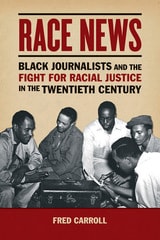
Race News
Black Journalists and the Fight for Racial Justice in the Twentieth CenturyFred Carroll
University of Illinois Press, 2017

Race Riot at East St. Louis, July 2, 1917
Elliott Rudwick
University of Illinois Press, 1982
. . a well-researched and thoughtful inquiry into the circumstances and
social forces producing one of the most violent of twentieth-century American
race riots."
-- American Historical Review
"His work fills a serious
gap in the history of racial violence in the United States. Never before
analyzed by sociologists in the way that the Chicago and Detroit riots
were, the East St. Louis riot outranked both as measured by the number
of deaths."
-- American Journal of Sociology
Race Riot
CHICAGO IN THE RED SUMMER OF 1919William M. Tuttle, Jr.
University of Illinois Press, 1996
Race Struggles
Edited by Theodore Koditschek, Sundiata Keita Cha-Jua, and Helen A. Neville
University of Illinois Press, 2008
These assumptions underlie the organization of the volume, which is divided into three parts: "Racial Structures," which explores the problem of how race has historically been structured in modern capitalist societies; "Racial Ideology and Identity," which tackles diverse but interrelated questions regarding the representation of race and racism in dominant ideologies and discourses; and "Struggle," which builds on the insight that resistance to structures and ideologies of racial oppression is always situated in a particular time and place.
In addition to discussing and analyzing various dimensions of the African American experience, contributors also consider the ways in which race plays itself out in the experience of Asian Americans and in the very different geopolitical environments of the British Empire and postcolonial Africa.
Contributors are Pedro Cabán, Sundiata Keita Cha-Jua, David Crockett, Theodore Koditschek, Scott Kurashige, Clarence Lang, Minkah Makalani, Helen A. Neville, Tola Olu Pearce, David Roediger, Monica M. White, and Jeffrey Williams.

Race Talk in a Mexican Cantina
Tatcho Mindiola
Michigan State University Press, 2021
Race against Liberalism
Black Workers and the UAW in DetroitDavid M. Lewis-Colman
University of Illinois Press, 2007
Race against Liberalism examines how black worker activism in Detroit shaped the racial politics of the labor movement and the white working class. David M. Lewis-Colman traces the substantive, long-standing disagreements between liberals and the black workers who embraced autonomous race-based action. As he shows, black autoworkers placed themselves at the center of Detroit's working-class politics and sought to forge a kind of working class unity that accommodated their interests as African Americans. The book covers the independent caucuses in the 1940s and the Trade Union Leadership Council in the 1950s; the black power movement and Revolutionary Union Movements of the mid-1960s; and the independent race-based activism of the 1970s that resulted in Coleman Young's 1973 election as the city's first black mayor.
Race among Friends
Exploring Race at a Suburban SchoolModica, Marianne
Rutgers University Press, 2015
This intriguing volume focuses on a “racially friendly” suburban charter school called Excellence Academy, highlighting the ways that students and teachers think about race and act out racial identity. Modica finds that even in an environment where students of all racial backgrounds work and play together harmoniously, race affects the daily experiences of students and teachers in profound but unexamined ways. Some teachers, she notes, feared that talking about race in the classroom would open them to charges of racism, so they avoided the topic. And rather than generate honest and constructive conversations about race, student friendships opened the door for insensitive racial comments by whites, resentment and silence by blacks, and racially biased administrative practices. In the end, the school’s friendly environment did not promote—and may have hindered—serious discussion of race and racial inequity.
The desire to ignore race in favor of a “colorblind society,” Modica writes, has become an entrenched part of American culture. But as Race Among Friends shows, when race becomes a taboo subject, it has serious ramifications for students and teachers of all ethnic origins.
Race and Class on Campus
Conversations with Ricardo’s DaughterJay M. Rochlin
University of Arizona Press, 1997
Here are some insights into the hot issues sparking debate over equal opportunity and American education. In these pages, through the use of a fictional character, author Jay Rochlin presents more than forty very real African American and Mexican American men and women who struggled to earn degrees at a large, nationally recognized university in the west. Their goals, their gains, and their disappointments echo the experiences of millions of others around the country during much of the twentieth century. Perhaps most important, their true stories will provide inspiration to the many young people who wonder whether pursuing the dream of a college education is possible for them.
Readers will warm to the words of Carlos Vélez-Ibáñez, learning as a toddler from his father that the university represented toda la sabiduría del mundo,"all the wisdom in the world." Their hearts will go out to young Laura Banks, barred as a black woman from a "whites only" pool and the swimming class required for her degree in physical education. In the face of open hostility and closed doors, these students and many others persevered. When they were shunned by Anglo social clubs, they created their own. When they were assigned "back of the room" seating because of discrimination, they rose above it. And when their ultimate goal--graduation--was threatened by racism, they fought it.
Looking back, many in the book remember coming from poor families who nonetheless considered themselves middle class and, as such, simply expected their children to go to college. This family support--bolstered by the students' own drive, ambition, and sense of responsibility--seemed to be pivotal to their success. Thus the book comes out strongly on the side of critical race theorists, who emphasize individual effort as a means of combating racism and personal narratives as a way of analyzing the complex issue.
These pages are filled with the voices of everyday men and women. Their language is straightforward and from the heart. Their message is timely, in the midst of current debates over race, class, and affirmative action. And their words--for American education and for the country as a whole--carry force and meaning guaranteed to reach far into the future.
Race and Cultural Practice in Popular Culture
Perez, Domino
Rutgers University Press, 2019

Race and Education, 1954-2007
Raymond Wolters
University of Missouri Press, 2008
In this compelling study, a scholar who has long observed the traumas of school desegregation uncovers the changes and difficulties with which public education has dealt over the last fifty years—and argues that some judicial decisions were ill-advised. Dealing candidly with matters usually considered taboo in academic discourse, Wolters argues that the Supreme Court acted correctly and in accordance with public sentiment in Brown but that it later took a wrong turn by equating desegregation with integration.
Retracing the history of desegregation and integration in America’s schools, Wolters distinguishes between several Court decisions, explaining that while Brown called for desegregation by requiring that schools deal with students on a racially nondiscriminatory basis, subsequent decisions—Green, Swann, Keyes—required actual integration through racial balancing. He places these decisions in the context of educational reform in the 1950s that sought to encourage bright students through advanced placement and honors courses—courses in which African American and Hispanic students were less likely to be enrolled. Then with the racial unrest of the 1960s, the pursuit of academic excellence yielded to concerns for uplifting disadvantaged youths and ensuring the predominance of middle-class peer groups in schools.
Wolters draws on rich historical records to document the devastating consequences of requiring racial balance and sheds new light on America’s legal, social, and cultural landscapes. He reexamines the educational theories of Kenneth Clark and James Coleman, and he challenges statistics that support the results of racial balancing by describing how school desegregation and integration actually proceeded in several towns, cities, and counties.
Race and Education is a bold challenge to political correctness in education and a corrective to the now widely accepted notion that desegregation and racially balanced integration are one and the same. It is essential reading for scholars of law and education and a wake-up call for citizens concerned about the future of America’s schools.
Race and Meaning
The African American Experience in MissouriGary R. Kremer
University of Missouri Press, 2014
In addition to his previously published articles, Kremer includes a personal introduction revealing how he first became interested in researching African American history and how his education at Lincoln University--and specifically the influence of his mentor, Lorenzo Greene--helped him to realize his eventual career path. Race and Meaning makes a collection of largely unheard stories spanning much of Missouri history accessible for the first time in one place, allowing each article to be read in the context of the others, and creating a whole that is much greater than the sum of its parts. Whether you are a student, researcher, or general reader, this book will be essential to anyone with an interest in Missouri history.
Race and Performance after Repetition
Soyica Diggs Colbert, Douglas A. Jones Jr., and Shane Vogel, editors
Duke University Press, 2020
Contributors. Joshua Chambers-Letson, Soyica Diggs Colbert, Nicholas Fesette, Patricia Herrera, Jasmine Elizabeth Johnson, Douglas A. Jones Jr., Mario LaMothe, Daphne P. Lei, Jisha Menon, Tavia Nyong’o, Tina Post, Elizabeth W. Son, Shane Vogel, Catherine M. Young, Katherine Zien
Race and Photography
Racial Photography as Scientific Evidence, 1876-1980Amos Morris-Reich
University of Chicago Press, 2015
Exploring the development of racial photography wherever it took place, including countries like France and England, Morris-Reich pays special attention to the German and Jewish contexts of scientific racism. Through careful reconstruction of individual cases, conceptual genealogies, and patterns of practice, he compares the intended roles of photography with its actual use in scientific argumentation. He examines the diverse ways it was used to establish racial ideologies—as illustrations of types, statistical data, or as self-evident record of racial signs. Altogether, Morris-Reich visits this troubling history to outline important truths about the roles of visual argumentation, imagination, perception, aesthetics, epistemology, and ideology within scientific study.
Race and Politics
Asian Americans, Latinos, and Whites in a Los Angeles SuburbLeland T. Saito. Foreword by Roger Daniels
University of Illinois Press, 1998
Located a mere fifteen minutes from Los Angeles, the San Gabriel Valley is an incubator for California's new ethnic politics. Here, Latinos and Asian Americans are the dominant groups. Politics are Latino-dominated, while a large infusion of Chinese immigrants and capital has made the San Gabriel Valley the center of the nation's largest Chinese ethnic economy. The white population, meanwhile, has dropped from an overwhelming majority in 1970 to a minority in 1990.
Leland T. Saito presents an insider's view of the political, economic, and cultural implications of this ethnic mix. He examines how diverse residents of the region have worked to overcome their initial antagonisms and develop new, more effective political alliances.
Tracing grassroots political organization along racial and ethnic lines, Race and Politics focuses on the construction of new identities in general and the panethnic affiliation "Asian American" in particular.
Race and Radicalism in the Union Army
Mark A. Lause
University of Illinois Press, 2013
In this compelling portrait of interracial activism, Mark A. Lause documents the efforts of radical followers of John Brown to construct a triracial portion of the Federal Army of the Frontier. Mobilized and inspired by the idea of a Union that would benefit all, black, Indian, and white soldiers fought side by side, achieving remarkable successes in the field. Against a backdrop of idealism, racism, greed, and the agonies and deprivations of combat, Lause examines links between radicalism and reform, on the one hand, and racialized interactions among blacks, Indians, and whites, on the other.
Lause examines how this multiracial vision of American society developed on the Western frontier. Focusing on the men and women who supported Brown in territorial Kansas, Lause examines the impact of abolitionist sentiment on relations with Indians and the crucial role of nonwhites in the conflict. Through this experience, Indians, blacks, and whites began to see their destinies as interdependent, and Lause discusses the radicalizing impact of this triracial Unionism upon the military course of the war in the upper Trans-Mississippi.
The aftermath of the Civil War destroyed much of the memory of the war in the West, particularly in the Indian Territory (now Oklahoma). The opportunity for an interracial society was quashed by the government's willingness to redefine the lucrative field of Indian exploitation for military and civilian officials and contractors.
Assessing the social interrelations, ramifications, and military impact of nonwhites in the Union forces, Race and Radicalism in the Union Army explores the extent of interracial thought and activity among Americans in this period and greatly expands the historical narrative on the Civil War in the West.
Race and Religion Among the Chosen People of Crown Heights
Goldschmidt, Henry
Rutgers University Press, 2006
In August of 1991, the Brooklyn neighborhood of Crown Heights was engulfed in violence following the deaths of Gavin Cato and Yankel Rosenbaum—a West Indian boy struck by a car in the motorcade of a Hasidic spiritual leader and an orthodox Jew stabbed by a Black teenager. The ensuing unrest thrust the tensions between the Lubavitch Hasidic community and their Afro-Caribbean and African American neighbors into the media spotlight, spurring local and national debates on diversity and multiculturalism. Crown Heights became a symbol of racial and religious division. Yet few have paused to examine the nature of Black-Jewish difference in Crown Heights, or to question the flawed assumptions about race and religion that shape the politics—and perceptions—of conflict in the community.
In Race and Religion among the Chosen Peoples of Crown Heights, Henry Goldschmidt explores the everyday realities of difference in Crown Heights. Drawing on two years of fieldwork and interviews, he argues that identity formation is particularly complex in Crown Heights because the neighborhood’s communities envision the conflict in remarkably diverse ways. Lubavitch Hasidic Jews tend to describe it as a religious difference between Jews and Gentiles, while their Afro-Caribbean and African American neighbors usually define it as a racial difference between Blacks and Whites. These tangled definitions are further complicated by government agencies who address the issue as a matter of culture, and by the Lubavitch Hasidic belief—a belief shared with a surprising number of their neighbors—that they are a “chosen people” whose identity transcends the constraints of the social world.
The efforts of the Lubavitch Hasidic community to live as a divinely chosen people in a diverse Brooklyn neighborhood where collective identities are generally defined in terms of race illuminate the limits of American multiculturalism—a concept that claims to celebrate diversity, yet only accommodates variations of certain kinds. Taking the history of conflict in Crown Heights as an invitation to reimagine our shared social world, Goldschmidt interrogates the boundaries of race and religion and works to create space in American society for radical forms of cultural difference.
Race and Retail
Consumption across the Color LineBay, Mia
Rutgers University Press, 2015
Race and Role
The Mixed-Race Asian Experience in American DramaRena M. Heinrich
Rutgers University Press, 2023
Race and Role: The Mixed-Race Experience in American Drama traces the shifting identities of multiracial Asian figures in theater from the late-nineteenth century to the present day and explores the ways that mixed-race Asian identity transforms our understanding of race. Mixed-Asian playwrights harness theater’s generative power to enact performances of “double liminality” and expose the absurd tenacity with which society clings to a tenuous racial scaffolding.
Race and Time
American Women's Poetics from Antislavery to Racial ModernityJanet Gray
University of Iowa Press, 2004
Gray clarifies the cultural roles women’s poetry played in the nineteenth-century United States and also reveals that these poems offer a fascinating, dynamic, and diverse field for students of social and cultural history. Gray’s readings provide a rich sense of the contexts in which this poetry is embedded and examine its aesthetic and political vitality in meticulous detail, linking careful explication of the texts with analysis of the history of poetry, canons, literacy, and literary authority.
Race and Time distinguishes itself from other critical studies not only through its searching, in-depth readings but also through its sustained attention to less known poets and its departure from a Dickinson-centered model. Most significantly, it offers a focus on race, demonstrating how changes in both the U.S. racial structure and women’s place in public culture set the terms for change in how women poets envisioned the relationship between poetry and social power.
Gray’s work makes contributions to several fields of study: poetry, U.S. literary history and American studies, women’s studies, African American studies and whiteness studies, children’s literature, and cultural studies. While placing the works of figures who have been treated elsewhere (e.g., Dickinson and Harper) into revealing new relationships, Race and Time does much to open interdisciplinary discussion of unfamiliar works.
Race and the Forms of Knowledge
Technique, Identity, and Place in Artistic ResearchBen Spatz
Northwestern University Press, 2024
Enacts a radically interdisciplinary intersectionality to position performance-based research in solidarity with decoloniality
This boldly innovative work interrogates the form and meaning of artistic research (also called practice research, performance as research, and research-creation), examining its development within the context of predominately white institutions that have enabled and depoliticized it while highlighting its radical potential when reframed as a lineage of critical whiteness practice.
Ben Spatz crafts a fluid yet critical new framework, explored via a series of case studies that includes Spatz’s own practice-as-research, to productively confront hegemonic modes of white writing and white institutionality. Ultimately taking jewishness as a paradigmatically “molecular” identity—variously configured as racial, ethnic, religious, or national—they offer a series of concrete methodological and formal proposals for working at the intersections of embodied identities, artistic techniques, and alternative forms of knowledge.
Race and the Forms of Knowledge: Technique, Identity, and Place in Artistic Research takes inspiration from recent critical studies of blackness and indigeneity to show how artistic research is always involved in the production and transformation of identity. Spatz offers a toolkit of practical methods and concepts—from molecular identities to audiovisual ethnotechnics and earthing the laboratory—for reimagining the university and other contemporary institutions.
Race and the Foundations of Knowledge
Cultural Amnesia in the AcademyEdited by Joseph Young and Jana Evans Braziel
University of Illinois Press, 2006
Race and the Politics of Welfare Reform
Sanford F. Schram, Joe Soss, and Richard C. Fording, Editors
University of Michigan Press, 2003
Race at the Top
Asian Americans and Whites in Pursuit of the American Dream in Suburban SchoolsNatasha Warikoo
University of Chicago Press, 2022
The American suburb conjures an image of picturesque privilege: manicured lawns, quiet streets, and—most important to parents—high-quality schools. These elite enclaves are also historically white, allowing many white Americans to safeguard their privileges by using public schools to help their children enter top colleges. That’s changing, however, as Asian American professionals increasingly move into wealthy suburban areas to give their kids that same leg up for their college applications and future careers.
As Natasha Warikoo shows in Race at the Top, white and Asian parents alike will do anything to help their children get to the top of the achievement pile. She takes us into the affluent suburban East Coast school she calls “Woodcrest High,” with a student body about one-half white and one-third Asian American. As increasing numbers of Woodcrest’s Asian American students earn star-pupil status, many whites feel displaced from the top of the academic hierarchy, and their frustrations grow. To maintain their children’s edge, some white parents complain to the school that schoolwork has become too rigorous. They also emphasize excellence in extracurriculars like sports and theater, which maintains their children’s advantage.
Warikoo reveals how, even when they are bested, white families in Woodcrest work to change the rules in their favor so they can remain the winners of the meritocracy game. Along the way, Warikoo explores urgent issues of racial and economic inequality that play out in affluent suburban American high schools. Caught in a race for power and privilege at the very top of society, what families in towns like Woodcrest fail to see is that everyone in their race is getting a medal—the children who actually lose are those living beyond their town’s boundaries.
Race in America
The Struggle for EqualityHerbert Hill
University of Wisconsin Press, 1993
Race in America is a multidisciplinary analysis of race and injustice by some of the nation’s foremost scholar-activists who helped shape the course of the struggle for civil rights during the recent past. These essays provide a historical retrospective, an assessment of where we are now, and an outline of possibilities for the future.
The major controversial issues in race relations, in the past and in the present, such as affirmative action, educational segregation, racial practices of labor unions, legal strategies for protest movements, the persistence of racism in American institutions, and the sources of resistance to change are discussed at length by major authorities in their respective fields.
Many of the most important events in recent American history come alive in these pages as the strategies and programs, the victories and defeats of the civil rights movement are rigorously examined. A unique aspect of the book is that the human experience of active participants in this rich history is evoked through personal and often poignant accounts, such as those of Kenneth B. Clark, who in a memorable autobiographical essay describes a long life devoted to the pursuit of racial justice, and Patricia J. Williams, who relates the contemporary struggles of African American women to the historical context of slavery and its aftermath.
As no other book can, this collection provides the basis for the critical insights and historical perspectives that are essential for an understanding of the central issue still confronting American society: race and racism.
Race in the College Classroom
TuSmith, Bonnie
Rutgers University Press, 2002
Winner of the 2003 American Educational Studies Association Critics' Choice Awards
Winner of the 2003 Gustavus Myers Outstanding Book Award
Did affirmative action programs solve the problem of race on American college campuses, as several recent books would have us believe? If so, why does talking about race in anything more than a superficial way make so many students uncomfortable? Written by college instructors from many disciplines, this volume of essays takes a bold first step toward a nationwide conversation. Each of the twenty-nine contributors addresses one central question: what are the challenges facing a college professor who believes that teaching responsibly requires an honest and searching examination of race?
Professors from the humanities, social sciences, sciences, and education consider topics such as how the classroom environment is structured by race; the temptation to retreat from challenging students when faced with possible reprisals in the form of complaints or negative evaluations; the implications of using standardized evaluations in faculty tenure and promotion when the course subject is intimately connected with race; and the varying ways in which white faculty and faculty of color are impacted by teaching about race.
Race to the Bottom
How Racial Appeals Work in American PoliticsLaFleur Stephens-Dougan
University of Chicago Press, 2020
Challenging what we think we know about race and politics, LaFleur Stephens-Dougan argues that candidates across the racial and political spectrum engage in “racial distancing,” or using negative racial appeals to communicate to racially moderate and conservative whites—the overwhelming majority of whites—that they will not disrupt the racial status quo. Race to the Bottom closely examines empirical data on racialized partisan stereotypes to show that engaging in racial distancing through political platforms that do not address the needs of nonwhite communities and charged rhetoric that targets African Americans, immigrants, and others can be politically advantageous. Racialized communication persists as a well-worn campaign strategy because it has real electoral value for both white and black politicians seeking to broaden their coalitions. Stephens-Dougan reveals that claims of racial progress have been overstated as our politicians are incentivized to employ racial prejudices at the expense of the most marginalized in our society.
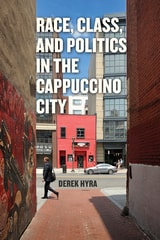
Race, Class, and Politics in the Cappuccino City
Derek S. Hyra
University of Chicago Press, 2017
Race, Class, and Politics in the Cappuccino City is an in-depth ethnography of this gilded ghetto. Derek S. Hyra captures here a quickly gentrifying space in which long-time black residents are joined, and variously displaced, by an influx of young, white, relatively wealthy, and/or gay professionals who, in part as a result of global economic forces and the recent development of central business districts, have returned to the cities earlier generations fled decades ago. As a result, America is witnessing the emergence of what Hyra calls “cappuccino cities.” A cappuccino has essentially the same ingredients as a cup of coffee with milk, but is considered upscale, and is double the price. In Hyra’s cappuccino city, the black inner-city neighborhood undergoes enormous transformations and becomes racially “lighter” and more expensive by the year.
Race, Ethnicity, and the COVID-19 Pandemic
Edited by Melvin E. Thomas, Loren M. Henderson, and Hayward Derrick Horton
University of Minnesota Press, 2022
To understand racial disparities in COVID-19 infections and deaths, we must first understand how they are linked to racial inequality. In the United States, the material advantages afforded by whiteness lead to lower rates of infections and deaths from COVID-19 when compared to the rates among Black, Latino, and Native American populations. Most experts point to differences in population density, underlying health conditions, and proportions of essential workers as the primary determinants in the levels of COVID-19 deaths.
The national response to the pandemic has laid bare the fundamentals of a racialized social structure. Assembled by a prestigious group of sociologists, this volume examines how particularly during the first year of COVID-19, the socioeconomic impact of the pandemic led to different and poorer outcomes for Black, Latino, and Native American populations. While color-blindness shaped national discussions on essential workers, charity, and differential mortality, minorities were overwhelmingly affected. The essays in this collection provide a mix of critical examination of the progress and direction of our COVID-19 response, personal accounts of the stark difference in care and outcomes for minorities throughout the United States, and offer recommendations to create a foundation for future response and research during the critical early days.
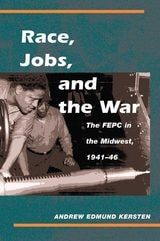
Race, Jobs, and the War
Andrew E. Kersten
University of Illinois Press, 1999
In this rigorous and thoroughly documented study focusing on the pivotal Midwest, Andrew E. Kersten shows how a tiny government agency--the President's Committee on Fair Employment Practice (FEPC)--influenced the course of civil rights reform, moving the United States closer to a national fair employment policy and laying the foundation for today's contested affirmative action practices.
Rejecting claims that black advancement during the war was due primarily to shortages of labor, Race, Jobs, and the War contends that the FEPC made significant strides in breaking racial barriers, settling complaints, and pursuing a vigorous educational campaign to foster more harmonious industrial relations between white and minority workers.
Race, Labor, and Violence in the Delta
Essays to Mark the Centennial of the Elaine MassacreMichael Pierce
University of Arkansas Press, 2022
Race, Liberalism, and Economics
David Colander, Robert E. Prasch, and Falguni A. Sheth, Editors
University of Michigan Press, 2009
The contributors show how the evolution of racist ideas has been a subtle process that is woven into larger movements in the development of scientific thought; economic thinking is embedded in a larger social milieu. Previous discussions of policies toward race have been constrained by that social milieu, and, since World War II, have largely focused on ending legislated and state-sanctioned discrimination. In the past decade, the broader policy debate has moved on to questions about the existence and relative importance of intangible sources of inequality, including market structure, information asymmetries, cumulative processes, and cultural and/or social capital. This book is a product of, and a contribution to, this modern discussion. It is uniquely transdisciplinary, with contributions by and discussions among economists, philosophers, anthropologists, and literature scholars.
The volume first examines the early history of work on race by economists and social scientists more generally. It continues by surveying American economists on race and featuring contributions that embody more modern approaches to race within economics. Finally it explores several important policy issues that follow from the discussion.
". . . adds new insights that contribute significantly to the debate on racial economic inequality in the U.S. The differing opinions of the contributors provide the broad perspective needed to examine this extremely complex issue."
--James Peoples, University of Wisconsin-Milwaukee
"There is an immense economic literature on racial discrimination, employing a variety of models and decomposition methods. This volume makes a unique contribution by focusing on the philosophical assumptions at the root of this analysis and by presenting many sides of the very vigorous debate surrounding these controversial issues."
--Thomas Maloney, University of Utah
"By focusing upon the progress of analytical technique, historians of economic thought have grossly neglected the symbiotic relation of economics to public policy and ideology. This collection of essays offers a most welcome breach of disciplinary apartheid. Seizing upon recent research in the almost forgotten writings about race of Classical economists and their contemporaries, it relates nineteenth-century ideas to current debates about economic discrimination and other manifestations of racism. As the writing is both learned and lively, the book should appeal both to the generally educated reader and to teachers of courses in multiculturalism."
--Melvin Reder, Isidore Brown and Gladys J. Brown Professor Emeritus of Urban and Labor Economics, University of Chicago
Race, Nature, and the Politics of Difference
Donald S. Moore, Jake Kosek, and Anand Pandian, eds.
Duke University Press, 2003
Synthesizing a number of fields—anthropology, cultural studies, and critical race, feminist, and postcolonial theory—this collection analyzes diverse historical, cultural, and spatial locations. Contributors draw on thinkers such as Fanon, Foucault, and Gramsci to investigate themes ranging from exclusionary notions of whiteness and wilderness in North America to linguistic purity in Germany. Some essayists focus on the racialized violence of imperial rule and evolutionary science and the biopolitics of race and class in the Guatemalan civil war. Others examine how race and nature are fused in biogenetic discourse—in the emergence of “racial diseases” such as sickle cell anemia, in a case of mistaken in vitro fertilization in which a white couple gave birth to a black child, and even in the world of North American dog breeding. Several essays tackle the politics of representation surrounding environmental justice movements, transnational sex tourism, and indigenous struggles for land and resource rights in Indonesia and Brazil.
Contributors. Bruce Braun, Giovanna Di Chiro, Paul Gilroy, Steven Gregory, Donna Haraway, Jake Kosek, Tania Murray Li, Uli Linke, Zine Magubane, Donald S. Moore, Diane Nelson, Anand Pandian, Alcida Rita Ramos, Keith Wailoo, Robyn Wiegman
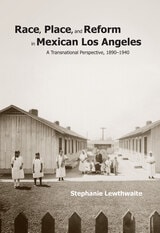
Race, Place, and Reform in Mexican Los Angeles
A Transnational Perspective, 1890-1940Stephanie Lewthwaite
University of Arizona Press, 2009
In Race, Place, and Reform in Mexican Los Angeles, Stephanie Lewthwaite presents evidence from a myriad of sources that these varied agendas of reform consistently supported the creation of racial, ethnic, and cultural differences across Los Angeles. Reformers simultaneously promoted acculturation and racialization, creating a “landscape of difference” that significantly shaped the place and status of Mexican immigrants and Mexican Americans from the Progressive era through the New Deal.
The book journeys across the urban, suburban, and rural spaces of Greater Los Angeles as it moves through time and examines the rural–urban migration of Mexicans on both a local and a transnational scale. Part 1 traverses the world of Progressive reform in urban Los Angeles, exploring the link between the region’s territorial and industrial expansion, early campaigns for social and housing reform, and the emergence of a first-generation Mexican immigrant population. Part 2 documents the shift from official Americanization and assimilation toward nativism and exclusion. Here Lewthwaite examines competing cultures of reform and the challenges to assimilation from Mexican nationalists and American nativists. Part 3 analyzes reform during the New Deal, which spawned the active resistance of second-generation Mexican Americans.
Race, Place, and Reform in Mexican Los Angeles achieves a full, broad, and nuanced account of the various—and often contradictory—efforts to reform the Mexican population of Los Angeles. With a transnational approach grounded in historical context, this book will appeal to students of history, cultural studies, and literary studies
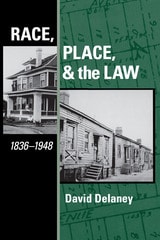
Race, Place, and the Law, 1836-1948
By David Delaney
University of Texas Press, 1998
Black and white Americans have occupied separate spaces since the days of "the big house" and "the quarters." But the segregation and racialization of American society was not a natural phenomenon that "just happened." The decisions, enacted into laws, that kept the races apart and restricted blacks to less desirable places sprang from legal reasoning which argued that segregated spaces were right, reasonable, and preferable to other arrangements.
In this book, David Delaney explores the historical intersections of race, place, and the law. Drawing on court cases spanning more than a century, he examines the moves and countermoves of attorneys and judges who participated in the geopolitics of slavery and emancipation; in the development of Jim Crow segregation, which effectively created apartheid laws in many cities; and in debates over the "doctrine of changed conditions," which challenged the legality of restrictive covenants and private contracts designed to exclude people of color from white neighborhoods. This historical investigation yields new insights into the patterns of segregation that persist in American society today.
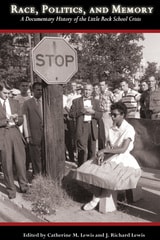
Race, Politics, and Memory
A Documentary History of the Little Rock School CrisisCatherine M. Lewis
University of Arkansas Press, 2007
Race, Redistricting, and Representation
The Unintended Consequences of Black Majority DistrictsDavid T. Canon
University of Chicago Press, 1999
In the most comprehensive treatment of the subject to date, David Canon shows that the unintended consequences of black majority districts actually contradict the common wisdom that whites will not be adequately represented in these areas. Not only do black candidates need white votes to win, but this crucial "swing" vote often decides the race. And, once elected, even the black members who appeal primarily to black voters usually do a better job than white members of walking the racial tightrope, balancing the needs of their diverse constituents.
Ultimately, Canon contends, minority districting is good for the country as a whole. These districts not only give African Americans a greater voice in the political process, they promote a politics of commonality—a biracial politics—rather than a politics of difference.