Results by title
808 books match the query 'Drama' and 46 start with r
RD vol 41 num 12
The University of Chicago Press
University of Chicago Press Journals, 2013
Rabinal Achi
A Fifteenth-Century Maya Dynastic DramaAlain Breton
University Press of Colorado, 2007
The drama is set in the Guatemalan highlands in the second half of the fifteenth century. In an exemplary trial that takes place in Kajyub, the capital of the Rabinaleb at that time, a captured enemy warrior (Quiché Achi) appears before the royal court. A series of combative dialogues pits the offending warrior against the local warrior (Rabinal Achi) and the king (Job Toj), reconstructing the deeds of those involved and retracing the antagonistic history of these two Mayan groups, the Quiché and the Rabinaleb.
Alain Breton approaches the text from an anthropological and ethnographical perspective, demonstrating that this indigenous text reenacts pre-Columbian historic paradigms. Breton's work is based on the Pérez Manuscript (1913), a facsimile of which is included in its entirety. Breton translated into French an entirely new transcription of the original text, and Teresa Lavender Fagan and Robert Schneider translated the text into English. Both the transcription and the translation are accompanied by detailed commentary and a glossary.
Race and Affect in Early Modern English Literature
Carole Mejia LaPerle
Arizona Center for Medieval and Renaissance Studies, 2021
Race and Affect in Early Modern English Literature puts the fields of critical race studies and affect theory into dialogue. Doing so opens a new set of questions: What are the emotional experiences of racial formation and racist ideologies? How do feelings—through the physical senses, emotional passions, or sexual encounters—come to signify race? What is the affective register of anti-blackness that pervades canonical literature? How can these visceral forms of racism be resisted in discourse and in practice? By investigating how race feels, this book offers new ways of reading and interpreting literary traditions, religious differences, gendered experiences, class hierarchies, sexuality, and social identities. So far scholars have shaped the discussion of race in the early modern period by focusing on topics such as genealogy, language, economics, religion, skin color, and ethnicity. This book, however, offers something new: it considers racializing processes as visceral, affective experiences.

Racine
From Ancient Myth to Tragic ModernityMitchell Greenberg
University of Minnesota Press, 2009
A study of all of the major tragedies of Jean Racine, France's preeminent dramatist-and, according to many, its greatest and most representative author-Mitchell Greenberg's work offers an exploration of Racinian tragedy to explain the enigma of the plays' continued fascination.
Greenberg shows how Racine uses myth, in particular the legend of Oedipus, to achieve his emotional power. In the seventeenth-century tragedies of Racine, almost all references to physical activity were banned from the stage. Yet contemporary accounts of the performances describe vivid emotional reactions of the audiences, who were often reduced to tears. Greenberg demonstrates how Racinian tragedy is ideologically linked to Absolutist France's attempt to impose the "order of the One" on its subjects. Racine's tragedies are spaces where the family and the state are one and the same, with the result that sexual desire becomes trapped in a closed, incestuous, and highly formalized universe.
Greenberg ultimately suggests that the politics and sexuality associated with the legend of Oedipus account for our attraction to charismatic leaders and that this confusion of the state with desire explains our continued fascination with these timeless tragedies.

Radical Tragedy
Religion, Ideology and Power in the Drama of Shakespeare and His ContemporariesJonathan Dollimore
Duke University Press, 2004
Rallying Cries
Eric Bentley
Northwestern University Press, 1977
Real Love, No Drama
The Music of Mary J. BligeBy Danny Alexander
University of Texas Press, 2016
Mary J. Blige is an icon who represents the political consciousness of hip hop and the historical promise of soul. She is an everywoman, celebrated by Oprah Winfrey and beloved by pop music fans of all ages and races. Blige has sold over fifty million albums, won numerous Grammys, and even played at multiple White House events, as well as the 2013 Nobel Peace Prize ceremony. Displaying astonishing range and versatility, she has recorded everything from Broadway standards to Led Zeppelin anthems and worked with some of popular music’s greatest artists—Aretha Franklin, Eric Clapton, Elton John, Whitney Houston, Sting, U2, and Beyoncé, among them.
Real Love, No Drama: The Music of Mary J. Blige tells the story of one of the most important artists in pop music history. Danny Alexander follows the whole arc of Blige’s career, from her first album, which heralded the birth of “hip hop soul,” to her critically praised 2014 album, The London Sessions. He highlights the fact that Blige was part of the historically unprecedented movement of black women onto pop radio and explores how she and other women took control of their careers and used their music to give voice to women’s (and men’s) everyday struggles and dreams. This book adds immensely to the story of both black women artists and artists rooted in hip hop and pays tribute to a musician who, by expanding her reach and asking tough questions about how music can and should evolve, has proven herself an artistic visionary.
Realism and the American Dramatic Tradition
William W. Demastes
University of Alabama Press, 1996
This book reconsiders realism on the American stage by addressing the great variety and richness of the plays that form the American theatre canon.
Any review of 20th-century American theatre invariably leads to the term realism. Yet despite the strong tradition of theatrical realism on the American stage, the term is frequently misidentified, and the practices to which it refers are often attacked as monolithically tyrannical, restricting the potential of the American national theatre.This book reconsiders realism on the American stage by addressing the great variety and richness of the plays that form the American theatre canon. By reconsidering the form and revisiting many of the plays that contributed to the realist tradition, the authors provide the opportunity to apprise strengths often overlooked by previous critics. The volume traces the development of American dramatic realism from James A. Herne, the "American Ibsen," to currently active contemporaries such as Sam Shepard, David Mamet, and Marsha Norman. This frank assessment, in sixteen original essays, reopens a critical dialog too long closed.
Essays include:
American Dramatic Realisms, Viable Frames of Thought
The Struggle for the Real--Interpretive Conflict, Dramatic Method, and the Paradox of Realism
The Legacy of James A. Herne: American Realities and Realisms
Whose Realism? Rachel Crothers's Power Struggle in the American Theatre
The Provincetown Players' Experiments with Realism
Servant of Three Masters: Realism, Idealism, and "Hokum" in American High Comedy
Reality Principles
From the Absurd to the VirtualHerbert Blau
University of Michigan Press, 2011
“Herbert Blau’s long sustained inquiry into theater’s most provocative questions—presence, liveness, and finitude—are, at their deepest level, queries into life. Reality Principles returns us to Blau’s inspiring provocations and extends them to new subjects—9/11 and Ground Zero, the nature of charisma, Pirandello and Strindberg.”
—Peggy Phelan, Stanford University
Reality Principles gathers recent essays by esteemed scholar and theater practitioner Herbert Blau covering a range of topics. The book’s provocative essays—including “The Emotional Memory of Directing,” “The Faith-Based Initiative of the Theater of the Absurd,” “Virtually Yours: Presence, Liveness, Lessness,” “The Human Nature of the Bot”—were given as keynotes and/or memorial lectures and are collected here for the first time. The essays take up a remarkable array of topics—from body art and the self-inflicted punishments of Stelarc, Orlan, and the Viennese Actionists, to Ground Zero and 9/11—and allow Blau to address critical questions of theater and theory, performance and relevance, the absurd and the virtual, history and illusion, community and memory. Reality Principles offers a panoramic view of Herbert Blau’s perspectives on life and the imitation of life on stage.

Redefining Theatre Communities
International Perspectives on Community-Conscious Theatre-MakingEdited by Marco Galea and Szabolcs Musca
Intellect Books, 2023
Redefining Theatre Communities explores the interplay between contemporary theatre and communities. It considers the aesthetic, social, and cultural aspects of community-conscious theatre-making. While doing so, the volume reflects on recent transformations in structural, textual, and theatrical conventions and traditions, and explores the changing modes of production and spectatorship in relation to theatre communities. The essays in this collection present an array of emerging perspectives on the politics, ethics, and practices of community representation in the contemporary international theatre landscape. An international, interdisciplinary collection featuring work by theatre scholars, theatre-makers, and artistic directors from across Europe and beyond, Redefining Theatre Communities will appeal to those interested in the diverse forms of socially engaged theatre and performance.
Reimagining A Raisin in the Sun
Four New PlaysRebecca Ann Rugg
Northwestern University Press, 2012
Winner, 2011 Pulitzer Prize for Drama
Winner, 2012 Tony Award for Best Play
Winner, 1974 National Book Award for Philosophy and Religion
In 1959, Lorraine Hansberry’s A Raisin in the Sun energized the conversation about how Americans live together across lines of race and difference. In Reimagining “A Raisin in the Sun,” Rebecca Ann Rugg and Harvey Young bring together four contemporary plays—including 2011 Pulitzer Prize for Drama winner Clybourne Park—that, in their engagement with Hansberry’s play, illuminate the tensions and anxieties that still surround neighborhood integration.
Although the plays—Robert O’Hara’s Etiquette of Vigilance, Gloria Bond Clunie’s Living Green, Branden Jacobs-Jenkins’s Neighbors, and Bruce Norris’s Clybourne Park—are distinct from one another in terms of style and perspective on their predecessor, they commonly feature characters who are forced to closely examine, and sometimes revise or abandon, their ideas concerning race and their notions of social and economic justice. Above all, the plays use the lenses of neighborliness, privacy, and community to engage the large question of America’s common purpose. Each play is accompanied by an interview with the playwright about the influence of Hansberry’s landmark work. The afterword includes an interview with George C. Wolfe, whose play The Colored Museum laid the groundwork for the titles in this collection.
The conversation around A Raisin in the Sun has continued unabated since its premiere fifty years ago. Rugg and Young’s book will serve as a valuable resource to fans, scholars, and students alike.
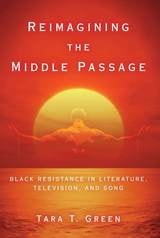
Reimagining the Middle Passage
Black Resistance in Literature, Television, and SongTara T. Green
The Ohio State University Press, 2018
Exploring the presence of water and its impact on African descendants,Reimagining the Middle Passageoffers fresh analyses of Alex Haley’sRootsand the television adaptations; the history of flooding in Black communities in literature such as Jesmyn Ward’sSalvage the Bonesand Paule Marshall’sPraisesong for the Widow, in blues songs, and in television shows such asTreme; and stories of resistance found in myths associated with Marie Laveau and flying Africans.
Religion and Spanish Film
Luis Buñuel, the Franco Era, and Contemporary DirectorsElizabeth Scarlett
University of Michigan Press, 2014
Renaissance Drama 29
New Series XIX 1998 Dramas of Hybridity: Performance and the BodyJeffrey Masten and Wendy Wall
Northwestern University Press, 2000
Volume 29, "Dramas of Hybridity: Performance and the Body," includes essays that focus on historically specific early modern bodies, analyzing staged representations of bodies as they spectacularly unfold, determine, negotiate, and erode various social categories. Topics include pathologies of value and transnationality in Troilus and Cressida, masculinity on the early modern stage, citizen comedy, Italian actresses and female performance, and race and romance in The Merchant of Venice.

Renaissance Drama 30
New Series XXX: Institutions of the TextJeffrey Masten and Wendy Wall
Northwestern University Press, 2001
Volume 30, Institutions of the Text, includes essays that examine playtexts in their relationship to a structure or structures shaping early modern culture: the printing industry, the marketplace of texts and of fashions, theatrical companies, manuscript culture and circulation, authorship, the family and paternity. Topics include Henry V and testicular masculinity, two essays on The Winter's Tale, Shakespeare's Sir John Oldcastle, and Shakespeare's commerciality.</p>
Renaissance Drama 31
New Series XXXI 2002 Performing AffectJeffrey Masten and Wendy Wall
Northwestern University Press, 2002
Renaissance Drama, an annual and interdisciplinary publication, is devoted to drama and performance as a central feature of Renaissance culture. The essays in each volume explore traditional canons of drama, the significance of performance (broadly construed) to early modern culture, and the impact of new forms of interpretation on the study of Renaissance plays, theater, and performance.
Renaissance Drama 32
New Series 32Wall/Masten
Northwestern University Press, 2003
Renaissance Drama 34
Media, Technology, and PerformanceW. B. Worthen
Northwestern University Press, 2006
This issue of Renaissance Drama, devoted to the topic of "Media, Technology, and Performance" is co-edited by W.B. Worthen, Wendy Wall, and Jeffrey Masten. The various articles displayed here address the interface between drama and its various modes of production over the past four centuries. This volume explores the relationship of drama to other forms of early modern spectacle (pageantry, masques), to the specificities of typography and the economics of the book industry, to the intersection of drama with film and DVD production, and to the way that stage technologies and theatrical economies of the 16th, 17th and 20th centuries define plays and playing. Rather than thinking of the early modern text as something simply reconstituted in its different incarnations, these essays make clear that different media force a rethinking of the terms that we use to envision, conceptualize, and even to see the work of drama.
Renaissance Drama 35
Mary Floyd-Wilson
Northwestern University Press, 2006
This special issue of Renaissance Drama "Embodiment and Environment in Early Modern Drama and Performance" is guest-edited by Mary Floyd-Wilson and Garrett A. Sullivan, Jr. Anatomized, fragmented, and embarrassed, the body has long been fruitful ground for scholars of early modern literature and culture. The contributors suggest, however, that period conceptions of embodiment cannot be understood without attending to transactional relations between body and environment. The volume explores the environmentally situated nature of early modern psychology and physiology, both as depicted in dramatic texts and as a condition of theatrical performance. Individual essays shed new light on the ways that travel and climatic conditions were understood to shape and reshape class status, gender, ethnicity, national identity, and subjectivity; they focus on theatrical ecologies, identifying the playhouse as a "special environment" or its own "ecosystem," where performances have material, formative effects on the bodies of actors and audience members; and they consider transactions between theatrical, political, and cosmological environments. For the contributors to this volume, the early modern body is examined primarily through its engagements with and operations in specific environments that it both shapes and is shaped by. Embodiment, these essays show, is without borders.
Renaissance Drama 36/37
Italy in the Drama of EuropeWilliam N. West
Northwestern University Press, 2010
Renaissance Drama, an annual interdisciplinary publication, is devoted to drama and performance as a central feature of Renaissance culture. The essays in each volume explore traditional canons of drama, the significance of performance (broadly construed) to early modern culture, and the impact of new forms of interpretation on the study of Renaissance plays, theater, and performance.
This special issue of Renaissance Drama on "Italy in the Drama of Europe" primarily builds on the groundwork laid by Louise George Clubb, who showed that Italian drama was made in such a way as to facilitate its absorption and transformation into other traditions, even when it was not explicitly cited or referenced.
"Italy in the Drama of Europe" takes up the reverberations of early modern Italian drama in the theaters of Spain, England, and France and in writings in Italian, English, Spanish, French, Hebrew, Latin, and German. Its scope is an example of the continuing force of and interest in one of the most rewarding, wide-ranging, and productive early modern aesthetic modes, and a tribute to the scholarship of Louise George Clubb, who, among others, recalled our attention to it.
Renaissance Drama 38
William N. West
Northwestern University Press, 2010
Renaissance Drama, an annual interdisciplinary publication, is devoted to drama and performance as a central feature of Renaissance culture. The essays in each volume explore the traditional canon of drama, the significance of performance, broadly construed, to early modern culture, and the impact of new forms of interpretation on the study of Renaissance plays, theater, and performance.
Volume 38 includes essays that explore topics in early modern drama ranging from Shakespeare’s Jewish questions in The Merchant of Venice and the gender of rhetoric in Shakespeare’s sonnets and Jonson’s plays to improvisation in the commedia dell’arte and the rebirth of tragedy in 1940 Germany.
Renaissance Drama 39
Jeffrey Masten
Northwestern University Press, 2011
Renaissance Drama, volume 49 number 2 (Fall 2021)
The University of Chicago Press
University of Chicago Press Journals, 2021
Renaissance Drama, volume 50 number 1 (Spring 2022)
The University of Chicago Press
University of Chicago Press Journals, 2022
Renaissance Drama, volume 50 number 2 (Fall 2022)
The University of Chicago Press
University of Chicago Press Journals, 2022
Renaissance Drama, volume 51 number 1 (Spring 2023)
The University of Chicago Press
University of Chicago Press Journals, 2023
Renaissance Drama, volume 51 number 2 (Fall 2023)
The University of Chicago Press
University of Chicago Press Journals, 2023
Renaissance Drama, volume 52 number 1 (Spring 2024)
The University of Chicago Press
University of Chicago Press Journals, 2024
Renaissance Drama, volume 52 number 2 (Fall 2024)
The University of Chicago Press
University of Chicago Press Journals, 2024
Renaissance Drama, volume 53 number 1 (Spring 2025)
The University of Chicago Press
University of Chicago Press Journals, 2025
Renaissance Drama, volume 53 number 2 (Fall 2025)
The University of Chicago Press
University of Chicago Press Journals, 2025
Renaissance Drama, volume 54 number 1 (Spring 2026)
The University of Chicago Press
University of Chicago Press Journals, 2026
Renunciation as a Tragic Focus
A Study of Five PlaysEugene H. Falk
University of Minnesota Press, 1954
Renunciation as a Tragic Focus was first published in 1954. Minnesota Archive Editions uses digital technology to make long-unavailable books once again accessible, and are published unaltered from the original University of Minnesota Press editions.
Norman J. DeWitt explains, in an introduction to this volume, that these essays are written in terms of a personal humanism.
"Personal humanism," Mr. DeWitt says, "comes from an awareness of a world in which pain is real, and it leads to the traditional virtues of wisdom and justice, terms that are seldom heard in academic circles today."
Traditionalist though he may be in the basic virtues, Professor Falk, in these studies, challenges a traditional concept. By analyzing the conflicting values in five plays, he demonstrates why the traditional definition of tragedy should be broadened. He shows that martyrdom and self-sacrifice, when they involve an act of renunciation, should be included in the realm of tragedy. The older concept ruled out these elements by its insistence that the death of a martyr is not the defeat but the victory of an individual.
The five plays studied here are Sophocles' Oedipus the King and Antigone,Corneille's Polyeucte,Maeterlinck's Aglavaine and Selysette,and Samain's Polypheme.In all of them, the tragic experience of man's defeat in an unequal struggle against destiny is examined in the light of the conflict between his worldly and his spiritual aspirations. The plays illustrate the tenet that renunciation becomes a tragic experience only if the character's devotion to both worldly and spiritual values is genuine. In succession, the five plays represent a progression from authentic to seeming renunciation.
The studies are pertinent to many interests in the broad academic field of the humanities as well as to such specific disciplines as comparative literature, drama, French literature, and the classics.
Repertory of Shakespeare's Company, 1594–1613
Roslyn Lander Knutson
University of Arkansas Press, 1991
Research-based Theatre
An Artistic MethodologyEdited by George Belliveau and Graham W. Lea
Intellect Books, 2016
Resonant Dissonance
The Russian Joke in Cultural ContextSeth Graham
Northwestern University Press, 2009
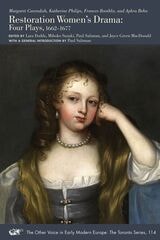
Restoration Women’s Drama
Four Plays, 1662–1677Margaret Cavendish, Katherine Philips, Frances Boothby, and Aphra Behn
Iter Press, 2026
Restoration Women’s Drama collects four Restoration plays by women: the highly acclaimed Katherine Philips, the successful professional Aphra Behn, the confidently original Margaret Cavendish, and the obscure pioneer Frances Boothby. This anthology includes Behn’s only tragedy as well as the first printed edition of Boothby’s Marcelia, the first play by a woman to be professionally staged in London, demonstrating the range of early modern drama produced by women in this period. An excellent introduction, it is poised to stimulate new discussions of women’s authorship, theatrical knowledge, and literary affinities. Each play has been edited afresh, and each has been modernized and annotated to facilitate reading, teaching, and performance possibilities.
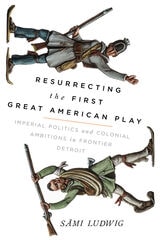
Resurrecting the First Great American Play
Imperial Politics and Colonial Ambitions in Frontier DetroitSämi Ludwig
University of Wisconsin Press, 2020
Sämi Ludwig contends that Ponteach's literary and artistic merits are worthy of further exploration. He investigates questions of authorship and analyzes the play's content, embracing its many contradictions as enriching windows into the era. In this way, he suggests using Ponteach as a tool to better understand British imperialism in North America and the emerging theatrical forms of the Young Republic.
Richard II
William Shakespeare
Arizona Center for Medieval and Renaissance Studies, 2021
Following the events of the final two years of his life, Richard II interrogates royal power and the forces that threaten it. After banishing his cousin Henry Bolingbroke, Richard begins to lose grip of his throne and strives to find meaning in the churn and chaos of the events unfolding around him. In her new translation, Naomi Iizuka ventures into the mystery of the work, scraping away the layers of received wisdom and cracking the play open for contemporary audiences.
This translation of Richard II was written as part of the Oregon Shakespeare Festival’s Play On! project, which commissioned new translations of thirty-nine Shakespeare plays. These translations present work from “The Bard” in language accessible to modern audiences while never losing the beauty of Shakespeare’s verse. Enlisting the talents of a diverse group of contemporary playwrights, screenwriters, and dramaturges from diverse backgrounds, this project reenvisions Shakespeare for the twenty-first century. These volumes make these works available for the first time in print—a new First Folio for a new era.
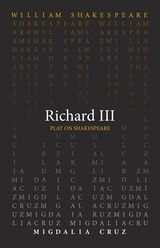
Richard III
William Shakespeare
Arizona Center for Medieval and Renaissance Studies, 2021
Nuyorican playwright Migdalia Cruz unpacks and repositions Shakespeare’s Richard III for a twenty-first-century audience. She presents a contemporary English verse translation, faithfully keeping the poetry, the puns, and the politics of the play intact, with a rigorous and in-depth examination of Richard III—the man, the king, the outsider—who is still the only English king to have died in battle. In the Wars of the Roses, his Catholic belief in his country led to his slaughter at Bosworth’s Field by his Protestant rivals. In reimagining this text, Cruz emphasizes Richard III’s outsider status—exacerbated by his severe scoliosis, which twisted his spine—by punctuating the text with punk music from 1970s London. Cruz’s Richard is no one’s fool or lackey. He is a new kind of monarch, whose dark sense of humor and deep sense of purpose leads his charge against the society which never fully accepted him because he looked different.
This translation was written as part of the Oregon Shakespeare Festival’s Play On! project, which commissioned new translations of thirty-nine Shakespeare plays. These translations present the work of "The Bard" in language accessible to modern audiences while never losing the beauty of Shakespeare’s verse. These volumes make these works available for the first time in print—a new First Folio for a new era.
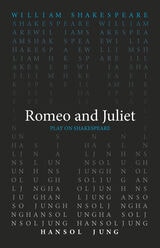
Romeo and Juliet
William Shakespeare
Arizona Center for Medieval and Renaissance Studies, 2022
“For never was a story of more woe / Than this of Juliet and her Romeo.” In this new version of Romeo and Juliet, written in accessible modern English, Hansol Jung breathes new life into Shakespeare’s famous tragedy. By closely examining the familiar language and focusing on the subtleties of the text, Jung illuminates a surprising and more nuanced world than many of us have come to expect from the well-known tale of star-crossed lovers.
This translation of Romeo and Juliet was written as part of the Oregon Shakespeare Festival’s Play On! project, which commissioned new translations of thirty-nine Shakespeare plays. These translations present work from “The Bard” in language accessible to modern audiences while never losing the beauty of Shakespeare’s verse. Enlisting the talents of a diverse group of contemporary playwrights, screenwriters, and dramaturges from diverse backgrounds, this project reenvisions Shakespeare for the twenty-first century. These volumes make these works available for the first time in print—a new First Folio for a new era.
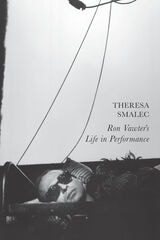
Ron Vawter's Life in Performance
Theresa Smalec
Seagull Books, 2018
Partly recuperative history, Ron Vawter’s Life in Performance explores the complex intersections of individual and group biography. It also offers a unique perspective on an era that spanned from the Vietnam War to the AIDS crisis, putting Vawter’s own activism at the forefront. This volume’s broad historical and cultural reach, coupled with its careful study of a beloved yet enigmatic performer, will make it a tremendous resource for theater scholars and practitioners.
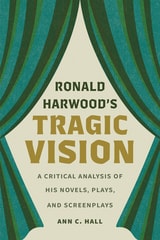
Ronald Harwood's Tragic Vision
A Critical Analysis of His Novels, Plays, and ScreenplaysAnn C. Hall
University of Iowa Press, 2024
Ronald Harwood’s Tragic Vision offers the first critical analysis of prolific and award-winning British author Ronald Harwood (1934–2020). Though he received an Oscar for The Pianist, a knighthood, and numerous other awards and nominations, Harwood worked as a ghostwriter, script doctor, and veritable unknown for many years. As he became successful, many critics still misread his works and positioned him as a less-fashionable counterpart to his lifelong friend Harold Pinter. This study proposes a conceptual framework to approach his, and others’, work based on the genre of tragedy, offering a greater appreciation for and understanding of the Harwood canon.
Rooms with a View
The Stages of Community in the Modern TheaterRichard L. Barr
University of Michigan Press, 1998
Russian Dramatic Theory from Pushkin to the Symbolists
An AnthologyTranslated and edited by Laurence P. Senelick
University of Texas Press, 1981
Although younger than most European theatrical traditions, the Russian professional theater has generated an exciting body of criticism and theory which until recently has remained unknown or nearly inaccessible in the West. This anthology presents a selection of important Russian writing on the aesthetics of drama and the theater from 1828 to 1914.
The focus of these essays, most published here for the first time in English, is on the so-called Crisis in the Theater of 1904 to 1914, a lively debate between the symbolists and the naturalists that evoked brilliant polemic writing from Meyerhold, Bely, Bryusov, and others. Along with Chekhov's amusing critique of Sarah Bernhardt ("monstrously facile!") and Ivanov's abstruse analysis of the essence of tragedy, the essays form a running commentary on the development of the Russian theater: Pushkin on his predecessors, Gogol on his own work, Belinsky on Gogol, Sleptsov on Ostrovsky and Leskov, Bely on Chekhov's The Cherry Orchard ("enervated people, trying to forget the terror of life"), the symbolists on one another.
Each selection is printed in its entirety, with extensive notes, and a lengthy introduction places all the pieces within their historical and cultural contexts to comprise a brief history of Russian dramatic theory before the revolution. This volume is essential reading for all who wish to extend their knowledge of the Russian contribution to theatrical history, theory, and criticism.
Russian Performances
Word, Object, ActionEdited by Julie A. Buckler, Julie A. Cassiday, and Boris Wolfson
University of Wisconsin Press, 2018
Challenging the primacy of the written word in this field, the volume fosters a larger intellectual community informed by theories and practices of performance from anthropology, art history, dance studies, film studies, cultural and social history, literary studies, musicology, political science, theater studies, and sociology.