Results by title
917 books match the query 'Economics' and 42 start with r
RSF
The Russell Sage Foundation Journal of the Social Sciences: Big Data in Political EconomyHoward Rosenthal
Russell Sage Foundation, 2016
Among other topics, the articles in this issue demonstrate how large-scale data sources can be used to analyze campaign contributions and political participation. Adam Bonica outlines the development of a comprehensive “map” of the American political system that collects, processes, and organizes data on politicians’ campaign finances, policy positions, and voting records, and makes such information available to voters. Drew Dimmery and Andrew Peterson show how web-based data-gathering techniques can augment such a map to include political contributions made by nonprofits, which are often overlooked or not fully transparent. Deniz Igan links campaign contribution data to both policymakers’ voting records and financial institutions’ lending behavior and shows that legislators who were heavily lobbied by institutions engaging in risky lending, such as subprime lenders, were more likely to vote for deregulation. Chris Tausanovitch connects big data on voters’ income and policy preferences to the voting records of their congressional representatives in order to study how effectively the political system represents voters of different income levels. And Sharyn O’Halloran and coauthors discuss how big data can augment traditional observational research by replacing tedious hand coding of volumes of text with automated procedures.
As research in political economy increasingly focuses on the role of money in shaping the outcomes of elections and policymaking, new methods of aggregating and examining financial data have become central. Together, the papers in this volume show how big data provides unprecedented opportunities for social scientists to better understand the links between politics and markets.
RSF
The Russell Sage Foundation Journal of the Social Sciences: Financial Reform: Preventing the Next CrisisMichael S. Barr
Russell Sage Foundation, 2017
Several contributors evaluate the Dodd-Frank bill which mandated greater federal oversight of banks, increased regulation of credit rating agencies, and established the Consumer Financial Protection Bureau (CFPB), among other measures. Martin Baily and coauthors conclude that measures that require greater transparency and oversight in derivatives transactions have made financial institutions more resilient. Yet, the bill’s attempts to consolidate the fragmented financial regulatory system have not gone far enough.
Lauren Willis argues that instead of simply issuing disclosures, financial service providers should be required to meet more rigorous performance standards, such as proving through third-party testing that customers understand their fees and surcharges. John Macey advocates reforms that would afford home mortgage borrowers the same protections as investors in the securities market, including regulations that prevent brokers from encouraging borrowers to refinance their mortgages to collect fees.
The issue also addresses global financial regulation. Viral Achara examines the financial sectors in the U.S., Europe, and Asia, and assesses their vulnerability to capital shortfalls in the event of a future crisis. Niamh Moloney finds that institutions established in the wake of the crash, such as the European Supervisory Authorities, have improved European-level prudential and consumer financial regulations and have the potential to increase the EU’s influence in international financial governance.
The effects of the financial crisis continue to reverberate around the world today. Together, the articles in this issue document the steps necessary for creating a more robust financial system that works better for all consumers, investors and the financial system itself.
RSF
The Russell Sage Foundation Journal of the Social Sciences: New Immigrant Labor Market NichesSusan Eckstein
Russell Sage Foundation, 2018
Several articles survey the history of immigrant labor market niches and how they have affected local economies. Siobhan O’Keefe and Sarah Quincy investigate a labor niche—farming—created by Russian Jews in rural New Jersey in the nineteenth century that revitalized local markets and reduced the outmigration of natives from the area. Zai Liang and Bo Zhou study the occupational niches held by Chinese immigrants from the turn of the century to present day. They show that restaurants have historically provided, and continue to provide, a major source of employment for low-skilled Chinese immigrants and that these immigrants tend to use new job-finding services such as employment agencies and internet advertising. These services have also allowed Chinese-owned restaurants to expand into new geographical locations.
Other contributors analyze the divisions between high and low-skill labor market niches. In his ethnographic study of restaurants in Los Angeles, Eli Wilson finds that Mexican immigrants primarily work “back of the house” jobs performing low-wage manual labor with few opportunities for advancement, while English-speaking whites hold higher-paid “front of the house” jobs interacting with customers. However, bilingual second-generation Latinos are often able to bridge these two roles, increasing their chances for promotions and greater job responsibilities. Yasmin Ortiga explores the effects of programs designed to recruit middle-skill nurses from the Philippines. She finds that because the United States only accepts a certain number of nurses, these programs have contributed to an oversupply of trained nurses in the Philippines and increased joblessness and underemployment there.
Together, the studies in this issue contribute to a deeper understanding of how and why new immigrants gravitate to specific lines of work. They also reveal how these labor niches influence markets both within the United States and abroad.
RSF
The Russell Sage Foundation Journal of the Social Sciences: Opportunity, Mobility, and Increased InequalityKatharine Bradbury
Russell Sage Foundation, 2016
Several contributors investigate how rising inequality in parental investments in children, lack of public resources for low-income families, and the high cost of postsecondary education limit the futures of many. Janet L. Yellen, Chair of the Federal Reserve Board, reviews trends in income and wealth inequality since the 1980s and shows how lack of access to key resources such as high-quality childhood education, affordable college, private business ownership, and inheritances for those in the lower half of the wealth distribution has significantly restricted economic opportunity in the U.S. Isabel Sawhill and Richard Reeves find that the socioeconomic status of one’s parents strongly predicts where one will end up on the income ladder as an adult, particularly for those at the very bottom and top of the income distribution. Timothy Smeeding shows that black men, children of never-married mothers, and children of parents lacking high school diplomas are likely to both begin life in the bottom quartile of the income distribution and remain there as adults.
Other contributors explore how inequality of opportunity begins in childhood, where family conditions and neighborhood quality influence children’s life outcomes. Katherine Magnuson and Greg Duncan show that even prior to kindergarten, low-income children lag behind their affluent peers in math and reading skills, in part because they lack access to high-quality preschool education. Greg Duncan and Richard Murnane find that affluent children’s advantages are further amplified during their school years, in part because their parents invest more time and resources in their educational and extra-curricular activities. They also show that increased residential segregation has led to higher concentrations of children with behavioral problems in low-income areas, which negatively affects their classmates’ ability to learn. Patrick Sharkey reviews research on the correlation between child neighborhood conditions and adult economic outcomes and confirms that the longer low-income children reside in bad neighborhoods, the more their disadvantages are compounded.
This issue of RSF offers new insights into how, despite our persistent belief in the American Dream, economic opportunity and mobility have stagnated for a growing number of citizens.
RSF
The Russell Sage Foundation Journal of the Social Sciences: Severe Deprivation in AmericaMatthew Desmond is associate professor of sociology and social sciences at Harvard University and codirector of the Justice and Poverty Project.
Russell Sage Foundation, 2015
Widening inequality has received much attention recently, but most of the focus has been on the top one percent or the middle class. The problems of those at the very bottom of society remain largely invisible. Along with the Great Recession, factors such as rising housing costs, welfare reform, mass incarceration, suppressed wages, and pervasive joblessness have contributed to deepening poverty in America. In this inaugural double issue of RSF: The Russell Sage Foundation Journal of the Social Sciences, a distinguished roster of poverty scholars from multiple disciplines focuses on families experiencing “severe deprivation”: acute, compounded, and persistent economic hardship.
Over twenty million families in America live in deep poverty, on incomes below half the federal poverty threshold, yet Liana Fox and colleagues find that government taxes and transfers lift millions of families out of deep poverty each year. Searching even further below the poverty line, Luke Shaefer, Kathryn Edin, and Elizabeth Talbert find that the number of children in households experiencing chronic extreme poverty—living on $2 or less per day—increased by over 240 percent between 1996 and 2012. Focusing on the elderly, Helen Levy shows that failing health exacerbates low-income seniors’ hardship by driving up their out-of-pocket medical spending. Other contributors examine the relationship between violence and severe deprivation.
Through longitudinal interviews with former prisoners in Boston, Bruce Western reveals the ubiquity of violence in the life course of disadvantaged young men. And Laurence Ralph draws on years of ethnography in Chicago to document how families and communities cope with the trauma of gun violence. Other studies in this
issue show that mass incarceration has changed the nature of poverty in recent decades, with consequences ranging from increased levels of deprivation among children of incarcerated parents to housing insecurity among parolees, which increases their risk for recidivism. Finally, several papers devise novel methods and concepts relevant to the study of severe deprivation. Kristin Perkin and Robert Sampson develop an innovative measure of “compounded disadvantage” that groups individual and ecological hardship, while Megan Comfort and colleagues pioneer a new approach to ethnographic fieldwork that combines embedded social work with participant observation.
This issue provides in-depth analyses of the causes and human costs of extreme disadvantage in one of the richest countries in the world and offers a new paradigm for understanding the changing face of poverty in America. In an age of economic extremes, understanding how and why severe deprivation persists will be vital for policymakers and practitioners attempting to deliver relief to the nation’s most marginalized families.
RSF
The Russell Sage Foundation Journal of the Social Sciences: Severe Deprivation in AmericaMatthew Desmond is associate professor of sociology and social sciences at Harvard University and codirector of the Justice and Poverty Project.
Russell Sage Foundation, 2015
Widening inequality has received much attention recently, but most of the focus has been on the top one percent or the middle class. The problems of those at the very bottom of society remain largely invisible. Along with the Great Recession, factors such as rising housing costs, welfare reform, mass incarceration, suppressed wages, and pervasive joblessness have contributed to deepening poverty in America. In this inaugural double issue of RSF: The Russell Sage Foundation Journal of the Social Sciences, a distinguished roster of poverty scholars from multiple disciplines focuses on families experiencing “severe deprivation”: acute, compounded, and persistent economic hardship.
Over twenty million families in America live in deep poverty, on incomes below half the federal poverty threshold, yet Liana Fox and colleagues find that government taxes and transfers lift millions of families out of deep poverty each year. Searching even further below the poverty line, Luke Shaefer, Kathryn Edin, and Elizabeth Talbert find that the number of children in households experiencing chronic extreme poverty—living on $2 or less per day—increased by over 240 percent between 1996 and 2012. Focusing on the elderly, Helen Levy shows that failing health exacerbates low-income seniors’ hardship by driving up their out-of-pocket medical spending. Other contributors examine the relationship between violence and severe deprivation.
Through longitudinal interviews with former prisoners in Boston, Bruce Western reveals the ubiquity of violence in the life course of disadvantaged young men. And Laurence Ralph draws on years of ethnography in Chicago to document how families and communities cope with the trauma of gun violence. Other studies in this
issue show that mass incarceration has changed the nature of poverty in recent decades, with consequences ranging from increased levels of deprivation among children of incarcerated parents to housing insecurity among parolees, which increases their risk for recidivism. Finally, several papers devise novel methods and concepts relevant to the study of severe deprivation. Kristin Perkin and Robert Sampson develop an innovative measure of “compounded disadvantage” that groups individual and ecological hardship, while Megan Comfort and colleagues pioneer a new approach to ethnographic fieldwork that combines embedded social work with participant observation.
This issue provides in-depth analyses of the causes and human costs of extreme disadvantage in one of the richest countries in the world and offers a new paradigm for understanding the changing face of poverty in America. In an age of economic extremes, understanding how and why severe deprivation persists will be vital for policymakers and practitioners attempting to deliver relief to the nation’s most marginalized families.
RSF
The Russell Sage Foundation Journal of the Social Sciences: The Socioeconomic Impacts of the COVID-19 PandemicSchneider, Daniel
Russell Sage Foundation, 2023
The 11 articles in this issue examine the impacts of the COVID-19 pandemic and federal and local responses to the crisis on social safety net usage, unemployment insurance (UI) recipiency, parenting and gender disparities, housing, and experiences with the criminal justice system. Marianne P. Bitler and colleagues find that during the pandemic, participation in the Supplemental Nutrition Assistance Program (SNAP) increased more in counties that experienced larger employment shocks, however, the SNAP pandemic benefit increases were less generous to Black and Hispanic SNAP participants as compared to White participants. Alex Bell and colleagues show while the UI recipiency rate increased substantially across the U.S. during the pandemic, wealthier states had higher recipiency rates and states with higher shares of Black residents had lower recipiency rates. Liana Christin Landivar and colleagues reveal that remote schooling was associated with reduced employment among mothers compared to fathers and women without children, with Black mothers experiencing the largest reduction in employment. Vincent J. Reina and Yeonhwa Lee find that low-income renters who received emergency rental assistance during the pandemic had lower arrears, a lower likelihood of having rent-related debt, and a lower likelihood of experiencing debilitating anxiety. Samantha Plummer and colleagues show that individuals leaving jail or who had criminal cases during the early phase of the pandemic suffered high levels of housing and food insecurity as well as joblessness, but those with co-occurring mental illness and substance abuse problems experienced the highest levels of material hardship.
This issue of RSF sheds light on how the pandemic and the corresponding government response have both reinforced and reshaped socioeconomic inequality in the United States.
RSF
The Russell Sage Foundation Journal of the Social Sciences: The U.S. Labor Market During and After the Great RecessionArne L. Kalleberg
Russell Sage Foundation, 2017
Contributors explore a number of changes to the labor market and union density during and after the Great Recession. Jesse Rothstein investigates the factors contributing to persistently high unemployment and finds that reduced employer demand for workers was more important than labor mismatch—or unemployed workers lacking the appropriate skills for available jobs. Ruth Milkman and Stephanie Luce find increased hostility to unions among employers and steep job losses in traditionally unionized industries, both of which constricted organized labor during and after the Great Recession.
Other articles examine the effects of job loss on unemployed individuals’ mental health and family lives. Kelsey J. O’Connor finds that declining income and rising unemployment contributed to the lowest level of reported happiness in 2010, particularly for men, older people, and Hispanics. William Dickens and coauthors evaluate families’ ability to weather job losses during the Great Recession by relying on savings and find that most had insufficient wealth to buffer large earnings losses for more than a short period of time. Gokce Basbug and Ofer Sharone explore the extent to which the negative emotional toll of long-term unemployment is shaped by gender and marital status. They find that marriage tends to boost the well-being of both men and women during times of unemployment. Among married men, however, this benefit disappeared when controlling for household income, suggesting that the benefits of marriage are related more to additional income than to other forms of intangible or emotional support.
The duration and severity of the Great Recession sets it apart from earlier economic downturns and, as this issue shows, it has had long-term consequences for workers and their families.
RSF
The Russell Sage Foundation Journal of the Social Sciences: Three Decades Since 'Making Ends Meet': What We Know about How Single Mothers Survive TodayElizabeth O. Ananat
Russell Sage Foundation, 2026
In their seminal 1995 book Making Ends Meet: How Low-Income Single Mothers Survive Welfare and Low-Wage Employment, Kathryn Edin and Laura Lein laid bare the strategies and challenges of low-income single mothers who were struggling to provide for their families. Even in an era when cash welfare was a federal entitlement, these women struggled to get by. In the thirty years since the book’s publication, many single parents wrestle with volatility and precarious resources from work, informal and formal supports. In this double issue of RSF, economist Elizabeth O. Ananat, political scientist and public policy scholar Carolyn Y. Barnes, sociologists Sandra K. Danziger and Kathryn Edin, and an interdisciplinary group of contributors examine how the policy landscape has changed since welfare reform and how it impacts low-income single mothers’ ability to make ends meet today.
Issue 1 has 8 articles that examine how the traditional safety net has evolved and new supports that have been developed since Making Ends Meet. For example, Sarah K. Bruch and colleagues assess changes to the social safety net since welfare reform in the 1990s and find that benefits have become more exclusive, have more constraints, and are less generous. Kelley Fong and Nora McCarthy reveal that, in an attempt to decrease child maltreatment, the child welfare system increasingly provides material resources to system-involved parents, including in-kind donations and assistance accessing childcare. However, parents often avoid obtaining resources through the system because it opens them up to increased state surveillance. Heather D. Hill and colleagues show that access to paid family and medical leave (PFML) varies greatly for single mothers, with two-thirds of single mothers living in states without PMFL. For those who live in states with PFML, the accessibility and generosity of benefits vary greatly.
Issue 2 has 5 articles that look at lessons that can be learned from COVID Era policies, how single mothers currently try to make ends meet, and men’s contributions to families. For example, Natasha V. Pilkauskas and Kevin Bruey find that low-income single mothers, with and without employment, utilize a variety of public and private resources to make ends meet. Despite this, both groups face high levels of material hardship, including food and housing insecurity. Hope Harvey examines how members of doubled up households understand their economic and social relationships and reveals that there are often disagreements about shared resources, such as money and food. However, it is not just the precise contributions that cause conflict, but how the exchanges are interpreted within the context of household members’ relationships. Allison Dwyer Emory and colleagues show that nonresident fathers often have trouble making ends meet themselves and are unable to make up for the loss of cash support post-welfare reform.
This double issue of RSF showcases the persistence of precarity that low-income families face since Making Ends Meet.
Note: This copy refers to both issues of the journal double issue.
RSF
The Russell Sage Foundation Journal of the Social Sciences: Three Decades Since 'Making Ends Meet': What We Know about How Single Mothers Survive TodayElizabeth O. Ananat
Russell Sage Foundation, 2026
In their seminal 1995 book Making Ends Meet: How Low-Income Single Mothers Survive Welfare and Low-Wage Employment, Kathryn Edin and Laura Lein laid bare the strategies and challenges of low-income single mothers who were struggling to provide for their families. Even in an era when cash welfare was a federal entitlement, these women struggled to get by. In the thirty years since the book’s publication, many single parents wrestle with volatility and precarious resources from work, informal and formal supports. In this double issue of RSF, economist Elizabeth O. Ananat, political scientist and public policy scholar Carolyn Y. Barnes, sociologists Sandra K. Danziger and Kathryn Edin, and an interdisciplinary group of contributors examine how the policy landscape has changed since welfare reform and how it impacts low-income single mothers’ ability to make ends meet today.
Issue 1 has 8 articles that examine how the traditional safety net has evolved and new supports that have been developed since Making Ends Meet. For example, Sarah K. Bruch and colleagues assess changes to the social safety net since welfare reform in the 1990s and find that benefits have become more exclusive, have more constraints, and are less generous. Kelley Fong and Nora McCarthy reveal that, in an attempt to decrease child maltreatment, the child welfare system increasingly provides material resources to system-involved parents, including in-kind donations and assistance accessing childcare. However, parents often avoid obtaining resources through the system because it opens them up to increased state surveillance. Heather D. Hill and colleagues show that access to paid family and medical leave (PFML) varies greatly for single mothers, with two-thirds of single mothers living in states without PMFL. For those who live in states with PFML, the accessibility and generosity of benefits vary greatly.
Issue 2 has 5 articles that look at lessons that can be learned from COVID Era policies, how single mothers currently try to make ends meet, and men’s contributions to families. For example, Natasha V. Pilkauskas and Kevin Bruey find that low-income single mothers, with and without employment, utilize a variety of public and private resources to make ends meet. Despite this, both groups face high levels of material hardship, including food and housing insecurity. Hope Harvey examines how members of doubled up households understand their economic and social relationships and reveals that there are often disagreements about shared resources, such as money and food. However, it is not just the precise contributions that cause conflict, but how the exchanges are interpreted within the context of household members’ relationships. Allison Dwyer Emory and colleagues show that nonresident fathers often have trouble making ends meet themselves and are unable to make up for the loss of cash support post-welfare reform.
This double issue of RSF showcases the persistence of precarity that low-income families face since Making Ends Meet.
Note: This copy refers to both issues of the journal double issue.
RSF
The Russell Sage Foundation Journal of the Social Sciences: Wealth Inequality: Economic and Social DimensionsFabian T. Pfeffer
Russell Sage Foundation, 2016
Several contributors investigate the growing chasm in wealth between the rich and the middle class. Edward Wolff attributes much of the recent wealth loss among the middle class to the housing market crash, as housing accounts for a much greater share of their total wealth than it does for the rich. Jonathan Fisher and coauthors show that wealth inequality is far higher than inequality in income and consumption, and argue that because wealth acts as a buffer to income changes, it is perhaps the most relevant measure of economic inequality. Others explore the persistent racial wealth gap. Alexandra Killewald and Brielle Bryan show that the average wealth return on home ownership for African Americans is only a quarter of the return for whites. Bryan Sykes and Michelle Maroto find that the incarceration of a family member is associated with reduced family wealth, exacerbating the racial wealth gap because of racial disparities in incarceration.
Other articles focus on the effects of wealth inequality on families and relationships. Emily Rauscher finds that that parents’ financial support for their children’s education, which has positive effects on children’s educational attainment, is increasingly connected to parental wealth, tightening the link between wealth inequality and inequality of opportunity. And Alicia Eads and Laura Tach find that while greater family wealth is associated with more stable marriages, lack of wealth—particularly in the form of unsecured debt—is associated with marital instability.
As wealth inequality has increased, it is increasingly important to understand its origins and manifold social and economic consequences for current and future generations.
Race, Ethnicity, and Economic Statistics for the 21st Century
Edited by Randall Akee, Lawrence F. Katz, and Mark A. Loewenstein
University of Chicago Press, 2026
Categorizing race and ethnicity for twenty-first-century statistics and economics.
The increasing racial and ethnic diversity of the US population raises the question of whether the race and ethnicity categories and definitions used by federal statistical agencies to create demographic statistics on which government officials, business decision-makers, and private citizens rely fully reflect the changing population. Official definitions of existing race and ethnic groups do not always command wide agreement, and over time, some definitions that were once widely accepted may become less so based on political, legal, and social factors. Comparable measures of race and ethnicity over time are needed to accurately track historical changes in economic and social outcomes, as well as racial and ethnic segregation.
This volume explores the production of economic statistics that accurately depict the complex racial and ethnic diversity of the US population in the twenty-first century. The chapters examine the consequences for economic analyses of different measurement choices concerning race and ethnicity, assess the likely implications of the 2024 changes in federal race and ethnicity measurement standards, introduce new data sets with richer demographic information, and compare measures of race and ethnicity in administrative versus survey data. They also apply existing data in creative ways to develop alternative characterizations of the changing US workforce and to illuminate important policy questions related to criminal justice, immigration, labor market discrimination, the social safety net, health care, and child welfare.
Race, Liberalism, and Economics
David Colander, Robert E. Prasch, and Falguni A. Sheth, Editors
University of Michigan Press, 2009
The contributors show how the evolution of racist ideas has been a subtle process that is woven into larger movements in the development of scientific thought; economic thinking is embedded in a larger social milieu. Previous discussions of policies toward race have been constrained by that social milieu, and, since World War II, have largely focused on ending legislated and state-sanctioned discrimination. In the past decade, the broader policy debate has moved on to questions about the existence and relative importance of intangible sources of inequality, including market structure, information asymmetries, cumulative processes, and cultural and/or social capital. This book is a product of, and a contribution to, this modern discussion. It is uniquely transdisciplinary, with contributions by and discussions among economists, philosophers, anthropologists, and literature scholars.
The volume first examines the early history of work on race by economists and social scientists more generally. It continues by surveying American economists on race and featuring contributions that embody more modern approaches to race within economics. Finally it explores several important policy issues that follow from the discussion.
". . . adds new insights that contribute significantly to the debate on racial economic inequality in the U.S. The differing opinions of the contributors provide the broad perspective needed to examine this extremely complex issue."
--James Peoples, University of Wisconsin-Milwaukee
"There is an immense economic literature on racial discrimination, employing a variety of models and decomposition methods. This volume makes a unique contribution by focusing on the philosophical assumptions at the root of this analysis and by presenting many sides of the very vigorous debate surrounding these controversial issues."
--Thomas Maloney, University of Utah
"By focusing upon the progress of analytical technique, historians of economic thought have grossly neglected the symbiotic relation of economics to public policy and ideology. This collection of essays offers a most welcome breach of disciplinary apartheid. Seizing upon recent research in the almost forgotten writings about race of Classical economists and their contemporaries, it relates nineteenth-century ideas to current debates about economic discrimination and other manifestations of racism. As the writing is both learned and lively, the book should appeal both to the generally educated reader and to teachers of courses in multiculturalism."
--Melvin Reder, Isidore Brown and Gladys J. Brown Professor Emeritus of Urban and Labor Economics, University of Chicago
Race, Nation, and Market
Economic Culture in Porfirian MexicoRichard Weiner
University of Arizona Press, 2004
Rational Choice
Edited by Robin M. Hogarth and Melvin W. Reder
University of Chicago Press, 1987

Rational Expectations and Econometric Practice
Volume 1Robert E. Lucas Jr. and Thomas J. Sargent, Editors
University of Minnesota Press, 1981
Rational Expectations and Econometric Practice was first published in 1981. Minnesota Archive Editions uses digital technology to make long-unavailable books once again accessible, and are published unaltered from the original University of Minnesota Press editions.
Assumptions about how people form expectations for the future shape the properties of any dynamic economic model. To make economic decisions in an uncertain environment people must forecast such variables as future rates of inflation, tax rates, government subsidy schemes and regulations. The doctrine of rational expectations uses standard economic methods to explain how those expectations are formed.
This work collects the papers that have made significant contributions to formulating the idea of rational expectations. Most of the papers deal with the connections between observed economic behavior and the evaluation of alternative economic policies.
Robert E. Lucas, Jr., is professor of economics at the University of Chicago. Thomas J. Sargent is professor of economics at the University of Minnesota and adviser to the Federal Reserve Bank of Minnesota.
Readings in Public Choice Economics
Jac C. Heckelman, Editor
University of Michigan Press, 2004
Public choice analysis applies the methodology of economics to issues in political science and the policy process. The readings in this anthology cover topics in both institutional political economy and social choice theory and are comprehensible to nonspecialists and advanced undergraduates with a background in basic economic theory. Readings are taken from academic journals and book chapters and are reproduced in their entirety. They are selected to ensure they contain a minimal amount of notation and are free of advanced econometrics.
The anthology contains two to three readings each to explore the areas of rent seeking, collective action, bureaucracy, elections and the economy, choosing decision rules, majority rule, alternative voting procedures, and the calculus of voting. Each part contains a brief introduction to the general theme, and questions are presented as a guide to each reading. Additional suggested readings are provided to develop these concepts further.
Jac C. Heckelman is Associate Professor of Economics, Wake Forest University.
Realizing Equality in Policy
Edited by Alexander Kaufman
University of Michigan Press, 2025
With contributions from scholars of both luck and relational egalitarianism, the essays reexamine a number of basic assumptions regarding social and economic policy from an egalitarian perspective. They explore gender-based discrimination, international justice, and the possibility for engagement between socialist and left-liberal thought. Rather than focusing on the subtle distinctions that divide egalitarian views, this volume shows that both views have the potential to offer important insights about how differences might be overcome and gaps might be closed. In offering new directions for solving wealth inequality through policy, Realizing Equality in Policy contributes to ongoing conversations in political theory, economic theory, and moral philosophy.
Recasting Welfare Capitalism
Economic Adjustment in Contemporary France and GermanyMark I. Vail
Temple University Press, 2009
Vail finds that these respective evolutions involve interrelated changes in social and economic policies and are characterized by political relationships that are continuously renegotiated—often in unpredictable ways. In the process, he presents a compelling reconceptualization of change in both the welfare state and the broader political economy during an age of globalization.
Reclaiming the State
A Progressive Vision of Sovereignty for a Post-Neoliberal WorldWilliam Mitchell and Thomas Fazi
Pluto Press, 2017
Many of our assumptions—about ideology, democracy, trade, and globalization—are being thrown into doubt, deposed by populism, nationalism, and racism. In response to these challenging times, economist Bill Mitchell and political theorist Thomas Fazi propose a reconceptualization of the sovereign state as a vehicle for change. They offer a progressive view of sovereignty based not on the demonization of the other, but as a way to bring the economy back under democratic control. With nationalism gaining support across the United States with each passing week, Reclaiaming the State provides innovative ideas to mobilize and reenergize a tired, divided Left.
Reducing Inflation
Motivation and StrategyEdited by Christina D. Romer and David H. Romer
University of Chicago Press, 1997
Section I discusses the consequences of inflation. These papers analyze inflation's impact on the tax system, labor market flexibility, equilibrium unemployment, and the public's sense of well-being. Section II considers the obstacles facing central bankers in achieving low inflation. These papers study the precision of estimates of equilibrium unemployment, the sources of the high inflation of the 1970s, and the use of non-traditional indicators in policy formation. The papers in section III consider how institutions can be designed to promote successful monetary policy, and the importance of institutions to the performance of policy in the United States, Germany, and other countries.
This timely volume should be read by anyone who studies or conducts monetary policy.
Reforming the Welfare State
Recovery and Beyond in SwedenEdited by Richard B. Freeman, Birgitta Swedenborg, and Robert H. Topel
University of Chicago Press, 2010
Regional and Global Capital Flows
Macroeconomic Causes and ConsequencesEdited by Takatoshi Ito and Anne O. Krueger
University of Chicago Press, 2001
Regulation versus Litigation
Perspectives from Economics and LawEdited by Daniel P. Kessler
University of Chicago Press, 2010
Regulatory Justice
Implementing a Wage-Price FreezeRobert A. Kagan
Russell Sage Foundation, 1978

Reinventing the Welfare State
Digital Platforms and Public PoliciesUrsula Huws
Pluto Press, 2020
The Covid-19 pandemic has tragically exposed how today’s welfare state cannot properly protect its citizens. Despite the valiant efforts of public sector workers, from under-resourced hospitals to a shortage of housing and affordable social care, the pandemic has tragically shown how decades of neglect has caused hundreds to die. In this bold new book, leading policy analyst Ursula Huws shows how we can create a welfare state that is fair, affordable, and offers security for all.
Huws focuses on some of the key issues of our time – the gig economy, universal, free healthcare, and social care, to criticize the current state of welfare provision. Drawing on a lifetime of research on these topics, she clearly explains why we need to radically rethink how it could change. With positivity and rigor, she proposes new and original policy ideas, including critical discussions of Universal Basic Income and new legislation for universal workers' rights.
She also outlines a 'digital welfare state' for the 21st century. This would involve a repurposing of online platform technologies under public control to modernize and expand public services, and improve accessibility.
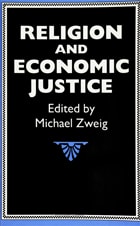
Religion and Economic Justice
edited by Michael Zweig
Temple University Press, 1992
As Eastern European economies move to capitalism, many people there hope for a better life. But capitalism is no guarantee of prosperity. Economic deprivation, war, social marginalization, and powerlessness mark the lives of millions and spark social movements for economic justice aimed at correcting these conditions. Often these movements are based in religious communities, their activists motivated by religious commitment to human dignity and the need for personal empowerment. Although the new theology contains an economic critique, little dialogue has taken place between the religious and economic communities on matters of economic analysis. Religion and Economic Justice seeks to develop this exchange.
This book contains original essays by distinguished contributors from economics, religious ethics, and biblical studies. The authors provide a powerful critique of the individualism which underlies mainstream economic analysis and which fragments our communities, a critique that extends to the values implicit in the market system. The authors also show how social marginalization and economic deprivation are the consequences of economic organization, not simply the failings of individuals.
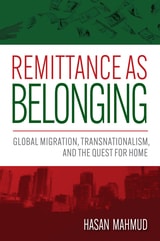
Remittance as Belonging
Global Migration, Transnationalism, and the Quest for HomeHasan Mahmud
Rutgers University Press, 2025

Reputation
Studies in the Voluntary Elicitation of Good ConductDaniel B. Klein, Editor
University of Michigan Press, 1997
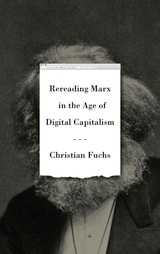
Rereading Marx in the Age of Digital Capitalism
Christian Fuchs
Pluto Press, 2019
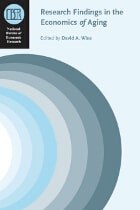
Research Findings in the Economics of Aging
Edited by David A. Wise
University of Chicago Press, 2010
While choices about when to retire are made by individuals, these decisions are influenced by a set of incentives, including retirement benefits and health care, and this volume includes cross-national analyses of the effects of such programs on these decisions. Furthermore, the volume also offers in-depth analysis of the effects of retirement plans, employer contributions, and housing prices on retirement. It explores well-established relationships among economic circumstances, health, and mortality, as well as the effects of poverty and lower levels of economic development on health and life satisfaction. By combining micro and macro evidence, this volume continues a tradition of expanding the research agenda on the economics of aging.

Resource Allocation in Higher Education
William F. Massy, Editor
University of Michigan Press, 1996
Resource Allocation in Higher Education describes how colleges, universities, and government agencies can use budgeting processes to improve program planning and productivity. Drawn from the contributors' direct experiences as well as research findings, it blends conceptual foundations with practical insights. Many resource allocation processes in higher education need reform, and this volume will stimulate and assist that effort. Beginning with the economic theory of nonprofits, the essays examine current budgeting systems in both theoretical and practical terms. Resource allocation systems from other domains such as health care are explored for relevant insights. Throughout, decentralization remains a major theme. Topics range from the eminently practical—how to establish a global accounting system or choose an endowment spending rate—to the more abstract—the theory of how various nonprofit enterprises balance academic values against market pressures. The volume ends by proposing value responsibility budgeting, which offers institutions a potentially better way of pursuing their academic values while remaining responsive to market pressures. Those within higher education institutions who are responsible for resource allocation, such as provosts, chief financial officers, or budget directors, will find much that speaks to them. While mostly in the domain of higher education economics, management, and planning, the essays are written for any serious reader concerned with the problem of reform in higher education.
Rethinking Money, Debt, and Finance after the Crisis
Melinda Cooper and Martijn Konings, special issue editors
Duke University Press, 0
Melinda Cooper is an Australian Research Council Future Fellow in the Department of Sociology and Social Policy at the University of Sydney. She is the author of Clinical Labor: Tissue Donors and Research Subjects in the Global Bioeconomy, also published by Duke University Press. Martijn Konings is Senior Lecturer and Australian Research Council DECRA Fellow in the Department of Political Economy at the University of Sydney. He is the author of The Development of American Finance.
Contributors: Lisa Adkins, Fiona Allon, Dick Bryan, Melinda Cooper, Marieke de Goede, Chris Jefferis, Martijn Konings, Randy Martin, Michael Rafferty
Rethinking Workplace Regulation
Beyond the Standard Contract of EmploymentKatherine V.W. Stone
Russell Sage Foundation, 2013
Rethinking the Financial Crisis
Alan S. Blinder
Russell Sage Foundation, 2013
Revenge Capitalism
The Ghosts of Empire, the Demons of Capital, and the Settling of Unpayable DebtsMax Haiven
Pluto Press, 2020
In Revenge Capitalism, Max Haiven argues that this economic vengeance helps us explain the culture and politics of revenge we see in society more broadly. Moving from the history of colonialism and its continuing effects today, he examines the opioid crisis in the US, the growth of 'surplus populations' worldwide and unpacks the central paradigm of unpayable debts - both as reparations owed, and as a methodology of oppression.
Revenge Capitalism offers no easy answers, but is a powerful call to the radical imagination.

Risk Topography
Systemic Risk and Macro ModelingEdited by Markus Brunnermeier and Arvind Krishnamurthy
University of Chicago Press, 2014
Markus Brunnermeier and Arvind Krishnamurthy have assembled contributions from leading academic researchers, central bankers, and other financial-market experts to explore the possibilities for advancing macroeconomic modeling in order to achieve more accurate economic measurement. Essays in this volume focus on the development of models capable of highlighting the vulnerabilities that leave the economy susceptible to adverse feedback loops and liquidity spirals. While these types of vulnerabilities have often been identified, they have not been consistently measured. In a financial world of increasing complexity and uncertainty, this volume is an invaluable resource for policymakers working to improve current measurement systems and for academics concerned with conceptualizing effective measurement.

Risks in Agricultural Supply Chains
Edited by Pol Antràs and David Zilberman
University of Chicago Press, 2023
An essential guide to the role of microeconomic incentives, macro policies, and technological change in enhancing agriculture resilience.
Climate change and the recent COVID-19 pandemic have exposed the vulnerability of global agricultural supply and value chains. There is a growing awareness of the importance of interactions within and between these supply chains for understanding the performance of agricultural markets. This book presents a collection of research studies that develop conceptual models and empirical analyses of risk resilience and vulnerability in supply chains. The chapters emphasize the roles played by microeconomic incentives, macroeconomic policies, and technological change in contributing to supply chain performance. The studies range widely, considering for example how agent-based modeling and remote sensing data can be used to assess the impact of shocks, and how recent shocks such as the COVID-19 pandemic and the African Swine fever in China affected agricultural labor markets, the supply chain for meat products, and the food retailing sector. A recurring theme is the transformation of agricultural supply chains and the volatility of food systems in response to microeconomic shocks. The chapters not only present new findings but also point to important directions for future research.
Risky Behavior among Youths
An Economic AnalysisEdited by Jonathan Gruber
University of Chicago Press, 2001
This important volume provides both a key data source for public policy makers and a clear affirmation of the usefulness of economic analysis to our understanding of risky behavior.
Risky Rivers
The Economics and Politics of Floodplain Farming in AmazoniaMichael Chibnik
University of Arizona Press, 1994
They have, however, suffered greatly from unpredictable crop prices and erratic state agricultural policies. Michael Chibnik here examines the household economies, cultural ecology, grassroots political organizations of ribere¤os living in three floodplain villages near Iquitos, Peru. He describes the villagers' remarkable history, their participation in misconceived development programs, and their longstanding conflicts with regional elites. Chibnik discusses the political ecology of the region in the context of arguments about appropriate development policies in tropical lowlands. Although ribere¤os practice intensive agriculture with low environmental impact, they have not been able to improve their economic circumstances in recent years. Chibnik's study is a significant and timely contribution to current debates about the possibility of sustainable, equitable development in Amazonia.

Road Pricing
Technologies, economics and acceptabilityJohn Walker
The Institution of Engineering and Technology, 2018
Rules, Games, and Common-Pool Resources
Elinor Ostrom, Roy Gardner, and James Walker
University of Michigan Press, 1994
Explores ways that the tragedy of the commons can be avoided by people who use common-property resources