Results by title
1832 books match the query 'Essays' and 76 start with r

R. F. D.
Charles Allen SmartCharles Allen Smart
Ohio University Press, 1998
“This book,” the author tells us in his preface, “is intended to be a picture of life on a farm in Southern Ohio in the 1930s.” It is a faithful portrait of farm life as thousands of men and women experienced it from one end of the country to the other and from pioneering times to the present century.
Originally published in 1938 to enthusiastic reviews and commercial success, RFD is the story of one couple’s trials with leaving the comforts of city life for a chance to get back to the land.
From his farm near Chillicothe, Ohio, Charles Allen Smart gives a realistic rendering of what it meant to farm in the 1930s. It is part of the book’s intrinsic honesty that it could not be as good as Walden. Thoreau had worked out a philosophy that suited him and that he was ready to recommend to others. Mr. Smart had no prescription for the general ailments, beyond a belief that creating things is important and that owning, buying, and selling things are unimportant.
What he tells us throughout this unusual book is that for him life on this particular farm, in this particular house, with this particular set-up of friends, neighbors, dogs, sheep, hens, cattle, trees, corn, vegetables, grass, and weather, costs less in human values than life in New York City—or in Chillicothe.
Ohio University Press is especially pleased to reissue this midwestern classic with a new foreword by noted farm writer Gene Logsdon.

RETHINKING LABOR HISTORY
ESSAYS ON DISCOURSE AND CLASS ANALYSISEdited by Lenard R. Berlanstein
University of Illinois Press, 1993
In Rethinking Labor History, nine well-known French labor historians join the debate. Advocates of both revisionist Marxism and discourse analysis are represented, and examples of empirical research emerging from the theoretical disputes are included.
Race And Reconciliation
Essays From The New South AfricaDaniel Herwitz
University of Minnesota Press, 2003
A meditation on the lessons to be learned from South Africa’s transformation in the wake of apartheid
Justice, truth, and identity; race, society, and law—all come into dramatic play as South Africa makes the tumultuous transition to a post-apartheid democracy. Seeking the timeless through the timely and trying to find the deeper meaning in the sweep of events, Daniel Herwitz brings the vast resources of the philosophical essay to bear on the new realities of post-apartheid South Africa—from racial identity to truth commissions, from architecture to film and television.
A public intellectual’s reflections on public life, Herwitz’s essays question how the new South Africa has constructed its concepts of reconciliation and return and how its historical emergence has meant a rethinking, reimagining, reexperiencing, relabeling, and repoliticizing of race. Herwitz’s purpose is to give a philosophical reading of society—a society already relying on implicitly philosophical concepts in its social and political agendas. Working through these concepts, testing their relevance for reading society, his book itself becomes a part of the politics of definition and description in the new South Africa.
Race, Culture, and Evolution
Essays in the History of AnthropologyGeorge W. Stocking, Jr
University of Chicago Press, 1982
Race, Labor, and Violence in the Delta
Essays to Mark the Centennial of the Elaine MassacreMichael Pierce
University of Arkansas Press, 2022
Race, Religion, and Black Lives Matter
Essays on a Moment and a MovementChristopher Cameron
Vanderbilt University Press, 2021
This volume has a simple, but far-reaching argument: religion is an important thread in BLM. To advance this claim, Race, Religion, and Black Lives Matter examines religion’s place in the movement through the lenses of history, politics, and culture. While this collection is not exhaustive or comprehensive in its coverage of religion and BLM, it selectively anthologizes unique aspects of Black religious history, thought, and culture in relation to political struggle in the contemporary era. The chapters aim to document historical change in light of current trends and current events. The contributors analyze religion and BLM in a current historical moment fraught with aggressive, fascist, authoritarian tendencies and one shaped by profound ingenuity, creativity, and insightful perspectives on Black history and culture.
Radical Affections
Essays on the Poetics of OutsideMiriam Nichols
University of Alabama Press, 2011
In 1950 the poet Charles Olson published his influential essay “Projective Verse” in which he proposed a poetry of “open field” composition—to replace traditional closed poetic forms with improvised forms that would reflect exactly the content of the poem.
The poets and poetry that have followed in the wake of the “projectivist” movement—the Black Mountain group, the New York School, the San Francisco Renaissance, and the Language poets—have since been studied at length. But more often than not they have been studied through the lens of continental theory with the effect that these highly propositional, pragmatic, and adaptable forms of verse were interpreted in very cramped, polemical ways.
Miriam Nichols highlights many of the impulses original to the thinking and methods of each poet: appeals to perceptual experience, spontaneity, renewed relationships with nature, engaging the felt world—what Nichols terms a “poetics of outside”—focusing squarely on experiences beyond the self-regarding self. As Nichols states, these poets may well “represent the last moment in recent cultural history when a serious poet could write from perception or pursue a visionary poetics without irony or quotation marks and expect serious intellectual attention.”
Radical Poetics
Essays on Literature & CultureKhadijah Queen
University of Michigan Press, 2025
Instead of operating from a base of unquestioned thought and systemic tradition, Radical Poetics presents more inclusive and accurate ways of contemplating literary work. Building on ideas and theoretical practices from Édouard Glissant, Toni Morrison, bell hooks, Saidiya Hartman, and Kimberlé Crenshaw, Queen reads for where love is present as well as for where it is absent—tracing systems of thought and aesthetic choices to track how characters are portrayed in terms of race, gender, class, and disability. She analyzes short stories, novels, nonfiction narratives, poetry, and a play from authors such as Herman Melville, Kate Chopin, Dionne Brand, Frances Ellen Watkins Harper, Ma-ka-tai-me-she-kia-kiak, Sor Juana Inés de la Cruz, Natasha Trethewey, and Muriel Rukeyser. Queen’s essays offer shifts in thinking about language—beyond calling out the ways language punishes vulnerability, entrenches harm, and suppresses true intercultural communication. Her intuitive approach aims to correct inaccuracies that have served as a foundation for the discriminatory thinking that undergirds American institutions and culture, particularly the continued glorification of violence. Radical Poetics makes a case for the imperative and practical value of understanding poetics beyond artistic and academic spaces and into everyday life.
Rafts, Raccons, & Revelations
Growing Up on a Great LakePete Griffin
Parkhurst Brothers, Inc., 2021
Ramblin' on My Mind
New Perspectives on the BluesEdited by David Evans
University of Illinois Press, 2007
This compilation of essays takes the study of the blues to a welcome new level. Distinguished scholars and well-established writers from such diverse backgrounds as musicology, anthropology, musicianship, and folklore join together to examine blues as literature, music, personal expression, and cultural product. Ramblin' on My Mind contains pieces on Ella Fitzgerald, Son House, and Robert Johnson; on the styles of vaudeville, solo guitar, and zydeco; on a comparison of blues and African music; on blues nicknames; and on lyric themes of disillusionment.
Contributors are Lynn Abbott, James Bennighof, Katharine Cartwright, Andrew M. Cohen, David Evans, Bob Groom, Elliott Hurwitt, Gerhard Kubik, John Minton, Luigi Monge, and Doug Seroff.
Re Verse
Essays on Poetry and PoetsDavid R. Slavitt
Northwestern University Press, 2009
Combining personal reminiscence with deft literary analysis, incisive biographical sketches, and, sometimes, literary gossip, these essays give new perspectives on the famous--such as Harold Bloom, Robert Penn Warren, Robert Frost, and Stephen Spender--and recover the charms of the near-forgotten--such as Dudley Fitts, Winfield Townley Scott, Merrill Moore and John Hall Wheelock. Slavitt writes with self-deprecating humor of his own literary education, and uses his impressive experience and erudition to illuminate the whims of poetic influence, passion, and reputation. With a refreshing honesty and considerable poise, he gives readers an enlightening view of the vast and ever-changing literary universe.
Re/presenting Class
Essays in Postmodern MarxismJ . K. Gibson-Graham, Stephen Resnick, and Richard Wolff, eds.
Duke University Press, 2001
Investigating a wide range of cases, the essays illuminate, for instance, the organizational and cultural means by which unmeasured surpluses—labor that occurs outside the formal workplace‚ such as domestic work—are distributed and put to use. Editors Resnick and Wolff, along with J. K. Gibson-Graham, bring theoretical essays together with those that apply their vision to topics ranging from the Iranian Revolution to sharecropping in the Mississippi Delta to the struggle over the ownership of teaching materials at a liberal arts college. Rather than understanding class as an element of an overarching capitalist social structure, the contributors—from radical and cultural economists to social scientists—define class in terms of diverse and ongoing processes of producing, appropriating, and distributing surplus labor and view class identities as multiple, changing, and interacting with other aspects of identity in contingent and unpredictable ways.
Re/presenting Class will appeal primarily to scholars of Marxism and political economy.
Contributors. Carole Biewener, Anjan Chakrabarti, Stephen Cullenberg, Fred Curtis, Satyananda Gabriel, J. K. Gibson-Graham, Serap Kayatekin, Bruce Norton, Phillip O’Neill, Stephen Resnick, David Ruccio, Dean Saitta, Andriana Vlachou, Richard Wolff
Reactivations
Essays on Performance and Its DocumentationPhilip Auslander
University of Michigan Press, 2018
performance from its documentation? What is the value of performance documentation?
The book treats performance documentation as a specific discursive use of media that arose in the middle of the 20th century alongside such forms of performance as the Happening and that is different, both discursively and as a practice, from traditional theater and dance photography. Philip Auslander explores the phenomenal relationship between the spectator who experiences the performance from the document and the document itself. The document is not merely a secondary iteration of the original event but a vehicle that gives us meaningful access to the performance itself as an artistic work.
Reader Of The Purple Sage
Essays On Western Writers And Environmental LiteratureAnn Ronald
University of Nevada Press, 2003
Literary scholar Ann Ronald gathers her most notable published essays about Nevada, environmental writing, and Western American literature in one volume. These essays reflect Ronald’s wide-ranging interests. Here are deeply informed, critical essays on writers as diverse as Zane Gray, Edward Abbey, Wallace Stegner, and Terry Tempest Williams, as well as the Tonopah Ladies—a group of literary women who found their voices in the unlikely setting of a mining boomtown—and on such varied topics as the image of Reno in nineteenth- and twentieth-century fiction. Included are several recent essays in which Ronald thoughtfully discusses the burgeoning field of environmental writing, some of its principal themes and concerns, and its best-known practitioners.
Reading Books
Essays on the Material Text and Literature in AmericaMichele Moylan
University of Massachusetts Press, 1996
This collection takes as its point of departure the proposition that one can, in fact, tell a book by its cover. The contributors examine the ways in which the material qualities of books—including typography, paper, bindings, layout , and promotional copy—as well as their editing, production, and distribution profoundly affect how they have been read and understood.
The volume includes essays on the publishing history of Melville's early novels, Twain's The Innocents Abroad, the Tauchnitz edition of Hawthornes's The Marble Faun, and Jackson's Romona. Other chapters examine the reception of Dante's works in America, Houghton Mifflin's biographical series, the binding styles of Ticknor and Fields, and the packaging of literature for American high schools.
Reading Southern Art
Essays on the Visual Arts in the United States from the Colonies to TodayRachel Stephens
University of Arkansas Press, 2027
For too long, the visual culture of the American South has been framed through narrow lenses: elite patronage, regional nostalgia, and selective narratives that privilege whiteness while overlooking the complexity of the region’s artistic production. Reading Southern Art: Essays on the Visual Arts in the United States from the Colonies to Today intervenes decisively in this tradition, illuminating the vast visual and material history of the South through works produced by a variety of artists across the region.
Edited by Rachel Stephens, this collection examines Southern art from the seventeenth century until today, covering a diverse variety of media, from traditional fine arts to material and visual culture, ephemera, and public monuments. Analyzing an array of works, from portraits to vernacular traditions to contemporary artistic practice, Reading Southern Art considers how histories, visual and otherwise, are constructed and revised and how the art of the American South has shaped, and been shaped by, such contested histories.
Reading Southern History
Essays on Interpreters and InterpretationsGlenn Feldman
University of Alabama Press, 2001
This collection of essays examines the contributions of some of the most notable interpreters of southern history and culture, furthering our understanding of the best historical work produced on the region.
Historian Glenn Feldman gathers together a group of essays that examine the efforts of important scholars to discuss and define the South's distinctiveness. The volume includes 18 chapters on such notable historians as John Hope Franklin, Anne Firor Scott, Frank L. Owsley, W. J. Cash, and C. Vann Woodward, written by 19 different researchers, both senior historians and emerging scholars, including Jacquelyn Dowd Hall, John Shelton Reed, Bruce Clayton, and Ted Ownby. The essays examine the major work or works of each scholar under consideration as well as that scholar's overall contribution to the study of southern history.
Reading Southern History will enlighten readers on the more compelling themes currently and traditionally explored by southern historians. It will appeal greatly to professors and students as a valuable multidisciplinary introduction to the study of southern history, since several of the essays are on scholars who are working outside the discipline of history proper, in the fields of political science, sociology, journalism, and economics. Feldman's collection, therefore, sheds light on a broad spectrum of themes important in southern history, including the plight of poor whites, race, debates over race and class, the "reconstruction syndrome," continuity versus discontinuity in relation to blacks and whites, and regional culture and distinctiveness.
Reading Southern History will be valuable to students and scholars of women's studies, African American history, working-class history, and ethnic studies, as well as traditional southern history. Most important, the publication makes a significant contribution to the development and ongoing study of the historiography of the South.
Reading the Dead Sea Scrolls
Essays in MethodGeorge J. Brooke
SBL Press, 2013
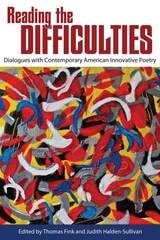
Reading the Difficulties
Dialogues with Contemporary American Innovative PoetryThomas Fink
University of Alabama Press, 2013
New Strategies for Reading the Most Innovative Poetry of Our Time.
Definitions of what constitutes innovative poetry are innumerable and are offered from every quarter. Some critics and poets argue that innovative poetry concerns free association (John Ashbery), others that experimental poetry is a “re-staging” of language (Bruce Andrews) or a syntactic and cognitive break with the past (Ron Silliman and Lyn Hejinian). The tenets of new poetry abound.
But what of the new reading that such poetry demands? Essays in Reading the Difficulties ask what kinds of stances allow readers to interact with verse that deliberately removes many of the comfortable cues to comprehension—poetry that is frequently nonnarrative, nonrepresentational, and indeterminate in subject, theme, or message.
Some essays in Thomas Fink and Judith Halden-Sullivan’s collection address issues of reader reception and the way specific stances toward reading support or complement the aesthetic of each poet. Others suggest how we can be open readers, how innovative poetic texts change the very nature of reader and reading, and how critical language can capture this metamorphosis. Some contributors consider how the reader changes innovative poetry, what language reveals about this interaction, which new reading strategies unfold for the audiences of innovative verse, and what questions readers should ask of innovative verse and of events and experiences that we might bring to reading it.

Reading the Room
A Bookseller's TalePaul Yamazaki
Prickly Paradigm Press, 2024
Over twenty-four hours, Paul Yamazaki leads us through the stacks of storied City Lights Booksellers in San Francisco; the care and prowess of his approach to book buying; his upbringing in a Japanese American family in Southern California and moving to San Francisco at the height of revolutionary foment; working with legendary figures in the book publishing industry like Lawrence Ferlinghetti, Sonny Mehta, and others; and his vision for the future of bookselling. Navigating building trust with readers and nurturing relationships across the literary industry, Yamazaki testifies to the value of generosity, sharing knowledge, and dialogue in a life devoted to books.
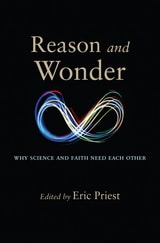
Reason and Wonder
Why Science and Faith Need Each OtherEric Priest
Templeton Press, 2016
This is exactly what Reason and Wonder does. Eric Priest has brought together twelve of the leading thinkers in science and theology to discuss everything from the origins of the universe to evolution and evil. At the heart of each essay is an understanding that the best science—and the best theology— are both undergirded by an appeal to reason as well as a deep sense of wonder.
Each of these great scientific and theological thinkers offers a chapter on their area of expertise, and the book closes with a stimulating set of questions for group discussion or personal reflection.
- Contributors and their topics include:
- Eric Priest: Towards an integration of science and religion
- Keith Ward: God, science and the New Atheism
- Eleonore Stump: Natural law, reductionism and the Creator
- David Wilkinson: The origin and end of the universe: A challenge for Christianity
- Jennifer Wiseman: Universe of wonder, universe of life
- Kenneth R. Miller: Evolution, faith and science
- Michael J. Murray and Jeff Schloss: Evolution and evil
- Pauline Rudd: Is there more to life than genes?
- David G. Myers: Psychological science meets Christian faith
- John Wyatt: Being a person: Towards an integration of neuroscientific and Christian perspectives
- John Swinton: From projection to connection: Conversations between science, spirituality and health
- Mark Harris: Do the miracles of Jesus contradict science?
- N. T. Wright: Can a scientist trust the New Testament?

Rebels and Outliers
Real Stories of the American WestJohn M Glionna
University of Nevada Press, 2025
This vibrant collection invites readers to journey through the rugged landscapes and tight-knit communities that define the American West. Along the way, you’ll meet individuals whose grit, resilience, and pioneering spirit embody the heart of this region’s legacy.
A captivating follow-up to Glionna’s 2022 book, Outback Nevada: Real Stories of the Silver State, Rebels and Outliers is a testament to the untamed, enduring character of the people who call the West home.
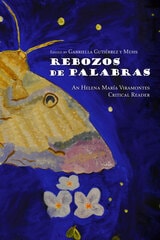
Rebozos de Palabras
An Helena María Viramontes Critical ReaderEdited by Gabriella Gutiérrez y Muhs
University of Arizona Press, 2013
As Gabriella Gutiérrez y Muhs points out in her insightful introduction, not only has Viramontes’s work not yet received the broad critical engagement it richly deserves, but there remains a monumental gap in the interpretations of Chicana literature that reach mainstream audiences. Rebozos de Palabras addresses this void by focusing on how the Chicana image has evolved through Viramontes’s body of work. With a foreword by Sonia Saldívar-Hull, this collection addresses Viramontes entire oeuvre through newly produced articles by major literary critics and emerging scholars who engage Viramontes’s writing from multiple perspectives.
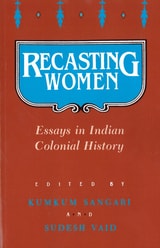
Recasting Women
Essays in Indian Colonial HistorySangari, Kumkum
Rutgers University Press, 1990
The political and social life of India in the last decade has given rise to a variety of questions concerning the nature and resilience of patriarchal systems in a transitional and post-colonial society. The contributors to this interdisciplinary volume recognize that every aspect of reality is gendered, and that such a recognition involves a dismantling of the ideological presuppositions of the so-called gender neutral ideologies, as well as the boundaries of individual disciplines.
The first set of essays seeks to analyze the patriarchal discourses of a colonial society and includes an analysis of the shaping of Hindu-Aryan identity, the parameters of the discourse on widow-immolation, the "defeminization" of popular culture in nineteenth-century urban Calcutta, the nature of the reforms proposed by early women's journals in Hindi, and the implications of the nationalist movement and of Indo-Anglian leterature on middle-class patriarchal norms.
The second set of articles relates to women of the productive classes--the reconstitution of patriarchies in the agrarian transition in Haryana, in the Oudh peasant movement, in the armed peasant struggle in Telangana, and among the working class in Bengal. The contributors explore the interrelation of patriarchies with political economy, law, religion, and culture, and suggest a different history of "reform" movements, and of class and gender relations.
Recasting Women
Essays in Indian Colonial HistorySangari, Kumkum
Rutgers University Press, 1990
The political and social life of India in the last decade has given rise to a variety of questions concerning the nature and resilience of patriarchal systems in a transitional and post-colonial society. The contributors to this interdisciplinary volume recognize that every aspect of reality is gendered, and that such a recognition involves a dismantling of the ideological presuppositions of the so-called gender neutral ideologies, as well as the boundaries of individual disciplines.
The first set of essays seeks to analyze the patriarchal discourses of a colonial society and includes an analysis of the shaping of Hindu-Aryan identity, the parameters of the discourse on widow-immolation, the "defeminization" of popular culture in nineteenth-century urban Calcutta, the nature of the reforms proposed by early women's journals in Hindi, and the implications of the nationalist movement and of Indo-Anglian leterature on middle-class patriarchal norms.
The second set of articles relates to women of the productive classes--the reconstitution of patriarchies in the agrarian transition in Haryana, in the Oudh peasant movement, in the armed peasant struggle in Telangana, and among the working class in Bengal. The contributors explore the interrelation of patriarchies with political economy, law, religion, and culture, and suggest a different history of "reform" movements, and of class and gender relations.

Recent Studies Indicate
The Best of Sarah BirdBy Sarah Bird
University of Texas Press, 2019
When Sarah Bird arrived in Austin in 1973 in pursuit of a boyfriend who was “hotter than lava,” she found an abundance of inspiration for storytelling (her sweetheart left her for Scientology, but she got to taste a morsel of Lynda Bird Johnson’s poorly preserved wedding cake as a temp worker at the LBJ Library). Sarah Bird went on to write ten acclaimed novels and contribute hundreds of articles to publications coast to coast, developing a signature voice that combines laser-sharp insight with irreverent, wickedly funny prose in the tradition of Molly Ivins and Nora Ephron
Now collecting forty of Bird’s best nonfiction pieces, from publications that range from Texas Monthly to the New York Times and others, Recent Studies Indicate presents some of Bird’s earliest work, including a prescient 1976 profile of a transgender woman, along with recent calls to political action, such as her 2017 speech at a benefit for Annie’s List.
Whether Bird is hanging out with socialites and sanitation workers or paying homage to her army-nurse mom, her collection brings a poignant perspective to the experience of being a woman, a feminist, a mother, and a Texan—and a writer with countless, spectacular true tales to tell us.
Reclaiming Modernity
Essays on a Paradoxical NostalgiaLarry Bennett
University of Illinois Press, 2025
Larry Bennett explores the complexities of nostalgia with considerations of the historic preservation of brutalist architecture, specifically Bertrand Goldberg’s Prentice Women’s Hospital in Chicago; the memoirs and recollections of early and mid-twentieth-century Brooklyn and Detroit; and the turntable’s rebirth as a musical instrument alongside the vinyl LP’s resurgence as a prized way of consuming music. Bennett tracks modernity as expressed through ideas, artistic products, and widespread social practices. His consideration of nostalgia focuses on our inclination to rediscover value in people, places, and social habits diminished by the passage of time.
Provocative and multidisciplinary, Reclaiming Modernity delves into the paradox of how we feel nostalgia for ideas and times that emerged from an impulse to shun nostalgia.
Reclaiming the Political in Latin American History
Essays from the NorthGilbert M. Joseph, ed.
Duke University Press, 2001
Taking careful stock of the state of historical writing on Latin America, the volume delineates current historiographical frontiers and suggests a series of new approaches that focus on several pivotal themes: the construction of historical narratives and memory; the articulation of class, race, gender, sexuality, and generation; and the historian’s involvement in the making of history. Although the book represents a view of the Latin American political that comes primarily from the North, the influence of Viotti da Costa powerfully marks the contributors’ engagement with Latin America’s past. Featuring a keynote essay by Viotti da Costa herself, the volume’s lively North-South encounter embodies incipient trends of hemispheric intellectual convergence.
Contributors. Jeffrey L. Gould, Greg Grandin, Daniel James, Gilbert M. Joseph, Thomas Miller Klubock, Mary Ann Mahony, Florencia E. Mallon, Diana Paton, Steve J. Stern, Heidi Tinsman, Emilia Viotti da Costa, Barbara Weinstein
Reclaiming the Rural
Essays on Literacy, Rhetoric, and PedagogyEdited by Kim Donehower, Charlotte Hogg, and Eileen E. Schell
Southern Illinois University Press, 2012
In Reclaiming the Rural: Essays on Literacy, Rhetoric, and Pedagogy, editors Kim Donehower, Charlotte Hogg, and Eileen E. Schell bring together a diverse collection of essays that consider literacy, rhetoric, and pedagogy in the United States, Canada, and Mexico. The essays move beyond the typical arguments for preserving, abandoning, or modernizing by analyzing how rural communities sustain themselves through literate action. The contributors explore the rhetorics of water disputes in the western United States, the histories and influences of religious rhetorics in Mexico, agricultural and rural literacy curricula, the literacies of organizations such as 4-H and Academia de la Nueva Raza, and neoliberal rhetorics. Central to these examinations are the rural populations themselves, which include indigenous peoples in the rural United States, Canada, and Mexico, as well as those of European or other backgrounds.
The strength of the anthology lies in its multiple perspectives, various research sites, and the range of methodologies employed, including rhetorical analyses of economies and environments, media, and public spaces; classroom-based research; historical analysis and archival work; and qualitative research. The researchers engage the duality between the practices of everyday life in rural communities and the practices of reflecting on and making meaning.
Reclaiming the Rural reflects the continually changing, nuanced, context-dependent realities of rural life while acknowledging the complex histories, power struggles, and governmental actions that have affected and continue to affect the lives of rural citizens. This thought-provoking collection demonstrates the value in reclaiming the rural for scholarly and pedagogical analysis.
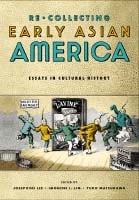
Recollecting Early Asian America
Essays In Cultural HistoryJosephine Lee
Temple University Press, 2002
Records of Reward
Essays on Literature and ValueFrances Ferguson
University of Chicago Press, 2026
A selection of essays revealing the singular brilliance of Ferguson’s critical writing over four decades.
Ranging across literature, philosophy, and social thought, Frances Ferguson asks how forms—whether aesthetic, legal, or bureaucratic—help to assign value and thereby organize our relations as well as our personal identities. Ferguson is a literary critic who takes her lead, unexpectedly, from Jeremy Bentham, showing how modernity tracks and makes perceptible the values of a host of human activities—the knowledge that comes from early learning exercises, the specialized knowledge that funds particular professions, and the exacting if unspecialized knowledge of the social world of courtship or hanging out.
Gathering Ferguson’s most influential and still timely essays, Records of Reward includes, among others, “The Nuclear Sublime,” in which Ferguson turns to Mary Shelley’s Frankenstein to examine how the aesthetic logic of the sublime obscures the claims of domesticity and the beautiful; “Rape and the Rise of the Novel,” which examines the history of rape law to highlight the importance of Samuel Richardson’s foregrounding of consent in Clarissa; “Pornography, the Theory,” where she explores the threshold between speech and action to identify environments—such as schools and workplaces—in which pornographic expression can be harmfully potentiated; and “Jane Austen, Emma, and the Impact of Form,” in which she analyzes Austen’s use of free indirect style to depict both her protagonist and her reader engaged in acts of “over-knowing” others in everyday life. Most unexpectedly, perhaps, the collection also includes an essay analyzing Bitcoin as a small language model that exerts enormous affective pressure on its partisans.
A vivid demonstration of the enduring rewards of theory and close reading alike, Records of Reward will be essential reading across the fields of literary studies, cultural studies, and political thought.
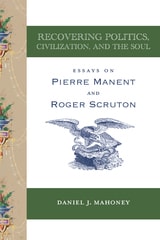
Recovering Politics, Civilization, and the Soul
Essays on Pierre Manent and Roger ScrutonDaniel J. Mahoney
St. Augustine's Press, 2022
Both Scruton and Manent have repudiated the fashionable nihilism associated with the “thought of 1968” and the “Parisian nonsense machine,” and have shown that gratitude is the proper response of the human person to the “givenness of things.” Both defend the self-governing nation against reckless nationalism and the even more reckless temptation of supranational governance and post-political democracy, what Manent suggestively calls a “kratos” without a “demos.” Both defend the secular state while taking aim at a radical secularism that rejects “the Christian mark” that is at the heart of our inheritance and that sustains the rich and necessary interpenetration of truth and liberty. Scruton’s more “cultural” perspective is indebted to Burke and Kant; Manent’s more political perspective draws on Aristotle, St. Thomas, Tocqueville, and Raymond Aron, among others. By highlighting their affinities, and reflecting on their instructive differences, Mahoney shows how, together, the English man of letters Scruton, and the French political philosopher Manent, guide us to the recovery of a horizon of thought and action animated by practical reason and the wellsprings of the human soul. They show us the humanizing path forward, but first we must make the necessary spiritual decision to repudiate repudiation once and for all.
“With sophisticated and profound scholarship, Daniel Mahoney deploys his elegant style to defend the soul of civilization. Through the writings of Pierre Manent and Roger Scruton, he charts a course through the political and philosophical turmoil of the present age, providing hope and light amid the prevailing darkness.”
— Mark Dooley, Irish philosopher, writer and journalist. Author of Conversations with Roger Scruton and Sir Roger's literary executor.
“Mahoney's collection of essays does a marvelous job of contextualizing and explaining the vital work of these two philosophers. He's also an engaging and elegant writer.”
— Daniel DiSalvo, City Journal
“A series of reflective essays by Mahoney on the philosophical, theological, and political thinking of our best conservative theorists: Pierre Manent and the late Roger
Scruton. Recovering Politics, Civilization, and the Soul expresses well what we need.” — Richard M. Reinsch II, National Review
Rediscovering The Past at Mexico's Periphery
Essays on the History of Modern YucatanGilbert M. Joseph
University of Alabama Press, 1986
Increasingly, the modern era of Mexican history (c. 1750 to the present) is attracting the attention of Mexican and international scholars. Significant studies have appeared for most of the major regions and Yucatán, in particular, has generated an unusual appeal and an abundant scholarship. This book surveys major trends in Yucatán’s currents in Mexican historiography, and suggest new departures for regional and local-level research.
Rather than compiling lists of sources around given subject headings in the manner of many historiographies, the author seeks common ground for analysis in the new literature’s preoccupation with changing relations of land, labor, and capital and their impact on regional society and culture. Joseph proposes a new periodization of Yucatán’s modern history which he develops in a series of synthetic essays rooted in regional political economy.
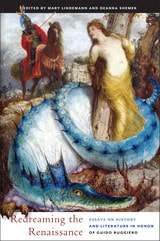
Redreaming the Renaissance
Essays on History and Literature in Honor of Guido RuggieroMary Lindemann
University of Delaware Press, 2024
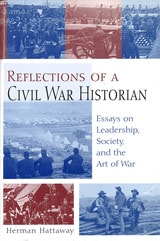
Reflections of a Civil War Historian
Essays on Leadership, Society, and the Art of WarHerman Hattaway & Foreword by Frank E. Vandiver
University of Missouri Press, 2003
Reflections on a Disruptive Decade
Essays from the SixtiesEugene Davidson
University of Missouri Press, 2000
As editor of Modern Age in the 1960s, Eugene Davidson introduced each quarterly issue with a thought-provoking contemplation of one or another of the decade's dizzying events. Gathered together here for the first time, the essays in Reflections on a Disruptive Decade present an intellectual conservative's perspective on an era which, because it underscores so many of the political divisions still with us today, continues to hold our fascination.
Davidson deals with the marvelous but confused realm of post-1945 international politics, in which the American people faced a new enemy, one often baffling and terrifying. The Cuban missile crisis was probably the most uncertain moment in foreign policy during this century. Although the crisis was resolved without bloodshed, there was intense danger of irrationality, for the Russians foolhardily had sent nuclear missiles to Cuba.
Other topics Davidson addresses are the Civil Rights movement, the policies and programs of Lyndon Johnson's Great Society, and the East-West battles of ideology and arms in Europe, Vietnam, and the Middle East. With remarkable shrewdness, Davidson illuminates many contradictions and excesses of the decade's liberal ascendancy, and presciently detects signs pointing to a resurgence of the nation's conservative forces.
Although more than thirty years have passed, Davidson's essays still contain great clarity, and his appraisals are still keen. Reflections on a Disruptive Decade is a truly remarkable addition to the work of this distinguished scholar.
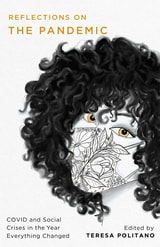
Reflections on the Pandemic
COVID and Social Crises in the Year Everything ChangedTeresa Politano
Rutgers University Press, 2024
Contributors include: Patricia Akhimie, Marc Aronson, Ulla D. Berg, Stephanie Bonne, Stephanie Boyer, Kimberly Camp, Jordan Casteel, Kelly-Jane Cotter, Mark Doty, David Dreyfus, Adrienne E. Eaton, Katherine C. Epstein, Leah Falk, Paul G. Falkowski, Rigoberto González, James Goodman, David Greenberg, Angelique Haugerud, Grace Lynne Haynes, Leslieann Hobayan, Jonathan Holloway, James W. Hughes, Naomi Jackson, Amy Jordan, Vikki Katz, Mackenzie Kean, Robert E. Kopp, Christian Lighty, Stephen Masaryk, Louis P. Masur, Revathi V. Machan, Yalidy Matos, Belinda McKeon, Susan L. Miller, Yehoshua November, Joyce Carol Oates, Mary E. O’Dowd, Katherine Ognyanova, David Orr, Gregory Pardlo, Steve Pikiell, Teresa Politano, en Purkert, Nick Romanenko, Evie Shockley, Caridad Svich, and Didier William.
Reflections
Conversations with PoliticiansPeter Hennessy and Robert Shepherd
Haus Publishing, 2016
Reflections collects transcripts of the best interviews from the BBC Radio 4 series Reflections with Peter Hennessy, a show on which the British political elite have spoken candidly about their careers and the moments that came to define their political lives. Supplementing the interviews are short biographies and profiles of the interviewees, allowing readers a fuller picture of each speaker’s background and professional trajectory. This revealing book includes conversations with political heavyweights such as former prime minister John Major; former foreign secretaries Margaret Beckett, David Owen, and Jack Straw; Labour Party leader Neil Kinnock; Liberal Party leader David Steel; and chancellor of exchequer Nigel Lawson. In addition, Reflections presents interviews with leading women, including Shirley Williams and Clare Short, who spent years at the forefront of their parties in Westminster.
The latest volume in the popular Haus Curiosities series, Reflections offers valuable insights from some of today’s most influential political figures.
Reflections
Conversations, Essays, and Other WritingsThomas Hauser
University of Arkansas Press, 2014
Rejoining the Common Reader
Essays, 1962-1990Clara Claiborne Park
Northwestern University Press, 1991
Relating Religion
Essays in the Study of ReligionJonathan Z. Smith
University of Chicago Press, 2004
Smith first explains how he was drawn to the study of religion, outlines his own theoretical commitments, and draws the connections between his thinking and his concerns for general education. He then engages several figures and traditions that serve to define his interests within the larger setting of the discipline. The essays that follow consider the role of taxonomy and classification in the study of religion, the construction of difference, and the procedures of generalization and redescription that Smith takes to be key to the comparative enterprise. The final essays deploy features of Smith's most recent work, especially the notion of translation.
Heady, original, and provocative, Relating Religion is certain to be hailed as a landmark in the academic study and critical theory of religion.
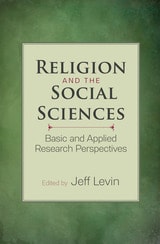
Religion and the Social Sciences
Basic and Applied Research PerspectivesJeff Levin
Templeton Press, 2018
To give this research the attention it deserves, editor Jeff Levin assembled a panel of preeminent social scientists and gave them a single directive: write the ultimate statement on religion from within their respective social science discipline or field. The result is this single volume, “state-of-the-science” compendium—a first of its kind for the study of religion.
Composed of ten essays, this book details the study of religion within nine basic and applied areas of social science. Along with a critical introduction to this subject, these essays include the expert contributions of:
- Kenneth I. Pargament & Julie J. Exline on psychology
- Anthony Gill on political science
- Charles M. North on economics
- Barry Hankins on history
- Annette Mahoney on family studies
- Byron R. Johnson on criminology
- Linda K. George on gerontology
- William H. Jeynes on education
- Jeff Levin on epidemiology
- An introduction to the history of the discipline’s or field’s religious research, as well as its most important people and published works.
- A comprehensive overview of key research findings and theories.
- A detailed research agenda to guide future scholars.
- An annotated bibliography of seminal works for the reader’s further consideration.

Remapping Memory
The Politics of TimeSpaceJonathan Boyarin, EditorAfterword by Charles Tilly
University of Minnesota Press, 1994
Remapping Memory was first published in 1994. Minnesota Archive Editions uses digital technology to make long-unavailable books once again accessible, and are published unaltered from the original University of Minnesota Press editions.
The essays in this book focus on contested memories in relation to time and space. Within the context of several profound cultural and political conflicts in the contemporary world, the contributors analyze historical self-configurations of human groups, and the construction by these groups of the spaces they shape and that shape them. What emerges is a view of the state as a highly contingent artifact of groups vying for legitimacy-whether through their own sense of "insiderhood," their control of positions within hierarchies, or their control of geographical territories.
Boyarin's lead essay shows how the supposedly "objective" categories of space and time are, in fact, specific products of European modernity. Each case study, in turn, addresses the (re)constitution of space, time, and memory in relation to an event either of historical significance, like the dropping of the atomic bomb on Hiroshima, or of cultural importance, like the Indian preoccupation with reincarnation. These ethnographic studies explore fundamental questions about the nature of memory, the limits of politics, and the complex links between them.
By focusing on personal and collective identity as the site where constructions of memory and dimensionality are tested, shaped, and effected, the authors offer a new way of understanding how the politics of space, time and memory are negotiated to bring people to terms with their history.
Contributors: Akhil Gupta, Stanford University;
Charles R. Hale, University of California, Davis; Carina Perelli, PEITHO, Montevideo, Uruguay; Jennifer Schirmer, Center for European Studies, Harvard; Daniel A. Segal, Pitzer College, Claremont, California; Lisa Yoneyama, University of California, San Diego.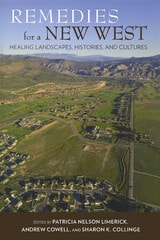
Remedies for a New West
Healing Landscapes, Histories, and CulturesEdited by Patricia Nelson Limerick, Andrew Cowell, and Sharon K. Collinge
University of Arizona Press, 2009
The signs of illness and trauma can seem omnipresent in today’s West: land and soil disrupted from mining, overgrazing, logging, and farming; wildlife habitat reduced and fragmented; native societies disturbed and threatened; open space diminished by cities and suburbs; wilderness destroyed by roads and recreation-seekers. But as these essays suggest, the “treatment program” for healing the West has many healthful side effects. Engaging in the kinds of projects suggested by contributors is therapeutic not only for the environment but for participants as well. Restoration, repair, and recovery can counter symptoms of despair with concentrated doses of promise and possibility.
The more “lesions” the West has, this book suggests, the more opportunities there are for westerners to revive and ultimately cure the ailing patient they have helped to create. The very idea of restoring the West to health, contributors and editors contend, unleashes our imaginations, sharpens our minds, and gives meaning to the ways we choose to live our lives. At the same time, acknowledging the profound difficulties of the work that lies ahead immunizes us against our own arrogance as we set about the task of healing the West.
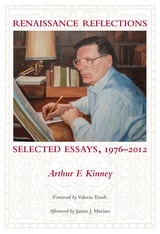
Renaissance Reflections
Selected EssaysArthur F. Kinney
University of Massachusetts Press, 2014
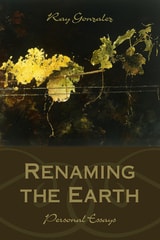
Renaming the Earth
Personal EssaysRay Gonzalez
University of Arizona Press, 2008
Nowhere does the process of redefinition hit Gonzalez quite as hard as in his native city of El Paso, Texas. There he finds the “segregated little town of my childhood” transformed into “a metropolis of fast Latino zip codes . . . a world where the cell phone, the quick beer, the rented apartment, and the low-paying job say you can be young and happy on the border.” Readers will wonder, along with the author, whether life along the “new border” is worth “the extermination of the old boundaries.”
But there is another side of the Southwest for this “son of the desert”—the world of dusty canyons, ponderosa pines, ocotillo, and mesquite. Here, he writes, “there is a shadow, and it is called ancient home—structures erased from their seed to grow elsewhere, vultured strings searching for a frame that stands atop history and renames the ground.”
Rooted in the desert sand and in the banks of the Rio Grande, the muddy river that forms the border between nations, these essays are by turns lyrical, mournful, warm to the ways of the land, and lukewarm to the ways of man.
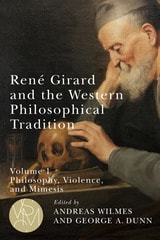
René Girard and the Western Philosophical Tradition, volume 1
Philosophy, Violence, and MimesisAndreas Wilmes
Michigan State University Press, 2024
This is the first collective scholarly effort at situating René Girard in relation to the Western philosophical tradition. Volume 1 features chapters on Plato, Augustine of Hippo, Niccolò Machiavelli, Thomas Hobbes, Blaise Pascal, Baruch Spinoza, Jean-Jacques Rousseau, Adam Smith, Immanuel Kant, Georg Wilhelm Friedrich Hegel, Friedrich Wilhelm Joseph Schelling, Alexis de Tocqueville, Søren Kierkegaard, and René Girard.
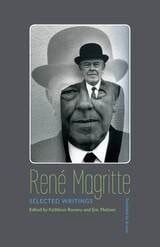
René Magritte
Selected WritingsRené Magritte
University of Minnesota Press, 2016
Available for the first time in an English translation, this selection of René Magritte’s writings gives non-Francophone readers the chance to encounter the many incarnations of the renowned Belgian painter—the artist, the man, the aspiring noirist, the fire-breathing theorist—in his own words. Through whimsical personal letters, biting apologia, appreciations of fellow artists, pugnacious interviews, farcical film scripts, prose poems, manifestos, and much more, a new Magritte emerges: part Surrealist, part literalist, part celebrity, part rascal.While this book is sure to appeal to admirers of Magritte’s art and those who are curious about his personal life, there is also much to delight readers interested in the history and theory of art, philosophy and politics, as well as lovers of creativity and the inner workings of a probing, inquisitive mind unrestricted by genre, medium, or fashion.
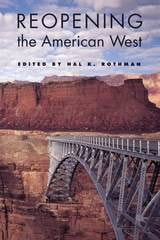
Reopening the American West
Edited by Hal K. Rothman
University of Arizona Press, 1998
In this book Mike Davis, Stephen Pyne, William deBuys, Donald Worster, Dan Flores, and others re-examine the relationship between people and the environment in the American West over five hundred years, from the legacy of Coronado's search for the Cities of Gold to the social costs of tourism and gaming inflicted by modern adventurers. By exploring places in the West, aspects of the region's past, and ways of understanding some of its pressing issues, the authors foster a better understanding of how people interact and perceive land.
Reopening the American West takes a fresh approach to the history of the region, examining the premises of earlier scholars as well as those who have redefined the study of the West over the past two decades. It combines provocative essays with insightful analyses to address issues that are representative of the West in the twentieth century—multiculturalism, water issues, resource exploitation—and to reopen the West for all readers interested in new ways of looking at its wide-open spaces.
Contents:
Places
Dreams of Earth, William deBuys
Environmentalism and Multiculturalism, Dan L. Flores
Pyre on the Mountain, Stephen J. Pyne
Las Vegas Versus Nature, Mike Davis
Pasts
The Legacy of John Wesley Powell, Donald Worster
Pokey’s Paradox: Tourism and Transformation on the Western Navajo Reservation, Hal K. Rothman
Negotiating National Identity: Western Tourism and "See American First," Marguerite Schaffer
Understanding
Place Humanists at the Headgates, Helen Ingram
Tapping the Rockies: Resource Exploitation and Conservation in the Intermountain West, Char Miller
The Meaning of Place: Reimagining Community in a Changing West, Robert Gottlieb

Replays, Rivalries, and Rumbles
The Most Iconic Moments in American SportsSteven Gietschier
University of Illinois Press, 2017