Results by title
230 books match the query 'Ethnicity' and 18 start with r
Race
Gregory, Steven
Rutgers University Press, 1994
“What unites these essays is a common focus on the ‘social construction’ of racial categories and a desire to expose the exercise of racism and its intersection with other forms of social domination such as class, gender, and ethnicity . . . Fascinating.”––Multicultural Review
“The coming together of theoretical, multiethnic, and ‘on-the-ground’ perspectives makes this book a particularly valuable contribution to the discourse on race.”––Paula Giddings
“Timely and thoughtful. . . contributes to our understanding of how race operates as a social process and in the contextualization of power and status.”––Contemporary Sociology
“A treasure chest full of gems. Virtually every article is fascinating and important, and as a collection, its impact is tremendous. Neo-conservative myths and fantasies fall like nine-pins before its well-researched and tightly argued papers.”––Martin Bernal, author of Black Athena
“A timely antidote to that reaction tome, The Bell Curve.”––Daily News (New York)
“Let’s be clear from the start what this book is about,” writes Roger Sanjek. “Race is the framework of ranked categories, segmenting the human population, that was developed by Western Europeans following their global expansion.”To contemporary social scientists, this ranking is baseless, though it has had all-too-real effects.
Drawing on anthropology, history, sociology, ethnic studies, and women's studies, this volume explores the role of race in a variety of cultural and historical contexts. The contributors show how racial ideologies intersect with gender, class, nation and sexuality in the formation of complex social identities and hierarchies. The essays address such topics as race and Egyptian nationalism, the construction of “whiteness” in the United States, and the transformation of racial categories in post-colonial Haiti. They demonstrate how social elites and members of subordinated groups construct and rework racial meanings and identities within the context of global political, economic, and cultural change. Race provides a comprehensive and empirically grounded survey of contemporary theoretical approaches to studying the complex interplay of race, power, and identity.
Race & Archaeology Of Identity
Charles Orser Jr
University of Utah Press, 2002
Race is not a subject most people associate with archaeological research. Yet because of archaeologists’ interest in long time-spans they are perfectly positioned to investigate the “naturalness” of racial designations through time.
Race and the Archaeology of Identity brings together twelve of America’s most perceptive and talented historical archaeologists. Their focus is on the recent archaeological record—stretching geographically from Jamaica to northern Michigan; their time frame is from colonial days to the late nineteenth century; and their subjects range from frontier fur traders to Victorian city dwellers. Using textual and archaeological sources, contributors explore such topics as the connections of race to economics, the creation and maintenance of institutionalized poverty, the role of race in structuring and guiding intercultural connections, and the importance of race in creating and defining space.
Contributors explore such topics as the connections of race to economics, the role of race in structuring and guiding intercultural connections, and the importance of race in creating and defining space.

Race and Ethnicity in Arkansas
New PerspectivesJohn A. Kirk
University of Arkansas Press, 2014

Race and Ethnicity in Latin America
Peter Wade
Pluto Press, 2010
For over ten years, Race and Ethnicity in Latin America has been an essential text for students studying the region. This second edition adds new material and brings the analysis up to date.
Race and ethnic identities are increasingly salient in Latin America. Peter Wade examines changing perspectives on Black and Indian populations in the region, tracing similarities and differences in the way these peoples have been seen by academics and national elites. Race and ethnicity as analytical concepts are re-examined in order to assess their usefulness.
This book should be the first port of call for anthropologists and sociologists studying identity in Latin America.

Race and Ethnicity in the Middle Ages, Volume 31
Thomas Hahn, ed.
Duke University Press, 0
"The Difference the Middle Ages Makes: Color and Race before the Modern World" by Thomas Hahn
"Medieval and Modern Concepts of Race and Ethnicity" by Robert Bartlett
"Black Servant, Black Demon: Color Ideology in the Ashburnham Pentateuch" by Dorothy Hoogland Verkerk
"Pagans are wrong and Christians are right: Alterity, Gender, and Nation in the Chanson de Roland" by Sharon Kinoshita
"On Saracen Enjoyment: Some Fantasies of Race in Late Medieval France and England" by Jeffrey Jerome Cohen
"Medieval Travel Writing and the Question of Race" by Linda Lomperis
"Why ‘Race’?" by William Chester Jordan
Race, Ethnicity, and Economic Statistics for the 21st Century
Edited by Randall Akee, Lawrence F. Katz, and Mark A. Loewenstein
University of Chicago Press, 2026
Categorizing race and ethnicity for twenty-first-century statistics and economics.
The increasing racial and ethnic diversity of the US population raises the question of whether the race and ethnicity categories and definitions used by federal statistical agencies to create demographic statistics on which government officials, business decision-makers, and private citizens rely fully reflect the changing population. Official definitions of existing race and ethnic groups do not always command wide agreement, and over time, some definitions that were once widely accepted may become less so based on political, legal, and social factors. Comparable measures of race and ethnicity over time are needed to accurately track historical changes in economic and social outcomes, as well as racial and ethnic segregation.
This volume explores the production of economic statistics that accurately depict the complex racial and ethnic diversity of the US population in the twenty-first century. The chapters examine the consequences for economic analyses of different measurement choices concerning race and ethnicity, assess the likely implications of the 2024 changes in federal race and ethnicity measurement standards, introduce new data sets with richer demographic information, and compare measures of race and ethnicity in administrative versus survey data. They also apply existing data in creative ways to develop alternative characterizations of the changing US workforce and to illuminate important policy questions related to criminal justice, immigration, labor market discrimination, the social safety net, health care, and child welfare.

Race, Ethnicity, and the COVID-19 Pandemic
Edited by Melvin E. Thomas, Loren M. Henderson, and Hayward Derrick Horton
University of Minnesota Press, 2022
To understand racial disparities in COVID-19 infections and deaths, we must first understand how they are linked to racial inequality. In the United States, the material advantages afforded by whiteness lead to lower rates of infections and deaths from COVID-19 when compared to the rates among Black, Latino, and Native American populations. Most experts point to differences in population density, underlying health conditions, and proportions of essential workers as the primary determinants in the levels of COVID-19 deaths.
The national response to the pandemic has laid bare the fundamentals of a racialized social structure. Assembled by a prestigious group of sociologists, this volume examines how particularly during the first year of COVID-19, the socioeconomic impact of the pandemic led to different and poorer outcomes for Black, Latino, and Native American populations. While color-blindness shaped national discussions on essential workers, charity, and differential mortality, minorities were overwhelmingly affected. The essays in this collection provide a mix of critical examination of the progress and direction of our COVID-19 response, personal accounts of the stark difference in care and outcomes for minorities throughout the United States, and offer recommendations to create a foundation for future response and research during the critical early days.
Race, Ethnicity, and the Cold War
A Global PerspectivePhilip E. Muehlenbeck
Vanderbilt University Press, 2012
Table of Contents
Preface
Introduction: The Borders of Race and Nation
Nico Slate
Part I: Race and the International System
Token Diplomacy: The United States, Race, and the Cold War
Michael L. Krenn
A Wind of Change? White Redoubt and the Postcolonial Moment in South Africa, 1960-1963
Ryan M. Irwin
Part II: Race, Ethnicity, and Decolonization
Race, Labor, and Security in the Panama Canal Zone: The 1946 Greaves Rape Case, Local 713, and the Isthmian Cold War Crackdown
Michael Donoghue
Race, Identity, and Diplomacy in the Papua Decolonization Struggle, 1949-1962
David Webster
"For a Better Guinea": Winning Hearts and Minds in Portuguese Guinea
Luís Nuno Rodrigues
Part III: Race and the Interplay of Domestic and International Politics
Testing the Limits of Soviet Internationalism: African Students in the Soviet Union
Maxim Matusevich
Crimes against Humanity in the Congo: Nazi Legacies and the German Cold War in Africa
Katrina M. Hagen
Race and the Cuban Revolution: The Impact of Cuba's Intervention in Angola
Henley Adams
Part IV: Ethnicity and the Interplay of Domestic and International Politics
Ethnic Nationalism in the Cold War Context: The Cyprus Issue in the Greek and Greek American Public Debate, 1954-1989
Zinovia Lialiouti and Philip E. Muehlenbeck
God Bless Reagan and God Help Canada: The Polish Canadian Action Group and Solidarność in Toronto
Eric L. Payseur
Ethnic Nationalism and the Collapse of Soviet Communism
Mark R. Beissinger
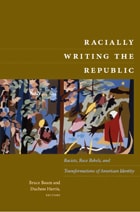
Racially Writing the Republic
Racists, Race Rebels, and Transformations of American IdentityBruce Baum and Duchess Harris, eds.
Duke University Press, 2009
The contributors analyze Thomas Jefferson’s legacy in light of his sexual relationship with his slave, Sally Hemings; the way that Samuel Gompers, the first president of the American Federation of Labor, rallied his organization against Chinese immigrant workers; and the eugenicist origins of the early-twentieth-century birth-control movement led by Margaret Sanger. They draw attention to the writing of Sarah Winnemucca, a Northern Piute and one of the first published Native American authors; the anti-lynching activist Ida B. Wells-Barnett; the Filipino American writer Carlos Bulosan; and the playwright Lorraine Hansberry, who linked civil rights struggles in the United States to anticolonial efforts abroad. Other figures considered include Alexis de Tocqueville and his traveling companion Gustave de Beaumont, Juan Nepomuceno Cortina (who fought against Anglo American expansion in what is now Texas), Abraham Lincoln, Theodore Roosevelt, and W. E. B. Du Bois. In the afterword, George Lipsitz reflects on U.S. racial politics since 1965.
Contributors. Bruce Baum, Cari M. Carpenter, Gary Gerstle, Duchess Harris, Catherine A. Holland, Allan Punzalan Isaac, Laura Janara, Ben Keppel, George Lipsitz, Gwendolyn Mink, Joel Olson, Dorothy Roberts, Patricia A. Schechter, John Kuo Wei Tchen, Jerry Thompson

Racism Postrace
Roopali Mukherjee, Sarah Banet-Weiser, and Herman Gray, editors
Duke University Press, 2019
Contributors. Inna Arzumanova, Sarah Banet-Weiser, Aymer Jean Christian, Kevin Fellezs, Roderick A. Ferguson, Herman Gray, Eva C. Hageman, Daniel Martinez HoSang, Victoria E. Johnson, Joseph Lowndes, Roopali Mukherjee, Safiya Umoja Noble, Radhika Parameswaran, Sarah T. Roberts, Catherine R. Squires, Brandi Thompson Summers, Karen Tongson, Cynthia A. Young
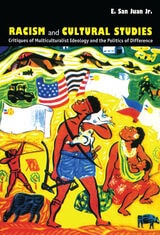
Racism and Cultural Studies
Critiques of Multiculturalist Ideology and the Politics of DifferenceE. San Juan Jr.
Duke University Press, 2002
Individual chapters engage the themes of ethnicity versus racism, gender inequality, sexuality, and the politics of identity configured with the discourse of postcoloniality and postmodernism. Questions of institutional racism, social justice, democratization, and international power relations between the center and the periphery are explored and analyzed. San Juan fashions a critique of dominant disciplinary approaches in the humanities and social sciences and contends that “the racism question” functions as a catalyst and point of departure for cultural critiques based on a radical democratic vision. He also asks urgent questions regarding globalization and the future of socialist transformation of “third world” peoples and others who face oppression.
As one of the most notable cultural theorists in the United States today, San Juan presents a provocative challenge to the academy and other disciplinary institutions. His intervention will surely compel the attention of all engaged in intellectual exchanges where race/ethnicity serves as an urgent focus of concern.
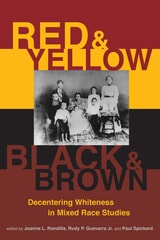
Red and Yellow, Black and Brown
Decentering Whiteness in Mixed Race StudiesRondilla, Joanne L
Rutgers University Press, 2017

Redefining Japaneseness
Japanese Americans in the Ancestral HomelandYamashiro, Jane H
Rutgers University Press, 2017
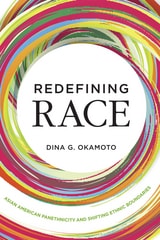
Redefining Race
Asian American Panethnicity and Shifting Ethnic BoundariesDina G. Okamoto is associate professor of sociology and director of the Center for Research on Race and Ethnicity in Society at Indiana University.
Russell Sage Foundation, 2014

Reframing Transracial Adoption
Adopted Koreans, White Parents, and the Politics of KinshipKristi Brian
Temple University Press, 2012
Until the late twentieth century, the majority of foreign-born children adopted in the United States came from Korea. In the absorbing book Reframing Transracial Adoption, Kristi Brian investigates the power dynamics at work between the white families, the Korean adoptees, and the unknown birth mothers. Brian conducts interviews with adult adopted Koreans, adoptive parents, and adoption agency facilitators in the United States to explore the conflicting interpretations of race, culture, multiculturalism, and family.
Brian argues for broad changes as she critiques the so-called "colorblind" adoption policy in the United States. Analyzing the process of kinship formation, the racial aspects of these adoptions, and the experience of adoptees, she reveals the stifling impact of dominant nuclear-family ideologies and the crowded intersections of competing racial discourses.
Brian finds a resolution in the efforts of adult adoptees to form coherent identities and launch powerful adoption reform movements.
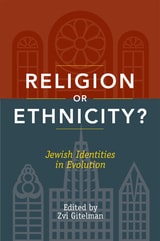
Religion or Ethnicity?
Jewish Identities in EvolutionGitelman, Zvi
Rutgers University Press, 2009
In Religion or Ethnicity? fifteen leading scholars trace the evolution of Jewish identity. The book examines Judaism from the Greco-Roman age, through medieval times, modern western and eastern Europe, to today. Jewish identity has been defined as an ethnicity, a nation, a culture, and even a race. Religion or Ethnicity? questions what it means to be Jewish. The contributors show how the Jewish people have evolved over time in different ethnic, religious, and political movements. In his closing essay, Gitelman questions the viability of secular Jewishness outside Israel but suggests that the continued interest in exploring the relationship between Judaism's secular and religious forms will keep the heritage alive for generations to come.
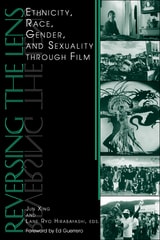
Reversing the Lens
Ethnicity, Race, Gender, and Sexuality through FilmJun Xing
University Press of Colorado, 2003
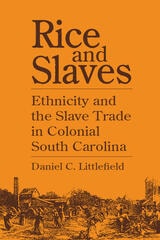
Rice and Slaves
Ethnicity and the Slave Trade in Colonial South CarolinaDaniel C. Littlefield
University of Illinois Press, 1991