Results by title
1031 books match the query 'Intellectual life' and 48 start with r
REGULATIONS OF ROBBERS
LEGAL FICTIONS OF SLAVERY AND RESISTANCEChristina Accomando
The Ohio State University Press, 2001
Racial Castration
Managing Masculinity in Asian AmericaDavid L. Eng
Duke University Press, 2001
Eng juxtaposes theortical discussions of Freud, Lacan, and Fanon with critical readings of works by Frank Chin, Maxine Hong Kingston, Lonny Kaneko, David Henry Hwang, Louie Chu, David Wong Louie, Ang Lee, and R. Zamora Linmark. While situating these literary and cultural productions in relation to both psychoanalytic theory and historical events of particular significance for Asian Americans, Eng presents a sustained analysis of dreamwork and photography, the mirror stage and the primal scene, and fetishism and hysteria. In the process, he offers startlingly new interpretations of Asian American masculinity in its connections to immigration exclusion, the building of the transcontinental railroad, the wartime internment of Japanese Americans, multiculturalism, and the model minority myth. After demonstrating the many ways in which Asian American males are haunted and constrained by enduring domestic norms of sexuality and race, Eng analyzes the relationship between Asian American male subjectivity and the larger transnational Asian diaspora. Challenging more conventional understandings of diaspora as organized by race, he instead reconceptualizes it in terms of sexuality and queerness.
Radical Aesthetics and Modern Black Nationalism
GerShun Avilez
University of Illinois Press, 2016
A bold addition to an advancing field, Radical Aesthetics and Modern Black Nationalism rewrites recent black cultural production even as it uncovers unexpected ways of locating black radicalism.
Radical Representations
Politics and Form in U.S. Proletarian Fiction, 1929–1941Barbara Foley
Duke University Press, 1994
Josephine Herbst, William Attaway, Jack Conroy, Thomas Bell and Tillie Olsen, are among the radical writers whose work Foley reexamines. Her fresh approach to the U.S. radicals' debates over experimentalism, the relation of art to propaganda, and the nature of proletarian literature recasts the relation of writers to the organized left. Her grasp of the left's positions on the "Negro question" and the "woman question" enables a nuanced analysis of the relation of class to race and gender in the proletarian novel. Moreover, examining the articulation of political doctrine in different novelistic modes, Foley develops a model for discussing the interplay between politics and literary conventions and genres.
Radical Representations recovers a literature of theoretical and artistic value meriting renewed attention form those interested in American literature, American studies, the U. S. left, and cultural studies generally.
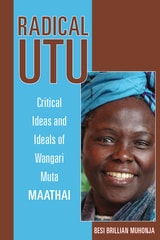
Radical Utu
Critical Ideas and Ideals of Wangari Muta MaathaiBesi Brillian Muhonja
Ohio University Press, 2020

Radical Visions and American Dreams
Culture and Social Thought in the Depression YearsRichard H. Pells
University of Illinois Press, 1998
Pells's classic work of American intellectual history includes a new preface.
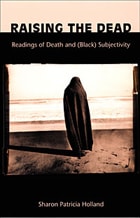
Raising the Dead
Readings of Death and (Black) SubjectivitySharon Patricia Holland
Duke University Press, 2000
Holland argues that the presence of blacks, Native Americans, women, queers, and other “minorities” in society is, like death, “almost unspeakable.” She gives voice to—or raises—the dead through her examination of works such as the movie Menace II Society, Toni Morrison’s novel Beloved, Leslie Marmon Silko’s Almanac of the Dead, Randall Kenan’s A Visitation of Spirits, and the work of the all-white, male, feminist hip-hop band Consolidated. In challenging established methods of literary investigation by putting often-disparate voices in dialogue with each other, Holland forges connections among African-American literature and culture, queer and feminist theory.
Raising the Dead will be of interest to students and scholars of American culture, African-American literature, literary theory, gender studies, queer theory, and cultural studies.
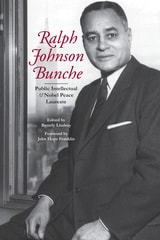
Ralph Johnson Bunche
Public Intellectual and Nobel Peace LaureateEdited by Beverly Lindsay; Foreword by John Hope Franklin
University of Illinois Press, 2007
Nobel Peace Prize winner Ralph Johnson Bunche (1904-71) was one of the twentieth century’s foremost diplomats and intellectuals. In the wake of centennial celebrations of his birth, leading scholars and diplomats assess Bunche’s historical importance and enduring impact on higher education, public policy, and international politics. Their essays reveal not only the breadth of Bunche’s influence, such as his United Nations work to broker peace during times of civil war in Africa, the Middle East, and Asia, but also the depth of his intellectual perspectives on race, civil rights, higher education, and international law. Probing his publications, speeches, and public policy initiatives, the volume offers telling insights into the critical roles of universities, public intellectuals, and diplomats in working together to find solutions to domestic and international problems through public and scholarly engagement. In this way, the volume highlights the very connections that Bunche exhibited as an academic, intellectual, and diplomat.
Contributors include Lorenzo DuBois Baber, John Hope Franklin, Jonathan Scott Holloway, Charles P. Henry, Ben Keppel, Beverly Lindsay, Princeton Lyman, Edwin Smith, and Hanes Walton Jr.
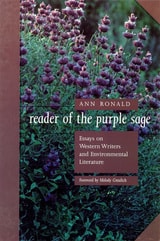
Reader Of The Purple Sage
Essays On Western Writers And Environmental LiteratureAnn Ronald
University of Nevada Press, 2003
Literary scholar Ann Ronald gathers her most notable published essays about Nevada, environmental writing, and Western American literature in one volume. These essays reflect Ronald’s wide-ranging interests. Here are deeply informed, critical essays on writers as diverse as Zane Gray, Edward Abbey, Wallace Stegner, and Terry Tempest Williams, as well as the Tonopah Ladies—a group of literary women who found their voices in the unlikely setting of a mining boomtown—and on such varied topics as the image of Reno in nineteenth- and twentieth-century fiction. Included are several recent essays in which Ronald thoughtfully discusses the burgeoning field of environmental writing, some of its principal themes and concerns, and its best-known practitioners.
Reading The Trail
Exploring The Literature And Natural History Of The California CrestCorey Lee Lewis
University of Nevada Press, 2005
A provocative new way to read and interpret the classic works of John Muir, Mary Austin, and Gary Snyder, and to bring their ideas into the discussion of ecological values and the current environmental crisis. Lewis combines a perceptive discussion of their work and ideas with an engaging account of his own trail experiences as hiker/backpacker and volunteer trail builder, proposing that such a field-based, interdisciplinary approach to literary study and outdoors experience can enrich our appreciation for the work of nature writers.
Reading Virgil and His Texts
Studies in IntertextualityRichard F. Thomas
University of Michigan Press, 2000
The articles and notes included in this volume have been selected for their diachronic aspect in addition to the synchronic status they had in their original context. Dealing with the intricate ways in which Virgil, and in the introductory chapter his predecessor Catullus, manipulated and appropriated their inherited Greek and Roman literary tradition, this book presents a coherent profile, through these detailed studies, of the mechanics of one of the most dynamic periods in the literary history of any culture.
Richard Thomas--one of the most important voices in Latin literary studies today--shows little anxiety about objections to authorial intentionality. Throughout there is a working assumption that intertextual connections can be established and, further, that functions and purposes, even intended ones, may be inferred from those connections.
This book will be of interest to scholars and students of Greek and Latin literature but will also be of great value to students of medieval, Renaissance, and early modern vernacular literatures, most of whose poets see themselves as closely connected to Virgil.
Richard F. Thomas is Professor of Greek and Latin, Harvard University.
Reading the Literatures of Asian America
Shirley Geok-lin Lim
Temple University Press, 1992
Reading the Renaissance
Black Women's Literary Reception and Taste in Chicago, 1932-1953Mary I. Unger
University of Massachusetts Press, 2025
From 1932 to 1953, during the Black Chicago Renaissance, numerous literary events were held within and for the city’s Black community. In book clubs, public forums, print reviews, little magazines, local programming, and other public venues, Black women in particular debated the role of literature in racial uplift efforts, set literary standards, and acted as community gatekeepers for cultural production during a time known as the Black Chicago Renaissance. Through these inspiring efforts, a mix of publishers, well-known authors, and everyday readers significantly fostered a robust literary culture in the Windy City.
Reading the Renaissance constructs a reception history of the Black women who read and reviewed, published and promoted, and collected and curated literature of the era. Mary Unger interprets how local figures such as Vivian G. Harsh, Ora Morrow, Gwendolyn Brooks, Alice Browning, Fern Gayden, and Margaret Walker cultivated particular literary tastes through collective acts of reading and reception. She does so by recovering a network of readers, book clubs, literary magazines, civic programs, and book businesses that Black women created, led, and transformed during the early 1930s through the early 1950s in Bronzeville, Chicago’s predominantly Black South Side neighborhood.
This illuminating work includes close readings of texts alongside letters, scrapbooks, meeting minutes, reviews, and other ephemera of local reading practices to show how Black women facilitated diverse strategies of reading while instructing community members how to engage a variety of print cultures at the time. Unger demonstrates how Black women readers influenced individual authors as well as the norms and expectations of African American literature more broadly, becoming important (yet too often overlooked) players in American literary history.
Realism, Utopia, and the Mushroom Cloud
Four Activist Intellectuals and their Strategies for Peace, 1945-1989--Louise Weiss (France), Leo Szilard (USA), E. P. Thompson (England), Danilo Dolci (Italy)Michael Bess
University of Chicago Press, 1993
Nagasaki, and continued preparations for nuclear war illustrate the modern
world's propensity for mass destruction. . . . Yet there have been
important signs of resistance to this trend. These have included not only
the emergence of mass-based peace and disarmament movements but activist
intellectuals grappling with the growing problem posed by mass violence
among nation-states. . . . Bess examines the lives and ideas of four of
these intellectuals: Leo Szilard of Hungary and (later) the United States,
E. P. Thompson of England, Danilo Dolci of Italy, and Louise Weiss of
France. . . . Realism, Utopia, and the Mushroom Cloud is a powerful,
important scholarly work, casting new light upon some of the great issues
of modern times. Readers will learn much from it."—Lawrence S.
Wittner, Peace and Change
"Bess seeks to understand the way in which the creation of the atomic bomb
has changed the social and political situation of humankind. Are we to be
held hostage by military forces or can we transform our situation? He
describes the lives of four very different activists, each with different
views on what causes conflict and how best to address conflict. . . .
Overall, this book offers an interesting perspective on life after the
atomic bomb. . . . In asking ourselves what the possibilities of our future
are, we can turn to these lives for some guidance. . . . This book is
informative, provocative, and encourages one to consider carefully how s/he
chooses to live."—Erin McKenna, Utopian Studies
"These four lives, researched and skillfully presented by historian Michael
Bess, make fascinating stories in themselves. They also serve as useful
vehicles for examining major cross-currents of Cold War resistance. . . .
From Weiss the cynical pragmatist to Szilard the high-level fixer to
hompson the social reformer to Dolce the spiritual street organizer,
Michael Bess has woven an illuminating tapestry of human efforts to cope
with life under the mushroom cloud."—Samuel H. Day Jr., The
Progressive
Reality in Movement
Octavio Paz as Essayist and Public IntellectualMaarten van Delden
Vanderbilt University Press, 2021
Reality in Movement looks at a wide range of topics of interest in Paz's career, including his engagement with the subversive, adversary strain in Western culture; his meditations on questions of cultural identity and intercultural contact; his dialogue with both leftist and conservative ideological traditions; his interest in feminism and psychoanalysis, and his theory of poetry. It concludes with a chapter on Octavio Paz as a literary character—a kind of reception study.
Offering a complex and nuanced portrait of Paz as a writer and thinker—as well as an understanding of the era in which he lived—Reality in Movement will appeal to students of Octavio Paz and of Mexican literature more generally, and to readers with an interest in the many significant literary, cultural, political, and historical topics Paz wrote about over the course of his long career.
Reassessing Communism
Concepts, Culture, and Society in Poland 1944–1989Instytutem Badan Literackich PAN Chmielewska
Central European University Press, 2021
The thirteen authors of this collective work undertook to articulate matter-of-fact critiques of the dominant narrative about communism in Poland while offering new analyses of the concept, and also examining the manifestations of anticommunism. Approaching communist ideas and practices, programs and their implementations, as an inseparable whole, they examine the issues of emancipation, upward social mobility, and changes in the cultural canon.
The authors refuse to treat communism in Poland in simplistic categories of totalitarianism, absolute evil and Soviet colonization, and similarly refuse to equate communism and fascism. Nor do they adopt the neoliberal view of communism as a project doomed to failure. While wholly exempt from nostalgia, these essays show that beyond oppression and bad governance, communism was also a regime in which people pursued a variety of goals and sincerely attempted to build a better world for themselves.
The book is interdisciplinary and applies the tools of social history, intellectual history, political philosophy, anthropology, literature, cultural studies, and gender studies to provide a nuanced view of the communist regimes in east-central Europe.
Rebels
Youth and the Cold War Origins of IdentityLeerom Medovoi
Duke University Press, 2005
Alongside the young rebel, the contemporary concept of identity emerged in the 1950s. It was in that decade that “identity” was first used to define collective selves in the politicized manner that is recognizable today: in terms such as “national identity” and “racial identity.” Medovoi traces the rapid absorption of identity themes across many facets of postwar American culture, including beat literature, the young adult novel, the Hollywood teen film, early rock ‘n’ roll, black drama, and “bad girl” narratives. He demonstrates that youth culture especially began to exhibit telltale motifs of teen, racial, sexual, gender, and generational revolt that would burst into political prominence during the ensuing decades, bequeathing to the progressive wing of contemporary American political culture a potent but ambiguous legacy of identity politics.
Rebuilding Jewish Life in Germany
Jay Howard Geller
Rutgers University Press, 2020
Reckoning Day
Race, Place, and the Atom Bomb in Postwar AmericaJacqueline Foertsch
Vanderbilt University Press, 2013
Foertsch also examines the location of African American characters in novels, science fiction, and survivalist nonfiction such as government-sponsored forecasts regarding post-nuclear survival. In these, black characters are often displaced or absented entirely: in doomsday narratives they are excluded from executive decision-making and the stories' often triumphant conclusions; in the nonfiction, they are rarely envisioned amongst the "typical American" survivors charged with rebuilding US society. Throughout Reckoning Day, issues of placement and positioning provide the conceptual framework: abandoned at "ground zero" (America's inner cities) during the height of the atomic threat, African Americans were figured in white-authored survival fiction as compliant servants aiding white victory over atomic adversity, while as historical figures they were often perceived as "elsewhere" (indifferent) to the atomic threat. In fact, African Americans' "position" on the bomb was rarely one of silence or indifference. Ranging from appreciation to disdain to vigorous opposition, atomic-era African Americans developed diverse and meaningful positions on the bomb and made essential contributions to a remarkably American dialogue.
Reconstructing a Chicano/a Literary Heritage
Hispanic Colonial Literature of the SouthwestEdited by María Herrera-Sobek
University of Arizona Press, 1993
Contributors:
Juan Bruce-Novoa
Ramón Gutiérrez
María Herrera-Sobek
Enrique Lamadrid
Luis Leal
Francisco A. Lomelí
Genaro Padilla
Tey Diana Rebolledo
Tino Villanueva
Recovered Legacies
Authority And Identity In Early Asian Amer Litedited by Keith Lawrence and Floyd Cheung
Temple University Press, 2005
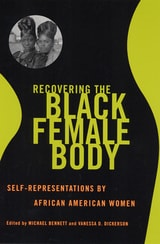
Recovering the Black Female Body
Self-Representation by African American WomenEdited by Michael Bennett and Vanessa D Dickerson
Rutgers University Press, 2000
Despite the recent flood of scholarly work investigating the interrelated issues of race, gender, and representation, little has been written about black women’s depictions of their own bodies. Both past and present-day American cultural discourse has attempted either to hypereroticize the black female body or make it a site of impropriety and crime.
The essays in this volume focus on how African American women, from the nineteenth century to the present, have represented their physical selves in opposition to the distorted vision of others. Contributors attempt to “recover” the black female body in two ways: they explore how dominant historical images have mediated black female identity, and they analyze how black women have resisted often demeaning popular cultural perceptions in favor of more diverse, subtle presentations of self.
The pieces in this book—all of them published here for the first time—address a wide range of topics, from antebellum American poetry to nineteenth-century African American actors, and twentieth-century pulp fiction.
Recovering the Black Female Body recognizes the pressing need to highlight through scholarship the vibrant energy of African American women’s attempts to wrest control of the physical and symbolic construction of their bodies away from the distortions of others.
Contributors are Margaret Bass, Dorri Rabung Beam, Michael Bennett, Jacqueline E. Brady, Daphne A. Brooks, Vanessa D. Dickerson, Meredith Goldsmith, Yvette Louis, Ajuan Maria Mance, Noliwe Rooks, Mark Winokur, and Doris Witt. This book also contains a foreword by Carla L. Peterson and an afterword by Deborah E. McDowell.
Red On Red
Native American Literary SeparatismCraig S. Womack
University of Minnesota Press, 1999
An entertaining and enlightening proposal for a new way to read Native American literature.
An entertaining and enlightening proposal for a new way to read Native American literature.
How can a square peg fit into a round hole? It can’t. How can a door be unlocked with a pencil? It can’t. How can Native literature be read applying conventional postmodern literary criticism? It can’t.That is Craig Womack’s argument in Red on Red. Indian communities have their own intellectual and cultural traditions that are well equipped to analyze Native literary production. These traditions should be the eyes through which the texts are viewed. To analyze a Native text with the methods currently dominant in the academy, according to the author, is like studying the stars with a magnifying glass.In an unconventional and piercingly humorous appeal, Womack creates a dialogue between essays on Native literature and fictional letters from Creek characters who comment on the essays. Through this conceit, Womack demonstrates an alternative approach to American Indian literature, with the letters serving as a “Creek chorus” that offers answers to the questions raised in his more traditional essays. Topics range from a comparison of contemporary oral versions of Creek stories and the translations of those stories dating back to the early twentieth century, to a queer reading of Cherokee author Lynn Riggs’s play The Cherokee Night.Womack argues that the meaning of works by Native peoples inevitably changes through evaluation by the dominant culture. Red on Red is a call for self-determination on the part of Native writers and a demonstration of an important new approach to studying Native works-one that engages not only the literature, but also the community from which the work grew.ISBN 0-8166-3022-4 Cloth £33.50 $47.95xxISBN 0-8166-3023-2 Paper £13.00 $18.95x288 Pages 5 7/8 x 9 November Translation inquiries: University of Minnesota Press
Red, Black, and Jew
New Frontiers in Hebrew LiteratureBy Stephen Katz
University of Texas Press, 2009
Between 1890 and 1924, more than two million Jewish immigrants landed on America's shores. The story of their integration into American society, as they traversed the difficult path between assimilation and retention of a unique cultural identity, is recorded in many works by American Hebrew writers. Red, Black, and Jew illuminates a unique and often overlooked aspect of these literary achievements, charting the ways in which the Native American and African American creative cultures served as a model for works produced within the minority Jewish community.
Exploring the paradox of Hebrew literature in the United States, in which separateness, and engagement and acculturation, are equally strong impulses, Stephen Katz presents voluminous examples of a process that could ultimately be considered Americanization. Key components of this process, Katz argues, were poems and works of prose fiction written in a way that evoked Native American forms or African American folk songs and hymns. Such Hebrew writings presented America as a unified society that could assimilate all foreign cultures. At no other time in the history of Jews in diaspora have Hebrew writers considered the fate of other minorities to such a degree. Katz also explores the impact of the creation of the state of Israel on this process, a transformation that led to ambivalence in American Hebrew literature as writers were given a choice between two worlds.
Reexamining long-neglected writers across a wide spectrum, Red, Black, and Jew celebrates an important chapter in the history of Hebrew belles lettres.
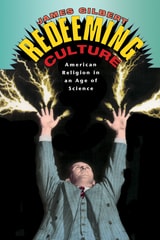
Redeeming Culture
American Religion in an Age of ScienceJames Gilbert
University of Chicago Press, 1997
"Anyone seriously interested in the history of current controversies involving religion and science will find Gilbert's book invaluable."—Peter J. Causton, Boston Book Review
"Redeeming Culture provides some fascinating background for understanding the interactions of science and religion in the United States. . . . Intriguing pictures of some of the highlights in this cultural exchange."—George Marsden, Nature
"A solid and entertaining account of the obstacles to mutual understanding that science and religion are now warily overcoming."—Catholic News Service
"[An] always fascinating look at the conversation between religion and science in America."—Publishers Weekly
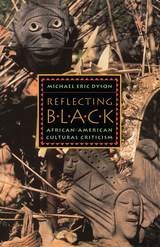
Reflecting Black
African-American Cultural CriticismMichael Eric Dyson
University of Minnesota Press, 1993
From rap music to preaching, from Toni Morrison to Leonard Jeffries, from Michael Jackson to Michael Jordan, Reflecting Black explores as never before the varied and complex dimensions of African-American culture through personal reflection, expository journalism, scholarly investigation and even homily.
"A landmark text in Afro-American cultural criticism. There is simply nothing like it that exists. The level of theoretical sophistication and political engagement is rare-and badly needed." -Cornel West"As Reflecting Black so richly demonstrates, Michael Eric Dyson combines cutting-edge theoretical acuity with the passionate, engaged, and accessible stance of a public intellectual. His critical purview encompasses scholarly tomes and mass market periodicals, trends in theology and in hip-hop culture alike. This book is a splendid introduction to a singularly important voice." -Henry Louis Gates, Jr."Dyson is a young black cultural, political and religious critic whose new book directs its nastiest commentary at racism, sexism, capitalism and straight-up immorality. His is a fresh voice seemingly unfazed by Blackademe's battle royal. Dyson's project is very much in the tradition of recent work by a number of young African-American cultural critics like Tricia Rose, Hilton Als, bell hooks, Greg Tate, Wahneema Lubiano, Elizabeth Alexander and Herman Gray, to name but a few. Reflecting Black is much more than a cultural critique in the formal sense. It interrogates the political, social and moral crises confronting American society generally and African-American communities in particular. In the end, Dyson is not one of those cultural studies scholars concerned with debating the fine points of discourse theory. He is an 'oppositional' critic with a much higher purpose than developing analytical tools to make sense of African-American culture. The Reverend Dyson is not only operating within a rich Marxist tradition but within a very old and continuing African-American tradition. Black communities, through newspaper columns, church groups, street corner gatherings, beauty parlor and barber shop discussions, have always debated and taken responsibility for their culture(s). Dyson's constant lecturing, chiding and encouraging embodies what Antonio Gramsci and his own mama expected us to do all along: not just interpret culture but actively change it--through struggle." -The Nation"Where Michael Jackson meets spirituality, where Martin Luther King meets Malcolm X, where the consolidating 'narrative of racial unity' meets the 'perplexing and chaotic politics of racial identity': These are the border zones of Michael Eric Dyson's compassionate, postmodern, eclectic critical project. Reflecting Black is an invigorating reader for our perplexing and chaotic times." -Voice Literary Supplement"He shows an admirable breadth, ranging from issues such as racism and political correctness in the seminary to examinations of such icons of popular culture as filmaker Spike Lee, singer Michael Jackson and athlete Michael Jordan. One entire section of the book is devoted to black religion, and includes an examination of the lives and examples of Martin Luther King, Jr. and Malcom X." -Washington Post Book World"Yet, if Dyson stumbles in his discussions of black popular culture, he soars in his section titled 'Beyond the Mantra: Reflections on Race, Gender, and Class.' In 'Remembering Emmett Till,' Dyson writes not just with his mind, but with his heart." -Boston Globe"Yet his insights are just as often incisive and challenging, and they demand serious consideration. By insisting that we acknowledge the complexities of race in America and by refusing to accept easy answers, Reflecting Black forces us to think harder about how we can create alterna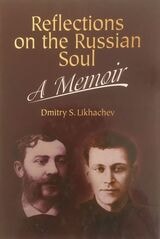
Reflections on the Russian Soul
A MemoirDmitry S. Likhachev
Central European University Press, 2000
This compelling and often traumatic book is the memoir of one of the most important figures in modern Russian history, Dmitry S. Likhachev, revered as ‘a guardian of national culture’. Reflections on the Russian Soul is an incredible account of an intellectual’s turbulent journey through twentieth century Russia. Likhachev re-counts the fortunes of people with whom he came into contact and reproduces the air of passed years in Russia.
Likhachev vividly portrays his childhood years in St. Petersburg and continues into his student life at Leningrad University that led to an agonizing period of imprisonment and near death. He describes how a harmless prank caught the attention of the Secret Police, resulting in his exile and confinement within the infamous prison island of Solovki. He describes his first-hand experience of brutality in prison during the early Stalin years and the incident that not only saved him but also haunted him for the rest of his life.
He reflects on the years after his release from prison and the events leading up to the Second World War. His powerful recollection of the blockade of Leningrad provides the reader with a horrific insight into the harsh effects of war, hunger and survival. Lichachev goes on to describe post-war Russia and how his own livelihood developed from literary editor to a return to Leningrad University as Professor of History. This compelling autobiography finishes with Likhachev’s poignant return to Solovki as a free man.
Reforming Empire
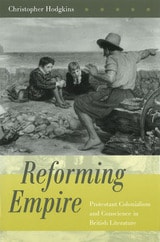
Protestant Colonialism and Conscience in British LiteratureChristopher Hodgkins
University of Missouri Press, 2002
“The strength of Empire,” wrote Ben Jonson, “is in religion.” In Reforming Empire, Christopher Hodgkins takes Jonson’s dictum as his point of departure, showing how for more than four centuries the Protestant imagination gave the British Empire its main paradigms for dominion and also, ironically, its chief languages of anti-imperial dissent. From Edmund Spenser’s Faerie Queene to Rudyard Kipling’s “The Man Who Would Be King,” English literature about empire has turned with strange constancy to themes of worship and idolatry, atrocity and deliverance, slavery and service, conversion, prophecy, apostasy, and doom.
Focusing on the work of the Protestant imagination from the Renaissance origins of English overseas colonization through the modern end of England’s colonial enterprise, Hodgkins organizes his study around three kinds of religious binding—unification, subjugation, and self-restraint. He shows how early modern Protestants like Hakluyt and Spenser reformed the Arthurian chronicles and claimed to inherit Rome’s empire from the Caesars: how Ralegh and later Cromwell imagined a counterconquest of Spanish America, and how Milton’s Satan came to resemble Cortés; how Drake and the fictional Crusoe established their status as worthy colonial masters by refusing to be worshiped as gods; and how seventeenth-century preachers, poets, and colonists moved haltingly toward a racist metaphysics—as Virginia began by celebrating the mixed marriage of Pocahontas but soon imposed the draconian separation of the Color Line.
Yet Hodgkins reveals that Tudor-Stuart times also saw the revival of Augustinian anti-expansionism and the genesis of Protestant imperial guilt. From the start, British Protestant colonialism contained its own opposite: a religion of self-restraint. Though this conscience often was co-opted or conscripted to legitimize conquests and pacify the conquered, it frequently found memorable and even fierce literary expression in writers such as Shakespeare, Daniel, Herbert, Swift, Johnson, Burke, Blake, Austen, Browning, Tennyson, Conrad, Forster, and finally the anti-Protestant Waugh. Written in a lively and accessible style, Reforming Empire will be of interest to all scholars and students of English literature.
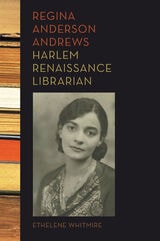
Regina Anderson Andrews, Harlem Renaissance Librarian
Ethelene Whitmire
University of Illinois Press, 2015
Andrews also played a key role in the Harlem Renaissance, supporting writers and intellectuals with dedicated workspace at her 135th Street Branch Library. After hours she cohosted a legendary salon that drew the likes of Langston Hughes and Zora Neale Hurston. Her work as an actress and playwright helped establish the Harlem Experimental Theater, where she wrote plays about lynching, passing, and the Underground Railroad.
Ethelene Whitmire's new biography offers the first full-length study of Andrews's activism and pioneering work with the NYPL. Whitmire's portrait of her sustained efforts to break down barriers reveals Andrews's legacy and places her within the NYPL's larger history.
Reimagining Popular Notions of American Intellectualism
Literacy, Education, and ClassKelly Susan Bradbury
Southern Illinois University Press, 2016
Bradbury begins by tracing the origins and evolution of the narrow views of intellectualism that are common in the United States today. Then, applying a more inclusive and egalitarian definition of intellectualism, she examines the literacy and learning practices of three nonelite sites of adult public education in the United States: the nineteenth-century lyceum, a twentieth-century labor college, and a twenty-first-century GED writing workshop. Bradbury argues that together these three case studies teach us much about literacy, learning, and intellectualism in the United States over time and place. She concludes the book with a reflection on her own efforts to aid students in recognizing and resisting the rhetoric of anti-intellectualism that surrounds them and that influences their attitudes and actions.
Drawing on case studies as well as Bradbury’s own experiences with students, Reimagining Popular Notions of American Intellectualism demonstrates that Americans have engaged and do engage in the process and exercise of intellectual inquiry, contrary to what many people believe. Addressing a topic often overlooked by rhetoric, composition, and literacy studies scholars, it offers methods for helping students reimagine what it means to be intellectual in the twenty-first century.
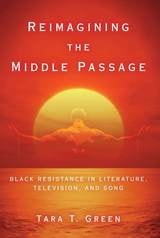
Reimagining the Middle Passage
Black Resistance in Literature, Television, and SongTara T. Green
The Ohio State University Press, 2018
Exploring the presence of water and its impact on African descendants,Reimagining the Middle Passageoffers fresh analyses of Alex Haley’sRootsand the television adaptations; the history of flooding in Black communities in literature such as Jesmyn Ward’sSalvage the Bonesand Paule Marshall’sPraisesong for the Widow, in blues songs, and in television shows such asTreme; and stories of resistance found in myths associated with Marie Laveau and flying Africans.
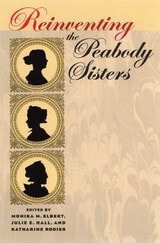
Reinventing the Peabody Sisters
Monika M. Elbert
University of Iowa Press, 2006
Reinventing the Peabody Sisters seeks to redefine this dynamic trio’s relationship to the literary and political movements of the mid nineteenth century. Previous scholarship has romanticized, vilified, or altogether erased their influences and literary productions or viewed these individuals solely in light of their relationships to other nineteenth-century luminaries, particularly men—Ralph Waldo Emerson, Nathaniel Hawthorne, Horace Mann. This collection underscores that each woman was a creative force in her own right.
Despite their differences and sibling conflicts, all three sisters thrived in the rarefied—if economically modest—atmosphere of a childhood household that glorified intellectual and artistic pursuits. This background allowed each woman to negotiate the nineteenth-century literary marketplace and in the process redefine its scope. Elizabeth, Mary, and Sophia remained linked throughout their lives, encouraging, complementing, and sometimes challenging each other's endeavors while also contributing to each other’s literary work.
The essays in this collection examine the sisters’ confrontations with and involvement in the intellectual movements and social conflicts of the nineteenth century, including Transcendentalism, the Civil War, the role of women, international issues, slavery, Native American rights, and parenting. Among the most revealing writings that the sisters left behind, however, are those which explore the interlaced relationship that continued throughout their remarkable lives.
Reinventing the South
Versions of a Literary RegionMark Royden Winchell
University of Missouri Press, 2006
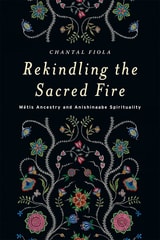
Rekindling the Sacred Fire
Métis Ancestry and Anishinaabe SpiritualityChantal Fiola
University of Manitoba Press, 2015
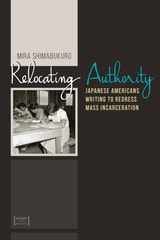
Relocating Authority
Japanese Americans Writing to Redress Mass IncarcerationMira Shimabukuro
University Press of Colorado, 2015
Relocating Authority examines the ways Japanese Americans have continually used writing to respond to the circumstances of their community’s mass imprisonment during World War II. Using both Nikkei cultural frameworks and community-specific history for methodological inspiration and guidance, Mira Shimabukuro shows how writing was used privately and publicly to individually survive and collectively resist the conditions of incarceration.
Examining a wide range of diverse texts and literacy practices such as diary entries, note-taking, manifestos, and multiple drafts of single documents, Relocating Authority draws upon community archives, visual histories, and Asian American history and theory to reveal the ways writing has served as a critical tool for incarcerees and their descendants. Incarcerees not only used writing to redress the “internment” in the moment but also created pieces of text that enabled and inspired further redress long after the camps had closed.
Relocating Authority highlights literacy’s enduring potential to participate in social change and assist an imprisoned people in relocating authority away from their captors and back to their community and themselves. It will be of great interest to students and scholars of ethnic and Asian American rhetorics, American studies, and anyone interested in the relationship between literacy and social justice.
Representations
Doing Asian American RhetoricLuMing Mao and Morris Young
Utah State University Press, 2008
Mao, Young, and their contributors propose that Asian American discourse should be seen as a spacious form, one that deliberately and selectively incorporates Asian “foreign-ness” into the English of Asian Americans. These authors offer the concept of a dynamic “togetherness-in-difference” as a way to theorize the contact and mutual influence. Chapters here explore a rich diversity of histories, theories, literary texts, and rhetorical practices. Collectively, they move the scholarly discussion toward a more nuanced, better balanced, critically informed representation of the forms of Asian American rhetorics and the cultural work that they do.
Repression, Exile, and Democracy
Uruguayan CultureSaul Sosnowski and Louise B. Popkin, eds.
Duke University Press, 1992
The first section provides a context for the volume, with its analyses of the historical, political, and social aspects of the Uruguayan experience. The following chapters explore various aspects of cultural production, including personal experiences of exile and imprisonment, popular music, censorship, literary criticism, return from exile, and the role that culture plays in redemocratization.
This book's appeal extends well beyond the study of Uruguay to scholars and students of the history and culture of other Latin American nations, as well as to fields of comparative literature and politics in general.
Contributors. Hugo Achugar, Alvarro Barros-Lémez, Lisa Block de Behar, Amanda Berenguer, Hiber Conteris, José Pedro Díaz, Eduardo Galeano, Edy Kaufman, Leo Masliah, Carina Perelli, Teresa Porzecanski, Juan Rial, Mauricio Rosencof, Jorge Ruffinelli, Saúl Sosonowski, Martin Weinstein, Ruben Yáñez

Reproductions of Banality
Fascism, Literature, and French Intellectual LifeAlice Yaeger KaplanForeword by Russell Berman
University of Minnesota Press, 1986
Reproductions of Banality was first published in 1986. Minnesota Archive Editions uses digital technology to make long-unavailable books once again accessible, and are published unaltered from the original University of Minnesota Press editions.
An established fascist state has never existed in France, and after World War II there was a tendency to blame the Nazi Occupation for the presence of fascists within the country. Yet the memory of fascism within their ranks still haunts French intellectuals, and questions about a French version of fascist ideology have returned to the political forefront again and again in the years since the war. In Reproductions of Banality, Alice Yaegar Kaplan investigates the development of fascist ideology as it was manifested in the culture of prewar and Occupied France. Precisely because it existed only in a "gathering" or formative stage, and never achieved the power that brings with it a bureaucratic state apparatus, French fascism never lost its utopian, communal elements, or its consequent aesthetic appeal. Kaplan weighs this fascist aesthetic and its puzzling power of attraction by looking closely at its material remains: the narratives, slogans, newspapers, and film criticism produced by a group of writers who worked in Paris in the 1930s and early 1940s — their "most real moment."
These writers include Pierre Drieu la Rochelle, Louis-Ferdinand Celine, Lucien Rebatat, Robert Brasillach, and Maurice Bardeche, as well as two precursors of French fascism, Georges Sorel and the Italian futurist F.T. Marinetti, who made of the airplane an industrial carrier of sexual fantasies and a prime mover in the transit from futurism to fascism. Kaplan's work is grounded in the major Marxist and psychoanalytic theories of fascism and in concepts of banality and mechanical reproduction that draw upon Walter Benjamin. Emphasizing the role played by the new technologies of sight and sound, she is able to suggest the nature of the long-repressed cultural and political climate that produced French fascism, and to show—by implication — that the mass marketing of ideology in democratic states bears a family resemblance to the fascist mode of an earlier time.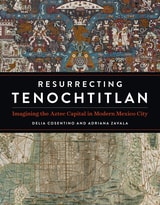
Resurrecting Tenochtitlan
Imagining the Aztec Capital in Modern Mexico CityDelia Cosentino and Adriana Zavala
University of Texas Press, 2023
Honorable Mention, ALAA-Arvey Foundation Book Award, Association of Latin American Art
Finalist, 2024 Charles Rufus Morey Book Award, College Art Association
How Mexican artists and intellectuals created a new identity for modern Mexico City through its ties to Aztec Tenochtitlan.
After archaeologists rediscovered a corner of the Templo Mayor in 1914, artists, intellectuals, and government officials attempted to revive Tenochtitlan as an instrument for reassessing Mexican national identity in the wake of the Revolution of 1910. What followed was a conceptual excavation of the original Mexica capital in relation to the transforming urban landscape of modern Mexico City.
Revolutionary-era scholars took a renewed interest in sixteenth century maps as they recognized an intersection between Tenochtitlan and the foundation of a Spanish colonial settlement directly over it. Meanwhile, Mexico City developed with modern roads and expanded civic areas as agents of nationalism promoted concepts like indigenismo, the embrace of Indigenous cultural expressions. The promotion of artworks and new architectural projects such as Diego Rivera’s Anahuacalli Museum helped to make real the notion of a modern Tenochtitlan. Employing archival materials, newspaper reports, and art criticism from 1914 to 1964, Resurrecting Tenochtitlan connects art history with urban studies to reveal the construction of a complex physical and cultural layout for Mexico’s modern capital.
Revisiting Racialized Voice
African American Ethos in Language and LiteratureDavid G. Holmes
Southern Illinois University Press, 2004
Revisiting Racialized Voice:African American Ethos in Language and Literature argues that past misconceptions about black identity and voice, codified from the 1870s through the 1920s, inform contemporary assumptions about African American authorship and ethos. Tracing elements of racial consciousness in the works of Frederick Douglass, Charles Chesnutt, W. E. B. DuBois, Zora Neale Hurston, and others, David G. Holmes urges a revisiting of narratives from this period to strengthen and advance notions about racialized writing and to shape contemporary composition pedagogies.
Pointing to the intersection of African American identity, literature, and rhetoric, Revisiting Racialized Voice begins to construct rhetorically workable yet ideologically flexible definitions of black voice. Holmes maintains that political pressure to embrace“color blindness” endangers scholars’ ability to uncover links between racialized discourses of the past and those of the present, and he calls instead for a reassessment of the material realities and theoretical assumptions race represents and with which it has been associated.
Revolution and Subjectivity in Postwar Japan
J. Victor Koschmann
University of Chicago Press, 1996
In a major contribution to modern Japanese intellectual history, J. Victor Koschmann analyzes the debate over subjectivity. He traces the arguments of intellectuals from various disciplines and political viewpoints, and finds that despite their stress on individual autonomy, they all came to define subjectivity in terms of deterministic historical structures, thus ultimately deferring the possibility of radical change in Japan.
Establishing a basis for historical dialogue about democratic revolution, this book will interest anyone concerned with issues of nationalism, postcolonialism, and the formation of identities.
Revolutionary Passage
From Soviet To Post-Soviet RussiaMarc Garcelon
Temple University Press, 2005

Rewriting Exodus
American Futures from Du Bois to ObamaAnna Hartnell
Pluto Press, 2011
Exodus, as a powerful narrative of liberation, has been a central imaginative touchstone in the black American struggle against US racism. This book traces the concept in a number of pivotal black thinkers, and explores its signficance for contemporary America.
The exodus story is a fitting allegory for the painful experience of exile that disproportionately afflicted African Americans in the aftermath of Hurricane Katrina, and it also provides compelling imagery for the triumphant election of Barack Obama in 2008. Building around these themes, Anna Hartnell traces the intellectual development of one of the defining narratives of black American thinking on social justice in the United States.
In placing black America at the centre of the study of US culture, Rewriting Exodus suggests new ways of thinking about America's relationship with the Middle East and the wider postcolonial world. Hartnell's groundbreaking contribution marks a vital new chapter in American cultural and political history.
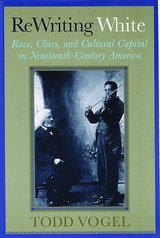
Rewriting White
Race, Class, and Cultural Capital in Nineteenth-Century AmericaTodd Vogel
Rutgers University Press, 2004
What did it mean for people of color in nineteenth-century America to speak or write "white"? More specifically, how many and what kinds of meaning could such "white" writing carry? In ReWriting White, Todd Vogel looks at how America has racialized language and aesthetic achievement. To make his point, he showcases the surprisingly complex interactions between four nineteenth-century writers of color and the "standard white English" they adapted for their own moral, political, and social ends. The African American, Native American, and Chinese American writers Vogel discusses delivered their messages in a manner that simultaneously demonstrated their command of the dominant discourse of their times-using styles and addressing forums considered above their station-and fashioned a subversive meaning in the very act of that demonstration.
The close readings and meticulous archival research in ReWriting White upend our conventional expectations, enrich our understanding of the dynamics of hegemony and cultural struggle, and contribute to the efforts of other cutting-edge contemporary scholars to chip away at the walls of racial segregation that have for too long defined and defaced the landscape of American literary and cultural studies.
Rhetorical Action in Ancient Athens
Persuasive Artistry from Solon DemosthenesJames Fredal
Southern Illinois University Press, 2006
James Fredal’s wide-ranging survey examines the spatial and performative features of rhetorical artistry in ancient Athens from Solon to Demosthenes, demonstrating how persuasive skill depended not on written treatises, but on the reproduction of spaces and modes for masculine self-formation and displays of contests of character.
Studies of the history of rhetoric generally begin with Homer and Greek orality, then move on to fifth-century Sicily and the innovations of Corax, Tisias, and the older Sophists. While thorough and useful, these narratives privilege texts as the sole locus of proper rhetorical knowledge. Rhetorical Action in Ancient Greece:Persuasive Artistry from Solon to Demosthenes describes rhetoric as largely unwritten and rhetorical skill as closely associated with the ideologies and practices of gender formation and expression. In expanding the notion of rhetorical innovation to include mass movements, large social genres, and cultural practices—rather than the formulations of of individual thinkers and writers—Fredal offers a view of classical rhetoric as local and contingent, bound to the physical spaces, local histories, and cultural traditions of place.
Fredal argues that Greek rhetorical skill remained a function of local spaces like the Pnyx, social practices such as symposia or local meetings, cultural ideologies like those surrounding masculine friendship, and genres of performance such as how to act like a man, herald, sage, tyrant, or democrat. Citizen participation, he explains, was motivated by the desire to display masculine excellence in contests of character by overcoming fear and exerting symbolic and bodily control over self, situation, and audience. He shows how ancient Greek rhetoric employed patterns of “action” such as public oratory and performance to establish, reinforce, or challenge hierarchies and claims to political power.
Instead of examining speeches, handbooks, and theory, Rhetorical Action in Ancient Greece examines the origins of rhetoric in terms of performance. The result is a presentation of rhetorical knowledge as embodied in places and practices with spatial and practical logics that are rarely articulated in written discourse. The volume calls on archaeological, literary, and anthropological evidence about the rhetorical actions of Athens’s leading political agents—including Solon, Peisistratus, Cleisthenes, Demosthenes, and the anonymous “herm-choppers” of the Peloponnesian war—to demonstrate how each generation of political leaders adopted and transformed existing performance genres and spaces to address their own political exigency.
Rolling Transition and the Role of Intellectuals
The Case of HungaryAndrás Bozóki
Central European University Press, 2022
Utilizing a new and original framework for examining the role of intellectuals in countries transitioning to democracy, Bozóki analyses the rise and fall of dissident intellectuals in Hungary in the late 20th century. He shows how that framework is applicable to other countries too as he forensically examines their activities.
Bozóki argues that the Hungarian intellectuals did not become a ‘New Class’. By rolling transition, he means an incremental, non-violent, elite driven political transformation which is based on the rotation of agency, and it results in a new regime. This is led mainly by different groups of intellectuals who do not construct a vanguard movement but create an open network which might transform itself into different political parties. Their roles changed from dissidents to reformers, to movement organizers and negotiators through the periods of dissidence, open network building, roundtable negotiations, parliamentary activities, and new movement politics.
Through the prism of political sociology, the author focuses on the following questions: Who were the dissident intellectuals and what did they want? Under what conditions do intellectuals rebel and what are the patterns of their protest? This book will be of interest to students, researchers, and public intellectuals around the world aiming to promote human rights and democracy.
Romances of the White Man's Burden
Race, Empire, and the Plantation in American Literature, 1880-1936Jeremy Wells
Vanderbilt University Press, 2011
Romances of the White Man's Burden takes on works in American literature in which the proverbial "old plantation" is made to seem not a relic but a harbinger, a sign that the South had arrived at a multiracial modernity and harmony before the rest of the United States. Focusing on writers such as Joel Chandler Harris, Thomas Nelson Page, Henry W. Grady, Thomas Dixon, and William Faulkner, Jeremy Wells reveals their shared fixation on the figure of the white southern man as specially burdened by history. Each of these writers, in his own way, presented the plantation South as an emblem, not an aberration, of America.
Russia Reads Rousseau, 1762-1825
Thomas Barran
Northwestern University Press, 2002