Results by title
477 books match the query 'Italy' and 20 start with r
Radical Thought in Italy
A Potential PoliticsPaolo Virno
University of Minnesota Press, 2006
Reactionary Mathematics
A Genealogy of PurityMassimo Mazzotti
University of Chicago Press, 2023
The nineteenth century opened with a major shift in European mathematics, and in the Kingdom of Naples, this occurred earlier than elsewhere. Between 1790 and 1830 its leading scientific institutions rejected as untrustworthy the “very modern mathematics” of French analysis and in its place consolidated, legitimated, and put to work a different mathematical culture. The Neapolitan mathematical resistance was a complete reorientation of mathematical practice. Over the unrestricted manipulation and application of algebraic algorithms, Neapolitan mathematicians called for a return to Greek-style geometry and the preeminence of pure mathematics.
For all their apparent backwardness, Massimo Mazzotti explains, they were arguing for what would become crucial features of modern mathematics: its voluntary restriction through a new kind of rigor and discipline, and the complete disconnection of mathematical truth from the empirical world—in other words, its purity. The Neapolitans, Mazzotti argues, were reacting to the widespread use of mathematical analysis in social and political arguments: theirs was a reactionary mathematics that aimed to technically refute the revolutionary mathematics of the Jacobins. During the Restoration, the expert groups in the service of the modern administrative state reaffirmed the role of pure mathematics as the foundation of a newly rigorous mathematics, which was now conceived as a neutral tool for modernization. What Mazzotti’s penetrating history shows us in vivid detail is that producing mathematical knowledge was equally about producing certain forms of social, political, and economic order.

Reading Galileo's Letters
Experiments in Friendship, Knowledge, and CommunityEdited by Paula Findlen and Hannah Marcus
University of Chicago Press, 2027
Essays by many of the foremost experts on Galileo offer an interdisciplinary approach to the legendary scientist’s correspondence.
The Tuscan mathematician, physicist, and astronomer Galileo Galilei (1564–1642) is one of history’s most iconic and controversial figures. Letters form the backbone of what one early Galileo scholar called the “private Galileo,” and his correspondence is indeed a record of his family and friendships; his intellectual evolution; his professional interactions with other scientific figures; and his relations with patrons, brokers, and publishers. Last, but hardly least, his letters are a unique cultural artifact of Galileo the writer and master of vernacular prose.
Galileo’s correspondence crossed Europe in public mail pouches, through diplomatic messengers, and was written in code. Today, there are 3,272 surviving letters to or from Galileo and his many friends, family members, disciples, and rivals across Europe. This volume examines these letters as an essential aspect of Galileo’s personal and scientific career. They are what the editors call his “experiments in friendship,” which enabled, abetted, and often served as early drafts of the theories in his published works. This collaborative volume brings together different approaches, case studies, and forms of expertise—historical and literary, intellectual and material, archival and digital. It is a must-read for all Galileo enthusiasts and anyone interested in how to make the most of a rich record of correspondence.
Redreaming the Renaissance
Essays on History and Literature in Honor of Guido RuggieroMary Lindemann
University of Delaware Press, 2024
Renaissance Characters
Edited by Eugenio Garin
University of Chicago Press, 1991
With this volume, Eugenio Garin, a leading Renaissance scholar, has gathered the work of an international team of scholars into an accessible account of the people who animated this decisive moment in the genesis of the modern mind. We are offered a broad spectrum of figures, major and minor, as they lived their lives: the prince and the military commander, the cardinal and the courtier, the artist and the philosopher, the merchant and the banker, the voyager, and women of all classes. With its concentration on the concrete, the specific, even the anecdotal, the volume offers a wealth of new perspectives and ideas for study.
Renaissance Drama 36/37
Italy in the Drama of EuropeWilliam N. West
Northwestern University Press, 2010
Renaissance Drama, an annual interdisciplinary publication, is devoted to drama and performance as a central feature of Renaissance culture. The essays in each volume explore traditional canons of drama, the significance of performance (broadly construed) to early modern culture, and the impact of new forms of interpretation on the study of Renaissance plays, theater, and performance.
This special issue of Renaissance Drama on "Italy in the Drama of Europe" primarily builds on the groundwork laid by Louise George Clubb, who showed that Italian drama was made in such a way as to facilitate its absorption and transformation into other traditions, even when it was not explicitly cited or referenced.
"Italy in the Drama of Europe" takes up the reverberations of early modern Italian drama in the theaters of Spain, England, and France and in writings in Italian, English, Spanish, French, Hebrew, Latin, and German. Its scope is an example of the continuing force of and interest in one of the most rewarding, wide-ranging, and productive early modern aesthetic modes, and a tribute to the scholarship of Louise George Clubb, who, among others, recalled our attention to it.
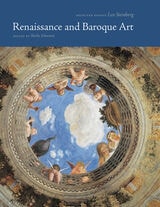
Renaissance and Baroque Art
Selected EssaysLeo Steinberg
University of Chicago Press, 2020
This volume begins and ends with thematic essays on two fundamental precepts of Steinberg’s art history: how dependence on textual authority mutes the visual truths of images and why artists routinely copy or adapt earlier artworks. In between are fourteen chapters on masterpieces of renaissance and baroque art, with bold and enlightening interpretations of works by Mantegna, Filippo Lippi, Pontormo, El Greco, Caravaggio, Steen and, finally, Velázquez. Four chapters are devoted to some of Velázquez’s best-known paintings, ending with the famously enigmatic Las Meninas.
Renaissance and Baroque Art is the third volume in a series that presents Steinberg’s writings, selected and edited by his longtime associate Sheila Schwartz.
Rereading the Renaissance
Petrarch, Augustine, and the Language of HumanismCarol Everhart Quillen
University of Michigan Press, 1998
Carol Quillen argues that the essential role of Augustine's words and authority in the expression of Petrarch's humanism is best grasped through a study of the complex textual practices exemplified in the writings of both men. Petrarch's reliance on Augustine is most evident in his ways of reading and in his strategies of argument. Secondly, she maintains that Petrarch's appropriation of Augustine's words is only intelligible in light of his struggle to legitimate his cultural ideals in the face of compelling opposition. Finally, Quillen shows how Petrarch's uses of Augustine can simultaneously uphold his humanist ideals and challenge the legitimacy of the assumptions on which those ideals were founded.
Interdisciplinary in scope and method, this volume speaks to important debates that span the humanities. Scholars of literary and historical studies, as well as those in the fields of classical studies, patristics, and comparative literature, will find in Rereading the Renaissance a solid contribution to their interests.
Carol Everhart Quillen is Associate Professor of History, Rice University.
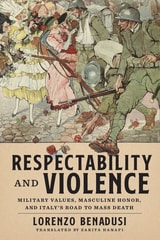
Respectability and Violence
Military Values, Masculine Honor, and Italy’s Road to Mass DeathLorenzo Benadusi
University of Wisconsin Press, 2021
In the aftermath of national unification in the 1860s, the Italian army was tasked with molding generations of men from warring regions and different social strata into obedient citizens of a centralized state. Integrating large numbers of the educated middle classes into the young kingdom’s armed forces proved decisive in establishing the army as the “main school” and backbone for mass nationalization. Lorenzo Benadusi examines the intersection of Italian military and civil society over the last century as they coalesced in the figure of the gentleman-officer—an idealized image of an altruistic, charming, and competent ruling class that could influence the choices, values, and behavior of the “new Italians.”
Respectability and Violence traces the relationship between civic virtues and military values from the post-Risorgimento period through the end of World War I, when the trauma of trench warfare made it necessary to again redefine ideas of chivalry and manliness and to accept violence as a necessary tool in defense of society and state. The language of conflict and attitudes about war forged in these decades—characterized by patriotism, heroism, and sacrifice—shaped the cultured bourgeoise into loyalists who ushered in Italy’s transition to a powerful Fascist political system. This unique study of the officer is crucial for understanding the military, social, and political history of Italy.
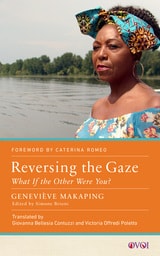
Reversing the Gaze
What If the Other Were You?Geneviève Makaping
Rutgers University Press, 2023
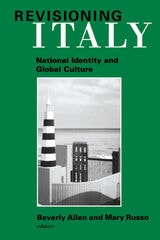
Revisioning Italy
National Identity and Global CultureBeverly Allen
University of Minnesota Press, 1997
Explores Italian national identity.
More than any other nation, Italy—from its imperial past to its subordinate present, from its colonial forays to its splendid isolation—embodies the myriad and contradictory historical forms of nationhood. This volume covers a range of subjects drawn from Italy and abroad to study the historical and contemporary formations of Italian national identity. In doing so, the work illuminates Italy past and present as well as the local and global dimensions of national identity in general.
Whether considering opera or Ninja Turtles, these essays reveal how cultural identity is constructed and manipulated-an issue made urgent by the influx of African, Indochinese, and Eastern European immigrants into Italy today. Exile, nationalism, and imagined communities are the topics of several essays, including Antonio Negri’s reflection on his own experience of political militancy and exile. Others focus on Italy’s colonial “unconscious,” Mussolini’s adventures in North Africa, and racism from the late nineteenth century to the present. By analyzing Italy’s European and Mediterranean identities, its highly regional character, its north-south economic imbalance, and its ethnic complexity, this truly interdisciplinary volume resists the hierarchizing and monumentalizing of traditional Italian studies in the United States. It will inform and redirect our understanding of what constitutes “Italy.”Contributors: Mohamed Aden; John Agnew, Syracuse U; Ayele Bekerie, Cornell U; Elaine K. Chang, Rutgers U; Antonio Marazzi, U of Padua, Italy; Francesca Miller, U of California, Davis; Antonio Negri, U of Paris VIII, France; Graziella Parati, Dartmouth College; Karen Pinkus, Northwestern U; Paul Robinson, Stanford U; Pasquale Verdicchio, U of California, San Diego; Marguerite R. Waller, U of California, Riverside; and David Ward, Wellesley College.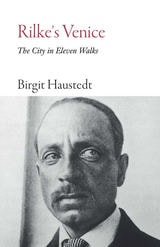
Rilke's Venice
Birgit Haustedt
Haus Publishing, 2019
In eleven walks, Birgit Haustedt guides readers through Venice following the poet’s footsteps. Haustedt invites us to look on the beloved sights of the city through Rilke’s eyes, offering a new vision of this famed destination. Rilke’s Venice provides new insight into one of the finest and most widely recognized writers of the twentieth century. It also acts as a literary travel companion and guidebook to Venice, offering eleven detailed maps of walks through the city.
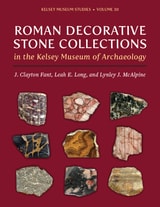
Roman Decorative Stone Collections in the Kelsey Museum of Archaeology
J. Clayton Fant, Leah E. Long, and Lynley J. McAlpine
University of Michigan Press, 2024
In keeping with the nature of the collection, Roman Decorative Stone Collections focuses on archaeological contexts and object biographies, from the stones’ first use to their eventual display in the Kelsey Museum. Entries are accompanied by rich photographs detailing the stones’ appearances, environmental factors, and their collectors. The fully illustrated catalog includes essays deriving from Kelsey’s original notes on sources, buildings, sites, and dealers. As the first formal catalog of these items, Roman Decorative Stone Collections is an accessible resource of Roman archaeology, antiquities, and the decorative arts.
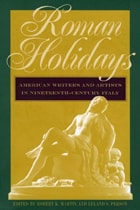
Roman Holidays
American Writers and Artists in Nineteenth-Century ItalyRobert K. Martin
University of Iowa Press, 2001
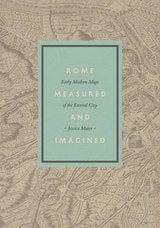
Rome Measured and Imagined
Early Modern Maps of the Eternal CityJessica Maier
University of Chicago Press, 2015
In Rome Measured and Imagined, Jessica Maier explores the history of this genre—which merged the accuracy of scientific endeavor with the imaginative aspects of art—during the rise of Renaissance print culture. Through an exploration of works dating from the fifteenth to the eighteenth centuries, her book interweaves the story of the city portrait with that of Rome itself.
Highly interdisciplinary and beautifully illustrated with nearly one hundred city portraits, Rome Measured and Imagined advances the scholarship on Renaissance Rome and print culture in fascinating ways.
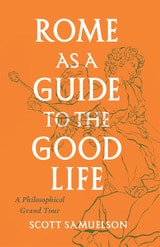
Rome as a Guide to the Good Life
A Philosophical Grand TourScott Samuelson
University of Chicago Press, 2023
This is a guidebook to Rome for those interested in both la dolce vita and what the ancient Romans called the vita beata—the good life. Philosopher Scott Samuelson offers a thinker’s tour of the Eternal City, rooting ideas from this philosophical tradition within the geography of the city itself. As he introduces the city’s great works of art and its most famous sites—the Colosseum, the Forum, the Campo de’ Fiori—Samuelson also gets to the heart of the knotty ethical and emotional questions they pose. Practicing philosophy in place, Rome as a Guide to the Good Life tackles the profound questions that most tours of Rome only bracket. What does all this history tell us about who we are?
In addition to being a thoughtful philosophical companion, Samuelson is also a memorable tour guide, taking us on plenty of detours and pausing to linger over an afternoon Negroni, sample four classic Roman pastas, or explore the city’s best hidden gems. With Samuelson’s help, we understand why Rome has inspired philosophers such as Lucretius and Seneca, poets and artists such as Horace and Caravaggio, filmmakers like Fellini, and adventurers like Rosa Bathurst. This eclectic guidebook to Roman philosophy is for intrepid wanderers and armchair travelers alike—anyone who wants not just a change of scenery, but a change of soul.
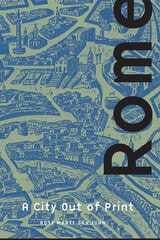
Rome
A City out of PrintRose Marie San Juan
University of Minnesota Press, 2001
Romeo and Juliet
William Shakespeare
Arizona Center for Medieval and Renaissance Studies, 2022
“For never was a story of more woe / Than this of Juliet and her Romeo.” In this new version of Romeo and Juliet, written in accessible modern English, Hansol Jung breathes new life into Shakespeare’s famous tragedy. By closely examining the familiar language and focusing on the subtleties of the text, Jung illuminates a surprising and more nuanced world than many of us have come to expect from the well-known tale of star-crossed lovers.
This translation of Romeo and Juliet was written as part of the Oregon Shakespeare Festival’s Play On! project, which commissioned new translations of thirty-nine Shakespeare plays. These translations present work from “The Bard” in language accessible to modern audiences while never losing the beauty of Shakespeare’s verse. Enlisting the talents of a diverse group of contemporary playwrights, screenwriters, and dramaturges from diverse backgrounds, this project reenvisions Shakespeare for the twenty-first century. These volumes make these works available for the first time in print—a new First Folio for a new era.
Ruling Culture
Art Police, Tomb Robbers, and the Rise of Cultural Power in ItalyFiona Greenland
University of Chicago Press, 2021
In 2006, the then-president of Italy declared his country to be “the world’s greatest cultural power.” With Ruling Culture, Fiona Greenland traces how Italy came to wield such extensive legal authority, global power, and cultural influence—from the nineteenth century unification of Italy and the passage of novel heritage laws, to current battles with the international art market. Today, Italy’s belief in its cultural superiority is evident through interactions between citizens, material culture, and the state—crystallized in the Art Squad, the highly visible military-police art protection unit. Greenland reveals the contemporary actors in this tale, taking a close look at the Art Squad and state archaeologists on one side and unauthorized excavators, thieves, and smugglers on the other. Drawing on years in Italy interviewing key figures and following leads, Greenland presents a multifaceted story of art crime, cultural diplomacy, and struggles between international powers.
Ruling Peacefully
Cardinal Ercole Gonzaga and Patrician Reform in Sixteenth-Century ItalyPaul V. Murphy
Catholic University of America Press, 2007