Results by title
301 books match the query 'Knowledge' and 16 start with r
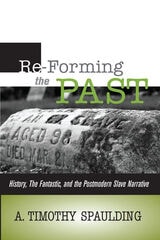
RE-FORMING THE PAST
HISTORY, THE FANTASTIC, & THE POSTMODERN SLAVE NARRATIVEA. Timothy Spaulding
The Ohio State University Press, 2005
In their rejection of mimetic representation and traditional historiography, Spaulding contextualizes postmodern slave narrative. By addressing both literary and popular African American texts, Re-Forming the Past expands discussions of both the African American literary tradition and postmodern culture.
Race and the Forms of Knowledge
Technique, Identity, and Place in Artistic ResearchBen Spatz
Northwestern University Press, 2024
Enacts a radically interdisciplinary intersectionality to position performance-based research in solidarity with decoloniality
This boldly innovative work interrogates the form and meaning of artistic research (also called practice research, performance as research, and research-creation), examining its development within the context of predominately white institutions that have enabled and depoliticized it while highlighting its radical potential when reframed as a lineage of critical whiteness practice.
Ben Spatz crafts a fluid yet critical new framework, explored via a series of case studies that includes Spatz’s own practice-as-research, to productively confront hegemonic modes of white writing and white institutionality. Ultimately taking jewishness as a paradigmatically “molecular” identity—variously configured as racial, ethnic, religious, or national—they offer a series of concrete methodological and formal proposals for working at the intersections of embodied identities, artistic techniques, and alternative forms of knowledge.
Race and the Forms of Knowledge: Technique, Identity, and Place in Artistic Research takes inspiration from recent critical studies of blackness and indigeneity to show how artistic research is always involved in the production and transformation of identity. Spatz offers a toolkit of practical methods and concepts—from molecular identities to audiovisual ethnotechnics and earthing the laboratory—for reimagining the university and other contemporary institutions.
Race and the Foundations of Knowledge
Cultural Amnesia in the AcademyEdited by Joseph Young and Jana Evans Braziel
University of Illinois Press, 2006

Ramona Memories
Tourism and the Shaping of Southern CaliforniaDydia DeLyser
University of Minnesota Press, 2005

Reading Galileo's Letters
Experiments in Friendship, Knowledge, and CommunityEdited by Paula Findlen and Hannah Marcus
University of Chicago Press, 2027
Essays by many of the foremost experts on Galileo offer an interdisciplinary approach to the legendary scientist’s correspondence.
The Tuscan mathematician, physicist, and astronomer Galileo Galilei (1564–1642) is one of history’s most iconic and controversial figures. Letters form the backbone of what one early Galileo scholar called the “private Galileo,” and his correspondence is indeed a record of his family and friendships; his intellectual evolution; his professional interactions with other scientific figures; and his relations with patrons, brokers, and publishers. Last, but hardly least, his letters are a unique cultural artifact of Galileo the writer and master of vernacular prose.
Galileo’s correspondence crossed Europe in public mail pouches, through diplomatic messengers, and was written in code. Today, there are 3,272 surviving letters to or from Galileo and his many friends, family members, disciples, and rivals across Europe. This volume examines these letters as an essential aspect of Galileo’s personal and scientific career. They are what the editors call his “experiments in friendship,” which enabled, abetted, and often served as early drafts of the theories in his published works. This collaborative volume brings together different approaches, case studies, and forms of expertise—historical and literary, intellectual and material, archival and digital. It is a must-read for all Galileo enthusiasts and anyone interested in how to make the most of a rich record of correspondence.
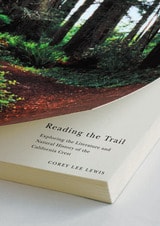
Reading The Trail
Exploring The Literature And Natural History Of The California CrestCorey Lee Lewis
University of Nevada Press, 2005
A provocative new way to read and interpret the classic works of John Muir, Mary Austin, and Gary Snyder, and to bring their ideas into the discussion of ecological values and the current environmental crisis. Lewis combines a perceptive discussion of their work and ideas with an engaging account of his own trail experiences as hiker/backpacker and volunteer trail builder, proposing that such a field-based, interdisciplinary approach to literary study and outdoors experience can enrich our appreciation for the work of nature writers.
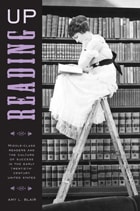
Reading Up
Middle-Class Readers and the Culture of Success in the Early Twentieth-Century United StatesAmy Blair
Temple University Press, 2011
A person who reads a book for self-improvement rather than aesthetic pleasure is “reading up.” Reading Up is Amy Blair's engaging study of popular literary critics who promoted reading generally and specific books as vehicles for acquiring cultural competence and economic mobility. Combining methodologies from the history of the book and the history of reading, to mass-cultural studies, reader-response criticism, reception studies, and formalist literary analysis, Blair shows how such critics influenced the choices of striving readers and popularized some elite writers.
Framed by an analysis of Hamilton Wright Mabie's role promoting the concept of “reading up” during his ten-year stint as the cultivator of literary taste for the highly popular Ladies' Home Journal, Reading Up reveals how readers flocked to literary works that they would be expected to dislike. Blair shows that while readers could be led to certain books by a trusted adviser, they frequently followed their own path in interpreting them in unexpected ways.
Reading Virgil and His Texts
Studies in IntertextualityRichard F. Thomas
University of Michigan Press, 2000
The articles and notes included in this volume have been selected for their diachronic aspect in addition to the synchronic status they had in their original context. Dealing with the intricate ways in which Virgil, and in the introductory chapter his predecessor Catullus, manipulated and appropriated their inherited Greek and Roman literary tradition, this book presents a coherent profile, through these detailed studies, of the mechanics of one of the most dynamic periods in the literary history of any culture.
Richard Thomas--one of the most important voices in Latin literary studies today--shows little anxiety about objections to authorial intentionality. Throughout there is a working assumption that intertextual connections can be established and, further, that functions and purposes, even intended ones, may be inferred from those connections.
This book will be of interest to scholars and students of Greek and Latin literature but will also be of great value to students of medieval, Renaissance, and early modern vernacular literatures, most of whose poets see themselves as closely connected to Virgil.
Richard F. Thomas is Professor of Greek and Latin, Harvard University.
Regulating Confusion
Samuel Johnson and the CrowdThomas Reinert
Duke University Press, 1996
Ambivalent about the disruption, confusion, perplexity, and boundless variety apparent in the London of his day, Johnson was committed to the conventions of moral reflection but also troubled by the pressure to adopt the perspective of the crowd and the language of social theory. Regulating Confusion explores the consequences of his ambivalence and his attempt to order the chaos. It discusses his critique of moral generalizations, concept of moral reflection as a symbolic gesture, and account of what happens to the notion of character when individuals, having lost the support of moral convention, become faces in a crowd. Reflecting generally on the relationship between skepticism and political ideology, Reinert also discusses Johnson’s political skepticism and the forms of speculation and action it authorized.
Challenging prevalent psychologizing and humanistic interpretations, Regulating Confusion leaves behind the re-emergent view of Johnson as a reactionary ideologue and presents him in a theoretically sophisticated context. It offers his style of skepticism as a model of poise in the face of confusion about the nature of political truth and personal responsibility and demonstrates his value as a resource for students of culture struggling with contemporary debates about the relationship between literature and politics.
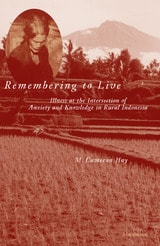
Remembering to Live
Illness at the Intersection of Anxiety and Knowledge in Rural IndonesiaM. Cameron Hay
University of Michigan Press, 2004
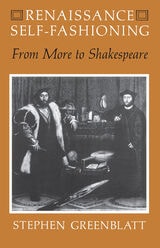
Renaissance Self-Fashioning
From More to ShakespeareStephen Greenblatt
University of Chicago Press, 1983
"No one who has read [Greenblatt's] accounts of More, Tyndale, Wyatt, and others can fail to be moved, as well as enlightened, by an interpretive mode which is as humane and sympathetic as it is analytical. These portraits are poignantly, subtly, and minutely rendered in a beautifully lucid prose alive in every sentence to the ambivalences and complexities of its subjects."—Harry Berger Jr., University of California, Santa Cruz
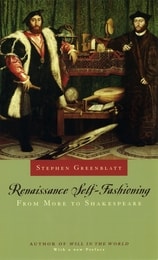
Renaissance Self-Fashioning
From More to ShakespeareStephen Greenblatt
University of Chicago Press, 2005
"No one who has read [Greenblatt's] accounts of More, Tyndale, Wyatt, and others can fail to be moved, as well as enlightened, by an interpretive mode which is as humane and sympathetic as it is analytical. These portraits are poignantly, subtly, and minutely rendered in a beautifully lucid prose alive in every sentence to the ambivalences and complexities of its subjects."—Harry Berger Jr., University of California, Santa Cruz
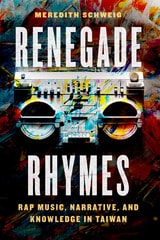
Renegade Rhymes
Rap Music, Narrative, and Knowledge in TaiwanMeredith Schweig
University of Chicago Press, 2022
Like many states emerging from oppressive political rule, Taiwan saw a cultural explosion in the late 1980s, when nearly four decades of martial law under the Chinese Nationalist Party ended. As members of a multicultural, multilingual society with a complex history of migration and colonization, Taiwanese people entered this moment of political transformation eager to tell their stories and grapple with their identities. In Renegade Rhymes, ethnomusicologist Meredith Schweig shows how rap music has become a powerful tool in the post-authoritarian period for both exploring and producing new knowledge about the ethnic, cultural, and political history of Taiwan.
Schweig draws on extensive ethnographic fieldwork, taking readers to concert venues, music video sets, scenes of protest, and more to show how early MCs from marginalized ethnic groups infused rap with important aspects of their own local languages, music, and narrative traditions. Aiming their critiques at the educational system and a neoliberal economy, new generations of rappers have used the art form to nurture associational bonds and rehearse rituals of democratic citizenship, making a new kind of sense out of their complicated present.
Reproductive Technologies as Global Form
Ethnographies of Knowledge, Practices, and Transnational EncountersEdited by Michi Knecht, Maren Klotz, and Stefan Beck
Campus Verlag, 2012
In the thirty years since the first “test-tube baby,” in-vitro fertilization and other methods of reproductive assistance have become a common aspect of family life and medicine in developed nations—and, increasingly, throughout the world. This collection brings together ethnographic studies of how these reproductive technologies are deployed across a wide variety of nations and cultures, taking special account of how they are linked to aspirations towards modernity—and how they contribute to an ongoing reconfiguration of the boundaries of knowledge and human agency. The resulting volume offers both a current snapshot of the cultural state of reproductive technologies and a plethora of provocative questions for the future.
Rethinking Sustainability
Power, Knowledge, and InstitutionsJonathan Harris, Editor
University of Michigan Press, 2003
Any theory of sustainable development must take into account economic, social, and environmental dimensions. Until recently, the question "What is development?" was often answered predominantly from the economist's perspective, with high priority being assigned to expansion of economic output. Social, political, institutional, and ethical aspects have often been neglected. But now that sustainable development has become a broadly accepted concept, it is impossible to maintain a narrowly economistic view of development. For this reason, the varied perspectives offered by the contributors to this volume are crucial to understanding the process of development as it relates to environmental sustainability and human well-being.
The selection of articles is meant to be stimulating and provocative rather than comp-rehensive. They are roughly divided between those dealing with broad theoretical issues concerning the economic, political, and social aspects of development (Part I) and those presenting more applied analysis (Part II). The common thread is a concern for examining which factors contribute to making development socially just and environmentally sound.
Rethinking Sustainability will be of interest to economists and social scientists, development professionals, and instructors seeking to offer their students a broad perspective on development issues.
Jonathan Harris is Senior Research Associate, Global Development and Environment Institute at Tufts University, as well as Adjunct Associate Professor of International Economics at Tufts University Fletcher School of Law.
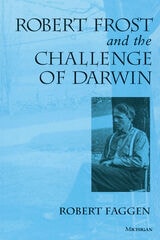
Robert Frost and the Challenge of Darwin
Robert Faggen
University of Michigan Press, 2001
Combining both intellectual history and detailed analysis of Frost's poems, Robert Faggen shows how Frost's reading of Darwin reflected the significance of science in American culture from Emerson and Thoreau, through James and pragmatism. He provides fresh and provocative readings of many of Frost's shorter lyrics and longer pastoral narratives as they illustrate the impact of Darwinian thought on the concept of nature, with particular exploration of man's relationship to other creatures, the conditions of human equality and racial conflict, the impact of gender and sexual differences, and the survival of religion.
The book shows that Frost was neither a pessimist lamenting the uncertainties of the Darwinian worldview, nor a humanist opposing its power. Faggen draws on Frost's unpublished notebooks to reveal a complex thinker who willingly engaged with the difficult moral and epistemological implications of natural science, and showed their consonance with myths and traditions stretching back to Milton, Lucretius, and the Old Testament. Frost emerges as a thinker for whom poetry was not only artistic expression, but also a forum for the trial of ideas and their impact on humanity.
Robert Frost and the Challenge of Darwin provides a deeper understanding not only of Frost and modern poetry, but of the meaning of Darwin in the modern world, the complex interrelations of literature and science, and the history of American thought.
"A forceful, appealing study of the Frost-Darwin relation, which has gone little noted by previous scholars, and a fresh explanation of Frost's ambivalent relation to modernism, which he scorned but also influenced" --William Howarth, Princeton University
Robert Faggen is Associate Professor of Literature, Claremont McKenna College and Adjunct Associate Professor, Claremont Graduate School.