Results by title
320 books match the query 'Legal status, laws, etc' and 19 start with r
Race and Police
The Origin of Our Peculiar InstitutionsBen Brucato
Rutgers University Press, 2024
Race and Police corrects the Eurocentrism in the orthodox history of American police and in predominating critical theories of police. That orthodoxy rests on an origin story that begins with Sir Robert Peel and the London Metropolitan Police Service. Predating the Met by more than a century, America’s first police, often called slave patrols, did more than maintain order—it fabricated a racial order. Prior to their creation, all white citizens were conscripted to police all Blacks. Their participation in the coercive control of Blacks gave definition to their whiteness. Targeted as threats to the security of the economy and white society, being policed defined Blacks who, for the first time, were treated as a single racial group. The boundaries of whiteness were first established on the basis of who was required to regulate slaves, given a specific mandate to prevent Black insurrection, a mandate that remains core to the police role to this day.
Race, Rights, and the Asian American Experience
Ancheta, Angelo N
Rutgers University Press, 2006
Ancheta examines legal and social theories of racial discrimination, ethnic differences in the Asian American population, nativism, citizenship, language, school desegregation, and affirmative action. In the revised edition of this influential book, Ancheta also covers post-9/11 anti-Asian sentiment and racial profiling. He analyzes recent legal cases involving political empowerment, language rights, human trafficking, immigrant rights, and affirmative action in higher education-many of which move the country farther away from the ideals of racial justice. On a more positive note, he reports on the progress Asian Americans have made in the corporate sector, politics, the military, entertainment, and academia.
A skillful mixture of legal theories, court cases, historical events, and personal insights, this revised edition brings fresh insights to U.S. civil rights from an Asian American perspective.

Race, Rights, and the Asian American Experience
Ancheta, Angelo N
Rutgers University Press, 1997
In Race, Rights, and the Asian American Experience, Angelo N. Ancheta demonstrates how United States civil rights laws have been framed by a black-white model of race that typically ignores the experiences of other groups, including Asian Americans. When racial discourse is limited to antagonisms between black and white, Asian Americans often find themselves in a racial limbo, marginalized or unrecognized as full participants.
Ancheta examines legal and social theories of racial discrimination, ethnic differences in the Asian American population, nativism, citizenship, language, school desegregation, and affirmative action. In the second edition of this influential book, Ancheta also covers post–9/11 anti-Asian sentiment and racial profiling. He analyzes recent legal cases involving political empowerment, language rights, human trafficking, immigrant rights, and affirmative action in higher education—many of which move the country farther away from the ideals of racial justice. On a more positive note, he reports on the progress Asian Americans have made in the corporate sector, politics, the military, entertainment, and academia.
A skillful mixture of legal theories, court cases, historical events, and personal insights, this second edition brings fresh insights to U.S. civil rights from an Asian American perspective.
Raced to Death in 1920s Hawai i
Injustice and Revenge in the Fukunaga CaseJonathan Y. Okamura
University of Illinois Press, 2019
Rascuache Lawyer
Toward a Theory of Ordinary LitigationAlfredo Mirandé
University of Arizona Press, 2011
Every chapter presents an actual case from Mirandé’s experience (only the names and places have been changed). His clients have been charged with everything from carrying a concealed weapon, indecent exposure, and trespassing to attempted murder, domestic violence, and child abuse. Among them are recent Mexican immigrants, drug addicts, gang members, and the homeless. All of them are destitute, and many are victims of racial profiling. Some “pay” Mirandé with bartered services such as painting, home repairs, or mechanical work on his car. And Mirandé doesn’t always win their cases. But, as he recounts, he certainly works tirelessly to pursue all legal remedies.
Each case is presented as a letter to a fascinating (fictional) “Super Chicana” named Fermina Gabriel, who we are told is an accomplished lawyer, author, and singer. This narrative device allows the author to present his cases as if he were recounting them to a friend, drawing in the reader as a friend as well.
Bookending the individual cases, Mirandé’s introductions and conclusions offer a compelling vision of progressive legal practice grounded in rascuache lawyering.
Readings In American Indian Law
Jo Carrillo
Temple University Press, 1998
Courses in federal Indian law are often aimed at understanding rules, not cultural conflicts. This book expands doctrinal discussions into understandings of culture, strategy, history, identity, and hopes for the future. Contributions from law, history, anthropology, ethnohistory, biography, sociology, socio-legal studies, and fiction offer an array of alternative paradigms as strong antidotes to our usual conceptions of federal Indian law.
Each selection reveals an aspect of how federal Indian law is made, interpreted, implemented, or experienced. Throughout, the book centers on the ever present and contentious issue of identity. At the point where identity and law intersect lies an important new way to contextualize the legal concerns of Native Americans.
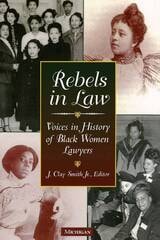
Rebels in Law
Voices in History of Black Women LawyersJ. Clay Smith, Jr., Editor
University of Michigan Press, 2000
The essays demonstrate the involvement of black women lawyers in important public issues of our time and show them addressing the sensitive subjects of race, equality, justice and freedom. Drawing together many writings that have never been published or have been published in obscure journals or newspapers, Rebels in Law is a groundbreaking study. In addition, it offers historical background information on each writer and on the history of black women lawyers. Providing an opportunity to study the origins of black women as professionals, community leaders, wives, mothers, and feminists, it will be of interest to scholars in the fields of law, history, political science, sociology, black studies and women's studies.
J. Clay Smith, Jr., is Professor of Law, Howard University Law School. He was formerly a member of the United States Equal Employment Opportunity Commission, Dean of Howard University Law School, and President of the Washington Bar Association. He is the author of Emancipation: The Making of the Black Lawyer, 1844-1944 and numerous articles.
Rebuilding Native Nations
Strategies for Governance and DevelopmentEdited by Miriam Jorgensen; Foreword by Oren Lyons; Afterword by Satsan (Herb George)
University of Arizona Press, 2007
Produced by the Native Nations Institute for Leadership, Management, and Policy at the University of Arizona and the Harvard Project on American Indian Economic Development, this book traces the contours of that revolution as Native nations turn the dream of self-determination into a practical reality. Part report, part analysis, part how-to manual for Native leaders, it discusses strategies for governance and community and economic development being employed by American Indian nations and First Nations in Canada as they move to assert greater control over their own affairs.
Rebuilding Native Nations provides guidelines for creating new governance structures, rewriting constitutions, building justice systems, launching nation-owned enterprises, encouraging citizen entrepreneurs, developing new relationships with non-Native governments, and confronting the crippling legacies of colonialism. For nations that wish to join that revolution or for those who simply want to understand the transformation now underway across Indigenous North America, this book is a critical resource.
CONTENTS
Foreword by Oren Lyons
Editor's Introduction
Part 1
Starting Points
1. Two Approaches to the Development of Native Nations: One Works, the Other Doesn't
Stephen Cornell and Joseph P. Kalt
2. Development, Governance, Culture: What Are They and What Do They Have to Do with Rebuilding Native Nations?
Manley A. Begay, Jr., Stephen Cornell, Miriam Jorgensen, and Joseph P. Kalt
Part 2
Rebuilding the Foundations
3. Remaking the Tools of Governance: Colonial Legacies, Indigenous Solutions
Stephen Cornell
4. The Role of Constitutions in Native Nation Building: Laying a Firm Foundation
Joseph P. Kalt
5 . Native Nation Courts: Key Players in Nation Rebuilding
Joseph Thomas Flies-Away, Carrie Garrow, and Miriam Jorgensen
6. Getting Things Done for the Nation: The Challenge of Tribal Administration
Stephen Cornell and Miriam Jorgensen
Part 3
Reconceiving Key Functions
7. Managing the Boundary between Business and Politics: Strategies for Improving the Chances for Success in Tribally Owned Enterprises
Kenneth Grant and Jonathan Taylor
8. Citizen Entrepreneurship: An Underutilized Development Resource
Stephen Cornell, Miriam Jorgensen, Ian Wilson Record, and Joan Timeche
9. Governmental Services and Programs: Meeting Citizens' Needs
Alyce S. Adams, Andrew J. Lee, and Michael Lipsky
10. Intergovernmental Relationships: Expressions of Tribal Sovereignty
Sarah L. Hicks
Part 4
Making It Happen
11. Rebuilding Native Nations: What Do Leaders Do?
Manley A. Begay, Jr., Stephen Cornell, Miriam Jorgensen, and Nathan Pryor
12. Seizing the Future: Why Some Native Nations Do and Others Don't
Stephen Cornell, Miriam Jorgensen, Joseph P. Kalt, and Katherine Spilde Contreras
Afterword by Satsan (Herb George)
References
About the Contributors
Index
Recognition Odysseys
Indigeneity, Race, and Federal Tribal Recognition Policy in Three Louisiana Indian CommunitiesBrian Klopotek
Duke University Press, 2011
Klopotek describes the varied effects of the recognition process on the social and political structures, community cohesion, cultural revitalization projects, identity, and economic health of each tribe. He emphasizes that recognition policy is not the only racial project affecting Louisiana tribes. For the Tunica-Biloxis, the Jena Band of Choctaws, and the Clifton-Choctaws, discourses around blackness and whiteness have shaped the boundaries of Indian identity in ways that have only begun to be explored. Klopotek urges scholars and officials from the Bureau of Indian Affairs (BIA) to acknowledge the multiple discourses and viewpoints influencing tribal identities. At the same time, he puts tribal recognition in broader perspective. Indigenous struggles began long before the BIA existed, and they will continue long after it renders any particular recognition decision.
Reconsidering Roosevelt on Race
How the Presidency Paved the Road to BrownKevin J. McMahon
University of Chicago Press, 2003
McMahon shows how FDR's attempt to strengthen the presidency and undermine the power of conservative Southern Democrats dovetailed with his efforts to seek racial equality through the federal courts. By appointing a majority of rights-based liberals deferential to presidential power, Roosevelt ensured that the Supreme Court would be receptive to civil rights claims, especially when those claims had the support of the executive branch.
Recovering Subversion
Feminist Politics beyond the LawNivedita Menon
University of Illinois Press, 2004
Is the language of rights enough to foster real social and political change? Nivedita Menon explores the relationship between law and feminist politics by examining the contemporary Indian women's movement with comparisons to France and the United States. She argues that the intersection of feminist politics, law, and the state often paradoxically and severely distorts important ethical and emancipatory impulses of feminism.
Menon reviews historical challenges to the liberal notion of rights from Marxist, feminist, postcolonial, and critical legal scholars, and analyzes current Indian debates on topics including abortion, sexual violence, and Parliamentary quotas for women. Far from being a call to withdraw from the arena of law, Recovering Subversion instead urges feminists everywhere to recognize the limits of "rights discourse" and pleads for a politics that goes beyond its boundaries.
Red Eagle's Children
Weatherford vs. Weatherford et al.Edited by J. Anthony Paredes and Judith Knight
University of Alabama Press, 2012
Tracing identity, law, and legacy in an inheritance dispute that reveals the intersection of two cultural and legal systems: Creek Indian and Euro-American.
In 1846, in the Chancery Court of Mobile, Alabama, William “Red Eagle” Weatherford’s son, by the Indian woman Supalamy, sued his half siblings fathered by Weatherford with two other Creek women, Polly Moniac and Mary Stiggins, for a greater share of Weatherford’s estate. While the court recognized William Jr. as the son of William Sr., he nevertheless lost his petition for inheritance due to the lack of legal evidence concerning the marriage of his biological mother to William Sr. The case, which went to the Alabama Supreme Court in 1851, provides a record of an attempt to interrelate and, perhaps, manipulate differences in cultures as they played out within the ritualized, arcane world of antebellum Alabama jurisprudence.
Although the case has value in the classic mold of salvage ethnography of Creek Indian culture, Red Eagle’s Children, edited by J. Anthony Paredes and Judith Knight, shows that its more enduring value lies in being a source for historical ethnography—that is, for anthropological analyses of cultural dynamics of the past events that complement the narratives of professional historians.
CONTRIBUTORS: David I. Durham / Robbie Ethridge / Judith Knight / J. Anthony Paredes / Paul M. Pruitt Jr. / Nina Gail Thrower / Robert Thrower / Gregory A. Waselkov
Redress for Historical Injustices in the United States
On Reparations for Slavery, Jim Crow, and Their LegaciesMichael T. Martin and Marilyn Yaquinto, eds.
Duke University Press, 2007
Written by activists and scholars of law, political science, African American studies, philosophy, economics, and history, the twenty-six essays include both previously published articles and pieces written specifically for this volume. Essays theorize the historical and legal bases of claims for redress; examine the history, strengths, and limitations of the reparations movement; and explore its relation to human rights and social justice movements in the United States and abroad. Other essays evaluate the movement’s primary strategies: legislation, litigation, and mobilization. While all of the contributors support the campaign for redress in one way or another, some of them engage with arguments against reparations.
Among the fifty-three primary documents included in the volume are federal, state, and municipal acts and resolutions; declarations and statements from organizations including the Black Panther Party and the NAACP; legal briefs and opinions; and findings and directives related to the provision of redress, from the Oklahoma Commission to Study the Tulsa Race Riot of 1921 to the mandate for the Greensboro Truth and Reconciliation Commission. Redress for Historical Injustices in the United States is a thorough assessment of the past, present, and future of the modern reparations movement.
Contributors. Richard F. America, Sam Anderson, Martha Biondi, Boris L. Bittker, James Bolner, Roy L. Brooks, Michael K. Brown, Robert S. Browne, Martin Carnoy, Chiquita Collins, J. Angelo Corlett, Elliott Currie, William A. Darity, Jr., Adrienne Davis, Michael C. Dawson, Troy Duster, Dania Frank, Robert Fullinwider, Charles P. Henry, Gerald C. Horne, Robert Johnson, Jr., Robin D. G. Kelley, Jeffrey R. Kerr-Ritchie, Theodore Kornweibel, Jr., David Lyons, Michael T. Martin, Douglas S. Massey , Muntu Matsimela , C. J. Munford, Yusuf Nuruddin, Charles J. Ogletree Jr., Melvin L. Oliver, David B. Oppenheimer, Rovana Popoff, Thomas M. Shapiro, Marjorie M. Shultz, Alan Singer, David Wellman, David R. Williams, Eric K. Yamamoto, Marilyn Yaquinto

Regulating Football
Commodification, Consumption and the LawSteve Greenfield and Guy Osborn
Pluto Press, 2001
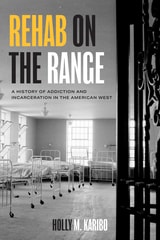
Rehab on the Range
A History of Addiction and Incarceration in the American WestHolly M. Karibo
University of Texas Press, 2024
2026 Texas Christian University (TCU) Texas Book Award Winner
2025 Coral Horton Tullis Memorial Prize, Texas State Historical Association
2025 Outstanding Academic Title, CHOICE
The first study of the Fort Worth Narcotic Farm, an institution that played a critical role in fusing the War on Drugs, mass incarceration, and public health in the American West.
In 1929, the United States government approved two ground-breaking and controversial drug addiction treatment programs. At a time when fears about a supposed rise in drug use reached a fevered pitch, the emergence of the nation’s first “narcotic farms” in Fort Worth, Texas, and Lexington, Kentucky, marked a watershed moment in the treatment of addiction. Rehab on the Range is the first in-depth history of the Fort Worth Narcotic Farm and its impacts on the American West. Throughout its operation from the 1930s to the 1970s, the institution was the only federally funded drug treatment center west of the Mississippi River. Designed to blend psychiatric treatment, physical rehabilitation, and vocational training, the Narcotic Farm, its proponents argued, would transform American treatment policies for the better. The reality was decidedly more complicated.
Holly M. Karibo tells the story of how this institution—once framed as revolutionary for addiction care—ultimately contributed to the turn towards incarceration as the solution to the nation’s drug problem. Blending an intellectual history of addiction and imprisonment with a social history of addicts’ experiences, Rehab on the Range provides a nuanced picture of the Narcotic Farm and its cultural impacts. In doing so, it offers crucial historical context that can help us better understand our current debates over addiction, drug policy, and the rise of mass incarceration.
Representing Women
Law, Literature, and FeminismSusan Sage Heinzelman and Zipporah Batshaw Wiseman, eds.
Duke University Press, 1994
Beginning with an exploration of the ways in which women are represented—how they either tell or have their stories told in literature, in the law, in a courtroom—this collection demonstrates the interrelatedness of the legal and the literary. Whether considering the status of medieval women readers or assessing the effectiveness and extent of contemporary rape law reform, the essays show that power first comes with telling one’s own story, and that the degree and effect of that power are determined by the cultural significance of the forum in which the story is presented. But telling the story is not enough. One must also be aware of how the story is contained within traditional constructs or boundaries and is thus limited in its effects, as Carol Sanger’s essay on mothers and legal/sexual identity makes clear. One must also recognize how a story might perpetuate an ideological agenda that is not in the best interests of the storyteller, as Elizabeth Butler Cullingford shows in her reading of Yeats’s "Leda and the Swan" and one must know the historical context of a story and of its telling, as Anne B. Goldstein’s essay on lesbian narratives discloses.
Breaking down the boundaries between law and literature, this anthology makes evident the ways in which the effect of women’s stories has been constrained and expands the range of possibilities for those who represent women, tell women’s stories, or present women’s issues. Representing Women makes the retelling of old stories about women compelling and the telling of new ones both necessary and possible.
Contributors. Kathryn Abrams, Linda Brodkey, Rita Copeland, Elizabeth Butler Cullingford, Margaret Anne Doody, Susan B. Estrich, Michelle Fine, Anne B. Goldstein, Angela P. Harris, Susan Sage Heinzelman, Christine L. Krueger, Martha Minow, Carol Sanger, Judy Scales-Trent
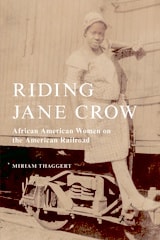
Riding Jane Crow
African American Women on the American RailroadMiriam Thaggert
University of Illinois Press, 2022
Rights of Inclusion
Law and Identity in the Life Stories of Americans with DisabilitiesDavid M. Engel and Frank W. Munger
University of Chicago Press, 2003
Although all sixty interviewees had experienced discrimination, none had filed a formal protest or lawsuit. Nevertheless, civil rights played a crucial role in their lives. Rights improved their self-image, enhanced their career aspirations, and altered the perceptions and assumptions of their employers and coworkers-in effect producing more inclusive institutional arrangements. Focusing on these long-term life histories, Engel and Munger incisively show how rights and identity affect one another over time and how that interaction ultimately determines the success of laws such as the ADA.

Roots of Disorder
Race and Criminal Justice in the American South, 1817-80Christopher Waldrep
University of Illinois Press, 1998
"Delivers what no other study has yet attempted. . . . Waldrep's book is one of the first systematically to use local trial data to explore questions of society and culture." -- Vernon Burton, author of "A Gentleman and an Officer": A Social and Military History of James B. Griffin's Civil War