Results by title
998 books match the query 'Life' and 31 start with r
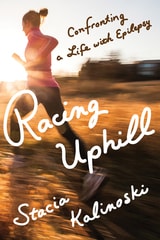
Racing Uphill
Confronting a Life with EpilepsyStacia Kalinoski
University of Minnesota Press, 2025
The candid, inspiring story of a woman’s experience with a chronic, unpredictable neurological condition
When twenty-nine-year-old reporter Stacia Kalinoski regained consciousness on a couch at the TV station where she worked, she assumed that she’d had another seizure. But the electrical storm that had just torn through her brain was more destructive than she could have imagined, and the broadcast journalism career she loved swiftly came to an end. Forced to confront the reality of her medical condition, Kalinoski made the risky decision to undergo brain surgery, targeting the epilepsy that was ravaging her life.
In Racing Uphill, Kalinoski describes the seizures that occurred while she was running, which led to her pursuit of an uncertain cure. Rallying the grit she developed as an athlete and engaging the research and reporting skills she acquired as a journalist, she gives us a rare inside look at the ways epilepsy can change a life. Moving beyond her own personal experience, Kalinoski interviews prominent epileptologists to understand how seizures can spread, steal memories, and create strange behaviors and mood disorders. She seamlessly joins what she learned from her research with her own story, offering valuable insight into the experience of grappling with a relentless neurological disease.
The vivid auras that preceded seizures and the damage that followed; the toll of her epilepsy on her family and loved ones; the extraordinary determination her reckoning required—these are all part of Kalinoski’s story of adversity, denial, acceptance, and resilience. In sharing the remarkable opportunity that epilepsy presented for her courage and growth, Stacia Kalinoski speaks to anyone facing an uphill battle and offers inspiration for taking control of one’s own health.
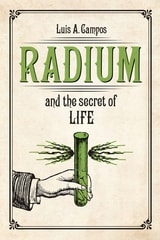
Radium and the Secret of Life
Luis A. Campos
University of Chicago Press, 2015
From the creation of half-living microbes in the test tube to charting the earliest histories of genetic engineering, Radium and the Secret of Life highlights previously unknown interconnections between the history of the early radioactive sciences and the sciences of heredity. Equating the transmutation of radium with the biological transmutation of living species, biologists saw in metabolism and mutation properties that reminded them of the new element. These initially provocative metaphoric links between radium and life proved remarkably productive and ultimately led to key biological insights into the origin of life, the nature of heredity, and the structure of the gene. Radium and the Secret of Life recovers a forgotten history of the connections between radioactivity and the life sciences that existed long before the dawn of molecular biology.

Ramblin' Rose
The Life and Career of Rose MaddoxJonny Whiteside
Vanderbilt University Press, 1997
A groundbreaking study of one of the pioneering women of country music, whose biography sheds new light on both the role of women in postwar America and the growth of the music business in California.
It's a Depression-era saga right out of Steinbeck. The strongwilled matriarch of a rural Alabama family uproots her husband and six children and drives them westward on foot and by boxcar, through sheer willpower, on a journey of two thousand miles to California where a new life begins. Four years later, at age eleven, youngest daughter Rose Maddox steps to the microphone for the first time to sing on radio with the family band. Within a week, the Maddox Brothers & Rose receive a thousand letters, launching the group on a country music career that ultimately ranges from the rodeo shows of the West to the bright lights of Nashville's Grand Ole Opry.
In this meticulously researched biography, veteran music journalist Jonny Whiteside recounts the colorful story of this pioneering woman who literally grew up in the male-dominated enclaves of country music and struggled to make a place for herself there. In Rose Maddox, Whiteside has found an exceptional protagonist for his story: a fiery, strongwilled entertainer whose music has had an influence far beyond her handful of hits on the record charts, and who in many ways, Whiteside convincingly argues, prefigured the coming of rock and roll. In the process, Whiteside introduces us to a host of memorable characters--stars like Hank Williams and Roy Acuff; behind-the-scenes movers and shakers like record men Cliffie Stone and Bill McCall; and, at the heart of the story, the irrepressible Maddox family themselves, whose freewheeling music so faithfully reflected the hurlyburly world of California's displaced migrant workers.
Ramblin' Rose is a long-overdue work of research and synthesis that documents not only the life of an unsung musical trailblazer but also the vibrant, roughhewn West Coast country music scene that once rivaled Nashville and left an indelible imprint on the popular music of today.
Co-published with the Country Music Foundation Press
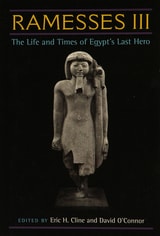
Ramesses III
The Life and Times of Egypt's Last HeroEdited by Eric H. Cline and David O'Connor
University of Michigan Press, 2012
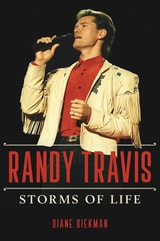
Randy Travis
Storms of LifeDiane Diekman
University of Illinois Press, 2025
Randy Travis’s 1986 breakthrough put him at the forefront of Nashville’s new traditionalist sound and, in the words of Garth Brooks, saved country music. The singer’s warm baritone and all-time classic songs like “Forever and Ever, Amen” landed him atop the charts sixteen times. His cross-genre appeal brought a level of multiplatinum success that no country artist before him had ever achieved.
Diane Diekman’s biography follows the life and career of one of country music’s most beloved figures. Steered from a troubled path as a teen, Travis served a long apprenticeship under manager and future wife Lib Hatcher before being rejected by the Nashville music industry as “too country.” The single “On the Other Hand” and his smash debut album did away with the doubters and began a dominant four-year run that stretched into ongoing success as a recording artist, trailblazing live performer, and actor in film and television. Diekman uses dozens of interviews and in-depth research to fill in the details of Travis’s pre-fame life and his enormous impact on country, popular, and gospel music. From there, she pivots to telling the story of the singer’s difficult divorce from Hatcher, subsequent problems with alcohol and run-ins with the law, and the challenges he overcame in the aftermath of a devastating 2013 stroke.
Informed by a wealth of new research and interviews, Randy Travis is the first in-depth biography of the country music legend.
Realizing Metaphors
Alexander Pushkin and the Life of the PoetDavid M. Bethea
University of Wisconsin Press, 1998
Readers often have regarded with curiosity the creative life of the poet. In this passionate and authoritative new study, David Bethea illustrates the relation between the art and life of nineteenth-century poet Alexander Pushkin, the central figure in Russian thought and culture. Bethea shows how Pushkin, on the eve of his two-hundredth birthday, still speaks to our time. He indicates how we as modern readers might "realize"— that is, not only grasp cognitively, but feel, experience—the promethean metaphors central to the poet's intensely "sculpted" life. The Pushkin who emerges from Bethea's portrait is one who, long unknown to English-language readers, closely resembles the original both psychologically and artistically.
Bethea begins by addressing the influential thinkers Freud, Bloom, Jakobson, and Lotman to show that their premises do not, by themselves, adequately account for Pushkin's psychology of creation or his version of the "life of the poet." He then proposes his own versatile model of reading, and goes on to sketches the tangled connections between Pushkin and his great compatriot, the eighteenth-century poet Gavrila Derzhavin. Pushkin simultaneously advanced toward and retreated from the shadow of his predecessor as he created notions of poet-in-history and inspiration new for his time and absolutely determinative for the tradition thereafter.
Rebel against Injustice
The Life of Frank P. O'HarePeter H. Buckingham
University of Missouri Press, 1996
Rebel against Injustice, a carefully crafted biography of Frank P. O'Hare (1877-1960), socialist, political activist, editor, and husband of prominent radical Kate Richards O'Hare, is the first study of a much-neglected but important figure of the American Left whose contributions are often referred to, in passing, in many other works.
Abandoned by his father at the age of four, O'Hare grew up in the Kerry Patch slum of St. Louis. Although he began his career in business, O'Hare turned to socialism with the sublime dream of bringing about a better world. While attending a school for Socialist organizers, he met Kate Richards, and the young couple forged a personal and professional partnership. Settling in Oklahoma, the O'Hares helped build a strong grassroots movement through grueling lecture tours and colorful camp meetings. In 1911, Frank, his wife, and their four children moved to St. Louis, where they transformed the National Rip-Saw into a popular Socialist monthly magazine. It was there that Frank found his niche as a Socialist impresario, editing the writings and arranging the tours of his "stars," Kate O'Hare and Eugene Debs.
A series of calamities, including the breakup of his marriage, brought Frank O'Hare near the edge of despair in the mid-1920s. Divorcing and remarrying, he made a new life in St. Louis. Plunging back into radical activism, he worked for the Federated Press syndicate. During the last twenty years of his life, O'Hare wrote for the St. Louis Post-Dispatch, worked as a business consultant, and continued his involvement as a community activist in St. Louis. Although Frank O'Hare has long been dismissed as a lost soul without Kate Richards O'Hare, Rebel against Injustice shows that he continued to be a presence in St. Louis and never stopped his fight against injustice. In 1958, a Teamster newspaper referred to O'Hare as "one of the truly great men of St. Louis--possibly the ONLY one."
Based upon a close study of the largely untapped Frank P. O'Hare papers, this well-written biography will enlighten readers about the organizational choices behind the success of American Socialism, while shedding new light on the lives and activities of many prominent American radicals.
Reclaiming the Discarded
Life and Labor on Rio's Garbage DumpKathleen M. Millar
Duke University Press, 2018
Recollections of Life on the Prison Ship Jersey
Thomas Dring
Westholme Publishing, 2010
“Among the many events which took place during the Revolutionary War from its commencement to its termination [are] the cruelties inflicted upon that unfortunate class of men who had the misfortune to be numbered among the prisoners [of the British] and more particularly those whom the dreadful chance of war had placed on board their prison ships at New York.” So begins the remarkable narrative of Thomas Dring. In 1824, Dring was an aging man of 65, retired in his native state of Rhode Island. Forty-two years before, he, like thousands of other young men, had been caught up in the American cause. In 1782, he had been captured by the British and sentenced to the infamous prison ship Jersey, a demasted hulk anchored in the East River off New York City. It is estimated that more than 11,000 men perished on the British prison ships over the course of the war, and their bones regularly washed up on the shore long after hostilities ceased. Dring survived to tell the tale, and in 1824, he decided to do just that. He was motivated partly because the fate of the prisoners was beginning to be doubted, that their hardships were thought to have been grossly exaggerated, and even that the entire experience had never occurred.
This book publishes for the first time the complete text of Dring’s handwritten manuscript, a major primary-source document, in which he describes the horrible conditions, treatment by guards, and experiences that he and others endured during captivity. Recollections of Life on the Prison Ship Jersey is a plea not to forget but instead to remember the inhumanity of the captors and the sacrifices of the captives—a message that continues to resonate today. Editor David Swain has provided an introductory essay and extensive notes that contain background information and historical documentation to accompany and illuminate the original manuscript.
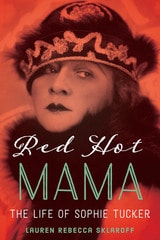
Red Hot Mama
The Life of Sophie TuckerLauren Rebecca Sklaroff
University of Texas Press, 2018
The “First Lady of Show Business” and the “Last of the Red Hot Mamas,” Sophie Tucker was a star in vaudeville, radio, film, and television. A gutsy, song-belting stage performer, she entertained audiences for sixty years and inspired a host of younger women, including Judy Garland, Carol Channing, and Bette Midler. Tucker was a woman who defied traditional expectations and achieved success on her own terms, becoming the first female president of the American Federation of Actors and winning many other honors usually bestowed on men. Dedicated to social justice, she advocated for African Americans in the entertainment industry and cultivated friendships with leading black activists and performers. Tucker was also one of the most generous philanthropists in show business, raising over four million dollars for the religious and racial causes she held dear.
Drawing from the hundreds of scrapbooks Tucker compiled, Red Hot Mama presents a compelling biography of this larger-than-life performer. Lauren Rebecca Sklaroff tells an engrossing story of how a daughter of Russian Jewish immigrants set her sights on becoming one of the most formidable women in show business and achieved her version of the American dream. More than most of her contemporaries, Tucker understood how to keep her act fresh, to change branding when audiences grew tired and, most importantly, how to connect with her fans, the press, and entertainment moguls. Both deservedly famous and unjustly forgotten today, Tucker stands out as an exemplar of the immigrant experience and a trailblazer for women in the entertainment industry.
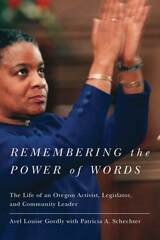
Remembering the Power of Words
The Life of an Oregon Activist, Legislator, and Community LeaderAvel Louise Gordly
Oregon State University Press, 2011
Remembering the Power of Words recounts the personal and professional journey of Avel Gordly, the first African-American woman elected to the Oregon State Senate.
The book is a brave and honest telling of Gordly’s life. She shares the challenges and struggles she faced growing up black in Portland in the 1950s and 1960s, as well as her determination to attend college, the dedication to activism that took her from Portland to Africa, and her eventual decision to run for a seat in the state legislature.
That words have power is a constant undercurrent in Gordly’s account and a truth she learned early in life. “Growing up, finding my own voice,” she writes, “was tied up with denying my voice or having it forcefully rejected and in all of that the memory of my father is very strong. To this day—and I am today a very experienced public speaker—preparation to speak takes a great deal of energy.” That this memoir has its origins as an oral history is fitting since Gordly has used her voice, out loud, to teach and inspire others for so many years.
Important as a biographical account of one significant Oregonian’s story, the book also contributes “broader narratives touching on Black history (and Oregon’s place within it), and most particularly the politics associated with being an African American woman,” according to series editor Melody Rose.
Remote
Reflections on Life in the Shadow of CelebrityDavid Shields
University of Wisconsin Press, 2003
In this truly one-of-a-kind book, the author/narrator—a representative, in extremis, of contemporary American obsession with beauty, celebrity, transmitted image—finds himself suspended, fascinated, in the remoteness of our wall-to-wall mediascape. It is a remoteness that both perplexes and enthralls him.
Through dazzling sleight of hand in which the public becomes private and the private becomes public, the entire book—clicking from confession to family-album photograph to family chronicle to sexual fantasy to pseudo-scholarly footnote to reportage to personal essay to stand-up comedy to cultural criticism to literary criticism to film criticism to prose-poem to litany to outtake —becomes both an anatomy of American culture and a searing self-portrait.
David Shields reads his own life—reads our life—as if it were an allegory about remoteness and finds persuasive, hilarious, heartbreaking evidence wherever he goes.
Winner of the PEN / Revson Award?
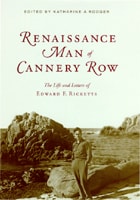
Renaissance Man of Cannery Row
The Life and Letters of Edward F. RickettsEdward F. Ricketts, edited by Katharine A. Rodger
University of Alabama Press, 2002
This portrait of one of John Steinbeck's closest friends illuminates the life and work of a figure central to the development of scientific and literary thought in the 20th century.
Marine biologist Edward F. Ricketts is perhaps best known as the inspiration for John Steinbeck's most empathic literary characters Doc in Cannery Row, Slim in Of Mice and Men, Jim Casy in The Grapes of Wrath, and Lee in East of Eden. The correspondence of this accomplished scientist, writer, and philosopher reveals the influential exchange of ideas he shared with such prominent thinkers and artists as Henry Miller, Joseph Campbell, Ellwood Graham, and James Fitzgerald, in addition to Steinbeck, all of whom were drawn to Ricketts's Monterey Bay laboratory, a haven of intellectual discourse and Bohemian culture in the 1930s and 1940s.
The 125 previously unpublished letters of this collection, housed at the Stanford University Library, document the broad range of Ricketts's interests and accomplishments during the last 12 and most productive years of his life. His handbook on Pacific marine life, Between Pacific Tides, is still in print, now in its fifth edition. The biologist's devotion to ecological conservation and his evolving philosophy of science as a cross-disciplinary, holistic pursuit led to the publication of The Sea of Cortez. Many of Ricketts's letters discuss his studies of the Pacific littoral and his theories of “phalanx” and transcendence. Epistles to family members, often tender and humorous, add dimension and depth to Steinbeck's mythologized depictions of Ricketts. Katharine A. Rodger has enriched the correspondence with an introductory biographical essay and a list of works cited.
Renunciation and Longing
The Life of a Twentieth-Century Himalayan Buddhist SaintAnnabella Pitkin
University of Chicago Press, 2022
In the early twentieth century, Khunu Lama journeyed across Tibet and India, meeting Buddhist masters while sometimes living, so his students say, on cold porridge and water. Yet this elusive wandering renunciant became a revered teacher of the Fourteenth Dalai Lama. At Khunu Lama’s death in 1977, he was mourned by Himalayan nuns, Tibetan lamas, and American meditators alike. The many surviving stories about him reveal significant dimensions of Tibetan Buddhism, shedding new light on questions of religious affect and memory that reimagines cultural continuity beyond the binary of traditional and modern.
In Renunciation and Longing, Annabella Pitkin explores devotion, renunciation, and the teacher-student lineage relationship as resources for understanding Tibetan Buddhist approaches to modernity. By examining narrative accounts of the life of a remarkable twentieth-century Himalayan Buddhist and focusing on his remembered identity as a renunciant bodhisattva, Pitkin illuminates Tibetan and Himalayan practices of memory, affective connection, and mourning. Refuting long-standing caricatures of Tibetan Buddhist communities as unable to be modern because of their religious commitments, Pitkin shows instead how twentieth- and twenty-first-century Tibetan and Himalayan Buddhist narrators have used themes of renunciation, devotion, and lineage as touchstones for negotiating loss and vitalizing continuity.
Resisting Work
The Corporatization of Life and Its DiscontentsPeter Fleming
Temple University Press, 2015
A job is no longer something we "do," but instead something we "are." As the boundaries between work and non-work have dissolved, we restructure ourselves and our lives using social ingenuity to get things done and be resourceful outside the official workday.
In his provocative book, Resisting Work Peter Fleming insists that many jobs in the West are now regulated by a new matrix of power-biopower-where "life itself" is put to work through our ability to self-organize around formal rules. This neoliberal system of employment tries to absorb our life attributes--from our consumer tastes, "downtime," and sexuality--into employment so that questions of human capital and resources replace questions of employee, worker, and labor.
Fleming then suggests that the corporation turns to communal life-what he calls "the common"-in order to reproduce itself and reinforce corporate culture. Yet a resistance against this new definition of work is in effect, and Fleming shows how it may already be taking shape.
Revered Commander, Maligned General
The Life of Clarence Ransom Edwards, 1859-1931Michael E. Shay
University of Missouri Press, 2011
Rewrite Man
The Life and Career of Screenwriter Warren SkaarenBy Alison Macor
University of Texas Press, 2017
In Rewrite Man, Alison Macor tells an engrossing story about the challenges faced by a top screenwriter at the crossroads of mixed and conflicting agendas in Hollywood. Whether writing love scenes for Tom Cruise on the set of Top Gun, running lines with Michael Keaton on Beetlejuice, or crafting Nietzschean dialogue for Jack Nicholson on Batman, Warren Skaaren collaborated with many of New Hollywood’s most powerful stars, producers, and directors. By the time of his premature death in 1990, Skaaren was one of Hollywood’s highest-paid writers, although he rarely left Austin, where he lived and worked. Yet he had to battle for shared screenwriting credit on these films, and his struggles yield a new understanding of the secretive screen credit arbitration process—a process that has only become more intense, more litigious, and more public for screenwriters and their union, the Writers Guild of America, since Skaaren’s time. His story, told through a wealth of archival material, illuminates crucial issues of film authorship that have seldom been explored.
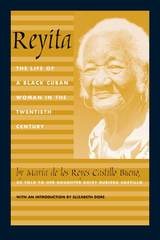
Reyita
The Life of a Black Cuban Woman in the Twentieth CenturyMaría de los Reyes Castillo Bueno
Duke University Press, 2000
Sensitive to and deeply knowledgeable of the systemic causes and consequences of poverty, Reyita’s testimony considers the impact of slavery on succeeding generations, her mother’s internalized racism, and Cuba’s residual discrimination. The humiliation and poverty inflicted on the black Cuban community as well as her decision to marry a white man to ensure a higher standard of living form the basis of other chapters. Reyita actively participated in the life of the community—often caring for the children of prostitutes along with her own eight children and giving herbal medicine and “spiritualist” guidance to ill or troubled neighbors. She describes her growing resistance, over five decades of marriage, to her husband’s sexism and negativity. Strong-willed and frank about her sexuality as well as her religious and political convictions, Reyita recounts joining the revolutionary movement in the face of her husband’s stern objections, a decision that added significant political purpose to her life. At book’s end, Reyita radiates gratification that her 118 descendants have many different hues of skin, enjoy a variety of professions, and—“most importantly”—are free of racial prejudice.
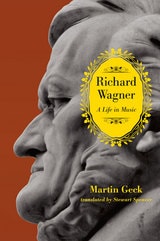
Richard Wagner
A Life in MusicMartin Geck
University of Chicago Press, 2013
Wagner has always inspired passionate admirers as well as numerous detractors, with the result that he has achieved a mythical stature nearly equal to that of the Valkyries and Viking heroes he popularized. There are few, if any, scholars today who know more about Wagner and his legacy than Geck, who builds upon his extensive research and considerable knowledge as one of the editors of the Complete Works to offer a distinctive appraisal of the composer and the operas. Using a wide range of sources, from contemporary scholars to the composer’s own words, Geck explores key ideas in Wagner’s life and works, while always keeping the music in the foreground. Geck discusses not only all the major operas, but also several unfinished operas and even the composer’s early attempts at quasi-Shakespearean drama.
Richard Wagner: A Life in Music is a landmark study of one of music’s most important figures, offering something new to opera enthusiasts, Wagnerians, and anti-Wagnerians alike.
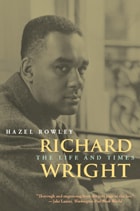
Richard Wright
The Life and TimesHazel Rowley
University of Chicago Press, 2008
Drawing on journals, letters, and eyewitness accounts, Richard Wright probes the author’s relationships with Langston Hughes and Ralph Ellison, his attraction to Communism, and his so-called exile in France. Skillfully interweaving quotes from Wright’s own writings, Rowley deftly portrays a passionate, courageous, and flawed man who would become one of our most enduring literary figures.
“Splendid. . . . Richard Wright is well written, prodigiously researched, and nicely paced, a compelling evocation of the man, his craft, and the different worlds through which he moved.”—Michael J. Ybarra, Wall Street Journal
“A welcome and illuminating work . . . [Rowley] does an outstanding job. . . . Rich and revealing.”—Megan Harlan, San Francisco Chronicle
“A magnificent biography, subtle and insightful. . . . Rowley writes with style and grace, and her research on Wright is prodigious.”—Howard Zinn, The Week
Riches for the Mind and Spirit
John Marks Templeton's Treasury of Words to Help, Inspire, and Live ByJohn Marks Templeton
Templeton Press, 2006
This book contains a collection of John Templeton's favorite inspirational passages.
“From the Bible, from philosophers and poets, and from other writers, we begin to form a clear understanding of the spiritual and ethical laws of life. The world's literature teaches us valuable lessons that no amount of money can buy. Those lessonsare there for everyone. They are free and they are priceless.”—John Marks Templeton
Rifftide
The Life and Opinions of Papa Jo JonesPapa Jo Jones
University of Minnesota Press, 2011
Finalist for Best Jazz Book of the Year Award from the Jazz Journalists Association
The things that I have, I’ll give to you. This is my legacy with you, Albert. This is my last hoo-rah. So begins the autobiography of Jonathan David Samuel Jones—or as the world better knows him, Papa Jo Jones. Playing with Count Basie and his orchestra when they exploded out of Kansas City in 1936 and took the world by storm, Jones went on to inspire generations of jazz drummers, but until now few have had access to his own remarkable story.
Rifftide presents Jones’s inimitable life and opinions, as originally told by Jones to the prominent jazz historian and novelist Albert Murray and now transcribed, arranged, and introduced by Paul Devlin. Drawn from fourteen tapes recorded over eight years beginning in 1977, Rifftide is an impressionistic series of riffs and tales by Jones: his life as a musician on the road in segregated America, his outstanding solo career following his years with the Basie band, and his interactions with iconic artists and cultural figures of the time, including Ralph Ellison, James Baldwin, Langston Hughes, Duke Ellington, Louis Armstrong, Bill “Bojangles” Robinson, and Satchell Paige.
A true American original and jazz luminary, Papa Jo Jones bedazzled and intrigued many with his outrageous, volatile personality and his innovative drumming—and nowhere does his fierce intellect and humor shine more marvelously than in his life’s telling. With a fascinating introduction and annotations by Paul Devlin and an afterword by Phil Schaap, jazz historian and longtime friend of Jones, Rifftide reveals a man at the forefront of both a whole new form of music and a country in the midst of incredible turmoil and opportunity. As Jones himself puts it: Listen man, I’ve had a hell of a time . . .
Ritual Cosmos
Sanctification Of Life InEvan Zuesse
Ohio University Press, 1985
African religions, as this study concludes from its close examination of a number of specific African universes, are religions devoted to the sanctification and constant renewal of life. They are dedicated to Becoming rather than to Being, and seek to sustain a flourishing divine order rather than save the isolated self from it. But these religions do not comfortably express themselves in metaphysical abstractions; instead, they use a ritual idiom more effective than any philosophical disquisition.
Ritual Cosmos analyzes the logic and inner meaning of such ritual structures as sacrifice and taboo, harvest festivals and rites of divine kingship, millenary movements, witchcraft, and much else. In the course of the discussion, many of the basic assumptions of the scientists and theologians who have concerned themselves with the role of religion in human society are reexamined; the distinctions often made between the sacred and the secular, or religion and magic, for example, are questioned.
Rivers of History
Life on the Coosa, Tallapoosa, Cahaba, and AlabamaHarvey H. Jackson, III
University of Alabama Press, 1995
An illuminating study of how rivers shaped the history, culture, and environment of Alabama and the American South.
In Rivers of History, acclaimed historian Harvey H. Jackson III blends environmental history with compelling storytelling and traces the evolving relationship between people and rivers—from Indigenous communities who first depended on these waterways, to European settlers, to the development of modern towns and industries. Along the way, readers encounter stories of transportation and trade, conflict and cooperation, ecological change and conservation, all tied to the flow of these essential rivers.
Far more than a geographical study, Rivers of History demonstrates how waterways act as lifelines of human experience. Rivers shaped patterns of settlement, enabled agricultural and economic growth, and served as critical channels for communication across the American South. At the same time, they created challenges—flooding, environmental degradation, and competing demands for natural resources—that continue to influence life in the region today.
Jackson shows how the history of Alabama cannot be understood apart from its rivers. The Coosa, Tallapoosa, Cahaba, and Alabama rivers emerge not simply as physical features on a map, but as powerful forces that connect past and present, nature and society. His interdisciplinary approach—bringing together history, geography, and environmental studies—makes this work especially valuable for students, scholars, and general readers alike.
Accessible yet authoritative, Rivers of History is essential reading for anyone interested in Southern history, environmental change, or the enduring relationship between landscapes and human communities. It offers a compelling reminder that the story of a place is often written in the movement of its waters.
Robber Baron
The Life of Charles Tyson YerkesJohn Franch
University of Illinois Press, 2006

Robert E. Howard
The Life and Times of a Texas AuthorWillard P. Oliver
University of North Texas Press, 2025
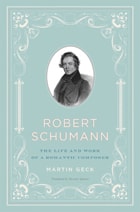
Robert Schumann
The Life and Work of a Romantic ComposerMartin Geck
University of Chicago Press, 2012
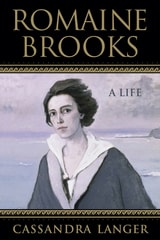
Romaine Brooks
A LifeCassandra Langer
University of Wisconsin Press, 2015
Romaine Brooks: A Life introduces much fresh information from Langer's decades of research on Brooks and establishes this groundbreaking artist's centrality to feminism and contemporary sexual politics as well as to visual culture.
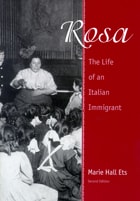
Rosa
The Life of an Italian ImmigrantMarie Hall Ets
University of Wisconsin Press, 1999
This is the life story of Rosa Cavalleri, an Italian woman who came to the United States in 1884, one of the peak years in the nineteenth-century wave of immigration. A vivid, richly detailed account, the narrative traces Rosa’s life in an Italian peasant village and later in Chicago. Marie Hall Ets, a social worker and friend of Rosa’s at the Chicago Commons settlement house during the years following World War I, meticulously wrote down her lively stories to create this book.
Rosa was born in a silk-making village in Lombardy, a major source of north Italian emigration; she first set foot in the United States at the Castle Garden immigrant depot on the tip of Manhattan. Her life in this country was hard and Ets chronicles it in eloquent detail—Rosa endures a marriage at sixteen to an abusive older man, an unwilling migration to a Missouri mining town, and the unassisted birth of a child, and manages to escape from a husband who tried to force her into prostitution. Rosa’s exuberant personality, remarkable spirit, and ability as a storyteller distinguish this book, a unique contribution to the annals of U.S. immigration.
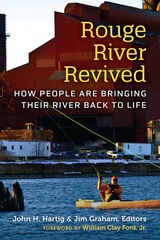
Rouge River Revived
How People Are Bringing Their River Back to LifeJohn H. Hartig and Jim Graham, Editors
University of Michigan Press, 2022
Rouge River Revived describes the river’s history from pre-European times into the 21st century. Chapters cover topics such as Native American life on the Rouge; indigenous flora and fauna over time; the river’s role in the founding of local cities; its key involvement in Detroit’s urban development and intensive industrialization; and the dramatic clean-up arising from citizen concern and activism. This book is not only a history of the environment of the Rouge River, but also of the complex and evolving relationship between humans and natural spaces.
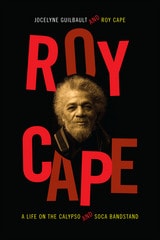
Roy Cape
A Life on the Calypso and Soca BandstandJocelyne Guilbault and Roy Cape
Duke University Press, 2014