Results by title
1210 books match the query 'Mexico' and 55 start with r
Race, Nation, and Market
Economic Culture in Porfirian MexicoRichard Weiner
University of Arizona Press, 2004
Racial Alterity, Wixarika Youth Activism, and the Right to the Mexican City
Diana Negrín
University of Arizona Press, 2019
This book examines the legacy of the racial imaginary in Mexico with a focus on the Wixarika (Huichol) Indigenous peoples of the western Sierra Madre from the colonial period to the present. Through an examination of the politics of identity, space, and activism among Wixarika university students living and working in the western Mexican cities of Tepic and Guadalajara, geographer Diana Negrín analyzes the production of racialized urban geographies and reveals how Wixarika youth are making claims to a more heterogeneous citizenship that challenges these deep-seated discourses and practices. Through the weaving together of historical material, critical interdisciplinary scholarship, and rich ethnography, this book sheds light on the racialized history, urban transformation, and contemporary Indigenous activism of a region of Mexico that has remained at the margins of scholarship.
Radio Nation
Communication, Popular Culture, and Nationalism in Mexico, 1920-1950Joy Elizabeth Hayes
University of Arizona Press, 2000
The role of mass communication in nation building has often been underestimated, particularly in the case of Mexico. Following the Revolution, the Mexican government used the new medium of radio to promote national identity and build support for the new regime. Joy Hayes now tells how an emerging country became a radio nation.
This groundbreaking book investigates the intersection of radio broadcasting and nation building. Hayes tells how both government-controlled and private radio stations produced programs of distinctly Mexican folk and popular music as a means of drawing the country's regions together and countering the influence of U.S. broadcasts.
Hayes describes how, both during and after the period of cultural revolution, Mexican radio broadcasting was shaped by the clash and collaboration of different social forces--including U.S. interests, Mexican media entrepreneurs, state institutions, and radio audiences. She traces the evolution of Mexican radio in case studies that focus on such subjects as early government broadcasting activities, the role of Mexico City media elites, the "paternal voice" of presidential addresses, and U.S. propaganda during World War II.
More than narrative history, Hayes's study provides an analytical framework for understanding the role of radio in building Mexican nationalism at a critical time in that nation's history. Radio Nation expands our appreciation of an overlooked medium that changed the course of an entire country.
Ranchero Revolt
The Mexican Revolution in GuerreroBy Ian Jacobs
University of Texas Press, 1982
The Mexican Revolution has most often been characterized as the revolt of the oppressed rural masses against the conservative regime of Porfirio Díaz. In Ranchero Revolt Ian Jacobs challenges this populist interpretation of the Revolution by exploring the crucial role played by the rural middle class—rancheros—in the organization and final victory of the Revolution.
Jacobs focuses on the Revolution as it developed in Guerrero, the rebellious Mexican state still frequently at odds with central authority. His is the first account in English of the genesis and development of the Revolution in this important Mexican state and the first detailed history in any language of Guerrero in the period 1876 to 1940.
Stressing as it does the conservative tendencies of the Revolution in Mexico, Ranchero Revolt is a major contribution to revisionist history. It is a striking example of the trend toward local and regional studies of Mexican history that are transforming much of the conventional wisdom about modern Mexico.
Among these studies, however, Ranchero Revolt is unusual in its chronological scope, embracing not only the origins and military struggle of the Revolution but also the emergence of a new revolutionary state in the 1920s and 1930s. Especially valuable are Jacobs' descriptions of the agrarian developments that preceded and followed the Revolution; the vagaries of local factions; and the process of political centralization that took place first under Díaz and later under the revolutionary regimes.
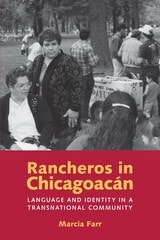
Rancheros in Chicagoacán
Language and Identity in a Transnational CommunityBy Marcia Farr
University of Texas Press, 2006
Rancheros hold a distinct place in the culture and social hierarchy of Mexico, falling between the indigenous (Indian) rural Mexicans and the more educated city-dwelling Mexicans. In addition to making up an estimated twenty percent of the population of Mexico, rancheros may comprise the majority of Mexican immigrants to the United States. Although often mestizo (mixed race), rancheros generally identify as non-indigenous, and many identify primarily with the Spanish side of their heritage. They are active seekers of opportunity, and hence very mobile. Rancheros emphasize progress and a self-assertive individualism that contrasts starkly with the common portrayal of rural Mexicans as communal and publicly deferential to social superiors.
Marcia Farr studied, over the course of fifteen years, a transnational community of Mexican ranchero families living both in Chicago and in their village-of-origin in Michoacán, Mexico. For this ethnolinguistic portrait, she focuses on three culturally salient styles of speaking that characterize rancheros: franqueza (candid, frank speech); respeto (respectful speech); and relajo (humorous, disruptive language that allows artful verbal critique of the social order maintained through respeto). She studies the construction of local identity through a community's daily talk, and provides the first book-length examination of language and identity in transnational Mexicans.
In addition, Farr includes information on the history of rancheros in Mexico, available for the first time in English, as well as an analysis of the racial discourse of rancheros within the context of the history of race and ethnicity in Mexico and the United States. This work provides groundbreaking insight into the lives of rancheros, particularly as seen from their own perspectives.
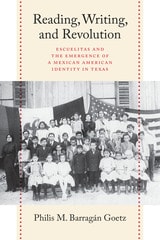
Reading, Writing, and Revolution
Escuelitas and the Emergence of a Mexican American Identity in TexasBy Philis M. Barragán Goetz
University of Texas Press, 2020
2022 National Association for Chicana and Chicano Studies Book Award
Tejas Foco Non-fiction Book Award, National Association for Chicana and Chicano Studies
2021 Tejano Book Prize, Tejano Genealogy Society of Austin
2021 Jim Parish Award for Documentation and Publication of Local and Regional History, Webb County Heritage Foundation
2021 Runner-up, Ramirez Family Award for Most Significant Scholarly Book
The first book on the history of escuelitas, Reading, Writing, and Revolution examines the integral role these grassroots community schools played in shaping Mexican American identity.
Language has long functioned as a signifier of power in the United States. In Texas, as elsewhere in the Southwest, ethnic Mexicans’ relationship to education—including their enrollment in the Spanish-language community schools called escuelitas—served as a vehicle to negotiate that power. Situating the history of escuelitas within the contexts of modernization, progressivism, public education, the Mexican Revolution, and immigration, Reading, Writing, and Revolution traces how the proliferation and decline of these community schools helped shape Mexican American identity.
Philis M. Barragán Goetz argues that the history of escuelitas is not only a story of resistance in the face of Anglo hegemony but also a complex and nuanced chronicle of ethnic Mexican cultural negotiation. She shows how escuelitas emerged and thrived to meet a diverse set of unfulfilled needs, then dwindled as later generations of Mexican Americans campaigned for educational integration. Drawing on extensive archival, genealogical, and oral history research, Barragán Goetz unravels a forgotten narrative at the crossroads of language and education as well as race and identity.

Real del Monte
A British Silver Mining Venture in MexicoBy Robert W. Randall
University of Texas Press, 1972
To speak of mining in newly independent Mexico is to speak of silver. And silver, historically abundant in the Real del Monte–Pachuca district, was the object of the Company of Adventurers in the Mines of Real del Monte. Organized in response to a plea by Pedro Romero de Terreros for help in rehabilitating his famous family’s once-rich properties, the English Real del Monte was led by men convinced that the application of English capital, management practices, and technology to those ruined mines and mills would reap them a profit and would revitalize the new nation’s most promising industry.
The adventurers were to be disappointed. The story of the English company is one of financial disaster: the loss of more than $5 million between its beginning in 1824 and its dissolution in 1849. Yet this failure was ironic, for upon the foundations of the English company was built a modern concern that yielded great rewards to Mexican and American successors to the hapless Englishmen.
A full account of a single risky venture, this inquiry is a microcosm of early foreign economic penetration into the Mexican mining industry. It offers specific solutions to poorly understood historical problems concerning the wave of capital that flowed from Great Britain into Latin America upon the disruption of the Spanish Empire, problems hitherto treated only in generalizations.
Reality in Movement
Octavio Paz as Essayist and Public IntellectualMaarten van Delden
Vanderbilt University Press, 2021
Reality in Movement looks at a wide range of topics of interest in Paz's career, including his engagement with the subversive, adversary strain in Western culture; his meditations on questions of cultural identity and intercultural contact; his dialogue with both leftist and conservative ideological traditions; his interest in feminism and psychoanalysis, and his theory of poetry. It concludes with a chapter on Octavio Paz as a literary character—a kind of reception study.
Offering a complex and nuanced portrait of Paz as a writer and thinker—as well as an understanding of the era in which he lived—Reality in Movement will appeal to students of Octavio Paz and of Mexican literature more generally, and to readers with an interest in the many significant literary, cultural, political, and historical topics Paz wrote about over the course of his long career.
Reassessing the Aztatlán World
Ethnogenesis and Cultural Continuity in Northwest MesoamericaEdited by Michael D. Mathiowetz and John M. D. Pohl
University of Utah Press, 2024
Volume contributors show how those responsible for the Aztatlán tradition were direct ancestors of diverse Indigenous peoples such as the Náayeri (Cora), Wixárika (Huichol), O’dam (Tepehuan), Caz’ Ahmo (Caxcan), Yoeme (Yaqui), Yoreme (Mayo), and others who continue to reside across the former Aztatlán region and its frontiers. The prosperity of the Aztatlán tradition was achieved through long-distance networks that fostered the development of new ritual economies and integrated peoples in Greater Mesoamerica with those in the U.S. Southwest/Mexican Northwest.
Recollections of Things to Come
By Elena Garro
University of Texas Press, 1969
This remarkable first novel depicts life in the small Mexican town of Ixtepec during the grim days of the Revolution. The town tells its own story against a variegated background of political change, religious persecution, and social unrest. Elena Garro, who has also won a high reputation as a playwright, is a masterly storyteller. Although her plot is dramatically intense and suspenseful, the novel does not depend for its effectiveness on narrative continuity. It is a book of episodes, one that leaves the reader with a series of vivid impressions. The colors are bright, the smells pungent, the many characters clearly drawn in a few bold strokes. Octavio Paz, the distinguished poet and critic, has written that it "is truly an extraordinnary work, one of the most perfect creations in contemporary Latin American literature."
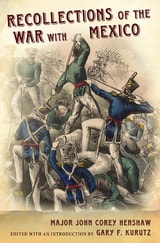
Recollections of the War with Mexico
Major John Corey Henshaw & Edited by Gary F. Kurutz
University of Missouri Press, 2008
Major John Henshaw, a dutiful regimental officer in the American invasion of Mexico, was one of only a handful of eyewitnesses to describe the two major theaters of that war from start to finish. But unlike most of his peers, he did not see himself as a conquering warrior and took pride in never having taken a life. He even wrote, “If I were alone, no earthly power could induce me to lend a helping hand in this base and infamous war.”
This book presents Henshaw’s recollections for the first time, covering all the action from the first skirmish in southern Texas to the collapse of Mexico City. As a member of the Seventh Infantry Regiment, this pugnacious line officer from New England served under both of the war’s principal generals, Zachary Taylor and Winfield Scott, and survived seven major battles. His writings constitute a virtual “minority opinion” report on the Mexican War.
Henshaw’s recollections include a rare and highly descriptive account of the siege of Fort Texas (later Fort Brown), plus rich new details of the storming of the Bishop’s Palace at Monterrey, the bombardment of Veracruz, the assault on Cerro Gordo, and the savage fighting outside the capital. His records of battles, marches, and maneuvers greatly augment what is already known about the campaign, but in addition to reporting daily occurrences and describing combat in graphic detail, Henshaw also reflected on the strategies and tactics—and what he saw as shortcomings—of officers on both sides.
Bitingly critical of those in command, of American volunteers, and of the war’s glory hounds, Henshaw admired the valor of ordinary soldiers on both sides of the fighting. And in the midst of the carnage, he also found time to describe Mexico’s cities and scenery in rhapsodic prose and express considerable empathy for its people. In addition to the “Recollections,” the volume includes vivid passages from letters Henshaw sent back to his wife, which supply additional details of the campaign. Editor Gary Kurutz provides an extensive biography of Henshaw, as well as comprehensive annotations to the text.
What Henshaw may have lacked as an unquestioning officer he more than made up for as an astute observer. Offering a decidedly different view of this war of American expansion, these writings with their balanced approach lend a fresh perspective among other primary sources and paint a startlingly honest picture of both Americans fighting abroad and those they fought.
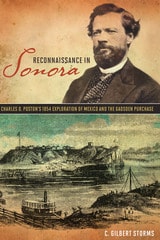
Reconnaissance in Sonora
Charles D. Poston’s 1854 Exploration of Mexico and the Gadsden PurchaseC. Gilbert Storms
University of Arizona Press, 2015
Poston led his party through Sonora and the territory of the 1854 Gadsden Purchase, which today encompasses southern Arizona and a portion of southern New Mexico. The syndicate’s charge to the young adventurer was to acquire land in Mexico in anticipation of the Gadsden Purchase and the building of the transcontinental railroad. Reconnaissance in Sonora details Poston’s expedition, including the founding of the town of Colorado City at the site of present-day Yuma, Arizona.
C. Gilbert Storms explores the American ideas of territorial expansion and Manifest Destiny, the national debate over a route for a transcontinental railroad, the legends of rich gold and silver mines in northern Mexico, and the French and American filibusters that plagued northern Mexico in the early 1850s.
Reconstructing Ancient Maya Diet
Christine White
University of Utah Press, 1999
The collapse of classic Maya civilization at the end of the eighth century A.D. is still an enigma, but the story behind it is likely more than a clash of warring city-states. New research indicates that ecological degradation and nutritional deficiency may be as important to our understanding of Maya cultural processes as deciphering the rise and fall of kings.
Reconstructing Ancient Maya Diet integrates recent data from bone-chemistry research, paleopathology, paleobotany, zooarchaeology, and ethnobotany to show what the ancient Maya actually ate at various periods (as opposed to archaeological suppositions) and how it affected the quality of their lives. It is now evident that to feed a burgeoning population the Maya relied on increasingly intensive forms of agriculture.
Exploring the relationship between these practices, ecological degradation, and social collapse, this book uses dietary data to investigate the rise of agricultural systems and class structure; the characterization of social relationships along lines of gender and age (i.e., who ate what); and the later effects of the Spanish conquest on diet and extant modes of agriculture.
Maya subsistence has been investigated intensively for the past two decades, but this is the first volume that unites work across the spectrum of Maya bioarchaeology.
Recovering History, Constructing Race
The Indian, Black, and White Roots of Mexican AmericansBy Martha Menchaca
University of Texas Press, 2002
A CHOICE Outstanding Academic Book, 2002
The history of Mexican Americans is a history of the intermingling of races—Indian, White, and Black. This racial history underlies a legacy of racial discrimination against Mexican Americans and their Mexican ancestors that stretches from the Spanish conquest to current battles over ending affirmative action and other assistance programs for ethnic minorities. Asserting the centrality of race in Mexican American history, Martha Menchaca here offers the first interpretive racial history of Mexican Americans, focusing on racial foundations and race relations from prehispanic times to the present.
Menchaca uses the concept of racialization to describe the process through which Spanish, Mexican, and U.S. authorities constructed racial status hierarchies that marginalized Mexicans of color and restricted their rights of land ownership. She traces this process from the Spanish colonial period and the introduction of slavery through racial laws affecting Mexican Americans into the late twentieth-century. This re-viewing of familiar history through the lens of race recovers Blacks as important historical actors, links Indians and the mission system in the Southwest to the Mexican American present, and reveals the legal and illegal means by which Mexican Americans lost their land grants.
Red International and Black Caribbean
Communists in New York City, Mexico and the West Indies, 1919-1939Margaret Stevens
Pluto Press, 2017
Challenging dominant accounts, Red International and Black Caribbean debunks the “great men” narrative, emphasizes the role of women in their capacity as laborers, and paints the true struggles of black peasants and workers in Communist parties.
Red Medicine
Traditional Indigenous Rites of Birthing and HealingPatrisia Gonzales
University of Arizona Press, 2012
Patrisia Gonzales addresses "Red Medicine" as a system of healing that includes birthing practices, dreaming, and purification rites to re-establish personal and social equilibrium. The book explores Indigenous medicine across North America, with a special emphasis on how Indigenous knowledge has endured and persisted among peoples with a legacy to Mexico. Gonzales combines her lived experience in Red Medicine as an herbalist and traditional birth attendant with in-depth research into oral traditions, storytelling, and the meanings of symbols to uncover how Indigenous knowledge endures over time. And she shows how this knowledge is now being reclaimed by Chicanos, Mexican Americans and Mexican Indigenous peoples.
For Gonzales, a central guiding force in Red Medicine is the principal of regeneration as it is manifested in Spiderwoman. Dating to Pre-Columbian times, the Mesoamerican Weaver/Spiderwoman—the guardian of birth, medicine, and purification rites such as the Nahua sweat bath—exemplifies the interconnected process of rebalancing that transpires throughout life in mental, spiritual and physical manifestations. Gonzales also explains how dreaming is a form of diagnosing in traditional Indigenous medicine and how Indigenous concepts of the body provide insight into healing various kinds of trauma.
Gonzales links pre-Columbian thought to contemporary healing practices by examining ancient symbols and their relation to current curative knowledges among Indigenous peoples. Red Medicine suggests that Indigenous healing systems can usefully point contemporary people back to ancestral teachings and help them reconnect to the dynamics of the natural world.
Redeeming a People
The Critical Role of Historical Examination in Moving Cultural and Moral TrajectoriesDarius Gray
Utah State University Press, 2020
The Arrington Lecture series, established by one of the twentieth-century West's most distinguished historians, Leonard Arrington, has become a leading forum for prominent historians to address topics related to Mormon history. Utah State University hosts the Leonard J. Arrington Mormon History Lecture Series through the Merrill-Cazier Library Special Collections and Archives department.
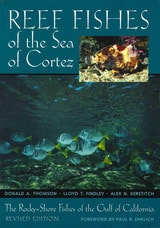
Reef Fishes of the Sea of Cortez
The Rocky-Shore Fishes of the Gulf of California, Revised EditionBy Donald A. Thomson, Lloyd T. Findley, and Alex N. Kerstitch
University of Texas Press, 2000
First published in 1979, this guide has become the standard resource for scientists, divers, and spearfishers interested in the fishes of the tropical Pacific Coast. The authors have revised and updated this edition to include the most current taxonomic information, additional species descriptions, and new illustrations.
Reflections of a Transborder Anthropologist
From Netzahualcóyotl to AztlánCarlos G. Vélez-Ibáñez
University of Arizona Press, 2020
In each chapter, Vélez-Ibáñez revisits a critical piece of his written work, providing a new introduction and discussion of ideas, sources, and influences for the piece. These are followed by the work, chosen because it accentuates key aspects of his development and formation as an anthropologist. By returning to these previously published works, Vélez-Ibáñez offers insight not only into the evolution of his own thinking and conceptualization but also into changes in the fields in which he has been so influential. Throughout his career, Vélez-Ibáñez has addressed why he does the work that he does, and in this volume he continues to address the personal and intellectual drives that have brought him from Netzahualcóyotl to Aztlán.
Reflections of a Transborder Anthropologist shows how both Vélez-Ibáñez and anthropology have changed and formed over a fifty-year period. Throughout, he has worked to understand how people survive and thrive against all odds. Vélez-Ibáñez has been guided by the burning desire to understand inequality, exploitation, and legitimacy, and, most importantly, to provide platforms for the voiceless to narrate their own histories.
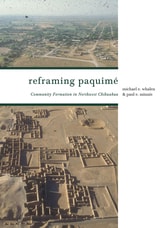
Reframing Paquimé
Community Formation in Northwest ChihuahuaMichael E. Whalen and Paul E. Minnis
University of Arizona Press, 2025
Reframing Paquimé: Community Formation in Northwest Chihuahua is a groundbreaking reinterpretation of the Casas Grandes region by scholars Michael E. Whalen and Paul E. Minnis. This final installment in their comprehensive study challenges the dominant view of Paquimé as a hierarchical society founded by outsiders, presenting instead a compelling case for a largely locally organized society with Mesoamerican and Puebloan characteristics. Drawing on twenty-five years of extensive survey and excavation data, the authors offer a fresh perspective that reframes our understanding of this remarkable archaeological site.
Whalen and Minnis bring forth significant new data that illuminates the cultural and ecological history of Paquimé and its neighboring communities. The book features more than fifty new radiocarbon dates, hundreds of analyzed archaeobotanical and faunal samples, plus tens of thousands of other artifacts. The data reveal a network of settlements characterized by corporate and ritual-based authority, challenging traditional models of the center’s rise, collapse, and subsequent regional abandonment and arguing that aspects of the Paquimé culture continued to exist up to the Spanish Colonial period.
Reframing Paquimé is poised to become an essential reference for archaeologists interested in Northwest Mexico and the U.S. Southwest. By addressing the complex dynamics of community formation and dissolution, Whalen and Minnis provide invaluable insights that will ignite scholarly debate and inspire future research. This meticulously researched volume, authored by leading experts with decades of fieldwork experience, is a vital addition to any collection on the archaeology and ethnobotany of ancient North American societies.
Refusals and Reinventions
Engendering New Indigenous and Black Life across the AmericasDaniel Ìgbín’bí Coleman
The Ohio State University Press, 2024
Reinventing Practice in a Disenchanted World
Bourdieu and Urban Poverty in Oaxaca, MexicoBy Cheleen Ann-Catherine Mahar
University of Texas Press, 2010
Colonia Hermosa, now considered a suburb of Oaxaca, began as a squatter settlement in the 1950s. The original residents came in search of transformation from migrants to urban citizens, struggling from rural poverty for the chance to be part of the global economy in Oaxaca.
Cheleen Ann-Catherine Mahar charts the lives of a group of residents in Colonia Hermosa over a period of thirty years, as Mexico became more closely tied into the structures of global capital, and the residents of Colonia Hermosa struggled to survive. Residents shape their discussions within a larger narrative, and their talk is the language of the heroic individual, so necessary to the ideology and the functioning of capital. However, this logic only tenuously connects to the actual material circumstances of their lives.
Mahar applies the theories of French sociologist Pierre Bourdieu to her data from Mexico in order to examine the class trajectories of migrant families over more than three decades. Through this investigation, Mahar adds an important intergenerational study to the existing body of literature on Oaxaca, particularly concerning the factors that have reshaped the lives of urban working poor families and have created a working-class fraction of globalized citizenship.
Religion and State Formation in Postrevolutionary Mexico
Ben Fallaw
Duke University Press, 2012
Ben Fallaw argues that previous scholarship has not appreciated the pervasive influence of Catholics and Catholicism on postrevolutionary state formation. By delving into the history of four understudied Mexican states, he is able to show that religion swayed regional politics not just in states such as Guanajuato, in Mexico's central-west "Rosary Belt," but even in those considered much less observant, including Campeche, Guerrero, and Hidalgo. Religion and State Formation in Postrevolutionary Mexico reshapes our understanding of agrarian reform, federal schooling, revolutionary anticlericalism, elections, the Segunda (a second Cristero War in the 1930s), and indigenism, the Revolution's valorization of the Mesoamerican past as the font of national identity.
Remembering Archaeological Fieldwork in Mexico and Peru, 1961-2003
A Photographic EssayJeffrey R. Parsons
University of Michigan Press, 2019

Remembering Victoria
A Tragic Nahuat Love StoryBy James M. Taggart
University of Texas Press, 2007
On October 15, 1983, a young mother of six was murdered while walking across her village of Huitzilan de Serdán, Mexico, with her infant son and one of her daughters. This woman, Victoria Bonilla, was among more than one hundred villagers who perished in violence that broke out soon after the Mexican army chopped down a cornfield that had been planted on an unused cattle pasture by forty Nahuat villagers.
In this anthropological account, based on years of fieldwork in Huitzilan, James M. Taggart turns to Victoria's husband, Nacho Angel Hernández, to try to understand how a community based on respect and cooperation descended into horrific violence and fratricide. When the army chopped down the cornfield at Talcuaco, the war that broke out resulted in the complete breakdown of the social and moral order of the community.
At its heart, this is a tragic love story, chronicling Nacho's feelings for Victoria spanning their courtship, marriage, family life, and her death. Nacho delivered his testimonio to the author in Nahuat, making it one of the few autobiographical love stories told in an Amerindian language, and a very rare account of love among the indigenous people of Mesoamerica. There is almost nothing in the literature on how a man develops and changes his feelings for his wife over his lifetime. This study contributes to the anthropology of emotion by focusing on how the Nahuat attempt to express love through language and ritual.
Remembering the Forgotten War
The Enduring Legacies of the U.S.-Mexican WarMichael Scott Van Wagenen
University of Massachusetts Press, 2012
On February 2, 1848, representatives of the United States and Mexico signed the Treaty of Guadalupe Hidalgo, officially ending hostilities between the two countries and ceding over one-half million square miles of land to the northern victors. In Mexico, this defeat has gradually moved from the periphery of dishonor to the forefront of national consciousness. In the United States, the war has taken an opposite trajectory, falling from its once-celebrated prominence into the shadowy margins of forgetfulness and denial.
Why is the U.S.–Mexican War so clearly etched in the minds of Mexicans and so easily overlooked by Americans? This book investigates that issue through a transnational, comparative analysis of how the tools of collective memory—books, popular culture, historic sites, heritage groups, commemorations, and museums—have shaped the war's multifaceted meaning in the 160 years since it ended. Michael Van Wagenen explores how regional, ethnic, and religious differences influence Americans and Mexicans in their choices of what to remember and what to forget. He further documents what happens when competing memories clash in a quest for dominance and control.
In the end, Remembering the Forgotten War addresses the deeper question of how remembrance of the U.S.–Mexican War has influenced the complex relationship between these former enemies now turned friends. It thus provides a new lens through which to view today's cross-border rivalries, resentments, and diplomatic pitfalls.
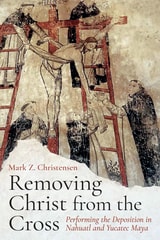
Removing Christ from the Cross
Performing the Deposition in Nahuatl and Yucatec MayaMark Z. Christensen
University Press of Colorado, 2026
Employed on Good Friday, the texts provided mute actors with roles and props with which to reenact the removal of Christ from his cross, his placement into the arms of his grieving mother, and his burial—his Deposition. Through rare translations, vivid historical accounts, and rich cultural insight, the book uncovers how these ceremonies moved audiences to tears, shaped local Catholicisms, and still have the power to stir hearts today.
Such theatrical reenactments were common among Nahuas and Mayas during the colonial period only to become largely overlooked by the scholarly literature on religion. The texts examined here provide not only examples of performances but also insight into how translation altered their content and meaning. More than simply plays or sermons, these hybrid performances merged European tradition with Nahua and Maya storytelling, creating unforgettable moments of faith, grief, and beauty. Familiarized through local worldviews, concerns, preferences, and language, these texts provide additional and important insights into myriad issues including those of gender, agency, and how Christianity adapted its message of the Deposition to accommodate Indigenous audiences of different cultures. Christensen also mines the deep well of existing European literature on the subject to clearly distinguish the aspects derived from the Old World from those from the New.
The first book examining how the Aztec and Maya were taught about and engaged in the Deposition, Removing Christ from the Cross exposes the colonial origins of modern Latin American commemorations, showing the past clearly reflected in the present and making a significant contribution to the literature on the evangelization of New Spain. This is more than history—it is the rediscovery of performances that connected worlds.
Responding to Crisis in Contemporary Mexico
The Political Writings of Paz, Fuentes, Monsiváis, and PoniatowskaClaire Brewster
University of Arizona Press, 2005
Claire Brewster has mined direct quotations from a host of publications to illustrate the techniques that they used in combating government and editorial restraints. Brewster first addresses the Student Movement of 1968—the violent suppression of which was a watershed in the relationship between the Mexican government and people—and illustrates the ways in which the student crisis affected the writers’ relationships with presidents Luis Echeverría Alvarez and José López Portillo. She next considers the profound social and political repercussions of the 1985 earthquake as described by Poniatowska and Monsiváis and the consequent emergence of Mexican civil society. She then outlines Paz’s and Monsiváis’s vociferous responses to the 1988 presidential election campaigns and their highly contentious result, and lastly she examines the Chiapas rebellion from January to July 1994.
The eloquent Zapatista spokesman, Subcomandante Marcos, challenged Mexican writers to a duel of words, and Brewster analyzes the ways in which the four writers took up the gauntlet—and in so doing reveals the development of their political thoughts and their relationships with the Mexican people and the federal government. The work of these four authors charts an important historical era, and a close examination of their essays reveals their maturation as writers and provides an understanding of the development of Mexican society. By bringing their opinions and attitudes to light, Brewster unearths a rich lode of insight into the inner workings of Mexican intellectuals and invites observers of contemporary Mexico to reconsider their role in reflecting social change.
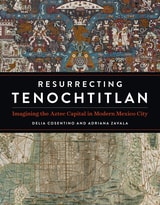
Resurrecting Tenochtitlan
Imagining the Aztec Capital in Modern Mexico CityDelia Cosentino and Adriana Zavala
University of Texas Press, 2023
Honorable Mention, ALAA-Arvey Foundation Book Award, Association of Latin American Art
Finalist, 2024 Charles Rufus Morey Book Award, College Art Association
How Mexican artists and intellectuals created a new identity for modern Mexico City through its ties to Aztec Tenochtitlan.
After archaeologists rediscovered a corner of the Templo Mayor in 1914, artists, intellectuals, and government officials attempted to revive Tenochtitlan as an instrument for reassessing Mexican national identity in the wake of the Revolution of 1910. What followed was a conceptual excavation of the original Mexica capital in relation to the transforming urban landscape of modern Mexico City.
Revolutionary-era scholars took a renewed interest in sixteenth century maps as they recognized an intersection between Tenochtitlan and the foundation of a Spanish colonial settlement directly over it. Meanwhile, Mexico City developed with modern roads and expanded civic areas as agents of nationalism promoted concepts like indigenismo, the embrace of Indigenous cultural expressions. The promotion of artworks and new architectural projects such as Diego Rivera’s Anahuacalli Museum helped to make real the notion of a modern Tenochtitlan. Employing archival materials, newspaper reports, and art criticism from 1914 to 1964, Resurrecting Tenochtitlan connects art history with urban studies to reveal the construction of a complex physical and cultural layout for Mexico’s modern capital.
Return Of Guatemala'S Refugees
Clark Taylor
Temple University Press, 1998
Twelve years later, utilizing terms of refugee agreements reached in 1982, villagers from Santa Maria who had fled to Mexico returned to their homes and lands to re-create their community with those who had stayed in Guatemala. Return of Guatemala's Refugees tells the story of that process. In this moving and provocative book, Clark Taylor describes the experiences of the survivors -- both those who stayed behind in conditions of savage repression and those who fled to Mexico where they learned to organize and defend their rights. Their struggle to rebuild is set in the wider drama of efforts by grassroots groups to pressure the government, economic elites, and army to fulfill peace accords signed in December of 1996.
Focusing on the village of Santa Maria Tzeja, Taylor defines the challenges that faced returning refugees and their community. How did the opposing subcultures of fear (generated among those who stayed in Guatemala) and of education and human rights (experienced by those who took refuge in Mexico) coexist? Would the flood of international money sent to settle the refugees and fulfill the peace accords serve to promote participatory development or new forms of social control? How did survivors expand the space for democracy firmly grounded in human rights? How did they get beyond the grief and trauma that remained from the terror of the early eighties? Finally, the ultimate challenge, how did they work within conditions of extreme poverty to create a grassroots democracy in a militarized society?
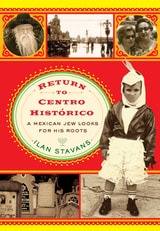
Return to Centro Histórico
A Mexican Jew Looks for His RootsStavans, Ilan
Rutgers University Press, 2012
After a stirring e-mail exchange with his father, awardwinning essayist and cultural commentator Ilan Stavans decided to do something bizarre: revisit his hometown, Mexico City, accompanied by a tourist guide. But rather than seeking his roots in the neighborhood where he grew up, he headed to the Centro Histórico, the downtown area at the heart of the world’s largest metropolis. It was there that conversos, the hidden Jews escaping the might of the Holy Office of the Inquisition, were burned at the stake. And, centuries later, it was the same section where Jewish immigrants, both Yiddish-speaking Ashkenazim and Sephardim from the Ottoman Empire, made their homes as peddlers. In a sense, Centro Histórico is to Mexico what the Lower East Side is to the United States: a platform for reinventing one’s self in the New World.
With the same linguistic verve and insight that has made him one of the most distinguished voices in American literature today, Ilan Stavans invites readers along for a personal journey that is not only his own, but that of an entire culture. In Return to Centro Histórico he makes it possible to understand the intimate role that Jews have played in the development of Hispanic civilization.
Return to Ixil
Maya Society in an Eighteenth-Century Yucatec TownMark Z. Christensen
University Press of Colorado, 2019
Supplemented with additional archival research, the wills provide new and detailed descriptions of various aspects of life in eighteenth-century Ixil. In each chapter, authors Mark Christensen and Matthew Restall examine a different dimension of Ixil’s colonial history, including the role of notaries, Maya participation in a coastal militia, economy and modes of production, religious life and records, and the structures and patterns of familial relationships. These details offer insight into the complex network of societies in colonial Yucatan, colonial Mesoamerica, and colonial Latin America.
Including an appendix presenting the original Maya texts as well as translations by Christensen and Restall, Return to Ixil not only analyzes the largest body of substantive wills in any Mayan language known today but also provides a rare closeup view of the inner workings of a colonial Maya town and the communal and familial affairs that made up a large part of the Maya colonial experience. It will be of great interest to Mayanists as well as to students and scholars of history, anthropology, ethnohistory, linguistics, and social history.
The publication of this book is supported in part byBrigham Young University and Penn State University.
Return to the Center
Culture, Public Space, and City Building in a Global EraBy Lawrence A. Herzog
University of Texas Press, 2006
The redesign and revitalization of traditional urban centers is the cutting edge of contemporary urban planning, as evidenced by the intense public and professional attention to the rebuilding of city cores from Berlin to New York City's "Ground Zero." Spanish and Latin American cities have never received the recognition they deserve in the urban revitalization debate, yet they offer a very relevant model for this "return to the center." These cultures have consistently embraced the notion of a city whose identity is grounded in its organic public spaces: plazas, promenades, commercial streets, and parks that invite pedestrian traffic and support a rich civic life. This groundbreaking book explores Spanish, Mexican, and Mexican-American border cities to learn what these urban areas can teach us about effectively using central public spaces to foster civic interaction, neighborhood identity, and a sense of place.
Herzog weaves the book around case studies of Madrid and Barcelona, Spain; Mexico City and Querétaro, Mexico; and the Tijuana-San Diego border metropolis. He examines how each of these urban areas was formed and grew through time, with attention to the design lessons of key public spaces. The book offers original and incisive discussions that challenge current urban thinking about politics and public space, globalization, and the future of privatized communities, from gated suburbs to cyberspace. Herzog argues that well-designed, human-scaled city centers are still vitally necessary for maintaining community and civic life. Applicable to urban renewal projects around the globe, Herzog's book will be important reading for planners, architects, designers, and all citizens interested in creating more livable cities.
Revolt at Taos
The New Mexican and Indian Insurrection of 1847James A. Crutchfield
Westholme Publishing, 2025
On the morning of January 19, 1847, Charles Bent, the newly appointed governor of the American-claimed territory of New Mexico, was savagely killed at his home in Don Fernando de Taos, a small, remote town located north of Santa Fe. Those responsible for Bent’s murder were New Mexican settlers and Indians from nearby Taos Pueblo who refused to recognize the United States occupation. With emotions rubbed raw, the natives continued their bloodbath until five more leading citizens were massacred in Taos. During the ensuing months, American civilians and soldiers, along with scores of New Mexicans and Taos Indians, were killed and wounded throughout the region. Less than a month following Bent’s murder, in a two-day battle, volunteer and regular elements of an American army under the command of Colonel Sterling Price emerged victorious after bombarding the insurrectionists at their refuge in the church at Taos Pueblo. Surviving participants in the earlier Taos murders were arrested, tried in American-dominated courts, and, within weeks, hanged for their actions. The murder of Bent and the others at Taos and the subsequent trials and executions brought with them misunderstanding, controversy, mistrust, and recrimination on both sides of the issue. The events also subjected President James K. Polk’s administration to censure over what some critics believed was an overextension of presidential authority in claiming New Mexico as a territory.
In Revolt at Taos: The New Mexican and Indian Insurrection of 1847, writer and historian James A. Crutchfield explores the fast-moving events surrounding the bloody revolt which left native inhabitants of New Mexico wondering how their neighbors and kinsmen could be legally tried, found guilty, and executed for acts they considered to have been honorable ones committed in defense of their country. These concerns have never been adequately addressed and their struggle has been all but scrubbed from the history of American expansion.
Revolution From Without
Yucatan, Mexico, and the United States, 1880–1924Gilbert M. Joseph
Duke University Press, 1988
Revolution at Querétaro
The Mexican Constitutional Convention of 1916–1917By E. V. Niemeyer, Jr.
University of Texas Press, 1974
In two of the most fateful months of Mexican history, the delegates to the Constitutional Convention of 1916–1917 came to grips with the basic problem of twentieth-century Mexico. They hammered out pragmatic solutions to establish the legal foundations of the Mexican Revolution, the definitive break between the old Mexico and the new, the constitutional bases for the socioeconomic changes from 1917 onward. Honored and obeyed, dishonored and disobeyed, many times amended, the constitution they wrote still serves as the instrument for achieving the national purpose.
Revolution at Querétaro is the first book in English to study in depth the remarkable convention that produced the Constitution of 1917. It chronicles the unfolding of ideas expressed in the debates on the most significant articles of the constitution, those that have given it a revolutionary flavor and have served the groundwork for the emergence of Mexico as a modern nation. These articles concern the Catholic church and its role in the sphere of education (Article 3); the relationship of the church to the state (Articles 24 and 130); the attack on vested interest and the establishment of guidelines for agrarian reform (Article 27); the drafting of a detailed labor code (Article 123); and attempts to implement municipal reform (Article 114). Other debates described in the book concern unsuccessful attempts to institute prohibition, outlaw bullfights, abolish capital punishment, and grant suffrage to women.
This study also sheds light on the delegates themselves, who they were and where they came from, their idiosyncrasies and attitudes, and their individual contributions to the writing of the constitution. Much material is taken from unpublished albums in which the delegates recorded their sentiments during the convention.
Revolutionary Parks
Conservation, Social Justice, and Mexico’s National Parks, 1910–1940Emily Wakild
University of Arizona Press, 2011
Revolutionary Parks tells the surprising story of how forty national parks were created in Mexico during the latter stages of the first social revolution of the twentieth century. By 1940 Mexico had more national parks than any other country. Together they protected more than two million acres of land in fourteen states. Even more remarkable, Lázaro Cárdenas, president of Mexico in the 1930s, began to promote concepts akin to sustainable development and ecotourism.
Conventional wisdom indicates that tropical and post-colonial countries, especially in the early twentieth century, have seldom had the ability or the ambition to protect nature on a national scale. It is also unusual for any country to make conservation a political priority in the middle of major reforms after a revolution. What emerges in Emily Wakild’s deft inquiry is the story of a nature protection program that takes into account the history, society, and culture of the times. Wakild employs case studies of four parks to show how the revolutionary momentum coalesced to create early environmentalism in Mexico.
According to Wakild, Mexico’s national parks were the outgrowth of revolutionary affinities for both rational science and social justice. Yet, rather than reserves set aside solely for ecology or politics, rural people continued to inhabit these landscapes and use them for a range of activities, from growing crops to producing charcoal. Sympathy for rural people tempered the radicalism of scientific conservationists. This fine balance between recognizing the morally valuable, if not always economically profitable, work of rural people and designing a revolutionary state that respected ecological limits proved to be a radical episode of government foresight.
Revolutionary Women in Postrevolutionary Mexico
Jocelyn Olcott
Duke University Press, 2005
Olcott demonstrates an extraordinary grasp of the complexity of postrevolutionary Mexican politics, exploring the goals and outcomes of women’s organizing in Mexico City and the port city of Acapulco as well as in three rural locations: the southeastern state of Yucatán, the central state of Michoacán, and the northern region of the Comarca Lagunera. Combining the strengths of national and regional approaches, this comparative perspective sets in relief the specificities of citizenship as a lived experience.
Revolutions in Mexican Catholicism
Reform and Revelation in Oaxaca, 1887–1934Edward Wright-Rios
Duke University Press, 2009
Wright-Rios demonstrates that pastors, peasants, and laywomen sought to enliven and shape popular religion in Oaxaca. The clergy tried to adapt the Vatican’s blueprint for Catholic revival to Oaxaca through institutional reforms and attempts to alter the nature and feel of lay religious practice in what amounted to a religious modernization program. Yet some devout women had their own plans. They proclaimed their personal experiences of miraculous revelation, pressured priests to recognize those experiences, marshaled their supporters, and even created new local institutions to advance their causes and sustain the new practices they created. By describing female-led visionary movements and the ideas, traditions, and startling innovations that emerged from Oaxaca’s indigenous laity, Wright-Rios adds a rarely documented perspective to Mexican cultural history. He reveals a remarkable dynamic of interaction and negotiation in which priests and parishioners as well as prelates and local seers sometimes clashed and sometimes cooperated but remained engaged with one another in the process of making their faith meaningful in tumultuous times.
Rim of Christendom
A Biography of Eusebio Francisco Kino, Pacific Coast PioneerHerbert Eugene Bolton; Foreword by John L. Kessell
University of Arizona Press, 1984
"This is truly an epic work, an absolute standard for any Southwestern collection."—Book Talk
Select maps from the 1984 edition of Rim of Christendom are now available online through the UA Campus Repository.
Riot and Rebellion in Mexico
The Making of a Race War ParadigmAna Sabau
University of Texas Press, 2022
2023 Best Book in the Humanities, Latin American Studies Association Mexico Section
Challenging conventional narratives of Mexican history, this book establishes race-making as a central instrument for the repression of social upheaval in nineteenth-century Mexico rather than a relic of the colonial-era caste system.
Many scholars assert that Mexico’s complex racial hierarchy, inherited from Spanish colonialism, became obsolete by the turn of the nineteenth century as class-based distinctions became more prominent and a largely mestizo population emerged. But the residues of the colonial caste system did not simply dissolve after Mexico gained independence. Rather, Ana Sabau argues, ever-present fears of racial uprising among elites and authorities led to persistent governmental techniques and ideologies designed to separate and control people based on their perceived racial status, as well as to the implementation of projects for development in fringe areas of the country.
Riot and Rebellion in Mexico traces this race-based narrative through three historical flashpoints: the Bajío riots, the Haitian Revolution, and the Yucatán’s caste war. Sabau shows how rebellions were treated as racially motivated events rather than political acts and how the racialization of popular and indigenous sectors coincided with the construction of “whiteness” in Mexico. Drawing on diverse primary sources, Sabau demonstrates how the race war paradigm was mobilized in foreign and domestic affairs and reveals the foundations of a racial state and racially stratified society that persist today.
Riparian Ecosystem Recovery in Arid Lands
Strategies and ReferencesMark K. Briggs
University of Arizona Press, 1996
The book opens with a review of watershed characteristics and an examination of drainage systems, then proceeds to determining the causes of riparian decline. It introduces five factors that have a significant effect on the results of riparian rehabilitation--natural regeneration, water availability, channel stability, direct impacts such as livestock grazing and recreational activities, and soil salinity--and offers case studies that demonstrate how revegetation has been used both effectively and ineffectively.
It also discusses strategies other than revegetation that may be effective in improving the ecological condition of a site. Many of the strategies presented are also relevant to nonarid climates and to urban areas. By emphasizing evaluation of riparian ecosystems, so that the causes of degradation can be understood, and by offering general approaches that can be tailored to specific situations, Riparian Ecosystem Recovery in Arid Lands takes a holistic approach to riparian recovery that will enable users to better judge whether recovery expenditures are likely to produce desired results. An unprecedented work, it will substantially add to efforts across the Southwest and elsewhere to restore these unique and priceless ecosystems.
CONTENTS
1 An Overview: Background on Riparian Ecosystems / Lessons Learned from Past Riparian Recovery Efforts / An Evaluation Strategy / Defining Some Important Terms
2 Considering the Damaged Riparian Area from a Watershed Perspective: Case Study 1: Rincon Creek / Taking Advantage of Available Information / Getting to Know the Watershed / Getting to Know the Stream
3 Impacts within the Riparian Zone: Livestock / Case Study 2: Sheepshead Spring / Recreation / Competition from Nonnative Species / Wildlife
4 Natural Recovery in Riparian Ecosystems: Case Study 3: Aravaipa Creek / Factors Influencing Natural Recovery / Case Study 4: McEuen Seep / Autoecology of Selected Southwestern Riparian Tree Species / Case Study 5: Boulder Creek
5 Water Availability: Case Study 6: Box Bar / How Groundwater Decline Occurs / Evaluating Groundwater Conditions / Revegetating Riparian Ecosystems Characterized by Groundwater Decline
6 The Drainageway: Channel Instability and Riparian Ecosystems / Case Study 7: Babocomari River / Channel Dynamics / Strategies for Evaluating Channel Stability / Developing Recovery Projects along Unstable Alluvial Stream Channels
7 Soil Salinity and Riparian Ecosystems: Effects of Soil Salinity on Plant Growth / The Soil Survey / Soil Salinity and Revegetation
8 Developing the Recovery Plan: Developing Project Objectives / Selecting the Best Site / Local, State, and Federal Permit Requirements / Identifying Model Areas / Critical Components of the Recovery Plan / Community Involvement / Demonstration Sites / Postproject Evaluation and Monitoring

Ritual Humor in Highland Chiapas
By Victoria Reifler Bricker
University of Texas Press, 1973
Zinacantan, Chamula, and Chenalhó are neighboring Mayan communities situated in highland Chiapas, Mexico, near the city of San Cristóbal Las Casas. The inhabitants of the three communities speak dialects of the Tzotzil language. Five religious fiestas, celebrated by these communities in honor of their saints, provide the data for Victoria Bricker's comparative study of ritual humor.
In Chenalhó and Chamula performances of ritual humor are concentrated in the five-day period of a single fiesta, while in Zanacantan similar performances are distributed over threee fiestas. In these fiesta settings, performers in distinctive costumes make obscene and sacreligious remarks in the context of religious ritual. These performances are defined as ritual humor because they occur only in ritual settings.
Bricker's study constitutes a controlled cross-cultural comparison of ceremonial or ritual humor in its social and cultural setting. Much new information is provided in verbatim texts, recorded during actual fiesta performances. The study reveals that, although the three communities share a common pool of ritual symbols, they elaborate them differently in ritual humor. The study analyzes the symbolic expression of values, social organization, and interethnic relations.
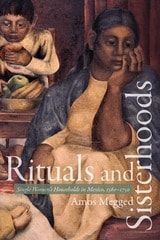
Rituals and Sisterhoods
Single Women's Households in Mexico, 1560–1750Amos Megged
University Press of Colorado, 2019
Megged analyzes these women’s life stories recorded during the Spanish Inquisition, as well as wills and bequests, petitions, parish records, and private letters that describe—in their own words—how they exercised agency in male-dominated and religious spaces. Translations of select documents and accompanying analysis illustrate the conditions in which women dissolved their marriages, remained in long-lasting extramarital cohabitations, and formed female-led households and “sisterhoods” of their own. Megged provides evidence that single women in colonial Mexico played a far more active and central role in economic systems, social organizations, cults, and political activism than has been previously thought, creating spaces for themselves in which they could initiate and maintain autonomy and values distinct from those of elite society.
The institutionalization of female-headed households in mid-colonial Mexico had wide-ranging repercussions and effects on general societal values. Rituals and Sisterhoods details the particular relevance of these changes to the history of emotions, sexuality, gender concepts, perceptions of marriage, life choices, and views of honor and shame in colonial society. This book will be of significant interest to students and scholars of colonial Latin American history, the history of Early Modern Spain and Europe, and gender and women’s studies.
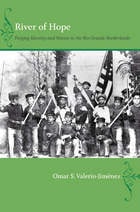
River of Hope
Forging Identity and Nation in the Rio Grande BorderlandsOmar S. Valerio-Jiménez
Duke University Press, 2012
Diverse influences transformed the borderlands as Spain, Mexico, and the United States competed for control of the region. Indian slaves joined Spanish society; Mexicans allied with Indians to defend river communities; Anglo Americans and Mexicans intermarried and collaborated; and women sued to confront spousal abuse and to secure divorces. Drawn into multiple conflicts along the border, Mexican nationals and Mexican Texans (tejanos) took advantage of their transnational social relations and ambiguous citizenship to escape criminal prosecution, secure political refuge, and obtain economic opportunities. To confront the racialization of their cultural practices and their increasing criminalization, tejanos claimed citizenship rights within the United States and, in the process, created a new identity.
Published in cooperation with the William P. Clements Center for Southwest Studies, Southern Methodist University.
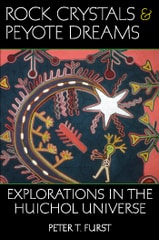
Rock Crystals and Peyote Dreams
Explorations in the Huichol UniverseFurst, Peter T
University of Utah Press, 2006
In the mid-1960s, Peter T. Furst began a lifelong encounter with their intellectual culture, facilitated by a growing relationship of mutual trust with Ramón Medina, an aspiring Huichol shaman, storyteller, and artist, and his wife Guadalupe de la Cruz Ríos. Ramón, who became a full-fledged shaman with his fifth peyote pilgrimage, also had a Huichol name: 'Uru Temay, Young Arrow Person.' Over the years Furst published a number of articles on various facets of Huichol life, many of them centered on what he learned and observed during his growing relationship with Ramón and his people.
Bound together by personal reminiscences and background explanations, Furst here brings many of those articles together and updates them. It includes transcriptions of myths that function as charters for 'being Huichols,' descriptions of deities, rituals, beliefs, as well as discussion of the place of hallucinogens in Huichol culture. Furst skillfully weaves current reflections with memories and older material in a manner that makes for a highly readable, contemporary presentation.
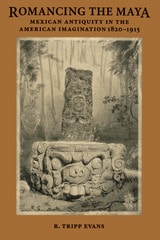
Romancing the Maya
Mexican Antiquity in the American Imagination, 1820-1915By R. Tripp Evans
University of Texas Press, 2004
During Mexico's first century of independence, European and American explorers rediscovered its pre-Hispanic past. Finding the jungle-covered ruins of lost cities and artifacts inscribed with unintelligible hieroglyphs—and having no idea of the age, authorship, or purpose of these antiquities—amateur archaeologists, artists, photographers, and religious writers set about claiming Mexico's pre-Hispanic patrimony as a rightful part of the United States' cultural heritage.
In this insightful work, Tripp Evans explores why nineteenth-century Americans felt entitled to appropriate Mexico's cultural heritage as the United States' own. He focuses in particular on five well-known figures—American writer and amateur archaeologist John Lloyd Stephens, British architect Frederick Catherwood, Joseph Smith, founder of the Church of Jesus Christ of Latter-Day Saints, and the French émigré photographers Désiré Charnay and Augustus Le Plongeon. Setting these figures in historical and cultural context, Evans uncovers their varying motives, including the Manifest Destiny-inspired desire to create a national museum of American antiquities in New York City, the attempt to identify the ancient Maya as part of the Lost Tribes of Israel (and so substantiate the Book of Mormon), and the hope of proving that ancient Mesoamerica was the cradle of North American and even Northern European civilization. Fascinating stories in themselves, these accounts of the first explorers also add an important new chapter to the early history of Mesoamerican archaeology.
Romans in a New World
Classical Models in Sixteenth-Century Spanish AmericaDavid A. Lupher
University of Michigan Press, 2006
In the course of this debate, many Spaniards were inspired to think more deeply on their own ethnic ancestry and identity, as Spanish treatment of the New World natives awakened the slumbering memory of Roman treatment of the Iberian tribes whom modern Spaniards were now embracing as their truest ancestors. At the same time, growing awareness of the cultural practices--especially the religious rituals--of the American natives framed a new perspective on both the pre-Christian ancestors of modern Europeans and even on the survival of "pagan" customs among modern Europeans themselves. In this incisive study, David A. Lupher addresses the increasingly debated question of the impact the discovery of the New World had upon Europeans' perceptions of their identity and place in history.
Romans in a New World holds much to interest both classicists and students of the history and culture of early modern Europe--especially, though not exclusively, historians of Spain. David A. Lupher's concern with the ideology of imperialism and colonization and with cross-cultural negotiations will be useful to students of cultural studies, as well.
David A. Lupher is Professor of Classics, University of Puget Sound.
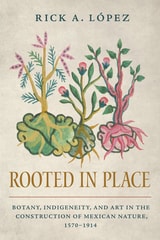
Rooted in Place
Botany, Indigeneity, and Art in the Construction of Mexican Nature, 1570–1914Rick A. López
University of Arizona Press, 2025
Prize for Best Book in Environmental Studies, Latin American Studies Association
Honorable mention for Best Book Prize in Visual Culture, Latin American Studies Association
Honorable mention for Best Book on Mexico, Latin American Studies Association
Since the first moment of conquest, colonizers and the colonized alike in Mexico confronted questions about what it meant to be from this place, what natural resources it offered, and who had the right to control those resources and on what basis.
Focusing on the ways people, environment, and policies have been affected by political boundaries, historian Rick A. López explores the historical connections between political identities and the natural world. López analyzes how scientific intellectuals laid claim to nature within Mexico, first on behalf of the Spanish Empire and then in the name of the republic, during three transformative moments: the Hernández expedition of the late sixteenth century; the Royal Botanical Expedition of the late eighteenth century; and the heyday of scientific societies such as the Sociedad Mexicana de Historia Natural of the late nineteenth century.
This work traces how scientific intellectuals studied and debated what it meant to know and claim the flora that sprang from Mexican soil—ranging from individual plants to forests and vegetated landscapes—and the importance they placed on indigeneity. It also points to the short- and long-term consequences of these efforts. López draws on archival and published sources produced from the sixteenth century through the start of the twentieth century and gives special attention to the use of visual images such as scientific illustrations and landscape art. López employs the term “visualization” in recognition of the degree to which officials, botanists, and draftsmen produced imagery and also how they and others viewed nature.
Rooted in Place reveals how scientific endeavors were not just about cataloging flora but were deeply intertwined with the construction of identity and the political landscape at three pivotal moments in Mexican history.
Rudo Ensayo
A Description of Sonora and Arizona in 1764Juan Nentvig; Translated, Clarified, and Annotated by Alberto Francisco Pradeau and Robert R. Rasmussen
University of Arizona Press, 1980